using IronPdf;

// Disable local disk access or cross-origin requests
Installation.EnableWebSecurity = true;

// Instantiate Renderer
var renderer = new ChromePdfRenderer();

// Create a PDF from a HTML string using C#
var pdf = renderer.RenderHtmlAsPdf("<h1>Hello World</h1>");

// Export to a file or Stream
pdf.SaveAs("output.pdf");

// Advanced Example with HTML Assets
// Load external html assets: Images, CSS and JavaScript.
// An optional BasePath 'C:\site\assets\' is set as the file location to load assets from
var myAdvancedPdf = renderer.RenderHtmlAsPdf("<img src='icons/iron.png'>", @"C:\site\assets\");
myAdvancedPdf.SaveAs("html-with-assets.pdf");
using IronPdf;// Disable local disk access or cross-origin requestsInstallation.EnableWebSecurity = true;// Instantiate Renderervar renderer = new ChromePdfRenderer();// Create a PDF from a HTML string using C#var pdf = renderer.RenderHtmlAsPdf("<h1>Hello World</h1>");// Export to a file or Streampdf.SaveAs("output.pdf");// Advanced Example with HTML Assets// Load external html assets: Images, CSS and JavaScript.// An optional BasePath 'C:\site\assets\' is set as the file location to load assets fromvar myAdvancedPdf = renderer.RenderHtmlAsPdf("<img src='icons/iron.png'>", @"C:\site\assets\");myAdvancedPdf.SaveAs("html-with-assets.pdf");
## Einführung in C#-Casting
[Casting](https://learn.microsoft.com/en-us/dotnet/csharp/programming-guide/types/casting-and-type-conversions) in C# ist ein leistungsstarkes Feature, das es Entwicklern ermöglicht, eine Variable eines Datentyps in einen anderen zu konvertieren. Es spielt eine entscheidende Rolle in der objektorientierten Programmierung, insbesondere beim Umgang mit Vererbungshierarchien oder bei der Arbeit mit Schnittstellen. Beim Einsatz von Bibliotheken wie [IronPDF](https://ironpdf.com) zur PDF-Bearbeitung wird das Verständnis des Castings unerlässlich, um die verschiedenen Arten von PDF-Elementen und -Operationen effektiv zu verwalten.
In diesem Artikel werden wir das Konzept des Castings in C#, seine Bedeutung und die Anwendung bei der Arbeit mit IronPDF untersuchen. Am Ende werden Sie sehen, wie die Nutzung des Castings Ihre Fähigkeiten zur PDF-Verarbeitung verbessern und Ihren Entwicklungsprozess rationalisieren kann. Wir empfehlen Ihnen, die kostenlose Testversion von IronPDF auszuprobieren, um diese Vorteile aus erster Hand zu erleben.
## Understanding Casting in C#
### Implizites vs. explizites Casting
In C# kann Casting grundsätzlich in zwei Typen unterteilt werden: **implizite Konvertierung** und **explizite Konvertierung**.
* **Implizite Konvertierung:** Dies tritt auf, wenn eine Konvertierung automatisch vom Compiler durchgeführt wird. Es ist sicher und führt nicht zu Datenverlust. Zum Beispiel ist die Konvertierung eines kleineren Datentyps (wie einer Ganzzahlvariablen) in einen größeren Typ (wie eine double-Variable) implizit:
```csharp
int myInt = 10; // Integer variable
double myDouble = myInt; // Implicit casting from int to double
```
Dieser Prozess wird oft als automatische Konvertierung bezeichnet, da der C# Compiler ihn ohne explizite Anweisung vom Entwickler durchführt.
* **Explizite Konvertierung:** Dies erfordert eine Typumwandlung und ist notwendig, wenn von einem größeren Typ in einen kleineren Typ konvertiert wird, da es sonst zu Datenverlusten kommen kann. Zum Beispiel:
```csharp
double myDouble = 9.78;
int myInt = (int)myDouble; // Explicit casting from double to int
```
In diesem Fall muss der Entwickler angeben, dass er die Daten in einen anderen Typ konvertieren möchte, daher der Begriff explizites Typ-Casting.
### Gängige Casting-Szenarien
Casting wird häufig in Szenarien mit Basisklassen und abgeleiteten Klassen verwendet. Zum Beispiel können Sie bei der Arbeit mit einer Klassenhierarchie ein Objekt einer abgeleiteten Klasse in den Typ seiner Basisklasse umwandeln:
```csharp
class Base { }
class Derived : Base { }
Derived derived = new Derived();
Base baseRef = derived; // Implicit casting to base class
```
Bei der Verwendung von IronPDF ist Casting unerlässlich, wenn es um verschiedene PDF-bezogene Klassen geht, wie z.B. wenn Sie ein generisches PDF-Objekt in einen spezifischeren Typ umwandeln möchten, um auf bestimmte Eigenschaften oder Methoden zuzugreifen.
## Gießen mit IronPDF
### Installation von IronPDF
Um [IronPDF](https://ironpdf.com) zu verwenden, müssen Sie es zuerst installieren. Wenn es bereits installiert ist, können Sie zum nächsten Abschnitt übergehen; Andernfalls behandeln die folgenden Schritte die Installation der IronPDF-Bibliothek.
#### Über die NuGet-Paketmanager-Konsole
Um [IronPDF über die NuGet-Paketmanager-Konsole](https://www.nuget.org/packages/IronPdf/) zu installieren, öffnen Sie Visual Studio und navigieren Sie zur Paketmanager-Konsole. Führen Sie dann den folgenden Befehl aus:
```shell
:ProductInstall
```
#### Über den NuGet Package Manager für Solution
Öffnen Sie Visual Studio, gehen Sie zu "Tools -> NuGet-Paketmanager -> NuGet-Pakete für die Lösung verwalten" und suchen Sie nach IronPDF. Von hier aus müssen Sie nur Ihr Projekt auswählen und auf "Installieren" klicken, und IronPDF wird zu Ihrem Projekt hinzugefügt.
Sobald Sie IronPDF installiert haben, müssen Sie nur noch die richtige using-Anweisung zu Beginn Ihres Codes hinzufügen, um IronPDF verwenden zu können:
```csharp
using IronPdf;
```
### Arbeiten mit PDF-Dokumentenobjekten
IronPDF bietet mehrere Klassen zur Bearbeitung von PDF-Dokumenten, wie [PdfDocument](/object-reference/api/IronPdf.PdfDocument.html), [ChromePdfRenderer](/object-reference/api/IronPdf.ChromePdfRenderer.html) und [PdfPage](/object-reference/api/IronPdf.Pages.PdfPage.html). Das Verständnis, wie diese Typen durch Casting interagieren, ist entscheidend für eine effektive PDF-Bearbeitung.
Zum Beispiel haben Sie möglicherweise eine Sammlung von generischen **PdfDocument**-Objekten und müssen mit einem bestimmten **PdfPage**-Objekt arbeiten. Dies können Sie durch Casting erreichen:
```csharp
PdfDocument pdfDoc = new PdfDocument(210, 297);
PdfPage page = (PdfPage)pdfDoc.Pages[0]; // Casting a generic PDF page to a specific type
```
Dieses Casting ermöglicht es Ihnen, auf Eigenschaften und Methoden zuzugreifen, die spezifisch für **PdfPage** sind, wodurch Sie mehr Kontrolle über den PDF-Inhalt erhalten.
### Beispiel: Casting in Aktion
Schauen wir uns das folgende Beispiel an, in dem wir Text aus einer PDF-Datei extrahieren und Objekte entsprechend umwandeln müssen:
```csharp
using IronPdf;
using IronPdf.Pages;
using System;
public static void Main(string[] args)
{
PdfDocument pdf = PdfDocument.FromFile("example.pdf");
foreach (PdfPage page in pdf.Pages)
{
PdfPage pdfPage = (PdfPage)page;
string text = pdfPage.Text;
Console.WriteLine($"Text from Page {pdfPage.PageIndex}: {text}");
}
}
```
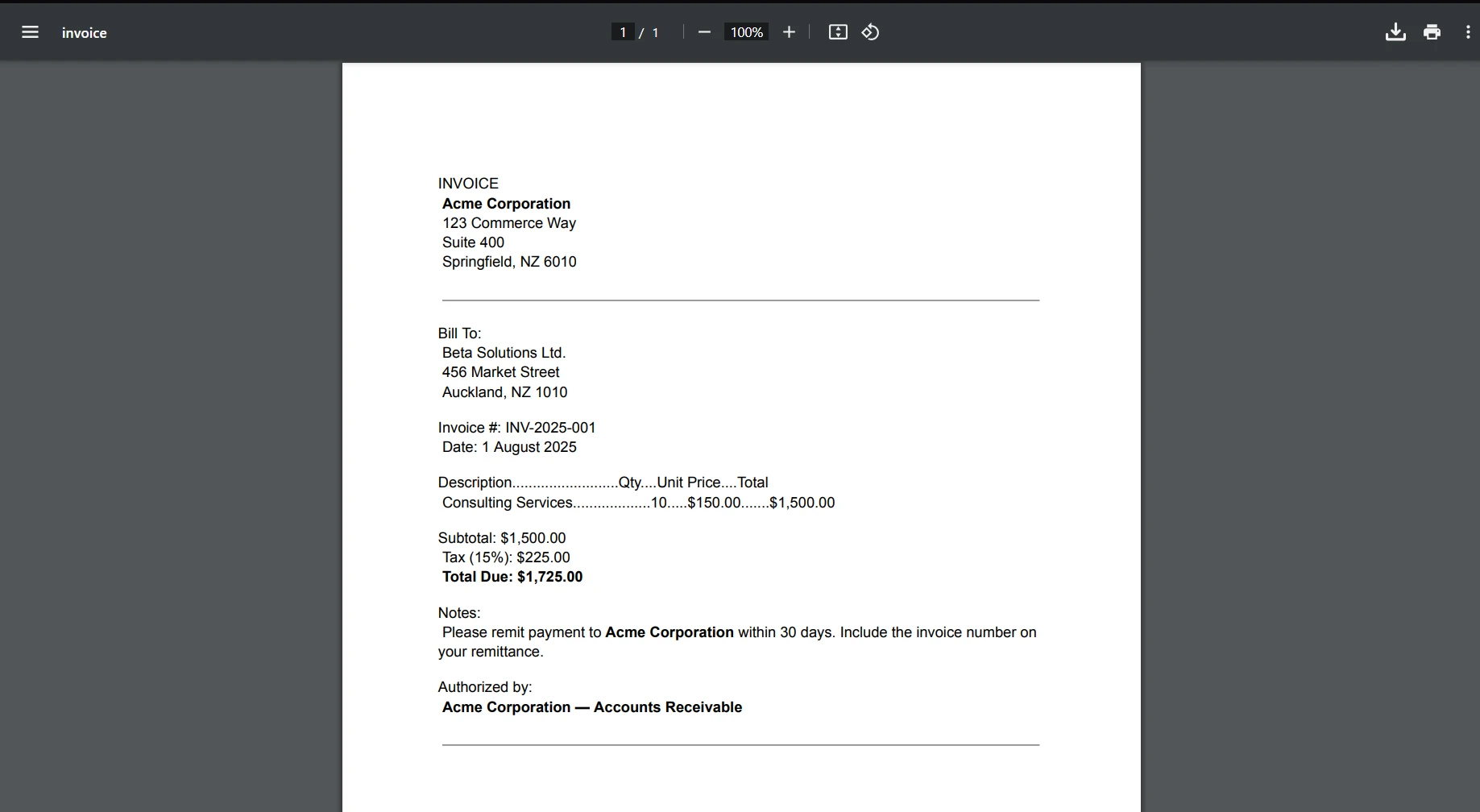
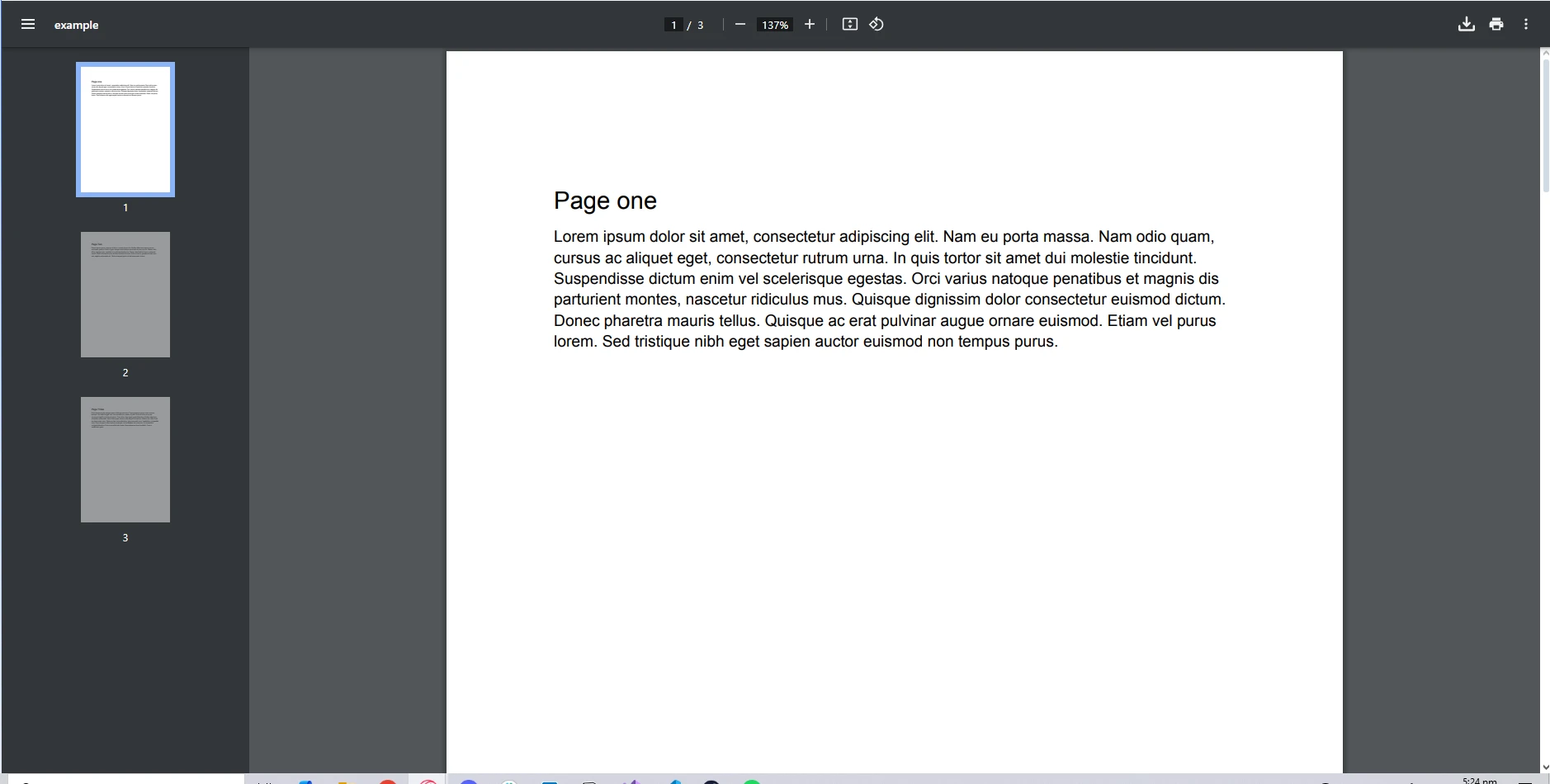
**Eingabe PDF:**
**Konsolenausgabe:**
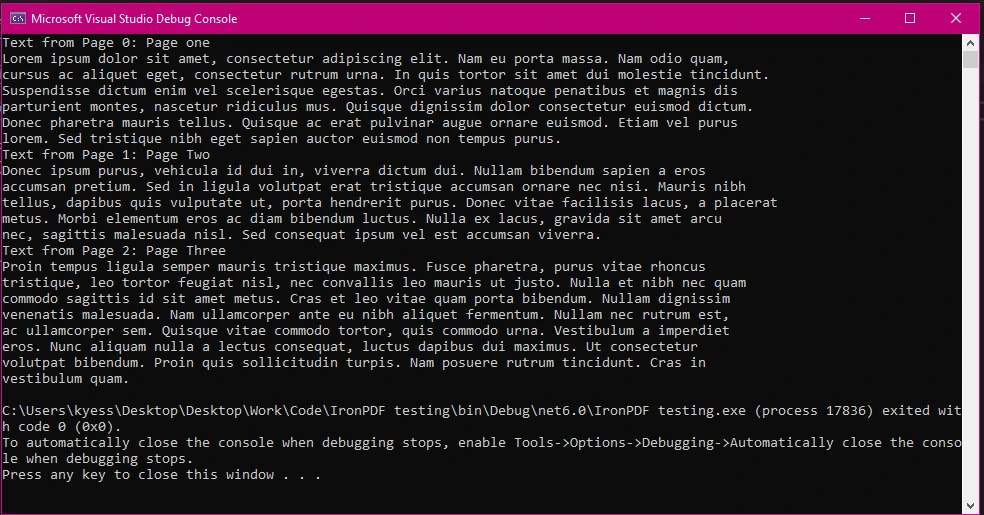
In diesem Beispiel laden wir ein PDF-Dokument, iterieren durch seine Seiten und wandeln jede Seite in **PdfPage** um, um Textinhalt zu extrahieren. Dies zeigt, wie Casting es Ihnen ermöglicht, mit den spezifischen Eigenschaften und Methoden der IronPDF-Klassen zu arbeiten.
## Best Practices for Casting in C#
### Umgehung der InvalidCastException
Beim Casting ist es wichtig, sicherzustellen, dass die Konvertierung gültig ist, um eine InvalidCastException zur Laufzeit zu vermeiden. Hier sind einige bewährte Verfahren:
1. **Verwenden Sie das Schlüsselwort `as`:** Dieses Schlüsselwort ermöglicht es Ihnen, einen Typecast zu versuchen, ohne eine Ausnahme auszulösen, wenn es fehlschlägt. Stattdessen gibt es null zurück.
```csharp
PdfPage pdfPage = page as PdfPage; // Safe cast
if (pdfPage != null)
{
// Proceed with pdfPage
}
```
2. **Typüberprüfung mit `is`:** Vor dem Typecasting können Sie den Typ des Objekts mit dem Schlüsselwort `is` überprüfen.
```csharp
if (page is PdfPage)
{
PdfPage pdfPage = (PdfPage)page; // Safe cast after type check
}
```
3. **Benutzerdefinierte Konvertierungen:** C# ermöglicht es Entwicklern, ihre eigenen Umwandlungsregeln für benutzerdefinierte Klassen durch benutzerdefinierte Konvertierungen zu definieren. Dies kann besonders nützlich sein, wenn Sie eine intuitivere Möglichkeit der Konvertierung zwischen verschiedenen benutzerdefinierten Typen schaffen möchten.
```csharp
public class MyCustomType
{
public static explicit operator MyCustomType(int value)
{
return new MyCustomType(/* conversion logic */);
}
}
int myInt = 5;
MyCustomType myCustomType = (MyCustomType)myInt; // Using explicit user-defined conversion
```
### Erwägungen zur Leistung
Obwohl Casting im Allgemeinen effizient ist, kann übermäßiges oder unnötiges Casting zu Performance-Problemen führen, insbesondere in Szenarien mit großen Sammlungen oder komplexen Objekten. Um die Leistung zu optimieren:
* Minimieren Sie das Casting, indem Sie wann immer möglich mit den spezifischsten Typen arbeiten.
* Vermeiden Sie Casting in leistungskritischen Schleifen und speichern Sie Ergebnisse, wo möglich.
* Nutzen Sie eingebauter Methoden zur Typkonvertierung, wenn möglich, da diese oft eine optimiertere Leistung bieten.
## Abschluss
Casting ist ein wesentlicher Aspekt der C#-Programmierung, insbesondere bei der Arbeit mit Bibliotheken wie IronPDF zur PDF-Bearbeitung. Durch das Verständnis von implizitem und explizitem Casting sowie durch die Anwendung bewährter Verfahren können Sie Ihre Fähigkeit zur Verwaltung von PDF-Objekten effektiv verbessern.
Die Verwendung der Funktionen von IronPDF mit richtigem Casting ermöglicht optimierte Arbeitsabläufe, wodurch Sie PDF-Inhalte mit Leichtigkeit und Präzision bearbeiten können. Um die umfangreiche Feature-Palette von IronPDF selbst zu erkunden, sollten Sie unbedingt die [kostenlose Testversion](trial-license) ausprobieren.
Casting in C# ist ein leistungsstarkes Feature, das es Entwicklern ermöglicht, eine Variable eines Datentyps in einen anderen zu konvertieren. Es spielt eine entscheidende Rolle in der objektorientierten Programmierung, insbesondere beim Umgang mit Vererbungshierarchien oder bei der Arbeit mit Schnittstellen. Beim Einsatz von Bibliotheken wie IronPDF zur PDF-Bearbeitung wird das Verständnis des Castings unerlässlich, um die verschiedenen Arten von PDF-Elementen und -Operationen effektiv zu verwalten.
In diesem Artikel werden wir das Konzept des Castings in C#, seine Bedeutung und die Anwendung bei der Arbeit mit IronPDF untersuchen. Am Ende werden Sie sehen, wie die Nutzung des Castings Ihre Fähigkeiten zur PDF-Verarbeitung verbessern und Ihren Entwicklungsprozess rationalisieren kann. Wir empfehlen Ihnen, die kostenlose Testversion von IronPDF auszuprobieren, um diese Vorteile aus erster Hand zu erleben.
Understanding Casting in C#
Implizites vs. explizites Casting
In C# kann Casting grundsätzlich in zwei Typen unterteilt werden: implizite Konvertierung und explizite Konvertierung.
Implizite Konvertierung: Dies tritt auf, wenn eine Konvertierung automatisch vom Compiler durchgeführt wird. Es ist sicher und führt nicht zu Datenverlust. Zum Beispiel ist die Konvertierung eines kleineren Datentyps (wie einer Ganzzahlvariablen) in einen größeren Typ (wie eine double-Variable) implizit:
int myInt = 10; // Integer variabledouble myDouble = myInt; // Implicit casting from int to double
int myInt = 10; // Integer variable
double myDouble = myInt; // Implicit casting from int to double
Dim myInt AsInteger = 10 ' Integer variableDim myDouble AsDouble = myInt ' Implicit casting from int to double
Dim myInt As Integer = 10 ' Integer variable
Dim myDouble As Double = myInt ' Implicit casting from int to double
Dieser Prozess wird oft als automatische Konvertierung bezeichnet, da der C# Compiler ihn ohne explizite Anweisung vom Entwickler durchführt.
Explizite Konvertierung: Dies erfordert eine Typumwandlung und ist notwendig, wenn von einem größeren Typ in einen kleineren Typ konvertiert wird, da es sonst zu Datenverlusten kommen kann. Zum Beispiel:
double myDouble = 9.78;int myInt = (int)myDouble; // Explicit casting from double to int
double myDouble = 9.78;
int myInt = (int)myDouble; // Explicit casting from double to int
ImportsSystemDim myDouble AsDouble = 9.78Dim myInt AsInteger = CInt(Math.Truncate(myDouble)) ' Explicit casting from double to int
Imports System

Dim myDouble As Double = 9.78
Dim myInt As Integer = CInt(Math.Truncate(myDouble)) ' Explicit casting from double to int
In diesem Fall muss der Entwickler angeben, dass er die Daten in einen anderen Typ konvertieren möchte, daher der Begriff explizites Typ-Casting.
Gängige Casting-Szenarien
Casting wird häufig in Szenarien mit Basisklassen und abgeleiteten Klassen verwendet. Zum Beispiel können Sie bei der Arbeit mit einer Klassenhierarchie ein Objekt einer abgeleiteten Klasse in den Typ seiner Basisklasse umwandeln:
class Base { }class Derived : Base { }Derived derived = new Derived();Base baseRef = derived; // Implicit casting to base class
class Base { }
class Derived : Base { }
Derived derived = new Derived();
Base baseRef = derived; // Implicit casting to base class
Friend Class BaseEnd ClassFriend Class DerivedInheritsBaseEnd ClassPrivate derived As New Derived()Private baseRef AsBase = derived ' Implicit casting to base class
Friend Class Base
End Class
Friend Class Derived
	Inherits Base

End Class
Private derived As New Derived()
Private baseRef As Base = derived ' Implicit casting to base class
Bei der Verwendung von IronPDF ist Casting unerlässlich, wenn es um verschiedene PDF-bezogene Klassen geht, wie z.B. wenn Sie ein generisches PDF-Objekt in einen spezifischeren Typ umwandeln möchten, um auf bestimmte Eigenschaften oder Methoden zuzugreifen.
Gießen mit IronPDF
Installation von IronPDF
Um IronPDF zu verwenden, müssen Sie es zuerst installieren. Wenn es bereits installiert ist, können Sie zum nächsten Abschnitt übergehen; Andernfalls behandeln die folgenden Schritte die Installation der IronPDF-Bibliothek.
Über die NuGet-Paketmanager-Konsole
Um IronPDF über die NuGet-Paketmanager-Konsole zu installieren, öffnen Sie Visual Studio und navigieren Sie zur Paketmanager-Konsole. Führen Sie dann den folgenden Befehl aus:
PM > Install-Package IronPdf
Install-Package IronPdf
Über den NuGet Package Manager für Solution
Öffnen Sie Visual Studio, gehen Sie zu "Tools -> NuGet-Paketmanager -> NuGet-Pakete für die Lösung verwalten" und suchen Sie nach IronPDF. Von hier aus müssen Sie nur Ihr Projekt auswählen und auf "Installieren" klicken, und IronPDF wird zu Ihrem Projekt hinzugefügt.
Sobald Sie IronPDF installiert haben, müssen Sie nur noch die richtige using-Anweisung zu Beginn Ihres Codes hinzufügen, um IronPDF verwenden zu können:
using IronPdf;
using IronPdf;
ImportsIronPdf
Imports IronPdf
Arbeiten mit PDF-Dokumentenobjekten
IronPDF bietet mehrere Klassen zur Bearbeitung von PDF-Dokumenten, wie PdfDocument, ChromePdfRenderer und PdfPage. Das Verständnis, wie diese Typen durch Casting interagieren, ist entscheidend für eine effektive PDF-Bearbeitung.
Zum Beispiel haben Sie möglicherweise eine Sammlung von generischen PdfDocument-Objekten und müssen mit einem bestimmten PdfPage-Objekt arbeiten. Dies können Sie durch Casting erreichen:
PdfDocument pdfDoc = new PdfDocument(210, 297);PdfPage page = (PdfPage)pdfDoc.Pages[0]; // Casting a generic PDF page to a specific type
PdfDocument pdfDoc = new PdfDocument(210, 297);
PdfPage page = (PdfPage)pdfDoc.Pages[0]; // Casting a generic PDF page to a specific type
Dim pdfDoc As New PdfDocument(210, 297)Dim page AsPdfPage = CType(pdfDoc.Pages(0), PdfPage) ' Casting a generic PDF page to a specific type
Dim pdfDoc As New PdfDocument(210, 297)
Dim page As PdfPage = CType(pdfDoc.Pages(0), PdfPage) ' Casting a generic PDF page to a specific type
Dieses Casting ermöglicht es Ihnen, auf Eigenschaften und Methoden zuzugreifen, die spezifisch für PdfPage sind, wodurch Sie mehr Kontrolle über den PDF-Inhalt erhalten.
Beispiel: Casting in Aktion
Schauen wir uns das folgende Beispiel an, in dem wir Text aus einer PDF-Datei extrahieren und Objekte entsprechend umwandeln müssen:
using IronPdf;using IronPdf.Pages;using System;public static voidMain(string[] args){ PdfDocument pdf = PdfDocument.FromFile("example.pdf"); foreach (PdfPage page in pdf.Pages) { PdfPage pdfPage = (PdfPage)page; string text = pdfPage.Text;Console.WriteLine($"Text from Page {pdfPage.PageIndex}: {text}"); }}
using IronPdf;
using IronPdf.Pages;
using System;

public static void Main(string[] args)
{
    PdfDocument pdf = PdfDocument.FromFile("example.pdf");
    foreach (PdfPage page in pdf.Pages)
    {
        PdfPage pdfPage = (PdfPage)page;
        string text = pdfPage.Text;
        Console.WriteLine($"Text from Page {pdfPage.PageIndex}: {text}");
    }
}
ImportsIronPdfImportsIronPdf.PagesImportsSystemPublicShared Sub Main(ByVal args() AsString) Dim pdf AsPdfDocument = PdfDocument.FromFile("example.pdf") For Each page AsPdfPageIn pdf.Pages Dim pdfPage AsPdfPage = CType(page, PdfPage) Dim text AsString = pdfPage.TextConsole.WriteLine($"Text from Page {pdfPage.PageIndex}: {text}") Next pageEnd Sub
Imports IronPdf
Imports IronPdf.Pages
Imports System

Public Shared Sub Main(ByVal args() As String)
	Dim pdf As PdfDocument = PdfDocument.FromFile("example.pdf")
	For Each page As PdfPage In pdf.Pages
		Dim pdfPage As PdfPage = CType(page, PdfPage)
		Dim text As String = pdfPage.Text
		Console.WriteLine($"Text from Page {pdfPage.PageIndex}: {text}")
	Next page
End Sub
Eingabe PDF:
Konsolenausgabe:
In diesem Beispiel laden wir ein PDF-Dokument, iterieren durch seine Seiten und wandeln jede Seite in PdfPage um, um Textinhalt zu extrahieren. Dies zeigt, wie Casting es Ihnen ermöglicht, mit den spezifischen Eigenschaften und Methoden der IronPDF-Klassen zu arbeiten.
Best Practices for Casting in C#
Umgehung der InvalidCastException
Beim Casting ist es wichtig, sicherzustellen, dass die Konvertierung gültig ist, um eine InvalidCastException zur Laufzeit zu vermeiden. Hier sind einige bewährte Verfahren:
Verwenden Sie das Schlüsselwort as: Dieses Schlüsselwort ermöglicht es Ihnen, einen Typecast zu versuchen, ohne eine Ausnahme auszulösen, wenn es fehlschlägt. Stattdessen gibt es null zurück.
PdfPage pdfPage = page as PdfPage; // Safe castif (pdfPage != null){ // Proceed with pdfPage}
PdfPage pdfPage = page as PdfPage; // Safe cast
if (pdfPage != null)
{
    // Proceed with pdfPage
}
Dim pdfPage AsPdfPage = TryCast(page, PdfPage) ' Safe castIf pdfPage IsNot Nothing Then ' Proceed with pdfPageEnd If
Dim pdfPage As PdfPage = TryCast(page, PdfPage) ' Safe cast
If pdfPage IsNot Nothing Then
	' Proceed with pdfPage
End If
Typüberprüfung mit is: Vor dem Typecasting können Sie den Typ des Objekts mit dem Schlüsselwort is überprüfen.
if (page is PdfPage){ PdfPage pdfPage = (PdfPage)page; // Safe cast after type check}
if (page is PdfPage)
{
    PdfPage pdfPage = (PdfPage)page; // Safe cast after type check
}
IfTypeOf page IsPdfPageThen Dim pdfPage AsPdfPage = CType(page, PdfPage) ' Safe cast after type checkEnd If
If TypeOf page Is PdfPage Then
	Dim pdfPage As PdfPage = CType(page, PdfPage) ' Safe cast after type check
End If
Benutzerdefinierte Konvertierungen: C# ermöglicht es Entwicklern, ihre eigenen Umwandlungsregeln für benutzerdefinierte Klassen durch benutzerdefinierte Konvertierungen zu definieren. Dies kann besonders nützlich sein, wenn Sie eine intuitivere Möglichkeit der Konvertierung zwischen verschiedenen benutzerdefinierten Typen schaffen möchten.
public class MyCustomType{ public static explicit operator MyCustomType(int value) { return new MyCustomType(/* conversion logic */); }}int myInt = 5;MyCustomType myCustomType = (MyCustomType)myInt; // Using explicit user-defined conversion
public class MyCustomType
{
    public static explicit operator MyCustomType(int value)
    {
        return new MyCustomType(/* conversion logic */);
    }
}

int myInt = 5;
MyCustomType myCustomType = (MyCustomType)myInt; // Using explicit user-defined conversion
Public Class MyCustomType PublicSharedNarrowingOperatorCType(ByVal value AsInteger) AsMyCustomType Return New MyCustomType()EndOperatorEnd ClassPrivate myInt AsInteger = 5Private myCustomType AsMyCustomType = CType(myInt, MyCustomType) ' Using explicit user-defined conversion
Public Class MyCustomType
	Public Shared Narrowing Operator CType(ByVal value As Integer) As MyCustomType
		Return New MyCustomType()
	End Operator
End Class

Private myInt As Integer = 5
Private myCustomType As MyCustomType = CType(myInt, MyCustomType) ' Using explicit user-defined conversion
Erwägungen zur Leistung
Obwohl Casting im Allgemeinen effizient ist, kann übermäßiges oder unnötiges Casting zu Performance-Problemen führen, insbesondere in Szenarien mit großen Sammlungen oder komplexen Objekten. Um die Leistung zu optimieren:
Minimieren Sie das Casting, indem Sie wann immer möglich mit den spezifischsten Typen arbeiten.
Vermeiden Sie Casting in leistungskritischen Schleifen und speichern Sie Ergebnisse, wo möglich.
Nutzen Sie eingebauter Methoden zur Typkonvertierung, wenn möglich, da diese oft eine optimiertere Leistung bieten.
Abschluss
Casting ist ein wesentlicher Aspekt der C#-Programmierung, insbesondere bei der Arbeit mit Bibliotheken wie IronPDF zur PDF-Bearbeitung. Durch das Verständnis von implizitem und explizitem Casting sowie durch die Anwendung bewährter Verfahren können Sie Ihre Fähigkeit zur Verwaltung von PDF-Objekten effektiv verbessern.
Die Verwendung der Funktionen von IronPDF mit richtigem Casting ermöglicht optimierte Arbeitsabläufe, wodurch Sie PDF-Inhalte mit Leichtigkeit und Präzision bearbeiten können. Um die umfangreiche Feature-Palette von IronPDF selbst zu erkunden, sollten Sie unbedingt die kostenlose Testversion ausprobieren.
Jacob Mellor ist Chief Technology Officer bei Iron Software und ein visionärer Ingenieur, der Pionierarbeit in der C# PDF-Technologie leistet. Als der ursprüngliche Entwickler hinter der Kern-Codebasis von Iron Software hat er die Produktarchitektur des Unternehmens seit seiner Gründung geprägt und es zusammen mit CEO Cameron Rimington in ein Unternehmen mit mehr als 50 Mitarbeitern verwandelt, das die NASA, Tesla und globale Regierungsbehörden beliefert.