OAuth2 ist ein leistungsstarkes Protokoll zur Sicherung Ihrer Webanwendungen, indem es die Authentifizierung und Autorisierung von Benutzern verwaltet. Im Bereich der C#-Entwicklung kann das Verständnis von OAuth2 die Sicherheit und Funktionalität Ihrer Anwendungen erheblich verbessern.
Dieser Leitfaden ist auf Anfänger zugeschnitten, mit Fokus auf Schlüsselkonzepte, praktische Beispiele und leicht verständliche Erklärungen. Wir lernen auch einen Anwendungsfall kennen, um OAuth2 mit der IronPDF-Bibliothek zu verwenden.
Verständnis von OAuth2 und seiner Bedeutung
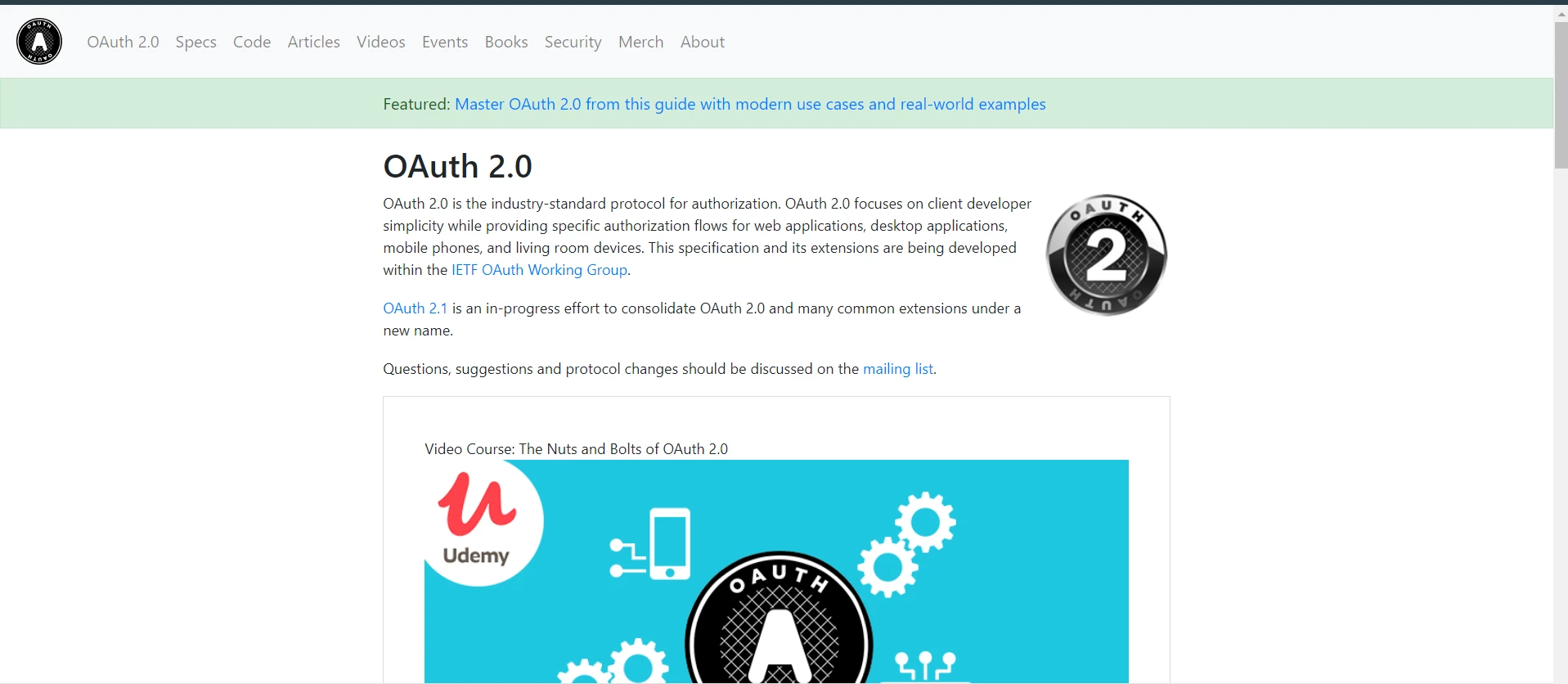
OAuth2 ist ein Protokoll, das es einer Client-Anwendung ermöglicht, im Auftrag eines Benutzers Zugriff auf Ressourcen zu beantragen, die von einem Autorisierungsserver gehostet werden. Es ist eine gängige Methode, um die Authentifizierung und Autorisierung von Benutzern in modernen Webanwendungen zu handhaben.
Das Hauptziel von OAuth2 ist es, sicheren und effektiven Zugriff auf Ressourcen zu ermöglichen, ohne die Anmeldeinformationen des Benutzers (wie Benutzername und Passwort) direkt mit der Client-Anwendung zu teilen.
Schlüsselkonzepte von OAuth2
Bevor wir in die Implementierung eintauchen, lassen Sie uns einige grundlegende OAuth2-Begriffe klären:
- Clientanwendung: Die Anwendung, die Zugriff auf das Benutzerkonto anfordert.
- Autorisierungsserver: Der Server, der den Benutzer authentifiziert und Zugriffstoken für die Clientanwendung ausgibt.
- Zugriffstoken: Ein Token, das der Clientanwendung für eine begrenzte Zeit Zugriff auf das Benutzerkonto gewährt.
- Aktualisierungstoken: Ein Token, das verwendet wird, um ein neues Zugriffstoken zu erhalten, wenn das aktuelle abläuft, ohne dass die Anmeldeinformationen des Benutzers erneut benötigt werden.
- Client-ID und Client-Geheimnis: Anmeldeinformationen, die die Client-Anwendung gegenüber dem Autorisierungsserver identifizieren.
- Umleitungs-URI: Eine URI, die der Autorisierungsserver dem Benutzer sendet, nachdem er der Clientanwendung den Zugriff gewährt oder verweigert hat.
- Autorisierungscode-Ablauf: Eine sichere Methode, bei der die Clientanwendung als Zwischenschritt einen Autorisierungscode erhält, bevor sie diesen gegen ein Zugriffstoken eintauscht.
Implementierung von OAuth2 in C#: Ein einfaches Beispiel
Erstellen wir eine einfache C#-Anwendung, die OAuth2 zur Benutzer-Authentifizierung verwendet. Dieses Beispiel führt Sie durch die Einrichtung eines OAuth2-Clients, das Abrufen eines Zugriffstokens und das Stellen einer Anfrage an eine geschützte Ressource.
Einrichten des OAuth2-Clients
Zunächst müssen Sie Ihre C#-Anwendung bei dem OAuth2-Autorisierungsserver registrieren. Dieser Prozess variiert je nach Server, aber normalerweise erhalten Sie eine Client-ID und ein Client-Geheimnis, die für den OAuth2-Fluss entscheidend sind.
Als erster Schritt richten Sie Ihre Client-Anmeldeinformationen wie Client-ID und Client-Geheimnis ein. Hier ist der Beispielcode:
// Define your client credentials
class Program
{
    private static string clientId = "your-client-id"; // Your client ID
    private static string clientSecret = "your-client-secret"; // Your client secret
    private static string redirectUri = "your-redirect-uri"; // Your redirect URI
    static void Main(string[] args)
    {
        // OAuth2 implementation will go here
    }
}
// Define your client credentials
class Program
{
    private static string clientId = "your-client-id"; // Your client ID
    private static string clientSecret = "your-client-secret"; // Your client secret
    private static string redirectUri = "your-redirect-uri"; // Your redirect URI
    static void Main(string[] args)
    {
        // OAuth2 implementation will go here
    }
}
' Define your client credentials
Friend Class Program
Private Shared clientId As String = "your-client-id" ' Your client ID
Private Shared clientSecret As String = "your-client-secret" ' Your client secret
Private Shared redirectUri As String = "your-redirect-uri" ' Your redirect URI
Shared Sub Main(ByVal args() As String)
' OAuth2 implementation will go here
End Sub
End Class
' Define your client credentials
Friend Class Program
	Private Shared clientId As String = "your-client-id" ' Your client ID
	Private Shared clientSecret As String = "your-client-secret" ' Your client secret
	Private Shared redirectUri As String = "your-redirect-uri" ' Your redirect URI
	Shared Sub Main(ByVal args() As String)
		' OAuth2 implementation will go here
	End Sub
End Class
Schritt 2: Anforderung der Benutzerautorisierung
Um den OAuth2-Fluss zu initiieren, leiten Sie den Benutzer zum Autorisierungsendpunkt des Autorisierungsservers um. Hier ist, wie die URL für die Autorisierungsanfrage konstruiert wird:
static void Main(string[] args)
{
    var authorizationEndpoint = "https://authorization-server.com/auth"; // Authorization server endpoint
    var responseType = "code"; // Response type for authorization
    var scope = "email profile"; // Scopes for the authorization request
    var authorizationUrl = $"{authorizationEndpoint}?response_type={responseType}&client_id={clientId}&redirect_uri={redirectUri}&scope={scope}";
    // Redirect the user to authorizationUrl
}
static void Main(string[] args)
{
    var authorizationEndpoint = "https://authorization-server.com/auth"; // Authorization server endpoint
    var responseType = "code"; // Response type for authorization
    var scope = "email profile"; // Scopes for the authorization request
    var authorizationUrl = $"{authorizationEndpoint}?response_type={responseType}&client_id={clientId}&redirect_uri={redirectUri}&scope={scope}";
    // Redirect the user to authorizationUrl
}
Shared Sub Main(ByVal args() As String)
Dim authorizationEndpoint = "https://authorization-server.com/auth" ' Authorization server endpoint
Dim responseType = "code" ' Response type for authorization
Dim scope = "email profile" ' Scopes for the authorization request
Dim authorizationUrl = $"{authorizationEndpoint}?response_type={responseType}&client_id={clientId}&redirect_uri={redirectUri}&scope={scope}"
' Redirect the user to authorizationUrl
End Sub
Shared Sub Main(ByVal args() As String)
	Dim authorizationEndpoint = "https://authorization-server.com/auth" ' Authorization server endpoint
	Dim responseType = "code" ' Response type for authorization
	Dim scope = "email profile" ' Scopes for the authorization request
	Dim authorizationUrl = $"{authorizationEndpoint}?response_type={responseType}&client_id={clientId}&redirect_uri={redirectUri}&scope={scope}"
	' Redirect the user to authorizationUrl
End Sub
Schritt 3: Umgang mit der Autorisierungsantwort
Nachdem der Benutzer die Erlaubnis erteilt oder verweigert hat, leitet der Autorisierungsserver ihn mit einem Autorisierungscode oder einer Fehlermeldung zurück zu Ihrer Anwendung. Sie müssen diesen Code aus den Abfrageparametern der Weiterleitungs-URI erfassen.
Schritt 4: Austauschen des Autorisierungscodes
Nun tauschen Sie den Autorisierungscode gegen ein Zugriffstoken. Dies erfordert eine POST-Anfrage an den Token-Endpunkt des Autorisierungsservers.
using System.IO;
using System.Net;
using System.Text;
using System.Threading.Tasks;

// Method to exchange authorization code for an access token
public static async Task<string> ExchangeAuthorizationCodeForAccessToken(string authorizationCode)
{
    var tokenEndpoint = "https://authorization-server.com/token"; // Token endpoint
    var postData = $"grant_type=authorization_code&code={authorizationCode}&redirect_uri={redirectUri}&client_id={clientId}&client_secret={clientSecret}";
    var data = Encoding.ASCII.GetBytes(postData);
    var request = WebRequest.Create(tokenEndpoint);
    request.Method = "POST"; // Use post method to request the access token
    request.ContentType = "application/x-www-form-urlencoded"; // Content type
    request.ContentLength = data.Length;
    using (var stream = request.GetRequestStream())
    {
        stream.Write(data, 0, data.Length);
    }
    var response = (HttpWebResponse)request.GetResponse();
    var responseString = new StreamReader(response.GetResponseStream()).ReadToEnd();
    // Extract and return the access token from the response
    var token = ExtractAccessTokenFromResponse(responseString);
    return token;
}
using System.IO;
using System.Net;
using System.Text;
using System.Threading.Tasks;

// Method to exchange authorization code for an access token
public static async Task<string> ExchangeAuthorizationCodeForAccessToken(string authorizationCode)
{
    var tokenEndpoint = "https://authorization-server.com/token"; // Token endpoint
    var postData = $"grant_type=authorization_code&code={authorizationCode}&redirect_uri={redirectUri}&client_id={clientId}&client_secret={clientSecret}";
    var data = Encoding.ASCII.GetBytes(postData);
    var request = WebRequest.Create(tokenEndpoint);
    request.Method = "POST"; // Use post method to request the access token
    request.ContentType = "application/x-www-form-urlencoded"; // Content type
    request.ContentLength = data.Length;
    using (var stream = request.GetRequestStream())
    {
        stream.Write(data, 0, data.Length);
    }
    var response = (HttpWebResponse)request.GetResponse();
    var responseString = new StreamReader(response.GetResponseStream()).ReadToEnd();
    // Extract and return the access token from the response
    var token = ExtractAccessTokenFromResponse(responseString);
    return token;
}
Imports System.IO
Imports System.Net
Imports System.Text
Imports System.Threading.Tasks
' Method to exchange authorization code for an access token
Public Shared Async Function ExchangeAuthorizationCodeForAccessToken(ByVal authorizationCode As String) As Task(Of String)
Dim tokenEndpoint = "https://authorization-server.com/token" ' Token endpoint
Dim postData = $"grant_type=authorization_code&code={authorizationCode}&redirect_uri={redirectUri}&client_id={clientId}&client_secret={clientSecret}"
Dim data = Encoding.ASCII.GetBytes(postData)
Dim request = WebRequest.Create(tokenEndpoint)
request.Method = "POST" ' Use post method to request the access token
request.ContentType = "application/x-www-form-urlencoded" ' Content type
request.ContentLength = data.Length
Using stream = request.GetRequestStream()
stream.Write(data, 0, data.Length)
End Using
Dim response = CType(request.GetResponse(), HttpWebResponse)
Dim responseString = (New StreamReader(response.GetResponseStream())).ReadToEnd()
' Extract and return the access token from the response
Dim token = ExtractAccessTokenFromResponse(responseString)
Return token
End Function
Imports System.IO
Imports System.Net
Imports System.Text
Imports System.Threading.Tasks

' Method to exchange authorization code for an access token
Public Shared Async Function ExchangeAuthorizationCodeForAccessToken(ByVal authorizationCode As String) As Task(Of String)
	Dim tokenEndpoint = "https://authorization-server.com/token" ' Token endpoint
	Dim postData = $"grant_type=authorization_code&code={authorizationCode}&redirect_uri={redirectUri}&client_id={clientId}&client_secret={clientSecret}"
	Dim data = Encoding.ASCII.GetBytes(postData)
	Dim request = WebRequest.Create(tokenEndpoint)
	request.Method = "POST" ' Use post method to request the access token
	request.ContentType = "application/x-www-form-urlencoded" ' Content type
	request.ContentLength = data.Length
	Using stream = request.GetRequestStream()
		stream.Write(data, 0, data.Length)
	End Using
	Dim response = CType(request.GetResponse(), HttpWebResponse)
	Dim responseString = (New StreamReader(response.GetResponseStream())).ReadToEnd()
	' Extract and return the access token from the response
	Dim token = ExtractAccessTokenFromResponse(responseString)
	Return token
End Function
Diese Funktion sendet eine POST-Anfrage an den Token-Endpunkt mit den erforderlichen Daten und gibt das Zugriffstoken zurück, das aus der Antwort extrahiert wurde.
Schritt 5: Autorisierte Anfragen stellen
Mit dem Zugriffstoken können Sie nun Anfragen an Ressourcen stellen, die eine Authentifizierung erfordern. Hängen Sie das Zugriffstoken als Bearer-Token an Ihre Anfragen im Authorization-Header an.
using System.Net.Http;
using System.Threading.Tasks;

// Method to make authorized requests
public static async Task<string> MakeAuthorizedRequest(string accessToken, string apiUrl)
{
    var httpClient = new HttpClient();
    httpClient.DefaultRequestHeaders.Authorization = new System.Net.Http.Headers.AuthenticationHeaderValue("Bearer", accessToken);
    // Make the request to the API
    var response = await httpClient.GetAsync(apiUrl);
    response.EnsureSuccessStatusCode();
    var responseString = await response.Content.ReadAsStringAsync();
    return responseString;
}
using System.Net.Http;
using System.Threading.Tasks;

// Method to make authorized requests
public static async Task<string> MakeAuthorizedRequest(string accessToken, string apiUrl)
{
    var httpClient = new HttpClient();
    httpClient.DefaultRequestHeaders.Authorization = new System.Net.Http.Headers.AuthenticationHeaderValue("Bearer", accessToken);
    // Make the request to the API
    var response = await httpClient.GetAsync(apiUrl);
    response.EnsureSuccessStatusCode();
    var responseString = await response.Content.ReadAsStringAsync();
    return responseString;
}
Imports System.Net.Http
Imports System.Threading.Tasks
' Method to make authorized requests
Public Shared Async Function MakeAuthorizedRequest(ByVal accessToken As String, ByVal apiUrl As String) As Task(Of String)
Dim httpClient As New HttpClient()
httpClient.DefaultRequestHeaders.Authorization = New System.Net.Http.Headers.AuthenticationHeaderValue("Bearer", accessToken)
' Make the request to the API
Dim response = Await httpClient.GetAsync(apiUrl)
response.EnsureSuccessStatusCode()
Dim responseString = Await response.Content.ReadAsStringAsync()
Return responseString
End Function
Imports System.Net.Http
Imports System.Threading.Tasks

' Method to make authorized requests
Public Shared Async Function MakeAuthorizedRequest(ByVal accessToken As String, ByVal apiUrl As String) As Task(Of String)
	Dim httpClient As New HttpClient()
	httpClient.DefaultRequestHeaders.Authorization = New System.Net.Http.Headers.AuthenticationHeaderValue("Bearer", accessToken)
	' Make the request to the API
	Dim response = Await httpClient.GetAsync(apiUrl)
	response.EnsureSuccessStatusCode()
	Dim responseString = Await response.Content.ReadAsStringAsync()
	Return responseString
End Function
Einführung in IronPDF
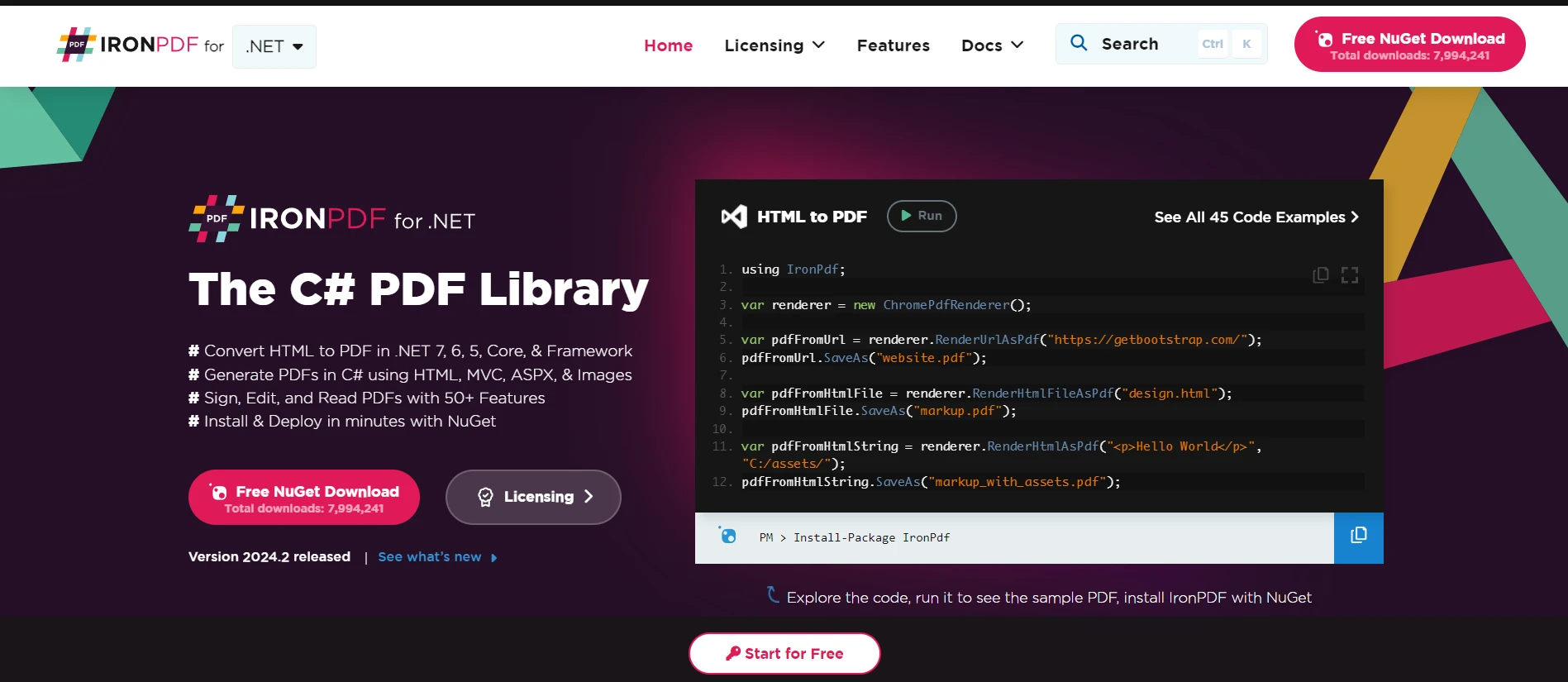
IronPDF ist eine vielseitige Bibliothek für C#-Entwickler, die das Erstellen, Bearbeiten und Rendern von PDF-Dokumenten direkt innerhalb von .NET-Anwendungen ermöglicht. Dieses leistungsstarke Werkzeug vereinfacht die Arbeit mit PDF-Dateien und macht es einfach, komplexe Dokumente zu erstellen, HTML mühelos in PDF zu konvertieren, Text aus PDFs zu extrahieren und vieles mehr. Die einfache API ermöglicht es Entwicklern, PDF-Funktionen schnell in ihre Anwendungen zu integrieren, ohne tiefgehende Kenntnisse der PDF-Spezifikationen zu benötigen.
IronPDF zeichnet sich in der HTML-zu-PDF-Konvertierung aus und behält Layouts und Stile bei. Diese Funktion ermöglicht die Erzeugung von PDFs aus Webinhalten, was für Berichte, Rechnungen und Dokumentationen nützlich ist. Es unterstützt die Konvertierung von HTML-Dateien, URLs und HTML-Strings in PDF.
using IronPdf;

class Program
{
    static void Main(string[] args)
    {
        var renderer = new ChromePdfRenderer(); // Create an instance of the PDF renderer

        // 1. Convert HTML String to PDF
        var htmlContent = "<h1>Hello, IronPDF!</h1><p>This is a PDF from an HTML string.</p>"; // HTML content as string
        var pdfFromHtmlString = renderer.RenderHtmlAsPdf(htmlContent);
        pdfFromHtmlString.SaveAs("HTMLStringToPDF.pdf"); // Save the PDF

        // 2. Convert HTML File to PDF
        var htmlFilePath = "path_to_your_html_file.html"; // Specify the path to your HTML file
        var pdfFromHtmlFile = renderer.RenderHtmlFileAsPdf(htmlFilePath);
        pdfFromHtmlFile.SaveAs("HTMLFileToPDF.pdf"); // Save the PDF

        // 3. Convert URL to PDF
        var url = "http://ironpdf.com"; // Specify the URL
        var pdfFromUrl = renderer.RenderUrlAsPdf(url);
        pdfFromUrl.SaveAs("URLToPDF.pdf"); // Save the PDF
    }
}
using IronPdf;

class Program
{
    static void Main(string[] args)
    {
        var renderer = new ChromePdfRenderer(); // Create an instance of the PDF renderer

        // 1. Convert HTML String to PDF
        var htmlContent = "<h1>Hello, IronPDF!</h1><p>This is a PDF from an HTML string.</p>"; // HTML content as string
        var pdfFromHtmlString = renderer.RenderHtmlAsPdf(htmlContent);
        pdfFromHtmlString.SaveAs("HTMLStringToPDF.pdf"); // Save the PDF

        // 2. Convert HTML File to PDF
        var htmlFilePath = "path_to_your_html_file.html"; // Specify the path to your HTML file
        var pdfFromHtmlFile = renderer.RenderHtmlFileAsPdf(htmlFilePath);
        pdfFromHtmlFile.SaveAs("HTMLFileToPDF.pdf"); // Save the PDF

        // 3. Convert URL to PDF
        var url = "http://ironpdf.com"; // Specify the URL
        var pdfFromUrl = renderer.RenderUrlAsPdf(url);
        pdfFromUrl.SaveAs("URLToPDF.pdf"); // Save the PDF
    }
}
Imports IronPdf
Friend Class Program
Shared Sub Main(ByVal args() As String)
Dim renderer = New ChromePdfRenderer() ' Create an instance of the PDF renderer
' 1. Convert HTML String to PDF
Dim htmlContent = "<h1>Hello, IronPDF!</h1><p>This is a PDF from an HTML string.</p>" ' HTML content as string
Dim pdfFromHtmlString = renderer.RenderHtmlAsPdf(htmlContent)
pdfFromHtmlString.SaveAs("HTMLStringToPDF.pdf") ' Save the PDF
' 2. Convert HTML File to PDF
Dim htmlFilePath = "path_to_your_html_file.html" ' Specify the path to your HTML file
Dim pdfFromHtmlFile = renderer.RenderHtmlFileAsPdf(htmlFilePath)
pdfFromHtmlFile.SaveAs("HTMLFileToPDF.pdf") ' Save the PDF
' 3. Convert URL to PDF
Dim url = "http://ironpdf.com" ' Specify the URL
Dim pdfFromUrl = renderer.RenderUrlAsPdf(url)
pdfFromUrl.SaveAs("URLToPDF.pdf") ' Save the PDF
End Sub
End Class
Imports IronPdf

Friend Class Program
	Shared Sub Main(ByVal args() As String)
		Dim renderer = New ChromePdfRenderer() ' Create an instance of the PDF renderer

		' 1. Convert HTML String to PDF
		Dim htmlContent = "<h1>Hello, IronPDF!</h1><p>This is a PDF from an HTML string.</p>" ' HTML content as string
		Dim pdfFromHtmlString = renderer.RenderHtmlAsPdf(htmlContent)
		pdfFromHtmlString.SaveAs("HTMLStringToPDF.pdf") ' Save the PDF

		' 2. Convert HTML File to PDF
		Dim htmlFilePath = "path_to_your_html_file.html" ' Specify the path to your HTML file
		Dim pdfFromHtmlFile = renderer.RenderHtmlFileAsPdf(htmlFilePath)
		pdfFromHtmlFile.SaveAs("HTMLFileToPDF.pdf") ' Save the PDF

		' 3. Convert URL to PDF
		Dim url = "http://ironpdf.com" ' Specify the URL
		Dim pdfFromUrl = renderer.RenderUrlAsPdf(url)
		pdfFromUrl.SaveAs("URLToPDF.pdf") ' Save the PDF
	End Sub
End Class
Code-Beispiel: Erzeugen einer PDF-Datei aus geschütztem Inhalt
Stellen Sie sich vor, Sie haben einen Endpunkt, der nur für authentifizierte Benutzer zugänglichen HTML-Inhalt zurückgibt. Sie könnten IronPDF verwenden, um diesen HTML-Inhalt in ein PDF-Dokument zu konvertieren, indem Sie das Zugriffstoken verwenden, das über OAuth2 erhalten wurde.
Definieren wir zunächst eine Methode, um geschützten HTML-Inhalt mit einem Zugriffstoken abzurufen:
using System.Net.Http;
using System.Threading.Tasks;

// Method to fetch protected content
public static async Task<string> FetchProtectedContent(string accessToken, string apiUrl)
{
    var httpClient = new HttpClient();
    httpClient.DefaultRequestHeaders.Authorization = new System.Net.Http.Headers.AuthenticationHeaderValue("Bearer", accessToken);
    var response = await httpClient.GetAsync(apiUrl); // Make the request to the protected API
    response.EnsureSuccessStatusCode();
    return await response.Content.ReadAsStringAsync(); // Return the HTML content
}
using System.Net.Http;
using System.Threading.Tasks;

// Method to fetch protected content
public static async Task<string> FetchProtectedContent(string accessToken, string apiUrl)
{
    var httpClient = new HttpClient();
    httpClient.DefaultRequestHeaders.Authorization = new System.Net.Http.Headers.AuthenticationHeaderValue("Bearer", accessToken);
    var response = await httpClient.GetAsync(apiUrl); // Make the request to the protected API
    response.EnsureSuccessStatusCode();
    return await response.Content.ReadAsStringAsync(); // Return the HTML content
}
Imports System.Net.Http
Imports System.Threading.Tasks
' Method to fetch protected content
Public Shared Async Function FetchProtectedContent(ByVal accessToken As String, ByVal apiUrl As String) As Task(Of String)
Dim httpClient As New HttpClient()
httpClient.DefaultRequestHeaders.Authorization = New System.Net.Http.Headers.AuthenticationHeaderValue("Bearer", accessToken)
Dim response = Await httpClient.GetAsync(apiUrl) ' Make the request to the protected API
response.EnsureSuccessStatusCode()
Return Await response.Content.ReadAsStringAsync() ' Return the HTML content
End Function
Imports System.Net.Http
Imports System.Threading.Tasks

' Method to fetch protected content
Public Shared Async Function FetchProtectedContent(ByVal accessToken As String, ByVal apiUrl As String) As Task(Of String)
	Dim httpClient As New HttpClient()
	httpClient.DefaultRequestHeaders.Authorization = New System.Net.Http.Headers.AuthenticationHeaderValue("Bearer", accessToken)
	Dim response = Await httpClient.GetAsync(apiUrl) ' Make the request to the protected API
	response.EnsureSuccessStatusCode()
	Return Await response.Content.ReadAsStringAsync() ' Return the HTML content
End Function
Nun verwenden wir IronPDF, um den abgerufenen HTML-Inhalt in ein PDF-Dokument zu konvertieren:
using IronPdf;

// Method to convert HTML content to PDF
public static async Task ConvertHtmlToPdf(string accessToken, string apiUrl, string outputPdfPath)
{
    // Fetch protected content using the access token
    string htmlContent = await FetchProtectedContent(accessToken, apiUrl);
    // Use IronPDF to convert the HTML content to a PDF document
    var renderer = new IronPdf.HtmlToPdf();
    var pdf = renderer.RenderHtmlAsPdf(htmlContent);
    // Save the generated PDF to a file
    pdf.SaveAs(outputPdfPath);
}
using IronPdf;

// Method to convert HTML content to PDF
public static async Task ConvertHtmlToPdf(string accessToken, string apiUrl, string outputPdfPath)
{
    // Fetch protected content using the access token
    string htmlContent = await FetchProtectedContent(accessToken, apiUrl);
    // Use IronPDF to convert the HTML content to a PDF document
    var renderer = new IronPdf.HtmlToPdf();
    var pdf = renderer.RenderHtmlAsPdf(htmlContent);
    // Save the generated PDF to a file
    pdf.SaveAs(outputPdfPath);
}
Imports IronPdf
' Method to convert HTML content to PDF
Public Shared Async Function ConvertHtmlToPdf(ByVal accessToken As String, ByVal apiUrl As String, ByVal outputPdfPath As String) As Task
' Fetch protected content using the access token
Dim htmlContent As String = Await FetchProtectedContent(accessToken, apiUrl)
' Use IronPDF to convert the HTML content to a PDF document
Dim renderer = New IronPdf.HtmlToPdf()
Dim pdf = renderer.RenderHtmlAsPdf(htmlContent)
' Save the generated PDF to a file
pdf.SaveAs(outputPdfPath)
End Function
Imports IronPdf

' Method to convert HTML content to PDF
Public Shared Async Function ConvertHtmlToPdf(ByVal accessToken As String, ByVal apiUrl As String, ByVal outputPdfPath As String) As Task
	' Fetch protected content using the access token
	Dim htmlContent As String = Await FetchProtectedContent(accessToken, apiUrl)
	' Use IronPDF to convert the HTML content to a PDF document
	Dim renderer = New IronPdf.HtmlToPdf()
	Dim pdf = renderer.RenderHtmlAsPdf(htmlContent)
	' Save the generated PDF to a file
	pdf.SaveAs(outputPdfPath)
End Function
Im obigen Code ist FetchProtectedContent dafür verantwortlich, HTML-Inhalte aus einer geschützten Ressource mit einem OAuth2-Zugriffstoken abzurufen. Sobald der HTML-Inhalt abgerufen wurde, wird er an den HtmlToPdf-Renderer von IronPDF übergeben, um ein PDF-Dokument zu erstellen, das dann an dem angegebenen Pfad gespeichert wird.
Abschluss
Dieser Leitfaden hat die Grundlagen der Verwendung von OAuth2 in C#-Anwendungen eingeführt, wobei Schlüsselkonzepte, Begriffe und ein einfaches Implementierungsbeispiel behandelt werden. OAuth2 spielt eine wesentliche Rolle bei der Sicherung von Webanwendungen, indem es Benutzer-Authentifizierung und -Autorisierung effizient verwaltet. Während dieses Beispiel den Autorisierungscode-Fluss zeigt, unterstützt OAuth2 auch andere Flüsse, die für verschiedene Anwendungsarten geeignet sind.
Durch die Integration von IronPDF für erweiterte PDF-Manipulation können C#-Entwickler die Fähigkeiten ihrer Anwendungen erweitern, um PDF-Erstellung und -Manipulation einzuschließen, was die Funktionen für authentifizierte Benutzer bereichert. Die Benutzerfreundlichkeit und umfassenden Möglichkeiten zur PDF-Manipulation machen IronPDF zu einem hervorragenden Werkzeug for .NET-Entwickler, die mit PDF-Dateien in ihren Projekten arbeiten möchten. Es bietet eine kostenlose Testversion, um alle Funktionen zu erkunden und seine Lizenzen beginnen ab $999.