using IronPdf;

// Disable local disk access or cross-origin requests
Installation.EnableWebSecurity = true;

// Instantiate Renderer
var renderer = new ChromePdfRenderer();

// Create a PDF from a HTML string using C#
var pdf = renderer.RenderHtmlAsPdf("<h1>Hello World</h1>");

// Export to a file or Stream
pdf.SaveAs("output.pdf");

// Advanced Example with HTML Assets
// Load external html assets: Images, CSS and JavaScript.
// An optional BasePath 'C:\site\assets\' is set as the file location to load assets from
var myAdvancedPdf = renderer.RenderHtmlAsPdf("<img src='icons/iron.png'>", @"C:\site\assets\");
myAdvancedPdf.SaveAs("html-with-assets.pdf");
using IronPdf;// Disable local disk access or cross-origin requestsInstallation.EnableWebSecurity = true;// Instantiate Renderervar renderer = new ChromePdfRenderer();// Create a PDF from a HTML string using C#var pdf = renderer.RenderHtmlAsPdf("<h1>Hello World</h1>");// Export to a file or Streampdf.SaveAs("output.pdf");// Advanced Example with HTML Assets// Load external html assets: Images, CSS and JavaScript.// An optional BasePath 'C:\site\assets\' is set as the file location to load assets fromvar myAdvancedPdf = renderer.RenderHtmlAsPdf("<img src='icons/iron.png'>", @"C:\site\assets\");myAdvancedPdf.SaveAs("html-with-assets.pdf");
PM >Install-Package IronPdf
Install-Package IronPdf
ENTWICKLER-UPDATES
C# Zeichenfolgenersatz (Wie es für Entwickler funktioniert)
Egal, ob Sie neu im Programmieren sind oder einfach nur ein besseres Verständnis dafür bekommen möchten, wie man Strings in C# manipuliert, sind Sie hier genau richtig. In diesem Tutorial werden wir die `replace` Methode in C# mit nachvollziehbaren Beispielen aus dem wirklichen Leben und einer erzählerischen Herangehensweise erkunden, die es spannend und einfach nachvollziehbar machen.
## Die Grundlagen: Was ist ein String?
Bevor wir uns der "string `replace`" Methode zuwenden, lassen Sie uns zunächst die Grundlagen von Strings erkunden. Ein String ist eine Folge von Zeichen, die Buchstaben, Zahlen und Symbole enthalten kann. In C# werden Strings durch den `string` Datentyp dargestellt. Sie sind essenziell für die Handhabung von Texten in einem Programm und kommen mit einer Vielzahl an eingebauten Methoden zur Manipulation. Eine solche Methode ist die "replace"-Methode, auf die wir uns in diesem Tutorial konzentrieren werden.
## Einführung in die Replace-Methode
Stellen Sie sich vor, Sie schreiben eine Anwendung, die es Benutzern ermöglicht, einen Satz einzugeben. Ihre Anwendung muss bestimmte Wörter oder Zeichen durch neue ersetzen. Hier kommt die `replace` Methode in C# ins Spiel.
Die `replace` Methode ist eine eingebaute Funktion, die es Ihnen ermöglicht, alle Vorkommen eines bestimmten Unicode-Zeichens oder einer Teilzeichenfolge durch eine neue Zeichenfolge zu ersetzen. Angenommen, Sie haben den folgenden String: "I love ice cream." Sie möchten das Wort "ice" durch "chocolate" ersetzen, um einen neuen String zu erstellen, der lautet: "I love chocolate cream." Die replace-Methode macht diese Aufgabe einfach und effizient.
## Verwendung der Ersetzungsmethode: Eine Schritt-für-Schritt-Anleitung
Befolgen Sie diese einfachen Schritte, um die replace-Methode zu verwenden:
1. Deklarieren Sie eine String-Variable, die den Originaltext enthält.
2. Rufen Sie die `replace` Methode auf der angegebenen Zeichenfolge auf, wobei Sie das zu ersetzende Zeichen oder die zu ersetzende Teilzeichenfolge und die neue Zeichenfolge angeben.
3. Speichern Sie das Ergebnis in einer neuen String-Variable oder aktualisieren Sie den Originalstring.
Hier ist ein Codebeispiel, das diese Schritte demonstriert:
```csharp
// Declare the original text
string originalText = "I love ice cream.";

// Use the Replace method to replace 'ice' with 'chocolate'
string newText = originalText.Replace("ice", "chocolate");

// Output the modified string
Console.WriteLine(newText);
```
Dieser Codeausschnitt würde den modifizierten String ausgeben: "I love chocolate cream."
### Unterschiedliche Varianten der Ersetzungsmethode
In C# gibt es zwei überladene Versionen der replace-Methode, um unterschiedlichen Bedürfnissen gerecht zu werden. Lassen Sie uns sie genauer ansehen:
### Ersetzen eines bestimmten Unicode-Zeichens
Die erste Version der replace-Methode ermöglicht Ihnen, ein bestimmtes Unicode-Zeichen durch ein neues Zeichen zu ersetzen. Die Syntax für diese Version lautet:
```csharp
public string Replace(char oldChar, char newChar);
```
Hier ist ein Beispiel, das seine Verwendung veranschaulicht:
```csharp
// Original string with numbers
string originalText = "H3ll0 W0rld!";
// Replace '3' with 'e' and '0' with 'o'
string newText = originalText.Replace('3', 'e').Replace('0', 'o');
// Output the modified string
Console.WriteLine(newText);
```
Das Ergebnis wäre: "Hello World!"
### Ersetzen einer Teilzeichenkette
Die zweite Version der `replace` Methode erlaubt es Ihnen, eine bestimmte Teilzeichenfolge durch eine neue Zeichenfolge zu ersetzen. Die Syntax für diese Version lautet:
```csharp
public string Replace(string oldValue, string newValue);
```
Hier ist ein Beispiel, das seine Verwendung veranschaulicht:
```csharp
// Original string
string originalText = "I have a red car and a red hat.";
// Replace "red" with "blue"
string newText = originalText.Replace("red", "blue");
// Output the modified string
Console.WriteLine(newText);
```
Das Ergebnis wäre: "Ich habe ein blaues Auto und einen blauen Hut."
### Groß- und Kleinschreibung und die Ersetzungsmethode
Es ist wichtig zu beachten, dass die replace-Methode auf Groß- und Kleinschreibung achtet. Das bedeutet, dass, wenn Sie versuchen, ein bestimmtes Unicode-Zeichen oder eine Teilzeichenfolge zu ersetzen, die Schreibweise genau übereinstimmen muss. Beispielsweise betrachten Sie den folgenden Codeausschnitt:
```csharp
// Original string with mixed casing
string originalText = "Cats are great pets, but some people prefer CATS.";
// Replace uppercase "CATS" with "dogs"
string newText = originalText.Replace("CATS", "dogs");
// Output the modified string
Console.WriteLine(newText);
```
Das Ergebnis wäre: "Cats are great pets, but some people prefer dogs."
Das Ergebnis wäre: "dogs are great pets, but some people prefer dogs." Wenn Sie eine Groß- und Kleinschreibungs-ignorierende Ersetzung durchführen möchten, müssen Sie den Originalstring und den Suchstring auf eine gemeinsame Schreibweise (entweder groß oder klein) umwandeln und dann die Ersetzung ausführen. Hier ist ein Beispiel:
```csharp
// Original string
string originalText = "Cats are great pets, but some people prefer CATS.";
// Convert the original string to lowercase
string lowerCaseText = originalText.ToLower();
// Replace "cats" with "dogs" in the lowercase string
string newText = lowerCaseText.Replace("cats", "dogs");
// Output the modified string
Console.WriteLine(newText);
```
Das Ergebnis wäre: "dogs are great pets, but some people prefer dogs."
Beachten Sie, dass dieser Ansatz auch die Schreibweise des gesamten Strings ändert. Wenn Sie die ursprüngliche Groß- und Kleinschreibung beibehalten möchten, können Sie die `Regex.Replace` Methode mit dem `RegexOptions.IgnoreCase` Flag verwenden.
### Die Macht der Verkettung von Ersetzungsmethoden
Sie können auch mehrere replace-Methoden aneinanderreihen, um mehrere Ersetzungen in einer einzigen Codezeile durchzuführen. Dies ist besonders nützlich, wenn Sie mehrere Zeichen oder Teilzeichenfolgen durch verschiedene neue Strings ersetzen müssen. Hier ist ein Beispiel:
```csharp
// Original string with numbers
string originalText = "H3ll0 W0rld!";
// Replace '3' with 'e' and '0' with 'o' using chained Replace methods
string newText = originalText.Replace('3', 'e').Replace('0', 'o');
// Output the modified string
Console.WriteLine(newText);
```
Das Ergebnis wäre: "Hello World!"
### Regelmäßige Ausdrücke und die Ersetzungsmethode
Während die `replace` Methode perfekt für einfache Zeichenersatzvorgänge ist, benötigen Sie möglicherweise erweiterte Funktionen für komplexe Szenarien. In solchen Fällen können Sie reguläre Ausdrücke und die `Regex.Replace` Methode verwenden, um erweiterte Zeichenfolgenmanipulationen durchzuführen.
Die `Regex.Replace` Methode ermöglicht es Ihnen, ein Muster in der ursprünglichen Zeichenfolge zu suchen und es durch eine neue Zeichenfolge zu ersetzen. Sie können reguläre Ausdrücke verwenden, um Muster abzugleichen, Optionen wie Groß-/Kleinschreibungsunabhängigkeit anzugeben und sogar Erfassungsgruppen zu verwenden, um dynamische Ersetzungen vorzunehmen.
Hier ist ein Beispiel für die Verwendung der `Regex.Replace` Methode, um alle Vorkommen eines Musters durch eine neue Zeichenfolge zu ersetzen:
```csharp
using System.Text.RegularExpressions;
// Original text with numbers
string originalText = "100 cats, 25 dogs, and 50 birds.";
// Regular expression pattern to match one or more digits
string pattern = @"\d+";
// Replace all digit sequences with the word "many"
string newText = Regex.Replace(originalText, pattern, "many");
// Output the modified string
Console.WriteLine(newText);
```
Die Ausgabe wäre: "viele Katzen, viele Hunde und viele Vögel."
In diesem Beispiel nutzten wir das reguläre Ausdrucksmuster `\d+`, um eine beliebige Abfolge von einem oder mehreren Ziffern zu finden und sie durch das Wort "viele" zu ersetzen.
## IronPDF: Generating PDFs with String Replacement in C#
Sie können die leistungsfähige [HTML-zu-PDF-Konvertierungsfähigkeit von IronPDF](/tutorials/html-to-pdf/) in Verbindung mit der C#-string-replace-Methode nutzen, um dynamische PDF-Dokumente zu erstellen.
```csharp
using IronPdf;
class Program
{
static void Main(string[] args)
{
var renderer = new ChromePdfRenderer();
// Convert HTML String to PDF
var htmlContent = "<h1>Hello, IronPDF!</h1><p>This is a PDF from an HTML string.</p>";
var pdfFromHtmlString = renderer.RenderHtmlAsPdf(htmlContent);
pdfFromHtmlString.SaveAs("HTMLStringToPDF.pdf");
// Convert HTML File to PDF
var htmlFilePath = "path_to_your_html_file.html"; // Specify the path to your HTML file
var pdfFromHtmlFile = renderer.RenderHtmlFileAsPdf(htmlFilePath);
pdfFromHtmlFile.SaveAs("HTMLFileToPDF.pdf");
// Convert URL to PDF
var url = "http://ironpdf.com"; // Specify the URL
var pdfFromUrl = renderer.RenderUrlAsPdf(url);
pdfFromUrl.SaveAs("URLToPDF.pdf");
}
}
```
### Erste Schritte mit IronPDF
Um [IronPDF für die PDF-Generierung](/) zu verwenden, müssen Sie zunächst das IronPDF-NuGet-Paket installieren. Sie können dies tun, indem Sie den folgenden Befehl in der Paket-Manager-Konsole ausführen:
```shell
:ProductInstall
```
Oder Sie können nach "IronPDF" im NuGet-Paketmanager in Visual Studio suchen und es von dort aus installieren.
### Erstellen einer PDF-Datei mit Zeichenfolgenersetzung
Angenommen, Sie möchten einen [PDF-Bericht aus HTML mit Platzhalter-Ersetzung](/tutorials/html-to-pdf/) erstellen, der personalisierte Grüße für verschiedene Benutzer anzeigt. Sie können die C#-string-replace-Methode verwenden, um Platzhalter in einer HTML-Vorlage durch die tatsächlichen Benutzerdaten zu ersetzen und dann IronPDF verwenden, um das HTML in ein PDF-Dokument zu konvertieren.
Hier ist ein Schritt-für-Schritt-Leitfaden, wie man das macht:
Erstellen Sie eine HTML-Vorlage mit Platzhaltern für die Benutzerdaten.
```html
<!-- HTML template with placeholders -->
<!DOCTYPE html>
<html>
<head>
<title>Personalized Greeting</title>
</head>
<body>
<h1>Hello, {USERNAME}!</h1>
<p>Welcome to our platform. Your email address is {EMAIL}.</p>
</body>
</html>
```
Verwenden Sie die C#-string-replace-Methode, um die Platzhalter durch die tatsächlichen Benutzerdaten zu ersetzen.
```csharp
// Read the HTML template from a file
string htmlTemplate = File.ReadAllText("greeting_template.html");
// Replace placeholders with actual user data
string personalizedHtml = htmlTemplate.Replace("{USERNAME}", "John Doe")
.Replace("{EMAIL}", "john.doe@example.com");
```
Verwenden Sie IronPDF, um das personalisierte HTML in ein PDF-Dokument zu konvertieren.
```csharp
using IronPdf;
var renderer = new ChromePdfRenderer();
// Convert the personalized HTML to a PDF document
PdfDocument pdfDocument = renderer.RenderHtmlAsPdf(personalizedHtml);
// Save the PDF document to a file
pdfDocument.SaveAs("PersonalizedGreeting.PDF");
```
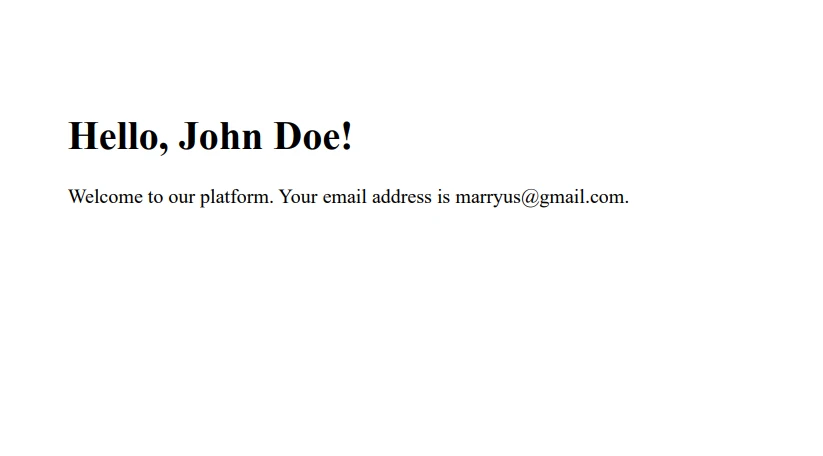
Und das war's! Sie haben erfolgreich ein personalisiertes PDF-Dokument mit der C# `replace` Methode und IronPDF erstellt.
### Abschluss
Durch die Kombination der Leistungsfähigkeit von IronPDF mit der Flexibilität der C# `replace` Methode können Sie dynamische PDF-Dokumente erstellen, die auf spezifische Benutzer oder Szenarien zugeschnitten sind. Dieser Ansatz ist nicht nur auf personalisierte Grüße beschränkt – Sie können ihn zur Erstellung von Rechnungen, Berichten, Zertifikaten und vielem mehr verwenden.
IronPDF bietet eine [kostenlose Testversion von IronPDF](trial-license) an, mit der Sie seine Möglichkeiten ohne anfängliche Investition erkunden können. Wenn Sie feststellen, dass es perfekt für Ihre PDF-Generierungsbedürfnisse geeignet ist, beginnen die Lizenzkosten bei `$liteLicense`.
Egal, ob Sie neu im Programmieren sind oder einfach nur ein besseres Verständnis dafür bekommen möchten, wie man Strings in C# manipuliert, sind Sie hier genau richtig. In diesem Tutorial werden wir die replace Methode in C# mit nachvollziehbaren Beispielen aus dem wirklichen Leben und einer erzählerischen Herangehensweise erkunden, die es spannend und einfach nachvollziehbar machen.
Die Grundlagen: Was ist ein String?
Bevor wir uns der "string replace" Methode zuwenden, lassen Sie uns zunächst die Grundlagen von Strings erkunden. Ein String ist eine Folge von Zeichen, die Buchstaben, Zahlen und Symbole enthalten kann. In C# werden Strings durch den string Datentyp dargestellt. Sie sind essenziell für die Handhabung von Texten in einem Programm und kommen mit einer Vielzahl an eingebauten Methoden zur Manipulation. Eine solche Methode ist die "replace"-Methode, auf die wir uns in diesem Tutorial konzentrieren werden.
Einführung in die Replace-Methode
Stellen Sie sich vor, Sie schreiben eine Anwendung, die es Benutzern ermöglicht, einen Satz einzugeben. Ihre Anwendung muss bestimmte Wörter oder Zeichen durch neue ersetzen. Hier kommt die replace Methode in C# ins Spiel.
Die replace Methode ist eine eingebaute Funktion, die es Ihnen ermöglicht, alle Vorkommen eines bestimmten Unicode-Zeichens oder einer Teilzeichenfolge durch eine neue Zeichenfolge zu ersetzen. Angenommen, Sie haben den folgenden String: "I love ice cream." Sie möchten das Wort "ice" durch "chocolate" ersetzen, um einen neuen String zu erstellen, der lautet: "I love chocolate cream." Die replace-Methode macht diese Aufgabe einfach und effizient.
Verwendung der Ersetzungsmethode: Eine Schritt-für-Schritt-Anleitung
Befolgen Sie diese einfachen Schritte, um die replace-Methode zu verwenden:
Deklarieren Sie eine String-Variable, die den Originaltext enthält.
Rufen Sie die replace Methode auf der angegebenen Zeichenfolge auf, wobei Sie das zu ersetzende Zeichen oder die zu ersetzende Teilzeichenfolge und die neue Zeichenfolge angeben.
Speichern Sie das Ergebnis in einer neuen String-Variable oder aktualisieren Sie den Originalstring.
Hier ist ein Codebeispiel, das diese Schritte demonstriert:
// Declare the original textstring originalText = "I love ice cream.";// Use the Replace method to replace 'ice' with 'chocolate'string newText = originalText.Replace("ice", "chocolate");// Output the modified stringConsole.WriteLine(newText);
// Declare the original text
string originalText = "I love ice cream.";

// Use the Replace method to replace 'ice' with 'chocolate'
string newText = originalText.Replace("ice", "chocolate");

// Output the modified string
Console.WriteLine(newText);
' Declare the original textDim originalText AsString = "I love ice cream."' Use the Replace method to replace 'ice' with 'chocolate'Dim newText AsString = originalText.Replace("ice", "chocolate")' Output the modified stringConsole.WriteLine(newText)
' Declare the original text
Dim originalText As String = "I love ice cream."

' Use the Replace method to replace 'ice' with 'chocolate'
Dim newText As String = originalText.Replace("ice", "chocolate")

' Output the modified string
Console.WriteLine(newText)
Dieser Codeausschnitt würde den modifizierten String ausgeben: "I love chocolate cream."
Unterschiedliche Varianten der Ersetzungsmethode
In C# gibt es zwei überladene Versionen der replace-Methode, um unterschiedlichen Bedürfnissen gerecht zu werden. Lassen Sie uns sie genauer ansehen:
Ersetzen eines bestimmten Unicode-Zeichens
Die erste Version der replace-Methode ermöglicht Ihnen, ein bestimmtes Unicode-Zeichen durch ein neues Zeichen zu ersetzen. Die Syntax für diese Version lautet:
public stringReplace(char oldChar, char newChar);
public string Replace(char oldChar, char newChar);
publicStringReplace(Char oldChar, Char newChar)
public String Replace(Char oldChar, Char newChar)
Hier ist ein Beispiel, das seine Verwendung veranschaulicht:
// Original string with numbersstring originalText = "H3ll0 W0rld!";// Replace '3' with 'e' and '0' with 'o'string newText = originalText.Replace('3', 'e').Replace('0', 'o');// Output the modified stringConsole.WriteLine(newText);
// Original string with numbers
string originalText = "H3ll0 W0rld!";

// Replace '3' with 'e' and '0' with 'o'
string newText = originalText.Replace('3', 'e').Replace('0', 'o');

// Output the modified string
Console.WriteLine(newText);
' Original string with numbersDim originalText AsString = "H3ll0 W0rld!"' Replace '3' with 'e' and '0' with 'o'Dim newText AsString = originalText.Replace("3"c, "e"c).Replace("0"c, "o"c)' Output the modified stringConsole.WriteLine(newText)
' Original string with numbers
Dim originalText As String = "H3ll0 W0rld!"

' Replace '3' with 'e' and '0' with 'o'
Dim newText As String = originalText.Replace("3"c, "e"c).Replace("0"c, "o"c)

' Output the modified string
Console.WriteLine(newText)
Das Ergebnis wäre: "Hello World!"
Ersetzen einer Teilzeichenkette
Die zweite Version der replace Methode erlaubt es Ihnen, eine bestimmte Teilzeichenfolge durch eine neue Zeichenfolge zu ersetzen. Die Syntax für diese Version lautet:
public stringReplace(string oldValue, string newValue);
public string Replace(string oldValue, string newValue);
public String Replace(String oldValue, String newValue)
Hier ist ein Beispiel, das seine Verwendung veranschaulicht:
// Original stringstring originalText = "I have a red car and a red hat.";// Replace "red" with "blue"string newText = originalText.Replace("red", "blue");// Output the modified stringConsole.WriteLine(newText);
// Original string
string originalText = "I have a red car and a red hat.";

// Replace "red" with "blue"
string newText = originalText.Replace("red", "blue");

// Output the modified string
Console.WriteLine(newText);
' Original stringDim originalText AsString = "I have a red car and a red hat."' Replace "red" with "blue"Dim newText AsString = originalText.Replace("red", "blue")' Output the modified stringConsole.WriteLine(newText)
' Original string
Dim originalText As String = "I have a red car and a red hat."

' Replace "red" with "blue"
Dim newText As String = originalText.Replace("red", "blue")

' Output the modified string
Console.WriteLine(newText)
Das Ergebnis wäre: "Ich habe ein blaues Auto und einen blauen Hut."
Groß- und Kleinschreibung und die Ersetzungsmethode
Es ist wichtig zu beachten, dass die replace-Methode auf Groß- und Kleinschreibung achtet. Das bedeutet, dass, wenn Sie versuchen, ein bestimmtes Unicode-Zeichen oder eine Teilzeichenfolge zu ersetzen, die Schreibweise genau übereinstimmen muss. Beispielsweise betrachten Sie den folgenden Codeausschnitt:
// Original string with mixed casingstring originalText = "Cats are great pets, but some people prefer CATS.";// Replace uppercase "CATS" with "dogs"string newText = originalText.Replace("CATS", "dogs");// Output the modified stringConsole.WriteLine(newText);
// Original string with mixed casing
string originalText = "Cats are great pets, but some people prefer CATS.";

// Replace uppercase "CATS" with "dogs"
string newText = originalText.Replace("CATS", "dogs");

// Output the modified string
Console.WriteLine(newText);
' Original string with mixed casingDim originalText AsString = "Cats are great pets, but some people prefer CATS."' Replace uppercase "CATS" with "dogs"Dim newText AsString = originalText.Replace("CATS", "dogs")' Output the modified stringConsole.WriteLine(newText)
' Original string with mixed casing
Dim originalText As String = "Cats are great pets, but some people prefer CATS."

' Replace uppercase "CATS" with "dogs"
Dim newText As String = originalText.Replace("CATS", "dogs")

' Output the modified string
Console.WriteLine(newText)
Das Ergebnis wäre: "Cats are great pets, but some people prefer dogs."
Das Ergebnis wäre: "dogs are great pets, but some people prefer dogs." Wenn Sie eine Groß- und Kleinschreibungs-ignorierende Ersetzung durchführen möchten, müssen Sie den Originalstring und den Suchstring auf eine gemeinsame Schreibweise (entweder groß oder klein) umwandeln und dann die Ersetzung ausführen. Hier ist ein Beispiel:
// Original stringstring originalText = "Cats are great pets, but some people prefer CATS.";// Convert the original string to lowercasestring lowerCaseText = originalText.ToLower();// Replace "cats" with "dogs" in the lowercase stringstring newText = lowerCaseText.Replace("cats", "dogs");// Output the modified stringConsole.WriteLine(newText);
// Original string
string originalText = "Cats are great pets, but some people prefer CATS.";

// Convert the original string to lowercase
string lowerCaseText = originalText.ToLower();

// Replace "cats" with "dogs" in the lowercase string
string newText = lowerCaseText.Replace("cats", "dogs");

// Output the modified string
Console.WriteLine(newText);
' Original stringDim originalText AsString = "Cats are great pets, but some people prefer CATS."' Convert the original string to lowercaseDim lowerCaseText AsString = originalText.ToLower()' Replace "cats" with "dogs" in the lowercase stringDim newText AsString = lowerCaseText.Replace("cats", "dogs")' Output the modified stringConsole.WriteLine(newText)
' Original string
Dim originalText As String = "Cats are great pets, but some people prefer CATS."

' Convert the original string to lowercase
Dim lowerCaseText As String = originalText.ToLower()

' Replace "cats" with "dogs" in the lowercase string
Dim newText As String = lowerCaseText.Replace("cats", "dogs")

' Output the modified string
Console.WriteLine(newText)
Das Ergebnis wäre: "dogs are great pets, but some people prefer dogs."
Beachten Sie, dass dieser Ansatz auch die Schreibweise des gesamten Strings ändert. Wenn Sie die ursprüngliche Groß- und Kleinschreibung beibehalten möchten, können Sie die Regex.Replace Methode mit dem RegexOptions.IgnoreCase Flag verwenden.
Die Macht der Verkettung von Ersetzungsmethoden
Sie können auch mehrere replace-Methoden aneinanderreihen, um mehrere Ersetzungen in einer einzigen Codezeile durchzuführen. Dies ist besonders nützlich, wenn Sie mehrere Zeichen oder Teilzeichenfolgen durch verschiedene neue Strings ersetzen müssen. Hier ist ein Beispiel:
// Original string with numbersstring originalText = "H3ll0 W0rld!";// Replace '3' with 'e' and '0' with 'o' using chained Replace methodsstring newText = originalText.Replace('3', 'e').Replace('0', 'o');// Output the modified stringConsole.WriteLine(newText);
// Original string with numbers
string originalText = "H3ll0 W0rld!";

// Replace '3' with 'e' and '0' with 'o' using chained Replace methods
string newText = originalText.Replace('3', 'e').Replace('0', 'o');

// Output the modified string
Console.WriteLine(newText);
' Original string with numbersDim originalText AsString = "H3ll0 W0rld!"' Replace '3' with 'e' and '0' with 'o' using chained Replace methodsDim newText AsString = originalText.Replace("3"c, "e"c).Replace("0"c, "o"c)' Output the modified stringConsole.WriteLine(newText)
' Original string with numbers
Dim originalText As String = "H3ll0 W0rld!"

' Replace '3' with 'e' and '0' with 'o' using chained Replace methods
Dim newText As String = originalText.Replace("3"c, "e"c).Replace("0"c, "o"c)

' Output the modified string
Console.WriteLine(newText)
Das Ergebnis wäre: "Hello World!"
Regelmäßige Ausdrücke und die Ersetzungsmethode
Während die replace Methode perfekt für einfache Zeichenersatzvorgänge ist, benötigen Sie möglicherweise erweiterte Funktionen für komplexe Szenarien. In solchen Fällen können Sie reguläre Ausdrücke und die Regex.Replace Methode verwenden, um erweiterte Zeichenfolgenmanipulationen durchzuführen.
Die Regex.Replace Methode ermöglicht es Ihnen, ein Muster in der ursprünglichen Zeichenfolge zu suchen und es durch eine neue Zeichenfolge zu ersetzen. Sie können reguläre Ausdrücke verwenden, um Muster abzugleichen, Optionen wie Groß-/Kleinschreibungsunabhängigkeit anzugeben und sogar Erfassungsgruppen zu verwenden, um dynamische Ersetzungen vorzunehmen.
Hier ist ein Beispiel für die Verwendung der Regex.Replace Methode, um alle Vorkommen eines Musters durch eine neue Zeichenfolge zu ersetzen:
using System.Text.RegularExpressions;// Original text with numbersstring originalText = "100 cats, 25 dogs, and 50 birds.";// Regular expression pattern to match one or more digitsstring pattern = @"\d+";// Replace all digit sequences with the word "many"string newText = Regex.Replace(originalText, pattern, "many");// Output the modified stringConsole.WriteLine(newText);
using System.Text.RegularExpressions;

// Original text with numbers
string originalText = "100 cats, 25 dogs, and 50 birds.";

// Regular expression pattern to match one or more digits
string pattern = @"\d+";

// Replace all digit sequences with the word "many"
string newText = Regex.Replace(originalText, pattern, "many");

// Output the modified string
Console.WriteLine(newText);
ImportsSystem.Text.RegularExpressions' Original text with numbersPrivate originalText AsString = "100 cats, 25 dogs, and 50 birds."' Regular expression pattern to match one or more digitsPrivate pattern AsString = "\d+"' Replace all digit sequences with the word "many"Private newText AsString = Regex.Replace(originalText, pattern, "many")' Output the modified stringConsole.WriteLine(newText)
Imports System.Text.RegularExpressions

' Original text with numbers
Private originalText As String = "100 cats, 25 dogs, and 50 birds."

' Regular expression pattern to match one or more digits
Private pattern As String = "\d+"

' Replace all digit sequences with the word "many"
Private newText As String = Regex.Replace(originalText, pattern, "many")

' Output the modified string
Console.WriteLine(newText)
Die Ausgabe wäre: "viele Katzen, viele Hunde und viele Vögel."
In diesem Beispiel nutzten wir das reguläre Ausdrucksmuster \d+, um eine beliebige Abfolge von einem oder mehreren Ziffern zu finden und sie durch das Wort "viele" zu ersetzen.
IronPDF: Generating PDFs with String Replacement in C#
using IronPdf;class Program{ static voidMain(string[] args) { var renderer = new ChromePdfRenderer(); // Convert HTML String to PDF var htmlContent = "<h1>Hello, IronPDF!</h1><p>This is a PDF from an HTML string.</p>"; var pdfFromHtmlString = renderer.RenderHtmlAsPdf(htmlContent); pdfFromHtmlString.SaveAs("HTMLStringToPDF.pdf"); // Convert HTML File to PDF var htmlFilePath = "path_to_your_html_file.html"; // Specify the path to your HTML file var pdfFromHtmlFile = renderer.RenderHtmlFileAsPdf(htmlFilePath); pdfFromHtmlFile.SaveAs("HTMLFileToPDF.pdf"); // Convert URL to PDF var url = "http://ironpdf.com"; // Specify the URL var pdfFromUrl = renderer.RenderUrlAsPdf(url); pdfFromUrl.SaveAs("URLToPDF.pdf"); }}
using IronPdf;

class Program
{
    static void Main(string[] args)
    {
        var renderer = new ChromePdfRenderer();

        // Convert HTML String to PDF
        var htmlContent = "<h1>Hello, IronPDF!</h1><p>This is a PDF from an HTML string.</p>";
        var pdfFromHtmlString = renderer.RenderHtmlAsPdf(htmlContent);
        pdfFromHtmlString.SaveAs("HTMLStringToPDF.pdf");

        // Convert HTML File to PDF
        var htmlFilePath = "path_to_your_html_file.html"; // Specify the path to your HTML file
        var pdfFromHtmlFile = renderer.RenderHtmlFileAsPdf(htmlFilePath);
        pdfFromHtmlFile.SaveAs("HTMLFileToPDF.pdf");

        // Convert URL to PDF
        var url = "http://ironpdf.com"; // Specify the URL
        var pdfFromUrl = renderer.RenderUrlAsPdf(url);
        pdfFromUrl.SaveAs("URLToPDF.pdf");
    }
}
ImportsIronPdfFriend Class ProgramShared Sub Main(ByVal args() AsString) Dim renderer = New ChromePdfRenderer() ' Convert HTML String to PDF Dim htmlContent = "<h1>Hello, IronPDF!</h1><p>This is a PDF from an HTML string.</p>" Dim pdfFromHtmlString = renderer.RenderHtmlAsPdf(htmlContent) pdfFromHtmlString.SaveAs("HTMLStringToPDF.pdf") ' Convert HTML File to PDF Dim htmlFilePath = "path_to_your_html_file.html" ' Specify the path to your HTML file Dim pdfFromHtmlFile = renderer.RenderHtmlFileAsPdf(htmlFilePath) pdfFromHtmlFile.SaveAs("HTMLFileToPDF.pdf") ' Convert URL to PDF Dim url = "http://ironpdf.com" ' Specify the URL Dim pdfFromUrl = renderer.RenderUrlAsPdf(url) pdfFromUrl.SaveAs("URLToPDF.pdf") End SubEnd Class
Imports IronPdf

Friend Class Program
	Shared Sub Main(ByVal args() As String)
		Dim renderer = New ChromePdfRenderer()

		' Convert HTML String to PDF
		Dim htmlContent = "<h1>Hello, IronPDF!</h1><p>This is a PDF from an HTML string.</p>"
		Dim pdfFromHtmlString = renderer.RenderHtmlAsPdf(htmlContent)
		pdfFromHtmlString.SaveAs("HTMLStringToPDF.pdf")

		' Convert HTML File to PDF
		Dim htmlFilePath = "path_to_your_html_file.html" ' Specify the path to your HTML file
		Dim pdfFromHtmlFile = renderer.RenderHtmlFileAsPdf(htmlFilePath)
		pdfFromHtmlFile.SaveAs("HTMLFileToPDF.pdf")

		' Convert URL to PDF
		Dim url = "http://ironpdf.com" ' Specify the URL
		Dim pdfFromUrl = renderer.RenderUrlAsPdf(url)
		pdfFromUrl.SaveAs("URLToPDF.pdf")
	End Sub
End Class
Erste Schritte mit IronPDF
Um IronPDF für die PDF-Generierung zu verwenden, müssen Sie zunächst das IronPDF-NuGet-Paket installieren. Sie können dies tun, indem Sie den folgenden Befehl in der Paket-Manager-Konsole ausführen:
PM > Install-Package IronPdf
Install-Package IronPdf
Oder Sie können nach "IronPDF" im NuGet-Paketmanager in Visual Studio suchen und es von dort aus installieren.
Erstellen einer PDF-Datei mit Zeichenfolgenersetzung
Angenommen, Sie möchten einen PDF-Bericht aus HTML mit Platzhalter-Ersetzung erstellen, der personalisierte Grüße für verschiedene Benutzer anzeigt. Sie können die C#-string-replace-Methode verwenden, um Platzhalter in einer HTML-Vorlage durch die tatsächlichen Benutzerdaten zu ersetzen und dann IronPDF verwenden, um das HTML in ein PDF-Dokument zu konvertieren.
Hier ist ein Schritt-für-Schritt-Leitfaden, wie man das macht:
Erstellen Sie eine HTML-Vorlage mit Platzhaltern für die Benutzerdaten.
<!-- HTML template with placeholders --><!DOCTYPE html><html><head> <title>Personalized Greeting</title></head><body> <h1>Hello, {USERNAME}!</h1> <p>Welcome to our platform. Your email address is {EMAIL}.</p></body></html>
<!-- HTML template with placeholders -->
<!DOCTYPE html>
<html>
<head>
    <title>Personalized Greeting</title>
</head>
<body>
    <h1>Hello, {USERNAME}!</h1>
    <p>Welcome to our platform. Your email address is {EMAIL}.</p>
</body>
</html>
HTML
Verwenden Sie die C#-string-replace-Methode, um die Platzhalter durch die tatsächlichen Benutzerdaten zu ersetzen.
// Read the HTML template from a filestring htmlTemplate = File.ReadAllText("greeting_template.html");// Replace placeholders with actual user datastring personalizedHtml = htmlTemplate.Replace("{USERNAME}", "John Doe") .Replace("{EMAIL}", "john.doe@example.com");
// Read the HTML template from a file
string htmlTemplate = File.ReadAllText("greeting_template.html");

// Replace placeholders with actual user data
string personalizedHtml = htmlTemplate.Replace("{USERNAME}", "John Doe")
                                      .Replace("{EMAIL}", "john.doe@example.com");
' Read the HTML template from a fileDim htmlTemplate AsString = File.ReadAllText("greeting_template.html")' Replace placeholders with actual user dataDim personalizedHtml AsString = htmlTemplate.Replace("{USERNAME}", "John Doe").Replace("{EMAIL}", "john.doe@example.com")
' Read the HTML template from a file
Dim htmlTemplate As String = File.ReadAllText("greeting_template.html")

' Replace placeholders with actual user data
Dim personalizedHtml As String = htmlTemplate.Replace("{USERNAME}", "John Doe").Replace("{EMAIL}", "john.doe@example.com")
Verwenden Sie IronPDF, um das personalisierte HTML in ein PDF-Dokument zu konvertieren.
using IronPdf;var renderer = new ChromePdfRenderer();// Convert the personalized HTML to a PDF documentPdfDocument pdfDocument = renderer.RenderHtmlAsPdf(personalizedHtml);// Save the PDF document to a filepdfDocument.SaveAs("PersonalizedGreeting.PDF");
using IronPdf;

var renderer = new ChromePdfRenderer();

// Convert the personalized HTML to a PDF document
PdfDocument pdfDocument = renderer.RenderHtmlAsPdf(personalizedHtml);

// Save the PDF document to a file
pdfDocument.SaveAs("PersonalizedGreeting.PDF");
ImportsIronPdfPrivate renderer = New ChromePdfRenderer()' Convert the personalized HTML to a PDF documentPrivate pdfDocument AsPdfDocument = renderer.RenderHtmlAsPdf(personalizedHtml)' Save the PDF document to a filepdfDocument.SaveAs("PersonalizedGreeting.PDF")
Imports IronPdf

Private renderer = New ChromePdfRenderer()

' Convert the personalized HTML to a PDF document
Private pdfDocument As PdfDocument = renderer.RenderHtmlAsPdf(personalizedHtml)

' Save the PDF document to a file
pdfDocument.SaveAs("PersonalizedGreeting.PDF")
Und das war's! Sie haben erfolgreich ein personalisiertes PDF-Dokument mit der C# replace Methode und IronPDF erstellt.
Abschluss
Durch die Kombination der Leistungsfähigkeit von IronPDF mit der Flexibilität der C# replace Methode können Sie dynamische PDF-Dokumente erstellen, die auf spezifische Benutzer oder Szenarien zugeschnitten sind. Dieser Ansatz ist nicht nur auf personalisierte Grüße beschränkt – Sie können ihn zur Erstellung von Rechnungen, Berichten, Zertifikaten und vielem mehr verwenden.
IronPDF bietet eine kostenlose Testversion von IronPDF an, mit der Sie seine Möglichkeiten ohne anfängliche Investition erkunden können. Wenn Sie feststellen, dass es perfekt für Ihre PDF-Generierungsbedürfnisse geeignet ist, beginnen die Lizenzkosten bei $999.
Jacob Mellor ist Chief Technology Officer bei Iron Software und ein visionärer Ingenieur, der Pionierarbeit in der C# PDF-Technologie leistet. Als der ursprüngliche Entwickler hinter der Kern-Codebasis von Iron Software hat er die Produktarchitektur des Unternehmens seit seiner Gründung geprägt und es zusammen mit CEO Cameron Rimington in ein Unternehmen mit mehr als 50 Mitarbeitern verwandelt, das die NASA, Tesla und globale Regierungsbehörden beliefert.
























