using IronPdf;

// Disable local disk access or cross-origin requests
Installation.EnableWebSecurity = true;

// Instantiate Renderer
var renderer = new ChromePdfRenderer();

// Create a PDF from a HTML string using C#
var pdf = renderer.RenderHtmlAsPdf("<h1>Hello World</h1>");

// Export to a file or Stream
pdf.SaveAs("output.pdf");

// Advanced Example with HTML Assets
// Load external html assets: Images, CSS and JavaScript.
// An optional BasePath 'C:\site\assets\' is set as the file location to load assets from
var myAdvancedPdf = renderer.RenderHtmlAsPdf("<img src='icons/iron.png'>", @"C:\site\assets\");
myAdvancedPdf.SaveAs("html-with-assets.pdf");
using IronPdf;// Disable local disk access or cross-origin requestsInstallation.EnableWebSecurity = true;// Instantiate Renderervar renderer = new ChromePdfRenderer();// Create a PDF from a HTML string using C#var pdf = renderer.RenderHtmlAsPdf("<h1>Hello World</h1>");// Export to a file or Streampdf.SaveAs("output.pdf");// Advanced Example with HTML Assets// Load external html assets: Images, CSS and JavaScript.// An optional BasePath 'C:\site\assets\' is set as the file location to load assets fromvar myAdvancedPdf = renderer.RenderHtmlAsPdf("<img src='icons/iron.png'>", @"C:\site\assets\");myAdvancedPdf.SaveAs("html-with-assets.pdf");
Eine C#-Clientbibliothek namens FireSharp wurde erstellt, um die Arbeit mit der [Firebase](https://en.wikipedia.org/wiki/Firebase) Realtime Database zu erleichtern. Sie bietet Echtzeit-Daten-Synchronisation und nahtlose Integration. Ohne sich direkt mit Low-Level-HTTP-Anfragen und -Antworten befassen zu müssen, können Entwickler mit FireSharp strukturierte Daten in Firebase von C#-Anwendungen aus einfach verwalten und synchronisieren.
Andererseits ist [IronPDF - .NET PDF Library for PDF Document Creation](https://ironpdf.com) eine robuste .NET-Bibliothek zur programmgesteuerten Erstellung, Bearbeitung und Modifikation von PDF-Dokumenten. Es bietet eine einfache, aber leistungsfähige API zum Erstellen von PDFs von Grund auf, zum Umwandeln von HTML-Informationen in PDFs und zur Durchführung verschiedener PDF-Aktionen.
Entwickler können dynamische PDF-Veröffentlichungen basierend auf aktuellen Daten, die in Firebase gespeichert sind, erstellen und diese mit FireSharp und IronPDF zusammen verwalten. Diese Schnittstelle ist besonders hilfreich, wenn Programme Berichte, Rechnungen oder andere druckbare Dokumente von Firebase-Daten aus dynamisch erstellen müssen, während Konsistenz und Echtzeit-Updates beibehalten werden.
Durch die nahtlose Integration von Firebase-gestützten Daten und PDF-Dokumentenerstellungskapazitäten können Entwickler die Benutzererfahrung insgesamt verbessern, die Dokumentenerstellungsprozesse optimieren und die datengetriebene Anwendungsfunktionalität verbessern, indem sie FireSharp verwenden, um Daten von Firebase abzurufen und zu verwalten, und IronPDF, um diese Daten in PDF-Dokumente umzuwandeln.
### What is FireSharp C#?
FireSharp ist eine asynchrone plattformübergreifende .NET-Bibliothek, die für die Arbeit mit der Firebase Realtime Database entwickelt wurde, um den Prozess für Entwickler zu vereinfachen. Mit der Google Firebase-Backend-Plattform können Entwickler Daten in Echtzeit über Clients hinweg mit einer cloudbasierten NoSQL-Datenbank speichern und synchronisieren. Da FireSharp eine High-Level-API bietet, die die Komplexität von direkten HTTP-Anrufen an die REST-API von Firebase abstrahiert, wird die Integration der Firebase-API in C#-Anwendungen einfacher gemacht.
Einer der Hauptvorteile von FireSharp ist die fehlerfreie Behandlung von CRUD-Aktionen (Erstellen, Lesen, Aktualisieren, Löschen) auf Firebase-Daten. Es erleichtert Echtzeit-Ereignislistener, die Clients auf Datenänderungen aufmerksam machen und eine Echtzeit-Synchronisierung zwischen Browsern und Geräten garantieren. Daher eignet es sich perfekt zur Entwicklung von Chat-Apps, Echtzeit-Dashboards, kollaborativen Anwendungen und vielem mehr.
Da FireSharp asynchron funktioniert, können Programme mit Firebase kommunizieren und dennoch wie gewohnt funktionieren. Um einen sicheren Zugriff auf Firebase-Ressourcen zu erleichtern, unterstützt es Authentifizierungsmethoden. Es verfügt auch über zuverlässige Fehlerbehebungs- und Protokollierungsfunktionen, um bei der Fehlerbehebung und dem Debugging zu helfen.
### Features of FireSharp C#
Als C#-Clientbibliothek für die Firebase Realtime Database bietet FireSharp eine Reihe wesentlicher Funktionen, die die Kommunikation mit Firebase vereinfachen und verbessern:
**Vereinfachte API:** CRUD-Aktionen auf Firebase-Daten werden vereinfacht durch die High-Level-API von FireSharp, die die Komplexität der Kommunikation mit der REST-API von Firebase abstrahiert. Dies kann direkt aus C# erfolgen.
**Synchronisation von Echtzeitdaten:** FireSharp unterstützt Echtzeit-Ereignislistener, die es Anwendungen ermöglichen, Updates zu erhalten, wann immer Firebase-Daten geändert werden. Dies erlaubt es Clients, Daten in Echtzeit zu synchronisieren, wodurch Updates sofort an alle verbundenen Geräte gesendet werden.
**Asynchrone Operationen:** Da FireSharp asynchron läuft, können C#-Programme weiterhin normal funktionieren, auch wenn sie mit Datenbankabfragen zu tun haben. Sein asynchrones Design ist entscheidend für das effiziente Verwalten mehrerer gleichzeitiger Anfragen.
**Unterstützung von Authentifizierung:** Entwickler können mithilfe von FireSharp sicher auf Firebase-Ressourcen zugreifen, indem sie eine Vielzahl von Authentifizierungsanbietern verwenden, darunter Google, Facebook, E-Mail und Passwort, unter anderem.
**Fehlerbehandlung und Protokollierung:** Die Bibliothek verfügt über robuste Fehlerbehandlungs- und Protokollierungsfunktionen, die Entwicklern umfassendes Feedback und Debugging-Daten liefern, um Probleme effizient zu beheben.
**Plattformübergreifende Kompatibilität:** Aufgrund der Kompatibilität von FireSharp mit dem .NET Framework, .NET Core und .NET Standard wird eine Vielzahl von C#-Anwendungskontexten unterstützt und Flexibilität geboten.
**Konfigurierbarkeit:** Mit einfachen Konfigurationsoptionen können Entwickler FireSharp an ihre spezifischen Anforderungen anpassen, einschließlich der Konfiguration von Firebase-Datenbank-URLs, Authentifizierungstoken und anderen Eigenschaften.
**Dokumentation und Community-Unterstützung:** Mit seiner umfangreichen Dokumentation und lebendigen Community unterstützt FireSharp Entwickler dabei, Firebase in ihre C#-Projekte zu integrieren, indem es Werkzeuge und Unterstützung bietet.
### Eine FireSharp C#-Anwendung erstellen und konfigurieren
#### FireSharp über NuGet installieren
* **NuGet -Pakete verwalten:** Klicken Sie im Projektmappen-Explorer mit der rechten Maustaste auf Ihr Projekt und wählen Sie " NuGet Pakete verwalten".
* **Suche nach FireSharp:** Installieren Sie das FireSharp-Paket von Gehtsoft. Die FireSharp-Bibliothek, die für die Kommunikation mit der Firebase Realtime Database benötigt wird, ist in diesem Paket enthalten.
Sie können auch die folgende Zeile verwenden, um FireSharp über NuGet zu installieren:
```shell
:InstallCmd Install-Package FireSharp
```
#### Ein neues .NET-Projekt erstellen
Öffnen Sie Ihre Eingabeaufforderung, Konsole oder Ihr Terminal.
Erstellen und starten Sie eine neue .NET-Konsolenanwendung, indem Sie tippen:
```shell
dotnet new console -n FiresharpExample
cd FiresharpExample
```
#### Firebase-Projekt einrichten
* **Erstellen Sie ein Firebase-Projekt:** Gehen Sie zur Firebase-Konsole ([https://console.firebase.google.com/](https://console.firebase.google.com/) ) und ein neues Projekt erstellen oder ein bestehendes verwenden.
* **Firebase Realtime Database einrichten:** Um die Realtime Database zu konfigurieren, gehen Sie in der Firebase Console zum Abschnitt "Datenbank". Richten Sie die Regeln gemäß Ihren Sicherheitsanforderungen ein.
#### FireSharp initialisieren
```csharp
using FireSharp.Config;
using FireSharp.Interfaces;
using FireSharp.Response;
class Program
{
static void Main(string[] args)
{
// Step 1: Configure FireSharp
IFirebaseConfig config = new FirebaseConfig
{
AuthSecret = "your_firebase_auth_secret",
BasePath = "https://your_project_id.firebaseio.com/"
};
IFirebaseClient client = new FireSharp.FirebaseClient(config);
// Step 2: Perform CRUD operations
// Example: Write data to Firebase
var data = new
{
Name = "John Doe",
Age = 30,
Email = "johndoe@example.com"
};
SetResponse response = client.Set("users/1", data);
if (response.StatusCode == System.Net.HttpStatusCode.OK)
{
Console.WriteLine("Data written to Firebase successfully");
}
else
{
Console.WriteLine($"Error writing data: {response.Error}");
}
// Step 3: Read data from Firebase
FirebaseResponse getResponse = client.Get("users/1");
if (getResponse.StatusCode == System.Net.HttpStatusCode.OK)
{
Console.WriteLine(getResponse.Body);
}
else
{
Console.WriteLine($"Error reading data: {getResponse.Error}");
}
// Step 4: Update data in Firebase
var newData = new
{
Age = 31
};
FirebaseResponse updateResponse = client.Update("users/1", newData);
if (updateResponse.StatusCode == System.Net.HttpStatusCode.OK)
{
Console.WriteLine("Data updated successfully");
}
else
{
Console.WriteLine($"Error updating data: {updateResponse.Error}");
}
// Step 5: Delete data from Firebase
FirebaseResponse deleteResponse = client.Delete("users/1");
if (deleteResponse.StatusCode == System.Net.HttpStatusCode.OK)
{
Console.WriteLine("Data deleted successfully");
}
else
{
Console.WriteLine($"Error deleting data: {deleteResponse.Error}");
}
}
}
```
Der bereitgestellte C#-Code zeigt, wie FireSharp eingerichtet und konfiguriert wird, um mit der Firebase Realtime Database zu interagieren. Es beginnt mit dem Import der notwendigen FireSharp-Namespaces und der Konfiguration des Firebase-Clients mithilfe von `IFirebaseConfig`, was das Authentifizierungsgeheimnis des Firebase-Projekts (`AuthSecret`) und die Datenbank-URL (`BasePath`) erfordert.
Eine Instanz von `IFirebaseClient` wird dann mit dieser Konfiguration erstellt. Der Code führt grundlegende CRUD-Operationen aus: Er schreibt Daten in die Datenbank mit `client.Set`, ruft Daten ab mit `client.Get`, aktualisiert vorhandene Daten über `client.Update` und löscht Daten mit `client.Delete`.

Jede Operation überprüft die `StatusCode` der Antwort, um den Erfolg zu bestätigen oder Fehler zu behandeln. Das Beispiel zeigt, wie man Daten in Firebase effizient aus einer C#-Anwendung verwaltet und verdeutlicht die Einfachheit und Effektivität der Verwendung von FireSharp für Echtzeit-Datenbankinteraktionen.
## Einstieg
Um mit IronPDF und FireSharp in C# zu beginnen, integrieren Sie beide Bibliotheken in Ihr Projekt, indem Sie diese Anweisungen befolgen. Diese Konfiguration zeigt, wie FireSharp verwendet werden kann, um Daten aus der Firebase Realtime Database abzurufen und IronPDF zu verwenden, um basierend auf diesen Daten ein PDF zu erstellen.
### Was ist IronPDF?
PDF-Dokumente können von C#-Programmen erstellt, gelesen und bearbeitet werden, dank [IronPDF](https://ironpdf.com/). Mit dieser Anwendung können Entwickler HTML-, CSS- und JavaScript-Inhalte schnell in hochwertige, druckfertige PDFs umwandeln. Das Hinzufügen von Kopf- und Fußzeilen, das Aufteilen und Zusammenführen von PDFs, das Wasserzeichen von Dokumenten und das Konvertieren von HTML in PDF gehören zu den wichtigsten Aufgaben.
IronPDF unterstützt sowohl .NET Framework als auch .NET Core, was es für eine breite Palette von Anwendungen nützlich macht. Seine benutzerfreundliche API ermöglicht es Entwicklern, PDFs problemlos in ihre Produkte zu integrieren. Die Fähigkeit von IronPDF, komplexe Datenlayouts und Formatierungen zu verwalten, bedeutet, dass die von ihm produzierten PDFs dem ursprünglichen HTML-Text des Clients nahekommen.
IronPDF ist ein Tool, das zur Umwandlung von Webseiten, URLs und [HTML in PDF](https://ironpdf.com/tutorials/html-to-pdf/)-Format genutzt wird. Die generierten PDFs behalten das ursprüngliche Format und Styling der Webseiten bei. Dieses Tool eignet sich besonders zum Erstellen von PDFs aus Webinhalten, einschließlich Berichten und Rechnungen.
```csharp
using IronPdf;
class Program
{
static void Main(string[] args)
{
var renderer = new ChromePdfRenderer();
// 1. Convert HTML String to PDF
var htmlContent = "<h1>Hello, IronPDF!</h1><p>This is a PDF from an HTML string.</p>";
var pdfFromHtmlString = renderer.RenderHtmlAsPdf(htmlContent);
pdfFromHtmlString.SaveAs("HTMLStringToPDF.pdf");
// 2. Convert HTML File to PDF
var htmlFilePath = "path_to_your_html_file.html"; // Specify the path to your HTML file
var pdfFromHtmlFile = renderer.RenderHtmlFileAsPdf(htmlFilePath);
pdfFromHtmlFile.SaveAs("HTMLFileToPDF.pdf");
// 3. Convert URL to PDF
var url = "http://ironpdf.com"; // Specify the URL
var pdfFromUrl = renderer.RenderUrlAsPdf(url);
pdfFromUrl.SaveAs("URLToPDF.pdf");
}
}
```
### Funktionen von IronPDF
**PDF-Erstellung aus HTML**
Konvertieren Sie HTML, CSS und JavaScript in PDF. IronPDF unterstützt zwei moderne Webstandards: Media Queries und Responsive Design. Diese Unterstützung für moderne Webstandards ist nützlich, um PDF-Dokumente, Rechnungen und Berichte mithilfe von HTML und CSS dynamisch zu dekorieren.
**PDF-Bearbeitung**
Es ist möglich, Text, Bilder und anderes Material zu bereits bestehenden PDFs hinzuzufügen. Verwenden Sie IronPDF, um Text und Bilder aus PDF-Dateien zu extrahieren, mehrere PDFs in eine einzige Datei zusammenzuführen, PDF-Dateien in mehrere separate Dokumente aufzuteilen und Kopfzeilen, Fußzeilen, Anmerkungen und Wasserzeichen hinzuzufügen.
**PDF-Konvertierung**
Konvertieren Sie Word-, Excel- und Bilddateien, unter anderem Dateiformate, in PDF. IronPDF unterstützt die Konvertierung von PDF in Bild (PNG, JPEG usw.).
**Leistung und Zuverlässigkeit**
In industriellen Kontexten sind hohe Leistung und Zuverlässigkeit wünschenswerte Designmerkmale. IronPDF bewältigt problemlos große Dokumentensätze.
### IronPDF installieren
Installieren Sie das IronPDF-Paket, um die Tools zu erhalten, die Sie benötigen, um mit PDFs in .NET-Projekten zu arbeiten.
```shell
:ProductInstall
```
## Initialisierung von FireSharp und IronPDF
Dies ist ein Beispiel, das FireSharp nutzt, um Daten von Firebase abzurufen und IronPDF, um ein PDF zu erstellen.
```csharp
using System;
using FireSharp.Config;
using FireSharp.Interfaces;
using FireSharp.Response;
using IronPdf;
class Program
{
static void Main(string[] args)
{
// Step 1: Configure FireSharp
IFirebaseConfig config = new FirebaseConfig
{
AuthSecret = "your_firebase_auth_secret",
BasePath = "https://your_project_id.firebaseio.com/"
};
IFirebaseClient client = new FireSharp.FirebaseClient(config);
// Step 2: Retrieve data from Firebase
FirebaseResponse response = client.Get("users/1");
if (response.StatusCode != System.Net.HttpStatusCode.OK)
{
Console.WriteLine($"Error retrieving data: {response.StatusCode}");
return;
}
else
{
Console.WriteLine(response.Body);
}
// Deserialize the data (assuming the data is in a simple format)
var user = response.ResultAs<User>();
// Step 3: Generate PDF using IronPDF
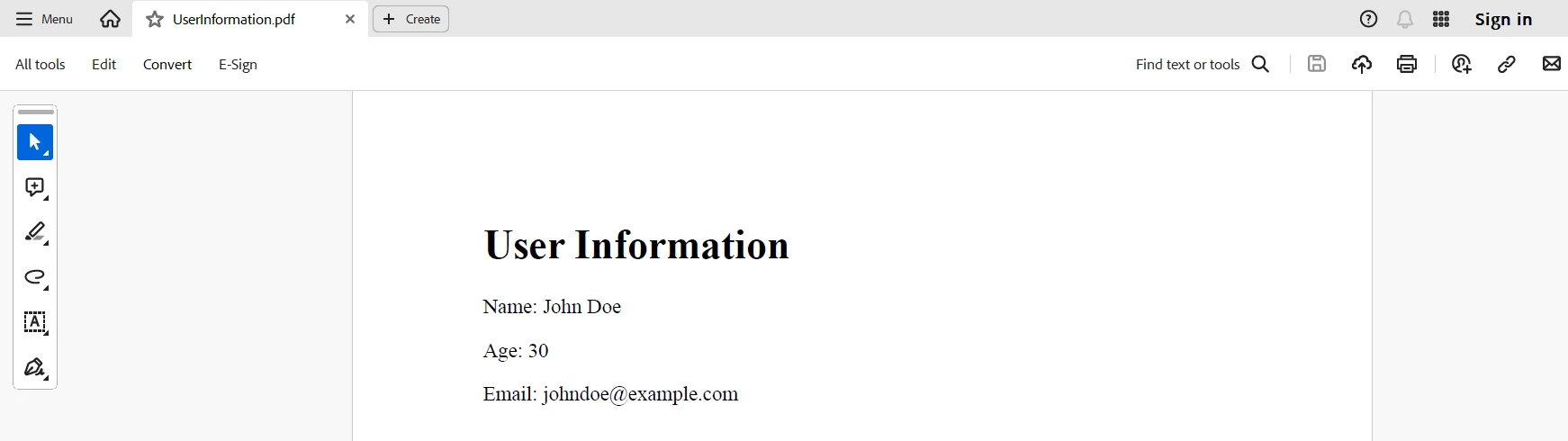
var htmlContent = $"<h1>User Information</h1><p>Name: {user.Name}</p><p>Age: {user.Age}</p><p>Email: {user.Email}</p>";
var pdf = new ChromePdfRenderer().RenderHtmlAsPdf(htmlContent);
// Save the PDF to a file
pdf.SaveAs("UserInformation.pdf");
Console.WriteLine("PDF generated and saved successfully");
}
public class User
{
public string Name { get; set; }
public int Age { get; set; }
public string Email { get; set; }
}
}
```
Der bereitgestellte C#-Code zeigt, wie FireSharp mit IronPDF integriert wird, um neue Daten aus der Firebase Realtime Database abzurufen und ein [PDF-Dokument aus HTML-Inhalten](https://ironpdf.com/examples/using-html-to-create-a-pdf/) basierend auf diesen Daten zu generieren. Zuerst konfiguriert der Code FireSharp mit dem `IFirebaseConfig` Objekt, das das Authentifizierungsgeheimnis von Firebase (`AuthSecret`) und die Basis-URL der Firebase Realtime-Datenbank (`BasePath`) enthält.
Eine Instanz von `IFirebaseClient` wird mit dieser Konfiguration erstellt, um mit Firebase zu interagieren. Der Code ruft dann Daten aus der Firebase-Datenbank mit der `client.Get` Methode ab und holt Daten vom angegebenen Pfad (`users/1`). Die Antwort wird auf Erfolg überprüft, und bei Erfolg werden die Daten in ein `User` Objekt deserialisiert.
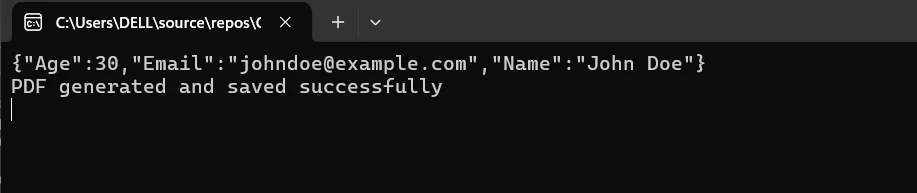
Mithilfe des [IronPDF - HTML-to-PDF Conversion Tutorial](https://ironpdf.com/tutorials/html-to-pdf/) erzeugt der Code ein PDF-Dokument, indem er HTML-Inhalte, die die abgerufenen Benutzerinformationen einschließen, in ein PDF-Format umwandelt. Der HTML-Inhalt wird als PDF mit `ChromePdfRenderer().RenderHtmlAsPdf` gerendert und in einer Datei namens "UserInformation.pdf" gespeichert. Diese Integration zeigt, wie FireSharp für die Echtzeit-Datenabfrage aus Firebase mit IronPDF für die dynamische PDF-Erstellung in einem nahtlosen Workflow kombiniert werden kann.
## Abschluss
Zusammengefasst bietet die Nutzung von FireSharp und IronPDF gemeinsam in einem C#-Programm eine starke und effektive Möglichkeit, Daten in Echtzeit zu verwalten und dynamische PDF-Dokumente zu erzeugen. Mit seiner benutzerfreundlichen API für CRUD-Operationen und der Echtzeit-Klientsynchronisation vereinfacht FireSharp die Interaktionen mit der Firebase Realtime Database. Andererseits brilliert IronPDF bei der Umwandlung von HTML-Inhalten in hochwertige PDF-Dokumente, was es perfekt macht, um druckbare Dokumente wie Rechnungen und Berichte zu produzieren, die auf Echtzeitdaten basieren.
Entwickler können die Funktionalität und Benutzererfahrung ihrer Anwendungen verbessern, indem sie diese beiden Bibliotheken integrieren, um PDF-Dokumente einfach zu erstellen und zu verteilen, während sie die aktuellsten Informationen von Firebase abrufen. Anwendungen, die Dokumente dynamisch basierend auf den neuesten Daten generieren müssen und Echtzeitdatenänderungen erfordern, werden von dieser Integration am meisten profitieren. Insgesamt können Entwickler solide, datengetriebene Anwendungen erzeugen, die die Fähigkeiten sowohl von Firebase als auch von PDF-Erzeugungstechnologien nutzen, dank der Synergie zwischen FireSharp und IronPDF.
Mit IronPDF und Iron Software können Sie Ihr Toolkit for .NET-Programmierung erweitern, indem Sie OCR, Barcode-Scanning, PDF-Erstellung, Excel-Verbindung und vieles mehr nutzen. IronPDF ist ab einem Startpreis von `$liteLicense` erhältlich.
Eine C#-Clientbibliothek namens FireSharp wurde erstellt, um die Arbeit mit der Firebase Realtime Database zu erleichtern. Sie bietet Echtzeit-Daten-Synchronisation und nahtlose Integration. Ohne sich direkt mit Low-Level-HTTP-Anfragen und -Antworten befassen zu müssen, können Entwickler mit FireSharp strukturierte Daten in Firebase von C#-Anwendungen aus einfach verwalten und synchronisieren.
Andererseits ist IronPDF - .NET PDF Library for PDF Document Creation eine robuste .NET-Bibliothek zur programmgesteuerten Erstellung, Bearbeitung und Modifikation von PDF-Dokumenten. Es bietet eine einfache, aber leistungsfähige API zum Erstellen von PDFs von Grund auf, zum Umwandeln von HTML-Informationen in PDFs und zur Durchführung verschiedener PDF-Aktionen.
Entwickler können dynamische PDF-Veröffentlichungen basierend auf aktuellen Daten, die in Firebase gespeichert sind, erstellen und diese mit FireSharp und IronPDF zusammen verwalten. Diese Schnittstelle ist besonders hilfreich, wenn Programme Berichte, Rechnungen oder andere druckbare Dokumente von Firebase-Daten aus dynamisch erstellen müssen, während Konsistenz und Echtzeit-Updates beibehalten werden.
Durch die nahtlose Integration von Firebase-gestützten Daten und PDF-Dokumentenerstellungskapazitäten können Entwickler die Benutzererfahrung insgesamt verbessern, die Dokumentenerstellungsprozesse optimieren und die datengetriebene Anwendungsfunktionalität verbessern, indem sie FireSharp verwenden, um Daten von Firebase abzurufen und zu verwalten, und IronPDF, um diese Daten in PDF-Dokumente umzuwandeln.
What is FireSharp C#?
FireSharp ist eine asynchrone plattformübergreifende .NET-Bibliothek, die für die Arbeit mit der Firebase Realtime Database entwickelt wurde, um den Prozess für Entwickler zu vereinfachen. Mit der Google Firebase-Backend-Plattform können Entwickler Daten in Echtzeit über Clients hinweg mit einer cloudbasierten NoSQL-Datenbank speichern und synchronisieren. Da FireSharp eine High-Level-API bietet, die die Komplexität von direkten HTTP-Anrufen an die REST-API von Firebase abstrahiert, wird die Integration der Firebase-API in C#-Anwendungen einfacher gemacht.
Einer der Hauptvorteile von FireSharp ist die fehlerfreie Behandlung von CRUD-Aktionen (Erstellen, Lesen, Aktualisieren, Löschen) auf Firebase-Daten. Es erleichtert Echtzeit-Ereignislistener, die Clients auf Datenänderungen aufmerksam machen und eine Echtzeit-Synchronisierung zwischen Browsern und Geräten garantieren. Daher eignet es sich perfekt zur Entwicklung von Chat-Apps, Echtzeit-Dashboards, kollaborativen Anwendungen und vielem mehr.
Da FireSharp asynchron funktioniert, können Programme mit Firebase kommunizieren und dennoch wie gewohnt funktionieren. Um einen sicheren Zugriff auf Firebase-Ressourcen zu erleichtern, unterstützt es Authentifizierungsmethoden. Es verfügt auch über zuverlässige Fehlerbehebungs- und Protokollierungsfunktionen, um bei der Fehlerbehebung und dem Debugging zu helfen.
Features of FireSharp C#
Als C#-Clientbibliothek für die Firebase Realtime Database bietet FireSharp eine Reihe wesentlicher Funktionen, die die Kommunikation mit Firebase vereinfachen und verbessern:
Vereinfachte API: CRUD-Aktionen auf Firebase-Daten werden vereinfacht durch die High-Level-API von FireSharp, die die Komplexität der Kommunikation mit der REST-API von Firebase abstrahiert. Dies kann direkt aus C# erfolgen.
Synchronisation von Echtzeitdaten: FireSharp unterstützt Echtzeit-Ereignislistener, die es Anwendungen ermöglichen, Updates zu erhalten, wann immer Firebase-Daten geändert werden. Dies erlaubt es Clients, Daten in Echtzeit zu synchronisieren, wodurch Updates sofort an alle verbundenen Geräte gesendet werden.
Asynchrone Operationen: Da FireSharp asynchron läuft, können C#-Programme weiterhin normal funktionieren, auch wenn sie mit Datenbankabfragen zu tun haben. Sein asynchrones Design ist entscheidend für das effiziente Verwalten mehrerer gleichzeitiger Anfragen.
Unterstützung von Authentifizierung: Entwickler können mithilfe von FireSharp sicher auf Firebase-Ressourcen zugreifen, indem sie eine Vielzahl von Authentifizierungsanbietern verwenden, darunter Google, Facebook, E-Mail und Passwort, unter anderem.
Fehlerbehandlung und Protokollierung: Die Bibliothek verfügt über robuste Fehlerbehandlungs- und Protokollierungsfunktionen, die Entwicklern umfassendes Feedback und Debugging-Daten liefern, um Probleme effizient zu beheben.
Plattformübergreifende Kompatibilität: Aufgrund der Kompatibilität von FireSharp mit dem .NET Framework, .NET Core und .NET Standard wird eine Vielzahl von C#-Anwendungskontexten unterstützt und Flexibilität geboten.
Konfigurierbarkeit: Mit einfachen Konfigurationsoptionen können Entwickler FireSharp an ihre spezifischen Anforderungen anpassen, einschließlich der Konfiguration von Firebase-Datenbank-URLs, Authentifizierungstoken und anderen Eigenschaften.
Dokumentation und Community-Unterstützung: Mit seiner umfangreichen Dokumentation und lebendigen Community unterstützt FireSharp Entwickler dabei, Firebase in ihre C#-Projekte zu integrieren, indem es Werkzeuge und Unterstützung bietet.
Eine FireSharp C#-Anwendung erstellen und konfigurieren
FireSharp über NuGet installieren
NuGet -Pakete verwalten: Klicken Sie im Projektmappen-Explorer mit der rechten Maustaste auf Ihr Projekt und wählen Sie " NuGet Pakete verwalten".
Suche nach FireSharp: Installieren Sie das FireSharp-Paket von Gehtsoft. Die FireSharp-Bibliothek, die für die Kommunikation mit der Firebase Realtime Database benötigt wird, ist in diesem Paket enthalten.
Sie können auch die folgende Zeile verwenden, um FireSharp über NuGet zu installieren:
PM > Install-Package FireSharp
Install-Package FireSharp
Ein neues .NET-Projekt erstellen
Öffnen Sie Ihre Eingabeaufforderung, Konsole oder Ihr Terminal.
Erstellen und starten Sie eine neue .NET-Konsolenanwendung, indem Sie tippen:
dotnet new console -n FiresharpExamplecd FiresharpExample
dotnet new console -n FiresharpExample
cd FiresharpExample
SHELL
Firebase-Projekt einrichten
Erstellen Sie ein Firebase-Projekt: Gehen Sie zur Firebase-Konsole (https://console.firebase.google.com/ ) und ein neues Projekt erstellen oder ein bestehendes verwenden.
Firebase Realtime Database einrichten: Um die Realtime Database zu konfigurieren, gehen Sie in der Firebase Console zum Abschnitt "Datenbank". Richten Sie die Regeln gemäß Ihren Sicherheitsanforderungen ein.
FireSharp initialisieren
using FireSharp.Config;using FireSharp.Interfaces;using FireSharp.Response;class Program{ static voidMain(string[] args) { // Step 1: Configure FireSharp IFirebaseConfig config = new FirebaseConfig {AuthSecret = "your_firebase_auth_secret",BasePath = "https://your_project_id.firebaseio.com/" }; IFirebaseClient client = new FireSharp.FirebaseClient(config); // Step 2: Perform CRUD operations // Example: Write data to Firebase var data = new {Name = "John Doe",Age = 30,Email = "johndoe@example.com" }; SetResponse response = client.Set("users/1", data); if (response.StatusCode == System.Net.HttpStatusCode.OK) {Console.WriteLine("Data written to Firebase successfully"); } else {Console.WriteLine($"Error writing data: {response.Error}"); } // Step 3: Read data from Firebase FirebaseResponse getResponse = client.Get("users/1"); if (getResponse.StatusCode == System.Net.HttpStatusCode.OK) {Console.WriteLine(getResponse.Body); } else {Console.WriteLine($"Error reading data: {getResponse.Error}"); } // Step 4: Update data in Firebase var newData = new {Age = 31 }; FirebaseResponse updateResponse = client.Update("users/1", newData); if (updateResponse.StatusCode == System.Net.HttpStatusCode.OK) {Console.WriteLine("Data updated successfully"); } else {Console.WriteLine($"Error updating data: {updateResponse.Error}"); } // Step 5: Delete data from Firebase FirebaseResponse deleteResponse = client.Delete("users/1"); if (deleteResponse.StatusCode == System.Net.HttpStatusCode.OK) {Console.WriteLine("Data deleted successfully"); } else {Console.WriteLine($"Error deleting data: {deleteResponse.Error}"); } }}
using FireSharp.Config;
using FireSharp.Interfaces;
using FireSharp.Response;
class Program
{
    static void Main(string[] args)
    {
        // Step 1: Configure FireSharp
        IFirebaseConfig config = new FirebaseConfig
        {
            AuthSecret = "your_firebase_auth_secret",
            BasePath = "https://your_project_id.firebaseio.com/"
        };
        IFirebaseClient client = new FireSharp.FirebaseClient(config);

        // Step 2: Perform CRUD operations

        // Example: Write data to Firebase
        var data = new
        {
            Name = "John Doe",
            Age = 30,
            Email = "johndoe@example.com"
        };

        SetResponse response = client.Set("users/1", data);
        if (response.StatusCode == System.Net.HttpStatusCode.OK)
        {
            Console.WriteLine("Data written to Firebase successfully");
        }
        else
        {
            Console.WriteLine($"Error writing data: {response.Error}");
        }

        // Step 3: Read data from Firebase
        FirebaseResponse getResponse = client.Get("users/1");
        if (getResponse.StatusCode == System.Net.HttpStatusCode.OK)
        {
            Console.WriteLine(getResponse.Body);
        }
        else
        {
            Console.WriteLine($"Error reading data: {getResponse.Error}");
        }

        // Step 4: Update data in Firebase
        var newData = new
        {
            Age = 31
        };

        FirebaseResponse updateResponse = client.Update("users/1", newData);
        if (updateResponse.StatusCode == System.Net.HttpStatusCode.OK)
        {
            Console.WriteLine("Data updated successfully");
        }
        else
        {
            Console.WriteLine($"Error updating data: {updateResponse.Error}");
        }

        // Step 5: Delete data from Firebase
        FirebaseResponse deleteResponse = client.Delete("users/1");
        if (deleteResponse.StatusCode == System.Net.HttpStatusCode.OK)
        {
            Console.WriteLine("Data deleted successfully");
        }
        else
        {
            Console.WriteLine($"Error deleting data: {deleteResponse.Error}");
        }
    }
}
ImportsFireSharp.ConfigImportsFireSharp.InterfacesImportsFireSharp.ResponseFriend Class ProgramShared Sub Main(ByVal args() AsString) ' Step 1: Configure FireSharp Dim config AsIFirebaseConfig = New FirebaseConfigWith { .AuthSecret = "your_firebase_auth_secret", .BasePath = "https://your_project_id.firebaseio.com/" } Dim client AsIFirebaseClient = New FireSharp.FirebaseClient(config) ' Step 2: Perform CRUD operations ' Example: Write data to Firebase Dim data = New With {Key .Name = "John Doe",Key .Age = 30,Key .Email = "johndoe@example.com" } Dim response AsSetResponse = client.Set("users/1", data) If response.StatusCode = System.Net.HttpStatusCode.OKThenConsole.WriteLine("Data written to Firebase successfully") ElseConsole.WriteLine($"Error writing data: {response.Error}") End If ' Step 3: Read data from Firebase Dim getResponse AsFirebaseResponse = client.Get("users/1") If getResponse.StatusCode = System.Net.HttpStatusCode.OKThenConsole.WriteLine(getResponse.Body) ElseConsole.WriteLine($"Error reading data: {getResponse.Error}") End If ' Step 4: Update data in Firebase Dim newData = New With {Key .Age = 31} Dim updateResponse AsFirebaseResponse = client.Update("users/1", newData) If updateResponse.StatusCode = System.Net.HttpStatusCode.OKThenConsole.WriteLine("Data updated successfully") ElseConsole.WriteLine($"Error updating data: {updateResponse.Error}") End If ' Step 5: Delete data from Firebase Dim deleteResponse AsFirebaseResponse = client.Delete("users/1") If deleteResponse.StatusCode = System.Net.HttpStatusCode.OKThenConsole.WriteLine("Data deleted successfully") ElseConsole.WriteLine($"Error deleting data: {deleteResponse.Error}") End If End SubEnd Class
Imports FireSharp.Config
Imports FireSharp.Interfaces
Imports FireSharp.Response
Friend Class Program
	Shared Sub Main(ByVal args() As String)
		' Step 1: Configure FireSharp
		Dim config As IFirebaseConfig = New FirebaseConfig With {
			.AuthSecret = "your_firebase_auth_secret",
			.BasePath = "https://your_project_id.firebaseio.com/"
		}
		Dim client As IFirebaseClient = New FireSharp.FirebaseClient(config)

		' Step 2: Perform CRUD operations

		' Example: Write data to Firebase
		Dim data = New With {
			Key .Name = "John Doe",
			Key .Age = 30,
			Key .Email = "johndoe@example.com"
		}

		Dim response As SetResponse = client.Set("users/1", data)
		If response.StatusCode = System.Net.HttpStatusCode.OK Then
			Console.WriteLine("Data written to Firebase successfully")
		Else
			Console.WriteLine($"Error writing data: {response.Error}")
		End If

		' Step 3: Read data from Firebase
		Dim getResponse As FirebaseResponse = client.Get("users/1")
		If getResponse.StatusCode = System.Net.HttpStatusCode.OK Then
			Console.WriteLine(getResponse.Body)
		Else
			Console.WriteLine($"Error reading data: {getResponse.Error}")
		End If

		' Step 4: Update data in Firebase
		Dim newData = New With {Key .Age = 31}

		Dim updateResponse As FirebaseResponse = client.Update("users/1", newData)
		If updateResponse.StatusCode = System.Net.HttpStatusCode.OK Then
			Console.WriteLine("Data updated successfully")
		Else
			Console.WriteLine($"Error updating data: {updateResponse.Error}")
		End If

		' Step 5: Delete data from Firebase
		Dim deleteResponse As FirebaseResponse = client.Delete("users/1")
		If deleteResponse.StatusCode = System.Net.HttpStatusCode.OK Then
			Console.WriteLine("Data deleted successfully")
		Else
			Console.WriteLine($"Error deleting data: {deleteResponse.Error}")
		End If
	End Sub
End Class
Der bereitgestellte C#-Code zeigt, wie FireSharp eingerichtet und konfiguriert wird, um mit der Firebase Realtime Database zu interagieren. Es beginnt mit dem Import der notwendigen FireSharp-Namespaces und der Konfiguration des Firebase-Clients mithilfe von IFirebaseConfig, was das Authentifizierungsgeheimnis des Firebase-Projekts (AuthSecret) und die Datenbank-URL (BasePath) erfordert.
Eine Instanz von IFirebaseClient wird dann mit dieser Konfiguration erstellt. Der Code führt grundlegende CRUD-Operationen aus: Er schreibt Daten in die Datenbank mit client.Set, ruft Daten ab mit client.Get, aktualisiert vorhandene Daten über client.Update und löscht Daten mit client.Delete.
Jede Operation überprüft die StatusCode der Antwort, um den Erfolg zu bestätigen oder Fehler zu behandeln. Das Beispiel zeigt, wie man Daten in Firebase effizient aus einer C#-Anwendung verwaltet und verdeutlicht die Einfachheit und Effektivität der Verwendung von FireSharp für Echtzeit-Datenbankinteraktionen.
Einstieg
Um mit IronPDF und FireSharp in C# zu beginnen, integrieren Sie beide Bibliotheken in Ihr Projekt, indem Sie diese Anweisungen befolgen. Diese Konfiguration zeigt, wie FireSharp verwendet werden kann, um Daten aus der Firebase Realtime Database abzurufen und IronPDF zu verwenden, um basierend auf diesen Daten ein PDF zu erstellen.
Was ist IronPDF?
PDF-Dokumente können von C#-Programmen erstellt, gelesen und bearbeitet werden, dank IronPDF. Mit dieser Anwendung können Entwickler HTML-, CSS- und JavaScript-Inhalte schnell in hochwertige, druckfertige PDFs umwandeln. Das Hinzufügen von Kopf- und Fußzeilen, das Aufteilen und Zusammenführen von PDFs, das Wasserzeichen von Dokumenten und das Konvertieren von HTML in PDF gehören zu den wichtigsten Aufgaben.
IronPDF unterstützt sowohl .NET Framework als auch .NET Core, was es für eine breite Palette von Anwendungen nützlich macht. Seine benutzerfreundliche API ermöglicht es Entwicklern, PDFs problemlos in ihre Produkte zu integrieren. Die Fähigkeit von IronPDF, komplexe Datenlayouts und Formatierungen zu verwalten, bedeutet, dass die von ihm produzierten PDFs dem ursprünglichen HTML-Text des Clients nahekommen.
IronPDF ist ein Tool, das zur Umwandlung von Webseiten, URLs und HTML in PDF-Format genutzt wird. Die generierten PDFs behalten das ursprüngliche Format und Styling der Webseiten bei. Dieses Tool eignet sich besonders zum Erstellen von PDFs aus Webinhalten, einschließlich Berichten und Rechnungen.
using IronPdf;class Program{ static voidMain(string[] args) { var renderer = new ChromePdfRenderer(); // 1. Convert HTML String to PDF var htmlContent = "<h1>Hello, IronPDF!</h1><p>This is a PDF from an HTML string.</p>"; var pdfFromHtmlString = renderer.RenderHtmlAsPdf(htmlContent); pdfFromHtmlString.SaveAs("HTMLStringToPDF.pdf"); // 2. Convert HTML File to PDF var htmlFilePath = "path_to_your_html_file.html"; // Specify the path to your HTML file var pdfFromHtmlFile = renderer.RenderHtmlFileAsPdf(htmlFilePath); pdfFromHtmlFile.SaveAs("HTMLFileToPDF.pdf"); // 3. Convert URL to PDF var url = "http://ironpdf.com"; // Specify the URL var pdfFromUrl = renderer.RenderUrlAsPdf(url); pdfFromUrl.SaveAs("URLToPDF.pdf"); }}
using IronPdf;

class Program
{
    static void Main(string[] args)
    {
        var renderer = new ChromePdfRenderer();

        // 1. Convert HTML String to PDF
        var htmlContent = "<h1>Hello, IronPDF!</h1><p>This is a PDF from an HTML string.</p>";
        var pdfFromHtmlString = renderer.RenderHtmlAsPdf(htmlContent);
        pdfFromHtmlString.SaveAs("HTMLStringToPDF.pdf");

        // 2. Convert HTML File to PDF
        var htmlFilePath = "path_to_your_html_file.html"; // Specify the path to your HTML file
        var pdfFromHtmlFile = renderer.RenderHtmlFileAsPdf(htmlFilePath);
        pdfFromHtmlFile.SaveAs("HTMLFileToPDF.pdf");

        // 3. Convert URL to PDF
        var url = "http://ironpdf.com"; // Specify the URL
        var pdfFromUrl = renderer.RenderUrlAsPdf(url);
        pdfFromUrl.SaveAs("URLToPDF.pdf");
    }
}
ImportsIronPdfFriend Class ProgramShared Sub Main(ByVal args() AsString) Dim renderer = New ChromePdfRenderer() ' 1. Convert HTML String to PDF Dim htmlContent = "<h1>Hello, IronPDF!</h1><p>This is a PDF from an HTML string.</p>" Dim pdfFromHtmlString = renderer.RenderHtmlAsPdf(htmlContent) pdfFromHtmlString.SaveAs("HTMLStringToPDF.pdf") ' 2. Convert HTML File to PDF Dim htmlFilePath = "path_to_your_html_file.html" ' Specify the path to your HTML file Dim pdfFromHtmlFile = renderer.RenderHtmlFileAsPdf(htmlFilePath) pdfFromHtmlFile.SaveAs("HTMLFileToPDF.pdf") ' 3. Convert URL to PDF Dim url = "http://ironpdf.com" ' Specify the URL Dim pdfFromUrl = renderer.RenderUrlAsPdf(url) pdfFromUrl.SaveAs("URLToPDF.pdf") End SubEnd Class
Imports IronPdf

Friend Class Program
	Shared Sub Main(ByVal args() As String)
		Dim renderer = New ChromePdfRenderer()

		' 1. Convert HTML String to PDF
		Dim htmlContent = "<h1>Hello, IronPDF!</h1><p>This is a PDF from an HTML string.</p>"
		Dim pdfFromHtmlString = renderer.RenderHtmlAsPdf(htmlContent)
		pdfFromHtmlString.SaveAs("HTMLStringToPDF.pdf")

		' 2. Convert HTML File to PDF
		Dim htmlFilePath = "path_to_your_html_file.html" ' Specify the path to your HTML file
		Dim pdfFromHtmlFile = renderer.RenderHtmlFileAsPdf(htmlFilePath)
		pdfFromHtmlFile.SaveAs("HTMLFileToPDF.pdf")

		' 3. Convert URL to PDF
		Dim url = "http://ironpdf.com" ' Specify the URL
		Dim pdfFromUrl = renderer.RenderUrlAsPdf(url)
		pdfFromUrl.SaveAs("URLToPDF.pdf")
	End Sub
End Class
Funktionen von IronPDF
PDF-Erstellung aus HTML
Konvertieren Sie HTML, CSS und JavaScript in PDF. IronPDF unterstützt zwei moderne Webstandards: Media Queries und Responsive Design. Diese Unterstützung für moderne Webstandards ist nützlich, um PDF-Dokumente, Rechnungen und Berichte mithilfe von HTML und CSS dynamisch zu dekorieren.
PDF-Bearbeitung
Es ist möglich, Text, Bilder und anderes Material zu bereits bestehenden PDFs hinzuzufügen. Verwenden Sie IronPDF, um Text und Bilder aus PDF-Dateien zu extrahieren, mehrere PDFs in eine einzige Datei zusammenzuführen, PDF-Dateien in mehrere separate Dokumente aufzuteilen und Kopfzeilen, Fußzeilen, Anmerkungen und Wasserzeichen hinzuzufügen.
PDF-Konvertierung
Konvertieren Sie Word-, Excel- und Bilddateien, unter anderem Dateiformate, in PDF. IronPDF unterstützt die Konvertierung von PDF in Bild (PNG, JPEG usw.).
Leistung und Zuverlässigkeit
In industriellen Kontexten sind hohe Leistung und Zuverlässigkeit wünschenswerte Designmerkmale. IronPDF bewältigt problemlos große Dokumentensätze.
IronPDF installieren
Installieren Sie das IronPDF-Paket, um die Tools zu erhalten, die Sie benötigen, um mit PDFs in .NET-Projekten zu arbeiten.
PM > Install-Package IronPdf
Install-Package IronPdf
Initialisierung von FireSharp und IronPDF
Dies ist ein Beispiel, das FireSharp nutzt, um Daten von Firebase abzurufen und IronPDF, um ein PDF zu erstellen.
using System;using FireSharp.Config;using FireSharp.Interfaces;using FireSharp.Response;using IronPdf;class Program{ static voidMain(string[] args) { // Step 1: Configure FireSharp IFirebaseConfig config = new FirebaseConfig {AuthSecret = "your_firebase_auth_secret",BasePath = "https://your_project_id.firebaseio.com/" }; IFirebaseClient client = new FireSharp.FirebaseClient(config); // Step 2: Retrieve data from Firebase FirebaseResponse response = client.Get("users/1"); if (response.StatusCode != System.Net.HttpStatusCode.OK) {Console.WriteLine($"Error retrieving data: {response.StatusCode}"); return; } else {Console.WriteLine(response.Body); } // Deserialize the data (assuming the data is in a simple format) var user = response.ResultAs<User>(); // Step 3: Generate PDF using IronPDF var htmlContent = $"<h1>User Information</h1><p>Name: {user.Name}</p><p>Age: {user.Age}</p><p>Email: {user.Email}</p>"; var pdf = new ChromePdfRenderer().RenderHtmlAsPdf(htmlContent); // Save the PDF to a file pdf.SaveAs("UserInformation.pdf");Console.WriteLine("PDF generated and saved successfully"); } public class User { public stringName { get; set; } public intAge { get; set; } public stringEmail { get; set; } }}
using System;
using FireSharp.Config;
using FireSharp.Interfaces;
using FireSharp.Response;
using IronPdf;

class Program
{
    static void Main(string[] args)
    {
        // Step 1: Configure FireSharp
        IFirebaseConfig config = new FirebaseConfig
        {
            AuthSecret = "your_firebase_auth_secret",
            BasePath = "https://your_project_id.firebaseio.com/"
        };
        IFirebaseClient client = new FireSharp.FirebaseClient(config);

        // Step 2: Retrieve data from Firebase
        FirebaseResponse response = client.Get("users/1");
        if (response.StatusCode != System.Net.HttpStatusCode.OK)
        {
            Console.WriteLine($"Error retrieving data: {response.StatusCode}");
            return;
        }
        else
        {
            Console.WriteLine(response.Body);
        }

        // Deserialize the data (assuming the data is in a simple format)
        var user = response.ResultAs<User>();

        // Step 3: Generate PDF using IronPDF
        var htmlContent = $"<h1>User Information</h1><p>Name: {user.Name}</p><p>Age: {user.Age}</p><p>Email: {user.Email}</p>";
        var pdf = new ChromePdfRenderer().RenderHtmlAsPdf(htmlContent);

        // Save the PDF to a file
        pdf.SaveAs("UserInformation.pdf");
        Console.WriteLine("PDF generated and saved successfully");
    }

    public class User
    {
        public string Name { get; set; }
        public int Age { get; set; }
        public string Email { get; set; }
    }
}
ImportsSystemImportsFireSharp.ConfigImportsFireSharp.InterfacesImportsFireSharp.ResponseImportsIronPdfFriend Class ProgramShared Sub Main(ByVal args() AsString) ' Step 1: Configure FireSharp Dim config AsIFirebaseConfig = New FirebaseConfigWith { .AuthSecret = "your_firebase_auth_secret", .BasePath = "https://your_project_id.firebaseio.com/" } Dim client AsIFirebaseClient = New FireSharp.FirebaseClient(config) ' Step 2: Retrieve data from Firebase Dim response AsFirebaseResponse = client.Get("users/1") If response.StatusCode <> System.Net.HttpStatusCode.OKThenConsole.WriteLine($"Error retrieving data: {response.StatusCode}") Return ElseConsole.WriteLine(response.Body) End If ' Deserialize the data (assuming the data is in a simple format) Dim user = response.ResultAs(OfUser)() ' Step 3: Generate PDF using IronPDF Dim htmlContent = $"<h1>User Information</h1><p>Name: {user.Name}</p><p>Age: {user.Age}</p><p>Email: {user.Email}</p>" Dim pdf = (New ChromePdfRenderer()).RenderHtmlAsPdf(htmlContent) ' Save the PDF to a file pdf.SaveAs("UserInformation.pdf")Console.WriteLine("PDF generated and saved successfully") End Sub Public Class User Public Property Name() AsString Public Property Age() AsInteger Public Property Email() AsString End ClassEnd Class
Imports System
Imports FireSharp.Config
Imports FireSharp.Interfaces
Imports FireSharp.Response
Imports IronPdf

Friend Class Program
	Shared Sub Main(ByVal args() As String)
		' Step 1: Configure FireSharp
		Dim config As IFirebaseConfig = New FirebaseConfig With {
			.AuthSecret = "your_firebase_auth_secret",
			.BasePath = "https://your_project_id.firebaseio.com/"
		}
		Dim client As IFirebaseClient = New FireSharp.FirebaseClient(config)

		' Step 2: Retrieve data from Firebase
		Dim response As FirebaseResponse = client.Get("users/1")
		If response.StatusCode <> System.Net.HttpStatusCode.OK Then
			Console.WriteLine($"Error retrieving data: {response.StatusCode}")
			Return
		Else
			Console.WriteLine(response.Body)
		End If

		' Deserialize the data (assuming the data is in a simple format)
		Dim user = response.ResultAs(Of User)()

		' Step 3: Generate PDF using IronPDF
		Dim htmlContent = $"<h1>User Information</h1><p>Name: {user.Name}</p><p>Age: {user.Age}</p><p>Email: {user.Email}</p>"
		Dim pdf = (New ChromePdfRenderer()).RenderHtmlAsPdf(htmlContent)

		' Save the PDF to a file
		pdf.SaveAs("UserInformation.pdf")
		Console.WriteLine("PDF generated and saved successfully")
	End Sub

	Public Class User
		Public Property Name() As String
		Public Property Age() As Integer
		Public Property Email() As String
	End Class
End Class
Der bereitgestellte C#-Code zeigt, wie FireSharp mit IronPDF integriert wird, um neue Daten aus der Firebase Realtime Database abzurufen und ein PDF-Dokument aus HTML-Inhalten basierend auf diesen Daten zu generieren. Zuerst konfiguriert der Code FireSharp mit dem IFirebaseConfig Objekt, das das Authentifizierungsgeheimnis von Firebase (AuthSecret) und die Basis-URL der Firebase Realtime-Datenbank (BasePath) enthält.
Eine Instanz von IFirebaseClient wird mit dieser Konfiguration erstellt, um mit Firebase zu interagieren. Der Code ruft dann Daten aus der Firebase-Datenbank mit der client.Get Methode ab und holt Daten vom angegebenen Pfad (users/1). Die Antwort wird auf Erfolg überprüft, und bei Erfolg werden die Daten in ein User Objekt deserialisiert.
Mithilfe des IronPDF - HTML-to-PDF Conversion Tutorial erzeugt der Code ein PDF-Dokument, indem er HTML-Inhalte, die die abgerufenen Benutzerinformationen einschließen, in ein PDF-Format umwandelt. Der HTML-Inhalt wird als PDF mit ChromePdfRenderer().RenderHtmlAsPdf gerendert und in einer Datei namens "UserInformation.pdf" gespeichert. Diese Integration zeigt, wie FireSharp für die Echtzeit-Datenabfrage aus Firebase mit IronPDF für die dynamische PDF-Erstellung in einem nahtlosen Workflow kombiniert werden kann.
Abschluss
Zusammengefasst bietet die Nutzung von FireSharp und IronPDF gemeinsam in einem C#-Programm eine starke und effektive Möglichkeit, Daten in Echtzeit zu verwalten und dynamische PDF-Dokumente zu erzeugen. Mit seiner benutzerfreundlichen API für CRUD-Operationen und der Echtzeit-Klientsynchronisation vereinfacht FireSharp die Interaktionen mit der Firebase Realtime Database. Andererseits brilliert IronPDF bei der Umwandlung von HTML-Inhalten in hochwertige PDF-Dokumente, was es perfekt macht, um druckbare Dokumente wie Rechnungen und Berichte zu produzieren, die auf Echtzeitdaten basieren.
Entwickler können die Funktionalität und Benutzererfahrung ihrer Anwendungen verbessern, indem sie diese beiden Bibliotheken integrieren, um PDF-Dokumente einfach zu erstellen und zu verteilen, während sie die aktuellsten Informationen von Firebase abrufen. Anwendungen, die Dokumente dynamisch basierend auf den neuesten Daten generieren müssen und Echtzeitdatenänderungen erfordern, werden von dieser Integration am meisten profitieren. Insgesamt können Entwickler solide, datengetriebene Anwendungen erzeugen, die die Fähigkeiten sowohl von Firebase als auch von PDF-Erzeugungstechnologien nutzen, dank der Synergie zwischen FireSharp und IronPDF.
Mit IronPDF und Iron Software können Sie Ihr Toolkit for .NET-Programmierung erweitern, indem Sie OCR, Barcode-Scanning, PDF-Erstellung, Excel-Verbindung und vieles mehr nutzen. IronPDF ist ab einem Startpreis von $999 erhältlich.
Jacob Mellor ist Chief Technology Officer bei Iron Software und ein visionärer Ingenieur, der Pionierarbeit in der C# PDF-Technologie leistet. Als der ursprüngliche Entwickler hinter der Kern-Codebasis von Iron Software hat er die Produktarchitektur des Unternehmens seit seiner Gründung geprägt und es zusammen mit CEO Cameron Rimington in ein Unternehmen mit mehr als 50 Mitarbeitern verwandelt, das die NASA, Tesla und globale Regierungsbehörden beliefert.