Das Verständnis des Verhaltens von Dezimalzahlen und ihrer Manipulation ist entscheidend beim Programmieren. In C# ist eines der Werkzeuge, das uns zur Verfügung steht, um Dezimalzahlen zu verwalten, die Math.Floor Methode. Gehen wir näher darauf ein.
Was ist Math.Floor?
Die Methode Math.Floor ist eine statische Funktion, die Teil des C#-Systemsnamespace ist. Ihr Hauptzweck? Die größte ganzzahlige Zahl, die kleiner oder gleich der angegebenen Dezimalzahl ist, zurückzugeben.
Einfach gesagt rundet diese Methode eine Dezimalzahl auf die nächste Ganzzahl ab. Unabhängig davon, wie klein der Dezimalwert sein mag, die Methode bewegt sich immer zur nächsten ganzen Zahl unterhalb der angegebenen Zahl.
Wenn wir zum Beispiel einen Dezimalwert wie 4,89 hätten und die Methode Math.Floor darauf anwenden würden, wäre das Ergebnis 4.
Wann würden Sie Math.Floor verwenden?
Stellen Sie sich vor, Sie bauen eine Anwendung, die Produkte in Kartons unterteilt. Sie wissen, dass jeder Karton maximal 5 Artikel fassen kann. Wenn ein Kunde 22 Artikel bestellt, würde er 4 volle Kartons bekommen und 2 Artikel würden ohne Karton bleiben. Die Methode Math.Floor kann Ihnen schnell mitteilen, wie viele volle Kartons Sie haben, indem Sie das Ergebnis der Division der Gesamtartikel durch Artikel pro Karton 'abrunden'.
Eintauchen in den Code
Jetzt, da wir das Grundkonzept verstanden haben, wollen wir sehen, wie wir dies in der Praxis nutzen können.
Einrichten
Bevor wir beginnen, stellen Sie sicher, dass Sie eine C#-Umgebung zum Testen bereit haben. Hier ist ein Setup:
using System;

namespace MathFloorExample
{
    class Program
    {
        static void Main(string[] args)
        {
            // Code will go here
        }
    }
}
using System;

namespace MathFloorExample
{
    class Program
    {
        static void Main(string[] args)
        {
            // Code will go here
        }
    }
}
Imports System
Namespace MathFloorExample
Friend Class Program
Shared Sub Main(ByVal args() As String)
' Code will go here
End Sub
End Class
End Namespace
Imports System

Namespace MathFloorExample
	Friend Class Program
		Shared Sub Main(ByVal args() As String)
			' Code will go here
		End Sub
	End Class
End Namespace
Grundlagen
Zu Beginn lassen Sie uns die Methode mit einer einfachen Dezimalzahl ausprobieren.
using System;

namespace MathFloorExample
{
    class Program
    {
        static void Main(string[] args)
        {
            double d = 8.75;
            double result = Math.Floor(d);
            Console.WriteLine(result); // Console Output: 8
        }
    }
}
using System;

namespace MathFloorExample
{
    class Program
    {
        static void Main(string[] args)
        {
            double d = 8.75;
            double result = Math.Floor(d);
            Console.WriteLine(result); // Console Output: 8
        }
    }
}
Imports System
Namespace MathFloorExample
Friend Class Program
Shared Sub Main(ByVal args() As String)
Dim d As Double = 8.75
Dim result As Double = Math.Floor(d)
Console.WriteLine(result) ' Console Output: 8
End Sub
End Class
End Namespace
Imports System

Namespace MathFloorExample
	Friend Class Program
		Shared Sub Main(ByVal args() As String)
			Dim d As Double = 8.75
			Dim result As Double = Math.Floor(d)
			Console.WriteLine(result) ' Console Output: 8
		End Sub
	End Class
End Namespace
Im obigen Beispiel wird die Dezimalzahl 8,75 von der Methode Floor auf 8 abgerundet, und genau das wird auch ausgegeben.
Behandlung negativer Zahlen
Was passiert, wenn wir eine negative Dezimalzahl verwenden? Finden wir es im folgenden Beispiel heraus:
using System;

namespace MathFloorExample
{
    class Program
    {
        static void Main(string[] args)
        {
            double d = -8.75;
            double result = Math.Floor(d);
            Console.WriteLine(result); // Console Output: -9
        }
    }
}
using System;

namespace MathFloorExample
{
    class Program
    {
        static void Main(string[] args)
        {
            double d = -8.75;
            double result = Math.Floor(d);
            Console.WriteLine(result); // Console Output: -9
        }
    }
}
Imports System
Namespace MathFloorExample
Friend Class Program
Shared Sub Main(ByVal args() As String)
Dim d As Double = -8.75
Dim result As Double = Math.Floor(d)
Console.WriteLine(result) ' Console Output: -9
End Sub
End Class
End Namespace
Imports System

Namespace MathFloorExample
	Friend Class Program
		Shared Sub Main(ByVal args() As String)
			Dim d As Double = -8.75
			Dim result As Double = Math.Floor(d)
			Console.WriteLine(result) ' Console Output: -9
		End Sub
	End Class
End Namespace
Sogar bei negativen Zahlen verhält sich Math.Floor konsistent. Es rundet die angegebene Zahl 'nach unten' ab. In diesem Fall ist -9 kleiner als -8,75, also ist das die Ausgabe.
Vergleich mit anderen Typen
Während Math.Floor mit dem Typ double arbeitet, ist es interessant zu sehen, wie es sich verhält, wenn es mit dem Typ decimal verglichen wird.
using System;

namespace MathFloorExample
{
    class Program
    {
        static void Main(string[] args)
        {
            decimal d = 8.75M; // The 'M' suffix indicates a decimal value
            decimal result = Math.Floor(d);
            Console.WriteLine(result); // Console Output: 8
        }
    }
}
using System;

namespace MathFloorExample
{
    class Program
    {
        static void Main(string[] args)
        {
            decimal d = 8.75M; // The 'M' suffix indicates a decimal value
            decimal result = Math.Floor(d);
            Console.WriteLine(result); // Console Output: 8
        }
    }
}
Imports System
Namespace MathFloorExample
Friend Class Program
Shared Sub Main(ByVal args() As String)
Dim d As Decimal = 8.75D ' The 'M' suffix indicates a decimal value
Dim result As Decimal = Math.Floor(d)
Console.WriteLine(result) ' Console Output: 8
End Sub
End Class
End Namespace
Imports System

Namespace MathFloorExample
	Friend Class Program
		Shared Sub Main(ByVal args() As String)
			Dim d As Decimal = 8.75D ' The 'M' suffix indicates a decimal value
			Dim result As Decimal = Math.Floor(d)
			Console.WriteLine(result) ' Console Output: 8
		End Sub
	End Class
End Namespace
Die Methode gibt dasselbe Ergebnis 8 zurück, auch wenn wir mit einem decimal-Typ beginnen. Denken Sie daran, dass, obwohl sowohl double als auch decimal Zahlen mit Nachkommastellen darstellen können, sie unterschiedlich im Speicher abgelegt sind und sich möglicherweise bei anderen Vorgängen unterschiedlich verhalten.
Der Unterschied zwischen Math.Floor und Math.Round
Während Math.Floor immer abrundet, gibt es eine andere Methode, auf die Sie stoßen könnten: Math.Round. Erforschen wir die Unterschiede zwischen diesen beiden.
Math.Floor
Wie wir bereits besprochen haben:
using System;

namespace MathFloorExample
{
    class Program
    {
        static void Main(string[] args)
        {
            double value = 4.7;
            Console.WriteLine(Math.Floor(value)); // Console Output: 4
        }
    }
}
using System;

namespace MathFloorExample
{
    class Program
    {
        static void Main(string[] args)
        {
            double value = 4.7;
            Console.WriteLine(Math.Floor(value)); // Console Output: 4
        }
    }
}
Imports System
Namespace MathFloorExample
Friend Class Program
Shared Sub Main(ByVal args() As String)
Dim value As Double = 4.7
Console.WriteLine(Math.Floor(value)) ' Console Output: 4
End Sub
End Class
End Namespace
Imports System

Namespace MathFloorExample
	Friend Class Program
		Shared Sub Main(ByVal args() As String)
			Dim value As Double = 4.7
			Console.WriteLine(Math.Floor(value)) ' Console Output: 4
		End Sub
	End Class
End Namespace
Math.Floor wird immer abrunden, unabhängig vom Dezimalwert.
Math.Runde
using System;

namespace MathRoundExample
{
    class Program
    {
        static void Main(string[] args)
        {
            double d = 4.7;
            Console.WriteLine(Math.Round(d)); // Console Output: 5
        }
    }
}
using System;

namespace MathRoundExample
{
    class Program
    {
        static void Main(string[] args)
        {
            double d = 4.7;
            Console.WriteLine(Math.Round(d)); // Console Output: 5
        }
    }
}
Imports System
Namespace MathRoundExample
Friend Class Program
Shared Sub Main(ByVal args() As String)
Dim d As Double = 4.7
Console.WriteLine(Math.Round(d)) ' Console Output: 5
End Sub
End Class
End Namespace
Imports System

Namespace MathRoundExample
	Friend Class Program
		Shared Sub Main(ByVal args() As String)
			Dim d As Double = 4.7
			Console.WriteLine(Math.Round(d)) ' Console Output: 5
		End Sub
	End Class
End Namespace
Math.Round rundet auf die nächste ganze Zahl. Also werden Werte wie 4,5 und darüber auf 5 gerundet.
Die Unterschiede zwischen den beiden zu verstehen, ist entscheidend, insbesondere bei präzisen Berechnungen.
Auswirkungen auf die Leistung
Es ist erwähnenswert, die Leistungsimplikationen bei der Verwendung verschiedener mathematischer Methoden.
Wann sollte Math.Floor verwendet werden
Math.Floor ist einfach und schnell, besonders wenn Sie wissen, dass Sie immer abrunden wollen. Zum Beispiel, wenn Sie Artikel in einem Einkaufswagen berechnen, bei denen halbe Artikel keinen Sinn machen, ist Math.Floor angemessener.
Betrachtungen mit anderen Methoden
Methoden wie Math.Round oder Math.Ceiling (das Gegenteil von Math.Floor, das immer aufrundet) können aufgrund der Logik zur Bestimmung der Rundungsrichtung winzige zusätzliche Überlastungen haben. In den meisten Anwendungen ist dieser Unterschied vernachlässigbar, aber für Hochleistungsszenarien lohnt es sich, die von Ihnen am häufigsten verwendeten Operationen zu benchmarken.
Gängige Fallstricke und wie man sie vermeidet
Jede Methode hat ihre Eigenheiten und Math.Floor ist keine Ausnahme.
Vorsicht bei sehr kleinen negativen Zahlen
Aufgrund der Art und Weise, wie die Gleitkommadarstellung funktioniert, können sehr kleine negative Zahlen manchmal unerwartete Ergebnisse liefern.
using System;

namespace MathFloorExample
{
    class Program
    {
        static void Main(string[] args)
        {
            double value = -0.000000000000001;
            Console.WriteLine(Math.Floor(value)); // Console Output: -1
        }
    }
}
using System;

namespace MathFloorExample
{
    class Program
    {
        static void Main(string[] args)
        {
            double value = -0.000000000000001;
            Console.WriteLine(Math.Floor(value)); // Console Output: -1
        }
    }
}
Imports System
Namespace MathFloorExample
Friend Class Program
Shared Sub Main(ByVal args() As String)
Dim value As Double = -0.000000000000001
Console.WriteLine(Math.Floor(value)) ' Console Output: -1
End Sub
End Class
End Namespace
Imports System

Namespace MathFloorExample
	Friend Class Program
		Shared Sub Main(ByVal args() As String)
			Dim value As Double = -0.000000000000001
			Console.WriteLine(Math.Floor(value)) ' Console Output: -1
		End Sub
	End Class
End Namespace
Dies kann kontraintuitiv sein, da der Wert so nahe bei null ist. Denken Sie jedoch daran, dass Math.Floor immer abwärts rundet, auch bei winzigen negativen Zahlen.
Stets Typen doppelt prüfen
Obwohl Math.Floor sowohl double als auch decimal Typen akzeptieren kann, ist es entscheidend, sicherzustellen, dass Sie mit dem richtigen Typ arbeiten, um subtile Fehler oder Typkonvertierungsüberlastungen zu vermeiden.
Iron Suite Enhancing C#
Während wir über das Thema C# und seine vielseitigen Werkzeuge sprechen, ist es wichtig, eine beeindruckende Produktsuite hervorzuheben, die C# auf die nächste Stufe hebt.
IronPDF
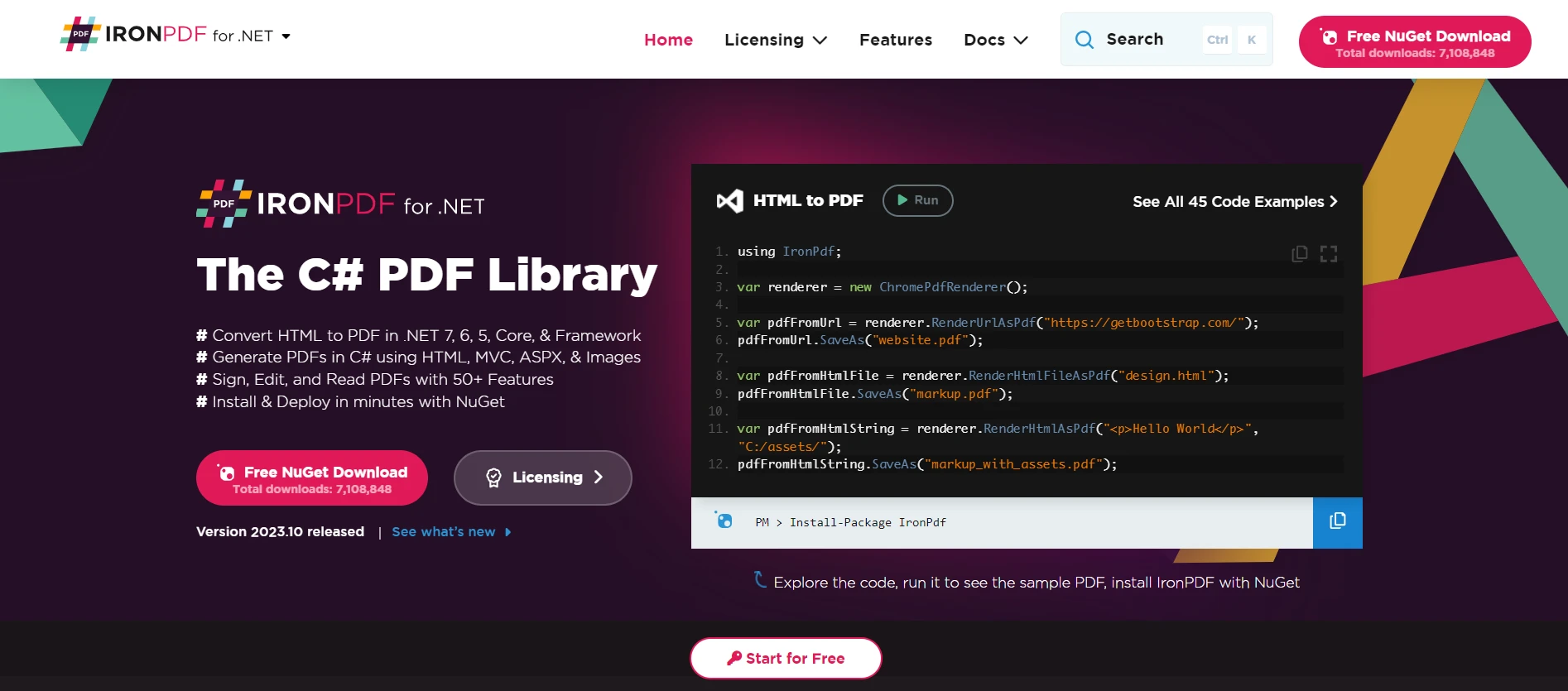
IronPDF vereinfacht die PDF-Erstellung in C#, indem es Entwicklern ermöglicht, schnell und mühelos PDF-Inhalte zu erstellen, zu bearbeiten und zu lesen. Angesichts des Schwerpunkts unseres Themas auf mathematischen Funktionen und Rundung kann IronPDF von unschätzbarem Wert sein, wenn Sie Berichte erstellen müssen, die diese Operationen zeigen, insbesondere in einem gut formatierten PDF-Dokument. Anstatt sich mit Drittanbieteranwendungen oder manuellen Exporten herumzuschlagen, können Sie direkt aus Ihren C#-Anwendungen PDF-Dateien erstellen, verwalten und manipulieren.
IronPDF überzeugt in der HTML-zu-PDF-Konvertierung, indem es den originalen Layouts und Stilen präzise erhält. Es ist ideal zur Erstellung von PDFs aus webbasierten Inhalten wie Berichten, Rechnungen und Dokumentationen. Mit Unterstützung für HTML-Dateien, URLs und rohe HTML-Strings erstellt IronPDF problemlos hochwertige PDF-Dokumente.
using IronPdf;

class Program
{
    static void Main(string[] args)
    {
        var renderer = new ChromePdfRenderer();

        // 1. Convert HTML String to PDF
        var htmlContent = "<h1>Hello, IronPDF!</h1><p>This is a PDF from an HTML string.</p>";
        var pdfFromHtmlString = renderer.RenderHtmlAsPdf(htmlContent);
        pdfFromHtmlString.SaveAs("HTMLStringToPDF.pdf");

        // 2. Convert HTML File to PDF
        var htmlFilePath = "path_to_your_html_file.html"; // Specify the path to your HTML file
        var pdfFromHtmlFile = renderer.RenderHtmlFileAsPdf(htmlFilePath);
        pdfFromHtmlFile.SaveAs("HTMLFileToPDF.pdf");

        // 3. Convert URL to PDF
        var url = "http://ironpdf.com"; // Specify the URL
        var pdfFromUrl = renderer.RenderUrlAsPdf(url);
        pdfFromUrl.SaveAs("URLToPDF.pdf");
    }
}
using IronPdf;

class Program
{
    static void Main(string[] args)
    {
        var renderer = new ChromePdfRenderer();

        // 1. Convert HTML String to PDF
        var htmlContent = "<h1>Hello, IronPDF!</h1><p>This is a PDF from an HTML string.</p>";
        var pdfFromHtmlString = renderer.RenderHtmlAsPdf(htmlContent);
        pdfFromHtmlString.SaveAs("HTMLStringToPDF.pdf");

        // 2. Convert HTML File to PDF
        var htmlFilePath = "path_to_your_html_file.html"; // Specify the path to your HTML file
        var pdfFromHtmlFile = renderer.RenderHtmlFileAsPdf(htmlFilePath);
        pdfFromHtmlFile.SaveAs("HTMLFileToPDF.pdf");

        // 3. Convert URL to PDF
        var url = "http://ironpdf.com"; // Specify the URL
        var pdfFromUrl = renderer.RenderUrlAsPdf(url);
        pdfFromUrl.SaveAs("URLToPDF.pdf");
    }
}
Imports IronPdf
Friend Class Program
Shared Sub Main(ByVal args() As String)
Dim renderer = New ChromePdfRenderer()
' 1. Convert HTML String to PDF
Dim htmlContent = "<h1>Hello, IronPDF!</h1><p>This is a PDF from an HTML string.</p>"
Dim pdfFromHtmlString = renderer.RenderHtmlAsPdf(htmlContent)
pdfFromHtmlString.SaveAs("HTMLStringToPDF.pdf")
' 2. Convert HTML File to PDF
Dim htmlFilePath = "path_to_your_html_file.html" ' Specify the path to your HTML file
Dim pdfFromHtmlFile = renderer.RenderHtmlFileAsPdf(htmlFilePath)
pdfFromHtmlFile.SaveAs("HTMLFileToPDF.pdf")
' 3. Convert URL to PDF
Dim url = "http://ironpdf.com" ' Specify the URL
Dim pdfFromUrl = renderer.RenderUrlAsPdf(url)
pdfFromUrl.SaveAs("URLToPDF.pdf")
End Sub
End Class
Imports IronPdf

Friend Class Program
	Shared Sub Main(ByVal args() As String)
		Dim renderer = New ChromePdfRenderer()

		' 1. Convert HTML String to PDF
		Dim htmlContent = "<h1>Hello, IronPDF!</h1><p>This is a PDF from an HTML string.</p>"
		Dim pdfFromHtmlString = renderer.RenderHtmlAsPdf(htmlContent)
		pdfFromHtmlString.SaveAs("HTMLStringToPDF.pdf")

		' 2. Convert HTML File to PDF
		Dim htmlFilePath = "path_to_your_html_file.html" ' Specify the path to your HTML file
		Dim pdfFromHtmlFile = renderer.RenderHtmlFileAsPdf(htmlFilePath)
		pdfFromHtmlFile.SaveAs("HTMLFileToPDF.pdf")

		' 3. Convert URL to PDF
		Dim url = "http://ironpdf.com" ' Specify the URL
		Dim pdfFromUrl = renderer.RenderUrlAsPdf(url)
		pdfFromUrl.SaveAs("URLToPDF.pdf")
	End Sub
End Class
IronXL
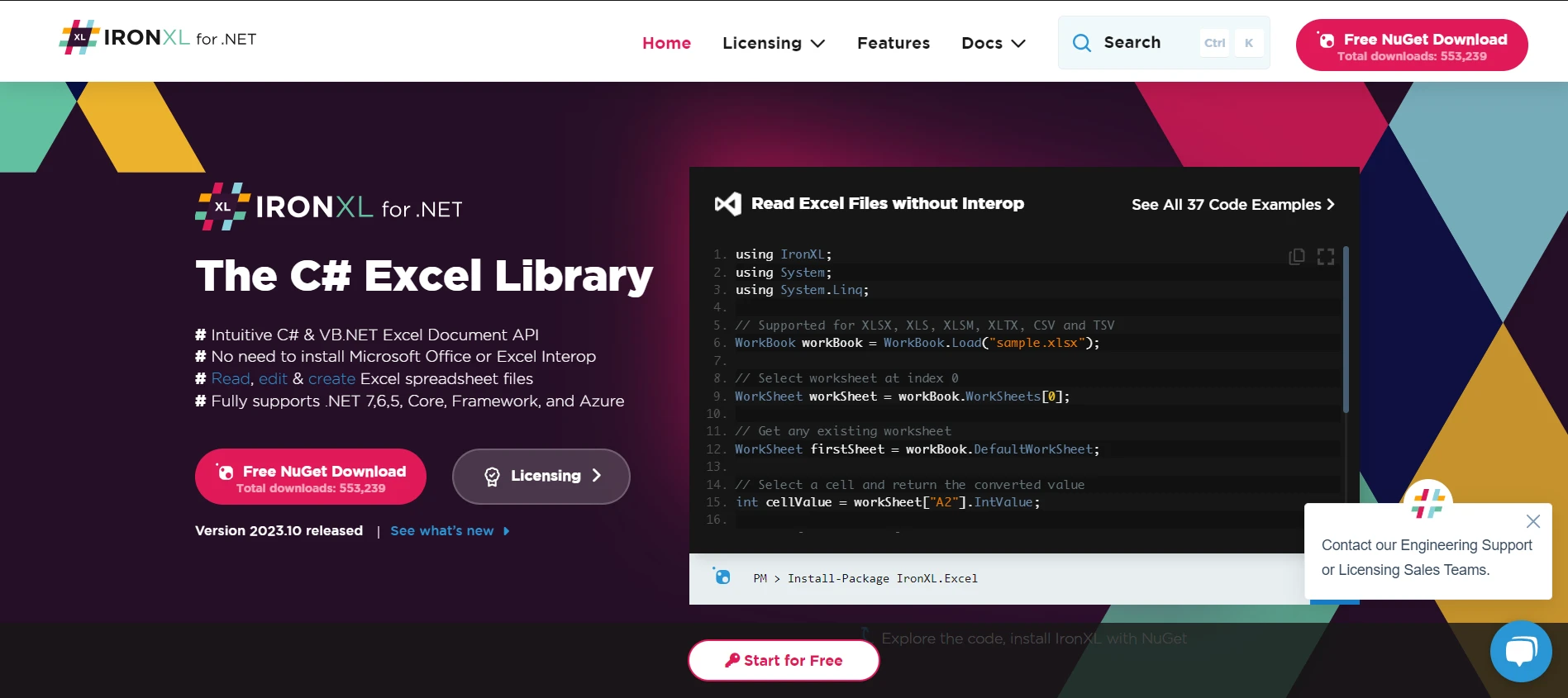
Beim Umgang mit Excel-Operationen vereinfacht IronXL das Excel-Datenmanagement in C#. Excel enthält oft Daten mit Dezimalzahlen und Operationen wie Math.Floor können eine wesentliche Rolle bei der Datenmanipulation spielen. IronXL vereinfacht den Prozess des Lesens, Schreibens und Umgangs mit Excel-Tabellen in C#. Wenn Sie jemals große Datensätze verwalten oder Operationen an Zellwerten durchführen mussten, kann IronXL den Prozess nahtlos gestalten und Ihnen dennoch die Flexibilität geben, native C#-Funktionen zu verwenden.
IronOCR
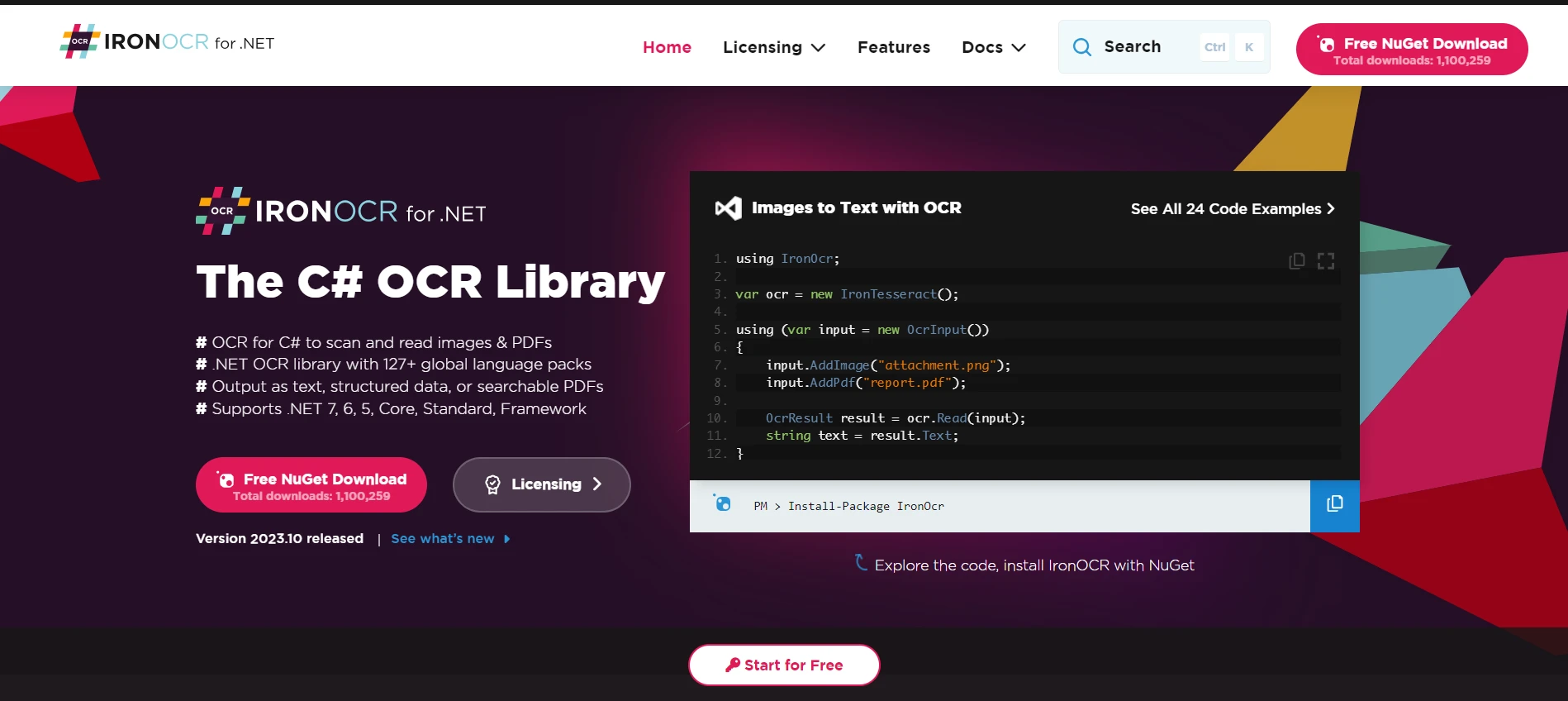
Die optische Zeichenerkennung, oder OCR, hat sich zu einem wesentlichen Werkzeug in der modernen Softwareentwicklung entwickelt. IronOCR ermöglicht OCR-Textextraktion in C#-Anwendungen, indem es Entwicklern die Werkzeuge an die Hand gibt, um Bilder und Dokumente zu scannen, Text zu extrahieren und in umsetzbare Daten zu verwandeln. Wenn Sie beispielsweise gescannte Dokumente mit numerischen Daten hätten, könnten Sie nach der Extraktion dieser Daten mit IronOCR Funktionen wie Math.Floor zur Verarbeitung oder zum Abrunden dieser Zahlen verwenden.
IronBarcode
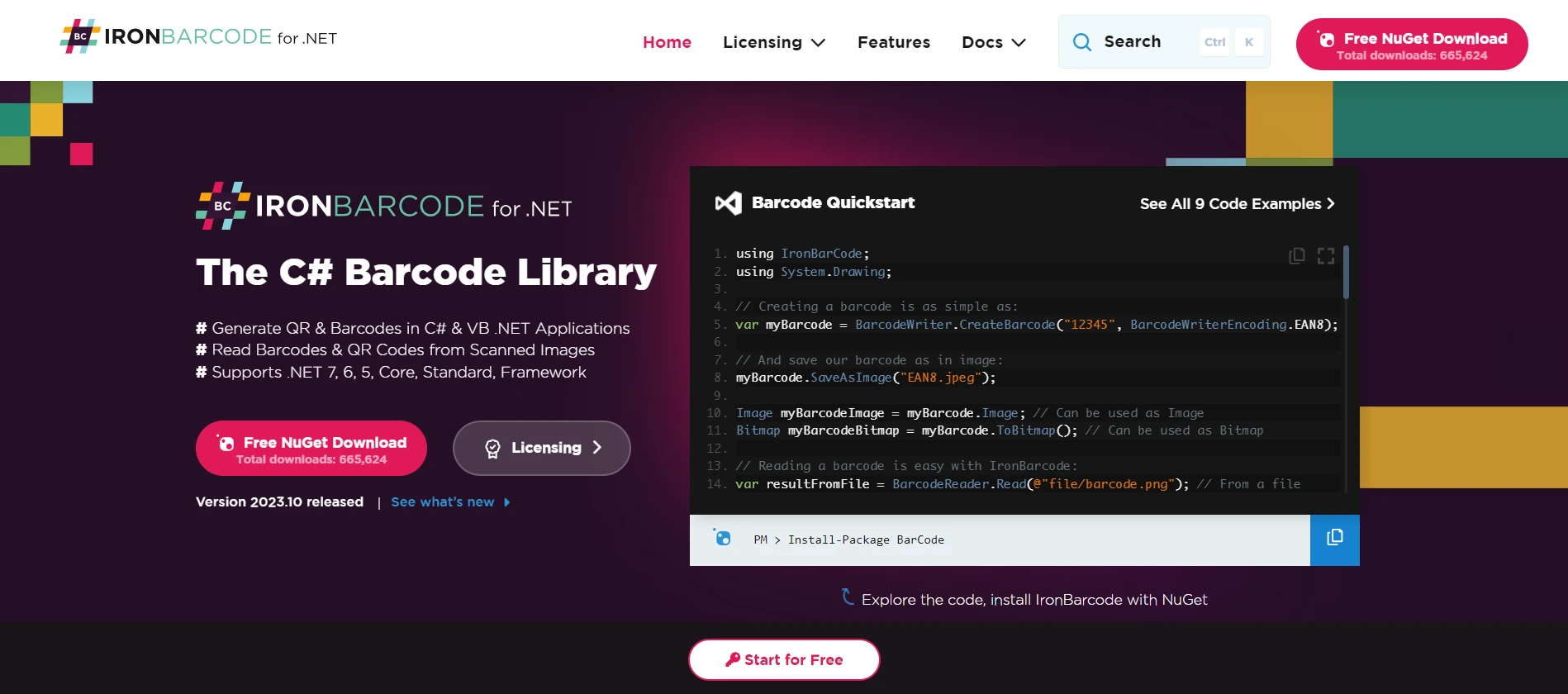
Barcodes spielen eine entscheidende Rolle im Bestandsmanagement, bei der Produktidentifikation und mehr. IronBarcode bereichert C# um Barcode-Funktionen, die Entwicklern ermöglichen, Barcodes nahtlos zu erstellen, zu lesen und zu bearbeiten. Wie bei jeder Datenverwaltungsaufgabe ist die Fähigkeit zur Manipulation und Analyse numerischer Daten, möglicherweise unter Verwendung mathematischer Funktionen, entscheidend. IronBarcode stellt sicher, dass Sie, wenn Sie die Daten aus Barcodes haben, sie effizient mit C# bearbeiten können.
Abschluss
C# bietet von Haus aus eine Fülle von Funktionen, aber mit der Ergänzung von spezialisierten Werkzeugen wie denen in der Iron Suite hebt C#-Fähigkeiten für Entwickler auf ein höheres Niveau, werden seine Fähigkeiten erheblich erweitert. Ob Sie Zahlen aus einer Excel-Tabelle mit IronXL abrunden oder Berichte mit IronPDF erstellen, das Verständnis von Kernmethoden in C# und deren Aufwertung mit diesen fortschrittlichen Werkzeugen bildet eine leistungsstarke Kombination für Entwickler.
Darüber hinaus ist es erwähnenswert, dass jedes Produkt in der Iron Suite wirtschaftlich erschwinglich ist. Einzellizenzen für jedes Produkt beginnen bei $999. Was noch besser ist? Wenn Sie darüber nachdenken, sie auszuprobieren, bietet jedes Produkt eine kostenlose Testversion der Iron Software-Produkte. Für diejenigen, die umfassende Lösungen suchen, gibt es ein großartiges Angebot: Sie können die gesamte Iron Suite zu einem gebündelten Preis kaufen, was einen ausgezeichneten Wert bietet und sicherstellt, dass Sie ein vollständiges Arsenal an Werkzeugen zur Verfügung haben.























