using IronPdf;

// Disable local disk access or cross-origin requests
Installation.EnableWebSecurity = true;

// Instantiate Renderer
var renderer = new ChromePdfRenderer();

// Create a PDF from a HTML string using C#
var pdf = renderer.RenderHtmlAsPdf("<h1>Hello World</h1>");

// Export to a file or Stream
pdf.SaveAs("output.pdf");

// Advanced Example with HTML Assets
// Load external html assets: Images, CSS and JavaScript.
// An optional BasePath 'C:\site\assets\' is set as the file location to load assets from
var myAdvancedPdf = renderer.RenderHtmlAsPdf("<img src='icons/iron.png'>", @"C:\site\assets\");
myAdvancedPdf.SaveAs("html-with-assets.pdf");
using IronPdf;// Disable local disk access or cross-origin requestsInstallation.EnableWebSecurity = true;// Instantiate Renderervar renderer = new ChromePdfRenderer();// Create a PDF from a HTML string using C#var pdf = renderer.RenderHtmlAsPdf("<h1>Hello World</h1>");// Export to a file or Streampdf.SaveAs("output.pdf");// Advanced Example with HTML Assets// Load external html assets: Images, CSS and JavaScript.// An optional BasePath 'C:\site\assets\' is set as the file location to load assets fromvar myAdvancedPdf = renderer.RenderHtmlAsPdf("<img src='icons/iron.png'>", @"C:\site\assets\");myAdvancedPdf.SaveAs("html-with-assets.pdf");
PM >Install-Package IronPdf
Install-Package IronPdf
ENTWICKLER-UPDATES
Newtonsoft Jsonpath (Wie es für Entwickler funktioniert)
Wenn Sie jemals mit JSON-Daten in .NET gearbeitet haben, sind Sie wahrscheinlich auf die [**Newtonsoft.Json**](http://newtonsoft.com/json)-Bibliothek gestoßen, ein beliebtes, leistungsstarkes JSON-Framework for .NET. Dieses Tutorial soll Anfängern und fortgeschrittenen Benutzern helfen, diese leistungsstarke Bibliothek effektiv zu verstehen und zu nutzen, mit einem Fokus auf ihre Systemreferenzen, Dokumentation und relevante Release-Updates.
## Einstieg
Um Newtonsoft.Json zu verwenden, müssen Sie es zuerst in Ihr .NET-Projekt installieren. Dies kann über NuGet, den .NET-Paketmanager, erfolgen. Geben Sie in der NuGet-Paketmanager-Konsole folgendes ein:
```shell
:InstallCmd Install-Package Newtonsoft.Json
```
Nach erfolgreicher Installation fügen Sie die Bibliothek zu Ihrem .NET-Projekt hinzu, indem Sie die folgende Using-Direktive hinzufügen:
```csharp
using Newtonsoft.Json;
```
## JSON mit `Newtonsoft.JSON` analysieren
JSON zu parsen bedeutet im Wesentlichen, einen String im JSON-Format in eine nutzbare Datenstruktur in Ihrer .NET-Anwendung umzuwandeln. Mit Newtonsoft.Json ist der Prozess einfach.
Schauen wir uns ein Beispiel für ein JSON-Objekt für eine Person an:
```json
{
    "Name": "Iron Developer",
    "Age": 30,
    "Email": "irondeveloper@ironsoftware.com"
}
```
Wir können diesen JSON-String in ein C#-Objekt umwandeln, indem wir die `JsonConvert.DeserializeObject<t>()`-Methode verwenden, wobei **`T`** der Typ des Objekts ist, das wir erstellen möchten. In diesem Fall erstellen wir eine `Person`-Klasse und wandeln das JSON in diese um.
```csharp
public class Person
{
    public string Name { get; set; }
    public int Age { get; set; }
    public string Email { get; set; }
}

string jsonString = "JSON string here";
Person person = JsonConvert.DeserializeObject<Person>(jsonString);
```
Nun wird das `person`-Objekt die Werte aus dem JSON-String enthalten.
## Arbeiten mit JSON-Dateien
Oft müssen Sie JSON-Daten von oder in eine Datei lesen oder schreiben. Schauen wir uns an, wie wir das mit Newtonsoft.Json machen können. Wir verwenden die `File`-Klasse aus dem `System.IO`-Namespace in diesem Fall.
Um eine JSON-Datei zu lesen und in ein Objekt zu parsen:
```csharp
string path = "path to your json file";
string jsonString = File.ReadAllText(path);
Person person = JsonConvert.DeserializeObject<Person>(jsonString);
```
Um ein Objekt in eine JSON-Datei zu schreiben:
```csharp
Person person = new Person()
{
Name = "John Doe",
Age = 30,
Email = "johndoe@example.com"
};
string path = "path to your json file";
string jsonString = JsonConvert.SerializeObject(person);
File.WriteAllText(path, jsonString);
```
## Arbeiten mit Arrays
In einigen Fällen wird Ihr JSON Arrays enthalten. Zum Beispiel könnte ein `Person`-Objekt ein Array von `Friends` enthalten:
```json
{
"Name": "John Doe",
"Friends": [
{
"Name": "Jane Doe",
"Age": 28
},
{
"Name": "Billy",
"Age": 25
}
]
}
```
Sie können die `foreach`-Schleife verwenden, um über das JSON-Array zu iterieren:
```csharp
JArray friends = (JArray)jsonObject["Friends"];
foreach (JObject friend in friends)
{
string friendName = (string)friend["Name"];
Console.WriteLine(friendName);
}
```
*Hinweis: `jsonObject` sollte durch ein tatsächliches JObject ersetzt werden, das aus dem JSON initialisiert wurde.*
## JSON modifizieren und schreiben
Newtonsoft.Json macht es einfach, JSON zu modifizieren und zu schreiben. Angenommen, Sie müssen den `Age`-Wert unseres `Person`-Objekts aktualisieren.
```csharp
jsonObject["Age"] = 31; // Update the age
```
Und dann schreiben Sie es zurück in einen String:
```csharp
string updatedJson = jsonObject.ToString();
File.WriteAllText(path, updatedJson); // Write back to the file
```
*Hinweis: `jsonObject` sollte durch ein tatsächliches JObject ersetzt werden, das aus dem JSON initialisiert wurde.*
## LINQ zu JSON
Newtonsoft.Json bietet auch Funktionen zum Abfragen und Bearbeiten von JSON-Objekten mit LINQ (Language Integrated Query). Dies ist sehr leistungsstark, da es Ihnen ermöglicht, alle standardmäßigen LINQ-Operatoren zu verwenden, um ein JSON-Objekt zu durchsuchen, genau wie Sie es bei XML oder einer Sammlung von Objekten tun würden.
Hier ist ein Beispiel, das zeigt, wie Sie die Namen aller **Freunde** unter 30 Jahren abrufen können:
```csharp
var youngFriends = jsonObject["Friends"].Where(f => (int)f["Age"] < 30)
.Select(f => (string)f["Name"]);
foreach (string name in youngFriends)
{
Console.WriteLine(name);
}
```
*Hinweis: `jsonObject` sollte durch ein tatsächliches JObject ersetzt werden, das aus dem JSON initialisiert wurde.*
## Einführung in IronPDF
[Erfahren Sie mehr über IronPDF](https://ironpdf.com) ist eine beliebte Bibliothek im .NET-Ökosystem, die es Entwicklern ermöglicht, [PDF-Dateien zu erstellen, zu bearbeiten und Daten daraus zu extrahieren](/tutorials/html-to-pdf/). Es ist unglaublich vielseitig und arbeitet nahtlos mit anderen Bibliotheken zusammen, einschließlich Newtonsoft.Json.
IronPDF überzeugt in der [HTML-zu-PDF](/tutorials/html-to-pdf/)-Konvertierung, indem es den originalen Layouts und Stilen präzise erhält. Es ist ideal zur Erstellung von PDFs aus webbasierten Inhalten wie Berichten, Rechnungen und Dokumentationen. Mit Unterstützung für HTML-Dateien, URLs und rohe HTML-Strings erstellt IronPDF problemlos hochwertige PDF-Dokumente.
```csharp
using IronPdf;
class Program
{
static void Main(string[] args)
{
var renderer = new ChromePdfRenderer();
// 1. Convert HTML String to PDF
var htmlContent = "<h1>Hello, IronPDF!</h1><p>This is a PDF from an HTML string.</p>";
var pdfFromHtmlString = renderer.RenderHtmlAsPdf(htmlContent);
pdfFromHtmlString.SaveAs("HTMLStringToPDF.pdf");
// 2. Convert HTML File to PDF
var htmlFilePath = "path_to_your_html_file.html"; // Specify the path to your HTML file
var pdfFromHtmlFile = renderer.RenderHtmlFileAsPdf(htmlFilePath);
pdfFromHtmlFile.SaveAs("HTMLFileToPDF.pdf");
// 3. Convert URL to PDF
var url = "http://ironpdf.com"; // Specify the URL
var pdfFromUrl = renderer.RenderUrlAsPdf(url);
pdfFromUrl.SaveAs("URLToPDF.pdf");
}
}
```
Nehmen wir an, wir haben eine Anforderung, bei der wir JSON-Daten haben und daraus einen PDF-Bericht erstellen möchten. Wir können Newtonsoft.Json für das Parsen der JSON-Daten und IronPDF für die Erstellung des PDFs verwenden. Schauen wir, wie wir das machen.
### Installation von IronPDF
Wie Newtonsoft.Json ist IronPDF auch über NuGet verfügbar. Sie können es mit dem folgenden Befehl installieren:
```shell
:ProductInstall
```
Dann können Sie es in Ihr Projekt einbinden, indem Sie hinzufügen:
```csharp
using IronPdf;
```
### Anwendungsfall 1: PDF-Erstellung aus JSON-Daten
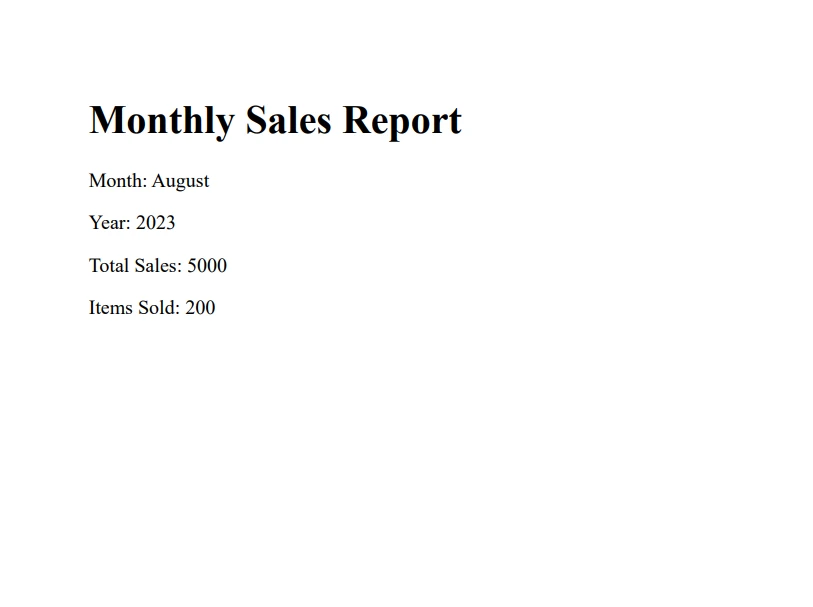
In diesem Anwendungsfall zeigen wir, wie Sie mit Newtonsoft.Json und IronPDF einen PDF-Bericht aus JSON-Daten erstellen können. Dies könnte besonders nützlich für Anwendungen sein, die dynamische Berichte basierend auf Daten im JSON-Format erstellen.
Hier ist eine Beispiel-JSON-Datei, mit der wir arbeiten werden:
```json
{
"Title": "Sales Report",
"Month": "August",
"Year": "2023",
"TotalSales": "10000",
"ItemsSold": "500"
}
```
Diese JSON-Daten stellen einen einfachen Verkaufsbericht dar.
Der erste Schritt besteht darin, die JSON-Datei, hier 'data.json', zu lesen und mit Newtonsoft.Json in ein Wörterbuch zu parsen:
```csharp
string jsonString = File.ReadAllText("data.json");
var reportData = JsonConvert.DeserializeObject<Dictionary<string, string>>(jsonString);
```
Nachdem Sie diesen Code ausgeführt haben, haben Sie ein Wörterbuch namens `reportData`, das Schlüssel-Wert-Paare enthält, die die Eigenschaften und deren Werte in der JSON-Datei darstellen.
Als Nächstes erstellen wir eine HTML-Vorlage mit den Daten aus `reportData`. Die Schlüssel aus dem `reportData`-Wörterbuch werden verwendet, um die entsprechenden Werte in das HTML einzufügen:
```csharp
string htmlContent = $@"
<html>
<head><title>{reportData["Title"]}</title></head>
<body>
<h1>{reportData["Title"]}</h1>
<p>Month: {reportData["Month"]}</p>
<p>Year: {reportData["Year"]}</p>
<p>Total Sales: {reportData["TotalSales"]}</p>
<p>Items Sold: {reportData["ItemsSold"]}</p>
</body>
</html>";
```
Zuletzt verwenden wir **IronPDF**, um den HTML-Code in ein PDF-Dokument zu konvertieren. Wir verwenden `ChromePdfRenderer`, um einen PDF-Renderer zu erstellen, nutzen ihn, um das HTML in ein PDF zu konvertieren, und speichern dann das PDF:
```csharp
var renderer = new ChromePdfRenderer();
var pdf = renderer.RenderHtmlAsPdf(htmlContent);
pdf.SaveAs("Report.pdf");
```
### Anwendungsfall 2: JSON zu PDF-Formular
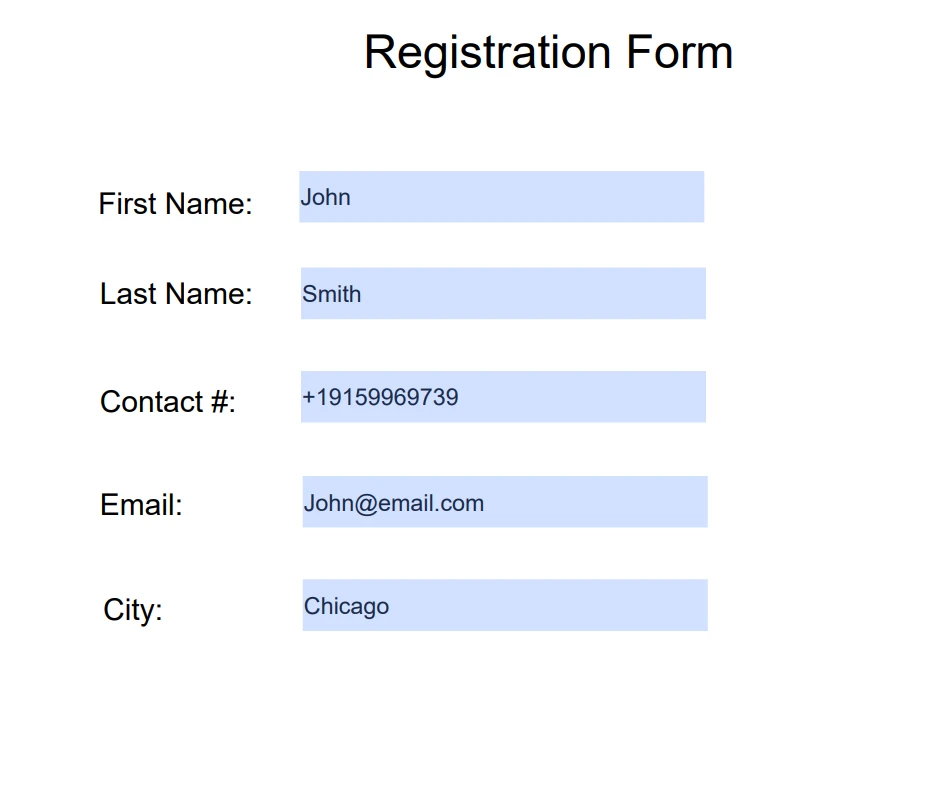
In diesem Anwendungsfall werden wir JSON-Daten lesen, um Formularfelder in einem PDF-Dokument auszufüllen. Für dieses Beispiel nehmen wir an, dass wir folgende JSON-Daten haben:
```json
{
"FirstName": "John",
"LastName": "Smith",
"PhoneNumber": "+19159969739",
"Email": "John@email.com",
"City": "Chicago"
}
```
Dieses JSON stellt persönliche Informationen für eine Person dar.
Zuerst verwenden wir `Newtonsoft.Json`, um die JSON-Daten aus der Datei zu lesen und in ein Wörterbuch zu analysieren:
```csharp
string jsonString = File.ReadAllText("data.json");
var person = JsonConvert.DeserializeObject<Dictionary<string, string>>(jsonString);
```
Diese Software erstellt ein Wörterbuch namens `person` mit Schlüsseln "`FirstName`", "`LastName`", "`PhoneNumber`", "`Email`" und "`City`" und deren entsprechenden Werten.
Als Nächstes öffnen wir das PDF-Dokument mit `IronPdf` und erhalten das Formular:
```csharp
var doc = PdfDocument.FromFile("myPdfForm.pdf");
var form = doc.Form;
```
Wir können jetzt das `person`-Wörterbuch verwenden, um die Formularfelder im PDF-Dokument auszufüllen:
```csharp
form.Fields[0].Value = person["FirstName"];
form.Fields[1].Value = person["LastName"];
form.Fields[2].Value = person["PhoneNumber"];
form.Fields[3].Value = person["Email"];
form.Fields[4].Value = person["City"];
```
Jedes Formularfeld ist mit einem Schlüssel aus dem **Person**-Wörterbuch verknüpft.
Schließlich speichern wir das ausgefüllte PDF-Formular:
```csharp
doc.SaveAs("myPdfForm_filled.pdf");
```
Diese Methode erstellt ein neues PDF-Dokument mit den Formularfeldern, die mit den Daten aus der JSON-Datei ausgefüllt sind.
Dies demonstriert, wie Sie `Newtonsoft.Json` effektiv nutzen können, um JSON-Daten zu analysieren und IronPDF zu verwenden, um PDF-Dokumente zu manipulieren.
## Anwendungsfall 3: PDF-Metadaten in JSON
Verwenden Sie zunächst IronPDF, um die Metadaten aus dem PDF zu extrahieren:
```csharp
var pdf = IronPdf.PdfDocument.FromFile("document.pdf");
var metadata = pdf.MetaData;
```
Dann serialisieren wir diese Daten in einen JSON-String mit `Newtonsoft.Json`:
```csharp
string jsonString = JsonConvert.SerializeObject(metadata, Formatting.Indented);
File.WriteAllText("metadata.json", jsonString);
```
In diesem Code enthält das `metadata`-Objekt Eigenschaften wie `Author`, `Title`, `CreateDate`, usw. Diese werden in einen JSON-String serialisiert und in eine Datei namens "metadata.json" geschrieben.
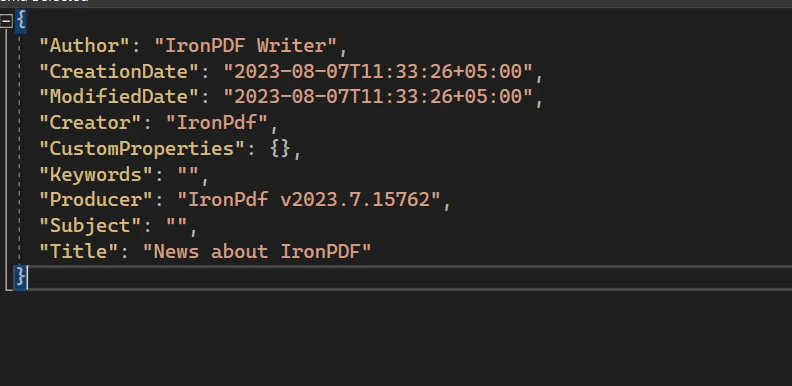
Durch die Kombination von Newtonsoft.Json und IronPDF können Sie Daten zwischen PDF-Dateien und JSON konvertieren und so eine Vielzahl von Anwendungsfällen abdecken.
## Abschluss
Abschließend bieten Ihnen Newtonsoft.Json und IronPDF zusammen eine leistungsstarke und flexible Lösung zum Umgang mit JSON-Daten und zur Erstellung von PDF-Dateien in .NET. Durch das Parsen von JSON-Daten in .NET-Objekte oder Wörterbücher mit Newtonsoft.Json können wir diese Daten manipulieren und in verschiedenen Kontexten verwenden, wie z.B. beim Ausfüllen von PDF-Formularen oder Erstellen dynamischer PDF-Berichte aus Vorlagen. IronPDF macht die Erstellung und Verwaltung von PDFs einfach und effizient.
Dieser Artikel hat die Bibliotheken eingeführt und einige ihrer Kernfunktionen hervorgehoben. Beide Bibliotheken bieten jedoch viel mehr. Wir empfehlen Ihnen dringend, ihre umfangreiche Dokumentation zu lesen, um sich eingehend mit ihren Funktionen und Fähigkeiten zu beschäftigen.
Wenn Sie daran interessiert sind, IronPDF auszuprobieren, bieten sie eine [kostenlose Testversion von IronPDF](trial-license) an, damit Sie seine Funktionen erkunden und evaluieren können, ob es Ihren Anforderungen entspricht, bevor Sie es kaufen. Sobald Sie sich entschieden haben, mit IronPDF weiterzumachen, beginnt die Lizenzierung bei [IronPDF Licensing Options](/licensing/), die den weiteren Zugang zu allen besprochenen Funktionen und Unterstützung und Updates einschließt. Dies stellt sicher, dass Sie die Werkzeuge und Unterstützung haben, um PDF-Dateien in Ihren .NET-Projekten effektiv zu erstellen, zu verwalten und zu bearbeiten.
Wenn Sie jemals mit JSON-Daten in .NET gearbeitet haben, sind Sie wahrscheinlich auf die Newtonsoft.Json-Bibliothek gestoßen, ein beliebtes, leistungsstarkes JSON-Framework for .NET. Dieses Tutorial soll Anfängern und fortgeschrittenen Benutzern helfen, diese leistungsstarke Bibliothek effektiv zu verstehen und zu nutzen, mit einem Fokus auf ihre Systemreferenzen, Dokumentation und relevante Release-Updates.
Einstieg
Um Newtonsoft.Json zu verwenden, müssen Sie es zuerst in Ihr .NET-Projekt installieren. Dies kann über NuGet, den .NET-Paketmanager, erfolgen. Geben Sie in der NuGet-Paketmanager-Konsole folgendes ein:
PM > Install-Package Newtonsoft.Json
Install-Package Newtonsoft.Json
Nach erfolgreicher Installation fügen Sie die Bibliothek zu Ihrem .NET-Projekt hinzu, indem Sie die folgende Using-Direktive hinzufügen:
using Newtonsoft.Json;
using Newtonsoft.Json;
ImportsNewtonsoft.Json
Imports Newtonsoft.Json
JSON mit Newtonsoft.JSON analysieren
JSON zu parsen bedeutet im Wesentlichen, einen String im JSON-Format in eine nutzbare Datenstruktur in Ihrer .NET-Anwendung umzuwandeln. Mit Newtonsoft.Json ist der Prozess einfach.
Schauen wir uns ein Beispiel für ein JSON-Objekt für eine Person an:
Wir können diesen JSON-String in ein C#-Objekt umwandeln, indem wir die JsonConvert.DeserializeObject<t>()-Methode verwenden, wobei T der Typ des Objekts ist, das wir erstellen möchten. In diesem Fall erstellen wir eine Person-Klasse und wandeln das JSON in diese um.
public class Person{ public stringName { get; set; } public intAge { get; set; } public stringEmail { get; set; }}string jsonString = "JSON string here";Person person = JsonConvert.DeserializeObject<Person>(jsonString);
public class Person
{
    public string Name { get; set; }
    public int Age { get; set; }
    public string Email { get; set; }
}

string jsonString = "JSON string here";
Person person = JsonConvert.DeserializeObject<Person>(jsonString);
Public Class Person Public Property Name() AsString Public Property Age() AsInteger Public Property Email() AsStringEnd ClassPrivate jsonString AsString = "JSON string here"Private person AsPerson = JsonConvert.DeserializeObject(OfPerson)(jsonString)
Public Class Person
	Public Property Name() As String
	Public Property Age() As Integer
	Public Property Email() As String
End Class

Private jsonString As String = "JSON string here"
Private person As Person = JsonConvert.DeserializeObject(Of Person)(jsonString)
Nun wird das person-Objekt die Werte aus dem JSON-String enthalten.
Arbeiten mit JSON-Dateien
Oft müssen Sie JSON-Daten von oder in eine Datei lesen oder schreiben. Schauen wir uns an, wie wir das mit Newtonsoft.Json machen können. Wir verwenden die File-Klasse aus dem System.IO-Namespace in diesem Fall.
Um eine JSON-Datei zu lesen und in ein Objekt zu parsen:
string path = "path to your json file";string jsonString = File.ReadAllText(path);Person person = JsonConvert.DeserializeObject<Person>(jsonString);
string path = "path to your json file";
string jsonString = File.ReadAllText(path);
Person person = JsonConvert.DeserializeObject<Person>(jsonString);
Dim path AsString = "path to your json file"Dim jsonString AsString = File.ReadAllText(path)Dim person AsPerson = JsonConvert.DeserializeObject(OfPerson)(jsonString)
Dim path As String = "path to your json file"
Dim jsonString As String = File.ReadAllText(path)
Dim person As Person = JsonConvert.DeserializeObject(Of Person)(jsonString)
Um ein Objekt in eine JSON-Datei zu schreiben:
Person person = new Person() {Name = "John Doe",Age = 30,Email = "johndoe@example.com"};string path = "path to your json file";string jsonString = JsonConvert.SerializeObject(person);File.WriteAllText(path, jsonString);
Person person = new Person()
{
    Name = "John Doe",
    Age = 30,
    Email = "johndoe@example.com"
};

string path = "path to your json file";
string jsonString = JsonConvert.SerializeObject(person);
File.WriteAllText(path, jsonString);
Dim person As New Person() With { .Name = "John Doe", .Age = 30, .Email = "johndoe@example.com"}Dim path AsString = "path to your json file"Dim jsonString AsString = JsonConvert.SerializeObject(person)File.WriteAllText(path, jsonString)
Dim person As New Person() With {
	.Name = "John Doe",
	.Age = 30,
	.Email = "johndoe@example.com"
}

Dim path As String = "path to your json file"
Dim jsonString As String = JsonConvert.SerializeObject(person)
File.WriteAllText(path, jsonString)
Arbeiten mit Arrays
In einigen Fällen wird Ihr JSON Arrays enthalten. Zum Beispiel könnte ein Person-Objekt ein Array von Friends enthalten:
Dim friends AsJArray = CType(jsonObject("Friends"), JArray)For Each [friend] AsJObjectIn friends Dim friendName AsString = CStr([friend]("Name"))Console.WriteLine(friendName)Next [friend]
Dim friends As JArray = CType(jsonObject("Friends"), JArray)
For Each [friend] As JObject In friends
	Dim friendName As String = CStr([friend]("Name"))
	Console.WriteLine(friendName)
Next [friend]
Hinweis: jsonObject sollte durch ein tatsächliches JObject ersetzt werden, das aus dem JSON initialisiert wurde.
JSON modifizieren und schreiben
Newtonsoft.Json macht es einfach, JSON zu modifizieren und zu schreiben. Angenommen, Sie müssen den Age-Wert unseres Person-Objekts aktualisieren.
jsonObject["Age"] = 31; // Update the age
jsonObject["Age"] = 31; // Update the age
jsonObject("Age") = 31 ' Update the age
jsonObject("Age") = 31 ' Update the age
Und dann schreiben Sie es zurück in einen String:
string updatedJson = jsonObject.ToString();File.WriteAllText(path, updatedJson); // Write back to the file
string updatedJson = jsonObject.ToString();
File.WriteAllText(path, updatedJson); // Write back to the file
Dim updatedJson AsString = jsonObject.ToString()File.WriteAllText(path, updatedJson) ' Write back to the file
Dim updatedJson As String = jsonObject.ToString()
File.WriteAllText(path, updatedJson) ' Write back to the file
Hinweis: jsonObject sollte durch ein tatsächliches JObject ersetzt werden, das aus dem JSON initialisiert wurde.
LINQ zu JSON
Newtonsoft.Json bietet auch Funktionen zum Abfragen und Bearbeiten von JSON-Objekten mit LINQ (Language Integrated Query). Dies ist sehr leistungsstark, da es Ihnen ermöglicht, alle standardmäßigen LINQ-Operatoren zu verwenden, um ein JSON-Objekt zu durchsuchen, genau wie Sie es bei XML oder einer Sammlung von Objekten tun würden.
Hier ist ein Beispiel, das zeigt, wie Sie die Namen aller Freunde unter 30 Jahren abrufen können:
var youngFriends = jsonObject["Friends"].Where(f => (int)f["Age"] < 30) .Select(f => (string)f["Name"]);foreach (string name in youngFriends){Console.WriteLine(name);}
var youngFriends = jsonObject["Friends"].Where(f => (int)f["Age"] < 30)
                                        .Select(f => (string)f["Name"]);
foreach (string name in youngFriends)
{
    Console.WriteLine(name);
}
ImportsSystemDim youngFriends = jsonObject("Friends").Where(Function(f) CInt(Math.Truncate(f("Age"))) < 30).Select(Function(f) CStr(f("Name")))For Each name AsStringIn youngFriendsConsole.WriteLine(name)Next name
Imports System

Dim youngFriends = jsonObject("Friends").Where(Function(f) CInt(Math.Truncate(f("Age"))) < 30).Select(Function(f) CStr(f("Name")))
For Each name As String In youngFriends
	Console.WriteLine(name)
Next name
Hinweis: jsonObject sollte durch ein tatsächliches JObject ersetzt werden, das aus dem JSON initialisiert wurde.
IronPDF überzeugt in der HTML-zu-PDF-Konvertierung, indem es den originalen Layouts und Stilen präzise erhält. Es ist ideal zur Erstellung von PDFs aus webbasierten Inhalten wie Berichten, Rechnungen und Dokumentationen. Mit Unterstützung für HTML-Dateien, URLs und rohe HTML-Strings erstellt IronPDF problemlos hochwertige PDF-Dokumente.
using IronPdf;class Program{ static voidMain(string[] args) { var renderer = new ChromePdfRenderer(); // 1. Convert HTML String to PDF var htmlContent = "<h1>Hello, IronPDF!</h1><p>This is a PDF from an HTML string.</p>"; var pdfFromHtmlString = renderer.RenderHtmlAsPdf(htmlContent); pdfFromHtmlString.SaveAs("HTMLStringToPDF.pdf"); // 2. Convert HTML File to PDF var htmlFilePath = "path_to_your_html_file.html"; // Specify the path to your HTML file var pdfFromHtmlFile = renderer.RenderHtmlFileAsPdf(htmlFilePath); pdfFromHtmlFile.SaveAs("HTMLFileToPDF.pdf"); // 3. Convert URL to PDF var url = "http://ironpdf.com"; // Specify the URL var pdfFromUrl = renderer.RenderUrlAsPdf(url); pdfFromUrl.SaveAs("URLToPDF.pdf"); }}
using IronPdf;

class Program
{
    static void Main(string[] args)
    {
        var renderer = new ChromePdfRenderer();

        // 1. Convert HTML String to PDF
        var htmlContent = "<h1>Hello, IronPDF!</h1><p>This is a PDF from an HTML string.</p>";
        var pdfFromHtmlString = renderer.RenderHtmlAsPdf(htmlContent);
        pdfFromHtmlString.SaveAs("HTMLStringToPDF.pdf");

        // 2. Convert HTML File to PDF
        var htmlFilePath = "path_to_your_html_file.html"; // Specify the path to your HTML file
        var pdfFromHtmlFile = renderer.RenderHtmlFileAsPdf(htmlFilePath);
        pdfFromHtmlFile.SaveAs("HTMLFileToPDF.pdf");

        // 3. Convert URL to PDF
        var url = "http://ironpdf.com"; // Specify the URL
        var pdfFromUrl = renderer.RenderUrlAsPdf(url);
        pdfFromUrl.SaveAs("URLToPDF.pdf");
    }
}
ImportsIronPdfFriend Class ProgramShared Sub Main(ByVal args() AsString) Dim renderer = New ChromePdfRenderer() ' 1. Convert HTML String to PDF Dim htmlContent = "<h1>Hello, IronPDF!</h1><p>This is a PDF from an HTML string.</p>" Dim pdfFromHtmlString = renderer.RenderHtmlAsPdf(htmlContent) pdfFromHtmlString.SaveAs("HTMLStringToPDF.pdf") ' 2. Convert HTML File to PDF Dim htmlFilePath = "path_to_your_html_file.html" ' Specify the path to your HTML file Dim pdfFromHtmlFile = renderer.RenderHtmlFileAsPdf(htmlFilePath) pdfFromHtmlFile.SaveAs("HTMLFileToPDF.pdf") ' 3. Convert URL to PDF Dim url = "http://ironpdf.com" ' Specify the URL Dim pdfFromUrl = renderer.RenderUrlAsPdf(url) pdfFromUrl.SaveAs("URLToPDF.pdf") End SubEnd Class
Imports IronPdf

Friend Class Program
	Shared Sub Main(ByVal args() As String)
		Dim renderer = New ChromePdfRenderer()

		' 1. Convert HTML String to PDF
		Dim htmlContent = "<h1>Hello, IronPDF!</h1><p>This is a PDF from an HTML string.</p>"
		Dim pdfFromHtmlString = renderer.RenderHtmlAsPdf(htmlContent)
		pdfFromHtmlString.SaveAs("HTMLStringToPDF.pdf")

		' 2. Convert HTML File to PDF
		Dim htmlFilePath = "path_to_your_html_file.html" ' Specify the path to your HTML file
		Dim pdfFromHtmlFile = renderer.RenderHtmlFileAsPdf(htmlFilePath)
		pdfFromHtmlFile.SaveAs("HTMLFileToPDF.pdf")

		' 3. Convert URL to PDF
		Dim url = "http://ironpdf.com" ' Specify the URL
		Dim pdfFromUrl = renderer.RenderUrlAsPdf(url)
		pdfFromUrl.SaveAs("URLToPDF.pdf")
	End Sub
End Class
Nehmen wir an, wir haben eine Anforderung, bei der wir JSON-Daten haben und daraus einen PDF-Bericht erstellen möchten. Wir können Newtonsoft.Json für das Parsen der JSON-Daten und IronPDF für die Erstellung des PDFs verwenden. Schauen wir, wie wir das machen.
Installation von IronPDF
Wie Newtonsoft.Json ist IronPDF auch über NuGet verfügbar. Sie können es mit dem folgenden Befehl installieren:
PM > Install-Package IronPdf
Install-Package IronPdf
Dann können Sie es in Ihr Projekt einbinden, indem Sie hinzufügen:
using IronPdf;
using IronPdf;
ImportsIronPdf
Imports IronPdf
Anwendungsfall 1: PDF-Erstellung aus JSON-Daten
In diesem Anwendungsfall zeigen wir, wie Sie mit Newtonsoft.Json und IronPDF einen PDF-Bericht aus JSON-Daten erstellen können. Dies könnte besonders nützlich für Anwendungen sein, die dynamische Berichte basierend auf Daten im JSON-Format erstellen.
Hier ist eine Beispiel-JSON-Datei, mit der wir arbeiten werden:
string jsonString = File.ReadAllText("data.json");
var reportData = JsonConvert.DeserializeObject<Dictionary<string, string>>(jsonString);
Dim jsonString AsString = File.ReadAllText("data.json")Dim reportData = JsonConvert.DeserializeObject(OfDictionary(OfString, String))(jsonString)
Dim jsonString As String = File.ReadAllText("data.json")
Dim reportData = JsonConvert.DeserializeObject(Of Dictionary(Of String, String))(jsonString)
Nachdem Sie diesen Code ausgeführt haben, haben Sie ein Wörterbuch namens reportData, das Schlüssel-Wert-Paare enthält, die die Eigenschaften und deren Werte in der JSON-Datei darstellen.
Als Nächstes erstellen wir eine HTML-Vorlage mit den Daten aus reportData. Die Schlüssel aus dem reportData-Wörterbuch werden verwendet, um die entsprechenden Werte in das HTML einzufügen:
Dim htmlContent As String = $"
<html>
<head><title>{reportData("Title")}</title></head>ignoreignore<body><h1>{reportData("Title")}</h1><p>Month: {reportData("Month")}</p><p>Year: {reportData("Year")}</p><p>Total Sales: {reportData("TotalSales")}</p><p>Items Sold: {reportData("ItemsSold")}</p></body></html>"
Zuletzt verwenden wir IronPDF, um den HTML-Code in ein PDF-Dokument zu konvertieren. Wir verwenden ChromePdfRenderer, um einen PDF-Renderer zu erstellen, nutzen ihn, um das HTML in ein PDF zu konvertieren, und speichern dann das PDF:
var renderer = new ChromePdfRenderer();var pdf = renderer.RenderHtmlAsPdf(htmlContent);pdf.SaveAs("Report.pdf");
var renderer = new ChromePdfRenderer();
var pdf = renderer.RenderHtmlAsPdf(htmlContent);
pdf.SaveAs("Report.pdf");
Dim renderer = New ChromePdfRenderer()Dim pdf = renderer.RenderHtmlAsPdf(htmlContent)pdf.SaveAs("Report.pdf")
Dim renderer = New ChromePdfRenderer()
Dim pdf = renderer.RenderHtmlAsPdf(htmlContent)
pdf.SaveAs("Report.pdf")
Anwendungsfall 2: JSON zu PDF-Formular
In diesem Anwendungsfall werden wir JSON-Daten lesen, um Formularfelder in einem PDF-Dokument auszufüllen. Für dieses Beispiel nehmen wir an, dass wir folgende JSON-Daten haben:
Dieses JSON stellt persönliche Informationen für eine Person dar.
Zuerst verwenden wir Newtonsoft.Json, um die JSON-Daten aus der Datei zu lesen und in ein Wörterbuch zu analysieren:
string jsonString = File.ReadAllText("data.json");var person = JsonConvert.DeserializeObject<Dictionary<string, string>>(jsonString);
string jsonString = File.ReadAllText("data.json");
var person = JsonConvert.DeserializeObject<Dictionary<string, string>>(jsonString);
Dim jsonString AsString = File.ReadAllText("data.json")Dim person = JsonConvert.DeserializeObject(OfDictionary(OfString, String))(jsonString)
Dim jsonString As String = File.ReadAllText("data.json")
Dim person = JsonConvert.DeserializeObject(Of Dictionary(Of String, String))(jsonString)
Diese Software erstellt ein Wörterbuch namens person mit Schlüsseln "FirstName", "LastName", "PhoneNumber", "Email" und "City" und deren entsprechenden Werten.
Als Nächstes öffnen wir das PDF-Dokument mit IronPdf und erhalten das Formular:
var doc = PdfDocument.FromFile("myPdfForm.pdf");var form = doc.Form;
var doc = PdfDocument.FromFile("myPdfForm.pdf");
var form = doc.Form;
Dim doc = PdfDocument.FromFile("myPdfForm.pdf")Dim form = doc.Form
Dim doc = PdfDocument.FromFile("myPdfForm.pdf")
Dim form = doc.Form
Wir können jetzt das person-Wörterbuch verwenden, um die Formularfelder im PDF-Dokument auszufüllen:
Jedes Formularfeld ist mit einem Schlüssel aus dem Person-Wörterbuch verknüpft.
Schließlich speichern wir das ausgefüllte PDF-Formular:
doc.SaveAs("myPdfForm_filled.pdf");
doc.SaveAs("myPdfForm_filled.pdf");
doc.SaveAs("myPdfForm_filled.pdf")
doc.SaveAs("myPdfForm_filled.pdf")
Diese Methode erstellt ein neues PDF-Dokument mit den Formularfeldern, die mit den Daten aus der JSON-Datei ausgefüllt sind.
Dies demonstriert, wie Sie Newtonsoft.Json effektiv nutzen können, um JSON-Daten zu analysieren und IronPDF zu verwenden, um PDF-Dokumente zu manipulieren.
Anwendungsfall 3: PDF-Metadaten in JSON
Verwenden Sie zunächst IronPDF, um die Metadaten aus dem PDF zu extrahieren:
var pdf = IronPdf.PdfDocument.FromFile("document.pdf");var metadata = pdf.MetaData;
var pdf = IronPdf.PdfDocument.FromFile("document.pdf");
var metadata = pdf.MetaData;
Dim pdf = IronPdf.PdfDocument.FromFile("document.pdf")Dim metadata = pdf.MetaData
Dim pdf = IronPdf.PdfDocument.FromFile("document.pdf")
Dim metadata = pdf.MetaData
Dann serialisieren wir diese Daten in einen JSON-String mit Newtonsoft.Json:
Dim jsonString AsString = JsonConvert.SerializeObject(metadata, Formatting.Indented)File.WriteAllText("metadata.json", jsonString)
Dim jsonString As String = JsonConvert.SerializeObject(metadata, Formatting.Indented)
File.WriteAllText("metadata.json", jsonString)
In diesem Code enthält das metadata-Objekt Eigenschaften wie Author, Title, CreateDate, usw. Diese werden in einen JSON-String serialisiert und in eine Datei namens "metadata.json" geschrieben.
Durch die Kombination von Newtonsoft.Json und IronPDF können Sie Daten zwischen PDF-Dateien und JSON konvertieren und so eine Vielzahl von Anwendungsfällen abdecken.
Abschluss
Abschließend bieten Ihnen Newtonsoft.Json und IronPDF zusammen eine leistungsstarke und flexible Lösung zum Umgang mit JSON-Daten und zur Erstellung von PDF-Dateien in .NET. Durch das Parsen von JSON-Daten in .NET-Objekte oder Wörterbücher mit Newtonsoft.Json können wir diese Daten manipulieren und in verschiedenen Kontexten verwenden, wie z.B. beim Ausfüllen von PDF-Formularen oder Erstellen dynamischer PDF-Berichte aus Vorlagen. IronPDF macht die Erstellung und Verwaltung von PDFs einfach und effizient.
Dieser Artikel hat die Bibliotheken eingeführt und einige ihrer Kernfunktionen hervorgehoben. Beide Bibliotheken bieten jedoch viel mehr. Wir empfehlen Ihnen dringend, ihre umfangreiche Dokumentation zu lesen, um sich eingehend mit ihren Funktionen und Fähigkeiten zu beschäftigen.
Wenn Sie daran interessiert sind, IronPDF auszuprobieren, bieten sie eine kostenlose Testversion von IronPDF an, damit Sie seine Funktionen erkunden und evaluieren können, ob es Ihren Anforderungen entspricht, bevor Sie es kaufen. Sobald Sie sich entschieden haben, mit IronPDF weiterzumachen, beginnt die Lizenzierung bei IronPDF Licensing Options, die den weiteren Zugang zu allen besprochenen Funktionen und Unterstützung und Updates einschließt. Dies stellt sicher, dass Sie die Werkzeuge und Unterstützung haben, um PDF-Dateien in Ihren .NET-Projekten effektiv zu erstellen, zu verwalten und zu bearbeiten.
Jacob Mellor ist Chief Technology Officer bei Iron Software und ein visionärer Ingenieur, der Pionierarbeit in der C# PDF-Technologie leistet. Als der ursprüngliche Entwickler hinter der Kern-Codebasis von Iron Software hat er die Produktarchitektur des Unternehmens seit seiner Gründung geprägt und es zusammen mit CEO Cameron Rimington in ein Unternehmen mit mehr als 50 Mitarbeitern verwandelt, das die NASA, Tesla und globale Regierungsbehörden beliefert.