using IronPdf;

// Disable local disk access or cross-origin requests
Installation.EnableWebSecurity = true;

// Instantiate Renderer
var renderer = new ChromePdfRenderer();

// Create a PDF from a HTML string using C#
var pdf = renderer.RenderHtmlAsPdf("<h1>Hello World</h1>");

// Export to a file or Stream
pdf.SaveAs("output.pdf");

// Advanced Example with HTML Assets
// Load external html assets: Images, CSS and JavaScript.
// An optional BasePath 'C:\site\assets\' is set as the file location to load assets from
var myAdvancedPdf = renderer.RenderHtmlAsPdf("<img src='icons/iron.png'>", @"C:\site\assets\");
myAdvancedPdf.SaveAs("html-with-assets.pdf");
using IronPdf;// Disable local disk access or cross-origin requestsInstallation.EnableWebSecurity = true;// Instantiate Renderervar renderer = new ChromePdfRenderer();// Create a PDF from a HTML string using C#var pdf = renderer.RenderHtmlAsPdf("<h1>Hello World</h1>");// Export to a file or Streampdf.SaveAs("output.pdf");// Advanced Example with HTML Assets// Load external html assets: Images, CSS and JavaScript.// An optional BasePath 'C:\site\assets\' is set as the file location to load assets fromvar myAdvancedPdf = renderer.RenderHtmlAsPdf("<img src='icons/iron.png'>", @"C:\site\assets\");myAdvancedPdf.SaveAs("html-with-assets.pdf");
IronPDF está disponible para Microsoft Windows .NET Framework 4.x, así como una versión reciente para .NET Core 3.1 y la última versión de .NET.
IronPDF for .NET Core está disponible a través de la página oficial de NuGet [IronPDF package on NuGet](https://www.nuget.org/packages/IronPdf/).
La versión actual de .NET Core es multiplataforma, compatible con los sistemas operativos clientes Linux, Unix y macOS, así como con Mono, con [compatibilidad con MAUI y Blazor](/blog/net-help/net-maui-blazor-library-list/).
Los clientes actuales y nuevos reciben actualizaciones gratuitas a la versión .NET Core de IronPDF dentro de su cobertura de Soporte y Actualización existente. Esto se proporciona con cada [licencia comercial de IronPDF](/licensing/). Esto garantiza que su inversión en IronPDF esté asegurada para el futuro.
Los clientes existentes que deseen extender la cobertura de soporte y actualización vencida pueden [comprar una extensión de la licencia de IronPDF](/licensing/extensions/).
## IronPDF: una biblioteca de PDF .NET
IronPDF es una biblioteca C# PDF que se puede utilizar en proyectos .NET Core. Proporciona todas las API necesarias para manipular documentos PDF de manera sencilla e intuitiva. Existen otras bibliotecas para generar PDF en el mercado, pero esta biblioteca ha sido diseñada tan simple como sea posible para evitar confusiones.
El objetivo principal de este proyecto es proporcionar una biblioteca PDF para aplicaciones .NET. Viene con muchas características útiles, como generar archivos PDF a partir de cadenas HTML, convertir PDFs a otros formatos, manipular documentos PDF existentes y generar archivos PDF directamente desde proyectos .NET Core. La biblioteca IronPDF también ofrece la capacidad de imprimir archivos PDF con solo unas pocas líneas de código. IronPDF se puede utilizar como un convertidor de PDF. Puede crear tablas de hojas de cálculo de varias páginas utilizando sus funciones accesibles.
Comencemos a usar la biblioteca IronPDF en nuestro proyecto.
### Crear proyecto C#
Se recomienda la última versión de Visual Studio para crear este proyecto .NET para garantizar una experiencia de usuario fluida. La biblioteca IronPDF también es compatible con un proyecto .NET Core. La elección depende del usuario, ya que la instalación y uso de IronPDF son idénticos en todos los .NET Frameworks. Siga los pasos a continuación para crear un proyecto en Visual Studio.
* Inicie Visual Studio.
* Haga clic en "Crear un nuevo proyecto".
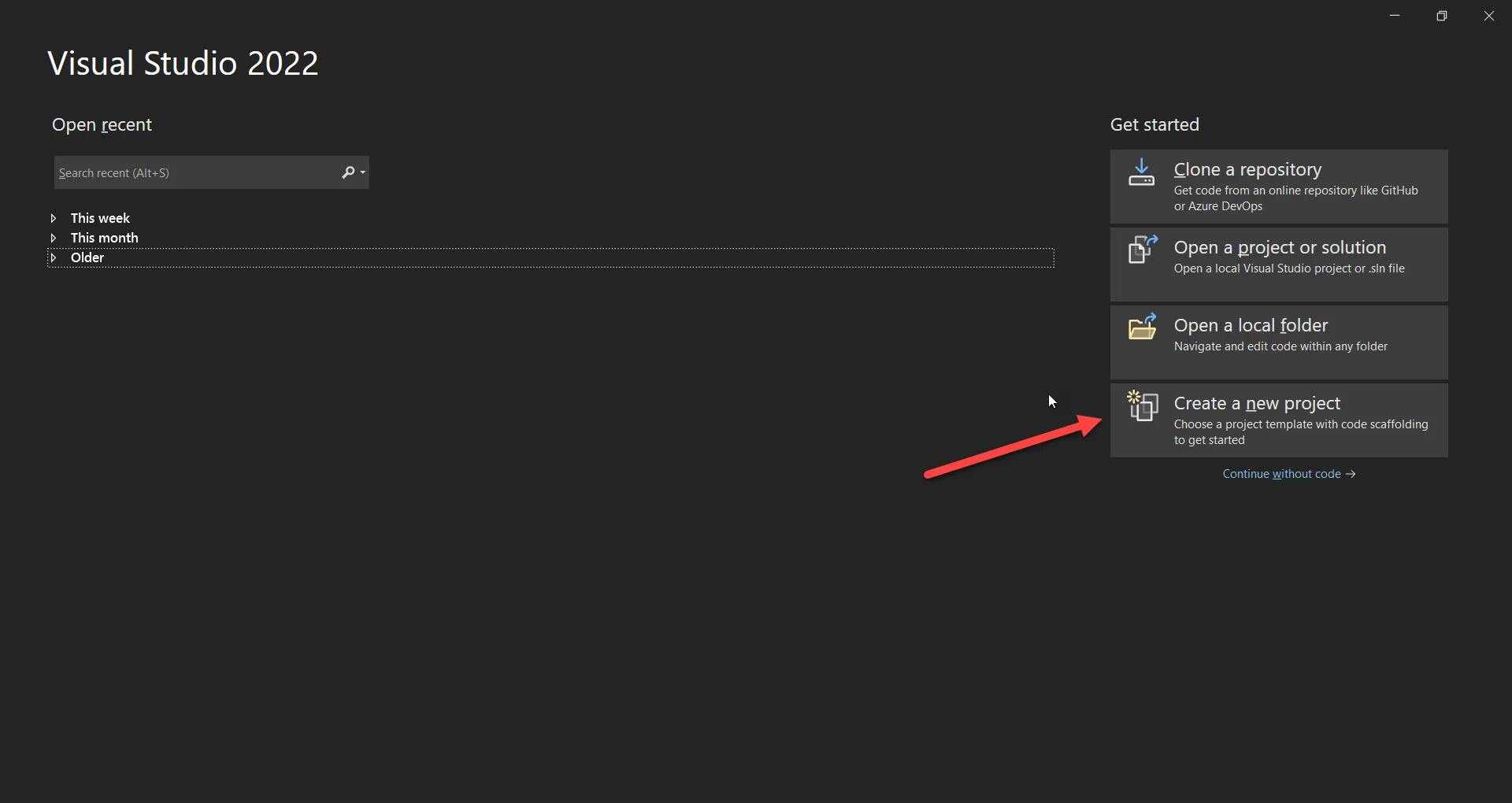
**Crea un nuevo proyecto en Visual Studio**
* Busque "Console" en el campo de búsqueda y seleccione "Console App" con la etiqueta C# de los resultados de búsqueda.
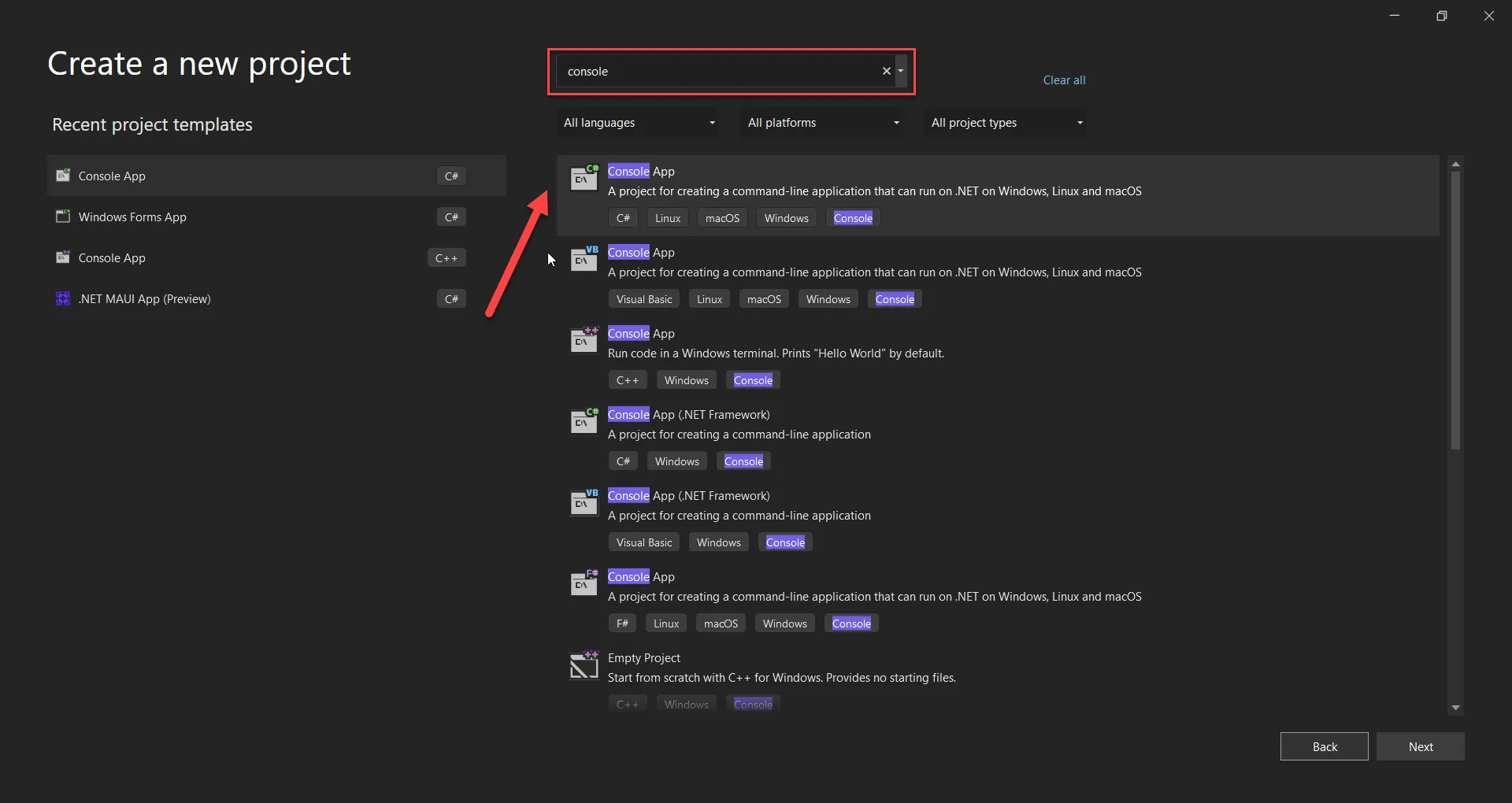
**Selección de Console App**
* Después de eso, configure el nombre del proyecto según sus requisitos.
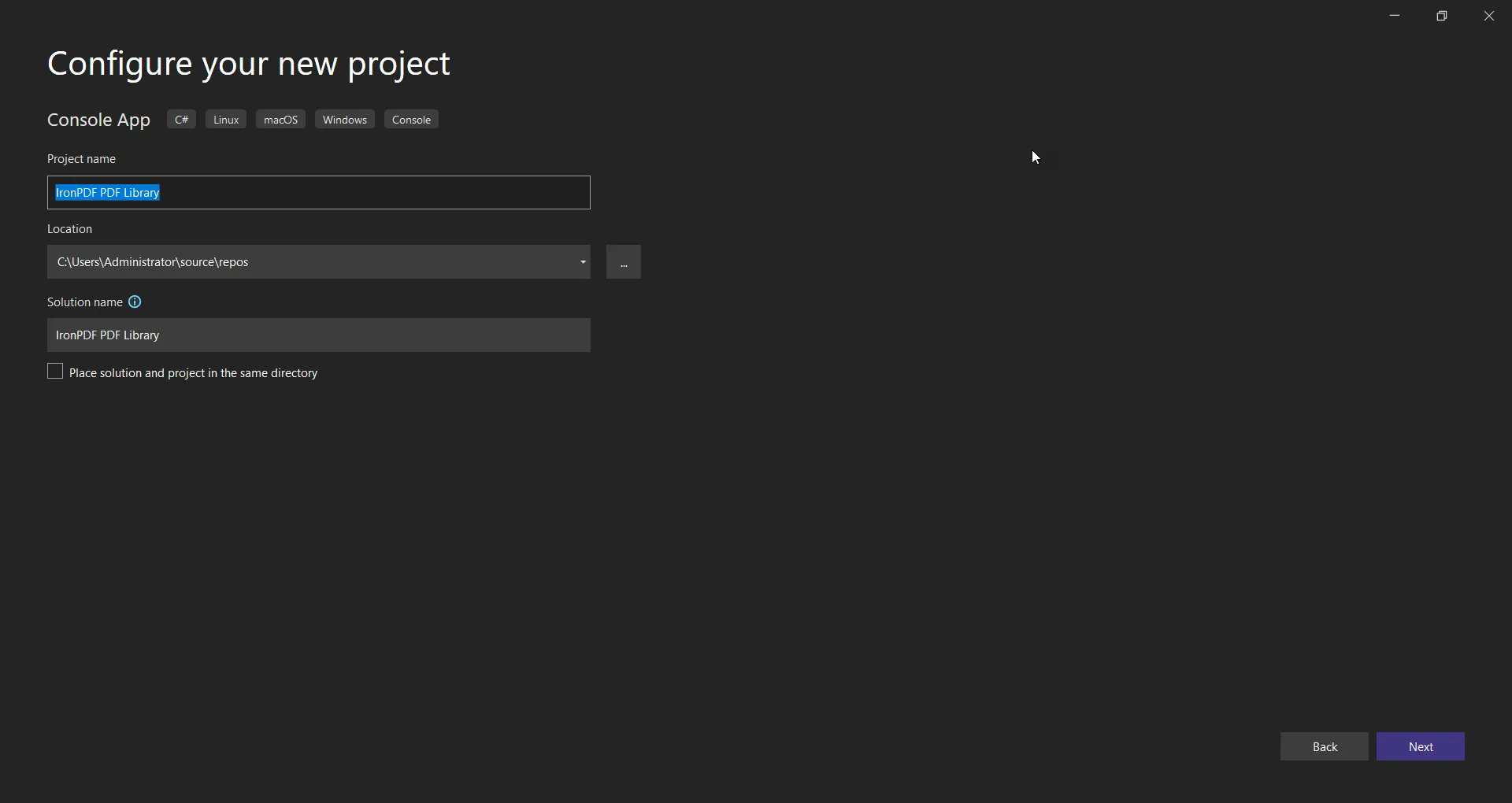
**Configurar esta nueva aplicación**
* Después de eso, seleccione la última versión de .NET Framework de la lista desplegable. Esto se recomienda. A continuación, haga clic en el botón **Crear**.
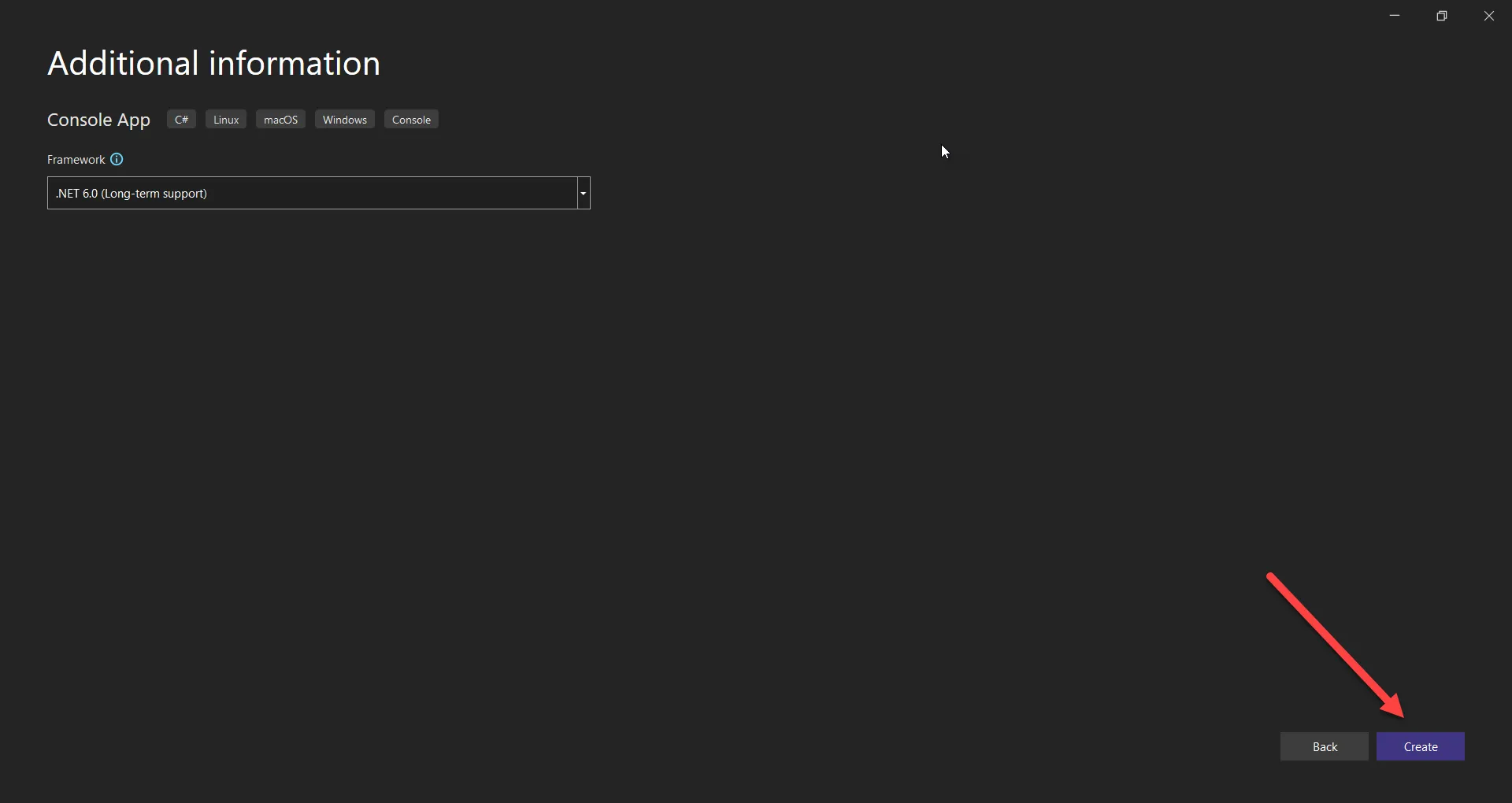
**Selección del Framework .NET**
El proyecto ahora se creará. También puede usar proyectos .NET Core existentes con IronPDF. Primero, necesita instalar la biblioteca. La siguiente sección muestra cómo instalar la biblioteca.
### Instalación de la biblioteca IronPDF
Para instalar la biblioteca IronPDF desde la línea de comandos, ejecute el siguiente comando:
```shell
:ProductInstall
```
Puede obtener más información en el sitio web de IronPDF y en la [página de IronPDF en NuGet](https://www.nuget.org/packages/IronPdf/).
Después de la instalación, podrá utilizarlo en su proyecto .NET. Para más detalles sobre la instalación, visite la [guía de instalación de IronPDF](/get-started/windows/).
### Ejemplo de código
### Una página web para archivos PDF
```csharp
using IronPdf;

var renderer = new ChromePdfRenderer();

// Choose Screen or Print CSS media
renderer.RenderingOptions.CssMediaType = Rendering.PdfCssMediaType.Screen;

// Set the width of the responsive virtual browser window in pixels
renderer.RenderingOptions.ViewPortWidth = 1280;

// Set the paper size of the output PDF
renderer.RenderingOptions.PaperSize = Rendering.PdfPaperSize.A2;

// Render the URL as PDF
var pdf = renderer.RenderUrlAsPdf("https://www.amazon.com/");

// Save the PDF to a local file
pdf.SaveAs("Amazon.pdf");
```
Este ejemplo muestra cómo convertir una interfaz de usuario compleja de un sitio web en PDF, por ejemplo, el sitio web de Amazon, siguiendo estos pasos:
* Configure el Tipo de Medio a Pantalla
* Configure el ancho de la ventana gráfica
* Configure el tamaño del papel del PDF de salida. El tamaño de la página es un factor significativo en los archivos PDF
* Renderice la URL en PDF, usando la URL de Amazon como fuente
#### Resultado
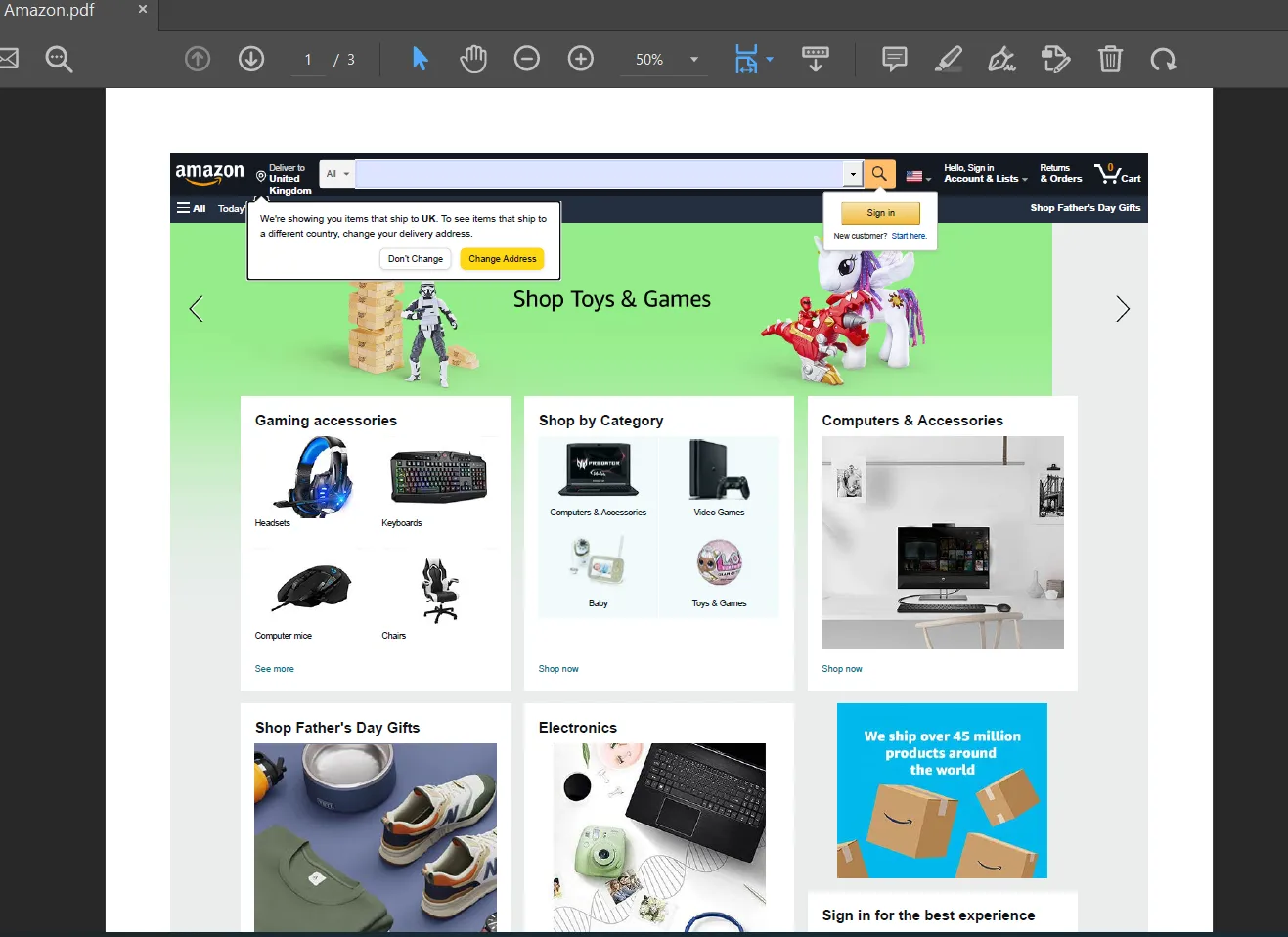
**Archivo PDF de salida renderizado desde el sitio web de Amazon**
### Simple creación de PDF
```csharp
using IronPdf;
// Instantiate renderer
var renderer = new IronPdf.ChromePdfRenderer();
// Create a PDF from an HTML string using C#
using var pdf = renderer.RenderHtmlAsPdf("<h1>Hello World</h1>");
// Export to a file or Stream
pdf.SaveAs("output.pdf");
/****** Advanced Example with HTML Assets ******/
// Load external html assets: images, CSS, and JavaScript.
// An optional BasePath 'C:\\site\\assets\\' is set as the file location to load assets from
using var myAdvancedPdf = renderer.RenderHtmlAsPdf("<img src='icons/iron.png'>", @"C:\site\assets\");
// Save the PDF with assets to a file
myAdvancedPdf.SaveAs("html-with-assets.pdf");
```
El código anterior demuestra cómo utilizar la funcionalidad HTML a PDF de IronPDF. Para usar IronPDF, es necesario importar el espacio de nombres. Escriba `using IronPdf;` en la parte superior del archivo del programa para usarlo en el proyecto.
El objeto [`ChromePdfRenderer`](https://ironsoftware.com/object-reference/api/IronPdf.ChromePdfRenderer.html) está disponible para soporte web. La función [`RenderHtmlAsPdf`](https://ironsoftware.com/object-reference/api/IronPdf.ChromePdfRenderer.html#IronPdf_ChromePdfRenderer_RenderHtmlAsPdf_System_String_System_String_System_String_) se puede utilizar para convertir cadenas HTML en archivos PDF. El parámetro de la función acepta varios tipos de fuentes, incluidas una cadena HTML. También puede utilizar imágenes en su documento PDF configurando la ruta base de las imágenes. Después de eso, se utiliza la función `SaveAs` para guardar el archivo PDF localmente. Puede elegir un HTML simple como el anterior e incorporar CSS, imágenes y JavaScript.
#### Resultado
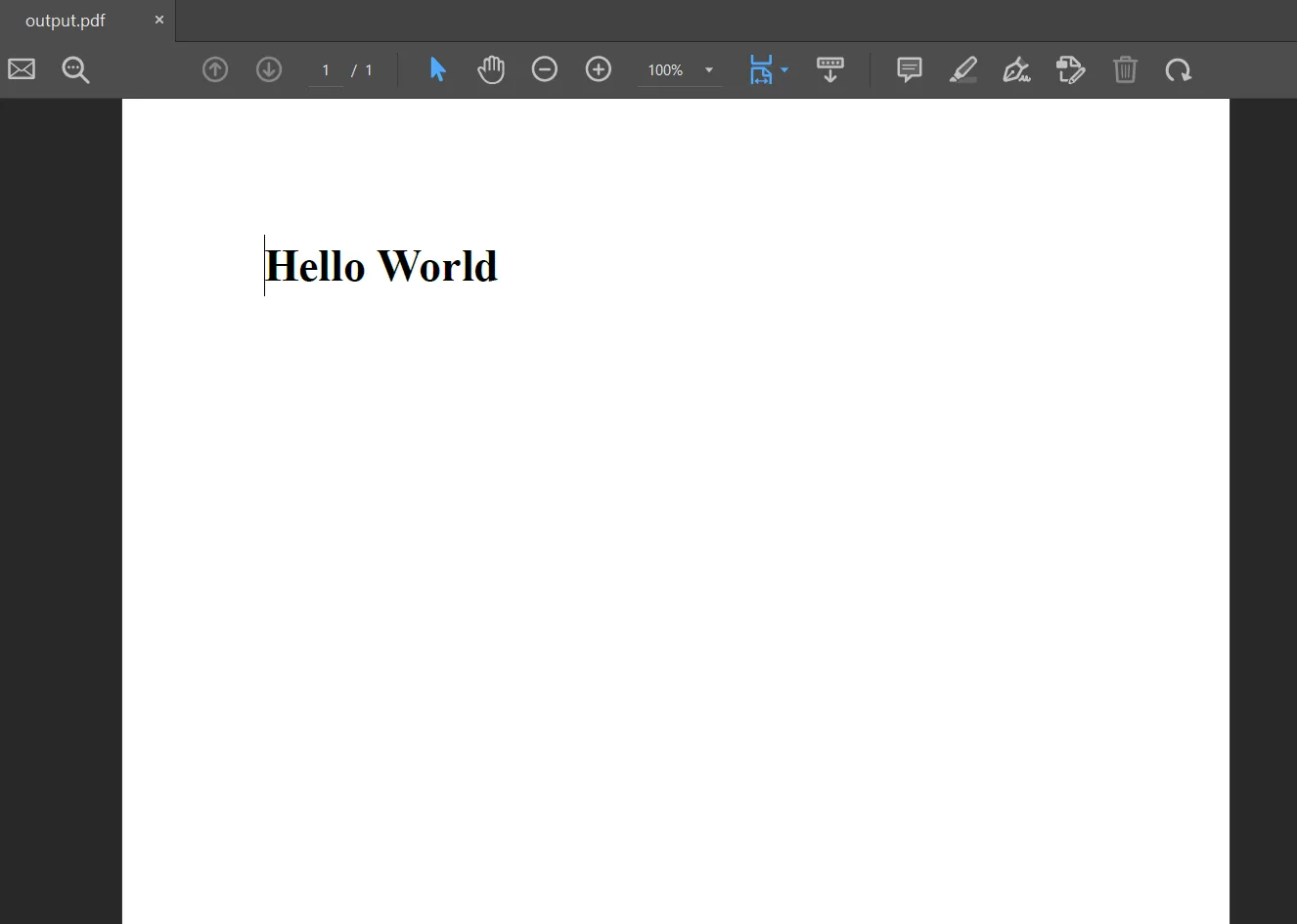
**Archivo PDF de salida del texto HTML Hola Mundo**
### Cabeceras y pies de página
```csharp
// Initialize the first page number
renderer.RenderingOptions.FirstPageNumber = 1; // use 2 if a cover page will be appended
// Set header options
renderer.RenderingOptions.TextHeader.DrawDividerLine = true;
renderer.RenderingOptions.TextHeader.CenterText = "{url}";
renderer.RenderingOptions.TextHeader.Font = IronPdf.Font.FontTypes.Helvetica;
renderer.RenderingOptions.TextHeader.FontSize = 12;
```
El ejemplo anterior demuestra cómo configurar encabezados y pies de página en el archivo PDF. IronPDF admite encabezados repetidos en el documento. IronPDF proporciona propiedades `TextHeader` y `TextFooter` para establecer varios atributos del texto, como fuentes, posición del texto, etc. También puede convertir archivos HTML a archivos PDF. Todo es sencillo con IronPDF. También puede [unir archivos PDF de manera eficiente](/how-to/merge-or-split-pdfs/), realizar [conversiones de página web a PDF](/how-to/url-to-pdf/), permitir [numeración automática de páginas](/how-to/page-numbers/) y [crear firmas digitales para PDFs](/blog/using-ironpdf/net-pdf-signature-library-tutorial/) usando IronPDF. Además, produce archivos PDF de [tamaño mínimo con compresión eficiente](/examples/pdf-compression/).
## Resumen
IronPDF es una biblioteca PDF completa que soporta todas las versiones más recientes de .NET Core y .NET Frameworks. IronPDF se basa en un modelo de negocio que ofrece una forma segura de crear y editar documentos comerciales utilizando la biblioteca IronPDF. Sus características avanzadas permiten al usuario crear documentos PDF dinámicos y creativos en proyectos .NET Core. Existe la opción de probar la prueba gratuita para la prueba de producción.
**Licencia Profesional de IronPDF**
Actualmente también puede comprar el conjunto de cinco paquetes de Iron Software por el precio de solo dos. Obtenga más información en la [página de licencias de IronPDF](licensing).
IronPDF está disponible para Microsoft Windows .NET Framework 4.x, así como una versión reciente para .NET Core 3.1 y la última versión de .NET.
IronPDF for .NET Core está disponible a través de la página oficial de NuGet IronPDF package on NuGet.
La versión actual de .NET Core es multiplataforma, compatible con los sistemas operativos clientes Linux, Unix y macOS, así como con Mono, con compatibilidad con MAUI y Blazor.
Los clientes actuales y nuevos reciben actualizaciones gratuitas a la versión .NET Core de IronPDF dentro de su cobertura de Soporte y Actualización existente. Esto se proporciona con cada licencia comercial de IronPDF. Esto garantiza que su inversión en IronPDF esté asegurada para el futuro.
IronPDF es una biblioteca C# PDF que se puede utilizar en proyectos .NET Core. Proporciona todas las API necesarias para manipular documentos PDF de manera sencilla e intuitiva. Existen otras bibliotecas para generar PDF en el mercado, pero esta biblioteca ha sido diseñada tan simple como sea posible para evitar confusiones.
El objetivo principal de este proyecto es proporcionar una biblioteca PDF para aplicaciones .NET. Viene con muchas características útiles, como generar archivos PDF a partir de cadenas HTML, convertir PDFs a otros formatos, manipular documentos PDF existentes y generar archivos PDF directamente desde proyectos .NET Core. La biblioteca IronPDF también ofrece la capacidad de imprimir archivos PDF con solo unas pocas líneas de código. IronPDF se puede utilizar como un convertidor de PDF. Puede crear tablas de hojas de cálculo de varias páginas utilizando sus funciones accesibles.
Comencemos a usar la biblioteca IronPDF en nuestro proyecto.
Crear proyecto C#
Se recomienda la última versión de Visual Studio para crear este proyecto .NET para garantizar una experiencia de usuario fluida. La biblioteca IronPDF también es compatible con un proyecto .NET Core. La elección depende del usuario, ya que la instalación y uso de IronPDF son idénticos en todos los .NET Frameworks. Siga los pasos a continuación para crear un proyecto en Visual Studio.
Inicie Visual Studio.
Haga clic en "Crear un nuevo proyecto".
Crea un nuevo proyecto en Visual Studio
Busque "Console" en el campo de búsqueda y seleccione "Console App" con la etiqueta C# de los resultados de búsqueda.
Selección de Console App
Después de eso, configure el nombre del proyecto según sus requisitos.
Configurar esta nueva aplicación
Después de eso, seleccione la última versión de .NET Framework de la lista desplegable. Esto se recomienda. A continuación, haga clic en el botón Crear.
Selección del Framework .NET
El proyecto ahora se creará. También puede usar proyectos .NET Core existentes con IronPDF. Primero, necesita instalar la biblioteca. La siguiente sección muestra cómo instalar la biblioteca.
Instalación de la biblioteca IronPDF
Para instalar la biblioteca IronPDF desde la línea de comandos, ejecute el siguiente comando:
Después de la instalación, podrá utilizarlo en su proyecto .NET. Para más detalles sobre la instalación, visite la guía de instalación de IronPDF.
Ejemplo de código
Una página web para archivos PDF
using IronPdf;var renderer = new ChromePdfRenderer();// Choose Screen or Print CSS mediarenderer.RenderingOptions.CssMediaType = Rendering.PdfCssMediaType.Screen;// Set the width of the responsive virtual browser window in pixelsrenderer.RenderingOptions.ViewPortWidth = 1280;// Set the paper size of the output PDFrenderer.RenderingOptions.PaperSize = Rendering.PdfPaperSize.A2;// Render the URL as PDFvar pdf = renderer.RenderUrlAsPdf("https://www.amazon.com/");// Save the PDF to a local filepdf.SaveAs("Amazon.pdf");
using IronPdf;

var renderer = new ChromePdfRenderer();

// Choose Screen or Print CSS media
renderer.RenderingOptions.CssMediaType = Rendering.PdfCssMediaType.Screen;

// Set the width of the responsive virtual browser window in pixels
renderer.RenderingOptions.ViewPortWidth = 1280;

// Set the paper size of the output PDF
renderer.RenderingOptions.PaperSize = Rendering.PdfPaperSize.A2;

// Render the URL as PDF
var pdf = renderer.RenderUrlAsPdf("https://www.amazon.com/");

// Save the PDF to a local file
pdf.SaveAs("Amazon.pdf");
ImportsIronPdfPrivate renderer = New ChromePdfRenderer()' Choose Screen or Print CSS mediarenderer.RenderingOptions.CssMediaType = Rendering.PdfCssMediaType.Screen' Set the width of the responsive virtual browser window in pixelsrenderer.RenderingOptions.ViewPortWidth = 1280' Set the paper size of the output PDFrenderer.RenderingOptions.PaperSize = Rendering.PdfPaperSize.A2' Render the URL as PDFDim pdf = renderer.RenderUrlAsPdf("https://www.amazon.com/")' Save the PDF to a local filepdf.SaveAs("Amazon.pdf")
Imports IronPdf

Private renderer = New ChromePdfRenderer()

' Choose Screen or Print CSS media
renderer.RenderingOptions.CssMediaType = Rendering.PdfCssMediaType.Screen

' Set the width of the responsive virtual browser window in pixels
renderer.RenderingOptions.ViewPortWidth = 1280

' Set the paper size of the output PDF
renderer.RenderingOptions.PaperSize = Rendering.PdfPaperSize.A2

' Render the URL as PDF
Dim pdf = renderer.RenderUrlAsPdf("https://www.amazon.com/")

' Save the PDF to a local file
pdf.SaveAs("Amazon.pdf")
Este ejemplo muestra cómo convertir una interfaz de usuario compleja de un sitio web en PDF, por ejemplo, el sitio web de Amazon, siguiendo estos pasos:
Configure el Tipo de Medio a Pantalla
Configure el ancho de la ventana gráfica
Configure el tamaño del papel del PDF de salida. El tamaño de la página es un factor significativo en los archivos PDF
Renderice la URL en PDF, usando la URL de Amazon como fuente
Resultado
Archivo PDF de salida renderizado desde el sitio web de Amazon
Simple creación de PDF
using IronPdf;// Instantiate renderervar renderer = new IronPdf.ChromePdfRenderer();// Create a PDF from an HTML string using C#using var pdf = renderer.RenderHtmlAsPdf("<h1>Hello World</h1>");// Export to a file or Streampdf.SaveAs("output.pdf");/****** Advanced Example with HTML Assets ******/// Load external html assets: images, CSS, and JavaScript.// An optional BasePath 'C:\\site\\assets\\' is set as the file location to load assets fromusing var myAdvancedPdf = renderer.RenderHtmlAsPdf("<img src='icons/iron.png'>", @"C:\site\assets\");// Save the PDF with assets to a filemyAdvancedPdf.SaveAs("html-with-assets.pdf");
using IronPdf;

// Instantiate renderer
var renderer = new IronPdf.ChromePdfRenderer();

// Create a PDF from an HTML string using C#
using var pdf = renderer.RenderHtmlAsPdf("<h1>Hello World</h1>");

// Export to a file or Stream
pdf.SaveAs("output.pdf");

/****** Advanced Example with HTML Assets ******/
// Load external html assets: images, CSS, and JavaScript.
// An optional BasePath 'C:\\site\\assets\\' is set as the file location to load assets from
using var myAdvancedPdf = renderer.RenderHtmlAsPdf("<img src='icons/iron.png'>", @"C:\site\assets\");

// Save the PDF with assets to a file
myAdvancedPdf.SaveAs("html-with-assets.pdf");
ImportsIronPdf' Instantiate rendererPrivate renderer = New IronPdf.ChromePdfRenderer()' Create a PDF from an HTML string using C#Private pdf = renderer.RenderHtmlAsPdf("<h1>Hello World</h1>")' Export to a file or Streampdf.SaveAs("output.pdf")'''**** Advanced Example with HTML Assets *****' Load external html assets: images, CSS, and JavaScript.' An optional BasePath 'C:\\site\\assets\\' is set as the file location to load assets fromDim myAdvancedPdf = renderer.RenderHtmlAsPdf("<img src='icons/iron.png'>", "C:\site\assets\")' Save the PDF with assets to a filemyAdvancedPdf.SaveAs("html-with-assets.pdf")
Imports IronPdf

' Instantiate renderer
Private renderer = New IronPdf.ChromePdfRenderer()

' Create a PDF from an HTML string using C#
Private pdf = renderer.RenderHtmlAsPdf("<h1>Hello World</h1>")

' Export to a file or Stream
pdf.SaveAs("output.pdf")

'''**** Advanced Example with HTML Assets *****
' Load external html assets: images, CSS, and JavaScript.
' An optional BasePath 'C:\\site\\assets\\' is set as the file location to load assets from
Dim myAdvancedPdf = renderer.RenderHtmlAsPdf("<img src='icons/iron.png'>", "C:\site\assets\")

' Save the PDF with assets to a file
myAdvancedPdf.SaveAs("html-with-assets.pdf")
El código anterior demuestra cómo utilizar la funcionalidad HTML a PDF de IronPDF. Para usar IronPDF, es necesario importar el espacio de nombres. Escriba using IronPdf; en la parte superior del archivo del programa para usarlo en el proyecto.
El objeto ChromePdfRenderer está disponible para soporte web. La función RenderHtmlAsPdf se puede utilizar para convertir cadenas HTML en archivos PDF. El parámetro de la función acepta varios tipos de fuentes, incluidas una cadena HTML. También puede utilizar imágenes en su documento PDF configurando la ruta base de las imágenes. Después de eso, se utiliza la función SaveAs para guardar el archivo PDF localmente. Puede elegir un HTML simple como el anterior e incorporar CSS, imágenes y JavaScript.
Resultado
Archivo PDF de salida del texto HTML Hola Mundo
Cabeceras y pies de página
// Initialize the first page numberrenderer.RenderingOptions.FirstPageNumber = 1; // use 2 if a cover page will be appended// Set header optionsrenderer.RenderingOptions.TextHeader.DrawDividerLine = true;renderer.RenderingOptions.TextHeader.CenterText = "{url}";renderer.RenderingOptions.TextHeader.Font = IronPdf.Font.FontTypes.Helvetica;renderer.RenderingOptions.TextHeader.FontSize = 12;
// Initialize the first page number
renderer.RenderingOptions.FirstPageNumber = 1; // use 2 if a cover page will be appended

// Set header options
renderer.RenderingOptions.TextHeader.DrawDividerLine = true;
renderer.RenderingOptions.TextHeader.CenterText = "{url}";
renderer.RenderingOptions.TextHeader.Font = IronPdf.Font.FontTypes.Helvetica;
renderer.RenderingOptions.TextHeader.FontSize = 12;
' Initialize the first page numberrenderer.RenderingOptions.FirstPageNumber = 1 ' use 2 if a cover page will be appended' Set header optionsrenderer.RenderingOptions.TextHeader.DrawDividerLine = Truerenderer.RenderingOptions.TextHeader.CenterText = "{url}"renderer.RenderingOptions.TextHeader.Font = IronPdf.Font.FontTypes.Helveticarenderer.RenderingOptions.TextHeader.FontSize = 12
' Initialize the first page number
renderer.RenderingOptions.FirstPageNumber = 1 ' use 2 if a cover page will be appended

' Set header options
renderer.RenderingOptions.TextHeader.DrawDividerLine = True
renderer.RenderingOptions.TextHeader.CenterText = "{url}"
renderer.RenderingOptions.TextHeader.Font = IronPdf.Font.FontTypes.Helvetica
renderer.RenderingOptions.TextHeader.FontSize = 12
IronPDF es una biblioteca PDF completa que soporta todas las versiones más recientes de .NET Core y .NET Frameworks. IronPDF se basa en un modelo de negocio que ofrece una forma segura de crear y editar documentos comerciales utilizando la biblioteca IronPDF. Sus características avanzadas permiten al usuario crear documentos PDF dinámicos y creativos en proyectos .NET Core. Existe la opción de probar la prueba gratuita para la prueba de producción.
Licencia Profesional de IronPDF
Actualmente también puede comprar el conjunto de cinco paquetes de Iron Software por el precio de solo dos. Obtenga más información en la página de licencias de IronPDF.
Curtis Chau tiene una licenciatura en Ciencias de la Computación (Carleton University) y se especializa en el desarrollo front-end con experiencia en Node.js, TypeScript, JavaScript y React. Apasionado por crear interfaces de usuario intuitivas y estéticamente agradables, disfruta trabajando con frameworks modernos y creando manuales bien estructurados y visualmente atractivos.





 Crea un nuevo proyecto en Visual Studio
 Selección de Console App
 Configurar esta nueva aplicación
 Selección del Framework .NET
 Archivo PDF de salida renderizado desde el sitio web de Amazon
 Archivo PDF de salida del texto HTML Hola Mundo