Los documentos digitales han revolucionado la forma en que compartimos y almacenamos información. De los muchos formatos de documentos electrónicos disponibles, el Formato de Documento Portátil (PDF) es el más utilizado. Recientemente, una versión más nueva de PDF, conocida como PDFA, ha surgido como un estándar para archivar documentos, y está generando bastante discusión.
Este artículo profundizará en la diferencia entre PDF y PDFA.
PDF, el documento electrónico universal
El documento PDF fue creado por Adobe para proporcionar un formato estándar para presentar e intercambiar documentos de manera confiable, independientemente del software, hardware o sistemas operativos. Los archivos PDF mantienen su apariencia independientemente del dispositivo en el que se vean, proporcionando una consistencia que ningún otro formato de archivo podría proporcionar.
Los archivos PDF son versátiles y pueden incluir formato de texto, imágenes y gráficos vectoriales, además de características interactivas como campos de formularios, audio y enlaces de hipertexto. También permiten la incorporación de firmas digitales para mayor seguridad. Los documentos PDF son capaces de ser cifrados usando algoritmos de cifrado de terceros, aumentando aún más el nivel de seguridad del documento.
Es importante destacar que el formato PDF puede depender de referencias externas para parte de su contenido, como fuentes e imágenes, que pueden cambiar o volverse indisponibles con el tiempo. Además, los visores de PDF pueden interpretar el contenido de un archivo PDF de diferentes maneras, resultando en pequeñas diferencias en la forma en que se muestra el documento.
PDFA, el PDF de calidad de archivo
PDFA, donde 'A' significa Archivo, es una versión de PDF desarrollada por la Asociación PDF específicamente para la preservación a largo plazo de documentos digitales. Se diferencia del PDF estándar en algunas formas clave para asegurar que el documento permanezca igual durante un período prolongado.
Los archivos PDFA son autónomos, lo que significa que no dependen de bibliotecas de fuentes externas o esquemas de color externos. Toda la información necesaria para mostrar el documento, incluidas las fuentes e imágenes, está incorporada dentro del archivo. Esto hace que PDFA sea una mejor elección para el archivo a largo plazo, ya que asegura que el documento se mostrará de la misma manera incluso después de mucho tiempo.
PDFA también prohíbe ciertas características no adecuadas para el archivo a largo plazo, como contenido ejecutable y enlaces externos, que pueden hacer un documento menos estable y seguro con el tiempo. Estos niveles de conformidad varían desde el nivel básico de Conformidad B hasta niveles más estrictos.
Además, los documentos PDFA también proporcionan metadatos basados en estándares, que incluyen información sobre el documento (como el autor y la fecha de creación) y mejoran la gestión y recuperación de documentos. Otro beneficio es que los archivos PDFA soportan mapeo de Unicode, lo que asegura que el texto se pueda buscar y copiar correctamente.
Sin embargo, crear un archivo PDFA desde un PDF normal u otros formatos a menudo requiere verificaciones visuales cuidadosas y a veces ajustes manuales. El proceso de convertir documentos a PDFA no es tan sencillo como guardar un documento en formato PDF normal.
PDF vs PDFA Las principales diferencias
Entender las diferencias entre PDF y PDFA es clave para decidir qué formato usar. Aquí están las principales distinciones:
1. Referencias externas y elementos incrustados
En los archivos PDF normales, ciertos elementos como colores y fuentes pueden referenciar bibliotecas externas. Si el esquema de color externo o la fuente cambian o se eliminan, podría afectar cómo se ve el documento. PDFA resuelve este problema incorporando todos los elementos necesarios dentro del documento, haciéndolo más resistente a cambios durante un período prolongado.
2. Contenido ejecutable y cifrado
Mientras que el formato PDF estándar soporta archivos ejecutables y algoritmos de cifrado de terceros, PDFA no lo hace. El estándar PDFA restringe características que podrían comprometer cómo se muestra un documento a lo largo del tiempo, como JavaScript y cifrado. Esto asegura que los documentos conformes se puedan abrir y leer de forma confiable en el futuro.
3. Archivo a largo plazo
PDFA está diseñado específicamente para el archivo a largo plazo. Es un PDF estándar con restricciones adicionales para asegurar que los documentos permanezcan iguales a lo largo del tiempo. El uso de PDFA asegura que los documentos se verifiquen visualmente de manera cuidadosa y que permanezcan sin cambios, haciéndolo ideal para preservar documentos importantes durante un período prolongado.
4. Conversión de tecnologías
Para convertir un PDF normal a un archivo PDFA, se necesitan tecnologías de conversión especializadas. Estas tecnologías aseguran que todos los elementos necesarios estén incrustados, que los elementos no esenciales o prohibidos sean eliminados y que el documento cumpla con el estándar PDFA.
IronPDF su solución para PDF y PDFA
Si trata con archivos PDF o PDFA regularmente, necesita una herramienta confiable que pueda manejar estos formatos de manera efectiva. IronPDF para .NET PDF Library se recomienda como una biblioteca robusta para desarrolladores .NET para crear, leer, editar y convertir archivos PDF en archivos PDFA eficientemente.
Con IronPDF, no solo puede convertir PDFs normales en PDFA con una sola línea de código, sino también validar si sus documentos PDFA son archivos conformes. IronPDF soporta generar documentos PDFA desde HTML, imágenes, ASPX y más.
using IronPdf;

// Create a PdfDocument object or open any PDF File
PdfDocument pdf = PdfDocument.FromFile("Invoice.pdf");
// Use the SaveAsPdfA method to save to file
pdf.SaveAsPdfA("pdf-a3-Invoice.pdf", PdfAVersions.PdfA3);
using IronPdf;

// Create a PdfDocument object or open any PDF File
PdfDocument pdf = PdfDocument.FromFile("Invoice.pdf");
// Use the SaveAsPdfA method to save to file
pdf.SaveAsPdfA("pdf-a3-Invoice.pdf", PdfAVersions.PdfA3);
Imports IronPdf
' Create a PdfDocument object or open any PDF File
Private pdf As PdfDocument = PdfDocument.FromFile("Invoice.pdf")
' Use the SaveAsPdfA method to save to file
pdf.SaveAsPdfA("pdf-a3-Invoice.pdf", PdfAVersions.PdfA3)
Imports IronPdf

' Create a PdfDocument object or open any PDF File
Private pdf As PdfDocument = PdfDocument.FromFile("Invoice.pdf")
' Use the SaveAsPdfA method to save to file
pdf.SaveAsPdfA("pdf-a3-Invoice.pdf", PdfAVersions.PdfA3)
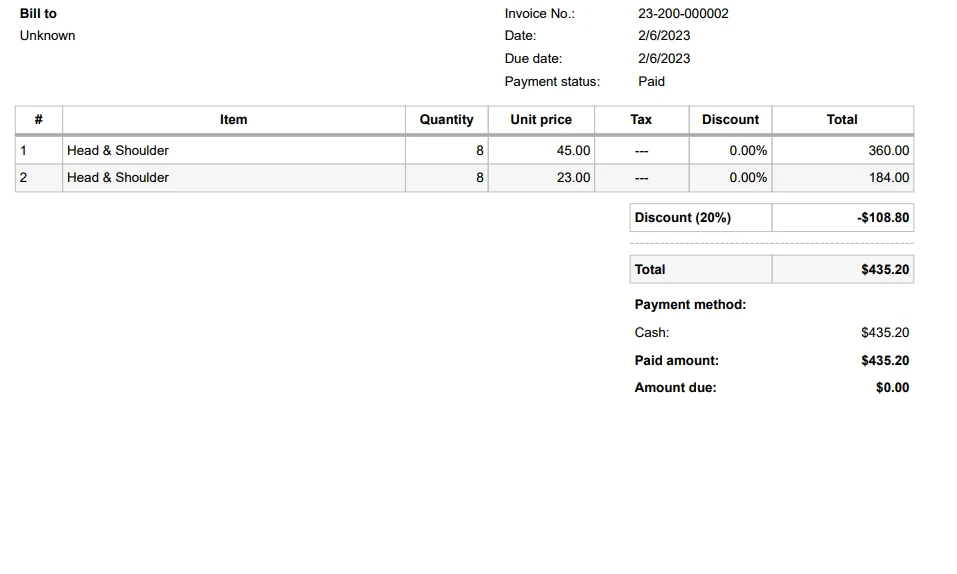 El archivo de factura PDF generado
Ya sea que esté trabajando con PDFs normales, archivos PDFA o incluso convirtiendo entre los dos, IronPDF asegura que el proceso sea lo más fluido y eficiente posible. Maneja todo, desde incrustar fuentes e imágenes hasta asegurar la conformidad con los estándares PDFA.
Conclusión
Elegir entre PDF y PDFA se reduce a sus necesidades específicas. Si su principal preocupación es la distribución y seguridad de documentos electrónicos, entonces el formato PDF estándar probablemente sea su mejor opción. Sin embargo, si busca archivo a largo plazo y preservación, PDFA le será útil.
IronPDF ofrece una prueba gratuita. Durante este período, puede explorar la funcionalidad completa de la herramienta sin restricciones. Después de su período de prueba, obtener una licencia es sencillo; La licencia comienza en $999, lo que constituye una inversión que vale la pena dadas las características sólidas y los beneficios a largo plazo que ofrece IronPDF . Algunas de las características importantes incluyen: