Este tutorial demostrará cómo convertir HTML a PDF utilizando la biblioteca más eficiente de IronPDF en VB.NET.
Cómo convertir una página HTML a PDF utilizando VB
- Descargue e instale la biblioteca de conversión de HTML a PDF en VB.
- Cree un objeto renderizador utilizando el método
IronPdf.ChromePdfRenderer().
- Utilice el método
renderer.RenderHtmlAsPdf para convertir HTML a PDF usando un nombre de archivo de cadena.
- Guarde el archivo PDF utilizando el método
SaveAs.
- Ejecute el programa para ver los resultados.
1. IronPDF
IronPDF es una biblioteca popular de .NET Core que proporciona a los desarrolladores herramientas y capacidades para trabajar con documentos PDF dentro de sus aplicaciones. Es una biblioteca específicamente diseñada para simplificar tareas relacionadas con la creación, manipulación y conversión de código HTML y gestión de archivos PDF. Con IronPDF, los desarrolladores pueden generar documentos PDF de forma programática, convertir contenido HTML a formato PDF, extraer texto e imágenes de archivos PDF existentes, agregar anotaciones, marcas de agua y elementos interactivos en formularios, así como fusionar, dividir y manipular páginas PDF. También soporta .NET Core.
2. Crear un nuevo proyecto VB.NET e instalar IronPDF
Antes de escribir el código, se necesita un nuevo proyecto en Visual Studio para crear e instalar la biblioteca IronPDF para convertir HTML a PDF usando el lenguaje de programación VB.
Crear un nuevo proyecto VB .NET :
Abra Visual Studio y siga estos pasos para crear un nuevo proyecto VB.NET:
Haga clic en "Archivo" > "Nuevo" > "Proyecto..."
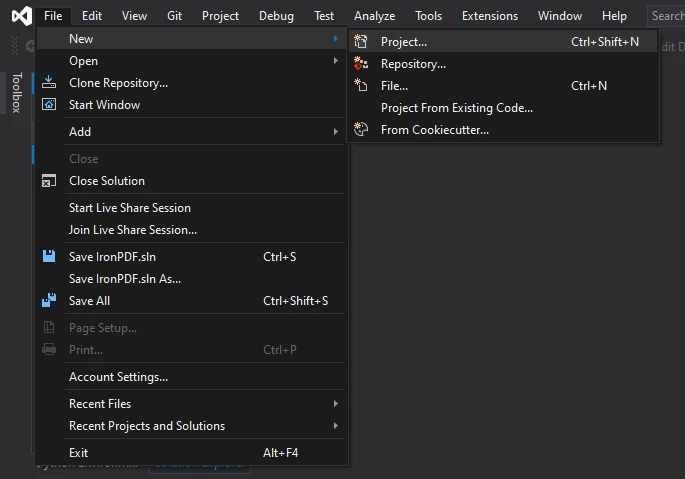 Proyecto HTML a PDF
Elija una plantilla de proyecto basada en su tipo de aplicación (por ejemplo, Windows Forms, Aplicación de Consola, ASP.NET, etc.) y haga clic en Siguiente.
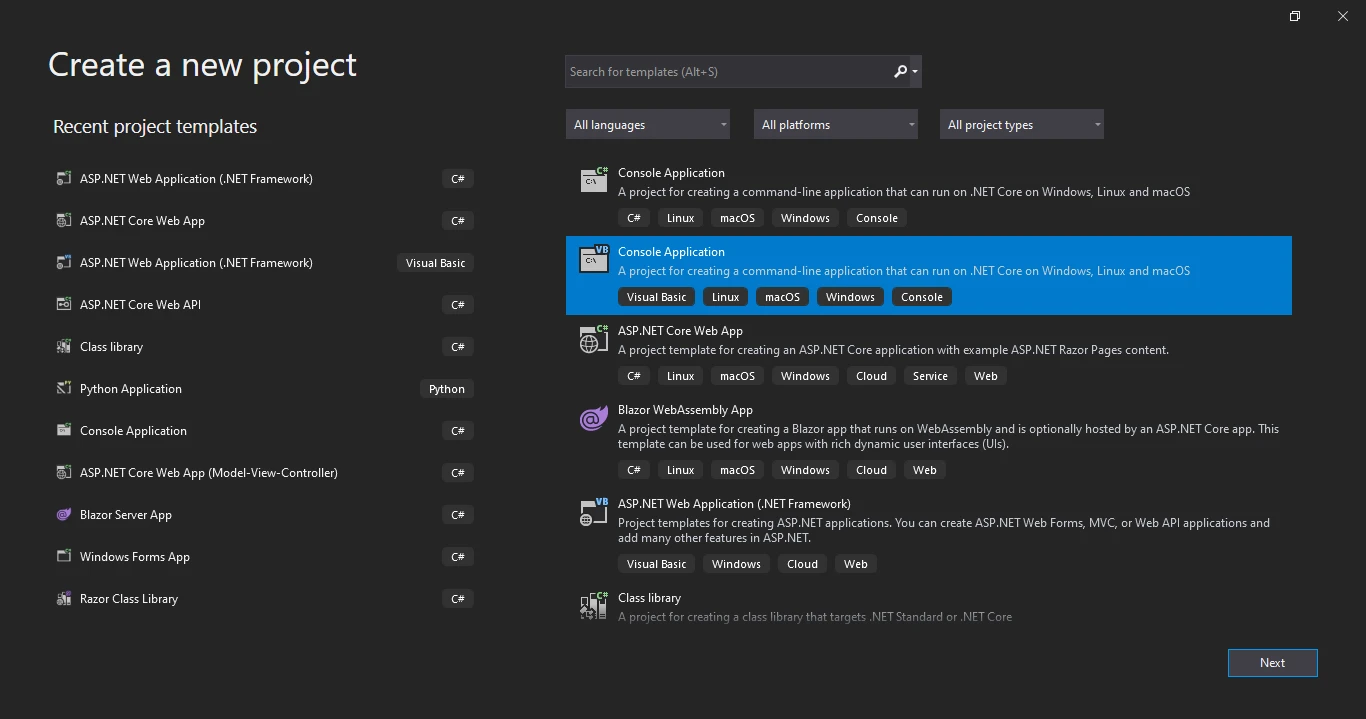 Plantilla de Proyecto
Ingrese un nombre y una ubicación para su proyecto y haga clic en el botón Siguiente.
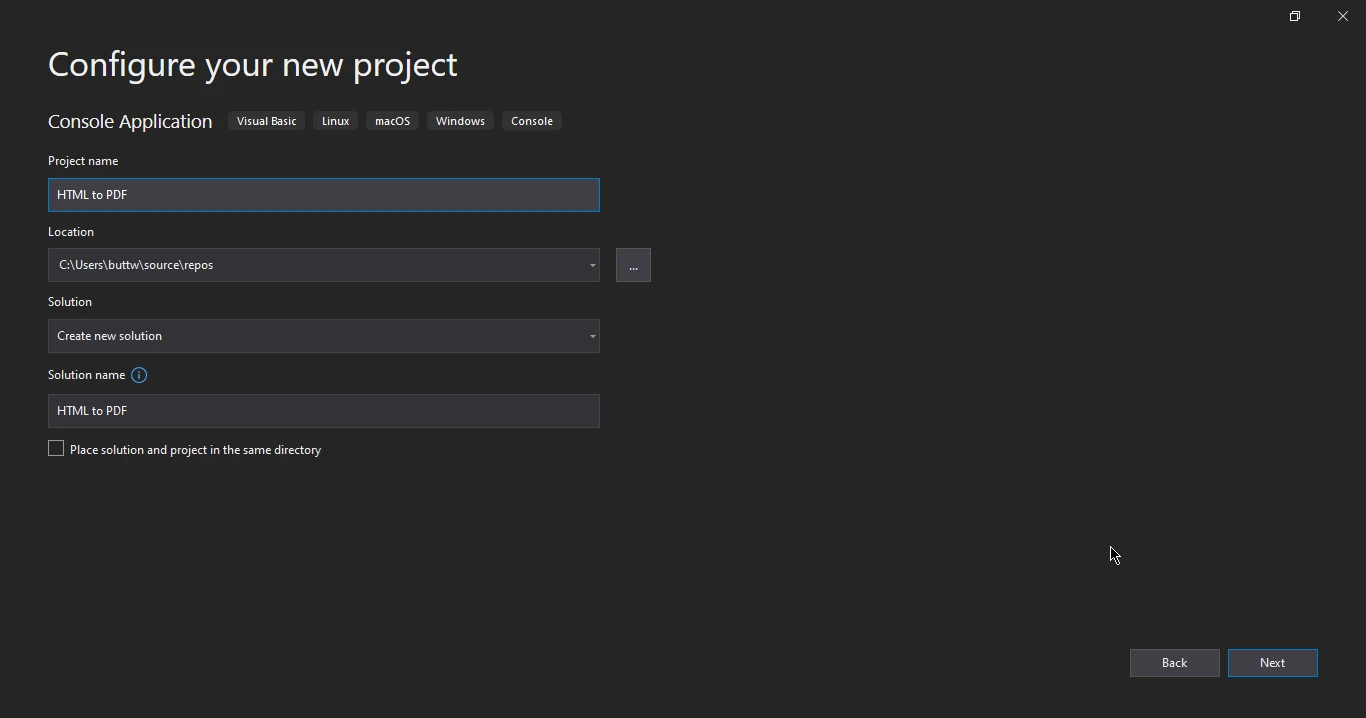 Configuración del Proyecto
Seleccione el marco de trabajo objetivo y haga clic en "Crear" para crear el proyecto.
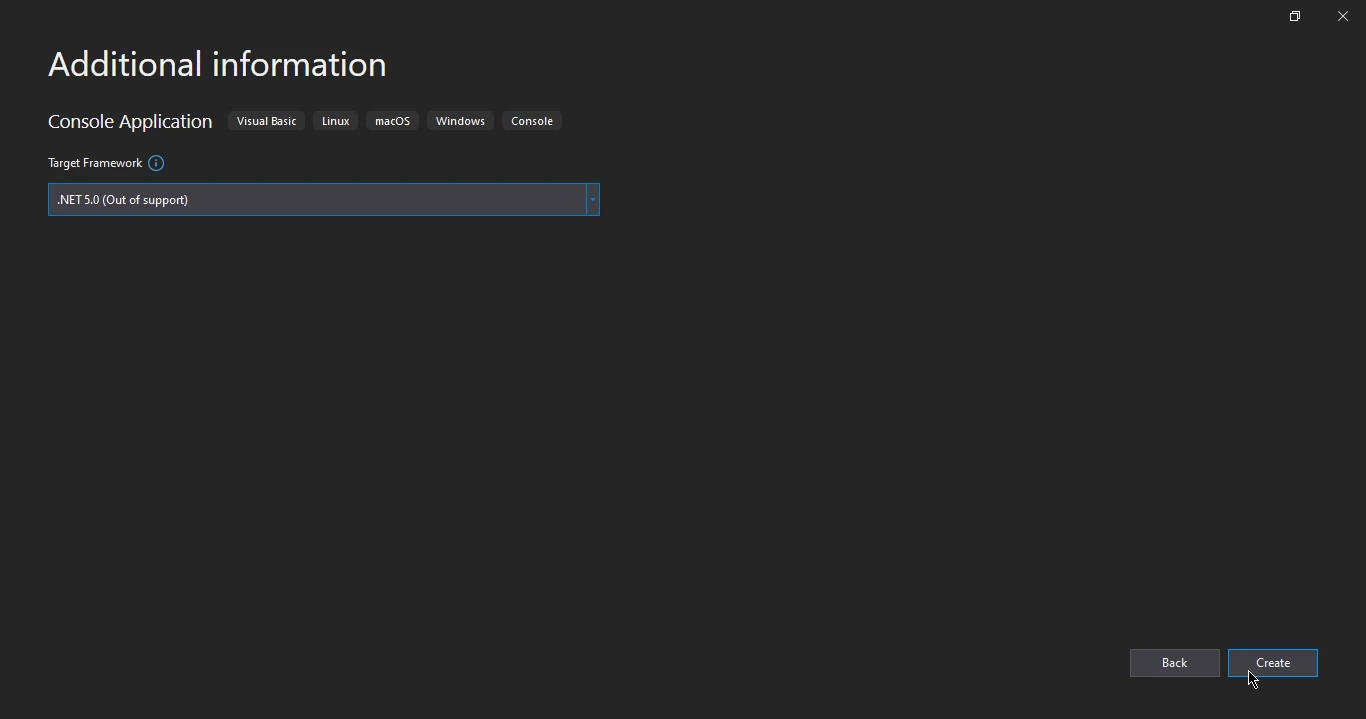 Marco de Trabajo Objetivo
Instalar IronPDF:
Después de crear el proyecto, necesitará instalar la biblioteca IronPDF usando NuGet. Así es como:
Haz clic derecho en tu proyecto en el Explorador de Soluciones.
Seleccione "Administrar Paquetes NuGet..."
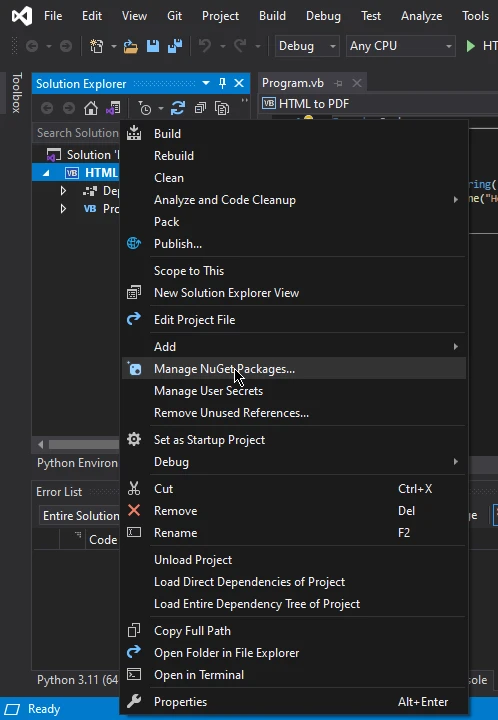 Administrar Paquetes NuGet
En la ventana del "Administrador de Paquetes NuGet", asegúrese de que "Explorar" esté seleccionado a la izquierda.
En el cuadro de búsqueda, escriba "IronPDF".
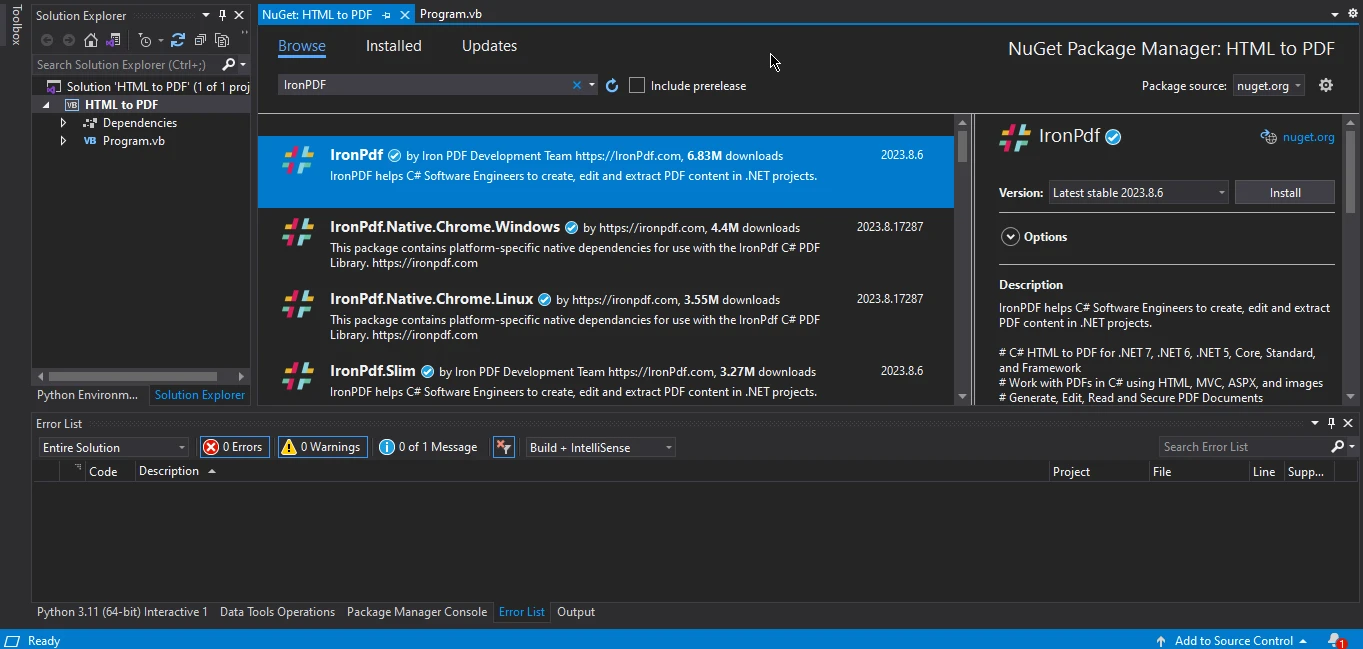 IronPDF
Seleccione el paquete "IronPDF" de los resultados de búsqueda.
Haga clic en el botón "Instalar" para instalar el paquete.
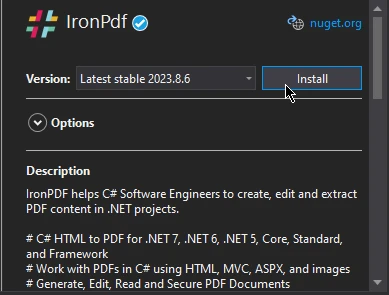 Instalación de IronPDF
3. Convertir un documento HTML a PDF utilizando IronPDF y el lenguaje de programación VB
El proceso de generación de PDFs a partir de contenido HTML y archivos es tanto intrigante como convenientemente alcanzable con la utilización de IronPDF. En las secciones venideras, profundizaremos en ejemplos ilustrativos que demuestran la conversión sin problemas tanto de cadenas HTML como de archivos HTML en documentos PDF meticulosamente elaborados.
3.1. Cadena HTML a documento PDF
IronPDF proporciona la función para convertir documentos HTML a PDF usando el lenguaje de programación VB con solo unas pocas líneas de código. Veamos cómo funciona esto en el fragmento de código de ejemplo a continuación.
Imports IronPdf

Module Module1
    Sub Main()
        ' Create a new PDF renderer using IronPDF.
        Dim renderer = New ChromePdfRenderer()

        ' Convert a simple HTML string to a PDF document.
        Dim document = renderer.RenderHtmlAsPdf("<h1> My First PDF in VB.NET</h1>")

        ' Save the resulting PDF document to a file.
        document.SaveAs("MyFirst.pdf")
    End Sub
End Module
Imports IronPdf

Module Module1
    Sub Main()
        ' Create a new PDF renderer using IronPDF.
        Dim renderer = New ChromePdfRenderer()

        ' Convert a simple HTML string to a PDF document.
        Dim document = renderer.RenderHtmlAsPdf("<h1> My First PDF in VB.NET</h1>")

        ' Save the resulting PDF document to a file.
        document.SaveAs("MyFirst.pdf")
    End Sub
End Module
VB .NET
Este fragmento de código de ejemplo primero importa el espacio de nombres de IronPDF, que contiene las clases y métodos utilizados para trabajar con documentos PDF. Luego, crea un nuevo objeto de motor de renderizado, que se utiliza para convertir HTML a PDF. El método RenderHtmlAsPdf del objeto renderizador toma una cadena HTML como entrada y devuelve un objeto Documento que representa el documento PDF. Finalmente, el método SaveAs del objeto Documento se utiliza para guardar el nuevo documento PDF en un archivo.
3.1.1. Salida
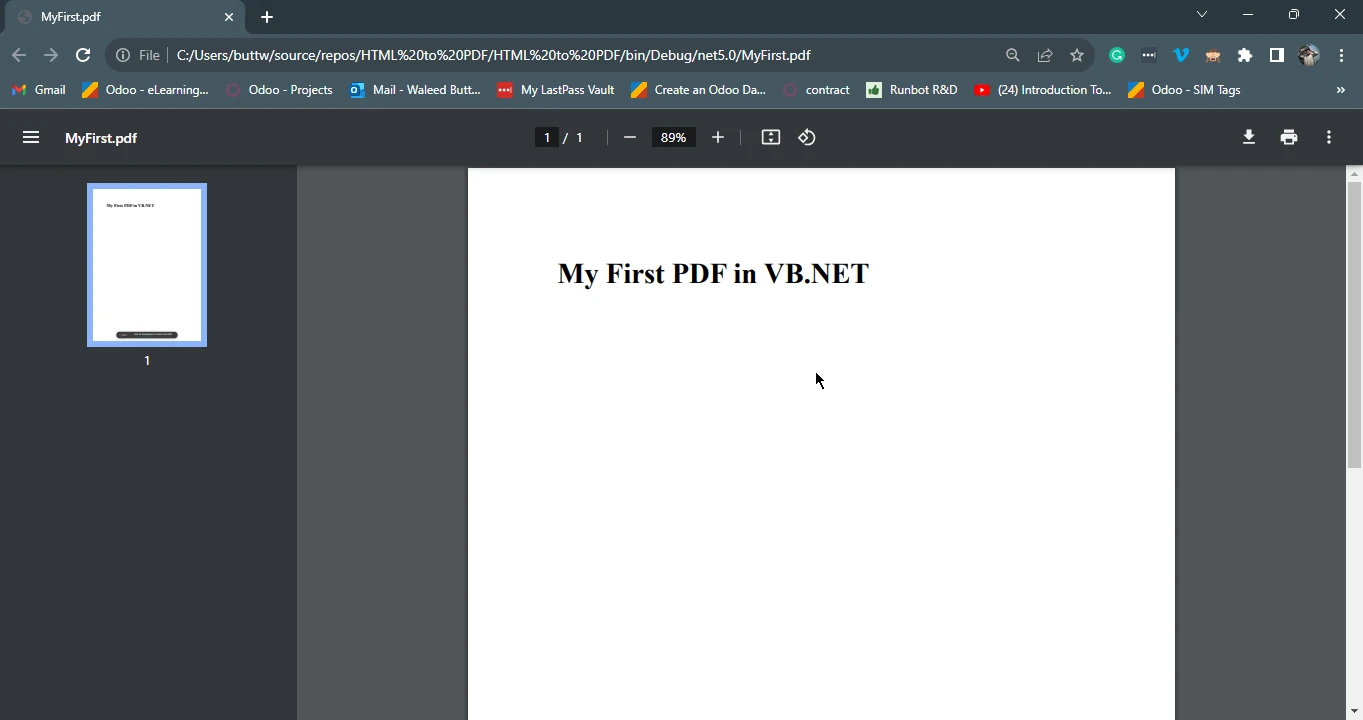 Salida PDF en Google Chrome
3.2. Archivo HTML a documento PDF
En la siguiente sección, exploraremos el proceso de convertir una página HTML en un formato PDF usando la biblioteca IronPDF. Para comenzar, puede generar un nuevo archivo HTML escribiendo código HTML o utilizar uno existente como punto de partida.
3.2.1. Archivo de entrada HTML
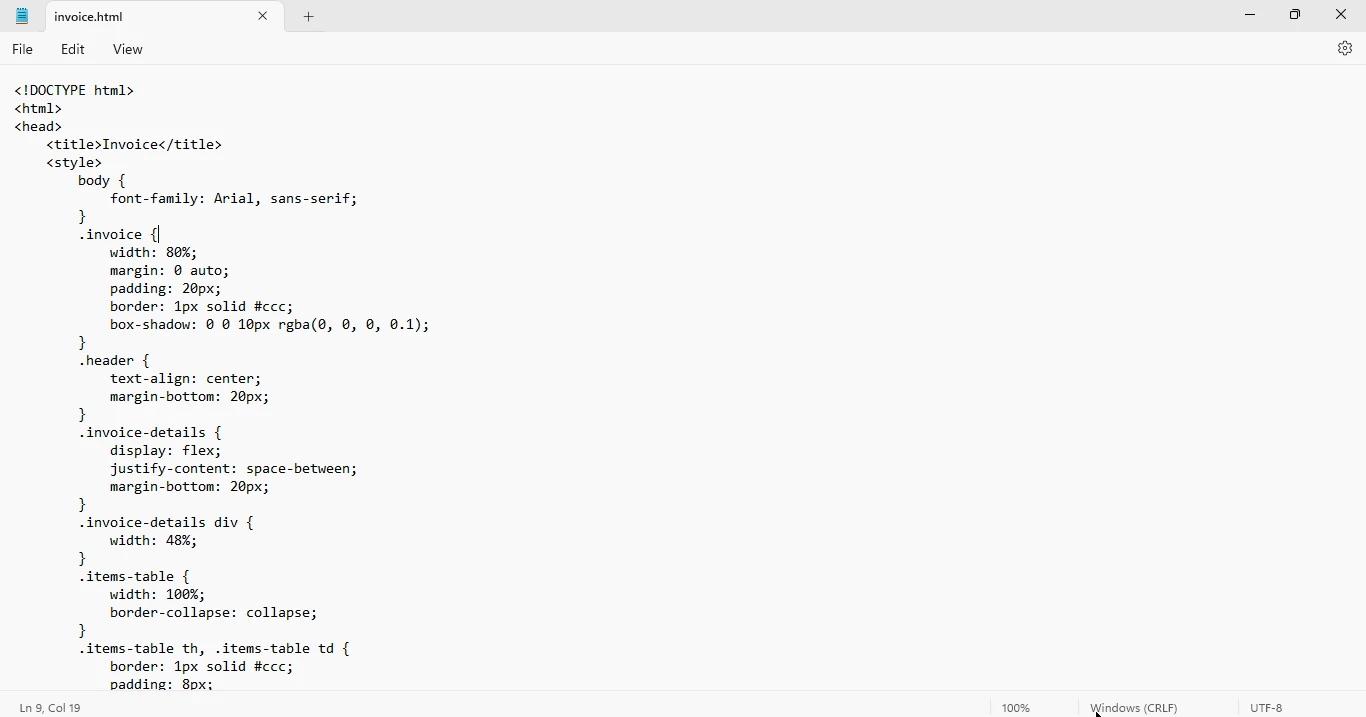 Archivo de Entrada HTML
Imports IronPdf

Module Module1
    Sub Main()
        ' Create a new PDF renderer using IronPDF.
        Dim renderer = New ChromePdfRenderer()

        ' Convert an HTML file to a PDF document.
        Dim document = renderer.RenderHtmlFileAsPdf("invoice.html")

        ' Save the resulting PDF document to a file.
        document.SaveAs("invoice.pdf")
    End Sub
End Module
Imports IronPdf

Module Module1
    Sub Main()
        ' Create a new PDF renderer using IronPDF.
        Dim renderer = New ChromePdfRenderer()

        ' Convert an HTML file to a PDF document.
        Dim document = renderer.RenderHtmlFileAsPdf("invoice.html")

        ' Save the resulting PDF document to a file.
        document.SaveAs("invoice.pdf")
    End Sub
End Module
VB .NET
El código fuente anterior primero crea un objeto renderizador de formulario HTML usando el método ChromePdfRenderer, luego convierte el archivo HTML a PDF usando el método RenderHtmlFileAsPdf. Por último, guarde el archivo PDF utilizando el método SaveAs.
3.2.2. Resultados
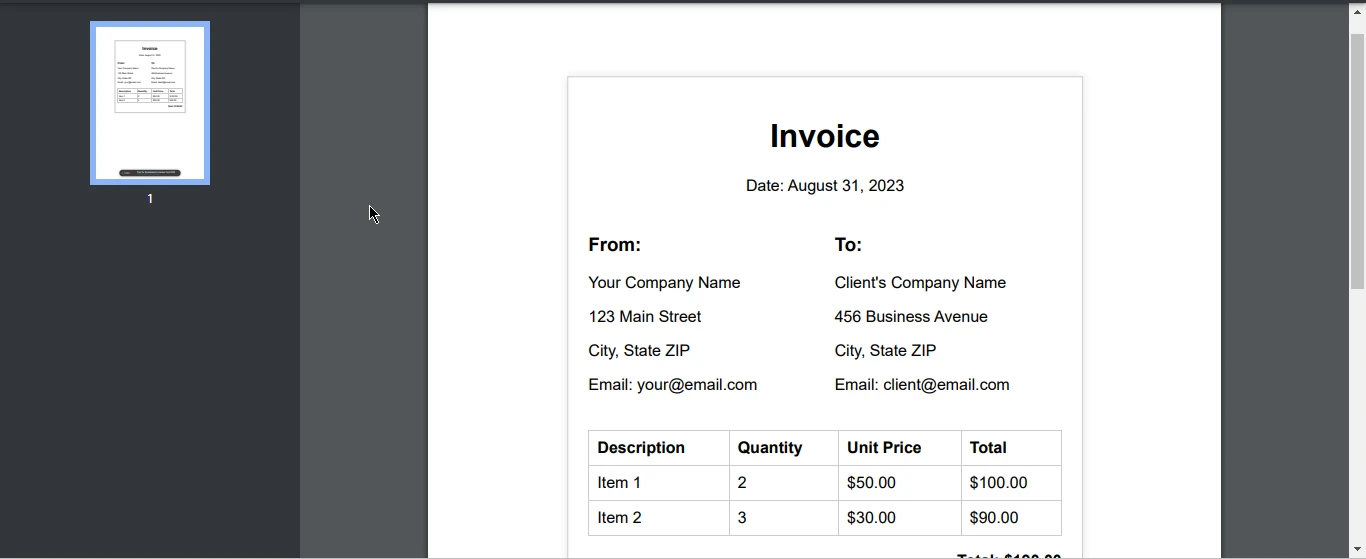 Salida de Factura
4. Conclusión
Convertir archivos HTML a formato PDF usando Visual Basic (VB) es una habilidad valiosa tanto para desarrolladores como para usuarios. Combinando de manera fluida la naturaleza dinámica de VB y convertir HTML con la permanencia y portabilidad del PDF, tanto desarrolladores como usuarios pueden desbloquear nuevos niveles de versatilidad y fiabilidad en el manejo de su contenido digital. La biblioteca IronPDF es una herramienta poderosa que puede generar documentos PDF de forma programática, convertir contenido HTML a formato PDF, extraer texto e imágenes de archivos PDF existentes, agregar anotaciones, marcas de agua y elementos interactivos, así como fusionar, dividir y manipular páginas PDF.
El artículo proporcionó una visión detallada de cómo usar IronPDF para convertir HTML a PDF en VB. Los ejemplos de código fueron claros y concisos, y las instrucciones fueron fáciles de seguir. Para el código fuente completo sobre cómo usar VB, visite la guía VB.NET PDF. También visite el tutorial de IronPDF HTML a PDF para instrucciones paso a paso. Puede descargar la biblioteca HTML a PDF desde el sitio web de NuGet en este enlace oficial de NuGet. El tutorial de creación de PDF en VB.NET de IronPDF también proporciona instrucciones adicionales.