
Cómo rellenar un formulario PDF en Python (Tutorial)

Rellene formularios PDF en Python mediante programación utilizando la biblioteca IronPDF, que proporciona métodos para cargar PDF existentes, acceder a campos de formulario por nombre, rellenarlos con valores y guardar los documentos modificados.
Inicio rápido: Completar formularios PDF en Python
:title="Quick Form Filling Example"
1. Install IronPDF: `pip install ironpdf`
2. Load your PDF: `form_document = PdfDocument.FromFile("form.pdf")`
3. Find form field: `field = form_document.Form.FindFormField("fieldname")`
4. Set field value: `field.Value = "Your Value"`
5. Save filled PDF: `form_document.SaveAs("filled_form.pdf")`
:title="Quick Form Filling Example"
1. Install IronPDF: `pip install ironpdf`
2. Load your PDF: `form_document = PdfDocument.FromFile("form.pdf")`
3. Find form field: `field = form_document.Form.FindFormField("fieldname")`
4. Set field value: `field.Value = "Your Value"`
5. Save filled PDF: `form_document.SaveAs("filled_form.pdf")`Introducción
Este artículo se centra en la cumplimentación programática de campos PDF en lugar de la introducción manual. Este enfoque se vuelve útil cuando la interfaz de usuario de una aplicación mejora la experiencia del usuario, pero los archivos PDF necesitan ser generados electrónicamente para fines de archivo.
Una vez recopilados todos los datos de entrada del usuario, es necesario crear formularios PDF mediante programación. Estos documentos cumplimentados pueden guardarse para su uso futuro o modificarse según sea necesario. Existen varias bibliotecas PDF de Python para trabajar con archivos PDF, como PyPDF2, ReportLab, IronPDF y otras. Este artículo explora específicamente cómo utilizar IronPDF para rellenar formularios interactivos.
El proceso de automatización del rellenado de formularios PDF puede agilizar significativamente los flujos de trabajo empresariales, especialmente en situaciones de procesamiento masivo de documentos, gestión de datos de clientes o documentación de cumplimiento normativo. Al aprovechar las capacidades de Python junto con las sólidas funciones de IronPDF, los desarrolladores pueden crear soluciones eficientes que gestionan la población de formularios a escala, al tiempo que mantienen la precisión de los datos y la integridad de los documentos.
Cómo rellenar un formulario PDF en Python
- Instale la biblioteca Python necesaria para rellenar formularios PDF
- Carga un documento PDF existente que contenga campos de formulario
- Acceda al campo de formulario deseado mediante el método `FindFormField` del atributo **Form**
- Rellene el campo del formulario asignando un valor al atributo **Value**
- Exporta el documento PDF modificado
¿Qué es IronPDF for Python?
IronPDF es una potente biblioteca PDF diseñada para desarrolladores Python, que proporciona un enfoque directo para crear, editar y manipular documentos PDF dentro de scripts Python. Esta completa biblioteca ofrece una API intuitiva que simplifica las complejas operaciones con PDF, haciéndola accesible para desarrolladores de todos los niveles.
Los desarrolladores pueden aprovechar el conjunto de características integrales de IronPDF, que incluye capacidades para manipular texto e imágenes, cifrar documentos e implementar firmas digitales. La biblioteca también admite funciones avanzadas como conversión de HTML a PDF, creación y manipulación de formularios y varias configuraciones de renderización para personalizar el resultado. Al utilizar IronPDF, los desarrolladores pueden generar documentos PDF de alta calidad de forma eficaz, aumentando así el valor y la eficacia de sus proyectos Python.
¿Cómo instalar IronPDF a través de Pip?
La biblioteca IronPDF se puede agregar vía pip. Use el siguiente comando para instalar IronPDF usando pip:
pip install ironpdf
Tras la instalación, es posible que tenga que configurar su entorno y aplicar claves de licencia si utiliza la biblioteca en un entorno de producción. Ahora puedes usar IronPDF con tu script de Python.
¿Cómo usar código Python para rellenar documentos PDF mediante programación?
A continuación se muestra el código que demuestra cómo utilizar la biblioteca IronPDF para crear y rellenar formularios PDF utilizando marcado HTML. El código importa las clases esenciales de la biblioteca IronPDF.
from ironpdf import *

# Define HTML content for a simple form
form_html = """
<html>
<body>
<h2>Editable PDF Form</h2>
<form>
First name: <br> <input type='text' name='firstname' value=''> <br>
Last name: <br> <input type='text' name='lastname' value=''>
</form>
</body>
</html>
"""

# Instantiate a PDF renderer
renderer = ChromePdfRenderer()

# Set the option to create PDF forms from HTML
renderer.RenderingOptions.CreatePdfFormsFromHtml = True

# Render the HTML content as a PDF file and save it
renderer.RenderHtmlAsPdf(form_html).SaveAs("BasicForm.pdf")

# Load the created PDF document
form_document = PdfDocument.FromFile("BasicForm.pdf")

# Access the "firstname" field and set its value
first_name_field = form_document.Form.FindFormField("firstname")
first_name_field.Value = "Minnie"
print("FirstNameField value: {}".format(first_name_field.Value))

# Access the "lastname" field and set its value
last_name_field = form_document.Form.FindFormField("lastname")
last_name_field.Value = "Mouse"
print("LastNameField value: {}".format(last_name_field.Value))

# Save the filled form to a new PDF file
form_document.SaveAs("FilledForm.pdf")
from ironpdf import *
# Define HTML content for a simple form
form_html = """
<html>
<body>
<h2>Editable PDF Form</h2>
<form>
First name: <br> <input type='text' name='firstname' value=''> <br>
Last name: <br> <input type='text' name='lastname' value=''>
</form>
</body>
</html>
"""
# Instantiate a PDF renderer
renderer = ChromePdfRenderer()
# Set the option to create PDF forms from HTML
renderer.RenderingOptions.CreatePdfFormsFromHtml = True
# Render the HTML content as a PDF file and save it
renderer.RenderHtmlAsPdf(form_html).SaveAs("BasicForm.pdf")
# Load the created PDF document
form_document = PdfDocument.FromFile("BasicForm.pdf")
# Access the "firstname" field and set its value
first_name_field = form_document.Form.FindFormField("firstname")
first_name_field.Value = "Minnie"
print("FirstNameField value: {}".format(first_name_field.Value))
# Access the "lastname" field and set its value
last_name_field = form_document.Form.FindFormField("lastname")
last_name_field.Value = "Mouse"
print("LastNameField value: {}".format(last_name_field.Value))
# Save the filled form to a new PDF file
form_document.SaveAs("FilledForm.pdf")Primero, generamos un formulario PDF convirtiendo un formulario HTML usando el método PdfDocument.RenderHtmlAsPdf. El atributo RenderingOptions se utiliza para establecer CreatePdfFormsFromHtml en verdadero, lo que hace que el formulario dentro del marcado HTML sea editable. Este enfoque permite a los desarrolladores aprovechar el HTML y CSS conocidos para diseñar formularios, al tiempo que se benefician de las funciones de seguridad y coherencia de los documentos PDF. Luego, el PDF resultante se guarda en la ubicación de salida especificada utilizando el método SaveAs.
Para formularios más complejos, IronPDF admite varios tipos de entradas, como casillas de verificación, botones de opción, menús desplegables y áreas de texto. La biblioteca también proporciona métodos para editar PDF existentes y trabajar con campos de formulario preexistentes en documentos heredados.
¿Qué aspecto tiene el formulario PDF inicial?
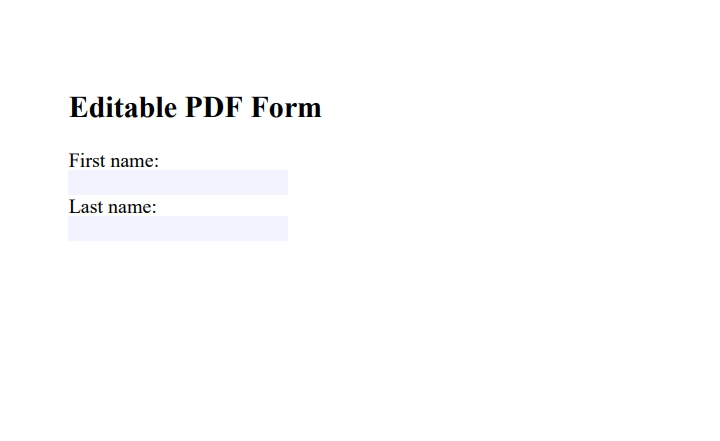
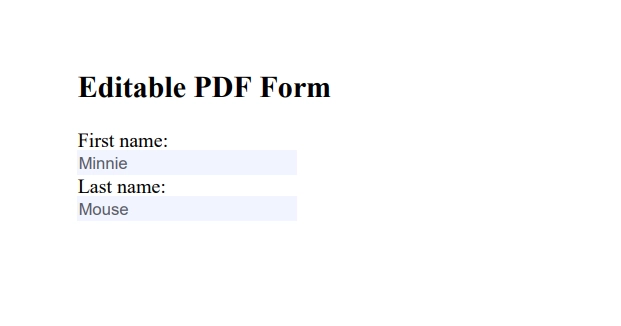
A continuación, cargamos el PDF creado utilizando el método PdfDocument.FromFile. Al utilizar el método FindFormField, accedemos a los campos de formulario especificados en función de sus respectivos nombres. Para completar los campos de entrada de nombre y apellido, asignamos valores a sus atributos Value. Finalmente, el PDF modificado se guarda en un nuevo archivo utilizando el método SaveAs.
El proceso de cumplimentación de formularios puede ampliarse para gestionar la validación, la lógica condicional y el procesamiento por lotes. Por ejemplo, los desarrolladores pueden iterar a través de múltiples registros de datos para generar cientos de formularios rellenados automáticamente, lo que hace que IronPDF sea ideal para aplicaciones que requieren un procesamiento de documentos de gran volumen.
¿Cómo aparece el formulario PDF rellenado?
¿Cuáles son las principales ventajas de utilizar IronPDF?
IronPDF ofrece varias ventajas a los desarrolladores de Python que trabajan con formularios PDF. La intuitiva API de la biblioteca reduce la curva de aprendizaje, lo que permite a los desarrolladores implementar rápidamente la funcionalidad de rellenado de formularios. Su compatibilidad con la creación de formularios basados en HTML significa que los desarrolladores pueden utilizar sus conocimientos de desarrollo web para diseñar sofisticados formularios PDF sin tener que aprender las especificaciones propietarias de PDF.
Además, IronPDF gestiona internamente operaciones PDF complejas, abstrayéndose de las complejidades del formato PDF. Esto incluye la incrustación automática de fuentes, la codificación adecuada de caracteres y el mantenimiento de la integridad de la estructura del documento. La biblioteca también admite funciones avanzadas como la validación de campos de formulario, la ejecución personalizada de JavaScript y la gestión segura de documentos.
En conclusión, IronPDF se destaca como una biblioteca de Python confiable y eficiente para la manipulación de documentos PDF. Con su excepcional capacidad para programar rellenar formularios PDF, se convierte en un activo inestimable para automatizar los flujos de trabajo de procesamiento de documentos. Tanto si está creando aplicaciones empresariales, automatizando tareas administrativas o creando sistemas de gestión de documentos, IronPDF proporciona las herramientas necesarias para la manipulación profesional de PDF.
IronPDF ofrece una prueba gratuita, permitiendo a los usuarios explorar sus características antes de comprometerse. Además, ofrece opciones de licencia que son asequibles y flexibles, con paquetes que comienzan en $799.
Preguntas Frecuentes
¿Cuáles son los pasos básicos para rellenar un formulario PDF mediante programación en Python?
Para rellenar un formulario PDF en Python utilizando IronPDF, siga estos pasos: 1) Instala IronPDF con 'pip install ironpdf', 2) Carga tu PDF usando PdfDocument.FromFile(), 3) Encuentra el campo del formulario con form_document.Form.FindFormField(), 4) Establece el valor del campo usando field.Value, y 5) Guarda el PDF rellenado con SaveAs().
¿Cómo puedo acceder a campos de formulario específicos de un documento PDF y modificarlos?
Con IronPDF, puede acceder a los campos de formulario utilizando el método FindFormField del atributo Form. Una vez localizado el campo deseado por su nombre, puede rellenarlo asignando un valor al atributo Value de ese objeto de campo.
¿Puedo automatizar el rellenado masivo de formularios PDF para varios documentos?
Sí, IronPDF permite rellenar formularios PDF de forma masiva y automatizada, ya que permite procesar mediante programación varios documentos en bucles. Esto es especialmente útil para flujos de trabajo empresariales que implican la gestión de datos de clientes, documentación de cumplimiento normativo o cualquier escenario que requiera el procesamiento de grandes volúmenes de documentos.
¿Qué tipos de operaciones con PDF se admiten además del rellenado de formularios?
IronPDF ofrece un amplio conjunto de funciones que incluyen la creación y edición de PDF, la manipulación de texto e imágenes, el cifrado de documentos, la implementación de firmas digitales, la conversión de HTML a PDF y la personalización de la salida a través de varios ajustes de renderización.
¿Este método es adecuado para crear PDF con fines de archivo?
Sí, IronPDF es ideal para crear PDF con fines de archivo. Permite generar mediante programación formularios cumplimentados que pueden guardarse para su uso futuro o modificarse según sea necesario, lo que lo hace perfecto para mantener registros electrónicos y la integridad de los documentos.
¿Cómo mejora el rellenado programático de formularios los flujos de trabajo empresariales?
El uso de IronPDF para el rellenado programático de formularios agiliza significativamente los flujos de trabajo empresariales al automatizar el procesamiento de documentos a escala. Este enfoque garantiza la precisión de los datos, reduce los errores de introducción manual y permite la gestión eficiente de grandes volúmenes de formularios, al tiempo que mantiene la integridad de los documentos.


¿Aún desplazándote?
¿Quieres una prueba rápida?
ejecutar una muestra Mira cómo tu HTML se convierte en PDF.






 Comience gratis
 Comience gratis
 Reserve demostración en vivo gratis



 No se requiere tarjeta de crédito ni creación de cuenta