



업데이트됨 2026년 4월 23일
.NET에서 Microsoft.Extensions.AI로 LLM 통합 간소화
AI는 소프트웨어 개발을 변혁하고 있으나, 대규모 언어 모델(LLM)을 .NET에 통합하는 것은 지금까지 복잡했습니다. 현대에는 OpenAI 기반 PDF 파싱, 데이터 추출 및 콘텐츠 요약을 .NET 애플리케이션에 가져오는 IronPdf.AI로 AI 통합을 더욱 확장하세요.
더 읽어보기

프로그래밍 분야에서 효율적인 데이터 처리 방법은 성공적인 소프트웨어 개발의 중요한 기초입니다. 정보를 관리하고 조직하는 데 중요한 역할을 하는 기본적인 데이터 구조 중 하나는 큐입니다. C#, 강력하고 다재다능한 프로그래밍 언어의 맥락에서, C# 큐는 데이터를 순차적으로 관리하기 위한 기본 도구로 두드러집니다. C#의 큐에 대해 더 자세히 알고 싶다면, C#의 큐 및 .NET의 제네릭 큐 클래스에 대한 추천 기사를 참조하세요.
큐는 선입선출(FIFO)의 원칙을 따르며, 처음 추가된 요소가 먼저 제거됩니다. 이 속성은 데이터를 특정 순서로 처리해야 하는 시나리오에서 특히 유용하며, 예를 들어 체계적인 방식으로 작업을 처리하거나 웹 서버에서 요청을 관리하는 것과 같은 경우에 적합합니다.
이 기사에서는 C# PDF 라이브러리 IronPDF를 C# 큐와 함께 사용할 것입니다.
C#의 표준 큐는 개발자가 어떤 데이터 유형의 큐도 만들 수 있도록 허용하는 제네릭 클래스입니다. 큐 끝에 요소를 추가하기 위한 Enqueue과(와) 큐의 앞에서 요소를 제거하기 위한 Dequeue과 같은 메서드를 제공합니다. 이 유형의 큐는 자원 할당의 공정성을 보장하며 엄격한 순서대로 데이터 처리가 이루어지는 시나리오에서 널리 사용됩니다.
using System;
using System.Collections.Generic;

class Program
{
    static void Main()
    {
        // Create an empty queue
        Queue<int> standardQueue = new Queue<int>();

        // Enqueue elements into the queue
        standardQueue.Enqueue(10);
        standardQueue.Enqueue(20);
        standardQueue.Enqueue(30);

        // Dequeue elements from the queue until it is empty
        while (standardQueue.Count > 0)
        {
            int element = standardQueue.Dequeue();
            Console.WriteLine($"Dequeued: {element}");
        }
    }
}Imports System
Imports System.Collections.Generic
Module Program
Sub Main()
' Create an empty queue
Dim standardQueue As New Queue(Of Integer)()
' Enqueue elements into the queue
standardQueue.Enqueue(10)
standardQueue.Enqueue(20)
standardQueue.Enqueue(30)
' Dequeue elements from the queue until it is empty
While standardQueue.Count > 0
Dim element As Integer = standardQueue.Dequeue()
Console.WriteLine($"Dequeued: {element}")
End While
End Sub
End Module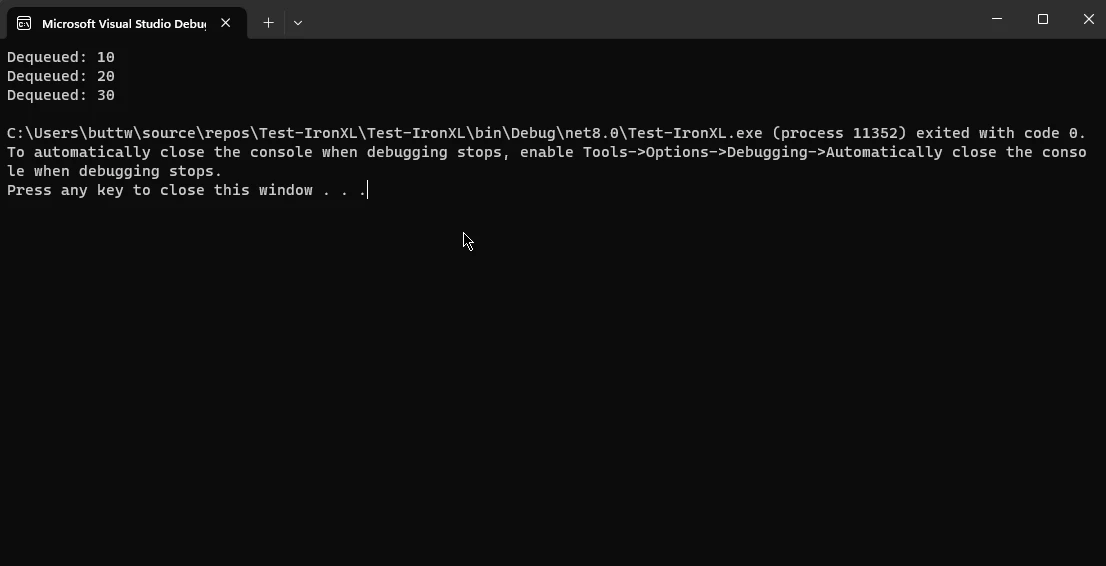
특정 상황에서는 큐에서 요소의 우선순위를 정하는 것이 중요해집니다. C#에는 내장된 우선순위 큐가 없지만 개발자는 정렬된 컬렉션이나 사용자 정의 데이터 구조를 사용하여 구현할 수 있습니다. 이 유형의 큐는 긴급성이나 중요성 등의 특정 기준에 따라 몇몇 요소를 다른 것보다 먼저 처리해야 할 때 유용합니다.
using System;
using System.Collections.Generic;

class Program
{
    static void Main()
    {
        // Create a priority queue using a sorted set to store elements in order
        SortedSet<int> priorityQueue = new SortedSet<int>();

        // Add elements to the priority queue
        priorityQueue.Add(30);
        priorityQueue.Add(10);
        priorityQueue.Add(20);

        // Dequeue elements from the priority queue based on their priority
        while (priorityQueue.Count > 0)
        {
            // Access the minimum element (highest priority for this example)
            int element = priorityQueue.Min;
            // Remove the element from the queue
            priorityQueue.Remove(element);
            Console.WriteLine($"Priority Queue Dequeued: {element}");
        }
    }
}Imports System
Imports System.Collections.Generic
Module Program
Sub Main()
' Create a priority queue using a sorted set to store elements in order
Dim priorityQueue As New SortedSet(Of Integer)()
' Add elements to the priority queue
priorityQueue.Add(30)
priorityQueue.Add(10)
priorityQueue.Add(20)
' Dequeue elements from the priority queue based on their priority
While priorityQueue.Count > 0
' Access the minimum element (highest priority for this example)
Dim element As Integer = priorityQueue.Min
' Remove the element from the queue
priorityQueue.Remove(element)
Console.WriteLine($"Priority Queue Dequeued: {element}")
End While
End Sub
End Module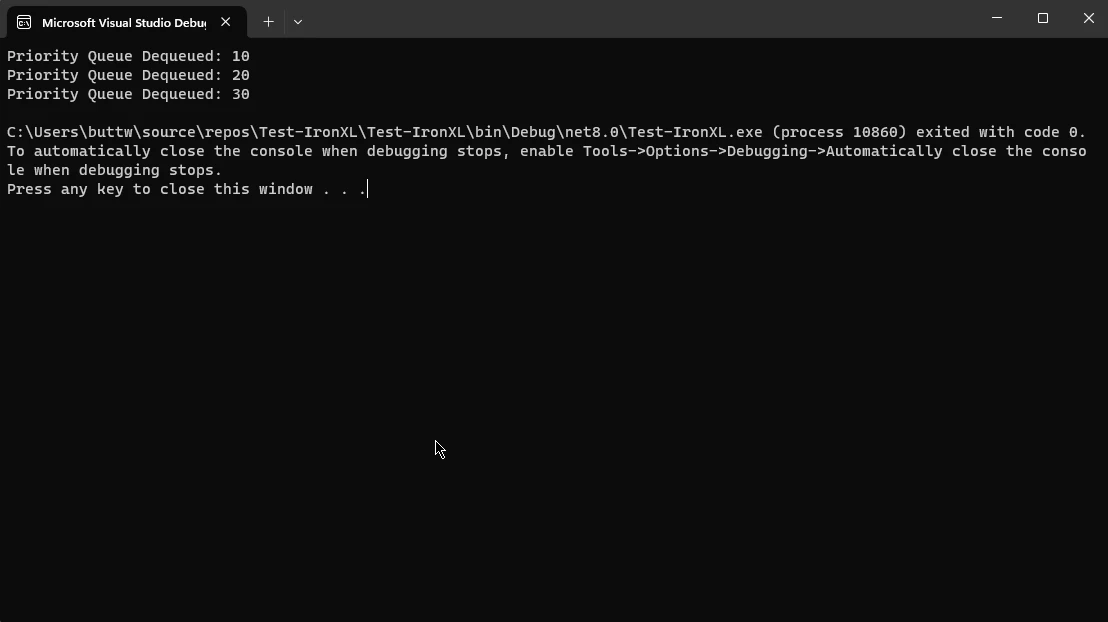
순환 큐는 마지막 요소가 첫 번째와 연결되어 순환 구조를 생성하는 변형입니다. 이는 큐가 고정 크기를 가지며, 오래된 큐 요소가 주기적으로 새 요소로 대체되어야 하는 시나리오에서 유리할 수 있습니다. C#에서 순환 큐를 구현하면 메모리 사용을 최적화하고 효율적인 데이터 처리를 보장할 수 있습니다.
using System;

// CircularQueue class to implement a fixed-size circular queue
class CircularQueue
{
    private int[] array;
    private int front, rear, size;

    public CircularQueue(int size)
    {
        this.size = size;
        array = new int[size];
        front = rear = -1;
    }

    // Enqueue method to add an element to the circular queue
    public void Enqueue(int item)
    {
        if ((front == 0 && rear == size - 1) || (rear == (front - 1) % (size - 1)))
        {
            Console.WriteLine("Queue is full");
            return;
        }
        else if (front == -1)  // Initial insertion case
        {
            front = rear = 0;
            array[rear] = item;
        }
        else if (rear == size - 1 && front != 0)  // Wrap around
        {
            rear = 0;
            array[rear] = item;
        }
        else  // Normal case
        {
            rear++;
            array[rear] = item;
        }
    }

    // Dequeue method to remove an element from the circular queue
    public int Dequeue()
    {
        if (front == -1)  // Queue is empty case
        {
            Console.WriteLine("Queue is empty");
            return -1;
        }

        int item = array[front];
        array[front] = -1;

        if (front == rear)  // Single element case
            front = rear = -1;
        else if (front == size - 1)  // Wrap around
            front = 0;
        else  // Normal case
            front++;

        return item;
    }
}

class Program
{
    static void Main()
    {
        // Create a circular queue with a specified initial capacity
        CircularQueue circularQueue = new CircularQueue(5);

        // Enqueue elements
        circularQueue.Enqueue(10);
        circularQueue.Enqueue(20);
        circularQueue.Enqueue(30);

        // Dequeue elements
        Console.WriteLine($"Circular Queue Dequeued: {circularQueue.Dequeue()}");
        Console.WriteLine($"Circular Queue Dequeued: {circularQueue.Dequeue()}");
    }
}Imports System
' CircularQueue class to implement a fixed-size circular queue
Class CircularQueue
Private array() As Integer
Private front, rear, size As Integer
Public Sub New(size As Integer)
Me.size = size
ReDim array(size - 1)
front = -1
rear = -1
End Sub
' Enqueue method to add an element to the circular queue
Public Sub Enqueue(item As Integer)
If (front = 0 AndAlso rear = size - 1) OrElse (rear = (front - 1) Mod (size - 1)) Then
Console.WriteLine("Queue is full")
Return
ElseIf front = -1 Then ' Initial insertion case
front = 0
rear = 0
array(rear) = item
ElseIf rear = size - 1 AndAlso front <> 0 Then ' Wrap around
rear = 0
array(rear) = item
Else ' Normal case
rear += 1
array(rear) = item
End If
End Sub
' Dequeue method to remove an element from the circular queue
Public Function Dequeue() As Integer
If front = -1 Then ' Queue is empty case
Console.WriteLine("Queue is empty")
Return -1
End If
Dim item As Integer = array(front)
array(front) = -1
If front = rear Then ' Single element case
front = -1
rear = -1
ElseIf front = size - 1 Then ' Wrap around
front = 0
Else ' Normal case
front += 1
End If
Return item
End Function
End Class
Class Program
Shared Sub Main()
' Create a circular queue with a specified initial capacity
Dim circularQueue As New CircularQueue(5)
' Enqueue elements
circularQueue.Enqueue(10)
circularQueue.Enqueue(20)
circularQueue.Enqueue(30)
' Dequeue elements
Console.WriteLine($"Circular Queue Dequeued: {circularQueue.Dequeue()}")
Console.WriteLine($"Circular Queue Dequeued: {circularQueue.Dequeue()}")
End Sub
End Class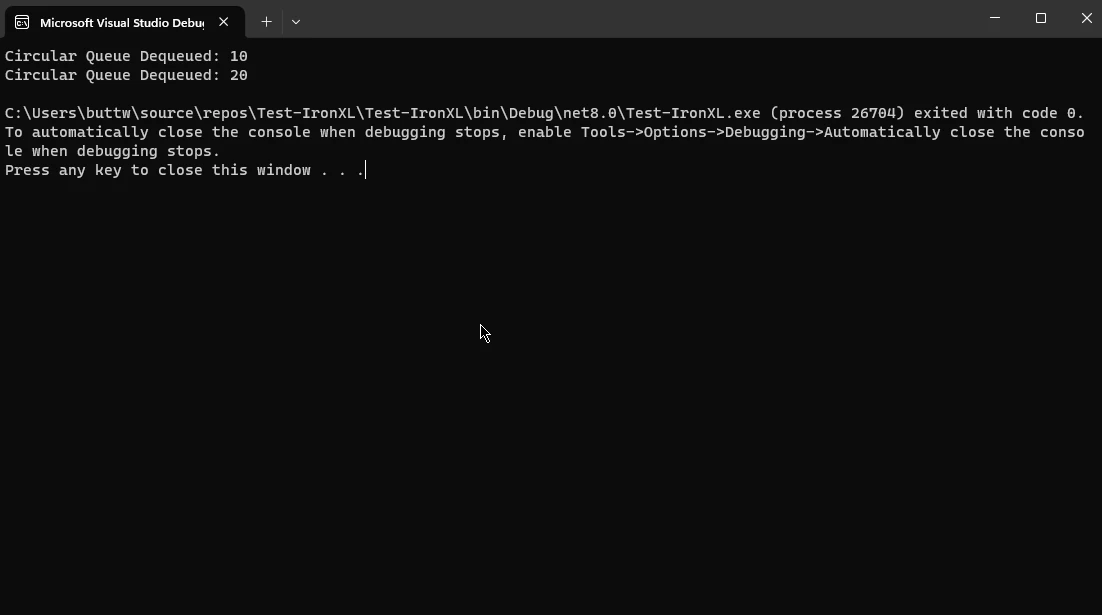
C# 큐의 기능 및 응용 프로그램에 대해 깊이 있게 탐구하면서, 이를 실제 응용 프로그램에 원활하게 통합할 수 있는 방법을 탐색하는 것이 중요합니다. C# 기능을 강화하는 강력한 도구 중 하나는 IronPDF입니다.
IronPDF는 PDF 문서의 생성, 조작 및 렌더링을 간소화하는 C# 라이브러리입니다. 직관적인 API를 통해 개발자가 HTML, ASPX 또는 일반 텍스트에서 PDF를 생성할 수 있습니다. IronPDF를 사용하면 PDF 생성 응용 프로그램에 C# 큐를 도입하는 과정이 간소화되고 효율적입니다.
C# 큐를 IronPDF와 함께 사용하여 동적이고 조직적인 PDF 문서를 생성하는 방법에 대해 자세히 살펴보겠습니다. 웹 응용 프로그램이 사용자 입력 및 요청을 기반으로 PDF 보고서를 생성해야 하는 시나리오를 고려해 보세요.
using IronPdf;
using System;
using System.Collections.Generic;

class PdfGenerator
{
    static void Main()
    {
        // Create a C# Queue to store user requests
        Queue<string> userRequests = new Queue<string>();

        // Simulate user requests being added to the queue
        userRequests.Enqueue("Generate PDF for User 1");
        userRequests.Enqueue("Generate PDF for User 2");
        userRequests.Enqueue("Generate PDF for User 3");

        // Process requests and generate PDFs
        while (userRequests.Count > 0)
        {
            string request = userRequests.Dequeue();
            GeneratePdf(request);
        }
    }

    // Method to generate a PDF file using IronPDF
    static void GeneratePdf(string userRequest)
    {
        // Use IronPDF to generate PDF based on user request
        var Renderer = new HtmlToPdf();

        // Render the provided HTML content as a PDF
        var PDF = Renderer.RenderHtmlAsPdf($"<h1>{userRequest}</h1>");

        // Save the generated PDF with the request name as file name
        PDF.SaveAs($"{userRequest.Replace(" ", "_")}.pdf");
    }
}Imports IronPdf
Imports System
Imports System.Collections.Generic
Class PdfGenerator
Shared Sub Main()
' Create a VB.NET Queue to store user requests
Dim userRequests As New Queue(Of String)()
' Simulate user requests being added to the queue
userRequests.Enqueue("Generate PDF for User 1")
userRequests.Enqueue("Generate PDF for User 2")
userRequests.Enqueue("Generate PDF for User 3")
' Process requests and generate PDFs
While userRequests.Count > 0
Dim request As String = userRequests.Dequeue()
GeneratePdf(request)
End While
End Sub
' Method to generate a PDF file using IronPDF
Shared Sub GeneratePdf(userRequest As String)
' Use IronPDF to generate PDF based on user request
Dim Renderer = New HtmlToPdf()
' Render the provided HTML content as a PDF
Dim PDF = Renderer.RenderHtmlAsPdf($"<h1>{userRequest}</h1>")
' Save the generated PDF with the request name as file name
PDF.SaveAs($"{userRequest.Replace(" ", "_")}.pdf")
End Sub
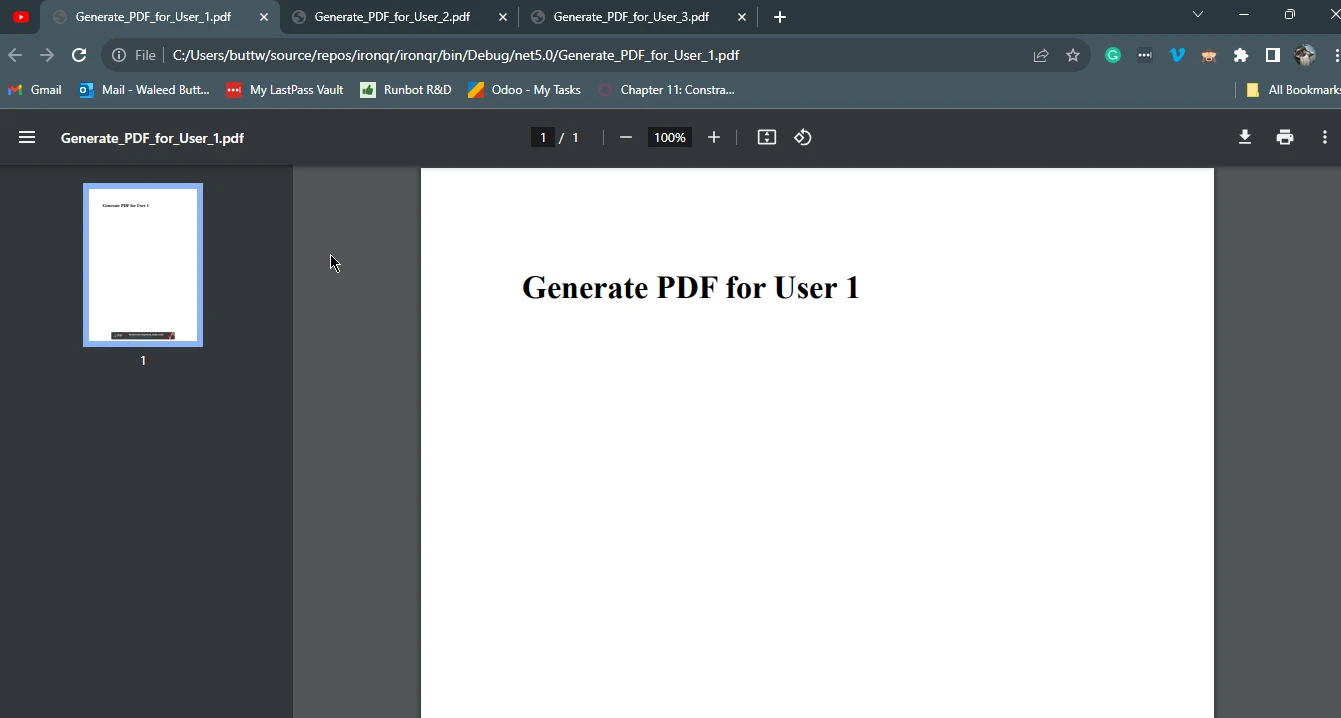
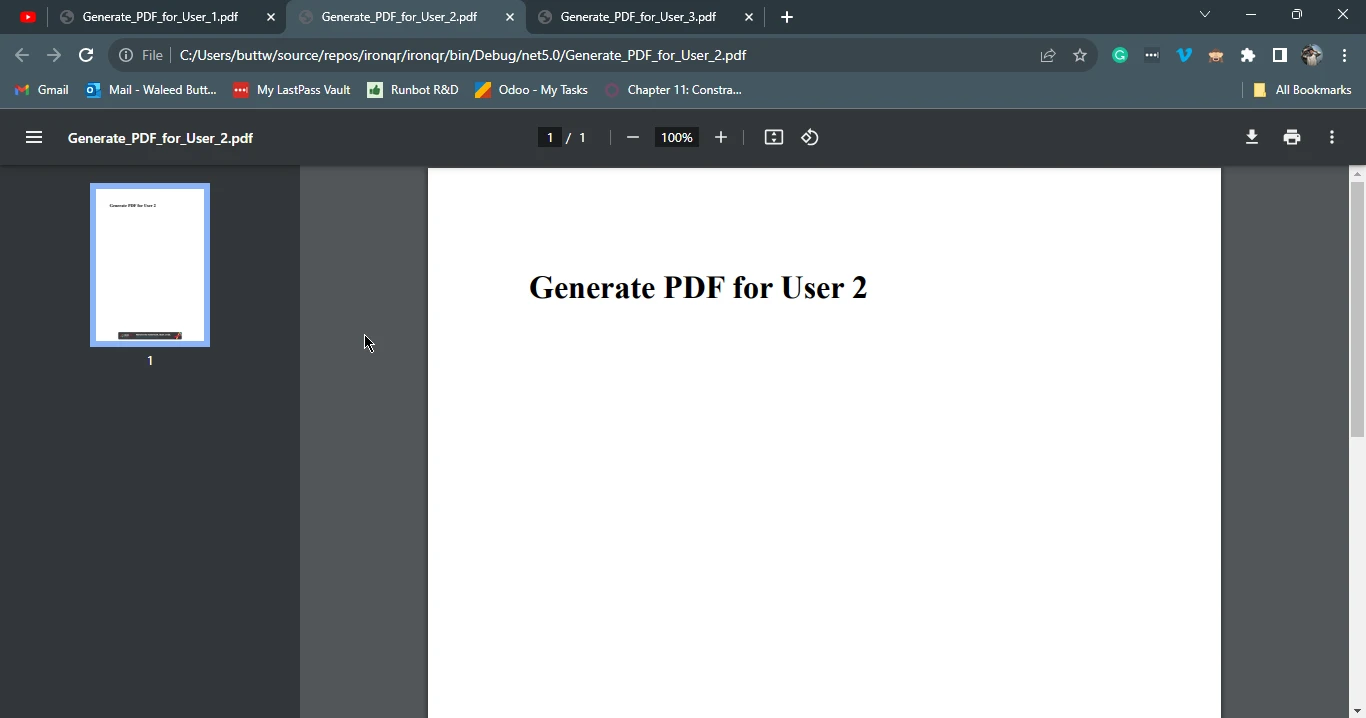
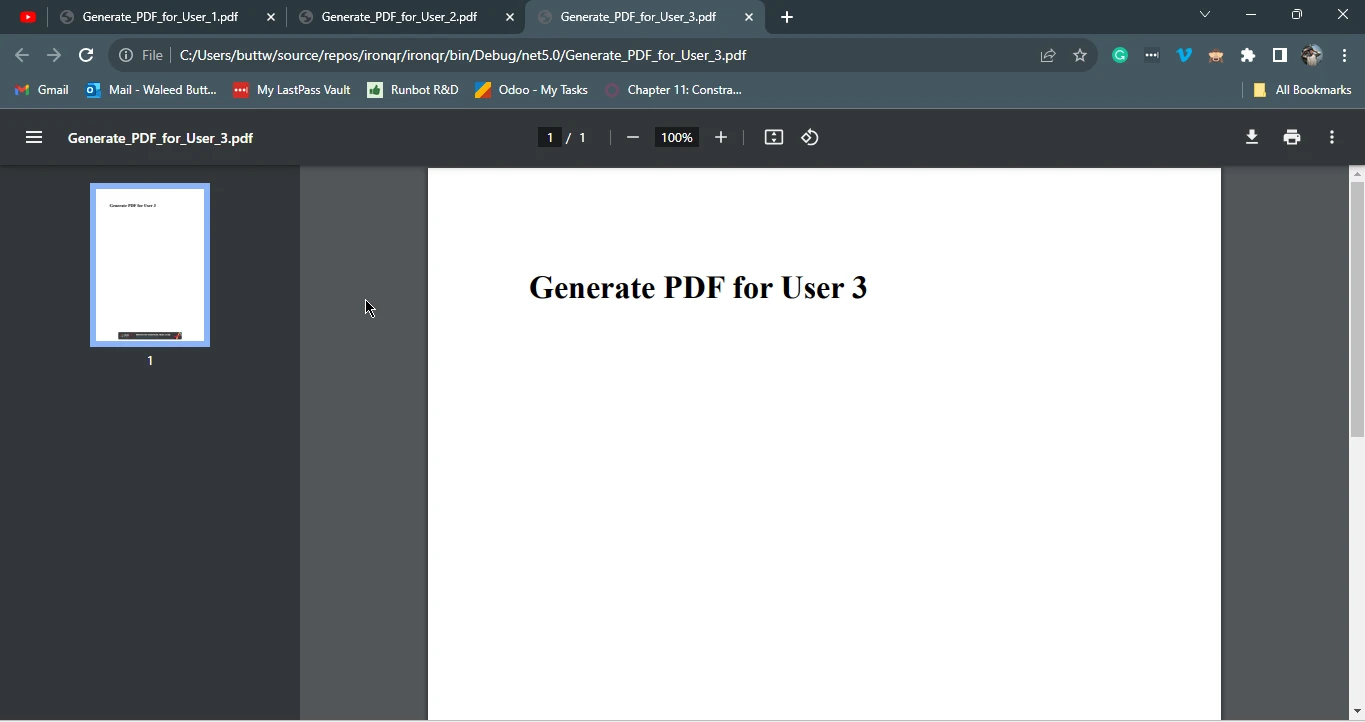
End Class이 예시에서는 C# 큐(userRequests)가 PDF 생성에 대한 사용자 요청을 저장하는 데 사용됩니다. GeneratePdf 메서드는 사용자 요청을 받아서 IronPDF를 사용하여 HTML 콘텐츠를 PDF 문서로 변환하고, 생성된 PDF 파일을 관련 이름으로 저장합니다.
이 통합 방법은 사용자 요청의 질서 있는 처리가 PDF 문서의 체계적인 생성으로 이어지는 곳에서 C# 큐와 IronPDF 간의 시너지를 보여줍니다.
결론적으로, C# 큐는 데이터를 순차적으로 관리하고 처리하는 데 있어 귀중한 자산임이 증명됩니다. 그것의 FIFO 원칙 준수는 작업 스케줄링부터 웹 서버의 요청 처리에 이르기까지 광범위한 응용에 적합합니다. 강력한 라이브러리인 IronPDF와 결합했을 때, C# 큐는 더욱 강력해져, 개발자가 조직적이고 동적인 PDF 문서를 효율적으로 생성할 수 있도록 합니다.
C# 큐의 세부 사항을 이해하고 IronPDF와 같은 도구와의 통합을 탐구하면 개발자가 데이터 관리 및 처리에 대한 강력하고 효율적인 솔루션을 설계할 수 있도록 합니다. 기술이 계속 발전함에 따라 C# 큐와 같은 기본 데이터 구조와 혁신적인 라이브러리 간의 시너지는 소프트웨어 개발의 지형을 형성하는 데 중요한 역할을 할 것입니다.
라이선스 정보는 IronPDF 라이선스 세부 사항을 참조하십시오. HTML을 PDF로 변환하는 것에 대한 더 많은 정보를 얻으려면 HTML to PDF 변환 튜토리얼을 방문하세요.

제이콥 멜러는 Iron Software의 최고 기술 책임자(CTO)이자 C# PDF 기술을 개척한 선구적인 엔지니어입니다. Iron Software의 핵심 코드베이스를 최초로 개발한 그는 창립 초기부터 회사의 제품 아키텍처를 설계해 왔으며, CEO인 캐머런 리밍턴과 함께 회사를 NASA, 테슬라, 그리고 전 세계 정부 기관에 서비스를 제공하는 50명 이상의 직원을 보유한 기업으로 성장시켰습니다.

IronPDF는 IRON SUITE 의 일부입니다.
10개의 .NET API 제품, 당신의 사무 문서를 위해











PDF 파일을 HTML처럼 빠르게 변환해야 할 때.


