



업데이트됨 2026년 4월 23일
.NET에서 Microsoft.Extensions.AI로 LLM 통합 간소화
AI는 소프트웨어 개발을 변혁하고 있으나, 대규모 언어 모델(LLM)을 .NET에 통합하는 것은 지금까지 복잡했습니다. 현대에는 OpenAI 기반 PDF 파싱, 데이터 추출 및 콘텐츠 요약을 .NET 애플리케이션에 가져오는 IronPdf.AI로 AI 통합을 더욱 확장하세요.
더 읽어보기

현대 소프트웨어 개발에서 효율적인 데이터 관리는 매우 중요합니다. 기본 응용 프로그램이나 복잡한 기업 시스템을 구축하든, 데이터를 접근, 조작 및 저장하는 것은 필수적인 요구사항입니다. C#의 Entity Framework Core (EF Core)는 데이터베이스 작업을 객체 지향적으로 제공하여 데이터 접근을 단순화하는 강력한 도구입니다. 이 글에서는 EF Core의 특징, 기능 및 모범 사례를 탐구하여 EF Core의 세계를 알아보겠습니다. 또한 'IronPDF for Handling PDF Documents'와 'Iron Software Solutions'를 통해 PDF 문서를 읽고, 쓰고, 관리하는 것도 알아보겠습니다. 두 패키지와 함께 실용적인 예제를 만들어보겠습니다.
Entity Framework Core는 인기 있는 Entity Framework 데이터 접근 기술의 경량 및 확장 가능한 오픈 소스 버전입니다. SQL Server, SQLite, MySQL, PostgreSQL, Azure Cosmos DB 등 다양한 기존 데이터베이스 서버 제공자를 지원하여 크로스 플랫폼 작업이 가능하도록 설계되었습니다. EF Core는 현대적인 객체 데이터베이스 매퍼이며 ORM(객체-관계 매핑) 패턴을 따르며, 개발자가 .NET 객체를 사용하여 데이터베이스로 작업할 수 있게 하여 수동으로 번거로운 SQL 쿼리를 작성할 필요를 제거합니다.
엔티티 모델링: EF Core는 개발자가 Plain Old CLR Objects (POCO)를 사용하여 데이터 모델을 정의할 수 있게 합니다. 이 엔티티 클래스는 데이터베이스 테이블을 나타내며, 속성이 테이블 열과 매핑됩니다.
LINQ 지원: EF Core는 LINQ 쿼리(Language Integrated Query)를 원활하게 지원하여 개발자가 친숙한 C# 구문을 사용하여 강력한 형식으로 SQL Server 또는 기타 데이터베이스에 대한 쿼리를 작성할 수 있게 합니다. 이는 데이터를 쿼리하는 것을 직관적으로 만들고 런타임 오류의 가능성을 줄입니다. 또한, 원시 SQL 문은 LINQ 쿼리와 함께 사용할 수 있습니다.
데이터베이스 마이그레이션: 팀 환경에서 데이터베이스 스키마 변경을 관리하는 것은 어려울 수 있습니다. EF Core는 데이터베이스 마이그레이션 기능을 제공하여 코드 우선 마이그레이션을 사용하여 데이터베이스 스키마에 점진적인 변경 사항을 적용할 수 있습니다.
지연 로딩 및 즉시 로딩: EF Core는 지연 로딩과 즉시 로딩 전략 모두를 지원하여, 사용 사례에 따라 관련 데이터를 수요에 따라 또는 사전 로딩함으로써 성능을 최적화 할 수 있습니다.
트랜잭션 관리: 트랜잭션은 데이터베이스 작업 도중 데이터 일관성과 무결성을 보장합니다. EF Core는 개발자들이 트랜잭션을 명시적으로 다룰 수 있도록 하여, 데이터베이스 작업의 그룹화가 함께 성공하거나 실패하도록 보장합니다.
동시성 제어: EF Core는 동시성 충돌 관리를 위한 내장 지원을 제공하여, 여러 사용자가 동시에 동일한 데이터를 수정하려고 할 때 발생할 수 있는 충돌을 감지하고 해결할 수 있도록 합니다.
ASP.NET Core 애플리케이션에서 Entity Framework Core (EF Core)와 함께 SQLite를 사용하는 기본 예제를 만들어 봅시다. 다음은 단계입니다:
애플리케이션 생성:
필요한 Install-Package:
프로젝트에 다음 NuGet 패키지를 추가하세요:
데이터베이스 컨텍스트 생성:
데이터베이스 컨텍스트(e.g., DatabaseContext)를 정의하고 DbContext에서 상속받습니다.
OnConfiguring 메서드에서 SQLite 연결 문자열을 설정합니다:
public class DatabaseContext : DbContext
{
    protected override void OnConfiguring(DbContextOptionsBuilder optionsBuilder)
    {
        optionsBuilder.UseSqlite("Filename=sample.db");
    }
}Public Class DatabaseContext
Inherits DbContext
Protected Overrides Sub OnConfiguring(optionsBuilder As DbContextOptionsBuilder)
optionsBuilder.UseSqlite("Filename=sample.db")
End Sub
End ClassStartup 클래스에서 컨텍스트를 서비스에 추가합니다:
public void ConfigureServices(IServiceCollection services)
{
    services.AddEntityFrameworkSqlite().AddDbContext<DatabaseContext>();
}Public Sub ConfigureServices(services As IServiceCollection)
services.AddEntityFrameworkSqlite().AddDbContext(Of DatabaseContext)()
End SubStartup 생성자에서 데이터베이스를 생성합니다:
public Startup(IHostingEnvironment env)
{
    using (var client = new DatabaseContext())
    {
        client.Database.EnsureCreated();
    }
}Public Sub New(env As IHostingEnvironment)
Using client As New DatabaseContext()
client.Database.EnsureCreated()
End Using
End Sub애플리케이션에서 SQLite 사용:
DatabaseContext을 사용하여 데이터베이스와 상호작용합니다.기본 예제임을 기억하고, 연결 문자열을 구성하고 EF Core를 사용하는 다른 방법들이 있습니다. 더 많은 고급 기능들을 탐험하고, 당신의 구체적인 필요에 맞추어 이를 조정하세요!
DbContext에 대한 범위 유지: EF Core에서 DbContext 인스턴스는 단명하도록 설계되었으며, 일반적으로 웹 애플리케이션의 단일 요청의 수명에 범위를 지정해야 합니다.
읽기 전용 작업에 AsNoTracking 사용: 엔티티가 수정되지 않을 것으로 예상되는 읽기 전용 작업을 수행할 때, 변경 추적을 우회하여 성능을 개선하기 위해 AsNoTracking 메서드를 사용하세요.
쿼리 최적화: 적절한 인덱싱, 페이징, 필터링 기술을 사용하여 데이터베이스에서 검색되는 데이터의 양을 최소화하여 효율적인 쿼리를 작성하세요.
N+1 쿼리 문제 피하기: 컬렉션의 관련 엔티티마다 쿼리가 실행되는 N+1 쿼리 문제에 주의하세요. 관련 데이터를 효율적으로 가져오기 위해 즉시 로딩이나 명시적 로딩을 사용하세요.
성능 모니터링: Entity Framework Profiler 같은 도구나 내장된 로깅 기능을 사용하여 EF Core 성능을 모니터링하고 성능 병목 현상을 식별하고 해결하세요.
IronPDF는 .NET 프로젝트에서 PDF 문서를 생성, 편집 및 내용 추출을 가능하게 하는 강력한 C# PDF 라이브러리입니다. 다음은 몇 가지 주요 기능입니다:
HTML을 PDF로 변환:
이미지 및 콘텐츠 변환:
편집 및 조작:
크로스 플랫폼 지원:
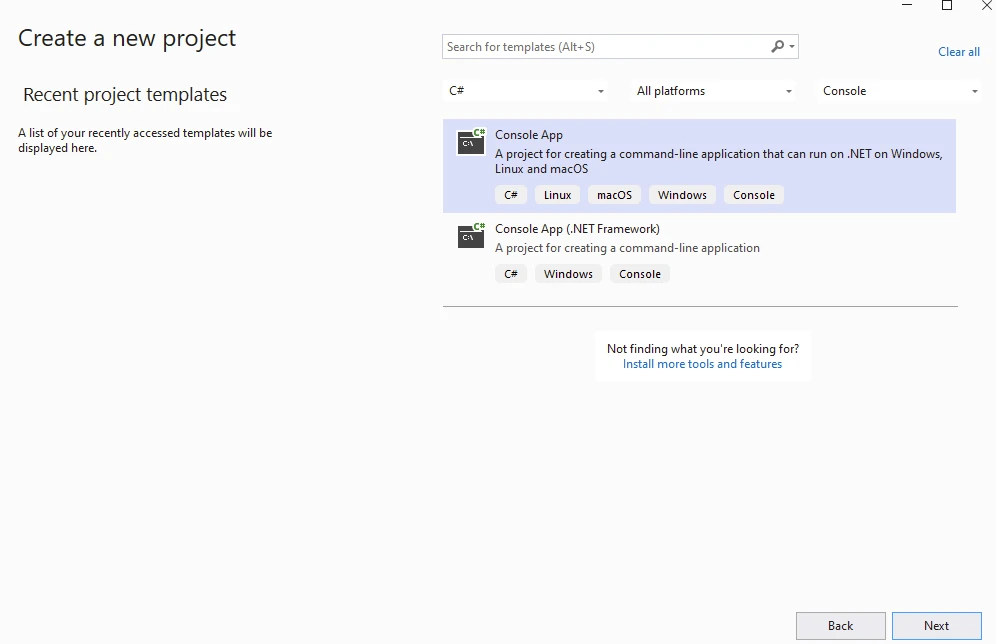
먼저, 아래와 같이 Visual Studio를 사용하여 콘솔 애플리케이션을 만듭니다.
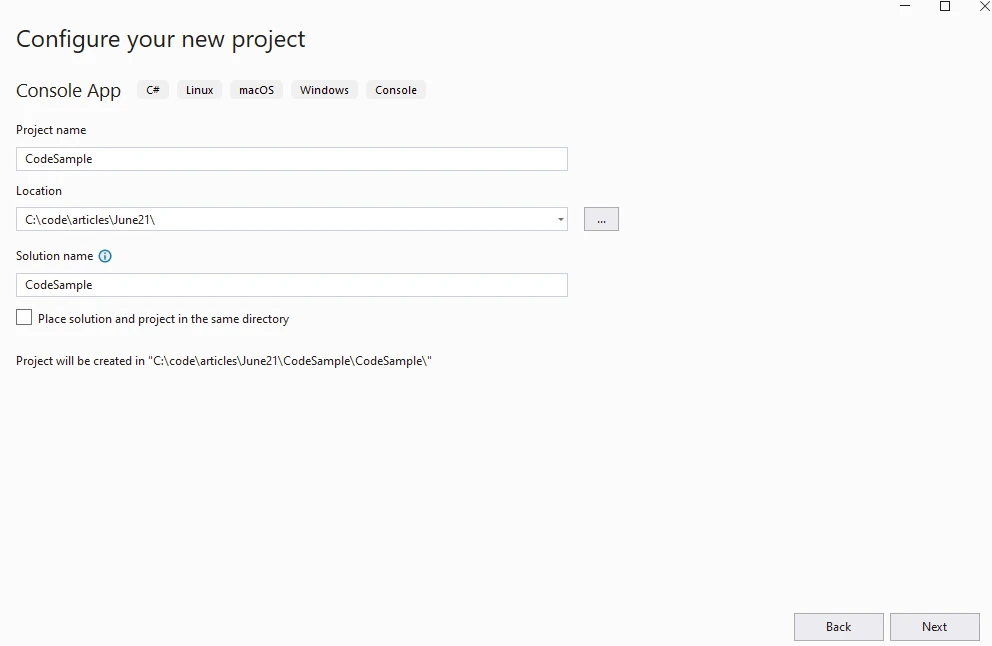
프로젝트 이름을 제공합니다.
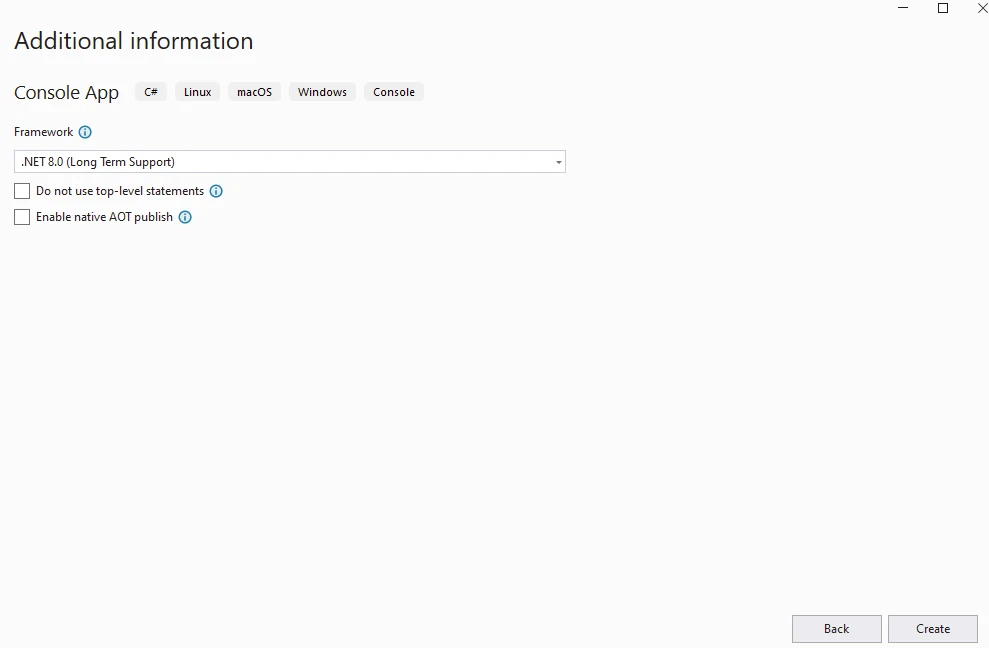
.NET 크로스 플랫폼 버전을 제공합니다.
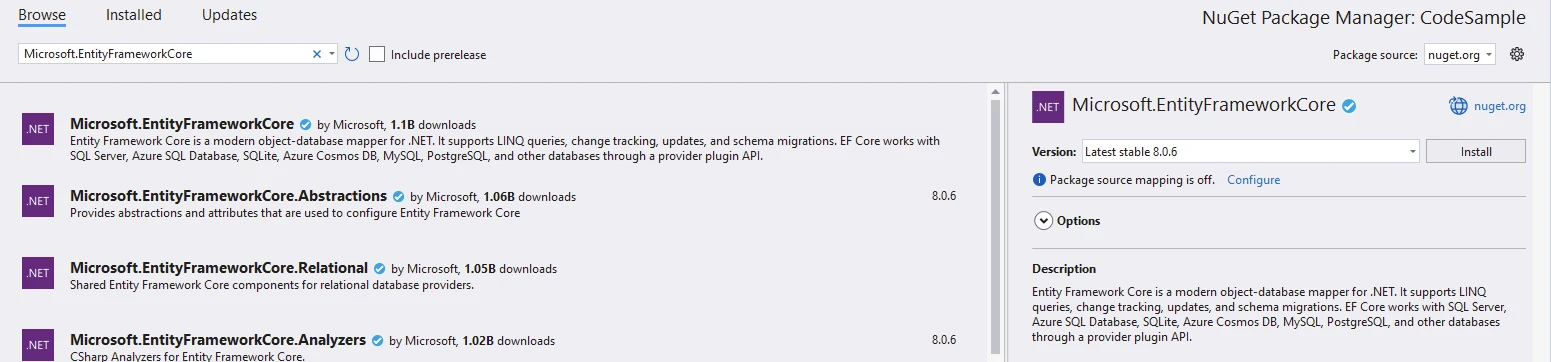
Microsoft.EntityFrameworkCore 패키지를 설치합니다.
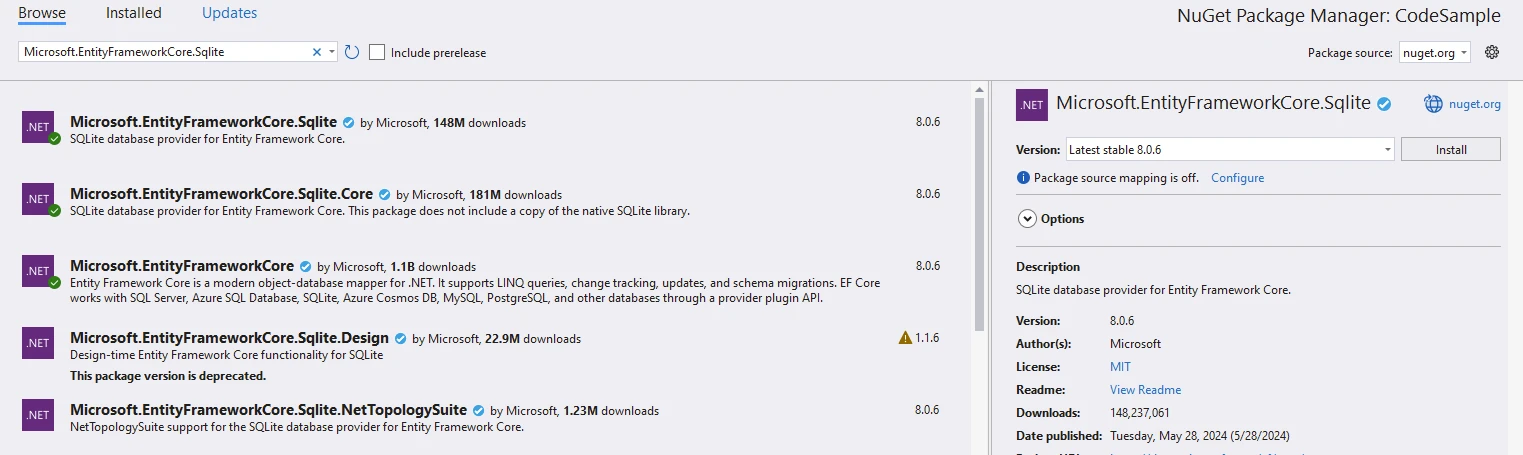
Microsoft.EntityFrameworkCore.SqlLite 패키지를 설치하십시오.
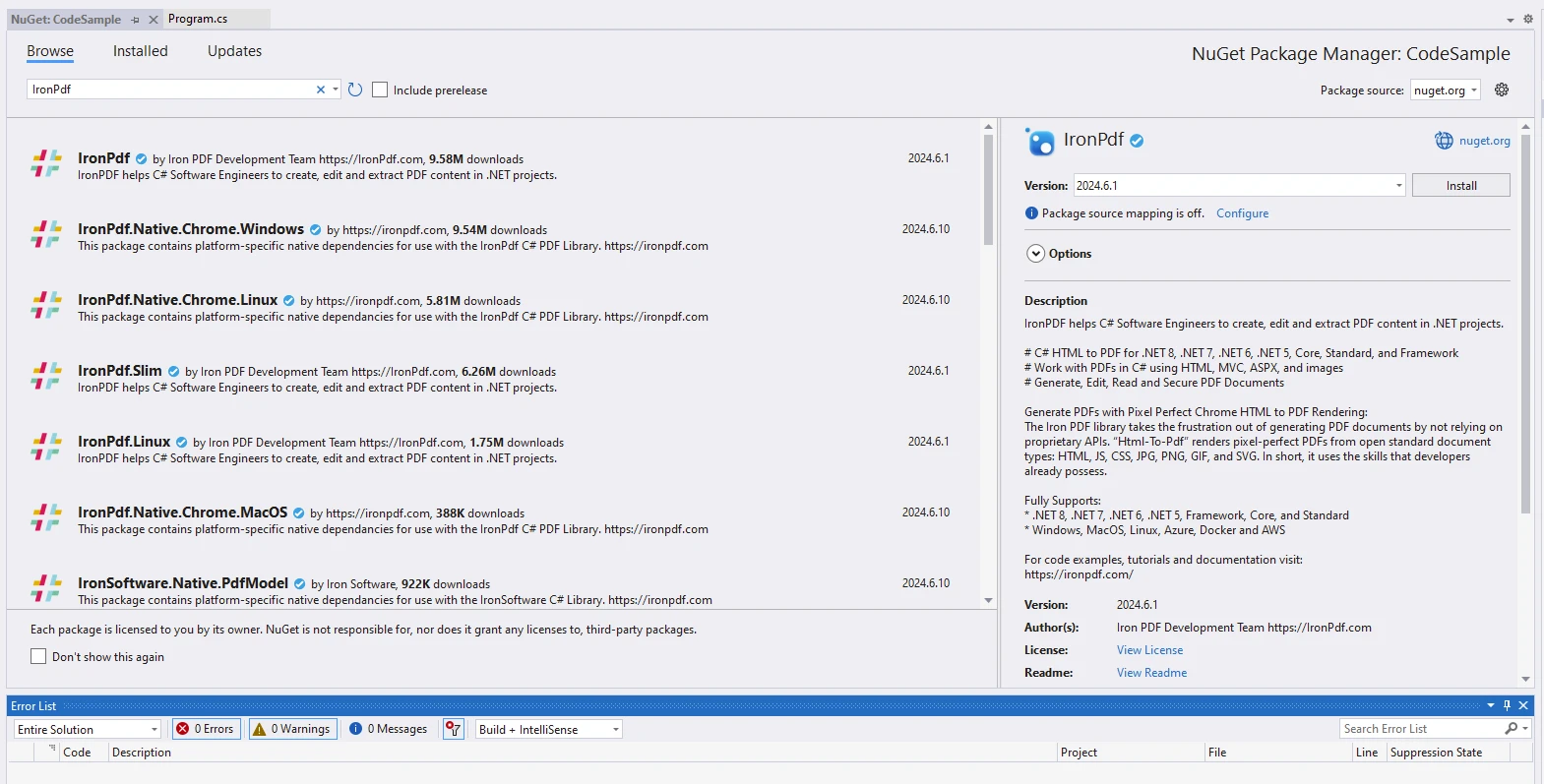
IronPDF 패키지를 설치하십시오.
아래 코드를 Program.cs에 추가하세요.
using IronPdf;
using Microsoft.EntityFrameworkCore;
using System;
using System.Linq;

namespace CodeSample
{
    public class Program
    {
        public static void Main()
        {
            Console.WriteLine("-------------Demo EF core and IronPDF--------------");

            // Disable local disk access or cross-origin requests
            Installation.EnableWebSecurity = true;

            // Instantiate Renderer
            var renderer = new ChromePdfRenderer();

            // Start with initial HTML content
            var content = "<h1>Demo EF core and IronPDF</h1>";
            content += "<h2>Add Students</h2>";

            // Add Students to Database
            using (var client = new DatabaseContext())
            {
                client.Database.EnsureCreated(); // Create table if it doesn't exist
                client.Students.ExecuteDelete(); // Ensure the table is clean

                // Define students
                var students = new[]
                {
                    new Student { StudentName = "Bill", DateOfBirth = new DateTime(1990, 12, 01), Height = 5.45M, Weight = 56, Grade = 10 },
                    new Student { StudentName = "Mike", DateOfBirth = new DateTime(1992, 12, 06), Height = 4.45M, Weight = 34, Grade = 8 },
                    new Student { StudentName = "Peter", DateOfBirth = new DateTime(1990, 12, 03), Height = 5.0M, Weight = 50, Grade = 10 },
                    new Student { StudentName = "Bob", DateOfBirth = new DateTime(1990, 12, 09), Height = 4.56M, Weight = 56, Grade = 10 },
                    new Student { StudentName = "Harry", DateOfBirth = new DateTime(1990, 12, 21), Height = 5.6M, Weight = 56, Grade = 10 },
                    new Student { StudentName = "Charle", DateOfBirth = new DateTime(1993, 12, 11), Height = 5.5M, Weight = 56, Grade = 7 }
                };

                // Add students to database
                client.Students.AddRange(students);
                client.SaveChanges();

                // Add students info to HTML content
                foreach (var student in students)
                {
                    content = AddStudent(content, student);
                }
            }

            content += "<h2>Display Students in Database</h2>";

            // Display Students in Database
            using (var client = new DatabaseContext())
            {
                Console.WriteLine($"Displaying Students in Database:");
                var students = client.Students.ToList();

                foreach (var student in students)
                {
                    Console.WriteLine($"Name= {student.StudentName}, ID={student.StudentID}, Grade={student.Grade}, Weight={student.Weight}, Height={student.Height}");
                    content = AddStudent(content, student);
                }
            }

            // Render HTML content to PDF
            var pdf = renderer.RenderHtmlAsPdf(content);

            // Export to a file or stream
            pdf.SaveAs("AwesomeEfCoreAndIronPdf.pdf");
        }

        // Helper method to add student info as HTML content
        private static string AddStudent(string content, Student student)
        {
            content += $"<p Name = {student.StudentName}, ID={student.StudentID}, Grade={student.Grade}, Weight={student.Weight}, Height={student.Height}</p>";
            return content;
        }
    }

    public class DatabaseContext : DbContext
    {
        public DbSet<Student> Students { get; set; }

        protected override void OnConfiguring(DbContextOptionsBuilder optionsBuilder)
        {
            optionsBuilder.UseSqlite("Filename=IronPdfDemo.db");
        }
    }

    public class Student
    {
        public int StudentID { get; set; }
        public string StudentName { get; set; }
        public DateTime? DateOfBirth { get; set; }
        public decimal Height { get; set; }
        public float Weight { get; set; }
        public int Grade { get; set; }
    }
}Imports IronPdf
Imports Microsoft.EntityFrameworkCore
Imports System
Imports System.Linq
Namespace CodeSample
Public Class Program
Public Shared Sub Main()
Console.WriteLine("-------------Demo EF core and IronPDF--------------")
' Disable local disk access or cross-origin requests
Installation.EnableWebSecurity = True
' Instantiate Renderer
Dim renderer = New ChromePdfRenderer()
' Start with initial HTML content
Dim content = "<h1>Demo EF core and IronPDF</h1>"
content += "<h2>Add Students</h2>"
' Add Students to Database
Using client = New DatabaseContext()
client.Database.EnsureCreated() ' Create table if it doesn't exist
client.Students.ExecuteDelete() ' Ensure the table is clean
' Define students
Dim students = {
New Student With {.StudentName = "Bill", .DateOfBirth = New DateTime(1990, 12, 1), .Height = 5.45D, .Weight = 56, .Grade = 10},
New Student With {.StudentName = "Mike", .DateOfBirth = New DateTime(1992, 12, 6), .Height = 4.45D, .Weight = 34, .Grade = 8},
New Student With {.StudentName = "Peter", .DateOfBirth = New DateTime(1990, 12, 3), .Height = 5.0D, .Weight = 50, .Grade = 10},
New Student With {.StudentName = "Bob", .DateOfBirth = New DateTime(1990, 12, 9), .Height = 4.56D, .Weight = 56, .Grade = 10},
New Student With {.StudentName = "Harry", .DateOfBirth = New DateTime(1990, 12, 21), .Height = 5.6D, .Weight = 56, .Grade = 10},
New Student With {.StudentName = "Charle", .DateOfBirth = New DateTime(1993, 12, 11), .Height = 5.5D, .Weight = 56, .Grade = 7}
}
' Add students to database
client.Students.AddRange(students)
client.SaveChanges()
' Add students info to HTML content
For Each student In students
content = AddStudent(content, student)
Next
End Using
content += "<h2>Display Students in Database</h2>"
' Display Students in Database
Using client = New DatabaseContext()
Console.WriteLine($"Displaying Students in Database:")
Dim students = client.Students.ToList()
For Each student In students
Console.WriteLine($"Name= {student.StudentName}, ID={student.StudentID}, Grade={student.Grade}, Weight={student.Weight}, Height={student.Height}")
content = AddStudent(content, student)
Next
End Using
' Render HTML content to PDF
Dim pdf = renderer.RenderHtmlAsPdf(content)
' Export to a file or stream
pdf.SaveAs("AwesomeEfCoreAndIronPdf.pdf")
End Sub
' Helper method to add student info as HTML content
Private Shared Function AddStudent(content As String, student As Student) As String
content += $"<p Name = {student.StudentName}, ID={student.StudentID}, Grade={student.Grade}, Weight={student.Weight}, Height={student.Height}</p>"
Return content
End Function
End Class
Public Class DatabaseContext
Inherits DbContext
Public Property Students As DbSet(Of Student)
Protected Overrides Sub OnConfiguring(optionsBuilder As DbContextOptionsBuilder)
optionsBuilder.UseSqlite("Filename=IronPdfDemo.db")
End Sub
End Class
Public Class Student
Public Property StudentID As Integer
Public Property StudentName As String
Public Property DateOfBirth As DateTime?
Public Property Height As Decimal
Public Property Weight As Single
Public Property Grade As Integer
End Class
End Namespace<h1>) 및 부제목(<h2>)과 함께 HTML 콘텐츠 문자열을 생성하는 것으로 시작합니다.
DatabaseContext 클래스는 데이터베이스와 상호작용하는 데 사용됩니다.client.Database.EnsureCreated();는 데이터베이스와 테이블의 존재를 보장합니다.client.Students.ExecuteDelete();는 Students 테이블의 기존 데이터를 삭제합니다.
StudentName, DateOfBirth, Height, Weight, Grade이(가) 포함됩니다.client.SaveChanges();는 데이터베이스에 변경 사항을 저장합니다.client.Students.ToList();를 사용하여 모든 학생을 검색합니다.
ChromePdfRenderer를 인스턴스화합니다.renderer.RenderHtmlAsPdf(content)를 사용하여 PDF로 렌더링됩니다.
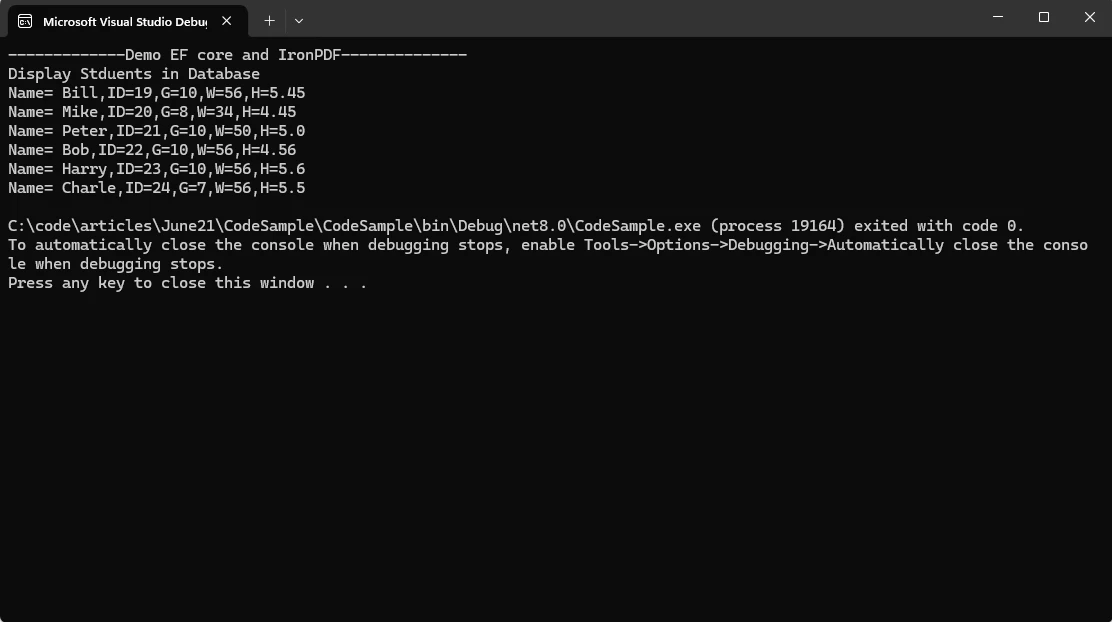
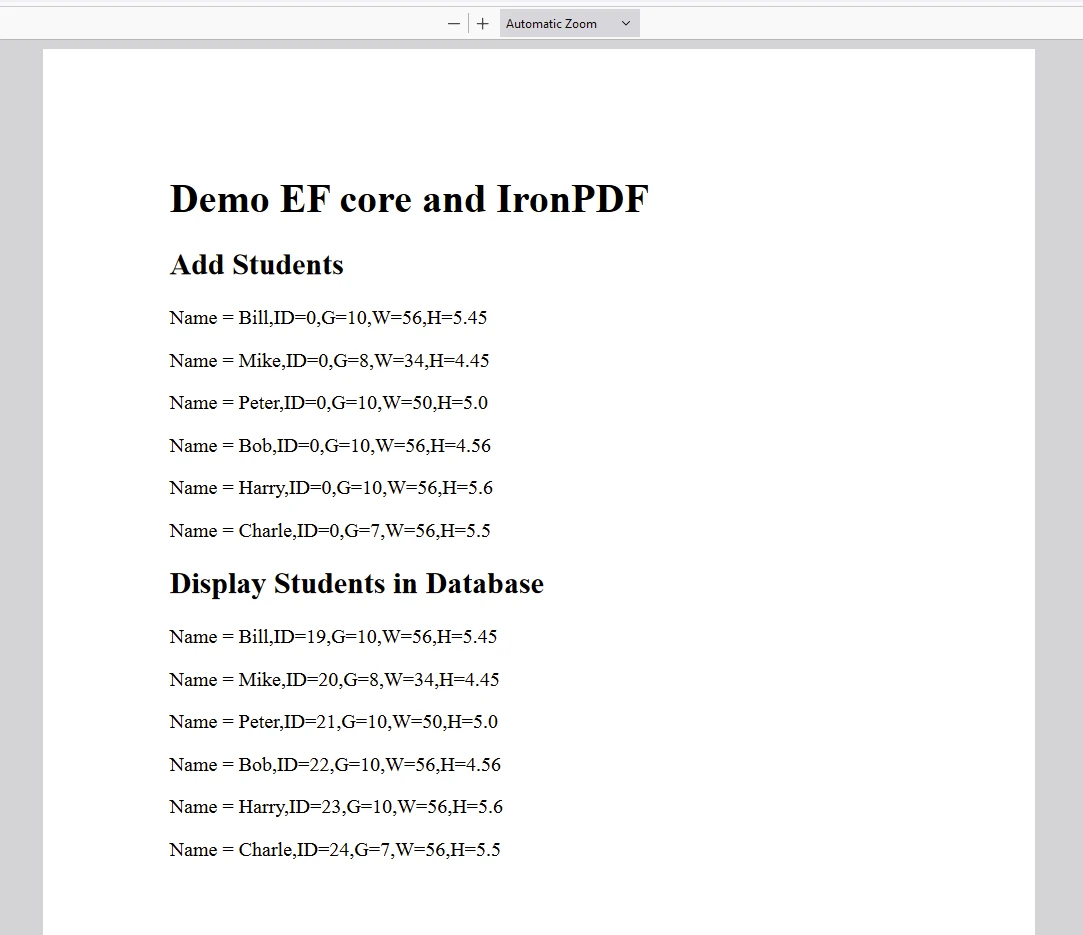
IronPDF 패키지는 실행 및 PDF 생성에 라이선스가 필요합니다. 패키지에 접근하기 전에 애플리케이션의 시작 부분에 아래 코드를 추가하십시오.
IronPdf.License.LicenseKey = "IRONPDF-MYLICENSE-KEY";Imports IronPdf
IronPdf.License.LicenseKey = "IRONPDF-MYLICENSE-KEY"체험판 라이선스는 IronPDF 라이선스 페이지에서 구할 수 있습니다.
C#의 Entity Framework Core는 데이터베이스와의 상호 작용을 위한 견고하고 직관적인 방법을 제공하며, LINQ 지원, 데이터베이스 마이그레이션 및 트랜잭션 관리 등의 기능을 기본으로 제공합니다. 최고의 방법을 따르고 강력한 기능을 활용하면 개발자는 확장 가능하고 유지 보수 가능한 애플리케이션을 쉽게 구축할 수 있습니다. 숙련된 개발자든 이제 시작하는 초보자든 EF Core는 C# 애플리케이션의 현대적 데이터 액세스를 위한 툴킷에 유용한 도구입니다. 다른 한편, IronPDF는 애플리케이션 내에서 PDF 문서를 생성, 조작 및 렌더링하기 위한 .NET 라이브러리입니다. 이미지를 포함한 HTML 콘텐츠를 PDF 파일로 변환하기 위해 EF Core와 함께 사용할 수 있습니다.

제이콥 멜러는 Iron Software의 최고 기술 책임자(CTO)이자 C# PDF 기술을 개척한 선구적인 엔지니어입니다. Iron Software의 핵심 코드베이스를 최초로 개발한 그는 창립 초기부터 회사의 제품 아키텍처를 설계해 왔으며, CEO인 캐머런 리밍턴과 함께 회사를 NASA, 테슬라, 그리고 전 세계 정부 기관에 서비스를 제공하는 50명 이상의 직원을 보유한 기업으로 성장시켰습니다.

IronPDF는 IRON SUITE 의 일부입니다.
10개의 .NET API 제품, 당신의 사무 문서를 위해

PDF 파일을 HTML처럼 빠르게 변환해야 할 때.


