已更新 2026年4月21日
Java 引用傳遞(開發者運作原理)
在 Java 程式語言中,參數傳遞始終是值傳遞。當處理物件時,引用變數是按值傳遞的
閱讀更多

Google HTTP客戶端程式庫適用於Java,是一個強大的程式庫,旨在簡化在Java應用程式中進行HTTP請求和處理響應的過程。 它是Google app engine和Google API客戶端的一部分,作為Google API的一部分。由Google開發和維護,這款強大的Java程式庫支援廣泛的HTTP方法,並與JSON資料模型和XML資料模型無縫整合,是希望與網路服務互動的開發者的絕佳選擇。 此外,我們將探索IronPDF適用於Java,並展示如何將其與Google HTTP客戶端程式庫整合,以從HTTP回應資料生成PDF文件。
要使用Google HTTP客戶端程式庫適用於Java,您必須將完整的客戶端程式庫和所需的依賴項新增到您的專案中。 如果您使用Maven,可以將以下依賴項新增到您的pom.xml文件中:
<dependencies>
    <dependency>
        <groupId>com.google.http-client</groupId>
        <artifactId>google-http-client</artifactId>
        <version>1.39.2</version>
    </dependency>
    <dependency>
        <groupId>com.google.http-client</groupId>
        <artifactId>google-http-client-jackson2</artifactId>
        <version>1.39.2</version>
    </dependency>
</dependencies>讓我們通過各種範例來探索Google HTTP客戶端程式庫適用於Java的基本使用。
下面的程式碼展示了如何使用Google HTTP客戶端程式庫進行簡單的GET請求:
import com.google.api.client.http.HttpRequest;
import com.google.api.client.http.HttpRequestFactory;
import com.google.api.client.http.HttpResponse;
import com.google.api.client.http.javanet.NetHttpTransport;
import com.google.api.client.http.GenericUrl;

public class HttpClientExample {
    public static void main(String[] args) {
        try {
            // Create a request factory using NetHttpTransport
            HttpRequestFactory requestFactory = new NetHttpTransport().createRequestFactory();
            // Define the URL for the GET request
            GenericUrl url = new GenericUrl("https://jsonplaceholder.typicode.com/posts/1");
            // Build the GET request
            HttpRequest request = requestFactory.buildGetRequest(url);
            // Execute the request and get the response
            HttpResponse response = request.execute();
            // Parse the response as a String and print it
            System.out.println(response.parseAsString());
        } catch (Exception e) {
            // Print the stack trace if an exception occurs
            e.printStackTrace();
        }
    }
}在這個範例中,我們建立了一個HttpRequestFactory,並用它構建和執行一個GET請求到一個占位符API。 我們在此使用try-catch區塊來處理請求失敗時可能發生的異常。 然後我們將響應列印到控制台。

以下程式碼示範如何使用JSON資料發送POST請求:
import com.google.api.client.http.HttpRequest;
import com.google.api.client.http.HttpRequestFactory;
import com.google.api.client.http.HttpResponse;
import com.google.api.client.http.javanet.NetHttpTransport;
import com.google.api.client.http.GenericUrl;
import com.google.api.client.http.json.JsonHttpContent;
import com.google.api.client.json.JsonFactory;
import com.google.api.client.json.jackson2.JacksonFactory;
import java.util.HashMap;
import java.util.Map;

public class HttpClientExample {
    public static void main(String[] args) {
        try {
            // Create a request factory using NetHttpTransport
            HttpRequestFactory requestFactory = new NetHttpTransport().createRequestFactory();
            // Define the URL for the POST request
            GenericUrl url = new GenericUrl("https://jsonplaceholder.typicode.com/posts");
            // Create a map to hold JSON data
            Map<String, Object> jsonMap = new HashMap<>();
            jsonMap.put("title", "foo");
            jsonMap.put("body", "bar");
            jsonMap.put("userId", 1);
            // Create a JSON content using the map
            JsonFactory jsonFactory = new JacksonFactory();
            JsonHttpContent content = new JsonHttpContent(jsonFactory, jsonMap);
            // Build the POST request
            HttpRequest request = requestFactory.buildPostRequest(url, content);
            // Execute the request and get the response
            HttpResponse response = request.execute();
            // Parse the response as a String and print it
            System.out.println(response.parseAsString());
        } catch (Exception e) {
            // Print the stack trace if an exception occurs
            e.printStackTrace();
        }
    }
}在這個範例中,我們建立了一個JSON物件,並使用JsonHttpContent將其發送在POST請求中。然後將響應列印到控制台。

IronPDF是一款強大的Java開發者程式庫,簡化了PDF文件的建立、編輯和管理。 它提供了各種功能,包括將HTML轉換為PDF、操作現有的PDF文件以及從PDF中提取文字和圖像。
要在您的Java專案中使用IronPDF,您需要包含IronPDF程式庫。 您可以從IronPDF網站下載JAR文件,或者使用如Maven這樣的構建工具將其包含在您的專案中。 對於使用Maven的使用者,請將以下程式碼新增到pom.xml中:
<!--Adds IronPDF Java. Use the latest version in the version tag.-->
<dependency>
    <groupId>com.ironsoftware</groupId>
    <artifactId>ironpdf</artifactId>
    <version>2023.12.1</version>
</dependency>
<!--Adds the slf4j logger which IronPDF Java uses.-->
<dependency>
    <groupId>org.slf4j</groupId>
    <artifactId>slf4j-simple</artifactId>
    <version>2.0.3</version>
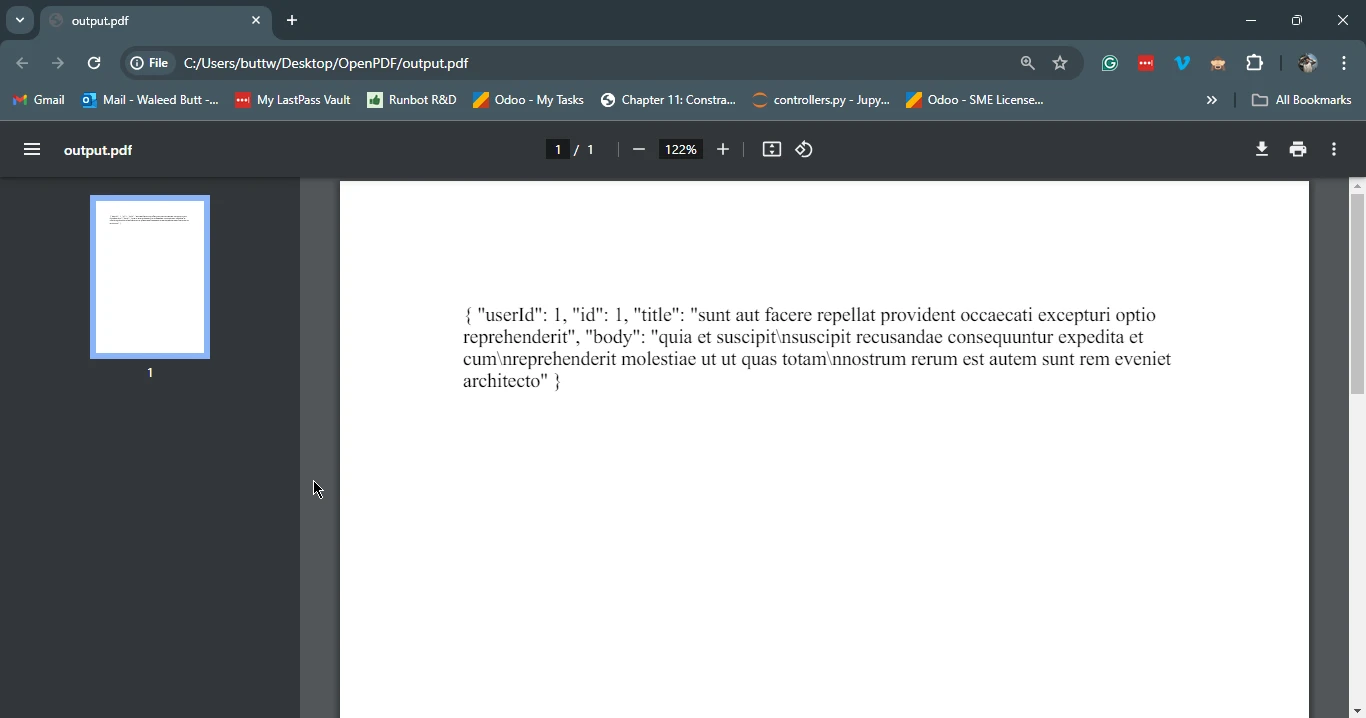
</dependency>在本節中,我們將演示如何使用Google HTTP客戶端程式庫從web服務獲取HTML內容,然後使用IronPDF將該HTML內容轉換為PDF文件。
import com.google.api.client.http.HttpRequest;
import com.google.api.client.http.HttpRequestFactory;
import com.google.api.client.http.HttpResponse;
import com.google.api.client.http.javanet.NetHttpTransport;
import com.google.api.client.http.GenericUrl;
import com.ironsoftware.ironpdf.PdfDocument;

public class HtmlToPdfExample {
    public static void main(String[] args) {
        try {
            // Fetch HTML content using Google HTTP Client Library
            HttpRequestFactory requestFactory = new NetHttpTransport().createRequestFactory();
            GenericUrl url = new GenericUrl("https://jsonplaceholder.typicode.com/posts/1");
            HttpRequest request = requestFactory.buildGetRequest(url);
            HttpResponse response = request.execute();
            String htmlContent = response.parseAsString();

            // Convert HTML content to PDF using IronPDF
            PdfDocument pdf = PdfDocument.renderHtmlAsPdf(htmlContent);
            pdf.saveAs("output.pdf");

            System.out.println("PDF created successfully!");
        } catch (Exception e) {
            // Print the stack trace if an exception occurs
            e.printStackTrace();
        }
    }
}在這個範例中,我們首先使用Google HTTP客戶端程式庫從占位符API獲取HTML內容。 然後我們使用IronPDF將獲取的HTML內容轉換為PDF文件並保存為output.pdf。
Google HTTP客戶端程式庫適用於Java是一個強大的工具,適用於與網路服務互動,提供了簡化的HTTP請求、各種身份驗證方法的支持、與JSON和XML解析的無縫整合,以及各種Java環境的相容性。 結合IronPDF,開發人員可以輕鬆從網路服務獲取HTML內容並將其轉換為PDF文件,從生成報告到為網路應用程式建立可下載內容,都能輕松使用整個程式庫。 透過利用這兩個程式庫,Java開發者可以大大提高其應用程式的功能,而降低程式碼的複雜性。
請參考以下連結。

Curtis Chau擁有Carleton大學的電腦科學學士學位,專精於前端開發,擁有Node.js、TypeScript、JavaScript和React的專業知識。Curtis熱衷於建立直觀且美觀的使用者介面,喜愛使用現代框架並建立結構良好、視覺吸引力的手冊。

IronPDF 是 IRONSUITE 的一部分
10 款適用於辦公室文件的 .NET API 產品

當您需要您的PDF看起來像HTML一樣快速。