using IronPdf;

// Disable local disk access or cross-origin requests
Installation.EnableWebSecurity = true;

// Instantiate Renderer
var renderer = new ChromePdfRenderer();

// Create a PDF from a HTML string using C#
var pdf = renderer.RenderHtmlAsPdf("<h1>Hello World</h1>");

// Export to a file or Stream
pdf.SaveAs("output.pdf");

// Advanced Example with HTML Assets
// Load external html assets: Images, CSS and JavaScript.
// An optional BasePath 'C:\site\assets\' is set as the file location to load assets from
var myAdvancedPdf = renderer.RenderHtmlAsPdf("<img src='icons/iron.png'>", @"C:\site\assets\");
myAdvancedPdf.SaveAs("html-with-assets.pdf");
using IronPdf;// Disable local disk access or cross-origin requestsInstallation.EnableWebSecurity = true;// Instantiate Renderervar renderer = new ChromePdfRenderer();// Create a PDF from a HTML string using C#var pdf = renderer.RenderHtmlAsPdf("<h1>Hello World</h1>");// Export to a file or Streampdf.SaveAs("output.pdf");// Advanced Example with HTML Assets// Load external html assets: Images, CSS and JavaScript.// An optional BasePath 'C:\site\assets\' is set as the file location to load assets fromvar myAdvancedPdf = renderer.RenderHtmlAsPdf("<img src='icons/iron.png'>", @"C:\site\assets\");myAdvancedPdf.SaveAs("html-with-assets.pdf");
PM >Install-Package IronPdf
Install-Package IronPdf
ENTWICKLER-UPDATES
C# DataTable (Wie es für Entwickler funktioniert Tutorial)
Willkommen zu diesem Tutorial über C# DataTables. Ein `DataTable` ist eine leistungsstarke Datenstruktur, die vom .NET Framework bereitgestellt wird und Ihnen ermöglicht, Daten in einem tabellarischen Format zu speichern, zu manipulieren und abzufragen. In diesem Tutorial werden wir die Grundlagen von DataTables in C# erkunden, einschließlich der Erstellung und Änderung von `DataTables`, dem Hinzufügen von Spalten und Zeilen, der Abfrage von Daten und der Verwendung von `DataView` zum Filtern und Sortieren.
Am Ende dieses Tutorials werden Sie ein gutes Verständnis dafür haben, wie Sie `DataTables` in Ihren C#-Anwendungen verwenden können. Legen wir los!
## Erstellen einer DataTable
Um ein `DataTable` in C# zu erstellen, müssen Sie zuerst das `System.Data`-Namespace importieren. Dieses Namespace enthält verschiedene Klassen und Methoden, die sich auf die Datenmanipulation beziehen, einschließlich der `DataTable`-Klasse.
```csharp
using System.Data;
```
Als Nächstes können Sie eine Instanz der `DataTable`-Klasse erstellen. Der einfachste Weg, dies zu tun, ist die Verwendung des Standardkonstruktors, wie folgt:
```csharp
DataTable dt = new DataTable();
```
Sie können auch ein `DataTable` mit einem bestimmten Namen erstellen, indem Sie einen Zeichenfolgenparameter an den Konstruktor übergeben:
```csharp
DataTable dt = new DataTable("Employees");
```
## DataTable-Methoden
### Spalten hinzufügen
Sobald Sie ein DataTable erstellt haben, können Sie damit beginnen, Spalten hinzuzufügen. Um eine Spalte hinzuzufügen, müssen Sie zuerst eine Instanz der `DataColumn`-Klasse erstellen und deren Eigenschaften wie `ColumnName` und `DataType` festlegen.
Hier ist ein Beispiel, wie man drei Spalten zu einem DataTable hinzufügt:
```csharp
DataColumn idColumn = new DataColumn("Id", typeof(int));
DataColumn nameColumn = new DataColumn("Name", typeof(string));
DataColumn ageColumn = new DataColumn("Age", typeof(int));

dt.Columns.Add(idColumn);
dt.Columns.Add(nameColumn);
dt.Columns.Add(ageColumn);
```
Sie können mehrere Spalten wie die `Id`-Spalte in der Datentabelle hinzufügen.
### Hinzufügen von Datenzeilen
Nach der Definition der Spalten können Sie damit beginnen, Zeilen zur `DataTable` hinzuzufügen. Um eine Zeile hinzuzufügen, müssen Sie eine neue Instanz der `DataRow`-Klasse erstellen und deren Felder mit den erforderlichen Daten füllen.
Hier ist ein Beispiel, wie Sie eine neue Zeile zu einer `DataTable` hinzufügen:
```csharp
DataRow newRow = dt.NewRow();
newRow["Id"] = 1;
newRow["Name"] = "John Doe";
newRow["Age"] = 30;
dt.Rows.Add(newRow);
```
Sie können auch mehrere `DataTable`-Zeilen gleichzeitig mithilfe derselben Methode in einer Schleife hinzufügen.
```csharp
for (int i = 1; i <= 3; i++)
{
DataRow row = dt.NewRow();
row["Id"] = i;
row["Name"] = "Employee " + i;
row["Age"] = 20 + i;
dt.Rows.Add(row);
}
```
Im obigen Code haben wir drei Datenzeilen hinzugefügt.
### Zugriff auf Daten
Sie können auf die in einem `DataTable` gespeicherten Daten zugreifen, indem Sie durch deren `Rows`- und `Columns`-Sammlungen iterieren. Hier ist ein Beispiel, wie Sie den Inhalt eines `DataTable` in der Konsole anzeigen:
```csharp
foreach (DataRow row in dt.Rows)
{
foreach (DataColumn col in dt.Columns)
{
Console.Write(row[col] + "\t");
}
Console.WriteLine();
}
```
### Daten modifizieren
Sie können die Daten in einem `DataTable` ändern, indem Sie die Werte in dessen `DataRow`-Objekten aktualisieren. Hier ist ein Beispiel, wie man das Alter eines bestimmten Mitarbeiters aktualisiert:
```csharp
var primaryKey = 1;
DataRow employeeRow = dt.Rows.Find(primaryKey); // Find the row with the specified primary key
if (employeeRow != null)
{
employeeRow["Age"] = 35;
}
```
### Löschen von Zeilen
Sie können eine Zeile aus einer DataTable löschen, indem Sie die Delete-Methode an einem `DataRow`-Objekt aufrufen:
```csharp
DataRow employeeRow = dt.Rows.Find(1);
if (employeeRow != null)
{
employeeRow.Delete();
dt.AcceptChanges(); // Commit the deletion
}
```
Beachten Sie, dass der Aufruf von `Delete` auf einem `DataRow` die Zeile nur zum Löschen markiert. Sie müssen die `AcceptChanges`-Methode am `DataTable` aufrufen, um die gelöschten Zeilen dauerhaft zu entfernen.
### Verwaltung mehrerer Tabellen
In einigen Fällen müssen Sie möglicherweise mit mehreren Datentabellen gleichzeitig arbeiten. Sie können eine Dataset-Variable erstellen, um mehrere DataTable-Objekte zu speichern und die Beziehungen zwischen ihnen zu verwalten.
### Datenabfrage mit LINQ
LINQ (Language Integrated Query) ist eine leistungsstarke Funktion in C#, die es Ihnen ermöglicht, Daten aus verschiedenen Datenquellen, einschließlich `DataTable`-Objekten, abzufragen. Um LINQ mit DataTables zu verwenden, müssen Sie das `System.Linq`-Namespace importieren. Hier ist ein Beispiel, wie man Mitarbeiter über 25 mit LINQ filtert:
```csharp
using System.Linq;
var filteredRows = dt.AsEnumerable().Where(row => row.Field<int>("Age") > 25);
foreach (DataRow row in filteredRows)
{
Console.WriteLine(row["Name"]);
}
```
### DataView: Sortieren und Filtern
`DataView` ist eine weitere nützliche Klasse, die vom `System.Data`-Namespace bereitgestellt wird und es Ihnen ermöglicht, eine sortierte oder gefilterte Ansicht eines `DataTable` zu erstellen. Dies ist besonders nützlich, wenn Sie die Daten in einem UI-Element wie einem `DataGridView` anzeigen müssen. Wir können auch Datenbindung durchführen, um Daten zum `DataGridView`-Steuerelement aus einem `DataTable` hinzuzufügen.
Hier ist ein Beispiel, wie man eine DataView erstellt, um die Mitarbeiter basierend auf ihrem Alter zu filtern und zu sortieren:
```csharp
DataView view = new DataView(dt);
// Filter employees older than 25
view.RowFilter = "Age > 25";
// Sort by age in descending order
view.Sort = "Age DESC";
// Display the filtered and sorted data
foreach (DataRowView rowView in view)
{
DataRow row = rowView.Row;
Console.WriteLine(row["Name"]);
}
```
## Exportieren von DataTable in PDF mit IronPDF
[IronPDF](https://ironpdf.com) ist ein leistungsstarker [HTML nach PDF Konverter](/tutorials/html-to-pdf/), komplett mit benutzerfreundlichen PDF-Manipulationsfunktionen, die es Entwicklern ermöglichen, PDF-Dokumente innerhalb von .NET-Anwendungen zu erstellen, zu lesen und zu bearbeiten.
```csharp
using IronPdf;
class Program
{
static void Main(string[] args)
{
var renderer = new ChromePdfRenderer();
// Convert HTML String to PDF
var htmlContent = "<h1>Hello, IronPDF!</h1><p>This is a PDF from an HTML string.</p>";
var pdfFromHtmlString = renderer.RenderHtmlAsPdf(htmlContent);
pdfFromHtmlString.SaveAs("HTMLStringToPDF.pdf");
// Convert HTML File to PDF
var htmlFilePath = "path_to_your_html_file.html"; // Specify the path to your HTML file
var pdfFromHtmlFile = renderer.RenderHtmlFileAsPdf(htmlFilePath);
pdfFromHtmlFile.SaveAs("HTMLFileToPDF.pdf");
// Convert URL to PDF
var url = "http://ironpdf.com"; // Specify the URL
var pdfFromUrl = renderer.RenderUrlAsPdf(url);
pdfFromUrl.SaveAs("URLToPDF.pdf");
}
}
```
In diesem Abschnitt lernen wir, wie man ein `DataTable` in ein PDF-Dokument exportiert, indem man IronPDF verwendet.
Zuerst müssen Sie das IronPDF NuGet-Paket installieren. Öffnen Sie die Paket-Manager-Konsole in Visual Studio und führen Sie den folgenden Befehl aus:
```shell
:ProductInstall
```
Sobald das Paket installiert ist, können Sie damit beginnen, die erforderlichen Namespaces in Ihren Code zu importieren:
```csharp
using IronPdf;
using System.IO;
```
Als nächstes erstellen Sie eine Hilfsmethode, die das DataTable in eine HTML-Tabelle konvertiert, da IronPDF HTML verwendet, um Inhalte in PDF-Dokumenten zu rendern:
```csharp
public static string ConvertDataTableToHtml(DataTable dt)
{
StringBuilder htmlBuilder = new StringBuilder();
htmlBuilder.AppendLine("<table border='1' cellpadding='5' cellspacing='0'>");
htmlBuilder.AppendLine("<tr>");
// Add column headers
foreach (DataColumn col in dt.Columns)
{
htmlBuilder.AppendFormat("<th>{0}</th>", col.ColumnName);
}
htmlBuilder.AppendLine("</tr>");
// Add rows
foreach (DataRow row in dt.Rows)
{
htmlBuilder.AppendLine("<tr>");
foreach (DataColumn col in dt.Columns)
{
htmlBuilder.AppendFormat("<td>{0}</td>", row[col]);
}
htmlBuilder.AppendLine("</tr>");
}
htmlBuilder.AppendLine("</table>");
return htmlBuilder.ToString();
}
```
Jetzt können Sie den von IronPDF bereitgestellten [`HtmlToPdf class`](/tutorials/html-to-pdf/) verwenden, um die HTML-Tabelle zu rendern und als PDF-Datei zu speichern:
```csharp
public static void ExportDataTableToPdf(DataTable dt, string outputPath)
{
// Convert DataTable to HTML
string htmlTable = ConvertDataTableToHtml(dt);
// Create a new HTML to PDF renderer
var renderer = new ChromePdfRenderer();
// Set global styles for the table
renderer.RenderingOptions.CssMediaType = PdfPrintOptions.PdfCssMediaType.Print;
renderer.RenderingOptions.FirstPageNumber = 1;
// Render the HTML table as a PDF document
PdfDocument pdf = renderer.RenderHtmlAsPdf(htmlTable);
// Save the PDF file
pdf.SaveAs(outputPath);
}
```
Die `ExportDataTableToPdf`-Methode erstellt ein `DataTable` aus der HTML-Tabelle und speichert es in der PDF-Datei.
Rufen Sie schließlich die `ExportDataTableToPdf`-Methode mit den entsprechenden Parametern auf, um Ihren `DataTable` zu exportieren:
```csharp
string pdfOutputPath = "Employees.pdf";
ExportDataTableToPdf(dt, pdfOutputPath);
```
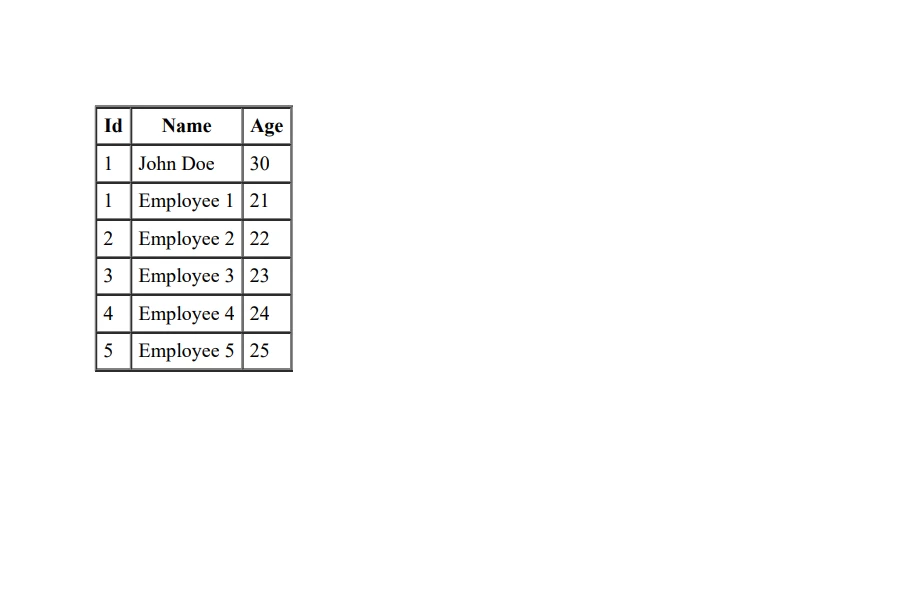
Dies erstellt eine PDF-Datei namens "Employees.pdf", die den Inhalt Ihres `DataTable` in tabellarischer Form enthält.
## Abschluss
In diesem Tutorial haben Sie die Grundlagen von DataTables in C# und wie man ein `DataTable` in ein PDF-Dokument mithilfe der IronPDF-Bibliothek exportiert, gelernt. Durch die Einbeziehung der Primärschlüsselspalte, Dataset-Variablen und DataView zum Filtern und Sortieren haben Sie mehr Kontrolle und Flexibilität über Ihre Daten. Jetzt sollten Sie ein gutes Verständnis von DataTables und wie Sie IronPDF in Verbindung mit DataTables verwenden, um professionell aussehende PDF-Berichte in Ihren C#-Anwendungen zu erstellen.
IronPDF bietet eine [kostenlose Testversion seiner Funktionen](trial-license) an, die es Ihnen ermöglicht, seine Fähigkeiten zu erkunden, bevor Sie sich für einen Kauf entscheiden.
Willkommen zu diesem Tutorial über C# DataTables. Ein DataTable ist eine leistungsstarke Datenstruktur, die vom .NET Framework bereitgestellt wird und Ihnen ermöglicht, Daten in einem tabellarischen Format zu speichern, zu manipulieren und abzufragen. In diesem Tutorial werden wir die Grundlagen von DataTables in C# erkunden, einschließlich der Erstellung und Änderung von DataTables, dem Hinzufügen von Spalten und Zeilen, der Abfrage von Daten und der Verwendung von DataView zum Filtern und Sortieren.
Am Ende dieses Tutorials werden Sie ein gutes Verständnis dafür haben, wie Sie DataTables in Ihren C#-Anwendungen verwenden können. Legen wir los!
Erstellen einer DataTable
Um ein DataTable in C# zu erstellen, müssen Sie zuerst das System.Data-Namespace importieren. Dieses Namespace enthält verschiedene Klassen und Methoden, die sich auf die Datenmanipulation beziehen, einschließlich der DataTable-Klasse.
using System.Data;
using System.Data;
ImportsSystem.Data
Imports System.Data
Als Nächstes können Sie eine Instanz der DataTable-Klasse erstellen. Der einfachste Weg, dies zu tun, ist die Verwendung des Standardkonstruktors, wie folgt:
DataTable dt = new DataTable();
DataTable dt = new DataTable();
Dim dt As New DataTable()
Dim dt As New DataTable()
Sie können auch ein DataTable mit einem bestimmten Namen erstellen, indem Sie einen Zeichenfolgenparameter an den Konstruktor übergeben:
DataTable dt = new DataTable("Employees");
DataTable dt = new DataTable("Employees");
Dim dt As New DataTable("Employees")
Dim dt As New DataTable("Employees")
DataTable-Methoden
Spalten hinzufügen
Sobald Sie ein DataTable erstellt haben, können Sie damit beginnen, Spalten hinzuzufügen. Um eine Spalte hinzuzufügen, müssen Sie zuerst eine Instanz der DataColumn-Klasse erstellen und deren Eigenschaften wie ColumnName und DataType festlegen.
Hier ist ein Beispiel, wie man drei Spalten zu einem DataTable hinzufügt:
DataColumn idColumn = new DataColumn("Id", typeof(int));DataColumn nameColumn = new DataColumn("Name", typeof(string));DataColumn ageColumn = new DataColumn("Age", typeof(int));dt.Columns.Add(idColumn);dt.Columns.Add(nameColumn);dt.Columns.Add(ageColumn);
DataColumn idColumn = new DataColumn("Id", typeof(int));
DataColumn nameColumn = new DataColumn("Name", typeof(string));
DataColumn ageColumn = new DataColumn("Age", typeof(int));

dt.Columns.Add(idColumn);
dt.Columns.Add(nameColumn);
dt.Columns.Add(ageColumn);
Dim idColumn As New DataColumn("Id", GetType(Integer))Dim nameColumn As New DataColumn("Name", GetType(String))Dim ageColumn As New DataColumn("Age", GetType(Integer))dt.Columns.Add(idColumn)dt.Columns.Add(nameColumn)dt.Columns.Add(ageColumn)
Dim idColumn As New DataColumn("Id", GetType(Integer))
Dim nameColumn As New DataColumn("Name", GetType(String))
Dim ageColumn As New DataColumn("Age", GetType(Integer))

dt.Columns.Add(idColumn)
dt.Columns.Add(nameColumn)
dt.Columns.Add(ageColumn)
Sie können mehrere Spalten wie die Id-Spalte in der Datentabelle hinzufügen.
Hinzufügen von Datenzeilen
Nach der Definition der Spalten können Sie damit beginnen, Zeilen zur DataTable hinzuzufügen. Um eine Zeile hinzuzufügen, müssen Sie eine neue Instanz der DataRow-Klasse erstellen und deren Felder mit den erforderlichen Daten füllen.
Hier ist ein Beispiel, wie Sie eine neue Zeile zu einer DataTable hinzufügen:
Dim newRow As DataRow = dt.NewRow()

newRow("Id") = 1
newRow("Name") = "John Doe"
newRow("Age") = 30

dt.Rows.Add(newRow)
Sie können auch mehrere DataTable-Zeilen gleichzeitig mithilfe derselben Methode in einer Schleife hinzufügen.
for (int i = 1; i <= 3; i++){ DataRow row = dt.NewRow(); row["Id"] = i; row["Name"] = "Employee " + i; row["Age"] = 20 + i; dt.Rows.Add(row);}
for (int i = 1; i <= 3; i++)
{
    DataRow row = dt.NewRow();
    row["Id"] = i;
    row["Name"] = "Employee " + i;
    row["Age"] = 20 + i;
    dt.Rows.Add(row);
}
For i AsInteger = 1 To 3 Dim row AsDataRow = dt.NewRow() row("Id") = i row("Name") = "Employee " & i row("Age") = 20 + i dt.Rows.Add(row)Next i
For i As Integer = 1 To 3
	Dim row As DataRow = dt.NewRow()
	row("Id") = i
	row("Name") = "Employee " & i
	row("Age") = 20 + i
	dt.Rows.Add(row)
Next i
Im obigen Code haben wir drei Datenzeilen hinzugefügt.
Zugriff auf Daten
Sie können auf die in einem DataTable gespeicherten Daten zugreifen, indem Sie durch deren Rows- und Columns-Sammlungen iterieren. Hier ist ein Beispiel, wie Sie den Inhalt eines DataTable in der Konsole anzeigen:
foreach (DataRow row in dt.Rows){ foreach (DataColumn col in dt.Columns) {Console.Write(row[col] + "\t"); }Console.WriteLine();}
foreach (DataRow row in dt.Rows)
{
    foreach (DataColumn col in dt.Columns)
    {
        Console.Write(row[col] + "\t");
    }
    Console.WriteLine();
}
ImportsMicrosoft.VisualBasicFor Each row AsDataRowIn dt.Rows For Each col AsDataColumnIn dt.ColumnsConsole.Write(row(col) & vbTab) Next colConsole.WriteLine()Next row
Imports Microsoft.VisualBasic

For Each row As DataRow In dt.Rows
	For Each col As DataColumn In dt.Columns
		Console.Write(row(col) & vbTab)
	Next col
	Console.WriteLine()
Next row
Daten modifizieren
Sie können die Daten in einem DataTable ändern, indem Sie die Werte in dessen DataRow-Objekten aktualisieren. Hier ist ein Beispiel, wie man das Alter eines bestimmten Mitarbeiters aktualisiert:
var primaryKey = 1;DataRow employeeRow = dt.Rows.Find(primaryKey); // Find the row with the specified primary keyif (employeeRow != null){ employeeRow["Age"] = 35;}
var primaryKey = 1;
DataRow employeeRow = dt.Rows.Find(primaryKey); // Find the row with the specified primary key
if (employeeRow != null)
{
    employeeRow["Age"] = 35;
}
Dim primaryKey = 1Dim employeeRow AsDataRow = dt.Rows.Find(primaryKey) ' Find the row with the specified primary keyIf employeeRow IsNot Nothing Then employeeRow("Age") = 35End If
Dim primaryKey = 1
Dim employeeRow As DataRow = dt.Rows.Find(primaryKey) ' Find the row with the specified primary key
If employeeRow IsNot Nothing Then
	employeeRow("Age") = 35
End If
Löschen von Zeilen
Sie können eine Zeile aus einer DataTable löschen, indem Sie die Delete-Methode an einem DataRow-Objekt aufrufen:
DataRow employeeRow = dt.Rows.Find(1);
if (employeeRow != null)
{
    employeeRow.Delete();
    dt.AcceptChanges(); // Commit the deletion
}
Dim employeeRow AsDataRow = dt.Rows.Find(1)If employeeRow IsNot Nothing Then employeeRow.Delete() dt.AcceptChanges() ' Commit the deletionEnd If
Dim employeeRow As DataRow = dt.Rows.Find(1)
If employeeRow IsNot Nothing Then
	employeeRow.Delete()
	dt.AcceptChanges() ' Commit the deletion
End If
Beachten Sie, dass der Aufruf von Delete auf einem DataRow die Zeile nur zum Löschen markiert. Sie müssen die AcceptChanges-Methode am DataTable aufrufen, um die gelöschten Zeilen dauerhaft zu entfernen.
Verwaltung mehrerer Tabellen
In einigen Fällen müssen Sie möglicherweise mit mehreren Datentabellen gleichzeitig arbeiten. Sie können eine Dataset-Variable erstellen, um mehrere DataTable-Objekte zu speichern und die Beziehungen zwischen ihnen zu verwalten.
Datenabfrage mit LINQ
LINQ (Language Integrated Query) ist eine leistungsstarke Funktion in C#, die es Ihnen ermöglicht, Daten aus verschiedenen Datenquellen, einschließlich DataTable-Objekten, abzufragen. Um LINQ mit DataTables zu verwenden, müssen Sie das System.Linq-Namespace importieren. Hier ist ein Beispiel, wie man Mitarbeiter über 25 mit LINQ filtert:
using System.Linq;var filteredRows = dt.AsEnumerable().Where(row => row.Field<int>("Age") > 25);foreach (DataRow row in filteredRows){Console.WriteLine(row["Name"]);}
using System.Linq;

var filteredRows = dt.AsEnumerable().Where(row => row.Field<int>("Age") > 25);

foreach (DataRow row in filteredRows)
{
    Console.WriteLine(row["Name"]);
}
Imports System.Linq

Private filteredRows = dt.AsEnumerable().Where(Function(row) row.Field(Of Integer)("Age") > 25)

For Each row As DataRow In filteredRows
	Console.WriteLine(row("Name"))
Next row
DataView: Sortieren und Filtern
DataView ist eine weitere nützliche Klasse, die vom System.Data-Namespace bereitgestellt wird und es Ihnen ermöglicht, eine sortierte oder gefilterte Ansicht eines DataTable zu erstellen. Dies ist besonders nützlich, wenn Sie die Daten in einem UI-Element wie einem DataGridView anzeigen müssen. Wir können auch Datenbindung durchführen, um Daten zum DataGridView-Steuerelement aus einem DataTable hinzuzufügen.
Hier ist ein Beispiel, wie man eine DataView erstellt, um die Mitarbeiter basierend auf ihrem Alter zu filtern und zu sortieren:
DataView view = new DataView(dt);// Filter employees older than 25view.RowFilter = "Age > 25";// Sort by age in descending orderview.Sort = "Age DESC";// Display the filtered and sorted dataforeach (DataRowView rowView in view){ DataRow row = rowView.Row;Console.WriteLine(row["Name"]);}
DataView view = new DataView(dt);

// Filter employees older than 25
view.RowFilter = "Age > 25";

// Sort by age in descending order
view.Sort = "Age DESC";

// Display the filtered and sorted data
foreach (DataRowView rowView in view)
{
    DataRow row = rowView.Row;
    Console.WriteLine(row["Name"]);
}
Dim view As New DataView(dt)' Filter employees older than 25view.RowFilter = "Age > 25"' Sort by age in descending orderview.Sort = "Age DESC"' Display the filtered and sorted dataFor Each rowView AsDataRowViewIn view Dim row AsDataRow = rowView.RowConsole.WriteLine(row("Name"))Next rowView
Dim view As New DataView(dt)

' Filter employees older than 25
view.RowFilter = "Age > 25"

' Sort by age in descending order
view.Sort = "Age DESC"

' Display the filtered and sorted data
For Each rowView As DataRowView In view
	Dim row As DataRow = rowView.Row
	Console.WriteLine(row("Name"))
Next rowView
Exportieren von DataTable in PDF mit IronPDF
IronPDF ist ein leistungsstarker HTML nach PDF Konverter, komplett mit benutzerfreundlichen PDF-Manipulationsfunktionen, die es Entwicklern ermöglichen, PDF-Dokumente innerhalb von .NET-Anwendungen zu erstellen, zu lesen und zu bearbeiten.
using IronPdf;class Program{ static voidMain(string[] args) { var renderer = new ChromePdfRenderer(); // Convert HTML String to PDF var htmlContent = "<h1>Hello, IronPDF!</h1><p>This is a PDF from an HTML string.</p>"; var pdfFromHtmlString = renderer.RenderHtmlAsPdf(htmlContent); pdfFromHtmlString.SaveAs("HTMLStringToPDF.pdf"); // Convert HTML File to PDF var htmlFilePath = "path_to_your_html_file.html"; // Specify the path to your HTML file var pdfFromHtmlFile = renderer.RenderHtmlFileAsPdf(htmlFilePath); pdfFromHtmlFile.SaveAs("HTMLFileToPDF.pdf"); // Convert URL to PDF var url = "http://ironpdf.com"; // Specify the URL var pdfFromUrl = renderer.RenderUrlAsPdf(url); pdfFromUrl.SaveAs("URLToPDF.pdf"); }}
using IronPdf;

class Program
{
    static void Main(string[] args)
    {
        var renderer = new ChromePdfRenderer();

        // Convert HTML String to PDF
        var htmlContent = "<h1>Hello, IronPDF!</h1><p>This is a PDF from an HTML string.</p>";
        var pdfFromHtmlString = renderer.RenderHtmlAsPdf(htmlContent);
        pdfFromHtmlString.SaveAs("HTMLStringToPDF.pdf");

        // Convert HTML File to PDF
        var htmlFilePath = "path_to_your_html_file.html"; // Specify the path to your HTML file
        var pdfFromHtmlFile = renderer.RenderHtmlFileAsPdf(htmlFilePath);
        pdfFromHtmlFile.SaveAs("HTMLFileToPDF.pdf");

        // Convert URL to PDF
        var url = "http://ironpdf.com"; // Specify the URL
        var pdfFromUrl = renderer.RenderUrlAsPdf(url);
        pdfFromUrl.SaveAs("URLToPDF.pdf");
    }
}
ImportsIronPdfFriend Class ProgramShared Sub Main(ByVal args() AsString) Dim renderer = New ChromePdfRenderer() ' Convert HTML String to PDF Dim htmlContent = "<h1>Hello, IronPDF!</h1><p>This is a PDF from an HTML string.</p>" Dim pdfFromHtmlString = renderer.RenderHtmlAsPdf(htmlContent) pdfFromHtmlString.SaveAs("HTMLStringToPDF.pdf") ' Convert HTML File to PDF Dim htmlFilePath = "path_to_your_html_file.html" ' Specify the path to your HTML file Dim pdfFromHtmlFile = renderer.RenderHtmlFileAsPdf(htmlFilePath) pdfFromHtmlFile.SaveAs("HTMLFileToPDF.pdf") ' Convert URL to PDF Dim url = "http://ironpdf.com" ' Specify the URL Dim pdfFromUrl = renderer.RenderUrlAsPdf(url) pdfFromUrl.SaveAs("URLToPDF.pdf") End SubEnd Class
Imports IronPdf

Friend Class Program
	Shared Sub Main(ByVal args() As String)
		Dim renderer = New ChromePdfRenderer()

		' Convert HTML String to PDF
		Dim htmlContent = "<h1>Hello, IronPDF!</h1><p>This is a PDF from an HTML string.</p>"
		Dim pdfFromHtmlString = renderer.RenderHtmlAsPdf(htmlContent)
		pdfFromHtmlString.SaveAs("HTMLStringToPDF.pdf")

		' Convert HTML File to PDF
		Dim htmlFilePath = "path_to_your_html_file.html" ' Specify the path to your HTML file
		Dim pdfFromHtmlFile = renderer.RenderHtmlFileAsPdf(htmlFilePath)
		pdfFromHtmlFile.SaveAs("HTMLFileToPDF.pdf")

		' Convert URL to PDF
		Dim url = "http://ironpdf.com" ' Specify the URL
		Dim pdfFromUrl = renderer.RenderUrlAsPdf(url)
		pdfFromUrl.SaveAs("URLToPDF.pdf")
	End Sub
End Class
In diesem Abschnitt lernen wir, wie man ein DataTable in ein PDF-Dokument exportiert, indem man IronPDF verwendet.
Zuerst müssen Sie das IronPDF NuGet-Paket installieren. Öffnen Sie die Paket-Manager-Konsole in Visual Studio und führen Sie den folgenden Befehl aus:
PM > Install-Package IronPdf
Install-Package IronPdf
Sobald das Paket installiert ist, können Sie damit beginnen, die erforderlichen Namespaces in Ihren Code zu importieren:
using IronPdf;using System.IO;
using IronPdf;
using System.IO;
ImportsIronPdfImportsSystem.IO
Imports IronPdf
Imports System.IO
Als nächstes erstellen Sie eine Hilfsmethode, die das DataTable in eine HTML-Tabelle konvertiert, da IronPDF HTML verwendet, um Inhalte in PDF-Dokumenten zu rendern:
public static stringConvertDataTableToHtml(DataTable dt){ StringBuilder htmlBuilder = new StringBuilder(); htmlBuilder.AppendLine("<table border='1' cellpadding='5' cellspacing='0'>"); htmlBuilder.AppendLine("<tr>"); // Add column headers foreach (DataColumn col in dt.Columns) { htmlBuilder.AppendFormat("<th>{0}</th>", col.ColumnName); } htmlBuilder.AppendLine("</tr>"); // Add rows foreach (DataRow row in dt.Rows) { htmlBuilder.AppendLine("<tr>"); foreach (DataColumn col in dt.Columns) { htmlBuilder.AppendFormat("<td>{0}</td>", row[col]); } htmlBuilder.AppendLine("</tr>"); } htmlBuilder.AppendLine("</table>"); return htmlBuilder.ToString();}
public static string ConvertDataTableToHtml(DataTable dt)
{
    StringBuilder htmlBuilder = new StringBuilder();

    htmlBuilder.AppendLine("<table border='1' cellpadding='5' cellspacing='0'>");
    htmlBuilder.AppendLine("<tr>");

    // Add column headers
    foreach (DataColumn col in dt.Columns)
    {
        htmlBuilder.AppendFormat("<th>{0}</th>", col.ColumnName);
    }

    htmlBuilder.AppendLine("</tr>");

    // Add rows
    foreach (DataRow row in dt.Rows)
    {
        htmlBuilder.AppendLine("<tr>");

        foreach (DataColumn col in dt.Columns)
        {
            htmlBuilder.AppendFormat("<td>{0}</td>", row[col]);
        }

        htmlBuilder.AppendLine("</tr>");
    }

    htmlBuilder.AppendLine("</table>");

    return htmlBuilder.ToString();
}
PublicShared Function ConvertDataTableToHtml(dt AsDataTable) AsString Dim htmlBuilder As New StringBuilder() htmlBuilder.AppendLine("<table border='1' cellpadding='5' cellspacing='0'>") htmlBuilder.AppendLine("<tr>") ' Add column headers For Each col AsDataColumnIn dt.Columns htmlBuilder.AppendFormat("<th>{0}</th>", col.ColumnName) Next htmlBuilder.AppendLine("</tr>") ' Add rows For Each row AsDataRowIn dt.Rows htmlBuilder.AppendLine("<tr>") For Each col AsDataColumnIn dt.Columns htmlBuilder.AppendFormat("<td>{0}</td>", row(col)) Next htmlBuilder.AppendLine("</tr>") Next htmlBuilder.AppendLine("</table>") Return htmlBuilder.ToString()End Function
Public Shared Function ConvertDataTableToHtml(dt As DataTable) As String
    Dim htmlBuilder As New StringBuilder()

    htmlBuilder.AppendLine("<table border='1' cellpadding='5' cellspacing='0'>")
    htmlBuilder.AppendLine("<tr>")

    ' Add column headers
    For Each col As DataColumn In dt.Columns
        htmlBuilder.AppendFormat("<th>{0}</th>", col.ColumnName)
    Next

    htmlBuilder.AppendLine("</tr>")

    ' Add rows
    For Each row As DataRow In dt.Rows
        htmlBuilder.AppendLine("<tr>")

        For Each col As DataColumn In dt.Columns
            htmlBuilder.AppendFormat("<td>{0}</td>", row(col))
        Next

        htmlBuilder.AppendLine("</tr>")
    Next

    htmlBuilder.AppendLine("</table>")

    Return htmlBuilder.ToString()
End Function
Jetzt können Sie den von IronPDF bereitgestellten HtmlToPdf class verwenden, um die HTML-Tabelle zu rendern und als PDF-Datei zu speichern:
public static voidExportDataTableToPdf(DataTable dt, string outputPath){ // Convert DataTable to HTML string htmlTable = ConvertDataTableToHtml(dt); // Create a new HTML to PDF renderer var renderer = new ChromePdfRenderer(); // Set global styles for the table renderer.RenderingOptions.CssMediaType = PdfPrintOptions.PdfCssMediaType.Print; renderer.RenderingOptions.FirstPageNumber = 1; // Render the HTML table as a PDF document PdfDocument pdf = renderer.RenderHtmlAsPdf(htmlTable); // Save the PDF file pdf.SaveAs(outputPath);}
public static void ExportDataTableToPdf(DataTable dt, string outputPath)
{
    // Convert DataTable to HTML
    string htmlTable = ConvertDataTableToHtml(dt);

    // Create a new HTML to PDF renderer
    var renderer = new ChromePdfRenderer();

    // Set global styles for the table
    renderer.RenderingOptions.CssMediaType = PdfPrintOptions.PdfCssMediaType.Print;
    renderer.RenderingOptions.FirstPageNumber = 1;

    // Render the HTML table as a PDF document
    PdfDocument pdf = renderer.RenderHtmlAsPdf(htmlTable);

    // Save the PDF file
    pdf.SaveAs(outputPath);
}
PublicShared Sub ExportDataTableToPdf(dt AsDataTable, outputPath AsString) ' Convert DataTable to HTML Dim htmlTable AsString = ConvertDataTableToHtml(dt) ' Create a new HTML to PDF renderer Dim renderer As New ChromePdfRenderer() ' Set global styles for the table renderer.RenderingOptions.CssMediaType = PdfPrintOptions.PdfCssMediaType.Print renderer.RenderingOptions.FirstPageNumber = 1 ' Render the HTML table as a PDF document Dim pdf AsPdfDocument = renderer.RenderHtmlAsPdf(htmlTable) ' Save the PDF file pdf.SaveAs(outputPath)End Sub
Public Shared Sub ExportDataTableToPdf(dt As DataTable, outputPath As String)
    ' Convert DataTable to HTML
    Dim htmlTable As String = ConvertDataTableToHtml(dt)

    ' Create a new HTML to PDF renderer
    Dim renderer As New ChromePdfRenderer()

    ' Set global styles for the table
    renderer.RenderingOptions.CssMediaType = PdfPrintOptions.PdfCssMediaType.Print
    renderer.RenderingOptions.FirstPageNumber = 1

    ' Render the HTML table as a PDF document
    Dim pdf As PdfDocument = renderer.RenderHtmlAsPdf(htmlTable)

    ' Save the PDF file
    pdf.SaveAs(outputPath)
End Sub
Die ExportDataTableToPdf-Methode erstellt ein DataTable aus der HTML-Tabelle und speichert es in der PDF-Datei.
Rufen Sie schließlich die ExportDataTableToPdf-Methode mit den entsprechenden Parametern auf, um Ihren DataTable zu exportieren:
Dim pdfOutputPath AsString = "Employees.pdf"ExportDataTableToPdf(dt, pdfOutputPath)
Dim pdfOutputPath As String = "Employees.pdf"
ExportDataTableToPdf(dt, pdfOutputPath)
Dies erstellt eine PDF-Datei namens "Employees.pdf", die den Inhalt Ihres DataTable in tabellarischer Form enthält.
Abschluss
In diesem Tutorial haben Sie die Grundlagen von DataTables in C# und wie man ein DataTable in ein PDF-Dokument mithilfe der IronPDF-Bibliothek exportiert, gelernt. Durch die Einbeziehung der Primärschlüsselspalte, Dataset-Variablen und DataView zum Filtern und Sortieren haben Sie mehr Kontrolle und Flexibilität über Ihre Daten. Jetzt sollten Sie ein gutes Verständnis von DataTables und wie Sie IronPDF in Verbindung mit DataTables verwenden, um professionell aussehende PDF-Berichte in Ihren C#-Anwendungen zu erstellen.
IronPDF bietet eine kostenlose Testversion seiner Funktionen an, die es Ihnen ermöglicht, seine Fähigkeiten zu erkunden, bevor Sie sich für einen Kauf entscheiden.
Jacob Mellor ist Chief Technology Officer bei Iron Software und ein visionärer Ingenieur, der Pionierarbeit in der C# PDF-Technologie leistet. Als der ursprüngliche Entwickler hinter der Kern-Codebasis von Iron Software hat er die Produktarchitektur des Unternehmens seit seiner Gründung geprägt und es zusammen mit CEO Cameron Rimington in ein Unternehmen mit mehr als 50 Mitarbeitern verwandelt, das die NASA, Tesla und globale Regierungsbehörden beliefert.