MSTest ist ein grundlegendes Unit-Test-Framework im .NET-Ökosystem. In Visual Studio integriert, vereinfacht es den Prozess der Erstellung und Ausführung von Unit-Tests for .NET-Anwendungen. Dieses Framework ist für Entwickler von entscheidender Bedeutung, um die Funktionalität und Zuverlässigkeit ihres Codes sicherzustellen. In diesem Tutorial werden wir verstehen, was MSTest ist und einige Szenarien prüfen, wie wir MSTest mit der IronPDF Library for PDF Processing verwenden können.
Grundlagen von MSTest verstehen
Was ist ein Unit Test?
Unit-Tests sind unerlässlich, um einzelne Komponenten der Software zu validieren. Sie sind kleine und isolierte Tests, die einen spezifischen Teil des Code-Basis bewerten. In MSTest sind diese Tests einfach zu erstellen und durchzuführen und bieten sofortiges Feedback zur Integrität des Codes.
Schlüsselkomponenten von MSTest
Testklasse und Testmethode: Die Kernelemente von MSTest. Ein TestClass ist ein Container für eine oder mehrere TestMethods. Jede Testmethode stellt einen einzigartigen Unit-Test dar, der Aussagen über den Code macht, um die erwarteten Ergebnisse zu validieren.
Einrichten von MSTest in Visual Studio
Erstellen von Testklassen und -methoden in Visual Studio IDE
1. Erstellen einer Testklasse
In der Visual Studio-IDE können Sie leicht eine Testklasse für MSTest erstellen. Diese Klasse ist mit dem TestClass-Attribut markiert, das MSTest anzeigt, dass diese Klasse Testmethoden enthält. Hier ist ein Beispiel, wie man eine Testklasse definiert:
using Microsoft.VisualStudio.TestTools.UnitTesting;

[TestClass]
public class MyTestClass
{
    // Test methods will go here
}
using Microsoft.VisualStudio.TestTools.UnitTesting;

[TestClass]
public class MyTestClass
{
    // Test methods will go here
}
Imports Microsoft.VisualStudio.TestTools.UnitTesting
<TestClass>
Public Class MyTestClass
' Test methods will go here
End Class
Imports Microsoft.VisualStudio.TestTools.UnitTesting

<TestClass>
Public Class MyTestClass
	' Test methods will go here
End Class
2. eine Testmethode schreiben
Innerhalb Ihrer Testklasse definieren Sie Testmethoden. Jede Einheitstestmethode ist mit dem TestMethod-Attribut annotiert, das sie als einen Unittest auszeichnet. Diese Methoden sollten die Logik enthalten, um spezifische Teile Ihres Codes zu testen. Hier ist ein Beispiel für die Definition einer einfachen Testmethode:
[TestClass]
public class MyTestClass
{
    [TestMethod]
    public void TestMethod1()
    {
        // Arrange: Set up any necessary variables, objects, or conditions.

        // Act: Perform the operation that you want to test.

        // Assert: Verify that the operation produced the expected results.
    }
}
[TestClass]
public class MyTestClass
{
    [TestMethod]
    public void TestMethod1()
    {
        // Arrange: Set up any necessary variables, objects, or conditions.

        // Act: Perform the operation that you want to test.

        // Assert: Verify that the operation produced the expected results.
    }
}<TestClass>
Public Class MyTestClass
<TestMethod>
Public Sub TestMethod1()
' Arrange: Set up any necessary variables, objects, or conditions.
' Act: Perform the operation that you want to test.
' Assert: Verify that the operation produced the expected results.
End Sub
End Class
<TestClass>
Public Class MyTestClass

    <TestMethod>
    Public Sub TestMethod1()
        ' Arrange: Set up any necessary variables, objects, or conditions.

        ' Act: Perform the operation that you want to test.

        ' Assert: Verify that the operation produced the expected results.
    End Sub

End Class
In diesem Abschnitt wird die Testklasse MyTestClass definiert und darin eine Testmethode TestMethod1 deklariert. In einem typischen Unittest folgen Sie dem Arrange-Act-Assert-Muster, wie es im TestMethod1 gezeigt wird. Dieses Muster hilft dabei, die Testlogik zu organisieren und macht Ihre Tests klarer und wartbarer.
Einbindung des MSTest Frameworks in .NET-Projekte
Die Integration des MSTest-Frameworks in ein .NET-Projekt erfordert einige unkomplizierte Schritte. Diese Schritte stellen sicher, dass Sie alle notwendigen Werkzeuge und Setups haben, um Ihre Unit-Tests mit MSTest zu schreiben und auszuführen.
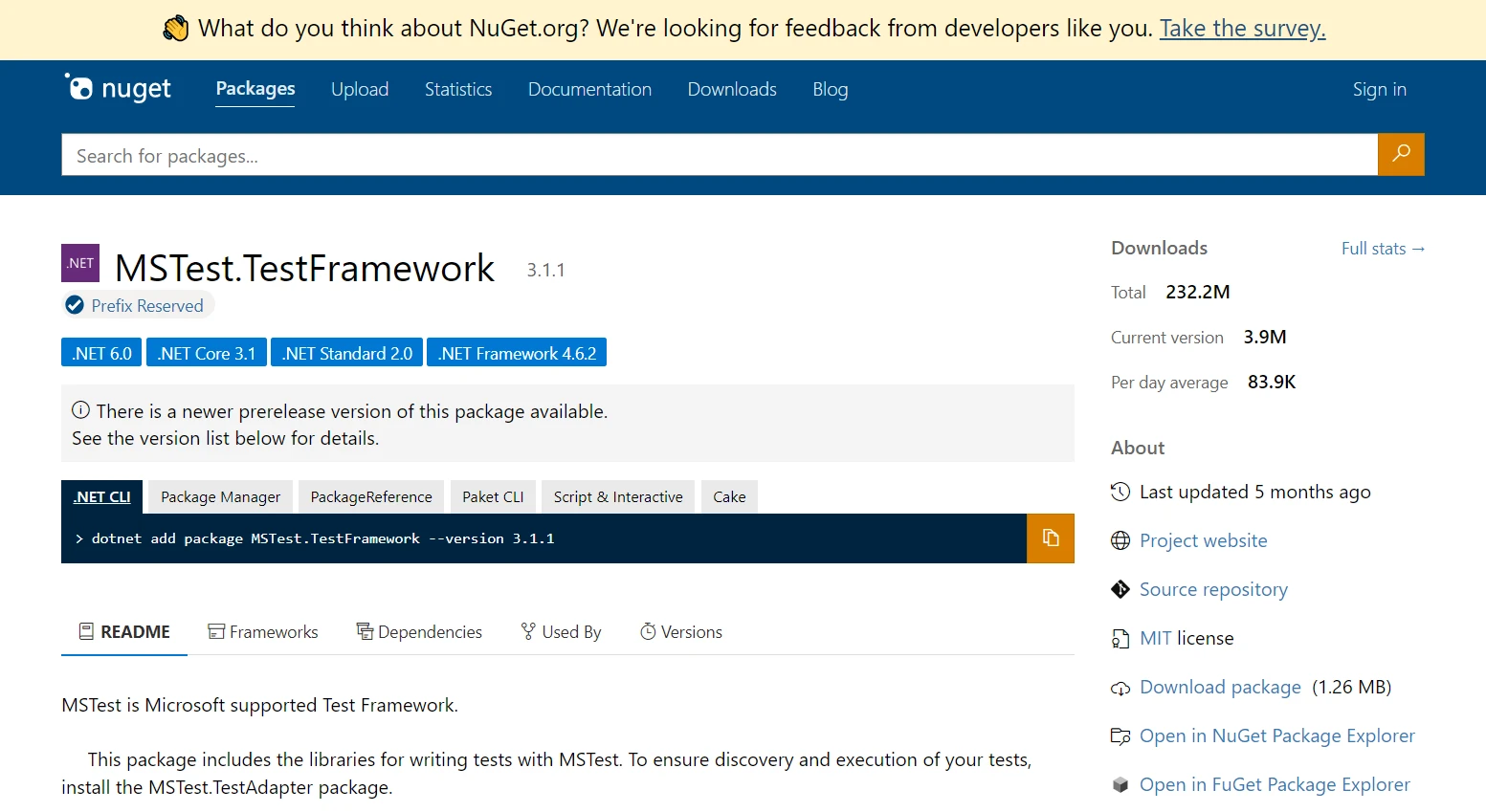
Verwendung von NuGet: Öffnen Sie Ihr .NET -Projekt in Visual Studio. Klicken Sie mit der rechten Maustaste auf das Projekt im Projektmappen-Explorer und wählen Sie "NuGet-Pakete verwalten". Suchen Sie im NuGet-Paketmanager im Suchreiter nach "MSTest.TestFramework" und installieren Sie es. Dieses Paket enthält alles Erforderliche, um MSTest-Unit-Tests zu schreiben.
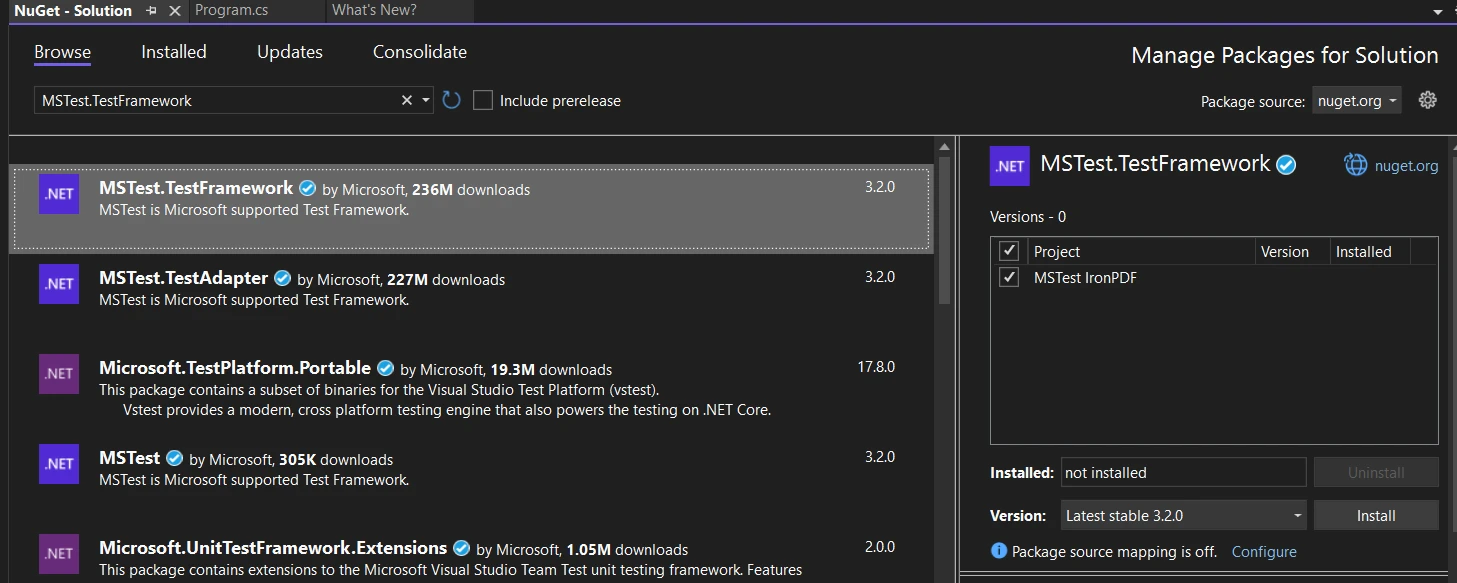
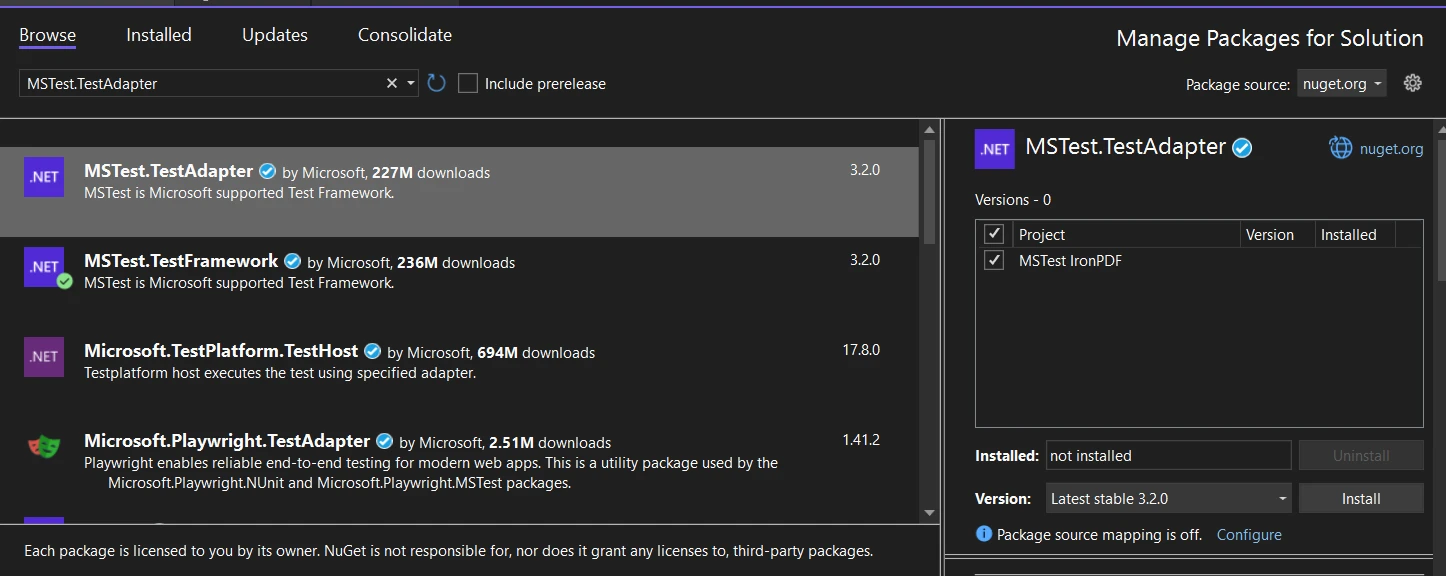
Installation des Testadapters: Zusätzlich zum MSTest-Framework müssen Sie auch den MSTest-Testadapter installieren, der es Visual Studio ermöglicht, Ihre Tests zu erkennen und auszuführen. Suchen Sie nach "MSTest.TestAdapter" im Browsetab des NuGet-Pakete-Managers und installieren Sie es.
MSTest Runner aktivieren: Nachdem Sie beide Bibliotheken installiert haben, öffnen Sie die Projektlösungsdatei (.csproj) und fügen Sie die folgende Zeile innerhalb von <PropertyGroup> hinzu:
<EnableMSTestRunner>true</EnableMSTestRunner>
<EnableMSTestRunner>true</EnableMSTestRunner>
XML
Und setzen Sie <OutputType> auf .exe. Folgendes kann so gemacht werden:
<OutputType>exe</OutputType>
<OutputType>exe</OutputType>
XML
Erweiterte Funktionen von MSTest
Lebenszyklusmanagement in MSTest
Das Verstehen und Verwalten des Testausführungs-Lebenszyklus ist in MSTest entscheidend, da es Entwicklern ermöglicht, Bedingungen vor und nach der Ausführung von Unit-Tests einzurichten und zu bereinigen. Es bietet umfassendes Lifecycle-Management mit Attributen wie [AssemblyInitialize], [ClassInitialize], [TestInitialize], und deren jeweiligen Bereinigungspendants. Diese Methoden ermöglichen Setup- und Bereinigungsoperationen auf verschiedenen Ebenen (Assembly-, Klassen- oder Testlevel).
Erweiterte Funktionen in MSTest V2
MSTest V2 führt verbesserte Fähigkeiten wie die parallele Testausführung ein, die es ermöglicht, Tests gleichzeitig auszuführen, und plattformübergreifende Unterstützung für umfassendere Anwendungstests.
Verwaltung mehrerer Test-Assemblies
Mit MSTest V2 wird die Handhabung mehrerer Test-Assemblies einfacher, was größere und komplexere Testszenarien erleichtert.
Integration von IronPDF mit MSTest für erweiterte Testszenarien
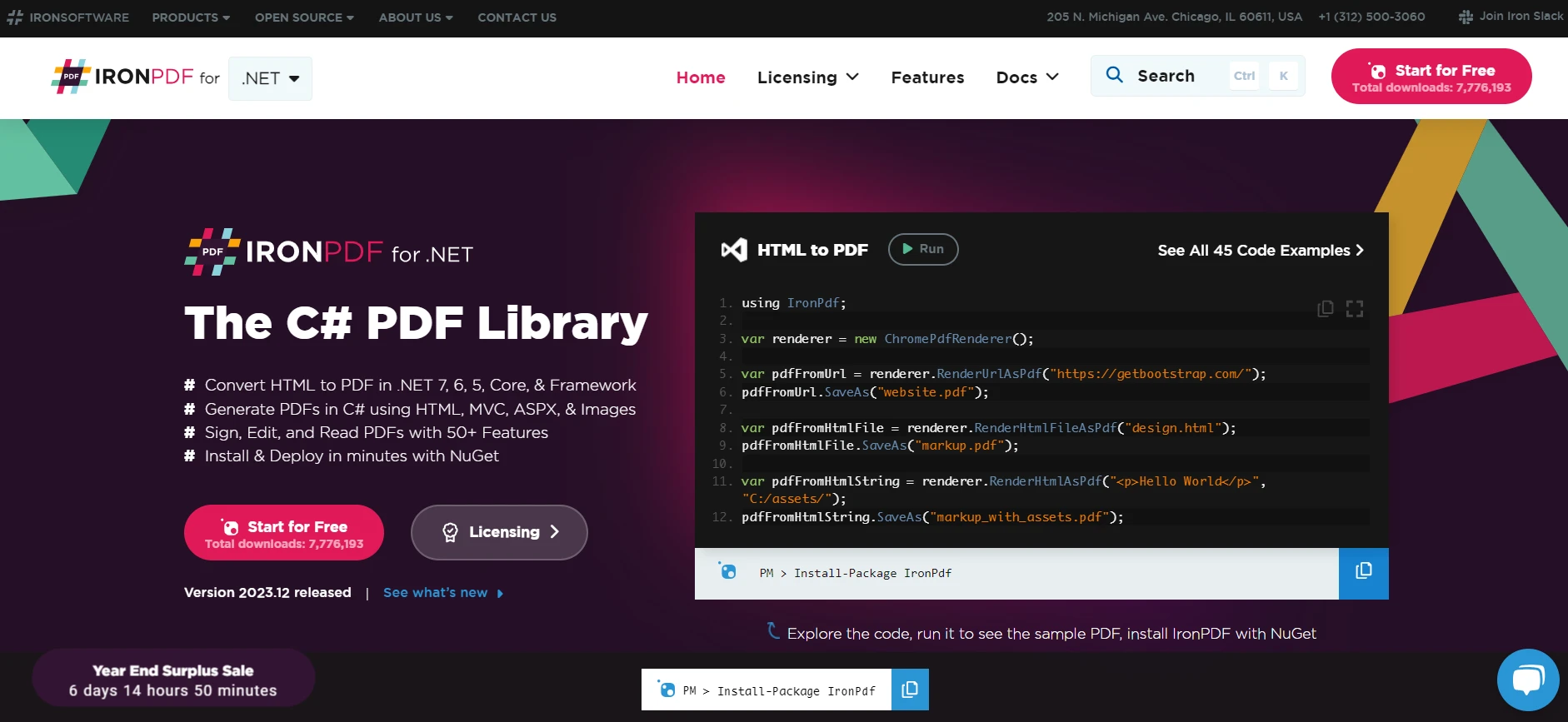
Die Integration von Drittanbieterbibliotheken wie IronPDF for .NET mit MSTest kann Ihre Testmöglichkeiten bei der PDF-Generierung und -Manipulation in .NET erheblich erweitern. IronPDF ist eine umfassende Bibliothek, die Funktionen zum Erstellen, Lesen und Bearbeiten von PDF-Dateien in .NET bereitstellt. Durch die Einbindung in Ihr MSTest-Projekt können Sie Unit-Tests erstellen, die sicherstellen, dass die PDF-Funktionalitäten Ihrer Anwendung wie erwartet funktionieren.
Möchten Sie eine Webseite als PDF speichern? Mit IronPDF ist das ganz einfach! Dieses Tool lässt Sie HTML, URLs und ganze Webseiten in saubere, präzise PDFs verwandeln, die genau wie das Original aussehen. Müssen Sie HTML in PDF umwandeln? IronPDF hat alles, was Sie brauchen.
using IronPdf;

class Program
{
    static void Main(string[] args)
    {
        // Create an instance of ChromePdfRenderer from IronPDF library
        var renderer = new ChromePdfRenderer();

        // 1. Convert HTML String to PDF
        var htmlContent = "<h1>Hello, IronPDF!</h1><p>This is a PDF from an HTML string.</p>";
        var pdfFromHtmlString = renderer.RenderHtmlAsPdf(htmlContent);
        pdfFromHtmlString.SaveAs("HTMLStringToPDF.pdf");

        // 2. Convert HTML File to PDF
        var htmlFilePath = "path_to_your_html_file.html"; // Specify the path to your HTML file
        var pdfFromHtmlFile = renderer.RenderHtmlFileAsPdf(htmlFilePath);
        pdfFromHtmlFile.SaveAs("HTMLFileToPDF.pdf");

        // 3. Convert URL to PDF
        var url = "http://ironpdf.com"; // Specify the URL
        var pdfFromUrl = renderer.RenderUrlAsPdf(url);
        pdfFromUrl.SaveAs("URLToPDF.pdf");
    }
}
using IronPdf;

class Program
{
    static void Main(string[] args)
    {
        // Create an instance of ChromePdfRenderer from IronPDF library
        var renderer = new ChromePdfRenderer();

        // 1. Convert HTML String to PDF
        var htmlContent = "<h1>Hello, IronPDF!</h1><p>This is a PDF from an HTML string.</p>";
        var pdfFromHtmlString = renderer.RenderHtmlAsPdf(htmlContent);
        pdfFromHtmlString.SaveAs("HTMLStringToPDF.pdf");

        // 2. Convert HTML File to PDF
        var htmlFilePath = "path_to_your_html_file.html"; // Specify the path to your HTML file
        var pdfFromHtmlFile = renderer.RenderHtmlFileAsPdf(htmlFilePath);
        pdfFromHtmlFile.SaveAs("HTMLFileToPDF.pdf");

        // 3. Convert URL to PDF
        var url = "http://ironpdf.com"; // Specify the URL
        var pdfFromUrl = renderer.RenderUrlAsPdf(url);
        pdfFromUrl.SaveAs("URLToPDF.pdf");
    }
}
Imports IronPdf
Friend Class Program
Shared Sub Main(ByVal args() As String)
' Create an instance of ChromePdfRenderer from IronPDF library
Dim renderer = New ChromePdfRenderer()
' 1. Convert HTML String to PDF
Dim htmlContent = "<h1>Hello, IronPDF!</h1><p>This is a PDF from an HTML string.</p>"
Dim pdfFromHtmlString = renderer.RenderHtmlAsPdf(htmlContent)
pdfFromHtmlString.SaveAs("HTMLStringToPDF.pdf")
' 2. Convert HTML File to PDF
Dim htmlFilePath = "path_to_your_html_file.html" ' Specify the path to your HTML file
Dim pdfFromHtmlFile = renderer.RenderHtmlFileAsPdf(htmlFilePath)
pdfFromHtmlFile.SaveAs("HTMLFileToPDF.pdf")
' 3. Convert URL to PDF
Dim url = "http://ironpdf.com" ' Specify the URL
Dim pdfFromUrl = renderer.RenderUrlAsPdf(url)
pdfFromUrl.SaveAs("URLToPDF.pdf")
End Sub
End Class
Imports IronPdf

Friend Class Program
	Shared Sub Main(ByVal args() As String)
		' Create an instance of ChromePdfRenderer from IronPDF library
		Dim renderer = New ChromePdfRenderer()

		' 1. Convert HTML String to PDF
		Dim htmlContent = "<h1>Hello, IronPDF!</h1><p>This is a PDF from an HTML string.</p>"
		Dim pdfFromHtmlString = renderer.RenderHtmlAsPdf(htmlContent)
		pdfFromHtmlString.SaveAs("HTMLStringToPDF.pdf")

		' 2. Convert HTML File to PDF
		Dim htmlFilePath = "path_to_your_html_file.html" ' Specify the path to your HTML file
		Dim pdfFromHtmlFile = renderer.RenderHtmlFileAsPdf(htmlFilePath)
		pdfFromHtmlFile.SaveAs("HTMLFileToPDF.pdf")

		' 3. Convert URL to PDF
		Dim url = "http://ironpdf.com" ' Specify the URL
		Dim pdfFromUrl = renderer.RenderUrlAsPdf(url)
		pdfFromUrl.SaveAs("URLToPDF.pdf")
	End Sub
End Class
Schritt 1: Installieren von IronPDF in Ihrem .NET-Projekt
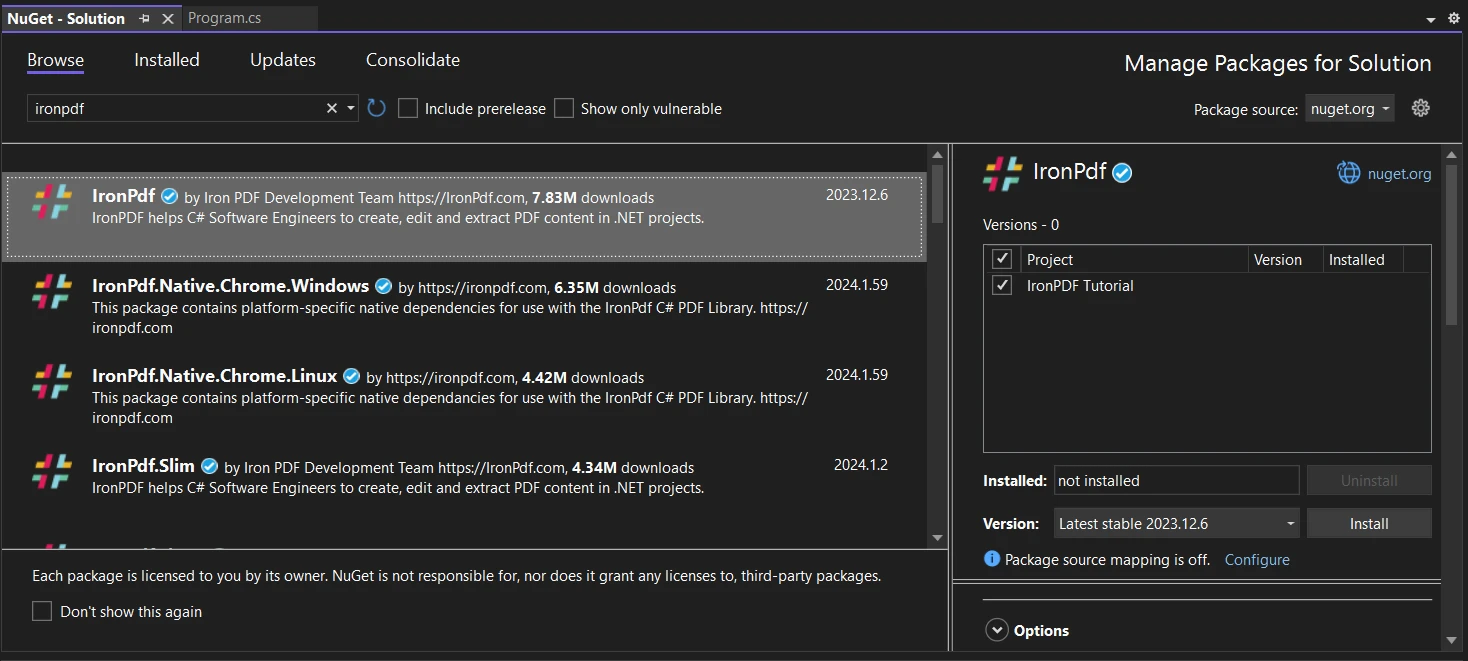
Verwendung von NuGet: Genau wie bei der Installation von MSTest-Paketen können Sie IronPDF über den NuGet -Paketmanager in Visual Studio installieren. Suchen Sie im Browse-Tab nach "IronPDF" und installieren Sie es in Ihrem Projekt, in dem Sie PDFs erzeugen oder bearbeiten.
Schritt 2: Schreiben von Unit-Tests, die PDF-Operationen beinhalten
Erstellen von Testmethoden für PDF-Funktionalität: Nachdem Sie IronPDF zu Ihrem Projekt hinzugefügt haben, können Sie in Ihren MSTest-Klassen Testmethoden schreiben, die speziell PDF-bezogene Funktionalität testen. Dies könnte das Erstellen eines PDFs, dessen Bearbeitung oder das Extrahieren von Daten daraus beinhalten und dann die Sicherstellung, dass die Operationen erfolgreich ausgeführt wurden.
Beispiel für einen Testfall mit IronPDF
Testen der PDF-Generierung: Angenommen, Ihre Anwendung verfügt über eine Funktion zum Generieren von PDF-Berichten. Sie können eine Testmethode schreiben, um sicherzustellen, dass das PDF korrekt generiert wird. Hier ist ein Beispiel:
[TestClass]
public class PdfTests
{
    [TestMethod]
    public void TestPdfGeneration()
    {
        // Arrange: Set up IronPDF and any necessary inputs for PDF generation.
        var renderer = new IronPdf.ChromePdfRenderer();

        // Act: Generate PDF from HTML content.
        var pdf = renderer.RenderHtmlAsPdf("<h1>Working with IronPDF and MSTest!</h1>");

        // Assert: Check if the PDF is generated and contains the expected content.
        Assert.IsNotNull(pdf);
        Assert.IsTrue(pdf.PageCount > 0);
        // Additional assertions can be made depending on the requirements
    }
}
[TestClass]
public class PdfTests
{
    [TestMethod]
    public void TestPdfGeneration()
    {
        // Arrange: Set up IronPDF and any necessary inputs for PDF generation.
        var renderer = new IronPdf.ChromePdfRenderer();

        // Act: Generate PDF from HTML content.
        var pdf = renderer.RenderHtmlAsPdf("<h1>Working with IronPDF and MSTest!</h1>");

        // Assert: Check if the PDF is generated and contains the expected content.
        Assert.IsNotNull(pdf);
        Assert.IsTrue(pdf.PageCount > 0);
        // Additional assertions can be made depending on the requirements
    }
}<TestClass>
Public Class PdfTests
<TestMethod>
Public Sub TestPdfGeneration()
' Arrange: Set up IronPDF and any necessary inputs for PDF generation.
Dim renderer As New IronPdf.ChromePdfRenderer()
' Act: Generate PDF from HTML content.
Dim pdf = renderer.RenderHtmlAsPdf("<h1>Working with IronPDF and MSTest!</h1>")
' Assert: Check if the PDF is generated and contains the expected content.
Assert.IsNotNull(pdf)
Assert.IsTrue(pdf.PageCount > 0)
' Additional assertions can be made depending on the requirements
End Sub
End Class
<TestClass>
Public Class PdfTests

    <TestMethod>
    Public Sub TestPdfGeneration()
        ' Arrange: Set up IronPDF and any necessary inputs for PDF generation.
        Dim renderer As New IronPdf.ChromePdfRenderer()

        ' Act: Generate PDF from HTML content.
        Dim pdf = renderer.RenderHtmlAsPdf("<h1>Working with IronPDF and MSTest!</h1>")

        ' Assert: Check if the PDF is generated and contains the expected content.
        Assert.IsNotNull(pdf)
        Assert.IsTrue(pdf.PageCount > 0)
        ' Additional assertions can be made depending on the requirements
    End Sub

End Class
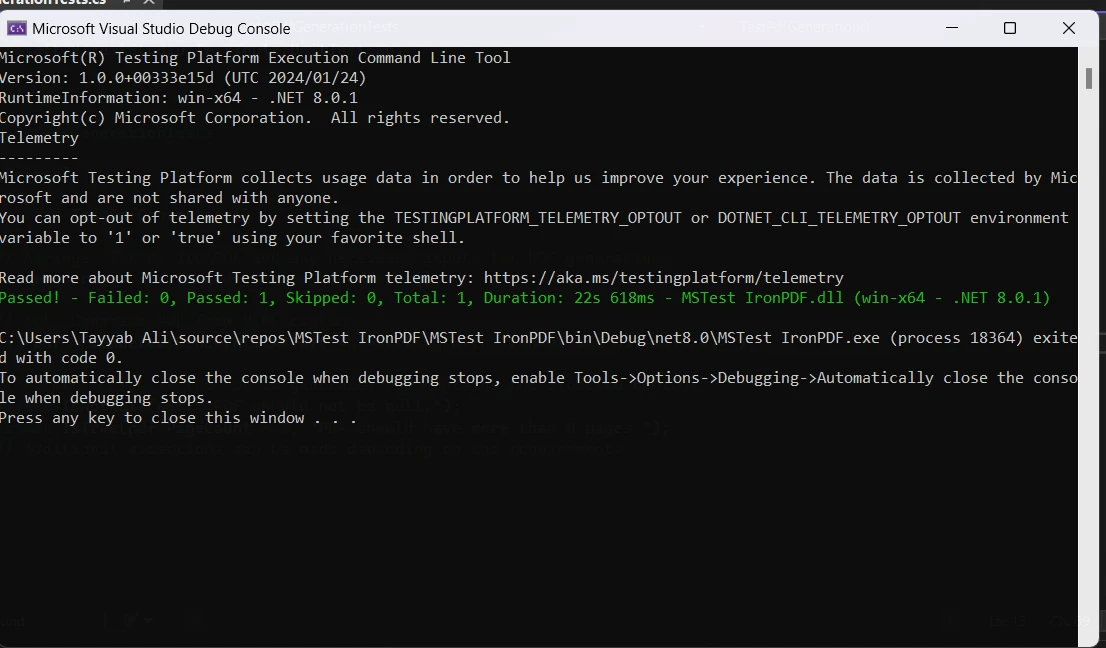
Wenn Sie das Projekt ausführen, wird die Testausgabe angezeigt:
Abschluss
MSTest ist ein wichtiger Bestandteil im .NET-Entwicklungsprozess und bietet robuste Möglichkeiten für Unit-Tests. Seine Integration mit Visual Studio, zusammen mit erweiterten Funktionen wie paralleler Ausführung und plattformübergreifender Unterstützung, macht es zur ersten Wahl für Entwickler, die die Qualität und Zuverlässigkeit ihrer .NET-Anwendungen sicherstellen möchten.
Entdecken Sie mehr über die IronPDF-Lizenzierung beginnend bei $999.