El artículo explora el proceso detallado de convertir archivos PDF en formato de imagen PNG utilizando las capacidades del .NET Framework mediante el uso de la biblioteca IronPDF.
¿Por qué convertir PDF a PNG?
La razón detrás de convertir archivos PDF a formato PNG se basa en las ventajas únicas que ofrecen las imágenes PNG (Gráficos de Red Portátiles). PNG es conocido por su compresión sin pérdida, lo que permite comprimir imágenes sin comprometer la calidad. Además, PNG admite fondos transparentes, lo que lo convierte en un formato ideal para conservar detalles visuales intrincados mientras se acomodan diversos elementos de diseño.
Al convertir PDFs a PNG, se puede asegurar que el formato del documento, la resolución completa de imagen y fidelidad, y los componentes gráficos complejos se conserven, haciendo de PNG una elección invaluable para aplicaciones que requieren precisión visual y versatilidad.
Este artículo usará las capacidades de conversión de PDF a PNG de IronPDF para convertir PDF en imágenes PNG programáticamente.
Cómo convertir PDF a PNG usando .NET
- Descargue e instale la biblioteca .NET PDF to PNG.
- Convierta archivos PDF a imágenes PNG.
- Abra un documento PDF existente del sistema utilizando el método "
PdfDocument.FromFile ".
- Convierta el PDF a imágenes utilizando el método "
RasterizeToImageFiles ".
- Pase la carpeta de salida y el formato de imagen como parámetros al método mencionado anteriormente.
1. IronPDF
El Resumen de la Biblioteca IronPDF es una biblioteca .NET que permite a los desarrolladores crear, manipular y renderizar documentos PDF en aplicaciones .NET. Proporciona una amplia gama de funciones para trabajar con archivos PDF, incluidas la creación de documentos PDF programáticamente, conversión de HTML a documentos PDF, fusión de múltiples PDFs, agregar texto e imágenes a PDFs, extracción de contenido de PDFs, y más. IronPDF es particularmente útil cuando se trabaja con aplicaciones web o cualquier proyecto .NET que requiera capacidades de generación o manipulación de PDF.
2. Configuración del entorno e instalación de IronPDF
Es fundamental crear un entorno ideal antes de comenzar el proceso de transformación de PDF con IronPDF. Instalar una versión adecuada del .NET Framework debería ser su primer paso. Una vez que su marco esté preparado, comience la instalación de IronPDF. Emplear NuGet, un gestor de paquetes muy popular para proyectos .NET, facilita esta tarea.
2.1. Crear un nuevo proyecto VB.NET
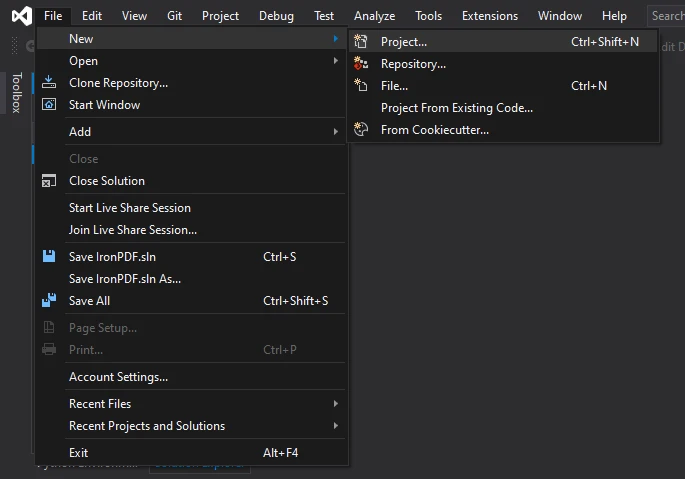
- Abra Visual Studio y siga estos pasos para crear un nuevo proyecto .NET:
-
Haga clic en "Archivo" > "Nuevo" > "Proyecto..."
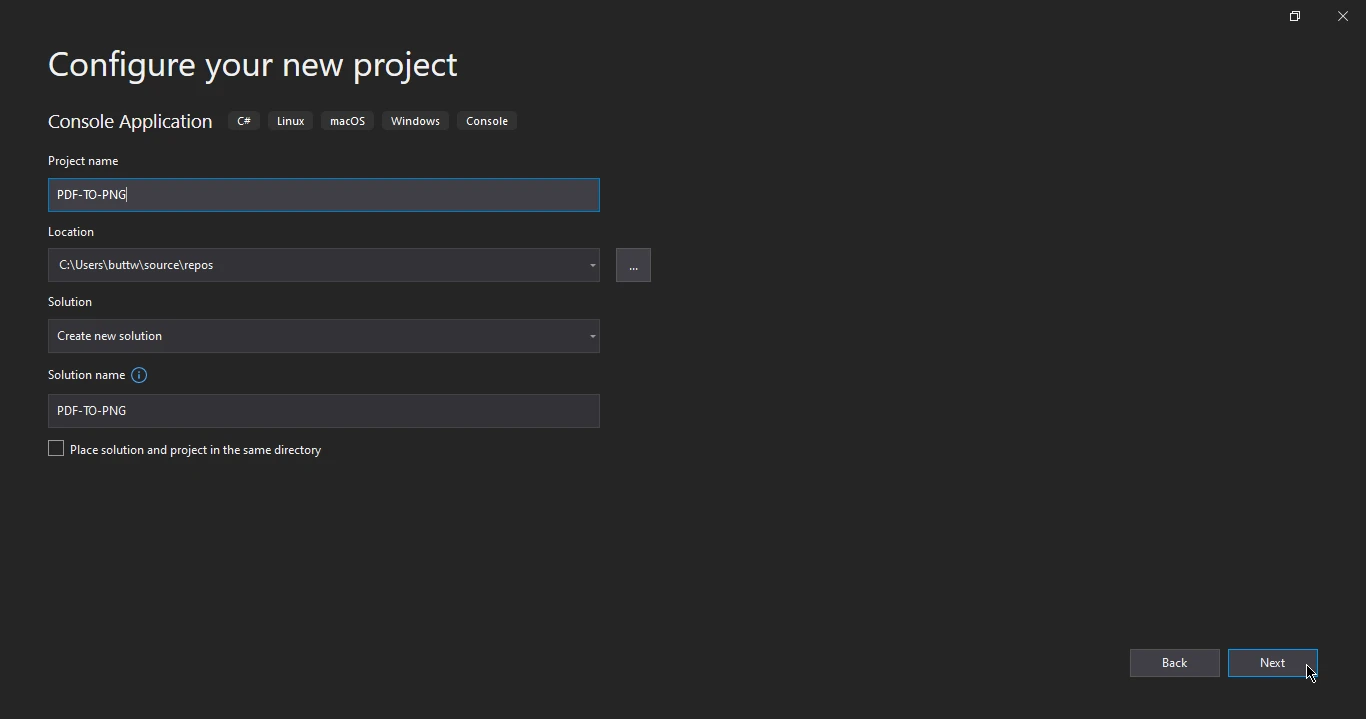
- Introduzca un nombre y ubicación para su proyecto y haga clic en el botón Siguiente.
-
Seleccione el marco objetivo y haga clic en "Crear" para crear el proyecto.
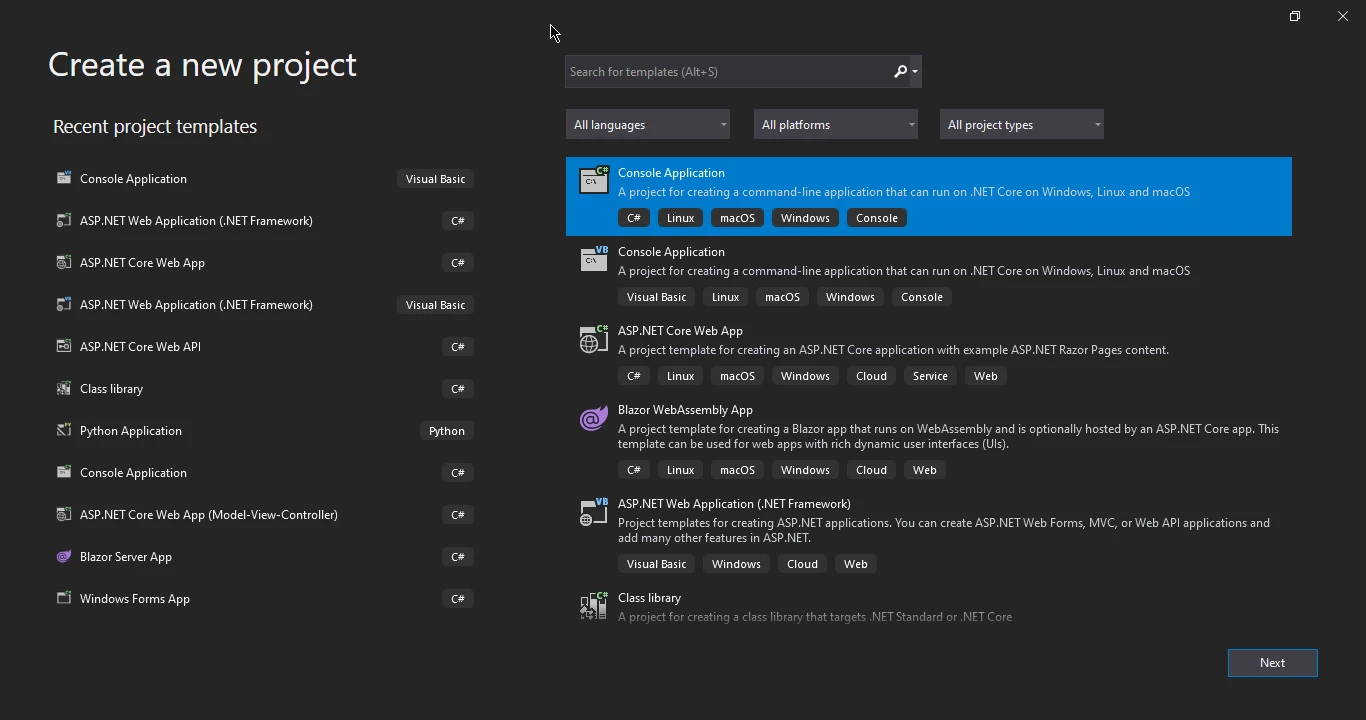 Crea un nuevo proyecto con Visual Studio
-
Ingresa un nombre y ubicación para tu proyecto y haz clic en el botón Siguiente.
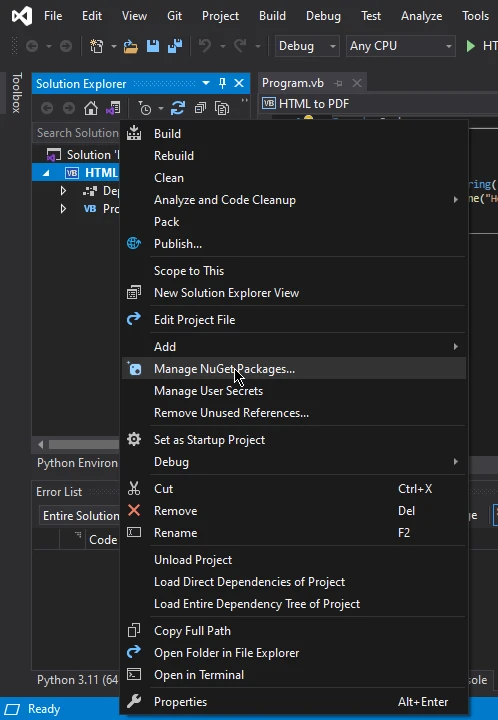 El menú desplegable del Administrador de Paquetes NuGet en la barra de herramientas de Visual Studio
-
En la ventana del "Administrador de Paquetes NuGet", asegúrese de que "Examinar" esté seleccionado a la izquierda.
-
En el cuadro de búsqueda, escriba "IronPDF".
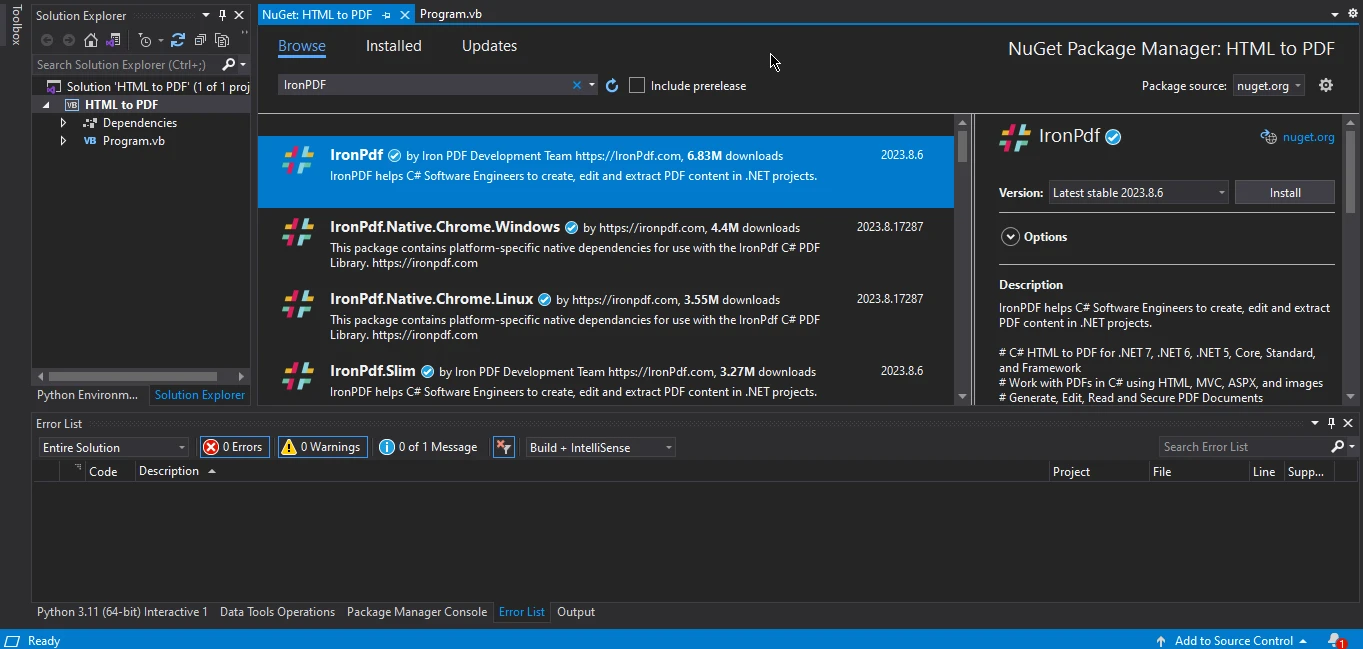 IronPDF seleccionado en el Administrador de Paquetes NuGet
3. Convertir archivos PDF en imágenes PNG
Las ventajas únicas del formato PNG, incluida la compresión sin pérdida y soporte para fondos transparentes, lo convierten en una opción invaluable para preservar el formato del documento, la fidelidad de la imagen y los elementos gráficos intrincados. Descubra más sobre las Características de IronPDF para capacitar a los desarrolladores a integrar la conversión de PDF a PNG, mejorando la precisión visual y versatilidad. Estas herramientas son clave para satisfacer los crecientes requisitos de las aplicaciones modernas. Consulte este Tutorial de PDF a PNG con IronPDF y para más ejemplos, visite la Guía de Rasterización de PDFs de IronPDF.
3.1. Archivos PDF de entrada
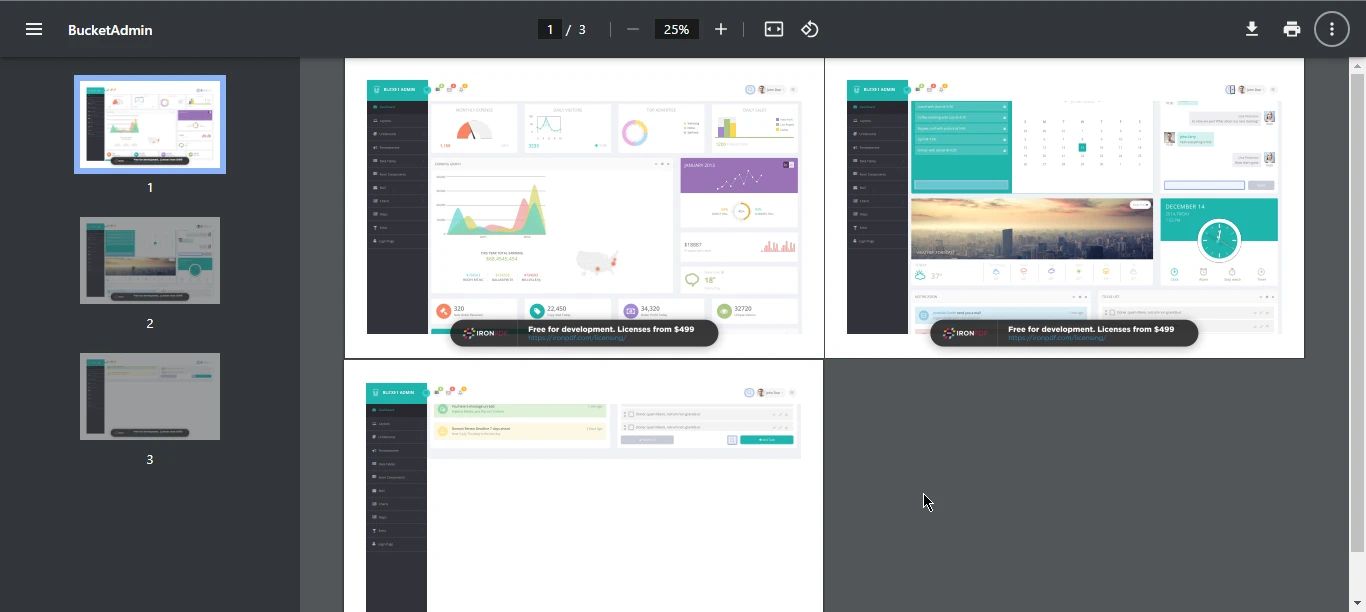 Un documento PDF de tres páginas con diversos gráficos y tablas
using IronPdf;

// Load the PDF document you want to convert
var pdf = PdfDocument.FromFile("bucket.pdf");

// Convert each page of the PDF into a separate PNG image stored in the specified directory
pdf.RasterizeToImageFiles(@"C:\image\folder\*.png");
using IronPdf;

// Load the PDF document you want to convert
var pdf = PdfDocument.FromFile("bucket.pdf");

// Convert each page of the PDF into a separate PNG image stored in the specified directory
pdf.RasterizeToImageFiles(@"C:\image\folder\*.png");
Imports IronPdf
' Load the PDF document you want to convert
Private pdf = PdfDocument.FromFile("bucket.pdf")
' Convert each page of the PDF into a separate PNG image stored in the specified directory
pdf.RasterizeToImageFiles("C:\image\folder\*.png")
Imports IronPdf

' Load the PDF document you want to convert
Private pdf = PdfDocument.FromFile("bucket.pdf")

' Convert each page of the PDF into a separate PNG image stored in the specified directory
pdf.RasterizeToImageFiles("C:\image\folder\*.png")
El código anterior utiliza la biblioteca IronPDF en una aplicación .NET para convertir todas las páginas de un archivo PDF específico ("bucket.pdf") en una serie de archivos PNG. El método FromFile carga el PDF y luego cada página se convierte al formato PNG. El método RasterizeToImageFiles especifica el directorio de salida y el formato de archivo, nombrando automáticamente los archivos según el contenido de entrada y produciendo imágenes PNG de alta calidad.
3.2. Imágenes de salida
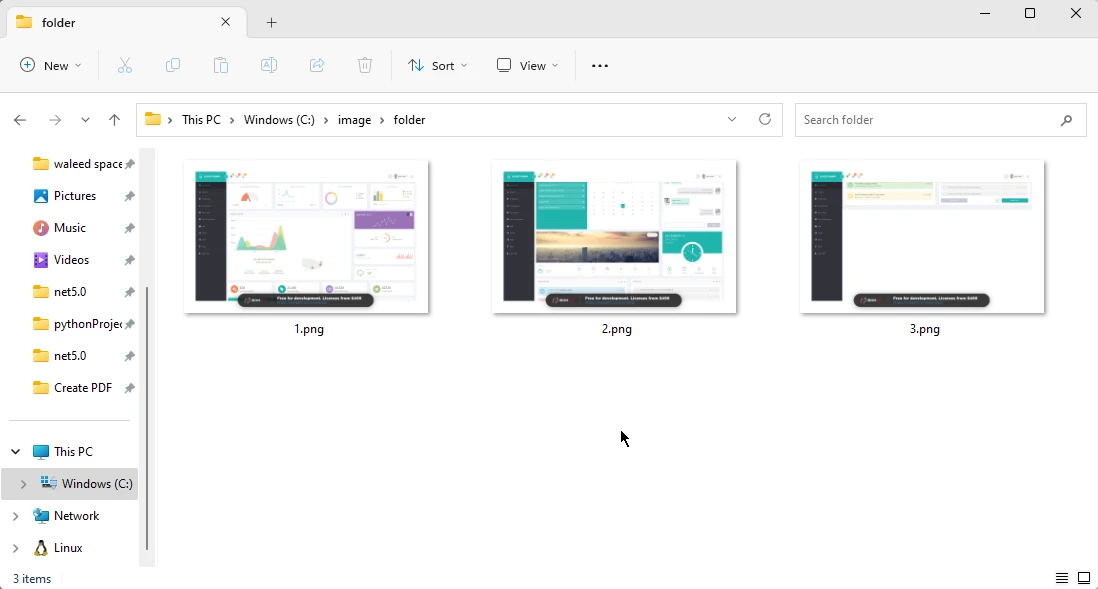 Tres imágenes PNG en el explorador de archivos de Windows, una para cada una de las páginas del PDF
4. Conclusión
La capacidad de convertir páginas PDF en imágenes PNG utilizando .NET Framework, aprovechando específicamente la potencia de IronPDF, ofrece una solución versátil y eficaz para hacer frente a la creciente demanda de transformación de documentos sin fisuras en el panorama actual impulsado por la tecnología. Las ventajas únicas del formato PNG, incluida la compresión sin pérdidas y la compatibilidad con fondos transparentes, lo convierten en una opción inestimable para conservar el formato de los documentos, la fidelidad de la imagen y los elementos gráficos complejos.
Descubra más sobre Características y capacidades de IronPDF para permitir a los desarrolladores integrar fácilmente la funcionalidad de conversión de páginas PDF a PNG en sus aplicaciones, demostrando la importancia del marco de trabajo para mejorar la precisión visual y la versatilidad en varios dominios. A medida que la tecnología sigue evolucionando, estas herramientas proporcionan un apoyo crucial para satisfacer los requisitos cada vez mayores de las aplicaciones modernas.
Asegúrese de consultar este Tutorial de conversión de PDF a PNG de IronPDF, y para ver más ejemplos de código relacionados, visite la Guía de rasterización de PDF a imágenes de IronPDF.