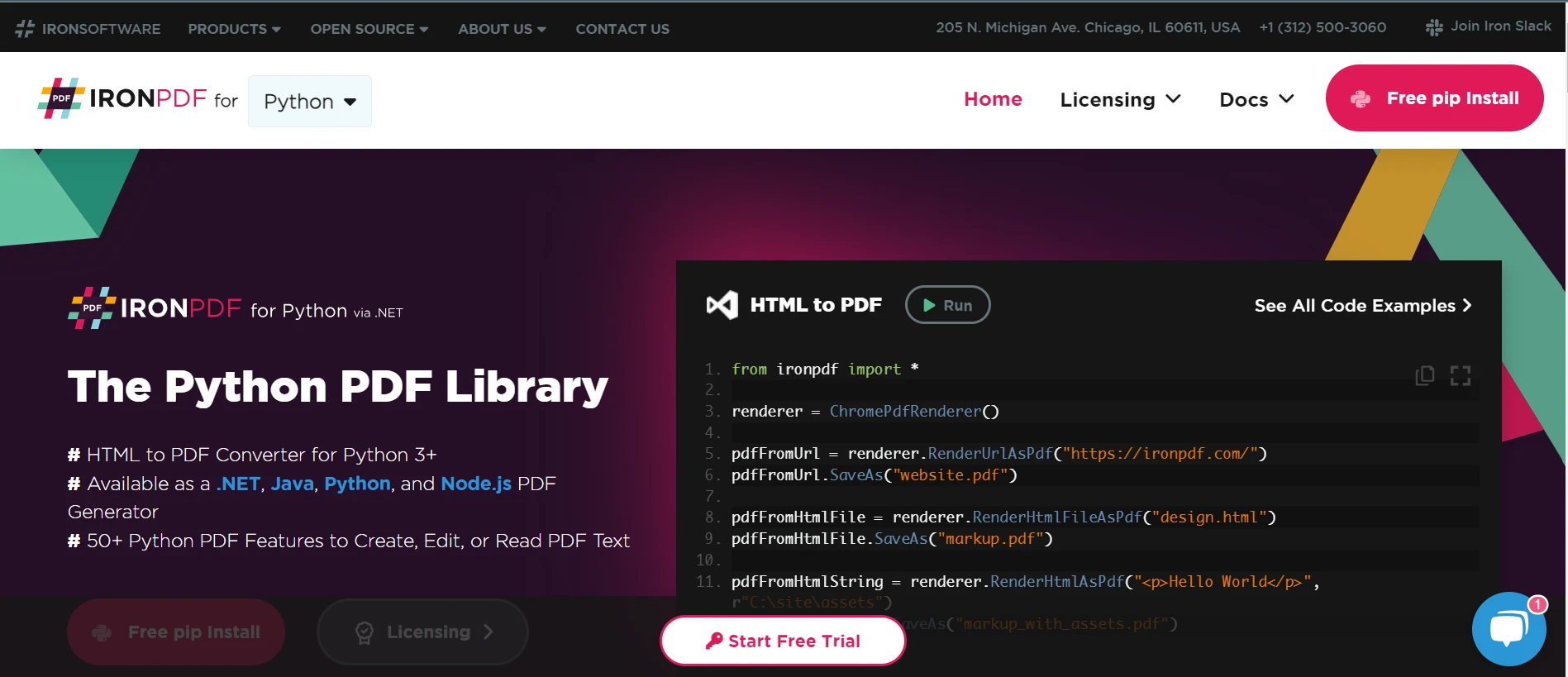
from ironpdf import *

# Instantiate Renderer
renderer = ChromePdfRenderer()

# Create a PDF from a HTML string using Python
pdf = renderer.RenderHtmlAsPdf("<h1>Hello World</h1>")

# Export to a file or Stream
pdf.SaveAs("output.pdf")

# Advanced Example with HTML Assets
# Load external html assets: Images, CSS and JavaScript.
# An optional BasePath 'C:\site\assets\' is set as the file location to load assets from
myAdvancedPdf = renderer.RenderHtmlAsPdf("<img src='icons/iron.png'>", r"C:\site\assets")
myAdvancedPdf.SaveAs("html-with-assets.pdf")
from ironpdf import *# Instantiate Rendererrenderer = ChromePdfRenderer()# Create a PDF from a HTML string using Pythonpdf = renderer.RenderHtmlAsPdf("<h1>Hello World</h1>")# Export to a file or Streampdf.SaveAs("output.pdf")# Advanced Example with HTML Assets# Load external html assets: Images, CSS and JavaScript.# An optional BasePath 'C:\site\assets\' is set as the file location to load assets frommyAdvancedPdf = renderer.RenderHtmlAsPdf("<img src='icons/iron.png'>", r"C:\site\assets")myAdvancedPdf.SaveAs("html-with-assets.pdf")
Esta publicación presentará el módulo IronPDF for Python para convertir un archivo PDF existente en un archivo PDF/A.
<div class="hsg-featured-snippet">
<h2>Cómo Convertir PDF A PDF/A en Python</h2>
<ol>
<li><a class="js-modal-open" data-modal-id="download-modal" href="#download-modal">Descargue Python PDF Library para convertir PDF a PDF/A en Python.</a></li>
<li>Crear un Nuevo Proyecto Python en PyCharm o cualquier otro IDE.</li>
<li>Cargar un archivo PDF existente utilizando el método <code>PdfDocument.FromFile</code>.</li>
<li>Convertir PDF a PDFA utilizando el método <code>SaveAsPdfA</code>.</li>
<li>Ejecutar el proyecto para obtener el archivo PDFA convertido.</li>
</ol>
</div>
## IronPDF
En comparación con otros lenguajes, Python proporciona una dinamismo significativamente mayor para los programadores y permite a los desarrolladores crear interfaces gráficas de usuario de manera rápida y fácil. Por lo tanto, incorporar la biblioteca IronPDF en Python es un proceso sencillo. Se puede utilizar una amplia gama de herramientas preinstaladas, como PyQt, wxWidgets, Kivy, y varios otros paquetes y bibliotecas, para ensamblar de manera eficiente y segura una GUI completamente funcional.
El diseño y desarrollo web en Python se simplifica enormemente con la ayuda de IronPDF. Esto se debe principalmente a la abundancia de paradigmas de desarrollo web en Python disponibles, incluidos Django, Flask y Pyramid. Sitios web y servicios en línea como Reddit, Mozilla y Spotify han empleado con éxito estos frameworks.
## Características de IronPDF
* Se pueden usar HTML, HTML5, ASP, PHP y otras fuentes para [crear archivos PDF](/python/tutorials/html-to-pdf/). Además, los archivos de imagen se pueden convertir a PDF.
* IronPDF permite la creación de documentos PDF interactivos. Proporciona funcionalidades como [imprimir archivos PDF](/python/how-to/python-print-pdf/), [rasterizar páginas PDF](/python/examples/rasterize-a-pdf-to-images/) a imágenes, convertir PDF a HTML, [dividir](/python/blog/using-ironpdf-for-python/split-pdf-python-tutorial/) y [fusionar](/python/how-to/python-merge-pdf/) archivos PDF, [extraer texto e imágenes](/python/blog/using-ironpdf-for-python/extract-data-from-pdf-python-tutorial/) de archivos PDF, buscar frases específicas en archivos PDF y completar y enviar [formularios interactivos](/python/examples/form-data/).
* Con IronPDF, es posible crear un documento desde una URL, mientras se admite agentes de usuario, proxies, cookies, encabezados HTTP, credenciales de inicio de sesión de red únicas, variables de formulario y agentes de usuario que inician sesión usando formularios de inicio de sesión HTML.
* IronPDF permite a los usuarios inspeccionar y [anotar](/python/blog/using-ironpdf-for-python/pdf-annotate-python-tutorial/) archivos PDF.
* Las imágenes pueden ser extraídas de documentos usando IronPDF.
* Con IronPDF, es muy fácil agregar [encabezados, pies de página](/python/examples/headers-and-footers/), texto, imágenes, [marcadores](/python/examples/bookmarks/), [marcas de agua](/python/blog/using-ironpdf-for-python/python-pdf-watermark-tutorial/) y más a documentos.
* Los usuarios pueden combinar y dividir páginas dentro de un documento nuevo o existente usando IronPDF.
* La conversión de documentos a objetos PDF es posible sin depender de un visor Acrobat.
* IronPDF permite la creación de un documento PDF desde un archivo CSS.
* Los archivos CSS con especificaciones de tipo de medio se pueden usar para construir documentos con IronPDF.
## Configurar entorno Python
### Configuración de Python
Asegúrate de que Python esté instalado en tu computadora. Visita el [sitio web oficial de Python](https://www.python.org/downloads/) para descargar e instalar la última versión de Python adecuada para tu sistema operativo. Una vez que Python esté instalado, crea un entorno virtual para aislar los requisitos de tu proyecto. Utilice el módulo `venv` para crear y gestionar entornos virtuales, lo que le proporcionará un espacio de trabajo limpio y separado para su proyecto de conversión.
### Nuevo proyecto en PyCharm
Para este tutorial, se recomienda PyCharm, un IDE para desarrollo en Python. Descarga e instala PyCharm desde el [sitio web oficial](https://www.jetbrains.com/pycharm/download/).
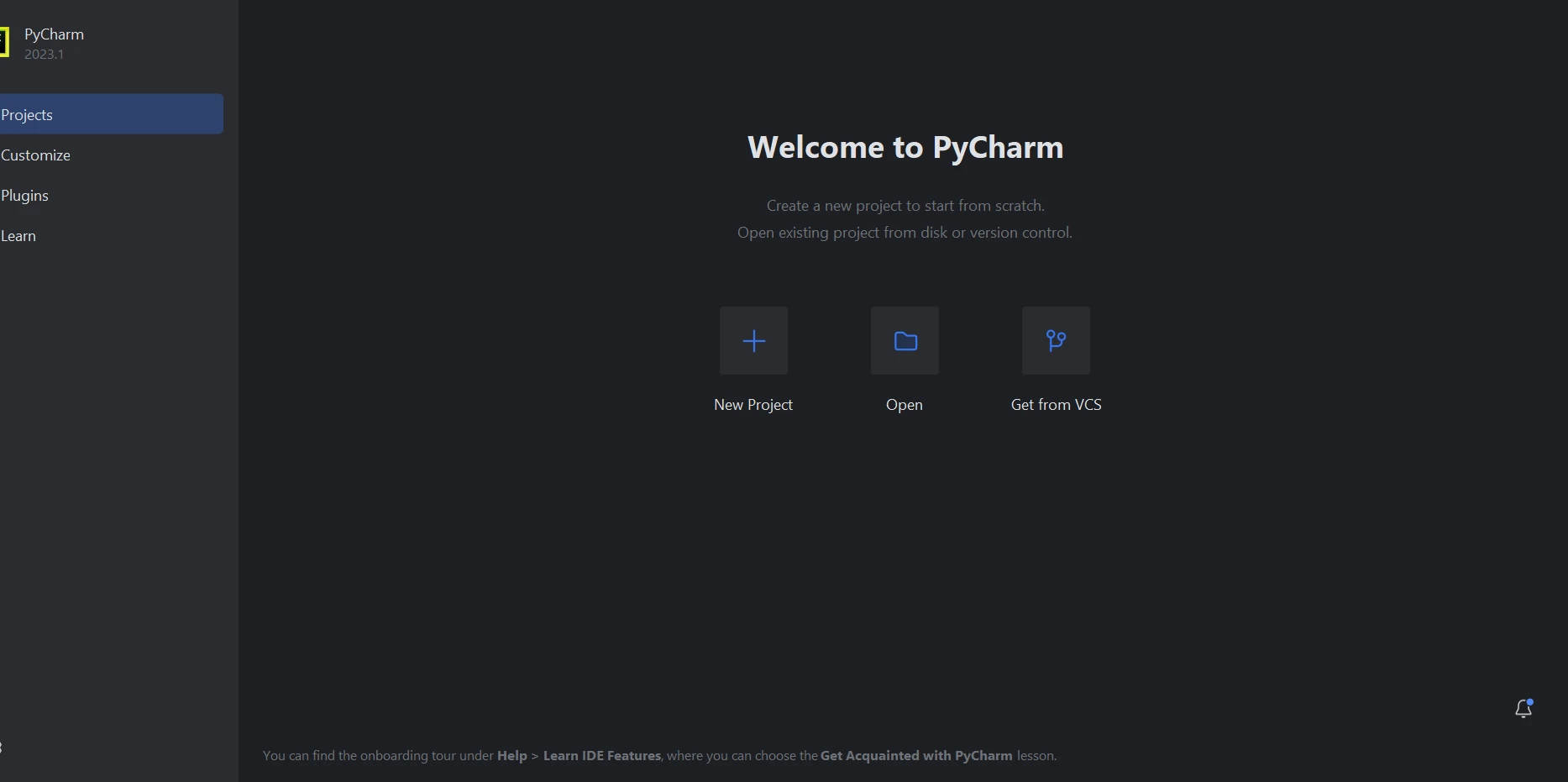
Después de iniciar el IDE PyCharm, selecciona "Nuevo Proyecto" del menú, como se muestra en la siguiente figura.
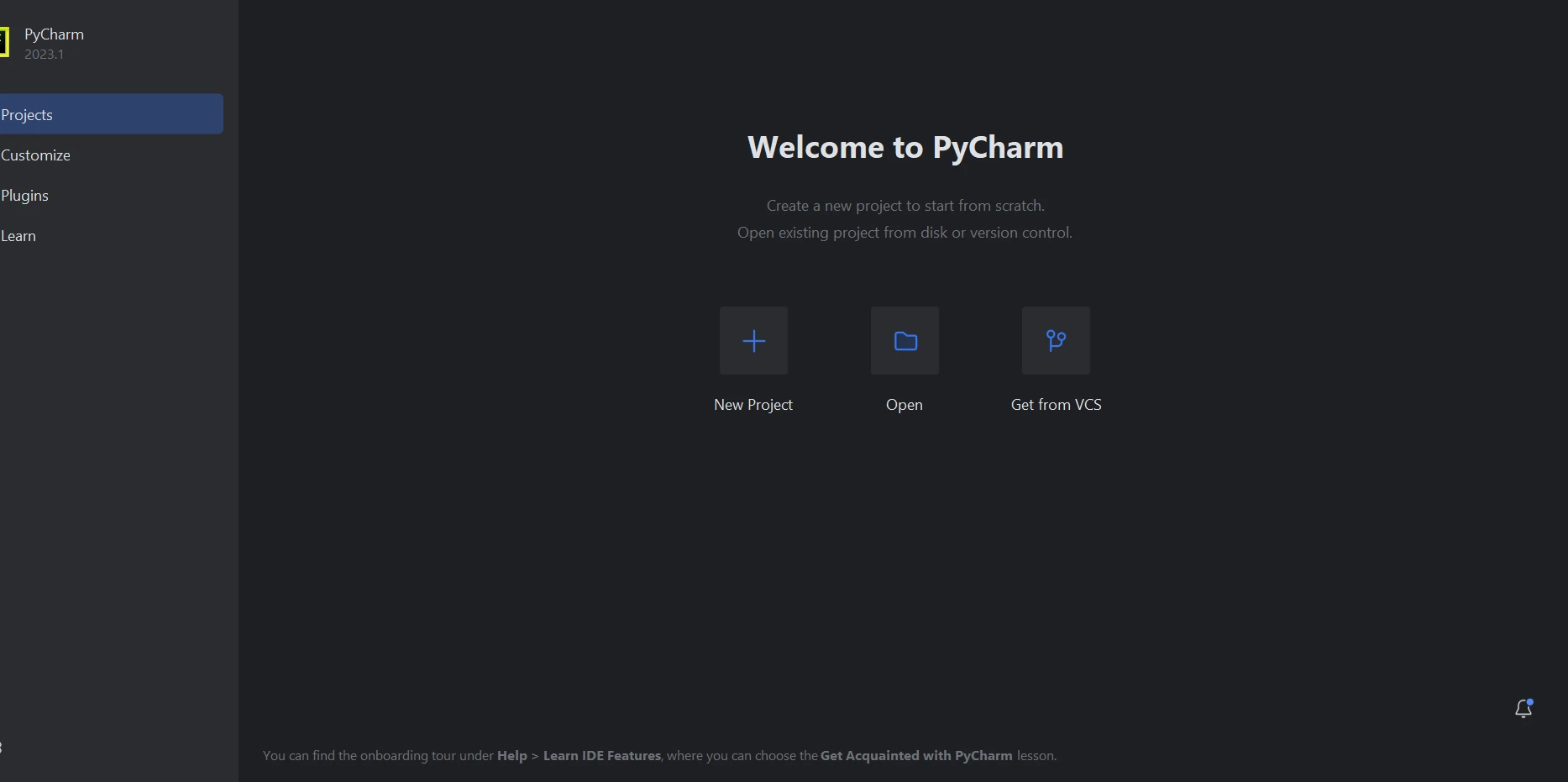
**IDE PyCharm**
Cuando seleccionas "Nuevo proyecto", aparecerá una nueva ventana que te permitirá especificar la ubicación y el entorno de Python para el proyecto, como se muestra en la figura a continuación.
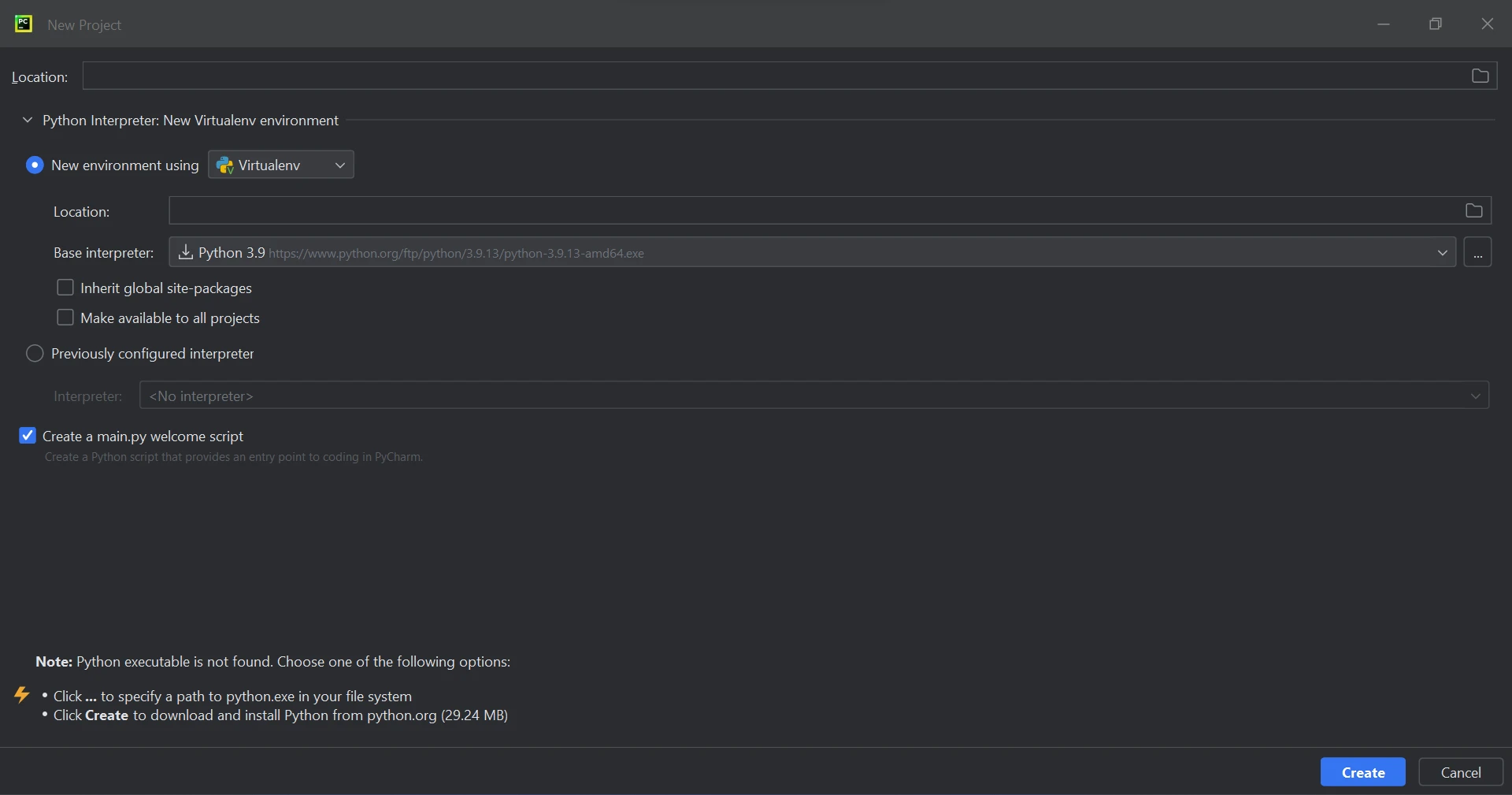
**Crear un nuevo proyecto de Python en PyCharm**
Después de seleccionar la ubicación y la ruta del entorno del proyecto, haz clic en el botón **Crear** para iniciar un nuevo proyecto. En la ventana recién abierta, puedes ingresar tu código en un archivo de Python. Este tutorial utiliza Python 3.9.
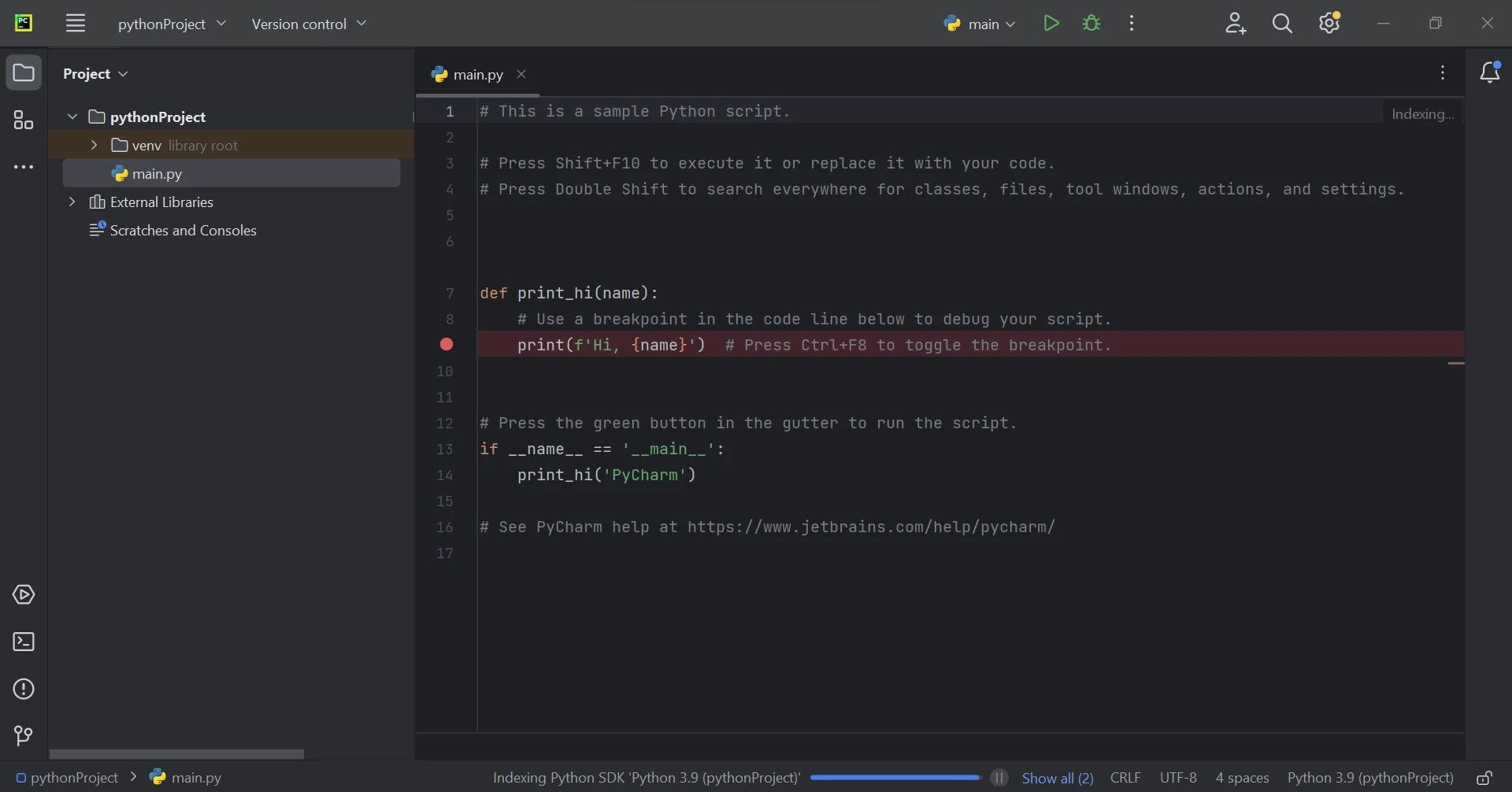
**El archivo principal de Python**
### Requisitos de la biblioteca IronPDF
IronPDF en Python utiliza .NET. Por lo tanto, es necesario tener instalado el Runtime de .NET en tu máquina para usar IronPDF for Python. Esto viene preinstalado en Windows, pero los usuarios de Linux y Mac pueden necesitar instalar .NET antes de usar este paquete de Python.
### Configuración de la biblioteca IronPDF
Para poder generar, modificar y abrir archivos con la extensión ".pdf", es necesario instalar el paquete `ironpdf`. Abre una ventana de terminal e ingresa el siguiente comando para instalar el paquete en PyCharm:
```shell
:ProductInstall
```
El paquete `ironpdf` se ha instalado, tal y como se muestra en la captura de pantalla siguiente.
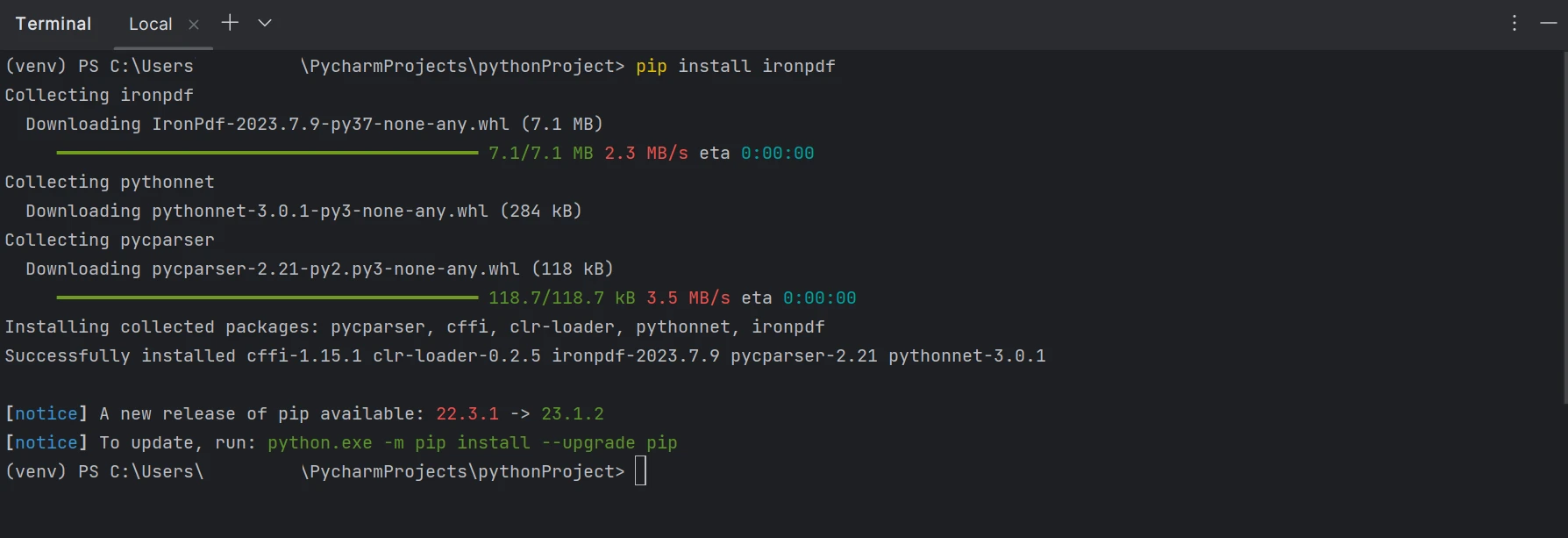
**Instalar el paquete IronPDF**
## Creación de PDF/A a partir de un documento PDF
Con la asistencia de la biblioteca IronPDF, crear un documento PDF/A es un proceso sencillo. Estos archivos están diseñados para almacenar información para su preservación a largo plazo. A continuación se muestra un fragmento de código de ejemplo para convertir un archivo PDF en un archivo PDF/A:
```python
from ironpdf import PdfDocument, PdfAVersions

# Load an existing PDF file
pdf = PdfDocument.FromFile("sample.pdf")

# Save it as a PDF/A file, specifying the desired version
pdf.SaveAsPdfA("Converted_pdfa.pdf", PdfAVersions.PdfA3)
```
El código anterior demuestra cómo convertir archivos PDF al formato PDF/A usando solo unas pocas líneas de código Python con la ayuda de IronPDF. En el paso inicial, importamos las clases necesarias de la biblioteca IronPDF, lo que permite acceder a todas las funciones que ofrece IronPDF, en particular a través de la clase `PdfDocument`.
Al utilizar el método `FromFile`, el archivo PDF de entrada se carga especificando su ruta de archivo como parámetro. El objeto `PdfDocument` proporciona el método `SaveAsPdfA`, que permite guardar y convertir el archivo PDF al formato PDF/A. El método `SaveAsPdfA` requiere dos parámetros: la nueva ubicación del archivo de guardado y la versión PDF/A. El parámetro de la versión PDF/A es opcional y, si no se especifica, el valor predeterminado será `PdfAVersions.PdfA3`.
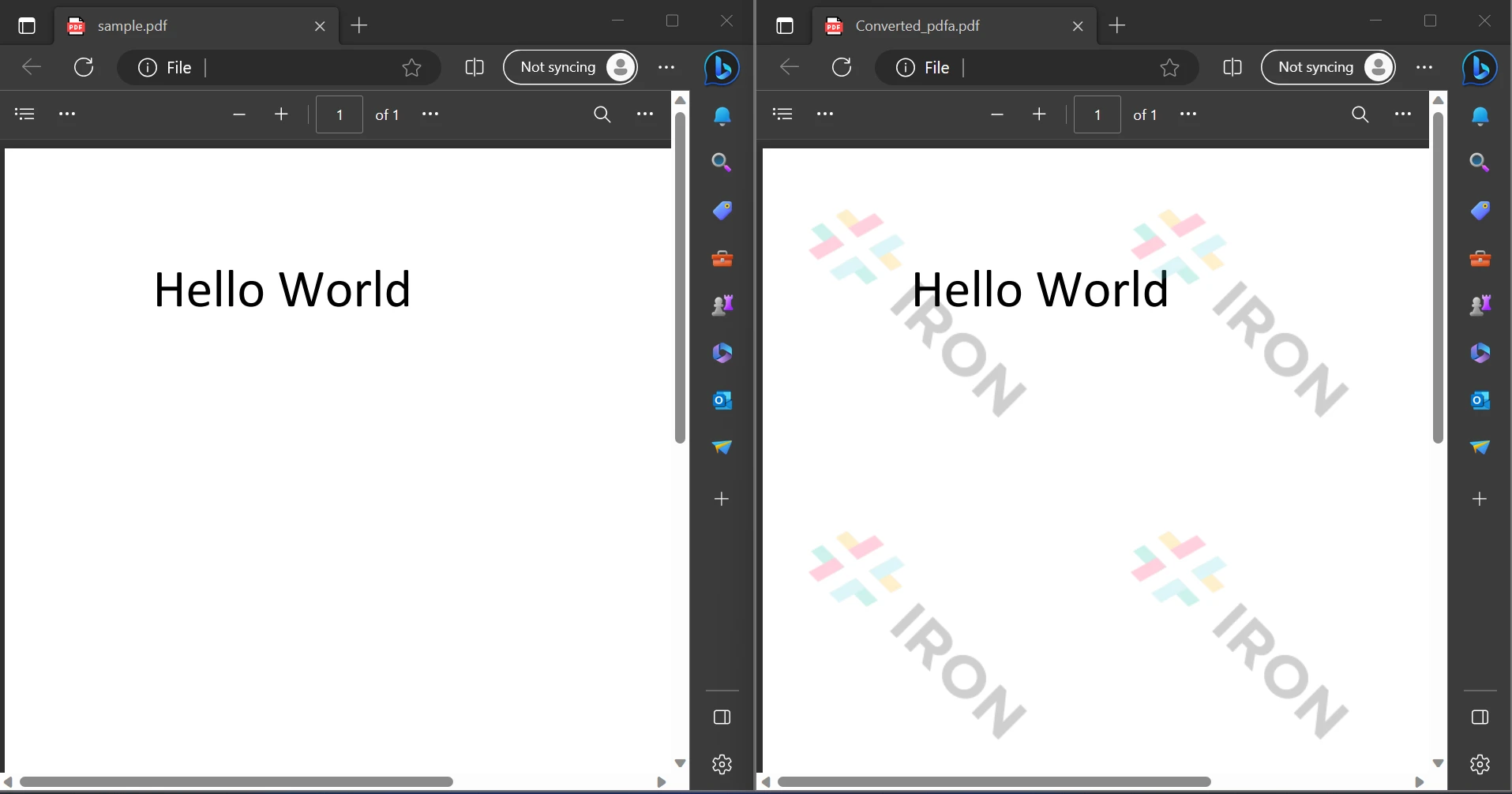
**El archivo PDF de salida**
En la salida, ambos archivos, el original y el creado PDF/A, se muestran. Sin embargo, la marca de agua se puede eliminar utilizando la versión licenciada del software. Para obtener tutoriales más detallados e información, puedes hacer clic en el siguiente [tutorial para el convertidor de HTML a PDF](/python/tutorials/html-to-pdf/).
## Conclusión
Para mejorar la seguridad de los datos y minimizar los posibles riesgos, la biblioteca IronPDF ofrece características de seguridad robustas. Es compatible con todos los navegadores web principales y no está limitado a ninguno en particular. Con solo unas pocas líneas de código, los programadores pueden crear y leer archivos PDF fácilmente utilizando IronPDF. La biblioteca ofrece una gama de opciones de licencia para atender las diversas necesidades de los desarrolladores, incluyendo una licencia de desarrollador gratuita y licencias de desarrollo adicionales disponibles para la compra.
El paquete Lite, con un precio de `$liteLicense`, incluye una licencia perpetua, una garantía de devolución del dinero de 30 días, un año de asistencia técnica y opciones de actualización. No hay tarifas adicionales después de la compra inicial. Estas licencias son adecuadas para entornos de desarrollo, prueba y producción. Además, IronPDF ofrece licencias gratuitas con ciertas restricciones de tiempo y redistribución. Los usuarios tienen la oportunidad de probar el software en un entorno real con un [periodo de prueba gratuito](trial-license), durante el cual no se aplican marcas de agua. Haz clic en la siguiente [página de licencias](licensing) para obtener información adicional sobre el precio de las pruebas y licencias de IronPDF.
Crear un Nuevo Proyecto Python en PyCharm o cualquier otro IDE.
Cargar un archivo PDF existente utilizando el método PdfDocument.FromFile.
Convertir PDF a PDFA utilizando el método SaveAsPdfA.
Ejecutar el proyecto para obtener el archivo PDFA convertido.
IronPDF
En comparación con otros lenguajes, Python proporciona una dinamismo significativamente mayor para los programadores y permite a los desarrolladores crear interfaces gráficas de usuario de manera rápida y fácil. Por lo tanto, incorporar la biblioteca IronPDF en Python es un proceso sencillo. Se puede utilizar una amplia gama de herramientas preinstaladas, como PyQt, wxWidgets, Kivy, y varios otros paquetes y bibliotecas, para ensamblar de manera eficiente y segura una GUI completamente funcional.
El diseño y desarrollo web en Python se simplifica enormemente con la ayuda de IronPDF. Esto se debe principalmente a la abundancia de paradigmas de desarrollo web en Python disponibles, incluidos Django, Flask y Pyramid. Sitios web y servicios en línea como Reddit, Mozilla y Spotify han empleado con éxito estos frameworks.
Características de IronPDF
Se pueden usar HTML, HTML5, ASP, PHP y otras fuentes para crear archivos PDF. Además, los archivos de imagen se pueden convertir a PDF.
Con IronPDF, es posible crear un documento desde una URL, mientras se admite agentes de usuario, proxies, cookies, encabezados HTTP, credenciales de inicio de sesión de red únicas, variables de formulario y agentes de usuario que inician sesión usando formularios de inicio de sesión HTML.
IronPDF permite a los usuarios inspeccionar y anotar archivos PDF.
Las imágenes pueden ser extraídas de documentos usando IronPDF.
Los usuarios pueden combinar y dividir páginas dentro de un documento nuevo o existente usando IronPDF.
La conversión de documentos a objetos PDF es posible sin depender de un visor Acrobat.
IronPDF permite la creación de un documento PDF desde un archivo CSS.
Los archivos CSS con especificaciones de tipo de medio se pueden usar para construir documentos con IronPDF.
Configurar entorno Python
Configuración de Python
Asegúrate de que Python esté instalado en tu computadora. Visita el sitio web oficial de Python para descargar e instalar la última versión de Python adecuada para tu sistema operativo. Una vez que Python esté instalado, crea un entorno virtual para aislar los requisitos de tu proyecto. Utilice el módulo venv para crear y gestionar entornos virtuales, lo que le proporcionará un espacio de trabajo limpio y separado para su proyecto de conversión.
Nuevo proyecto en PyCharm
Para este tutorial, se recomienda PyCharm, un IDE para desarrollo en Python. Descarga e instala PyCharm desde el sitio web oficial.
Después de iniciar el IDE PyCharm, selecciona "Nuevo Proyecto" del menú, como se muestra en la siguiente figura.
IDE PyCharm
Cuando seleccionas "Nuevo proyecto", aparecerá una nueva ventana que te permitirá especificar la ubicación y el entorno de Python para el proyecto, como se muestra en la figura a continuación.
Crear un nuevo proyecto de Python en PyCharm
Después de seleccionar la ubicación y la ruta del entorno del proyecto, haz clic en el botón Crear para iniciar un nuevo proyecto. En la ventana recién abierta, puedes ingresar tu código en un archivo de Python. Este tutorial utiliza Python 3.9.
El archivo principal de Python
Requisitos de la biblioteca IronPDF
IronPDF en Python utiliza .NET. Por lo tanto, es necesario tener instalado el Runtime de .NET en tu máquina para usar IronPDF for Python. Esto viene preinstalado en Windows, pero los usuarios de Linux y Mac pueden necesitar instalar .NET antes de usar este paquete de Python.
Configuración de la biblioteca IronPDF
Para poder generar, modificar y abrir archivos con la extensión ".pdf", es necesario instalar el paquete ironpdf. Abre una ventana de terminal e ingresa el siguiente comando para instalar el paquete en PyCharm:
> pip install ironpdf
pip install ironpdf
El paquete ironpdf se ha instalado, tal y como se muestra en la captura de pantalla siguiente.
Instalar el paquete IronPDF
Creación de PDF/A a partir de un documento PDF
Con la asistencia de la biblioteca IronPDF, crear un documento PDF/A es un proceso sencillo. Estos archivos están diseñados para almacenar información para su preservación a largo plazo. A continuación se muestra un fragmento de código de ejemplo para convertir un archivo PDF en un archivo PDF/A:
from ironpdf importPdfDocument, PdfAVersions# Load an existing PDF filepdf = PdfDocument.FromFile("sample.pdf")# Save it as a PDF/A file, specifying the desired versionpdf.SaveAsPdfA("Converted_pdfa.pdf", PdfAVersions.PdfA3)
from ironpdf import PdfDocument, PdfAVersions

# Load an existing PDF file
pdf = PdfDocument.FromFile("sample.pdf")

# Save it as a PDF/A file, specifying the desired version
pdf.SaveAsPdfA("Converted_pdfa.pdf", PdfAVersions.PdfA3)
Python
El código anterior demuestra cómo convertir archivos PDF al formato PDF/A usando solo unas pocas líneas de código Python con la ayuda de IronPDF. En el paso inicial, importamos las clases necesarias de la biblioteca IronPDF, lo que permite acceder a todas las funciones que ofrece IronPDF, en particular a través de la clase PdfDocument.
Al utilizar el método FromFile, el archivo PDF de entrada se carga especificando su ruta de archivo como parámetro. El objeto PdfDocument proporciona el método SaveAsPdfA, que permite guardar y convertir el archivo PDF al formato PDF/A. El método SaveAsPdfA requiere dos parámetros: la nueva ubicación del archivo de guardado y la versión PDF/A. El parámetro de la versión PDF/A es opcional y, si no se especifica, el valor predeterminado será PdfAVersions.PdfA3.
El archivo PDF de salida
En la salida, ambos archivos, el original y el creado PDF/A, se muestran. Sin embargo, la marca de agua se puede eliminar utilizando la versión licenciada del software. Para obtener tutoriales más detallados e información, puedes hacer clic en el siguiente tutorial para el convertidor de HTML a PDF.
Conclusión
Para mejorar la seguridad de los datos y minimizar los posibles riesgos, la biblioteca IronPDF ofrece características de seguridad robustas. Es compatible con todos los navegadores web principales y no está limitado a ninguno en particular. Con solo unas pocas líneas de código, los programadores pueden crear y leer archivos PDF fácilmente utilizando IronPDF. La biblioteca ofrece una gama de opciones de licencia para atender las diversas necesidades de los desarrolladores, incluyendo una licencia de desarrollador gratuita y licencias de desarrollo adicionales disponibles para la compra.
El paquete Lite, con un precio de $999, incluye una licencia perpetua, una garantía de devolución del dinero de 30 días, un año de asistencia técnica y opciones de actualización. No hay tarifas adicionales después de la compra inicial. Estas licencias son adecuadas para entornos de desarrollo, prueba y producción. Además, IronPDF ofrece licencias gratuitas con ciertas restricciones de tiempo y redistribución. Los usuarios tienen la oportunidad de probar el software en un entorno real con un periodo de prueba gratuito, durante el cual no se aplican marcas de agua. Haz clic en la siguiente página de licencias para obtener información adicional sobre el precio de las pruebas y licencias de IronPDF.
Curtis Chau tiene una licenciatura en Ciencias de la Computación (Carleton University) y se especializa en el desarrollo front-end con experiencia en Node.js, TypeScript, JavaScript y React. Apasionado por crear interfaces de usuario intuitivas y estéticamente agradables, disfruta trabajando con frameworks modernos y creando manuales bien estructurados y visualmente atractivos.




 IDE PyCharm
 Crear un nuevo proyecto de Python en PyCharm
 El archivo principal de Python
 Instalar el paquete IronPDF
 El archivo PDF de salida