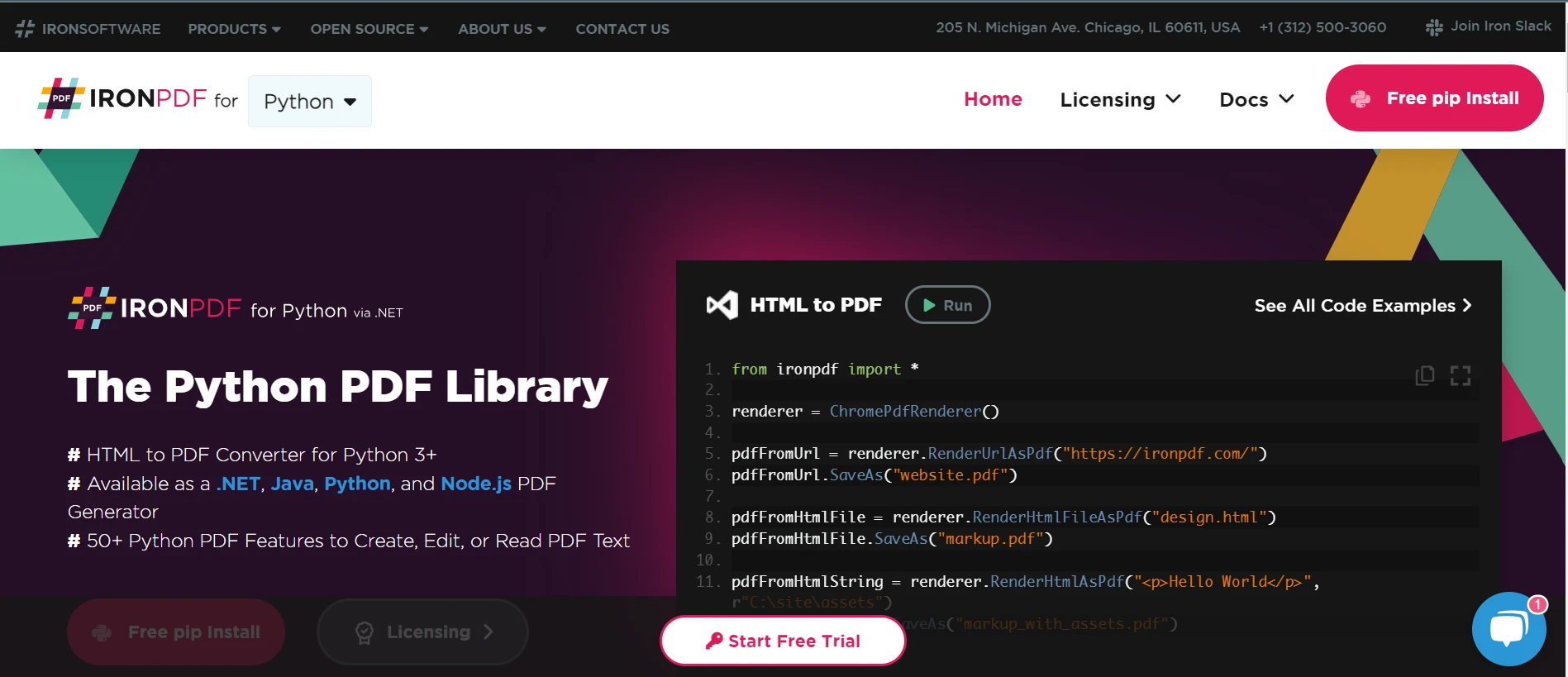
from ironpdf import *

# Instantiate Renderer
renderer = ChromePdfRenderer()

# Create a PDF from a HTML string using Python
pdf = renderer.RenderHtmlAsPdf("<h1>Hello World</h1>")

# Export to a file or Stream
pdf.SaveAs("output.pdf")

# Advanced Example with HTML Assets
# Load external html assets: Images, CSS and JavaScript.
# An optional BasePath 'C:\site\assets\' is set as the file location to load assets from
myAdvancedPdf = renderer.RenderHtmlAsPdf("<img src='icons/iron.png'>", r"C:\site\assets")
myAdvancedPdf.SaveAs("html-with-assets.pdf")
from ironpdf import *# Instantiate Rendererrenderer = ChromePdfRenderer()# Create a PDF from a HTML string using Pythonpdf = renderer.RenderHtmlAsPdf("<h1>Hello World</h1>")# Export to a file or Streampdf.SaveAs("output.pdf")# Advanced Example with HTML Assets# Load external html assets: Images, CSS and JavaScript.# An optional BasePath 'C:\site\assets\' is set as the file location to load assets frommyAdvancedPdf = renderer.RenderHtmlAsPdf("<img src='icons/iron.png'>", r"C:\site\assets")myAdvancedPdf.SaveAs("html-with-assets.pdf")
Este artículo explorará cómo ver archivos PDF en Python utilizando la biblioteca IronPDF.
## IronPDF - Biblioteca Python
[IronPDF](/python/) es una poderosa biblioteca de Python que permite a los desarrolladores trabajar con archivos PDF de manera programática. Con IronPDF, puedes generar, manipular y extraer datos de documentos PDF fácilmente, convirtiéndolo en una herramienta versátil para diversas tareas relacionadas con PDF. Ya sea que necesites crear PDFs desde cero, modificar PDFs existentes o extraer contenido de PDFs, IronPDF proporciona un conjunto completo de características para simplificar tu flujo de trabajo.
Algunas características de la biblioteca IronPDF for Python incluyen:
- [Crear nuevo archivo PDF](/python/tutorials/html-to-pdf/) desde cero usando HTML o URL
- Editar archivos PDF existentes
- Rotar páginas de PDF
- [Extraer texto](/python/blog/using-ironpdf-for-python/extract-data-from-pdf-python-tutorial/), metadatos e imágenes de archivos PDF
- Convertir archivos PDF a otros formatos
- [Proteger archivos PDF](/python/examples/security-and-metadata/) con contraseñas y restricciones
- [Dividir](/python/blog/using-ironpdf-for-python/split-pdf-python-tutorial/) y [fusionar](/python/how-to/python-merge-pdf/) PDFs
**Nota:** IronPDF produce un archivo de datos PDF con marca de agua. Para eliminar la marca de agua, necesitas licenciar IronPDF. Si deseas usar una versión licenciada de IronPDF, visita el [sitio web de IronPDF](/python/) para [obtener una clave de licencia](trial-license).
## Requisitos previos
Antes de trabajar con IronPDF en Python, hay algunos requisitos previos:
1. **Instalación de Python:** asegúrese de tener Python instalado en su sistema. IronPDF es compatible con versiones de Python 3.x, así que asegúrate de tener una instalación de Python compatible.
2. **Biblioteca IronPDF :** instale la biblioteca IronPDF para acceder a su funcionalidad. Puedes instalarla usando el gestor de paquetes de Python (**pip**) ejecutando el siguiente comando en tu interfaz de línea de comandos:
```bash
:ProductInstall
```
3. **Biblioteca Tkinter:** Tkinter es el kit de herramientas GUI estándar para Python. Se utiliza para crear la interfaz gráfica de usuario para el visor de PDF en el fragmento de código proporcionado. Tkinter suele venir preinstalado con Python, pero si encuentras algún problema, puedes instalarlo usando el gestor de paquetes:
```bash
pip install tkinter
```
4. **Biblioteca Pillow:** La biblioteca Pillow es una bifurcación de la biblioteca de imágenes de Python (PIL) y proporciona capacidades adicionales de procesamiento de imágenes. Se utiliza en el fragmento de código para cargar y mostrar las imágenes extraídas del PDF. Instala Pillow usando el gestor de paquetes:
```bash
pip install pillow
```
5. **Entorno de desarrollo integrado (IDE):** el uso de un IDE para gestionar proyectos de Python puede mejorar enormemente su experiencia de desarrollo. Proporciona características como autocompletar código, depuración y un flujo de trabajo más eficiente. Un IDE popular para el desarrollo en Python es PyCharm. Puedes descargar e instalar PyCharm desde el sitio web de JetBrains ([**https://www.jetbrains.com/pycharm/**](https://www.jetbrains.com/pycharm/)).
6. **Editor de texto:** como alternativa, si prefiere trabajar con un editor de texto liviano, puede usar cualquier editor de texto de su elección, como Visual Studio Code, Sublime Text o Atom. Estos editores proporcionan resaltado de sintaxis y otras características útiles para el desarrollo en Python. También puedes usar la propia aplicación IDE de Python para crear scripts de Python.
## Creación de un proyecto de visor de PDF con PyCharm
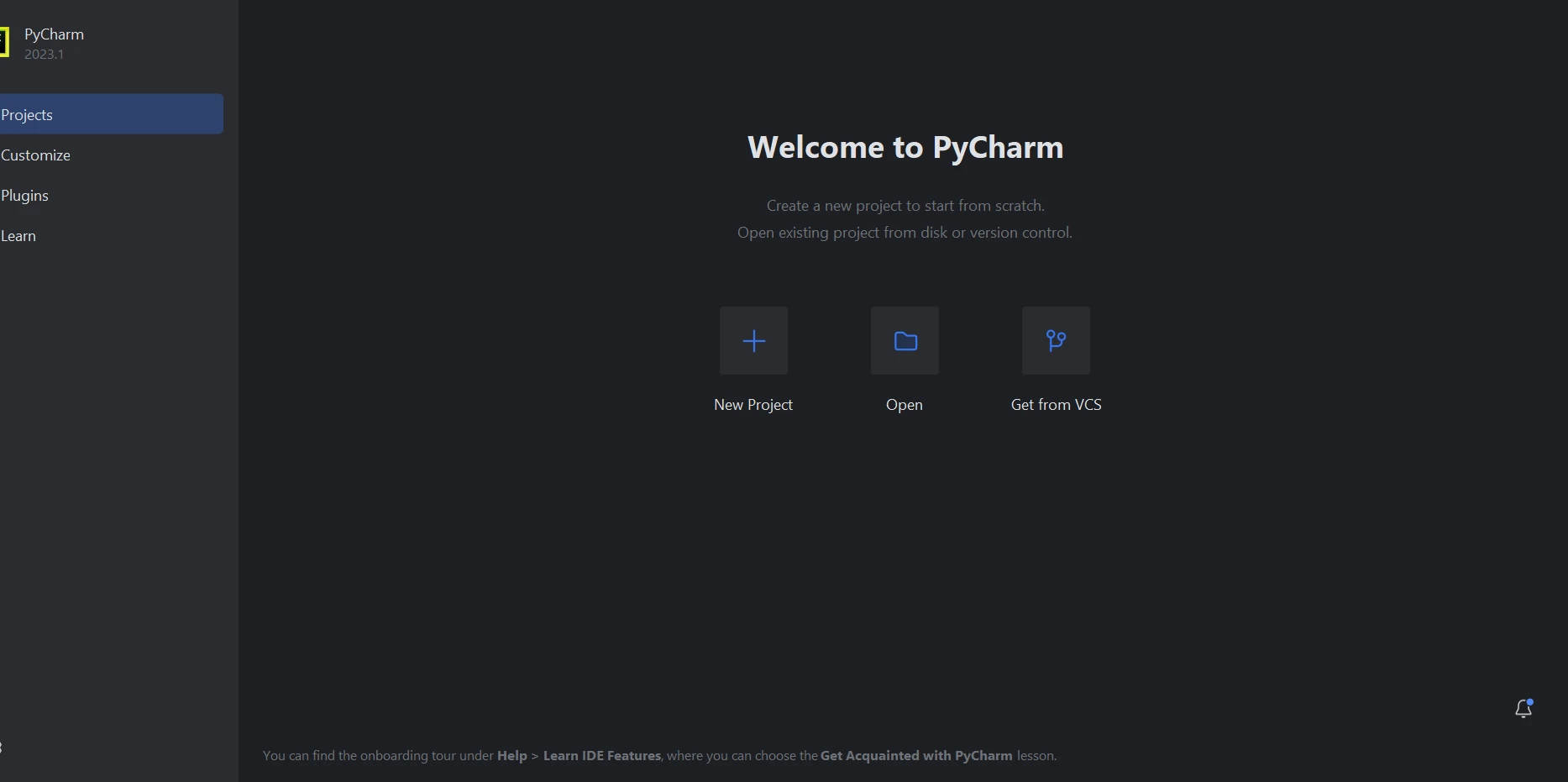
Después de instalar el IDE PyCharm, crea un proyecto de Python en PyCharm siguiendo los pasos a continuación:
1. **Lanzar PyCharm:** Abra PyCharm desde el lanzador de aplicaciones de su sistema o el acceso directo del escritorio.
2. **Crear un Nuevo Proyecto:** Haga clic en "Crear Nuevo Proyecto" o abra un proyecto Python existente.
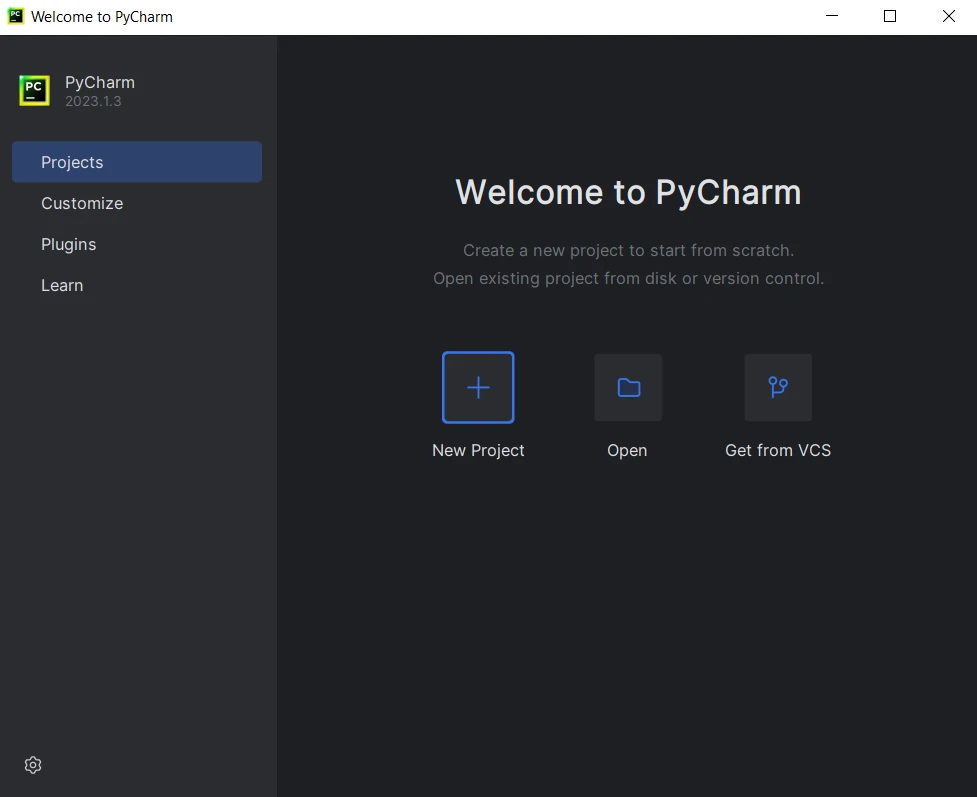
**PyCharm IDE**
3. **Configurar Configuración del Proyecto:** Proporcione un nombre para su proyecto y elija la ubicación para crear el directorio del proyecto. Seleccione el intérprete de Python para su proyecto. Luego haga clic en "Crear".
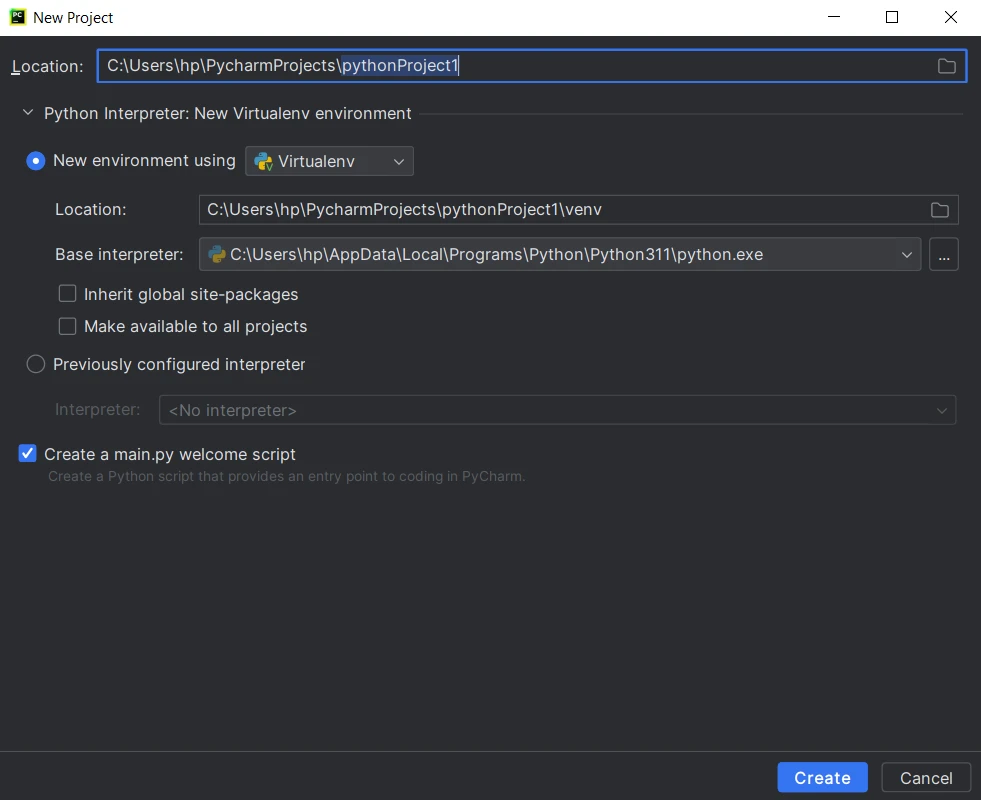
**Crea un nuevo proyecto de Python**
4. **Crear Archivos Fuente:** PyCharm creará la estructura del proyecto, incluyendo un archivo Python principal y un directorio para archivos fuente adicionales. Comience a escribir el código y haga clic en el botón de ejecución o presione Shift+F10 para ejecutar el script.
## Pasos para ver archivos PDF en Python usando IronPDF
### Importe las bibliotecas necesarias
Para comenzar, importa las bibliotecas necesarias. En este caso, se necesitarán las bibliotecas `os`, `shutil`, `ironpdf`, `tkinter` y `PIL`. Las bibliotecas `os` y `shutil` se utilizan para operaciones de archivos y carpetas, `ironpdf` es la biblioteca para trabajar con archivos PDF, `tkinter` se usa para crear la interfaz gráfica de usuario (GUI), y PIL se usa para la manipulación de imágenes.
```python
import os
import shutil
import ironpdf
from tkinter import *
from PIL import Image, ImageTk
```
### Convertir documentos PDF en imágenes
A continuación, define una función llamada `convert_pdf_to_images`. Esta función toma como entrada la ruta del archivo PDF. Dentro de la función, se usa la biblioteca IronPDF para cargar el documento PDF desde el archivo. Luego, especifica una ruta de carpeta para almacenar los archivos de imagen extraídos. El método `pdf.RasterizeToImageFiles` de IronPDF se utiliza para convertir cada página del PDF en un archivo de imagen y guardarlo en la carpeta especificada. Se usa una lista para almacenar las rutas de las imágenes. El ejemplo de código completo es el siguiente:
```python
def convert_pdf_to_images(pdf_file):
"""Convert each page of a PDF file to an image."""
pdf = ironpdf.PdfDocument.FromFile(pdf_file)
# Extract all pages to a folder as image files
folder_path = "images"
pdf.RasterizeToImageFiles(os.path.join(folder_path, "*.png"))
# List to store the image paths
image_paths = []
# Get the list of image files in the folder
for filename in os.listdir(folder_path):
if filename.lower().endswith((".png", ".jpg", ".jpeg", ".gif")):
image_paths.append(os.path.join(folder_path, filename))
return image_paths
```
Para extraer texto de documentos PDF, visita esta [página de ejemplos de código](/python/examples/extract-pdf-text/).
### Manejar el cierre de ventanas
Para limpiar los archivos de imagen extraídos cuando se cierra la ventana de la aplicación, define una función `on_closing`. Dentro de esta función, usa el método `shutil.rmtree()` para eliminar toda la carpeta `images`. A continuación, establece esta función como el protocolo para ejecutarse cuando se cierra la ventana. El siguiente código ayuda a lograr la tarea:
```python
def on_closing():
"""Handle the window closing event by cleaning up the images."""
# Delete the images in the 'images' folder
shutil.rmtree("images")
window.destroy()
window.protocol("WM_DELETE_WINDOW", on_closing)
```
### Crear la ventana GUI
Ahora, vamos a crear la ventana principal del GUI usando el constructor `Tk()`, establecer el título de la ventana en "Visor de imágenes" y establecer la función `on_closing()` como el protocolo para manejar el cierre de la ventana.
```python
window = Tk()
window.title("Image Viewer")
window.protocol("WM_DELETE_WINDOW", on_closing)
```
### Crear un lienzo desplazable
Para mostrar las imágenes y habilitar el desplazamiento, crea un widget `Canvas`. El widget `Canvas` está configurado para llenar el espacio disponible y expandirse en ambas direcciones usando `pack(side=LEFT, fill=BOTH, expand=True)`. Además, crea un widget `Scrollbar` y configúralo para controlar el desplazamiento vertical de todas las páginas y el lienzo.
```python
canvas = Canvas(window)
canvas.pack(side=LEFT, fill=BOTH, expand=True)
scrollbar = Scrollbar(window, command=canvas.yview)
scrollbar.pack(side=RIGHT, fill=Y)
canvas.configure(yscrollcommand=scrollbar.set)
# Update the scrollregion to encompass the entire canvas
canvas.bind("<Configure>", lambda e: canvas.configure(
scrollregion=canvas.bbox("all")))
# Configure the vertical scrolling using mouse wheel
canvas.bind_all("<MouseWheel>", lambda e: canvas.yview_scroll(
int(-1*(e.delta/120)), "units"))
```
### Crear un marco para imágenes
A continuación, crea un widget `Frame` dentro del lienzo para contener las imágenes utilizando `create_window()` para colocar el marco dentro del lienzo. Las coordenadas `(0, 0)` y el parámetro `anchor='nw'` aseguran que el marco comience en la esquina superior izquierda del lienzo.
```python
frame = Frame(canvas)
canvas.create_window((0, 0), window=frame, anchor="nw")
```
### Convertir archivo PDF en imágenes y mostrar
El siguiente paso es llamar a la función `convert_pdf_to_images()` con el nombre de la ruta del archivo del PDF de entrada. Esta función extrae las páginas del PDF como imágenes y devuelve una lista de rutas de imágenes. Al iterar a través de las rutas de imágenes y cargar cada imagen usando el método `Image.open()` de la biblioteca PIL, se crea un objeto `PhotoImage` usando `ImageTk.PhotoImage()`. Luego crea un widget `Label` para mostrar la imagen.
```python
images = convert_pdf_to_images("input.pdf")
# Load and display the images in the Frame
for image_path in images:
image = Image.open(image_path)
photo = ImageTk.PhotoImage(image)
label = Label(frame, image=photo)
label.image = photo # Store a reference to prevent garbage collection
label.pack(pady=10)
```
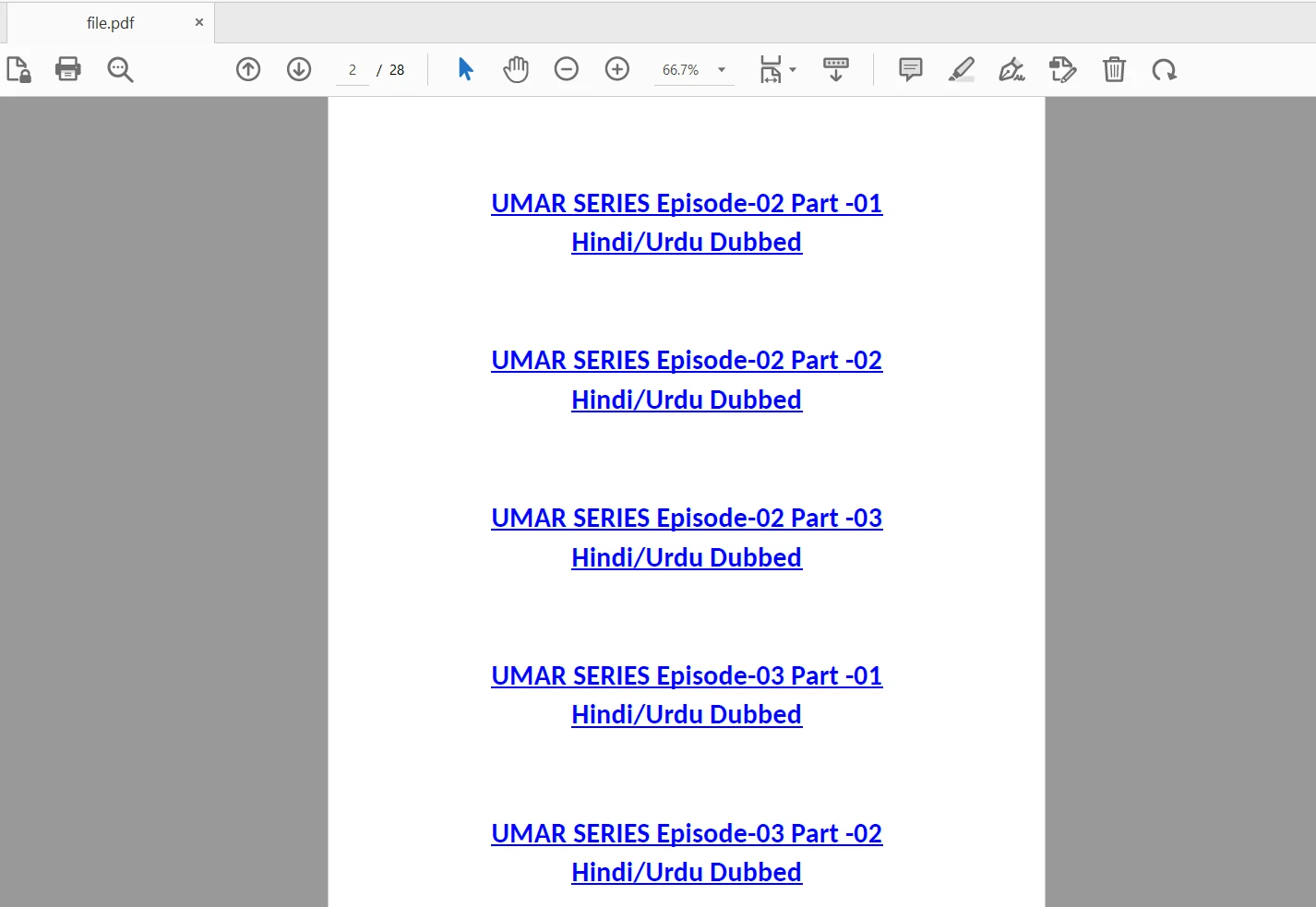
**El archivo de entrada**
### Ejecutar el bucle principal de GUI
Finalmente, ejecutemos el ciclo de eventos principal usando `window.mainloop()`. Esto asegura que la ventana de la GUI permanezca abierta y receptiva hasta que sea cerrada por el usuario.
```python
window.mainloop()
```
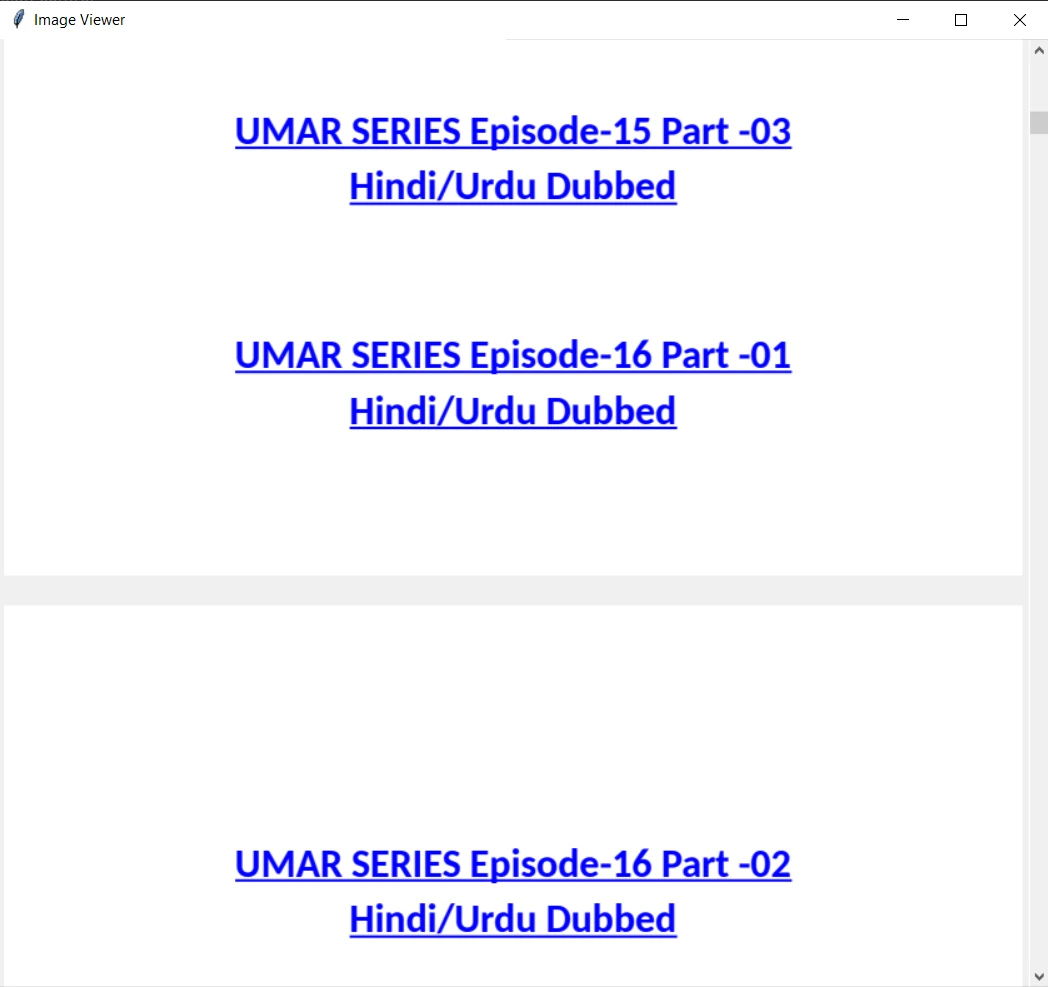
**La salida de la UI**
## Conclusión
Este tutorial exploró cómo ver documentos PDF en Python usando la biblioteca [IronPDF](/python/). Cubrió los pasos necesarios para abrir un archivo PDF y convertirlo en una serie de archivos de imagen, luego mostrarlos en un lienzo desplazable y manejar la limpieza de imágenes extraídas cuando se cierra la aplicación.
Para más detalles sobre la biblioteca IronPDF for Python, por favor consulta la [documentación](/python/docs/).
Descarga e instala la biblioteca [IronPDF for Python](/python/) y obtén también una [prueba gratuita](trial-license) para probar su funcionalidad completa en el desarrollo comercial.
Este artículo explorará cómo ver archivos PDF en Python utilizando la biblioteca IronPDF.
IronPDF - Biblioteca Python
IronPDF es una poderosa biblioteca de Python que permite a los desarrolladores trabajar con archivos PDF de manera programática. Con IronPDF, puedes generar, manipular y extraer datos de documentos PDF fácilmente, convirtiéndolo en una herramienta versátil para diversas tareas relacionadas con PDF. Ya sea que necesites crear PDFs desde cero, modificar PDFs existentes o extraer contenido de PDFs, IronPDF proporciona un conjunto completo de características para simplificar tu flujo de trabajo.
Algunas características de la biblioteca IronPDF for Python incluyen:
Nota: IronPDF produce un archivo de datos PDF con marca de agua. Para eliminar la marca de agua, necesitas licenciar IronPDF. Si deseas usar una versión licenciada de IronPDF, visita el sitio web de IronPDF para obtener una clave de licencia.
Requisitos previos
Antes de trabajar con IronPDF en Python, hay algunos requisitos previos:
Instalación de Python: asegúrese de tener Python instalado en su sistema. IronPDF es compatible con versiones de Python 3.x, así que asegúrate de tener una instalación de Python compatible.
Biblioteca IronPDF : instale la biblioteca IronPDF para acceder a su funcionalidad. Puedes instalarla usando el gestor de paquetes de Python (pip) ejecutando el siguiente comando en tu interfaz de línea de comandos:
> pip install ironpdf
pip install ironpdf
Biblioteca Tkinter: Tkinter es el kit de herramientas GUI estándar para Python. Se utiliza para crear la interfaz gráfica de usuario para el visor de PDF en el fragmento de código proporcionado. Tkinter suele venir preinstalado con Python, pero si encuentras algún problema, puedes instalarlo usando el gestor de paquetes:
pip install tkinter
pip install tkinter
SHELL
Biblioteca Pillow: La biblioteca Pillow es una bifurcación de la biblioteca de imágenes de Python (PIL) y proporciona capacidades adicionales de procesamiento de imágenes. Se utiliza en el fragmento de código para cargar y mostrar las imágenes extraídas del PDF. Instala Pillow usando el gestor de paquetes:
pip install pillow
pip install pillow
SHELL
Entorno de desarrollo integrado (IDE): el uso de un IDE para gestionar proyectos de Python puede mejorar enormemente su experiencia de desarrollo. Proporciona características como autocompletar código, depuración y un flujo de trabajo más eficiente. Un IDE popular para el desarrollo en Python es PyCharm. Puedes descargar e instalar PyCharm desde el sitio web de JetBrains (https://www.jetbrains.com/pycharm/).
Editor de texto: como alternativa, si prefiere trabajar con un editor de texto liviano, puede usar cualquier editor de texto de su elección, como Visual Studio Code, Sublime Text o Atom. Estos editores proporcionan resaltado de sintaxis y otras características útiles para el desarrollo en Python. También puedes usar la propia aplicación IDE de Python para crear scripts de Python.
Creación de un proyecto de visor de PDF con PyCharm
Después de instalar el IDE PyCharm, crea un proyecto de Python en PyCharm siguiendo los pasos a continuación:
Lanzar PyCharm: Abra PyCharm desde el lanzador de aplicaciones de su sistema o el acceso directo del escritorio.
Crear un Nuevo Proyecto: Haga clic en "Crear Nuevo Proyecto" o abra un proyecto Python existente.
PyCharm IDE
Configurar Configuración del Proyecto: Proporcione un nombre para su proyecto y elija la ubicación para crear el directorio del proyecto. Seleccione el intérprete de Python para su proyecto. Luego haga clic en "Crear".
Crea un nuevo proyecto de Python
Crear Archivos Fuente: PyCharm creará la estructura del proyecto, incluyendo un archivo Python principal y un directorio para archivos fuente adicionales. Comience a escribir el código y haga clic en el botón de ejecución o presione Shift+F10 para ejecutar el script.
Pasos para ver archivos PDF en Python usando IronPDF
Importe las bibliotecas necesarias
Para comenzar, importa las bibliotecas necesarias. En este caso, se necesitarán las bibliotecas os, shutil, ironpdf, tkinter y PIL. Las bibliotecas os y shutil se utilizan para operaciones de archivos y carpetas, ironpdf es la biblioteca para trabajar con archivos PDF, tkinter se usa para crear la interfaz gráfica de usuario (GUI), y PIL se usa para la manipulación de imágenes.
import os
import shutil
import ironpdf
from tkinter import *
from PIL import Image, ImageTk
Python
Convertir documentos PDF en imágenes
A continuación, define una función llamada convert_pdf_to_images. Esta función toma como entrada la ruta del archivo PDF. Dentro de la función, se usa la biblioteca IronPDF para cargar el documento PDF desde el archivo. Luego, especifica una ruta de carpeta para almacenar los archivos de imagen extraídos. El método pdf.RasterizeToImageFiles de IronPDF se utiliza para convertir cada página del PDF en un archivo de imagen y guardarlo en la carpeta especificada. Se usa una lista para almacenar las rutas de las imágenes. El ejemplo de código completo es el siguiente:
def convert_pdf_to_images(pdf_file):
    """Convert each page of a PDF file to an image."""
    pdf = ironpdf.PdfDocument.FromFile(pdf_file)
    # Extract all pages to a folder as image files
    folder_path = "images"
    pdf.RasterizeToImageFiles(os.path.join(folder_path, "*.png"))
    # List to store the image paths
    image_paths = []
    # Get the list of image files in the folder
    for filename in os.listdir(folder_path):
        if filename.lower().endswith((".png", ".jpg", ".jpeg", ".gif")):
            image_paths.append(os.path.join(folder_path, filename))
    return image_paths
def convert_pdf_to_images(pdf_file):
    """Convert each page of a PDF file to an image."""
    pdf = ironpdf.PdfDocument.FromFile(pdf_file)
    # Extract all pages to a folder as image files
    folder_path = "images"
    pdf.RasterizeToImageFiles(os.path.join(folder_path, "*.png"))
    # List to store the image paths
    image_paths = []
    # Get the list of image files in the folder
    for filename in os.listdir(folder_path):
        if filename.lower().endswith((".png", ".jpg", ".jpeg", ".gif")):
            image_paths.append(os.path.join(folder_path, filename))
    return image_paths
Para limpiar los archivos de imagen extraídos cuando se cierra la ventana de la aplicación, define una función on_closing. Dentro de esta función, usa el método shutil.rmtree() para eliminar toda la carpeta images. A continuación, establece esta función como el protocolo para ejecutarse cuando se cierra la ventana. El siguiente código ayuda a lograr la tarea:
def on_closing(): """Handle the window closing event by cleaning up the images.""" # Delete the images in the 'images' folder shutil.rmtree("images") window.destroy()window.protocol("WM_DELETE_WINDOW", on_closing)
def on_closing():
    """Handle the window closing event by cleaning up the images."""
    # Delete the images in the 'images' folder
    shutil.rmtree("images")
    window.destroy()

window.protocol("WM_DELETE_WINDOW", on_closing)
Python
Crear la ventana GUI
Ahora, vamos a crear la ventana principal del GUI usando el constructor Tk(), establecer el título de la ventana en "Visor de imágenes" y establecer la función on_closing() como el protocolo para manejar el cierre de la ventana.
Para mostrar las imágenes y habilitar el desplazamiento, crea un widget Canvas. El widget Canvas está configurado para llenar el espacio disponible y expandirse en ambas direcciones usando pack(side=LEFT, fill=BOTH, expand=True). Además, crea un widget Scrollbar y configúralo para controlar el desplazamiento vertical de todas las páginas y el lienzo.
canvas = Canvas(window)canvas.pack(side=LEFT, fill=BOTH, expand=True)scrollbar = Scrollbar(window, command=canvas.yview)scrollbar.pack(side=RIGHT, fill=Y)canvas.configure(yscrollcommand=scrollbar.set)# Update the scrollregion to encompass the entire canvascanvas.bind("<Configure>", lambda e: canvas.configure( scrollregion=canvas.bbox("all")))# Configure the vertical scrolling using mouse wheelcanvas.bind_all("<MouseWheel>", lambda e: canvas.yview_scroll( int(-1*(e.delta/120)), "units"))
canvas = Canvas(window)
canvas.pack(side=LEFT, fill=BOTH, expand=True)

scrollbar = Scrollbar(window, command=canvas.yview)
scrollbar.pack(side=RIGHT, fill=Y)
canvas.configure(yscrollcommand=scrollbar.set)

# Update the scrollregion to encompass the entire canvas
canvas.bind("<Configure>", lambda e: canvas.configure(
    scrollregion=canvas.bbox("all")))

# Configure the vertical scrolling using mouse wheel
canvas.bind_all("<MouseWheel>", lambda e: canvas.yview_scroll(
    int(-1*(e.delta/120)), "units"))
Python
Crear un marco para imágenes
A continuación, crea un widget Frame dentro del lienzo para contener las imágenes utilizando create_window() para colocar el marco dentro del lienzo. Las coordenadas (0, 0) y el parámetro anchor='nw' aseguran que el marco comience en la esquina superior izquierda del lienzo.
El siguiente paso es llamar a la función convert_pdf_to_images() con el nombre de la ruta del archivo del PDF de entrada. Esta función extrae las páginas del PDF como imágenes y devuelve una lista de rutas de imágenes. Al iterar a través de las rutas de imágenes y cargar cada imagen usando el método Image.open() de la biblioteca PIL, se crea un objeto PhotoImage usando ImageTk.PhotoImage(). Luego crea un widget Label para mostrar la imagen.
images = convert_pdf_to_images("input.pdf")# Load and display the images in the Framefor image_path in images: image = Image.open(image_path) photo = ImageTk.PhotoImage(image) label = Label(frame, image=photo) label.image = photo # Store a reference to prevent garbage collection label.pack(pady=10)
images = convert_pdf_to_images("input.pdf")
# Load and display the images in the Frame
for image_path in images:
    image = Image.open(image_path)
    photo = ImageTk.PhotoImage(image)
    label = Label(frame, image=photo)
    label.image = photo  # Store a reference to prevent garbage collection
    label.pack(pady=10)
Python
El archivo de entrada
Ejecutar el bucle principal de GUI
Finalmente, ejecutemos el ciclo de eventos principal usando window.mainloop(). Esto asegura que la ventana de la GUI permanezca abierta y receptiva hasta que sea cerrada por el usuario.
window.mainloop()
window.mainloop()
Python
La salida de la UI
Conclusión
Este tutorial exploró cómo ver documentos PDF en Python usando la biblioteca IronPDF. Cubrió los pasos necesarios para abrir un archivo PDF y convertirlo en una serie de archivos de imagen, luego mostrarlos en un lienzo desplazable y manejar la limpieza de imágenes extraídas cuando se cierra la aplicación.
Para más detalles sobre la biblioteca IronPDF for Python, por favor consulta la documentación.
Descarga e instala la biblioteca IronPDF for Python y obtén también una prueba gratuita para probar su funcionalidad completa en el desarrollo comercial.
Curtis Chau tiene una licenciatura en Ciencias de la Computación (Carleton University) y se especializa en el desarrollo front-end con experiencia en Node.js, TypeScript, JavaScript y React. Apasionado por crear interfaces de usuario intuitivas y estéticamente agradables, disfruta trabajando con frameworks modernos y creando manuales bien estructurados y visualmente atractivos.




 PyCharm IDE
 Crea un nuevo proyecto de Python
 El archivo de entrada
 La salida de la UI