



更新日 2026年4月23日
Microsoft.Extensions.AIを使用した .NET での LLM 統合の簡素化
AI はソフトウェア開発を変革していますが、.NET への大規模言語モデル (LLM) の統合はこれまで複雑でした。IronPdf.AI を使用して AI 統合をさらに進め、OpenAI を活用した PDF 解析、データ抽出、およびコンテンツの要約を .NET アプリケーションにもたらします。
詳しく読む

C#でのプログラミングは非常に柔軟で、IronPDFは特にPDFファイルの作成と変更を容易にする強力なライブラリです。 この投稿では、C#での優先度キューのアイデアを説明し、IronPDFを使用して文書処理手続きを最適化する方法を示します。 この記事では、C#の優先度キューとIronPDFを使用します。
優先度キューと呼ばれるデータ構造は、各々に優先度が割り当てられた複数のコンポーネントを管理します。 優先度キューの基本的な特徴は、高い優先度(または実装に応じて最低の優先度値)の要素が常に先頭にあるため、効率的な取得が可能であることです。 優先度に応じてタスクやアイテムを特定の順序で処理する必要がある状況において、優先度キューが頻繁に利用されます。
C#の標準ライブラリにはPriorityQueueクラスがありませんが、自分で作成するか、このデータ構造を提供するサードパーティのライブラリを利用することができます。 配列ヒープには初期容量があり、それがいっぱいになると、より大きな容量を持つ新しいヒープが形成され、新しい要素のエンキューを試みます。 同じ優先度を持つ2つのコンポーネントは、キューに入れられた順序で処理されます。 競合状態を防ぐために、スレッドセーフを処理する独自のコードを開発する必要があります。
対応する優先度を持ち、それに基づいて処理する必要があるコンポーネントがある場合、C#の優先度キューは多数の利点を提供します。
***優先順位付け:**要素は、優先キューを使用して、優先順位に従って自動的に順序付けられます。 これにより、優先度に基づく処理がより効率的になり、高い優先度のコンポーネントが低い優先度のものより先に処理されることが保証されます。
comparerクラスを使用したり、カスタム比較を構築したりすることができ、複雑な基準に従ってデータを並べ替えることが可能です。 複数の特性を持つオブジェクトやカスタムの優先度ロジックを扱う場合に役立ちます。
***高速取得:**ほとんどの場合、実装方法によっては優先度が最も高い要素(または最も優先度が低い要素)の取得には一定の時間がかかります。これは、最も重要な部分を迅速に取得する必要があるアルゴリズムに特に役立ちます。基本的なC#優先度キューシステムを作成するために二分ヒープを使用しましょう。 生産用では、既存のライブラリを活用したり、より複雑なアプローチを考えることをお勧めします。
using System;
using System.Collections.Generic;

public class PriorityQueue<t>
{
    private List<t> elements;
    private readonly IComparer<t> comparer;

    // Constructor that sets up the priority queue with a specific comparer
    public PriorityQueue(IComparer<t> comparer)
    {
        this.elements = new List<t>();
        this.comparer = comparer;
    }

    // Property to get the number of elements in the queue
    public int Count => elements.Count;

    // Method to add an element to the priority queue
    public void Enqueue(T item)
    {
        elements.Add(item);
        int index = Count - 1;

        // Bubble up the newly added item to maintain heap property
        while (index > 0)
        {
            int parentIndex = (index - 1) / 2;
            if (comparer.Compare(elements[parentIndex], elements[index]) <= 0)
                break;
            Swap(index, parentIndex);
            index = parentIndex;
        }
    }

    // Method to remove and return the element with the highest priority
    public T Dequeue()
    {
        if (Count == 0)
            throw new InvalidOperationException("Queue is empty.");

        T front = elements[0];
        elements[0] = elements[Count - 1];
        elements.RemoveAt(Count - 1);

        // Push down the root element to maintain heap property
        int index = 0;
        while (true)
        {
            int leftChild = 2 * index + 1;
            if (leftChild >= Count)
                break;

            int rightChild = leftChild + 1;
            int minChild = (rightChild < Count && comparer.Compare(elements[rightChild], elements[leftChild]) < 0)
                ? rightChild
                : leftChild;

            if (comparer.Compare(elements[index], elements[minChild]) <= 0)
                break;

            Swap(index, minChild);
            index = minChild;
        }

        return front;
    }

    // Helper method to swap elements in the list
    private void Swap(int i, int j)
    {
        T temp = elements[i];
        elements[i] = elements[j];
        elements[j] = temp;
    }
}.NETライブラリのIronPDFを利用することで、プログラマーはC#言語を使用してPDF文書を生成、編集、変更できます。 このソフトウェアは、HTMLからのPDF生成、HTMLからPDFへの変換、PDF文書の結合または分割、既存のPDFへのテキスト、画像、注釈の追加など、多様な操作を促進するツールと機能のセットを提供しています。 IronPDFについてさらに知るには、IronPDFドキュメントを参照してください。
IronPDFの主な特徴は、レイアウトやスタイルを維持するHTMLからPDFへの変換機能です。 報告書、請求書、文書化に最適なウェブコンテンツをPDFに変換します。 これには、HTMLファイル、URL、HTML文字列をPDFに変換することが含まれます。
using IronPdf;

class Program
{
    static void Main(string[] args)
    {
        // Initialize the PDF renderer
        var renderer = new ChromePdfRenderer();

        // 1. Convert HTML String to PDF
        var htmlContent = "<h1>Hello, IronPDF!</h1><p>This is a PDF from an HTML string.</p>";
        var pdfFromHtmlString = renderer.RenderHtmlAsPdf(htmlContent);
        pdfFromHtmlString.SaveAs("HTMLStringToPDF.pdf");

        // 2. Convert HTML File to PDF
        var htmlFilePath = "path_to_your_html_file.html"; // Specify the path to your HTML file
        var pdfFromHtmlFile = renderer.RenderHtmlFileAsPdf(htmlFilePath);
        pdfFromHtmlFile.SaveAs("HTMLFileToPDF.pdf");

        // 3. Convert URL to PDF
        var url = "http://ironpdf.com"; // Specify the URL
        var pdfFromUrl = renderer.RenderUrlAsPdf(url);
        pdfFromUrl.SaveAs("URLToPDF.pdf");
    }
}Imports IronPdf
Friend Class Program
Shared Sub Main(ByVal args() As String)
' Initialize the PDF renderer
Dim renderer = New ChromePdfRenderer()
' 1. Convert HTML String to PDF
Dim htmlContent = "<h1>Hello, IronPDF!</h1><p>This is a PDF from an HTML string.</p>"
Dim pdfFromHtmlString = renderer.RenderHtmlAsPdf(htmlContent)
pdfFromHtmlString.SaveAs("HTMLStringToPDF.pdf")
' 2. Convert HTML File to PDF
Dim htmlFilePath = "path_to_your_html_file.html" ' Specify the path to your HTML file
Dim pdfFromHtmlFile = renderer.RenderHtmlFileAsPdf(htmlFilePath)
pdfFromHtmlFile.SaveAs("HTMLFileToPDF.pdf")
' 3. Convert URL to PDF
Dim url = "http://ironpdf.com" ' Specify the URL
Dim pdfFromUrl = renderer.RenderUrlAsPdf(url)
pdfFromUrl.SaveAs("URLToPDF.pdf")
End Sub
End Class優先度キューの基礎を理解したので、IronPDFと連携させて文書をより迅速に処理する方法を見ていきましょう。 さまざまな優先度や緊急度を持ったPDF文書を生成する必要がある状況を想像してください。
***ドキュメントの動的な作成:**新しい優先キューを利用することで、さまざまな緊急度や優先度に応じて PDF ドキュメントを動的に作成できます。 ***効果的なワークフロー管理:**ドキュメント生成の効率を最大限にするために、優先キューにより、優先度の高いジョブが優先度の低いジョブよりも先に完了するようにします。 ***調整可能な優先順位:**優先順位の値/レベルおよび基準を変更することで、さまざまな状況に合わせて優先キューをすばやく変更できます。 ***スムーズな統合:**同じ優先キューと組み合わせてIronPDF を使用することで、優先度ベースのドキュメント生成をアプリケーションに簡単に統合できます。 ***スケーラビリティ:**新しい優先キューは、プログラムが大きくなるにつれて拡張され、PDF の作成に関連するより多くのアクションを処理できるようになります。
以下は、IronPDFを使用した優先度キューのサンプルコードです。
using IronPdf;
using System;
using System.Collections.Generic;

public class PdfGenerator
{
    static void Main()
    {
        // Create a priority queue for PDF tasks
        PriorityQueue<PdfTask> pdfTaskQueue = new PriorityQueue<PdfTask>(new PdfTaskComparer());

        // Enqueue PDF tasks with different priorities
        pdfTaskQueue.Enqueue(new PdfTask("High Priority Document", Priority.High));
        pdfTaskQueue.Enqueue(new PdfTask("Medium Priority Document", Priority.Medium));
        pdfTaskQueue.Enqueue(new PdfTask("Low Priority Document", Priority.Low));

        // Process PDF tasks in order of their priority
        while (pdfTaskQueue.Count > 0)
        {
            PdfTask nextTask = pdfTaskQueue.Dequeue();
            GeneratePdf(nextTask);
        }
    }

    // Generate PDF document using IronPDF
    static void GeneratePdf(PdfTask pdfTask)
    {
        // Create a new PDF document using IronPDF
        IronPdf.HtmlToPdf renderer = new IronPdf.HtmlToPdf();
        PdfDocument pdf = renderer.RenderHtmlAsPdf($"<h1>{pdfTask.Content}</h1>");

        // Save the PDF to a file
        string pdfFilePath = $"{pdfTask.Priority}_{Guid.NewGuid()}.pdf";
        pdf.SaveAs(pdfFilePath);

        // Display confirmation message
        Console.WriteLine($"PDF generated successfully. File saved at: {pdfFilePath}");
    }
}

// Class to define a PDF task
public class PdfTask
{
    public string Content { get; }
    public Priority Priority { get; }

    public PdfTask(string content, Priority priority)
    {
        Content = content;
        Priority = priority;
    }
}

// Enum to define priority levels
public enum Priority
{
    Low,
    Medium,
    High
}

// Comparer to compare PDF tasks based on their priority
public class PdfTaskComparer : IComparer<PdfTask>
{
    public int Compare(PdfTask x, PdfTask y)
    {
        // Prioritize higher priority tasks
        return y.Priority.CompareTo(x.Priority);
    }
}Imports IronPdf
Imports System
Imports System.Collections.Generic
Public Class PdfGenerator
Shared Sub Main()
' Create a priority queue for PDF tasks
Dim pdfTaskQueue As New PriorityQueue(Of PdfTask)(New PdfTaskComparer())
' Enqueue PDF tasks with different priorities
pdfTaskQueue.Enqueue(New PdfTask("High Priority Document", Priority.High))
pdfTaskQueue.Enqueue(New PdfTask("Medium Priority Document", Priority.Medium))
pdfTaskQueue.Enqueue(New PdfTask("Low Priority Document", Priority.Low))
' Process PDF tasks in order of their priority
While pdfTaskQueue.Count > 0
Dim nextTask As PdfTask = pdfTaskQueue.Dequeue()
GeneratePdf(nextTask)
End While
End Sub
' Generate PDF document using IronPDF
Shared Sub GeneratePdf(pdfTask As PdfTask)
' Create a new PDF document using IronPDF
Dim renderer As New IronPdf.HtmlToPdf()
Dim pdf As PdfDocument = renderer.RenderHtmlAsPdf($"<h1>{pdfTask.Content}</h1>")
' Save the PDF to a file
Dim pdfFilePath As String = $"{pdfTask.Priority}_{Guid.NewGuid()}.pdf"
pdf.SaveAs(pdfFilePath)
' Display confirmation message
Console.WriteLine($"PDF generated successfully. File saved at: {pdfFilePath}")
End Sub
End Class
' Class to define a PDF task
Public Class PdfTask
Public ReadOnly Property Content As String
Public ReadOnly Property Priority As Priority
Public Sub New(content As String, priority As Priority)
Me.Content = content
Me.Priority = priority
End Sub
End Class
' Enum to define priority levels
Public Enum Priority
Low
Medium
High
End Enum
' Comparer to compare PDF tasks based on their priority
Public Class PdfTaskComparer
Implements IComparer(Of PdfTask)
Public Function Compare(x As PdfTask, y As PdfTask) As Integer Implements IComparer(Of PdfTask).Compare
' Prioritize higher priority tasks
Return y.Priority.CompareTo(x.Priority)
End Function
End Classこの場合、異なる優先度のPDFジョブがpdfTaskQueue)に登録されます。 より高い優先度のジョブはPriorityQueueのおかげで優先的に処理されます。 Enqueueメソッドを使用して、要素を優先度キューに追加します。 また、Dequeueメソッドを使用して、最高優先度の値を削除して取得することができます。 ピークメソッドを使用して、項目を削除せずに最高優先度を確認することができます。

出力ファイルのサンプル:
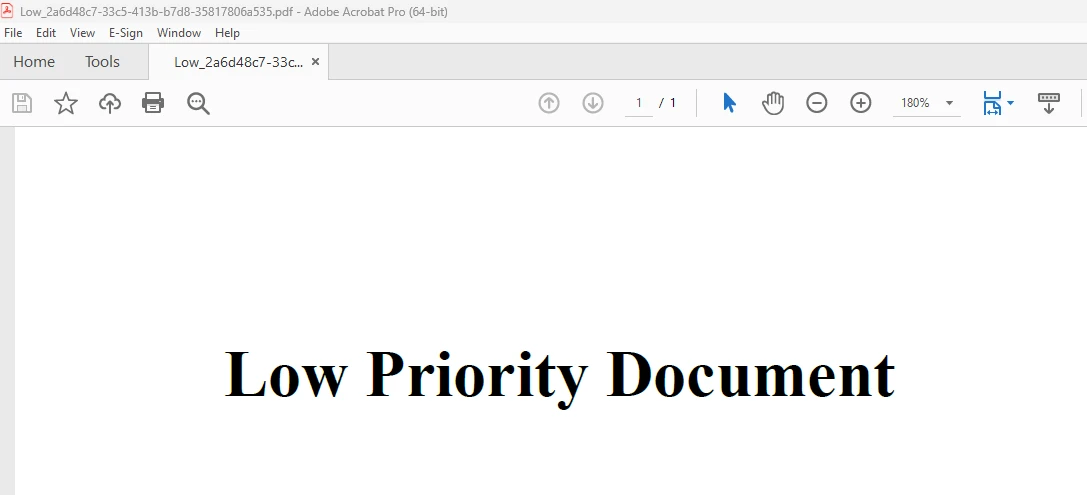
ジョブの内容に基づいて、GeneratePdf関数はIronPDFを利用してPDF文書を作成し、それをファイルに保存します。IronPDFコードの詳細については、IronPDF HTMLからPDFへの例を参照してください。
When IronPDF and a priority queue are combined in a C# application, it is possible to generate documents quickly and dynamically according to different priorities or levels of urgency. このメソッドは、他のいくつかの書類を処理して提供する必要がある状況で特に良く機能します。
IronPDFのHTMLからPDFへの変換機能を利用し、タスク管理のための優先度キューを統合することで、アプリケーションは柔軟でスケーラブルかつ優先順位のついた方法でドキュメント作成ジョブを管理できます。 これらのアイデアを統合するためのフレームワークはこの記事に示されています。 PDFを生成する報告ツール、文書管理システム、またはその他のアプリケーションを設計しているかどうかに関わらず、IronPDFと優先度キューを組み合わせることで、C#における効果的で優先順位に基づいた文書処理ソリューションを得ることができます。 IronPDFの$999のLiteエディションには、1年間のソフトウェア保守、アップグレードオプション、永久ライセンスが含まれています。
IronPDFの$999Lite版には1年間のソフトウェアメンテナンス、アップグレードオプション、永続ライセンスが含まれています。 IronPDFの費用、ライセンス、および無料試用についてさらに知りたい場合は、IronPDFライセンス情報を参照してください。 Iron Softwareについてさらに知りたい場合は、Iron Softwareウェブサイトを参照してください。 Iron Softwareの詳細については、Ironソフトウェアウェブサイトをご覧ください。

ジェイコブ・メラーはIron Softwareの最高技術責任者(CTO)であり、C# PDFテクノロジーを開拓する先見的なエンジニアです。Iron Softwareのコアコードベースを支えるオリジナル開発者として、彼は創業以来、会社の製品アーキテクチャを形成し、CEOのCameron Rimingtonとともに、会社をNASA、Tesla、および世界的な政府機関にサービスを提供する50人以上の会社に変えました。1999年にロンドンで最初のソフトウェアビジネスを開業し、2005年に最初 for .NETコンポーネントを作成した後、Microsoftのエコシステム全体で複雑な問題を解決することを専門としました。

IronPDF はIRONSUITEの一部です
オフィス文書向けの.NET API製品10個

PDFがHTMLのように見える必要があるとき、迅速に。












