


更新日 2026年4月23日
Microsoft.Extensions.AIを使用した .NET での LLM 統合の簡素化
AI はソフトウェア開発を変革していますが、.NET への大規模言語モデル (LLM) の統合はこれまで複雑でした。IronPdf.AI を使用して AI 統合をさらに進め、OpenAI を活用した PDF 解析、データ抽出、およびコンテンツの要約を .NET アプリケーションにもたらします。
詳しく読む

Grapevineは、シンプルでありながら効果的なC#マイクロWebフレームワークです。 プログラマーに、迅速で簡単、かつ適応性のある方法でRESTful Webサービスを構築する手段を提供します。 Grapevineは、そのスケーラビリティと使いやすさから、小さなプロジェクトやプロトタイプに最適です。 また、より複雑なアプリケーションを処理するのに十分な堅牢性も備えています。
著名な.NETパッケージであるIronPDFの助けを借りて、プログラマーはPDFドキュメントからコンテンツを生成、変更、抽出することができます。 IronPDFの豊富な機能セットは、C#アプリケーションでのPDFとの作業を容易にし、多くの開発者にとって重要なツールとなっています。
GrapevineとIronPDFを組み合わせることで、オンラインサービス内でのスムーズなPDF作成と操作を可能にし、C# Webアプリケーションを大幅に改善できます。 この連携により、請求書、レポート、その他のドキュメントを作成する効果的な方法が提供されます。
GrapevineというC#マイクロWebフレームワークを使うことで、軽量で迅速、かつ適応性のあるRESTful WebサービスやAPIを作成できます。 単純なパターンと基本的なアーキテクチャにより、迅速なセットアップと優れたパフォーマンスを保証し、小規模のプロジェクト、プロトタイプ、マイクロサービスのHTTPリクエストを効率的に処理するのに最適です。
Grapevineは、柔軟でユーザーフレンドリーなルーティングメカニズムを提供し、エンドポイントの識別と管理プロセスを容易にしています。 GET、POST、PUT、DELETEなど、さまざまなHTTPメソッドをサポートし、CRUD操作の作成や整理されたRESTful APIの構築を簡略化します。 また、ミドルウェアもサポートしており、プログラマーはログ記録、認証、エラーハンドリングのためのカスタムコンポーネントを作成して機能を追加できます。
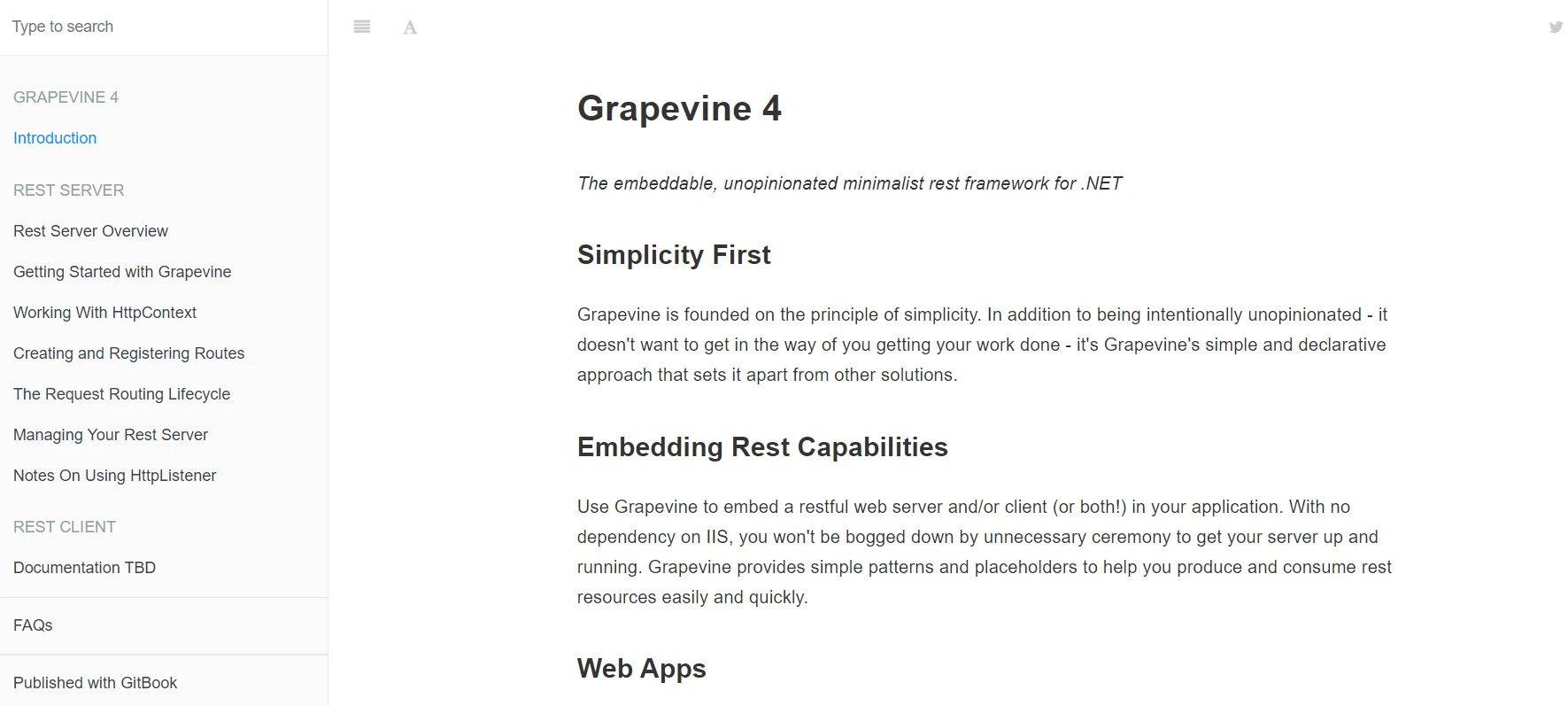
このフレームワークはRESTの原則に従うため、開発者はスケーラブルで信頼性の高いAPIを作成できます。シンプルさと使いやすさから、開発者がより大規模なフレームワークの複雑さに対処することなくWebサービスを迅速にプロトタイプし、起動するための優れたオプションとなっています。 軽量設計により、複雑なWebフレームワークのオーバーヘッドを必要としないマイクロサービスやアプリにGrapevineが適しています。
Grapevineは、スピードが重要なアプリケーションにとって理想的であり、基本設計により、小さなフットプリントと優れたパフォーマンスが保証されます。
フレームワークは、簡単でユーザーフレンドリーなルーティングシステムを提供し、HTTPエンドポイントの定義と管理を簡素化します。
RESTの考え方を念頭に置いて開発されたGrapevineは、GET、POST、PUT、DELETEなど、さまざまなHTTPメソッドをサポートし、信頼性が高く整理されたAPIの作成を促進します。
ログ、認証、認可、エラーハンドリングなどのタスクに役立つカスタムミドルウェアコンポーネントにより、開発者はGrapevineの機能を拡張できます。
Grapevineのシンプルな設計により、セットアップと開発が迅速に行え、Webサービスのプロトタイプ作成と展開に最適です。
他 for .NETライブラリやツールとの互換性があり、さまざまなアプリケーションシナリオで有用です。
フレームワークのモジュール式設計により、開発者は必要な機能のみを組み込むことができ、アプリケーションの効率性と軽量性を維持できます。
Grapevineは、軽量でありながらも、さまざまなプロジェクトサイズに適応でき、より複雑なアプリケーションも取り込むことができます。
活気に満ちたGrapevineコミュニティは、開発者がフレームワークを最大限に活用できるように、ツール、ガイダンス、ケーススタディを提供しています。
フレームワークの幅広い構成オプションにより、開発者は特定の要件に応じてRESTサーバーと設定を調整できます。
開発環境の設定、必要なパッケージのインストール、Grapevineフレームワークの構成は、Grapevine C#プロジェクトを作成し設定する過程の一部です。 始めるためのステップバイステップのチュートリアルはこちらです。
dotnet new console -n GrapevineExample
cd GrapevineExample
dotnet add package Grapevineusing Grapevine;
using Grapevine.Interfaces.Server;
using Grapevine.Server;
using Grapevine.Server.Attributes;
using Grapevine.Shared;
public class Program
{
public static void Main(string[] args)
{
// Create and start a new REST server
var server = new RestServer();
server.Start();
Console.WriteLine("Server is running...");
Console.WriteLine("Press enter to stop the server.");
Console.ReadKey();
server.Stop();
}
}
[RestResource]
public class SampleResource
{
// Defines a route method for the /hello endpoint
[RestRoute(HttpMethod = HttpMethod.GET, PathInfo = "/hello")]
public IHttpContext HelloWorld(IHttpContext context)
{
// Send a response for the GET request at /hello
context.Response.SendResponse("Hello, World!");
return context;
}
}Imports Grapevine
Imports Grapevine.Interfaces.Server
Imports Grapevine.Server
Imports Grapevine.Server.Attributes
Imports Grapevine.Shared
Public Class Program
Public Shared Sub Main(ByVal args() As String)
' Create and start a new REST server
Dim server = New RestServer()
server.Start()
Console.WriteLine("Server is running...")
Console.WriteLine("Press enter to stop the server.")
Console.ReadKey()
server.Stop()
End Sub
End Class
<RestResource>
Public Class SampleResource
' Defines a route method for the /hello endpoint
<RestRoute(HttpMethod := HttpMethod.GET, PathInfo := "/hello")>
Public Function HelloWorld(ByVal context As IHttpContext) As IHttpContext
' Send a response for the GET request at /hello
context.Response.SendResponse("Hello, World!")
Return context
End Function
End ClassImports Grapevine
Imports Grapevine.Interfaces.Server
Imports Grapevine.Server
Imports Grapevine.Server.Attributes
Imports Grapevine.Shared
Public Class Program
Public Shared Sub Main(ByVal args() As String)
' Create and start a new REST server
Dim server = New RestServer()
server.Start()
Console.WriteLine("Server is running...")
Console.WriteLine("Press enter to stop the server.")
Console.ReadKey()
server.Stop()
End Sub
End Class
<RestResource>
Public Class SampleResource
' Defines a route method for the /hello endpoint
<RestRoute(HttpMethod := HttpMethod.GET, PathInfo := "/hello")>
Public Function HelloWorld(ByVal context As IHttpContext) As IHttpContext
' Send a response for the GET request at /hello
context.Response.SendResponse("Hello, World!")
Return context
End Function
End Class最初のステップでは、HTTPリクエスト処理、ルーティング、サーバーの操作を支援するために、Grapevineライブラリから必要な名前空間をインポートします。 RestServerオブジェクトを作成して起動します。
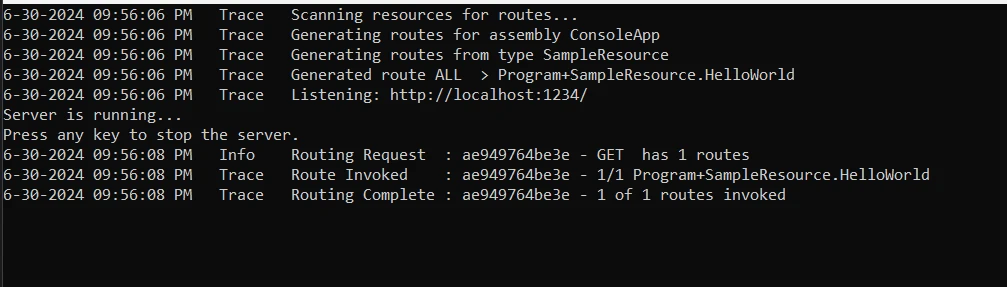
コンソールを通じて、サーバーが稼働中であり、任意のキーが押されると終了することが通知されます。 エンドポイントはHelloWorld関数を指定します。
エンドポイントが成功すると、IHttpContextパラメータを使用してクライアントに"Hello, World!"のレスポンスを返し、HTTPリクエストとレスポンスの詳細を含めます。 この単純な構成は、シングルルートの軽量Webサーバーの構築方法を示し、C#におけるGrapevineのユーザーフレンドリーなHTTPリクエスト処理を強調します。
RESTfulウェブサービスを確立するためにGrapevineを使用し、IronPDFでPDFドキュメントを作成または変更するプロジェクトを設定することが、C#でGrapevineとIronPDFを始める最初のステップです。 ここに、あなたを始めるためのステップ・バイ・ステップのチュートリアルがあります:
C#プログラムは、この豊富な.NETライブラリIronPDFを使用してPDFドキュメントを作成、読み取り、編集できます。 開発者は、このユーティリティを使用してHTML、CSS、JavaScriptコンテンツを高品質の印刷準備ができたPDFに簡単に変換できます。 ヘッダーとフッターの追加、PDFの分割と結合、ドキュメントへの透かしの追加、HTMLからPDFへの変換など、IronPDFが完了できる最も重要な作業のいくつかです。 IronPDFは.NET Frameworkと.NET Coreの両方をサポートしており、多くのアプリケーションで有用です。
PDFはユーザーフレンドリーで情報を豊富に提供するため、開発者は自分の製品に容易に含めることができます。 IronPDFの複雑なレイアウトとフォーマットを処理する能力は、作成したPDFが元のHTMLテキストに非常に近いことを意味します。
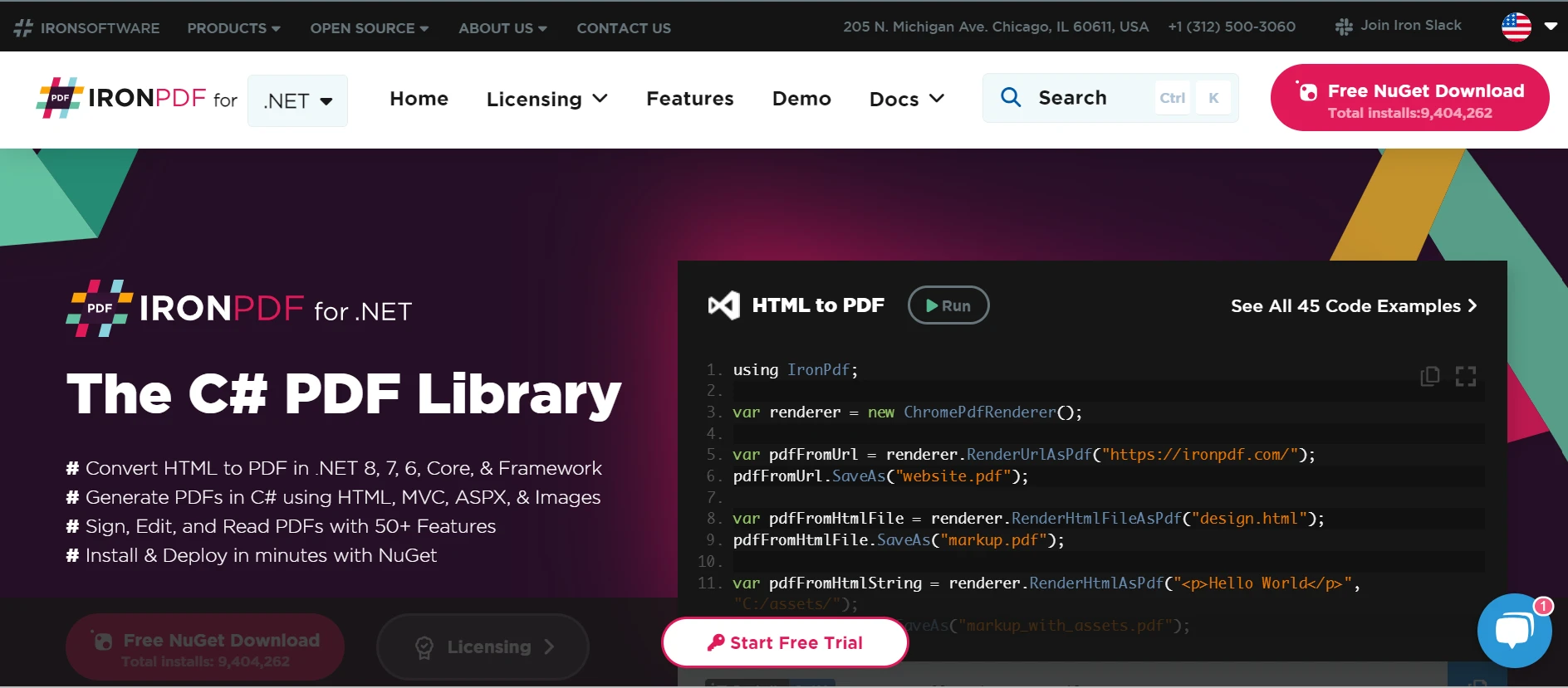
HTMLからのPDF生成
HTML、CSS、JavaScriptをPDFに変換します。 IronPDFは、HTMLおよびCSSを使用してPDF請求書、レポート、およびドキュメントを動的にスタイリングするのに役立つメディアクエリやレスポンシブデザインなどの最新のWeb標準をサポートしています。
PDF編集
既存のPDFにテキスト、画像、およびその他の資料を追加することが可能です。 IronPDFを使用して、テキストと画像を抽出し、複数のPDFを単一のファイルにマージし、PDFファイルを別々のドキュメントに分割し、PDFページにヘッダー、フッター、注釈、透かしを追加します。
PDF変換
Word、Excel、画像ファイルをPDFに変換するか、逆にPDFドキュメントをイメージ形式(PNG、JPEGなど)に変換します。
性能と信頼性
高い性能と信頼性は、産業環境にとって望ましい設計特性であり、大規模な文書セットの容易な処理を可能にします。
IronPDFパッケージをインストールして、.NETプロジェクトでPDFを操作するためのツールを入手します。
プログラム内で初めてHTTPリクエストとレスポンスを処理するサーバーを立ち上げるには、GrapevineのStop()メソッドを用いてサーバーを管理し、キーを押すと一時停止するコンソール指示が提供されます。
using Grapevine.Interfaces.Server;
using Grapevine.Server.Attributes;
using Grapevine.Server;
using Grapevine.Shared;
using IronPdf;
using System.Threading.Tasks;
using System;

class Program
{
    [RestResource]
    public class PdfResource
    {
        // Route method for PDF generation
        [RestRoute(HttpMethod = Grapevine.Shared.HttpMethod.GET, PathInfo = "/generate-pdf")]
        public IHttpContext GeneratePdf(IHttpContext context)
        {
            // HTML content to be converted to PDF
            var htmlContent = "<h1>Hello, PDF!</h1><p>This is a PDF generated using IronPDF.</p>";

            // Create a new PDF renderer
            var renderer = new ChromePdfRenderer();

            // Render the PDF from the HTML content
            var pdf = renderer.RenderHtmlAsPdf(htmlContent);

            // Convert PDF to byte array
            var pdfBytes = pdf.BinaryData;

            // Set response content type and length
            context.Response.ContentType = ContentType.CUSTOM_BINARY;
            context.Response.ContentLength64 = pdfBytes.Length;

            // Send PDF byte array as response
            context.Response.SendResponse(pdfBytes);

            return context;
        }
    }

    static async Task Main(string[] args)
    {
        // Create and start a new REST server
        var server = new RestServer();
        server.LogToConsole().Start();
        Console.WriteLine("Server is running...");
        Console.WriteLine("Press any key to stop the server.");
        Console.ReadKey();
        server.Stop();
    }
}
using Grapevine.Interfaces.Server;
using Grapevine.Server.Attributes;
using Grapevine.Server;
using Grapevine.Shared;
using IronPdf;
using System.Threading.Tasks;
using System;
class Program
{
[RestResource]
public class PdfResource
{
// Route method for PDF generation
[RestRoute(HttpMethod = Grapevine.Shared.HttpMethod.GET, PathInfo = "/generate-pdf")]
public IHttpContext GeneratePdf(IHttpContext context)
{
// HTML content to be converted to PDF
var htmlContent = "<h1>Hello, PDF!</h1><p>This is a PDF generated using IronPDF.</p>";
// Create a new PDF renderer
var renderer = new ChromePdfRenderer();
// Render the PDF from the HTML content
var pdf = renderer.RenderHtmlAsPdf(htmlContent);
// Convert PDF to byte array
var pdfBytes = pdf.BinaryData;
// Set response content type and length
context.Response.ContentType = ContentType.CUSTOM_BINARY;
context.Response.ContentLength64 = pdfBytes.Length;
// Send PDF byte array as response
context.Response.SendResponse(pdfBytes);
return context;
}
}
static async Task Main(string[] args)
{
// Create and start a new REST server
var server = new RestServer();
server.LogToConsole().Start();
Console.WriteLine("Server is running...");
Console.WriteLine("Press any key to stop the server.");
Console.ReadKey();
server.Stop();
}
}Imports Grapevine.Interfaces.Server
Imports Grapevine.Server.Attributes
Imports Grapevine.Server
Imports Grapevine.Shared
Imports IronPdf
Imports System.Threading.Tasks
Imports System
Friend Class Program
<RestResource>
Public Class PdfResource
' Route method for PDF generation
<RestRoute(HttpMethod := Grapevine.Shared.HttpMethod.GET, PathInfo := "/generate-pdf")>
Public Function GeneratePdf(ByVal context As IHttpContext) As IHttpContext
' HTML content to be converted to PDF
Dim htmlContent = "<h1>Hello, PDF!</h1><p>This is a PDF generated using IronPDF.</p>"
' Create a new PDF renderer
Dim renderer = New ChromePdfRenderer()
' Render the PDF from the HTML content
Dim pdf = renderer.RenderHtmlAsPdf(htmlContent)
' Convert PDF to byte array
Dim pdfBytes = pdf.BinaryData
' Set response content type and length
context.Response.ContentType = ContentType.CUSTOM_BINARY
context.Response.ContentLength64 = pdfBytes.Length
' Send PDF byte array as response
context.Response.SendResponse(pdfBytes)
Return context
End Function
End Class
Shared Async Function Main(ByVal args() As String) As Task
' Create and start a new REST server
Dim server = New RestServer()
server.LogToConsole().Start()
Console.WriteLine("Server is running...")
Console.WriteLine("Press any key to stop the server.")
Console.ReadKey()
server.Stop()
End Function
End ClassImports Grapevine.Interfaces.Server
Imports Grapevine.Server.Attributes
Imports Grapevine.Server
Imports Grapevine.Shared
Imports IronPdf
Imports System.Threading.Tasks
Imports System
Friend Class Program
<RestResource>
Public Class PdfResource
' Route method for PDF generation
<RestRoute(HttpMethod := Grapevine.Shared.HttpMethod.GET, PathInfo := "/generate-pdf")>
Public Function GeneratePdf(ByVal context As IHttpContext) As IHttpContext
' HTML content to be converted to PDF
Dim htmlContent = "<h1>Hello, PDF!</h1><p>This is a PDF generated using IronPDF.</p>"
' Create a new PDF renderer
Dim renderer = New ChromePdfRenderer()
' Render the PDF from the HTML content
Dim pdf = renderer.RenderHtmlAsPdf(htmlContent)
' Convert PDF to byte array
Dim pdfBytes = pdf.BinaryData
' Set response content type and length
context.Response.ContentType = ContentType.CUSTOM_BINARY
context.Response.ContentLength64 = pdfBytes.Length
' Send PDF byte array as response
context.Response.SendResponse(pdfBytes)
Return context
End Function
End Class
Shared Async Function Main(ByVal args() As String) As Task
' Create and start a new REST server
Dim server = New RestServer()
server.LogToConsole().Start()
Console.WriteLine("Server is running...")
Console.WriteLine("Press any key to stop the server.")
Console.ReadKey()
server.Stop()
End Function
End ClassGrapevineの構成内で、PDF作成に関連する特定のHTTPリクエストを管理するためにPdfResourceクラスが定義されています。 [RestResource]属性が存在する場合、このクラスにはRESTfulルートに応答できるメソッドがあることを示します。
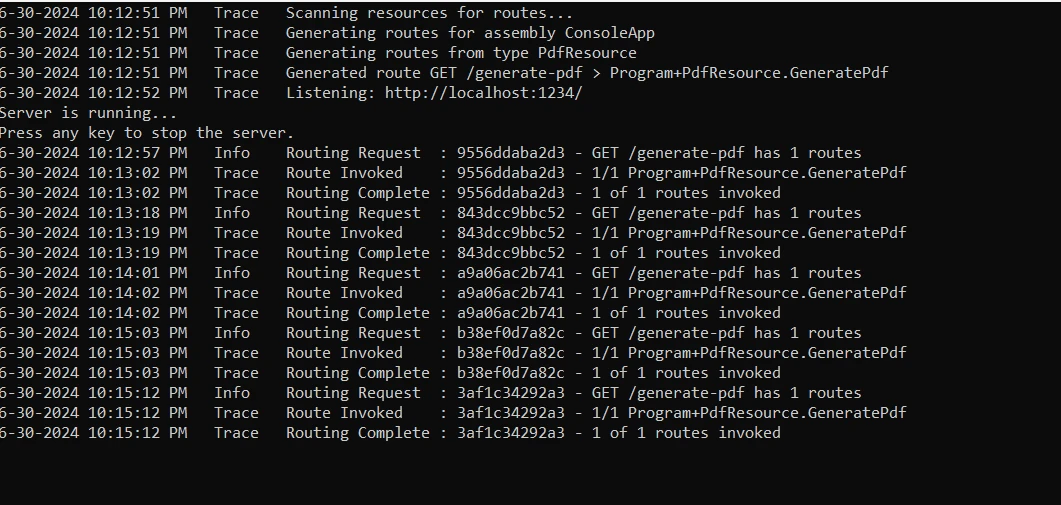
/generate-pdfエンドポイントでのGETリクエストに応答することを示します。 手続きの中で:
htmlContentとして定義されたHTMLコンテンツ文字列で表現されます。pdf)が作成されます。pdfBytes)が作成されます。SendResponseを使用します。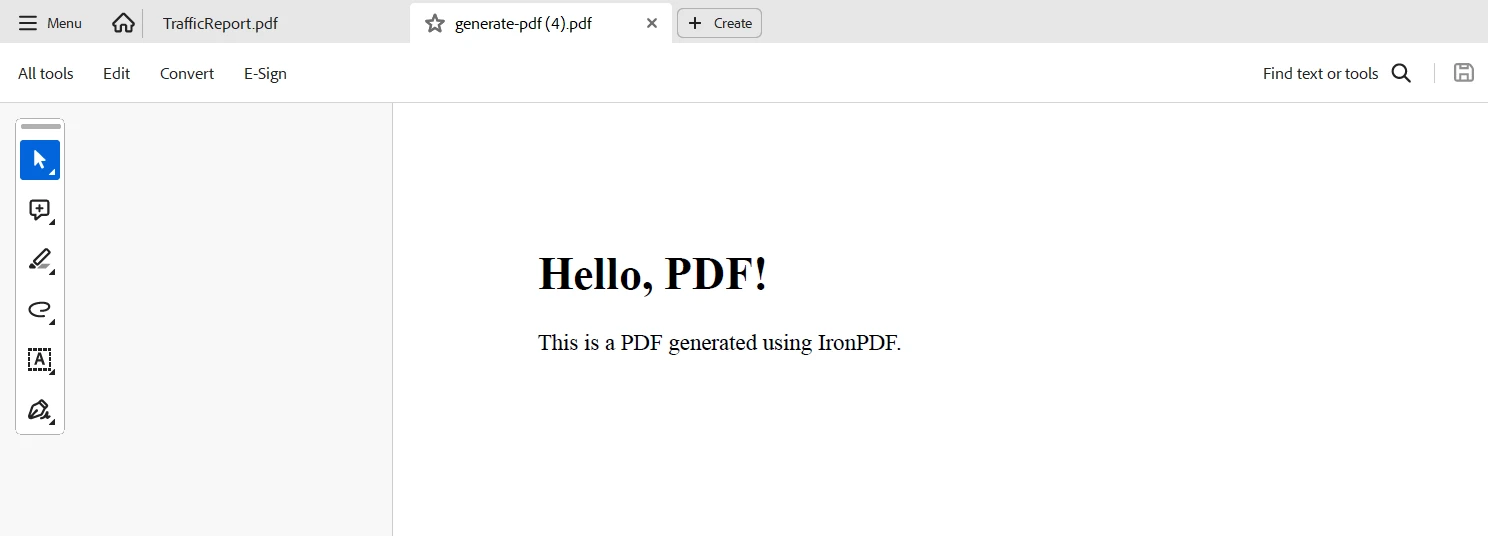
結論として、Grapevine C#とIronPDFの統合は、開発者がアプリケーション内でWebサービスの機能を取り入れ、動的PDF生成を行うことを望む場合に、強力なソリューションを提供します。 RESTfulエンドポイントのセットアップと実装は、Grapevineの軽量でユーザーフレンドリーなミニマリストWebフレームワークによって簡略化され、HTTPリクエストの処理やカスタムルートの作成が容易になります。 対照的に、IronPDFは、JavaScript統合およびCSSスタイリングのサポートを含む、優れたPDFドキュメントへのHTML情報の簡単な変換を可能にすることでアプリケーションを強化します。
この連携により、開発者はインタラクティブでデータ駆動のWebサービスを作成しながら、動的でプロフェッショナルな外観のPDFを作成し、それを配布できます。 一緒に、GrapevineとIronPDFは、レポートや請求書、または他の種類のドキュメントの作成に関して、現代のオンラインアプリケーション開発のニーズを満たす柔軟なツールボックスを提供します。 IronPDFの強力なPDF作成機能とGrapevineのユーザーフレンドリーなインターフェースの組み合わせにより、開発者は幅広いユーザーの要求と企業の目標を満たすスケーラブルで効果的なソリューションを作成できます。
Iron SoftwareのサポートとIronPDFにより、開発者はWebアプリと機能をより多く取得し、より効率的な開発が可能になります。 Iron Softwareの非常に柔軟なシステムとスイートと包括的なサポートを組み合わせることで、開発者が最適化されたモデルを簡単に選択できるプロジェクトに特化した明確に定義されたライセンスオプションを提供することによってこれを達成します。 このような利点により、多様な課題に対して迅速、一貫、効果的にソリューションを実装することができます。

ジェイコブ・メラーはIron Softwareの最高技術責任者(CTO)であり、C# PDFテクノロジーを開拓する先見的なエンジニアです。Iron Softwareのコアコードベースを支えるオリジナル開発者として、彼は創業以来、会社の製品アーキテクチャを形成し、CEOのCameron Rimingtonとともに、会社をNASA、Tesla、および世界的な政府機関にサービスを提供する50人以上の会社に変えました。1999年にロンドンで最初のソフトウェアビジネスを開業し、2005年に最初 for .NETコンポーネントを作成した後、Microsoftのエコシステム全体で複雑な問題を解決することを専門としました。

IronPDF はIRONSUITEの一部です
オフィス文書向けの.NET API製品10個

PDFがHTMLのように見える必要があるとき、迅速に。
