




업데이트됨 2026년 4월 23일
.NET에서 Microsoft.Extensions.AI로 LLM 통합 간소화
AI는 소프트웨어 개발을 변혁하고 있으나, 대규모 언어 모델(LLM)을 .NET에 통합하는 것은 지금까지 복잡했습니다. 현대에는 OpenAI 기반 PDF 파싱, 데이터 추출 및 콘텐츠 요약을 .NET 애플리케이션에 가져오는 IronPdf.AI로 AI 통합을 더욱 확장하세요.
더 읽어보기

AES (고급 암호화 표준)은 가장 일반적으로 사용되는 대칭 암호화 알고리즘 중 하나입니다. AES 암호화는 동일한 키를 사용하여 데이터를 암호화하고 해독하므로 많은 애플리케이션에서 민감한 데이터를 보호하는 데 효율적이고 빠릅니다.
이 튜토리얼은 C#에서 AES 암호화에 중점을 두고, AES 클래스를 사용하여 데이터를 암호화하고 복호화하며 IronPDF 라이브러리를 사용하는 방법을 다룹니다. 실제 예제를 다루고, 암호화 과정을 걸어보며, 보안을 강화하기 위해 암호화 블록 체인(CBC) 모드를 사용하는 방법을 알아봅니다. 또한 암호화 키 관리와 초기화 벡터(IV)의 역할에 대해서도 논의할 것입니다.
고급 암호화 표준(AES)은 미국 국립 표준 기술 연구소(NIST)에 의해 표준화된 대칭 암호화 알고리즘입니다. 이 알고리즘은 128, 192 또는 256 비트의 키 크기를 가질 수 있으며 기밀 데이터 암호화에 매우 안전합니다. 동일한 암호화 키를 사용하여 데이터를 암호화하고 복호화합니다.
AES는 원본 데이터를 블록으로 나누고 그 블록에 변환을 적용하여 작동합니다. CBC(암호화 블록 체인) 및 전자 코드 북(ECB)과 같이 다양한 암호 모드로 작동하며, 각각 다양한 보안 기능을 제공합니다.
C#의 AES 암호화 알고리즘은 System.Security.Cryptography 네임스페이스의 일부입니다. 이 네임스페이스에는 AES 클래스가 포함되어 있으며, AES 인스턴스를 생성하고, 키 크기, 암호 모드, 패딩 모드를 지정한 다음, 비밀 키를 사용하여 데이터를 암호화하고 복호화할 수 있습니다.
C#에서 AES를 사용하려면 다음 기본 단계를 따르십시오:
Aes.Create()을 사용하여 생성합니다.C#에서 기본적인 암호화 과정 및 복호화 프로그램을 만들어봅시다.
using System;
using System.IO;
using System.Security.Cryptography;
using System.Text;

class Program
{
    // Declare a static byte array for encrypted data
    public static byte[] encryptedData;

    // Main method to demonstrate encryption and decryption
    public static void Main(string[] args)
    {
        // String plaintext to be encrypted
        string plaintext = "This is some sensitive data!";
        string key = "abcdefghijklmnop"; // 128-bit key (16 characters)

        // Encrypt the plaintext
        string ciphertext = Encrypt(plaintext, key);
        Console.WriteLine("Encrypted Data: " + ciphertext);

        // Decrypt the ciphertext
        string decryptedData = Decrypt(ciphertext, key);
        Console.WriteLine("Decrypted Data: " + decryptedData);
    }

    // Method to encrypt data
    public static string Encrypt(string plaintext, string key)
    {
        // Create a new instance of the AES encryption algorithm
        using (Aes aes = Aes.Create())
        {
            aes.Key = Encoding.UTF8.GetBytes(key);
            aes.IV = new byte[16]; // Initialization vector (IV)

            // Create an encryptor to perform the stream transform
            ICryptoTransform encryptor = aes.CreateEncryptor(aes.Key, aes.IV);

            // Create the streams used for encryption
            using (MemoryStream ms = new MemoryStream())
            {
                // Create a CryptoStream using the encryptor
                using (CryptoStream cs = new CryptoStream(ms, encryptor, CryptoStreamMode.Write))
                {
                    using (StreamWriter sw = new StreamWriter(cs))
                    {
                        sw.Write(plaintext);
                    }
                }
                // Store the encrypted data in the public static byte array
                encryptedData = ms.ToArray();
                return Convert.ToBase64String(encryptedData);
            }
        }
    }

    // Method to decrypt data
    public static string Decrypt(string ciphertext, string key)
    {
        using (Aes aes = Aes.Create())
        {
            aes.Key = Encoding.UTF8.GetBytes(key);
            aes.IV = new byte[16]; // Initialization vector (IV)

            // Create a decryptor to perform the stream transform
            ICryptoTransform decryptor = aes.CreateDecryptor(aes.Key, aes.IV);

            // Create the streams used for decryption
            using (MemoryStream ms = new MemoryStream(Convert.FromBase64String(ciphertext)))
            {
                using (CryptoStream cs = new CryptoStream(ms, decryptor, CryptoStreamMode.Read))
                {
                    using (StreamReader sr = new StreamReader(cs))
                    {
                        return sr.ReadToEnd();
                    }
                }
            }
        }
    }
}Imports System
Imports System.IO
Imports System.Security.Cryptography
Imports System.Text
Friend Class Program
' Declare a static byte array for encrypted data
Public Shared encryptedData() As Byte
' Main method to demonstrate encryption and decryption
Public Shared Sub Main(ByVal args() As String)
' String plaintext to be encrypted
Dim plaintext As String = "This is some sensitive data!"
Dim key As String = "abcdefghijklmnop" ' 128-bit key (16 characters)
' Encrypt the plaintext
Dim ciphertext As String = Encrypt(plaintext, key)
Console.WriteLine("Encrypted Data: " & ciphertext)
' Decrypt the ciphertext
Dim decryptedData As String = Decrypt(ciphertext, key)
Console.WriteLine("Decrypted Data: " & decryptedData)
End Sub
' Method to encrypt data
Public Shared Function Encrypt(ByVal plaintext As String, ByVal key As String) As String
' Create a new instance of the AES encryption algorithm
Using aes As Aes = System.Security.Cryptography.Aes.Create()
aes.Key = Encoding.UTF8.GetBytes(key)
aes.IV = New Byte(15){} ' Initialization vector (IV)
' Create an encryptor to perform the stream transform
Dim encryptor As ICryptoTransform = aes.CreateEncryptor(aes.Key, aes.IV)
' Create the streams used for encryption
Using ms As New MemoryStream()
' Create a CryptoStream using the encryptor
Using cs As New CryptoStream(ms, encryptor, CryptoStreamMode.Write)
Using sw As New StreamWriter(cs)
sw.Write(plaintext)
End Using
End Using
' Store the encrypted data in the public static byte array
encryptedData = ms.ToArray()
Return Convert.ToBase64String(encryptedData)
End Using
End Using
End Function
' Method to decrypt data
Public Shared Function Decrypt(ByVal ciphertext As String, ByVal key As String) As String
Using aes As Aes = System.Security.Cryptography.Aes.Create()
aes.Key = Encoding.UTF8.GetBytes(key)
aes.IV = New Byte(15){} ' Initialization vector (IV)
' Create a decryptor to perform the stream transform
Dim decryptor As ICryptoTransform = aes.CreateDecryptor(aes.Key, aes.IV)
' Create the streams used for decryption
Using ms As New MemoryStream(Convert.FromBase64String(ciphertext))
Using cs As New CryptoStream(ms, decryptor, CryptoStreamMode.Read)
Using sr As New StreamReader(cs)
Return sr.ReadToEnd()
End Using
End Using
End Using
End Using
End Function
End Class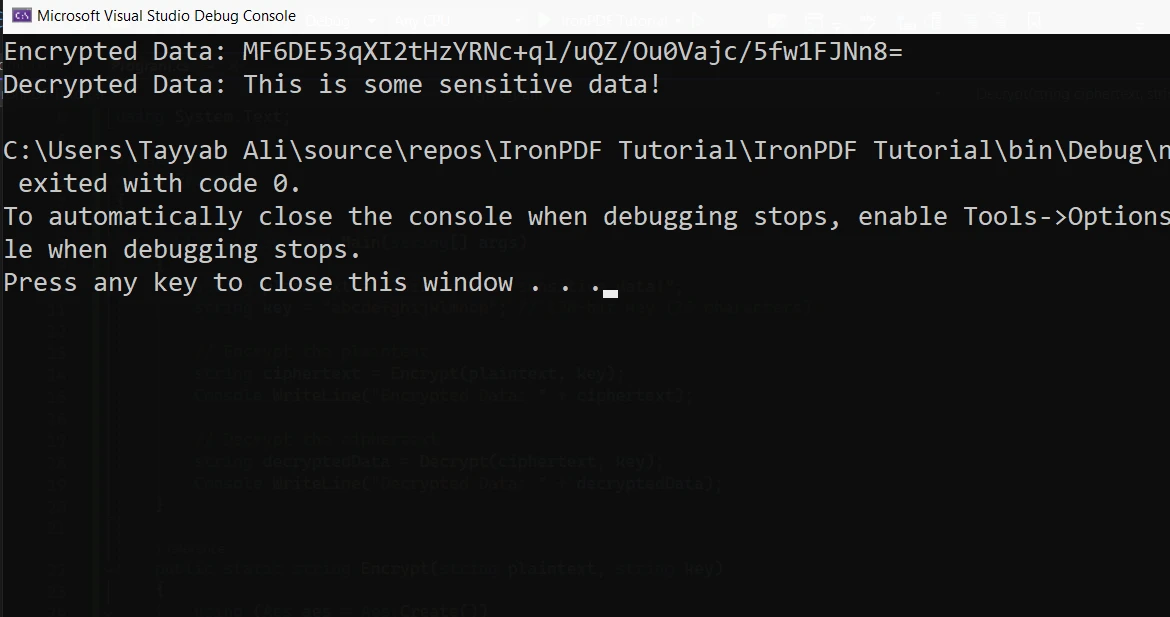
Aes.Create(): 이는 AES 암호화 알고리즘의 새 인스턴스를 생성합니다.aes.Key: 암호화와 복호화에 모두 사용되는 키입니다. 유효한 크기, 예를 들어 128 비트(16 바이트), 192 비트 또는 256 비트여야 합니다.aes.IV: 초기화 벡터(IV)는 암호화 과정을 임의화하는 데 사용됩니다. 이 예에서는 간단히 위해 0으로 된 IV를 사용합니다.이전 예제를 기반으로 무작위 키와 IV를 생성하여 암호화를 더욱 안전하게 하겠습니다.
public static string EncryptData(string plaintext)
{
    using (Aes aes = Aes.Create())
    {
        aes.Key = new byte[32]; // AES-256 requires a 256-bit key (32 bytes)
        aes.IV = new byte[16];  // 128-bit block size

        // Randomly generate key and IV
        using (RandomNumberGenerator rng = RandomNumberGenerator.Create())
        {
            rng.GetBytes(aes.Key); // Generate a random key
            rng.GetBytes(aes.IV);  // Generate a random IV
        }

        // Create an encryptor to perform the stream transform
        ICryptoTransform encryptor = aes.CreateEncryptor(aes.Key, aes.IV);

        // Create the streams used for encryption
        using (MemoryStream ms = new MemoryStream())
        {
            using (CryptoStream cs = new CryptoStream(ms, encryptor, CryptoStreamMode.Write))
            {
                using (StreamWriter sw = new StreamWriter(cs))
                {
                    sw.Write(plaintext);
                }
            }
            return Convert.ToBase64String(ms.ToArray());
        }
    }
}Public Shared Function EncryptData(ByVal plaintext As String) As String
Using aes As Aes = Aes.Create()
aes.Key = New Byte(31){} ' AES-256 requires a 256-bit key (32 bytes)
aes.IV = New Byte(15){} ' 128-bit block size
' Randomly generate key and IV
Using rng As RandomNumberGenerator = RandomNumberGenerator.Create()
rng.GetBytes(aes.Key) ' Generate a random key
rng.GetBytes(aes.IV) ' Generate a random IV
End Using
' Create an encryptor to perform the stream transform
Dim encryptor As ICryptoTransform = aes.CreateEncryptor(aes.Key, aes.IV)
' Create the streams used for encryption
Using ms As New MemoryStream()
Using cs As New CryptoStream(ms, encryptor, CryptoStreamMode.Write)
Using sw As New StreamWriter(cs)
sw.Write(plaintext)
End Using
End Using
Return Convert.ToBase64String(ms.ToArray())
End Using
End Using
End Function이 경우 함수가 호출될 때마다 새로운 키와 IV를 생성합니다. 이렇게 하면 더 강력한 암호화가 제공되며 동일한 키가 모든 작업에 사용되지 않습니다. AES는 키 크기를 128, 192 및 256 비트로 지원합니다.
복호화는 데이터를 암호화하는 과정의 반대입니다. 예제에서는 암호화에 사용된 동일한 키와 IV가 데이터를 복호화하기 위해 제공되어야 합니다. 복호화 과정은 암호화된 데이터를 원래 형태로 변환하는 것을 포함합니다.
기존에 암호화된 데이터를 사용하는 예제입니다:
public static string DecryptData(string ciphertext, byte[] key, byte[] iv)
{
    using (Aes aes = Aes.Create())
    {
        aes.Key = key;
        aes.IV = iv;

        // Create a decryptor to perform the stream transform
        ICryptoTransform decryptor = aes.CreateDecryptor(aes.Key, aes.IV);

        // Create the streams used for decryption
        using (MemoryStream ms = new MemoryStream(Convert.FromBase64String(ciphertext)))
        {
            using (CryptoStream cs = new CryptoStream(ms, decryptor, CryptoStreamMode.Read))
            {
                using (StreamReader sr = new StreamReader(cs))
                {
                    return sr.ReadToEnd();
                }
            }
        }
    }
}Public Shared Function DecryptData(ByVal ciphertext As String, ByVal key() As Byte, ByVal iv() As Byte) As String
Using aes As Aes = Aes.Create()
aes.Key = key
aes.IV = iv
' Create a decryptor to perform the stream transform
Dim decryptor As ICryptoTransform = aes.CreateDecryptor(aes.Key, aes.IV)
' Create the streams used for decryption
Using ms As New MemoryStream(Convert.FromBase64String(ciphertext))
Using cs As New CryptoStream(ms, decryptor, CryptoStreamMode.Read)
Using sr As New StreamReader(cs)
Return sr.ReadToEnd()
End Using
End Using
End Using
End Using
End Function이 코드는 암호화된 데이터를 다시 원본 데이터로 복호화합니다.
IronPDF는 간단한 C# 코드를 사용하여 PDF를 생성, 편집, 조작하도록 설계된 간단하고 개발자 친화적인 .NET 라이브러리입니다. 개발자가 HTML, CSS 및 JavaScript에서 직접 PDF 문서를 생성할 수 있게 하여 동적으로 보고서, 송장 또는 기타 문서를 생성하는 데 매우 유용합니다. 병합, 분할, 비밀번호나 디지털 서명 같은 보안 기능 추가도 지원하여 IronPDF는 .NET 응용 프로그램에서 PDF 생성의 포괄적인 솔루션입니다.
민감한 보고서나 문서를 생성할 때, 공유하기 전에 해당 PDF 내 데이터를 암호화해야 할 수 있습니다. AES(고급 암호화 표준) 암호화는 PDF 파일의 내용을 안전하게 암호화하는 완벽한 솔루션입니다. IronPDF와 AES 암호화를 결합하여 PDF 내 데이터를 보호하면서도 문서 자체를 작업할 수 있는 능력을 유지할 수 있습니다.
ChromePdfRenderer 클래스를 사용하여 HTML 콘텐츠로부터 PDF를 생성하고 파일에 저장하십시오:
var htmlContent = "<h1>Confidential</h1><p>This is sensitive data.</p>";
var renderer = new ChromePdfRenderer();
var pdf = renderer.RenderHtmlAsPdf(htmlContent);
pdf.SaveAs(@"C:\Reports\ConfidentialReport.pdf");Dim htmlContent = "<h1>Confidential</h1><p>This is sensitive data.</p>"
Dim renderer = New ChromePdfRenderer()
Dim pdf = renderer.RenderHtmlAsPdf(htmlContent)
pdf.SaveAs("C:\Reports\ConfidentialReport.pdf")PDF가 생성되면 AES:로 암호화하십시오.
byte[] pdfBytes = File.ReadAllBytes(@"C:\Reports\ConfidentialReport.pdf");
using (Aes aes = Aes.Create())
{
    aes.Key = Encoding.UTF8.GetBytes("abcdefghijklmnop");
    aes.IV = new byte[16];
    using (var encryptor = aes.CreateEncryptor(aes.Key, aes.IV))
    using (var ms = new MemoryStream())
    {
        using (var cs = new CryptoStream(ms, encryptor, CryptoStreamMode.Write))
        {
            cs.Write(pdfBytes, 0, pdfBytes.Length);
        }
        File.WriteAllBytes(@"C:\Reports\ConfidentialReport.encrypted", ms.ToArray());
    }
}Dim pdfBytes() As Byte = File.ReadAllBytes("C:\Reports\ConfidentialReport.pdf")
Using aes As Aes = Aes.Create()
aes.Key = Encoding.UTF8.GetBytes("abcdefghijklmnop")
aes.IV = New Byte(15){}
Using encryptor = aes.CreateEncryptor(aes.Key, aes.IV)
Using ms = New MemoryStream()
Using cs = New CryptoStream(ms, encryptor, CryptoStreamMode.Write)
cs.Write(pdfBytes, 0, pdfBytes.Length)
End Using
File.WriteAllBytes("C:\Reports\ConfidentialReport.encrypted", ms.ToArray())
End Using
End Using
End UsingIronPDF와 AES 암호화를 통합하면 접근 가능하면서도 암호화된 안전한 문서를 동적으로 생성할 수 있습니다. 안전한 문서 생성이 필요한 애플리케이션을 개발하거나 민감한 보고서를 관리할 때, IronPDF와 강력한 암호화를 결합하여 데이터를 보호합니다. IronPDF는 PDF 작업을 단순화하고, AES는 콘텐츠의 안전성을 보장합니다.
IronPDF는 무료 체험판을 제공하여 개발자가 기능을 먼저 탐색해볼 수 있습니다. 프로젝트에 IronPDF를 구현할 준비가 되었다면, 라이선스는 $999부터 시작하는 일회성 구매로 가능합니다.

제이콥 멜러는 Iron Software의 최고 기술 책임자(CTO)이자 C# PDF 기술을 개척한 선구적인 엔지니어입니다. Iron Software의 핵심 코드베이스를 최초로 개발한 그는 창립 초기부터 회사의 제품 아키텍처를 설계해 왔으며, CEO인 캐머런 리밍턴과 함께 회사를 NASA, 테슬라, 그리고 전 세계 정부 기관에 서비스를 제공하는 50명 이상의 직원을 보유한 기업으로 성장시켰습니다.



IronPDF는 IRON SUITE 의 일부입니다.
10개의 .NET API 제품, 당신의 사무 문서를 위해

PDF 파일을 HTML처럼 빠르게 변환해야 할 때.


