



업데이트됨 2026년 4월 23일
.NET에서 Microsoft.Extensions.AI로 LLM 통합 간소화
AI는 소프트웨어 개발을 변혁하고 있으나, 대규모 언어 모델(LLM)을 .NET에 통합하는 것은 지금까지 복잡했습니다. 현대에는 OpenAI 기반 PDF 파싱, 데이터 추출 및 콘텐츠 요약을 .NET 애플리케이션에 가져오는 IronPdf.AI로 AI 통합을 더욱 확장하세요.
더 읽어보기

객체 지향 프로그래밍 (OOP)은 모듈화, 재사용 가능, 적응 가능한 코드를 작성할 수 있도록 하는 소프트웨어 개발의 기본 개념입니다. 현대의 객체 지향 프로그래밍 언어인 C#은 복잡한 애플리케이션을 구축하기 위한 강력한 프레임워크를 제공합니다. 이 가이드는 C#을 사용한 OOP 개념을 소개하여, 초보자들이 이러한 원칙들을 효과적으로 이해하고 적용할 수 있도록 실용적 구현 및 코딩 예제를 제공합니다. IronPDF 라이브러리 for C#과 함께 이러한 원칙을 어떻게 적용할 수 있는지도 논의할 것입니다.
OOP의 핵심에는 클래스, 객체, 상속, 다형성, 추상화, 캡슐화와 같은 여러 주요 개념이 있습니다. 이러한 개념은 개발자가 현실 세계의 엔티티를 모델링하고, 복잡성을 관리하며, 코드의 유지 보수성을 높일 수 있도록 합니다.
클래스는 개별 객체를 생성합니다. 클래스는 모든 객체가 공유하는 데이터와 행동을 정의하는 청사진입니다. 객체는 클래스의 구체적인 표현입니다. 객체는 클래스 청사진에 정의된 추상적 표현보다 실제 값을 포함합니다.
public class Car // A class declared as 'Car' defines its structure and behavior.
{
    public string Name;
    public string Color;

    public void DisplayInfo()
    {
        Console.WriteLine($"Name: {Name}, Color: {Color}");
    }
}

class Program // This is the program class, serving as the entry point of a C# program.
{
    static void Main(string[] args)
    {
        Car myCar = new Car();
        myCar.Name = "Toyota";
        myCar.Color = "Red";
        myCar.DisplayInfo();
    }
}Public Class Car ' A class declared as 'Car' defines its structure and behavior.
Public Name As String
Public Color As String
Public Sub DisplayInfo()
Console.WriteLine($"Name: {Name}, Color: {Color}")
End Sub
End Class
Friend Class Program ' This is the program class, serving as the entry point of a C# program.
Shared Sub Main(ByVal args() As String)
Dim myCar As New Car()
myCar.Name = "Toyota"
myCar.Color = "Red"
myCar.DisplayInfo()
End Sub
End Class이 예시에서는 Car 클래시에는 두 개의 데이터 멤버(Name 및 Color)와 한 개의 메서드(DisplayInfo)가 있습니다. Main 메서드는 애플리케이션의 진입점 역할을 하며, Car 클래스의 인스턴스를 생성하고, 필드에 값을 할당한 후 이 값을 표시하기 위해 메서드를 호출합니다.
C# 객체 지향(개발자를 위한 작동 원리): 그림 1 - Car 객체의 멤버 값(name,color)이 DisplayInfo 메서드를 통해 콘솔에 표시됩니다
상속은 클래스가 기존 클래스의 속성과 메서드를 상속할 수 있도록 합니다. 속성을 상속받는 클래스는 기본 클래스(base class)이며, 속성을 상속받는 클래스는 파생 클래스(derived class)라고 합니다.
public class Vehicle
{
    public string LicensePlate;

    public void Honk()
    {
        Console.WriteLine("Honking");
    }
}

public class Truck : Vehicle // Truck is a child class derived from the Vehicle base class.
{
    public int CargoCapacity;
}

class Program
{
    static void Main(string[] args)
    {
        Truck myTruck = new Truck();
        myTruck.LicensePlate = "ABC123";
        myTruck.CargoCapacity = 5000;
        myTruck.Honk();
    }
}Public Class Vehicle
Public LicensePlate As String
Public Sub Honk()
Console.WriteLine("Honking")
End Sub
End Class
Public Class Truck ' Truck is a child class derived from the Vehicle base class.
Inherits Vehicle
Public CargoCapacity As Integer
End Class
Friend Class Program
Shared Sub Main(ByVal args() As String)
Dim myTruck As New Truck()
myTruck.LicensePlate = "ABC123"
myTruck.CargoCapacity = 5000
myTruck.Honk()
End Sub
End Class이 예에서 Truck은 Vehicle 기본 클래스를 확장한 파생 클래스이며, LicensePlate 필드와 Honk 메서드를 상속받고, 새로운 필드 CargoCapacity를 추가합니다.
다형성은 객체를 특정 클래스가 아닌 기본 클래스의 인스턴스로 처리할 수 있도록 합니다. 추상화는 인스턴스화할 수 없지만 기본 클래스로 사용할 수 있는 추상 클래스 및 인터페이스를 정의할 수 있게 합니다.
추상 클래스는 인스턴스화할 수 없으며, 여러 파생 클래스가 공유할 수 있는 기본 클래스의 공통 정의를 제공하는 데 사용됩니다.
public abstract class Shape
{
    public abstract void Draw();
}

public class Circle : Shape
{
    public override void Draw()
    {
        Console.WriteLine("Drawing a circle");
    }
}Public MustInherit Class Shape
Public MustOverride Sub Draw()
End Class
Public Class Circle
Inherits Shape
Public Overrides Sub Draw()
Console.WriteLine("Drawing a circle")
End Sub
End Class인터페이스는 클래스가 정의된 메서드를 구현함으로써 충족할 수 있는 동의서 또는 계약을 확립합니다. 클래스는 여러 인터페이스를 구현할 수 있으며, 이를 통해 다형성의 한 형태를 제공합니다.
public interface IDrawable
{
    void Draw();
}

public interface IColorable
{
    void Color();
}

public class CustomShape : IDrawable, IColorable // Defining a new class CustomShape that implements IDrawable and IColorable.
{
    public void Draw()
    {
        Console.WriteLine("Custom shape drawn");
    }

    public void Color()
    {
        Console.WriteLine("Custom shape colored");
    }
}Public Interface IDrawable
Sub Draw()
End Interface
Public Interface IColorable
Sub Color()
End Interface
Public Class CustomShape ' Defining a new class CustomShape that implements IDrawable and IColorable.
Implements IDrawable, IColorable
Public Sub Draw() Implements IDrawable.Draw
Console.WriteLine("Custom shape drawn")
End Sub
Public Sub Color() Implements IColorable.Color
Console.WriteLine("Custom shape colored")
End Sub
End Class캡슐화는 객체의 특정 구성 요소에 대한 접근을 제한하고, 외부자가 내부 표현을 보는 것을 방지하는 메커니즘입니다. 이것은 접근 제한자를 사용하여 달성됩니다.
public class Person
{
    private string name; // Private variable, inaccessible outside the class
    public string Name   // Public property to access the private variable
    {
        get { return name; }
        set { name = value; }
    }
}

// Example showing a simple customer class with encapsulated data
public class Customer
{
    public string Name { get; set; }
    public string Address { get; set; }
}Public Class Person
'INSTANT VB NOTE: The field name was renamed since Visual Basic does not allow fields to have the same name as other class members:
Private name_Conflict As String ' Private variable, inaccessible outside the class
Public Property Name() As String ' Public property to access the private variable
Get
Return name_Conflict
End Get
Set(ByVal value As String)
name_Conflict = value
End Set
End Property
End Class
' Example showing a simple customer class with encapsulated data
Public Class Customer
Public Property Name() As String
Public Property Address() As String
End Class이 예에서 name 필드는 Person 클래스 외부에서는 접근할 수 없는 private입니다. 이 필드에 대한 접근은 공용 Name 속성을 통해 제공되며, get 및 set 메서드를 포함합니다.
이제 여러 클래스가 포함된 예를 탐구하여 이러한 원칙이 어떻게 작동하는지를 보여드리겠습니다.
using System;

namespace OOPExample
{
    public class Program
    {
        static void Main(string[] args)
        {
            ElectricCar myElectricCar = new ElectricCar();
            myElectricCar.Make = "Tesla";
            myElectricCar.Model = "Model 3";
            myElectricCar.BatteryLevel = 100;
            myElectricCar.Drive();
            myElectricCar.Charge();
        }
    }

    public abstract class Vehicle
    {
        public string Make { get; set; }
        public string Model { get; set; }

        public abstract void Drive();
    }

    public class Car : Vehicle
    {
        public override void Drive()
        {
            Console.WriteLine($"The {Make} {Model} is driving.");
        }
    }

    public class ElectricCar : Car
    {
        public int BatteryLevel { get; set; }

        public void Charge()
        {
            Console.WriteLine("Charging the car.");
        }

        public override void Drive()
        {
            Console.WriteLine($"The {Make} {Model} is driving silently.");
        }
    }
}Imports System
Namespace OOPExample
Public Class Program
Shared Sub Main(ByVal args() As String)
Dim myElectricCar As New ElectricCar()
myElectricCar.Make = "Tesla"
myElectricCar.Model = "Model 3"
myElectricCar.BatteryLevel = 100
myElectricCar.Drive()
myElectricCar.Charge()
End Sub
End Class
Public MustInherit Class Vehicle
Public Property Make() As String
Public Property Model() As String
Public MustOverride Sub Drive()
End Class
Public Class Car
Inherits Vehicle
Public Overrides Sub Drive()
Console.WriteLine($"The {Make} {Model} is driving.")
End Sub
End Class
Public Class ElectricCar
Inherits Car
Public Property BatteryLevel() As Integer
Public Sub Charge()
Console.WriteLine("Charging the car.")
End Sub
Public Overrides Sub Drive()
Console.WriteLine($"The {Make} {Model} is driving silently.")
End Sub
End Class
End Namespace이 예제에서, Drive()는 Vehicle 추상 클래스의 추상 메서드입니다. Car는 **Drive()**를 구현한 파생 클래스이고, ElectricCar는 계층 구조에서 한 단계 더 아래에 있으며, BatteryLevel 등의 새 기능과 자체 Drive() 구현을 추가합니다. 이 구조는 C# 애플리케이션에서 추상화, 캡슐화, 상속 및 다형성이 함께 작동하는 것을 보여줍니다.
C# 객체 지향(개발자를 위한 작동 원리): 그림 2 - 코드에 대한 콘솔 출력으로, drive 추상 메서드와 charge 메서드의 출력을 출력합니다
IronPDF 라이브러리 .NET용은 C# 개발자를 위한 다목적 도구로, .NET 애플리케이션 내에서 PDF 문서를 생성, 편집 및 추출하는 과정을 단순화하도록 설계되었습니다. IronPDF는 HTML 문자열, URL 또는 ASPX 파일에서 PDF를 생성할 수 있는 기능을 제공하여 PDF 생성 및 조작 과정을 높은 수준으로 제어할 수 있습니다. 또한 IronPDF는 헤더 및 푸터 추가, 워터마크 설정, 암호화와 같은 고급 기능들을 지원하여 .NET 애플리케이션에서 PDF를 처리하는 포괄적인 해결책을 제공합니다.
여기에는 OOP의 핵심 개념인 상속을 통해 기능을 확장하는 방법을 설명하기 위해 virtual 키워드를 사용하여 C# 애플리케이션 내에서 IronPDF를 사용하는 방법을 보여주는 간단한 예제가 있습니다. 기본 PDF 보고서를 생성하는 기본 클래스와 이 기능을 확장해 맞춤형 헤더를 포함하는 파생 클래스가 있다고 가정해 보겠습니다.
using IronPdf;

public class BasicReportGenerator
{
    public virtual PdfDocument GenerateReport(string htmlContent)
    {
        var renderer = new ChromePdfRenderer();
        var pdf = renderer.RenderHtmlAsPdf(htmlContent);
        return pdf;
    }
}

public class CustomReportGenerator : BasicReportGenerator
{
    public override PdfDocument GenerateReport(string htmlContent)
    {
        var pdf = base.GenerateReport(htmlContent);
        AddCustomHeader(pdf, "Custom Report Header");
        return pdf;
    }

    private void AddCustomHeader(PdfDocument document, string headerContent)
    {
        // Create text header
        TextHeaderFooter textHeader = new TextHeaderFooter
        {
            CenterText = headerContent,
        };
        document.AddTextHeaders(textHeader);
    }
}

class Program
{
    static void Main(string[] args)
    {
        License.LicenseKey = "License-Key";
        // HTML content for the report
        string htmlContent = "<html><body><h1>Sample Report</h1><p>This is a sample report content.</p></body></html>";

        // Using BasicReportGenerator
        BasicReportGenerator basicReportGenerator = new BasicReportGenerator();
        var basicPdf = basicReportGenerator.GenerateReport(htmlContent);
        basicPdf.SaveAs("basic_report.pdf");

        // Using CustomReportGenerator
        CustomReportGenerator customReportGenerator = new CustomReportGenerator();
        var customPdf = customReportGenerator.GenerateReport(htmlContent);
        customPdf.SaveAs("custom_report.pdf");

        Console.WriteLine("PDF reports generated successfully.");
    }
}Imports IronPdf
Public Class BasicReportGenerator
Public Overridable Function GenerateReport(ByVal htmlContent As String) As PdfDocument
Dim renderer = New ChromePdfRenderer()
Dim pdf = renderer.RenderHtmlAsPdf(htmlContent)
Return pdf
End Function
End Class
Public Class CustomReportGenerator
Inherits BasicReportGenerator
Public Overrides Function GenerateReport(ByVal htmlContent As String) As PdfDocument
Dim pdf = MyBase.GenerateReport(htmlContent)
AddCustomHeader(pdf, "Custom Report Header")
Return pdf
End Function
Private Sub AddCustomHeader(ByVal document As PdfDocument, ByVal headerContent As String)
' Create text header
Dim textHeader As New TextHeaderFooter With {.CenterText = headerContent}
document.AddTextHeaders(textHeader)
End Sub
End Class
Friend Class Program
Shared Sub Main(ByVal args() As String)
License.LicenseKey = "License-Key"
' HTML content for the report
Dim htmlContent As String = "<html><body><h1>Sample Report</h1><p>This is a sample report content.</p></body></html>"
' Using BasicReportGenerator
Dim basicReportGenerator As New BasicReportGenerator()
Dim basicPdf = basicReportGenerator.GenerateReport(htmlContent)
basicPdf.SaveAs("basic_report.pdf")
' Using CustomReportGenerator
Dim customReportGenerator As New CustomReportGenerator()
Dim customPdf = customReportGenerator.GenerateReport(htmlContent)
customPdf.SaveAs("custom_report.pdf")
Console.WriteLine("PDF reports generated successfully.")
End Sub
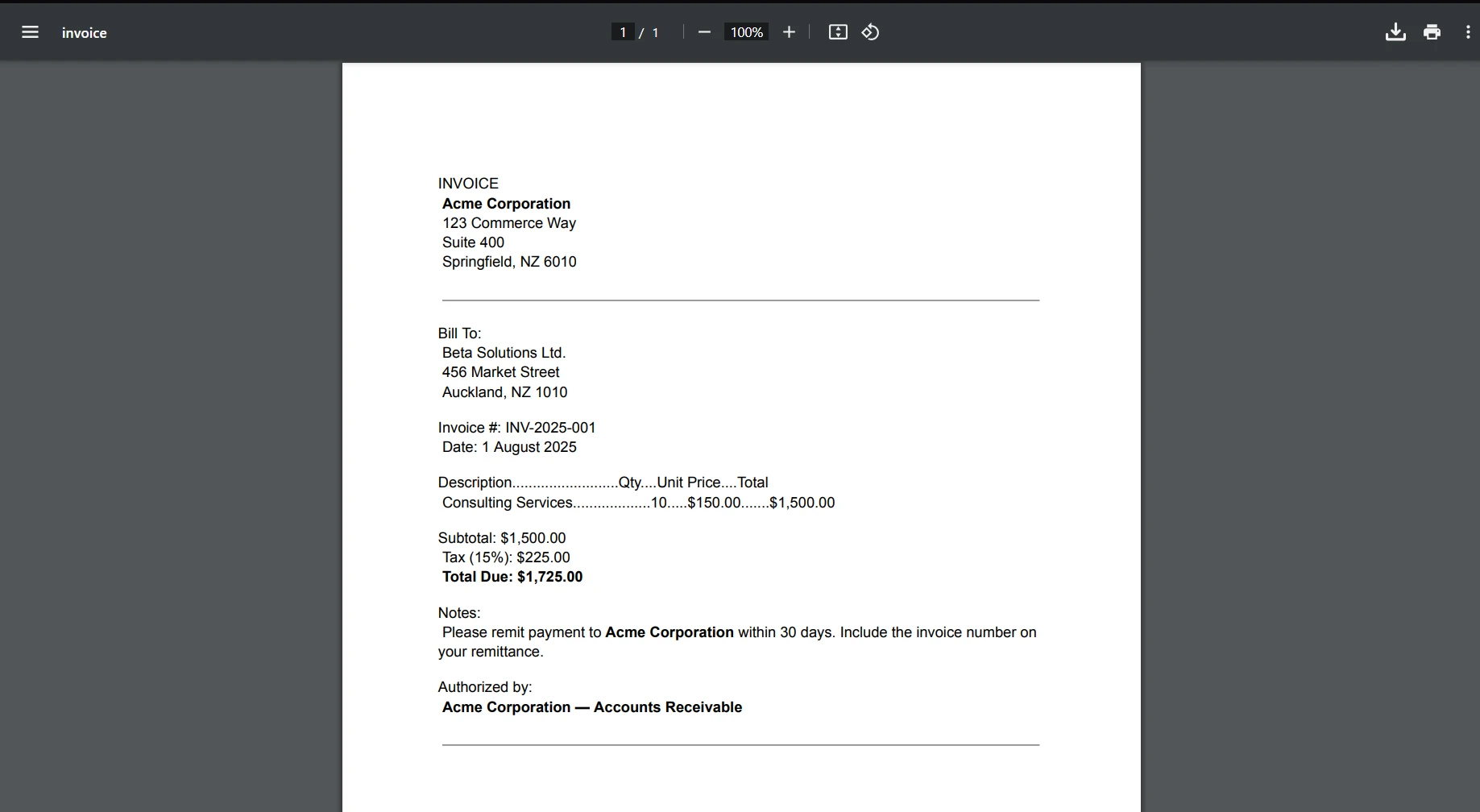
End Class이 예제에서 BasicReportGenerator는 HTML 콘텐츠를 받아 IronPDF를 사용하여 PDF 문서를 생성하는 GenerateReport 메서드를 가지고 있습니다. CustomReportGenerator 클래스는 BasicReportGenerator에서 상속받아, 기본 메서드에 의해 생성된 PDF에 맞춤형 헤더를 추가하기 위해 GenerateReport 메서드를 재정의합니다. 다음은 코드에 의해 생성된 사용자 지정 보고서입니다:
C# 객체 지향(개발자를 위한 작동 원리): 그림 3 - 코드 예제에서 생성된 사용자 정의 PDF로, 기사에서 논의된 OOP 메서드를 보여줍니다
C# 객체 지향(개발자를 위한 작동 원리): 그림 4 - IronPDF 라이선스 페이지
OOP의 기본 원칙을 이해하고 적용함으로써, 초보자들은 C# 숙달과 강력한 소프트웨어 솔루션 개발을 향해 의미 있는 발걸음을 뗄 수 있습니다. 상속과 다형성은 코드 재사용과 유연성을 제공하여 새로운 클래스가 기존 구조와 기능성을 기반으로 구축할 수 있게 합니다. 추상화와 캡슐화는 클래스가 외부에 필요한 것만 노출하도록 보장하여 내부 작동을 비공개로 유지하고 의도치 않은 사용으로부터 안전하게 보호합니다. C#에서 PDF 생성을 위한 IronPDF 무료 체험을 시도할 수 있으며, 이것은 liteLicense부터 사용할 수 있습니다.

제이콥 멜러는 Iron Software의 최고 기술 책임자(CTO)이자 C# PDF 기술을 개척한 선구적인 엔지니어입니다. Iron Software의 핵심 코드베이스를 최초로 개발한 그는 창립 초기부터 회사의 제품 아키텍처를 설계해 왔으며, CEO인 캐머런 리밍턴과 함께 회사를 NASA, 테슬라, 그리고 전 세계 정부 기관에 서비스를 제공하는 50명 이상의 직원을 보유한 기업으로 성장시켰습니다.

IronPDF는 IRON SUITE 의 일부입니다.
10개의 .NET API 제품, 당신의 사무 문서를 위해











PDF 파일을 HTML처럼 빠르게 변환해야 할 때.


