using IronPdf;

// Disable local disk access or cross-origin requests
Installation.EnableWebSecurity = true;

// Instantiate Renderer
var renderer = new ChromePdfRenderer();

// Create a PDF from a HTML string using C#
var pdf = renderer.RenderHtmlAsPdf("<h1>Hello World</h1>");

// Export to a file or Stream
pdf.SaveAs("output.pdf");

// Advanced Example with HTML Assets
// Load external html assets: Images, CSS and JavaScript.
// An optional BasePath 'C:\site\assets\' is set as the file location to load assets from
var myAdvancedPdf = renderer.RenderHtmlAsPdf("<img src='icons/iron.png'>", @"C:\site\assets\");
myAdvancedPdf.SaveAs("html-with-assets.pdf");
using IronPdf;// Disable local disk access or cross-origin requestsInstallation.EnableWebSecurity = true;// Instantiate Renderervar renderer = new ChromePdfRenderer();// Create a PDF from a HTML string using C#var pdf = renderer.RenderHtmlAsPdf("<h1>Hello World</h1>");// Export to a file or Streampdf.SaveAs("output.pdf");// Advanced Example with HTML Assets// Load external html assets: Images, CSS and JavaScript.// An optional BasePath 'C:\site\assets\' is set as the file location to load assets fromvar myAdvancedPdf = renderer.RenderHtmlAsPdf("<img src='icons/iron.png'>", @"C:\site\assets\");myAdvancedPdf.SaveAs("html-with-assets.pdf");
C# bietet eine einzigartige Funktion, die die Organisation und Verwaltung von Code in größeren Projekten verbessert: die Teilklasse durch das Schlüsselwort partial. Dieses Merkmal, auf das über den **teilweisen** Modifikator zugegriffen wird, ermöglicht es Entwicklern, die Definition einer Klasse, eines Interface oder einer Struktur auf mehrere Dateien aufzuteilen. Diese Fähigkeit ist besonders vorteilhaft für die Arbeit mit bereits generiertem Quellcode, wie Benutzeroberflächenkontrolldefinitionen oder Dienst-Wrapper-Code, zusammen mit benutzerdefinierter Geschäftslogik. In diesem Artikel lernen wir über partielle Klassen und die [IronPDF PDF-Bibliothek für .NET](https://ironpdf.com) mithilfe von Visual Studio.
## Verständnis der partiellen Klasse
Eine partielle Klasse, die das gleiche Zugriffslevel beibehält, wird mit dem partiellen Modifikator in C# definiert, was darauf hinweist, dass die Klassendefinition über zwei oder mehr Dateien innerhalb derselben Assembly verteilt ist. Dieser Ansatz hält zusammengehörigen Code zusammen, während die Trennung von Belangen aufrechterhalten wird. Ein Beispiel: Eine **partielle Klasse Mitarbeiter** könnte in einer Datei ihre Geschäftslogik und in einer anderen ihre Datenzugriffsschicht haben, doch beide Teile werden in eine einzelne Klasse kompiliert. Diese Trennung macht den Code nicht nur besser handhabbar, sondern erlaubt auch mehreren Entwicklern, an derselben Klasse zu arbeiten, ohne Konflikte.
```csharp
// File 1: Employee_BusinessLogic.cs
public partial class Employee
{
    // Method for calculating pay
    public void CalculatePay()
    {
        // Implementation of pay calculation
    }
}

// File 2: Employee_DataAccess.cs
public partial class Employee
{
    // Method for loading employee data
    public void Load()
    {
        // Implementation of data loading
    }
}
```
## Partielle Methoden nutzen
Partielle Klassen können auch partielle Methoden definieren, die deklariert, aber nicht zwingend implementiert werden müssen. Diese Methoden ermöglichen Szenarien, in denen ein Teil der Klasse eine Methode deklarieren kann, ohne sie zu implementieren, wobei ein anderer Teil der Klasse sie optional implementieren kann. Wenn keine Implementierung bereitgestellt wird, wird der Teilmethodenaufruf zur Compile-Zeit entfernt, wodurch keine Leistungsstrafe entsteht.
```csharp
// File 1: Employee_BusinessLogic.cs
public partial class Employee
{
// Declaration of a partial method to be called when pay is calculated
partial void OnPayCalculated(double amount);
public void CalculatePay()
{
double amount = 1000; // Simplified calculation
OnPayCalculated(amount); // Call the partial method
}
}
// File 2: Employee_Events.cs
public partial class Employee
{
// Implementation of the partial method
partial void OnPayCalculated(double amount)
{
Console.WriteLine($"Pay calculated: {amount}");
}
}
```
## Fortgeschrittene Verwendung von Partialmethoden
Partielle Methoden, die einen Ansatz für partielle Definitionen darstellen, ermöglichen eine Deklaration in einem Teil einer teilweisen Klasse und eine optionale Implementierung in einem anderen. Dieses Merkmal ist besonders nützlich, um Haken in generiertem Code bereitzustellen, die optional von Entwicklern implementiert werden können. Das **partielle** Schlüsselwort zeigt an, dass die Methode möglicherweise eine Implementierung hat oder nicht.
Betrachten wir ein Beispiel, bei dem eine UI-Komponente eine Aktion vor dem Laden eines Benutzeroberflächenkontrollens durchführen muss. Die partielle Methode bietet eine saubere Möglichkeit, benutzerdefinierte Geschäftslogik einzufügen, ohne den automatisch generierten Code zu überladen.
```csharp
// File: UIControls_AutoGenerated.cs
public partial class UIControls
{
// Declaration of a partial method for control loading
partial void OnControlLoading();
public void LoadControl()
{
OnControlLoading(); // Call the partial method
// Auto-generated loading logic here
}
}
// File: UIControls_CustomLogic.cs
public partial class UIControls
{
// Implementation of the partial method for adding custom logic
partial void OnControlLoading()
{
// Custom business logic code here
Console.WriteLine("Custom control loading logic executed.");
}
}
```
### Integration von Geschäftslogik mit partiellen Klassen
Geschäftslogik erfordert oft Modifikation und Erweiterung über das hinaus, was automatisch generiert wird, insbesondere in Anwendungen mit komplexen Regeln oder Verhalten. Partielle Klassen bieten eine nahtlose Möglichkeit, Geschäftslogik in einer separaten Quelldatei einzuschließen, ohne den automatisch generierten UI- oder Datenzugriffscode zu verändern. Diese Trennung stellt sicher, dass die Geschäftslogik leicht zugänglich und veränderbar durch Entwickler ist, was die Zusammenarbeit verbessert, insbesondere, wenn mehr als ein Entwickler an dem Projekt arbeitet.
```csharp
// File: Employee_AutoGenerated.cs
public partial class Employee
{
// Auto-generated properties and methods
}
// File: Employee_BusinessLogic.cs
public partial class Employee
{
// Business logic method for promoting an employee
public void Promote()
{
// Business logic code to promote an employee
Console.WriteLine("Employee promoted.");
}
}
```
### Teiltypen verschachteln
Verschachtelte partielle Typen erweitern das Konzept der partiellen Klassen auf verschachtelte Klassen, wodurch Teile einer verschachtelten Klasse in separaten Dateien definiert werden können. Dies kann besonders nützlich sein, um große verschachtelte Strukturen zu organisieren, wie eine komplexe Definition einer Benutzeroberflächensteuerung, die mehrere verschachtelte Typen für die Handhabung verschiedener Aspekte des Verhaltens der Steuerung umfasst.
```csharp
// File: ComplexControl_Part1.cs
public partial class ComplexControl
{
public partial class NestedControl
{
// Method for initializing the nested control
public void Initialize()
{
// Initialization code here
}
}
}
// File: ComplexControl_Part2.cs
public partial class ComplexControl
{
public partial class NestedControl
{
// Method for cleaning up the nested control
public void Cleanup()
{
// Cleanup code here
}
}
}
```
## Praktische Anwendungen
Partielle Klassen sind besonders von Vorteil in Szenarien, die automatisch generierten Quellcode umfassen, wie Formulare, bei denen Visual Studio Windows Forms erstellt. Diese Einrichtung ermöglicht es Entwicklern, UI-Design-Code in einer separaten Quelldatei zu halten, wodurch sie die Klasse erweitern oder ändern können, ohne das ursprüngliche UI-Design zu beeinträchtigen.
In Webanwendungen erleichtern partielle Klassen die Trennung von generiertem Webdienst-Wrapper-Code von benutzerdefinierter Geschäftslogik und stellen sicher, dass Updates der Webdienste keine benutzerdefinierten Änderungen überschreiben. Ähnlich erzeugen in Anwendungen, die LINQ to SQL verwenden, dbml-Dateien partielle Klassendefinitionen, die erweitert werden können, um zusätzliche Funktionalität oder Geschäftslogik ohne Änderung des automatisch generierten Codes einzuschließen.
```csharp
// Auto-generated UI class
public partial class MainForm : Form
{
// Designer code
}
// Custom logic for MainForm
public partial class MainForm
{
// Custom event handlers and methods
}
```
## IronPDF: C# PDF-Bibliothek
IronPDF ist eine umfassende Bibliothek für .NET, die es Entwicklern ermöglicht, PDF-Dokumente in ihren Anwendungen zu erstellen, zu lesen und zu bearbeiten. Es bietet einen einfachen Ansatz zur [Erzeugung von PDFs aus HTML mit IronPDF](/examples/using-html-to-create-a-pdf/), URLs, Bildern, ASPX und Text, was es zu einem vielseitigen Werkzeug für Berichterstellung, Dokumentenerzeugung und Web-Inhaltsarchivierung macht. IronPDF besticht durch seine Benutzerfreundlichkeit, da es nur minimalen Aufwand erfordert, um in jedes .NET-Projekt integriert zu werden, einschließlich in C# entwickelten Anwendungen.
## Integration von IronPDF mit partiellen Klassen
Um die Integration von IronPDF mit partiellen Klassen zu veranschaulichen, betrachten wir ein Beispiel, bei dem wir eine Webanwendung haben, die Berichte im PDF-Format generiert. Wir teilen die Funktionalität auf partielle Klassendateien auf, um unsere Geschäftslogik von unserer PDF-Erzeugungslogik zu trennen.
### Einrichten von IronPDF
Stellen Sie sicher, dass IronPDF Ihrem Projekt hinzugefügt ist. Dies kann in der Regel über den NuGet-Paket-Manager mit dem Befehl erfolgen:
```shell
:ProductInstall
```
### Erstellen der partiellen Klasse für die Berichterstellung
Wir teilen unsere Klasse in zwei Teile: einen für die Geschäftslogik in Bezug auf Berichtsdaten und einen anderen für die PDF-Erzeugung mit IronPDF.
**File 1: ReportGenerator_BusinessLogic.cs**
Diese Datei enthält die Geschäftslogik für die Vorbereitung der Daten für den Bericht.
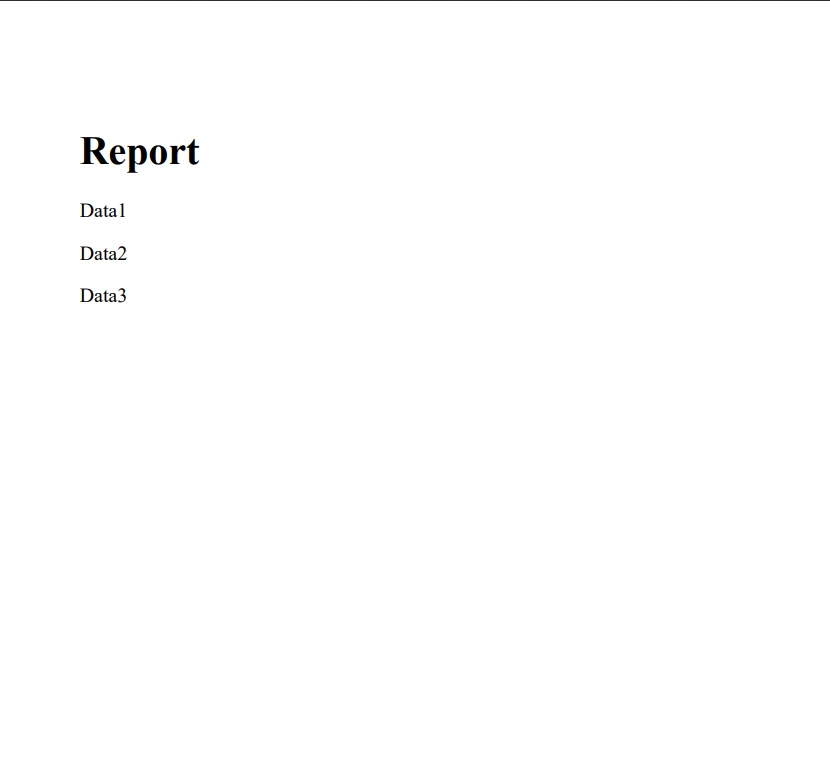
```csharp
public partial class ReportGenerator
{
// Method to get data for the report
public IEnumerable<string> GetDataForReport()
{
// Imagine this method fetches and prepares data for the report
return new List<string> { "Data1", "Data2", "Data3" };
}
}
```
**File 2: ReportGenerator_PdfGeneration.cs**
Diese Datei verwendet IronPDF, um einen PDF-Bericht aus den vorbereiteten Daten zu erstellen.
```csharp
public partial class ReportGenerator
{
// Method to generate PDF report using IronPDF
public void GeneratePdfReport()
{
var renderer = new IronPdf.ChromePdfRenderer();
var data = GetDataForReport();
var htmlContent = $"<html><body><h1>Report</h1><p>{string.Join("</p><p>", data)}</p></body></html>";
// Generate PDF from HTML string
var pdf = renderer.RenderHtmlAsPdf(htmlContent);
// Save the PDF to a file
pdf.SaveAs("Report.pdf");
Console.WriteLine("Report generated successfully.");
}
}
```
### Nutzung
Mit dem partiellen Klassensetup wird die Erstellung eines PDF-Berichts zu einer Frage des Aufrufs der **GeneratePdfReport**-Methode auf einer Instanz der **ReportGenerator**-Klasse.
```csharp
var reportGenerator = new ReportGenerator();
reportGenerator.GeneratePdfReport();
```
## Abschluss
Der Einsatz von partiellen Klassen, partiellen Methoden und verschachtelten partiellen Typen in C# bietet Entwicklern ein flexibles und leistungsfähiges Werkzeug zur Codeorganisation und Verwaltung. Durch die Trennung von automatisch generiertem Code von Geschäftslogik, Benutzeroberflächenkontrolldefinitionen und anderen Teilen der Anwendung können Entwickler wartbarere, lesbarere und skalierbarere Anwendungen erstellen.
Durch die Trennung der Belange von Geschäftslogik und PDF-Verarbeitung können Entwickler eine bessere Codeorganisation, Wartbarkeit und Skalierbarkeit erreichen. Die leistungsstarken Funktionen von IronPDF in Kombination mit den organisatorischen Vorteilen partieller Klassen schaffen ein mächtiges Werkzeugsortiment for .NET-Entwickler, die in ihren Projekten mit PDFs arbeiten. Testen Sie IronPDF kostenlos mit der [Testversion auf IronPDF](trial-license). Wenn Sie am Kauf interessiert sind, beginnt die Lizenz von IronPDF ab `$liteLicense`.
C# bietet eine einzigartige Funktion, die die Organisation und Verwaltung von Code in größeren Projekten verbessert: die Teilklasse durch das Schlüsselwort partial. Dieses Merkmal, auf das über den teilweisen Modifikator zugegriffen wird, ermöglicht es Entwicklern, die Definition einer Klasse, eines Interface oder einer Struktur auf mehrere Dateien aufzuteilen. Diese Fähigkeit ist besonders vorteilhaft für die Arbeit mit bereits generiertem Quellcode, wie Benutzeroberflächenkontrolldefinitionen oder Dienst-Wrapper-Code, zusammen mit benutzerdefinierter Geschäftslogik. In diesem Artikel lernen wir über partielle Klassen und die IronPDF PDF-Bibliothek für .NET mithilfe von Visual Studio.
Verständnis der partiellen Klasse
Eine partielle Klasse, die das gleiche Zugriffslevel beibehält, wird mit dem partiellen Modifikator in C# definiert, was darauf hinweist, dass die Klassendefinition über zwei oder mehr Dateien innerhalb derselben Assembly verteilt ist. Dieser Ansatz hält zusammengehörigen Code zusammen, während die Trennung von Belangen aufrechterhalten wird. Ein Beispiel: Eine partielle Klasse Mitarbeiter könnte in einer Datei ihre Geschäftslogik und in einer anderen ihre Datenzugriffsschicht haben, doch beide Teile werden in eine einzelne Klasse kompiliert. Diese Trennung macht den Code nicht nur besser handhabbar, sondern erlaubt auch mehreren Entwicklern, an derselben Klasse zu arbeiten, ohne Konflikte.
// File 1: Employee_BusinessLogic.cspublic partial class Employee{ // Method for calculating pay public voidCalculatePay() { // Implementation of pay calculation }}// File 2: Employee_DataAccess.cspublic partial class Employee{ // Method for loading employee data public voidLoad() { // Implementation of data loading }}
// File 1: Employee_BusinessLogic.cs
public partial class Employee
{
    // Method for calculating pay
    public void CalculatePay()
    {
        // Implementation of pay calculation
    }
}

// File 2: Employee_DataAccess.cs
public partial class Employee
{
    // Method for loading employee data
    public void Load()
    {
        // Implementation of data loading
    }
}
' File 1: Employee_BusinessLogic.csPartialPublic Class Employee ' Method for calculating pay Public Sub CalculatePay() ' Implementation of pay calculation End SubEnd Class' File 2: Employee_DataAccess.csPartialPublic Class Employee ' Method for loading employee data Public Sub Load() ' Implementation of data loading End SubEnd Class
' File 1: Employee_BusinessLogic.cs
Partial Public Class Employee
	' Method for calculating pay
	Public Sub CalculatePay()
		' Implementation of pay calculation
	End Sub
End Class

' File 2: Employee_DataAccess.cs
Partial Public Class Employee
	' Method for loading employee data
	Public Sub Load()
		' Implementation of data loading
	End Sub
End Class
Partielle Methoden nutzen
Partielle Klassen können auch partielle Methoden definieren, die deklariert, aber nicht zwingend implementiert werden müssen. Diese Methoden ermöglichen Szenarien, in denen ein Teil der Klasse eine Methode deklarieren kann, ohne sie zu implementieren, wobei ein anderer Teil der Klasse sie optional implementieren kann. Wenn keine Implementierung bereitgestellt wird, wird der Teilmethodenaufruf zur Compile-Zeit entfernt, wodurch keine Leistungsstrafe entsteht.
// File 1: Employee_BusinessLogic.cspublic partial class Employee{ // Declaration of a partial method to be called when pay is calculated partial voidOnPayCalculated(double amount); public voidCalculatePay() { double amount = 1000; // Simplified calculationOnPayCalculated(amount); // Call the partial method }}// File 2: Employee_Events.cspublic partial class Employee{ // Implementation of the partial method partial voidOnPayCalculated(double amount) {Console.WriteLine($"Pay calculated: {amount}"); }}
// File 1: Employee_BusinessLogic.cs
public partial class Employee
{
    // Declaration of a partial method to be called when pay is calculated
    partial void OnPayCalculated(double amount);

    public void CalculatePay()
    {
        double amount = 1000; // Simplified calculation
        OnPayCalculated(amount); // Call the partial method
    }
}

// File 2: Employee_Events.cs
public partial class Employee
{
    // Implementation of the partial method
    partial void OnPayCalculated(double amount)
    {
        Console.WriteLine($"Pay calculated: {amount}");
    }
}
' File 1: Employee_BusinessLogic.csPartialPublic Class Employee ' Declaration of a partial method to be called when pay is calculatedPartial Private Sub OnPayCalculated(ByVal amount AsDouble) End Sub Public Sub CalculatePay() Dim amount AsDouble = 1000 ' Simplified calculationOnPayCalculated(amount) ' Call the partial method End SubEnd Class' File 2: Employee_Events.csPartialPublic Class Employee ' Implementation of the partial method Private Sub OnPayCalculated(ByVal amount AsDouble)Console.WriteLine($"Pay calculated: {amount}") End SubEnd Class
' File 1: Employee_BusinessLogic.cs
Partial Public Class Employee
	' Declaration of a partial method to be called when pay is calculated
	Partial Private Sub OnPayCalculated(ByVal amount As Double)
	End Sub

	Public Sub CalculatePay()
		Dim amount As Double = 1000 ' Simplified calculation
		OnPayCalculated(amount) ' Call the partial method
	End Sub
End Class

' File 2: Employee_Events.cs
Partial Public Class Employee
	' Implementation of the partial method
	Private Sub OnPayCalculated(ByVal amount As Double)
		Console.WriteLine($"Pay calculated: {amount}")
	End Sub
End Class
Fortgeschrittene Verwendung von Partialmethoden
Partielle Methoden, die einen Ansatz für partielle Definitionen darstellen, ermöglichen eine Deklaration in einem Teil einer teilweisen Klasse und eine optionale Implementierung in einem anderen. Dieses Merkmal ist besonders nützlich, um Haken in generiertem Code bereitzustellen, die optional von Entwicklern implementiert werden können. Das partielle Schlüsselwort zeigt an, dass die Methode möglicherweise eine Implementierung hat oder nicht.
Betrachten wir ein Beispiel, bei dem eine UI-Komponente eine Aktion vor dem Laden eines Benutzeroberflächenkontrollens durchführen muss. Die partielle Methode bietet eine saubere Möglichkeit, benutzerdefinierte Geschäftslogik einzufügen, ohne den automatisch generierten Code zu überladen.
// File: UIControls_AutoGenerated.cspublic partial class UIControls{ // Declaration of a partial method for control loading partial voidOnControlLoading(); public voidLoadControl() {OnControlLoading(); // Call the partial method // Auto-generated loading logic here }}// File: UIControls_CustomLogic.cspublic partial class UIControls{ // Implementation of the partial method for adding custom logic partial voidOnControlLoading() { // Custom business logic code hereConsole.WriteLine("Custom control loading logic executed."); }}
// File: UIControls_AutoGenerated.cs
public partial class UIControls
{
    // Declaration of a partial method for control loading
    partial void OnControlLoading();

    public void LoadControl()
    {
        OnControlLoading(); // Call the partial method
        // Auto-generated loading logic here
    }
}

// File: UIControls_CustomLogic.cs
public partial class UIControls
{
    // Implementation of the partial method for adding custom logic
    partial void OnControlLoading()
    {
        // Custom business logic code here
        Console.WriteLine("Custom control loading logic executed.");
    }
}
' File: UIControls_AutoGenerated.csPartialPublic Class UIControls ' Declaration of a partial method for control loadingPartial Private Sub OnControlLoading() End Sub Public Sub LoadControl()OnControlLoading() ' Call the partial method ' Auto-generated loading logic here End SubEnd Class' File: UIControls_CustomLogic.csPartialPublic Class UIControls ' Implementation of the partial method for adding custom logic Private Sub OnControlLoading() ' Custom business logic code hereConsole.WriteLine("Custom control loading logic executed.") End SubEnd Class
' File: UIControls_AutoGenerated.cs
Partial Public Class UIControls
	' Declaration of a partial method for control loading
	Partial Private Sub OnControlLoading()
	End Sub

	Public Sub LoadControl()
		OnControlLoading() ' Call the partial method
		' Auto-generated loading logic here
	End Sub
End Class

' File: UIControls_CustomLogic.cs
Partial Public Class UIControls
	' Implementation of the partial method for adding custom logic
	Private Sub OnControlLoading()
		' Custom business logic code here
		Console.WriteLine("Custom control loading logic executed.")
	End Sub
End Class
Integration von Geschäftslogik mit partiellen Klassen
Geschäftslogik erfordert oft Modifikation und Erweiterung über das hinaus, was automatisch generiert wird, insbesondere in Anwendungen mit komplexen Regeln oder Verhalten. Partielle Klassen bieten eine nahtlose Möglichkeit, Geschäftslogik in einer separaten Quelldatei einzuschließen, ohne den automatisch generierten UI- oder Datenzugriffscode zu verändern. Diese Trennung stellt sicher, dass die Geschäftslogik leicht zugänglich und veränderbar durch Entwickler ist, was die Zusammenarbeit verbessert, insbesondere, wenn mehr als ein Entwickler an dem Projekt arbeitet.
// File: Employee_AutoGenerated.cspublic partial class Employee{ // Auto-generated properties and methods}// File: Employee_BusinessLogic.cspublic partial class Employee{ // Business logic method for promoting an employee public voidPromote() { // Business logic code to promote an employeeConsole.WriteLine("Employee promoted."); }}
// File: Employee_AutoGenerated.cs
public partial class Employee
{
    // Auto-generated properties and methods
}

// File: Employee_BusinessLogic.cs
public partial class Employee
{
    // Business logic method for promoting an employee
    public void Promote()
    {
        // Business logic code to promote an employee
        Console.WriteLine("Employee promoted.");
    }
}
' File: Employee_AutoGenerated.csPartialPublic Class Employee ' Auto-generated properties and methodsEnd Class' File: Employee_BusinessLogic.csPartialPublic Class Employee ' Business logic method for promoting an employee Public Sub Promote() ' Business logic code to promote an employeeConsole.WriteLine("Employee promoted.") End SubEnd Class
' File: Employee_AutoGenerated.cs
Partial Public Class Employee
	' Auto-generated properties and methods
End Class

' File: Employee_BusinessLogic.cs
Partial Public Class Employee
	' Business logic method for promoting an employee
	Public Sub Promote()
		' Business logic code to promote an employee
		Console.WriteLine("Employee promoted.")
	End Sub
End Class
Teiltypen verschachteln
Verschachtelte partielle Typen erweitern das Konzept der partiellen Klassen auf verschachtelte Klassen, wodurch Teile einer verschachtelten Klasse in separaten Dateien definiert werden können. Dies kann besonders nützlich sein, um große verschachtelte Strukturen zu organisieren, wie eine komplexe Definition einer Benutzeroberflächensteuerung, die mehrere verschachtelte Typen für die Handhabung verschiedener Aspekte des Verhaltens der Steuerung umfasst.
// File: ComplexControl_Part1.cspublic partial class ComplexControl{ public partial class NestedControl { // Method for initializing the nested control public voidInitialize() { // Initialization code here } }}// File: ComplexControl_Part2.cspublic partial class ComplexControl{ public partial class NestedControl { // Method for cleaning up the nested control public voidCleanup() { // Cleanup code here } }}
// File: ComplexControl_Part1.cs
public partial class ComplexControl
{
    public partial class NestedControl
    {
        // Method for initializing the nested control
        public void Initialize()
        {
            // Initialization code here
        }
    }
}

// File: ComplexControl_Part2.cs
public partial class ComplexControl
{
    public partial class NestedControl
    {
        // Method for cleaning up the nested control
        public void Cleanup()
        {
            // Cleanup code here
        }
    }
}
' File: ComplexControl_Part1.csPartialPublic Class ComplexControlPartialPublic Class NestedControl ' Method for initializing the nested control Public Sub Initialize() ' Initialization code here End Sub End ClassEnd Class' File: ComplexControl_Part2.csPartialPublic Class ComplexControlPartialPublic Class NestedControl ' Method for cleaning up the nested control Public Sub Cleanup() ' Cleanup code here End Sub End ClassEnd Class
' File: ComplexControl_Part1.cs
Partial Public Class ComplexControl
	Partial Public Class NestedControl
		' Method for initializing the nested control
		Public Sub Initialize()
			' Initialization code here
		End Sub
	End Class
End Class

' File: ComplexControl_Part2.cs
Partial Public Class ComplexControl
	Partial Public Class NestedControl
		' Method for cleaning up the nested control
		Public Sub Cleanup()
			' Cleanup code here
		End Sub
	End Class
End Class
Praktische Anwendungen
Partielle Klassen sind besonders von Vorteil in Szenarien, die automatisch generierten Quellcode umfassen, wie Formulare, bei denen Visual Studio Windows Forms erstellt. Diese Einrichtung ermöglicht es Entwicklern, UI-Design-Code in einer separaten Quelldatei zu halten, wodurch sie die Klasse erweitern oder ändern können, ohne das ursprüngliche UI-Design zu beeinträchtigen.
In Webanwendungen erleichtern partielle Klassen die Trennung von generiertem Webdienst-Wrapper-Code von benutzerdefinierter Geschäftslogik und stellen sicher, dass Updates der Webdienste keine benutzerdefinierten Änderungen überschreiben. Ähnlich erzeugen in Anwendungen, die LINQ to SQL verwenden, dbml-Dateien partielle Klassendefinitionen, die erweitert werden können, um zusätzliche Funktionalität oder Geschäftslogik ohne Änderung des automatisch generierten Codes einzuschließen.
// Auto-generated UI classpublic partial class MainForm : Form{ // Designer code}// Custom logic for MainFormpublic partial class MainForm{ // Custom event handlers and methods}
// Auto-generated UI class
public partial class MainForm : Form
{
    // Designer code
}

// Custom logic for MainForm
public partial class MainForm
{
    // Custom event handlers and methods
}
' Auto-generated UI classPartialPublic Class MainFormInheritsForm ' Designer codeEnd Class' Custom logic for MainFormPartialPublic Class MainFormInheritsForm ' Custom event handlers and methodsEnd Class
' Auto-generated UI class
Partial Public Class MainForm
	Inherits Form

	' Designer code
End Class

' Custom logic for MainForm
Partial Public Class MainForm
	Inherits Form

	' Custom event handlers and methods
End Class
IronPDF: C# PDF-Bibliothek
IronPDF ist eine umfassende Bibliothek für .NET, die es Entwicklern ermöglicht, PDF-Dokumente in ihren Anwendungen zu erstellen, zu lesen und zu bearbeiten. Es bietet einen einfachen Ansatz zur Erzeugung von PDFs aus HTML mit IronPDF, URLs, Bildern, ASPX und Text, was es zu einem vielseitigen Werkzeug für Berichterstellung, Dokumentenerzeugung und Web-Inhaltsarchivierung macht. IronPDF besticht durch seine Benutzerfreundlichkeit, da es nur minimalen Aufwand erfordert, um in jedes .NET-Projekt integriert zu werden, einschließlich in C# entwickelten Anwendungen.
Integration von IronPDF mit partiellen Klassen
Um die Integration von IronPDF mit partiellen Klassen zu veranschaulichen, betrachten wir ein Beispiel, bei dem wir eine Webanwendung haben, die Berichte im PDF-Format generiert. Wir teilen die Funktionalität auf partielle Klassendateien auf, um unsere Geschäftslogik von unserer PDF-Erzeugungslogik zu trennen.
Einrichten von IronPDF
Stellen Sie sicher, dass IronPDF Ihrem Projekt hinzugefügt ist. Dies kann in der Regel über den NuGet-Paket-Manager mit dem Befehl erfolgen:
PM > Install-Package IronPdf
Install-Package IronPdf
Erstellen der partiellen Klasse für die Berichterstellung
Wir teilen unsere Klasse in zwei Teile: einen für die Geschäftslogik in Bezug auf Berichtsdaten und einen anderen für die PDF-Erzeugung mit IronPDF.
File 1: ReportGenerator_BusinessLogic.cs
Diese Datei enthält die Geschäftslogik für die Vorbereitung der Daten für den Bericht.
public partial class ReportGenerator{ // Method to get data for the report public IEnumerable<string> GetDataForReport() { // Imagine this method fetches and prepares data for the report return new List<string> { "Data1", "Data2", "Data3" }; }}
public partial class ReportGenerator
{
    // Method to get data for the report
    public IEnumerable<string> GetDataForReport()
    {
        // Imagine this method fetches and prepares data for the report
        return new List<string> { "Data1", "Data2", "Data3" };
    }
}
PartialPublic Class ReportGenerator ' Method to get data for the report Public Function GetDataForReport() AsIEnumerable(OfString) ' Imagine this method fetches and prepares data for the report Return New List(OfString) From {"Data1", "Data2", "Data3"} End FunctionEnd Class
Partial Public Class ReportGenerator
	' Method to get data for the report
	Public Function GetDataForReport() As IEnumerable(Of String)
		' Imagine this method fetches and prepares data for the report
		Return New List(Of String) From {"Data1", "Data2", "Data3"}
	End Function
End Class
File 2: ReportGenerator_PdfGeneration.cs
Diese Datei verwendet IronPDF, um einen PDF-Bericht aus den vorbereiteten Daten zu erstellen.
public partial class ReportGenerator{ // Method to generate PDF report using IronPDF public voidGeneratePdfReport() { var renderer = new IronPdf.ChromePdfRenderer(); var data = GetDataForReport(); var htmlContent = $"<html><body><h1>Report</h1><p>{string.Join("</p><p>", data)}</p></body></html>"; // Generate PDF from HTML string var pdf = renderer.RenderHtmlAsPdf(htmlContent); // Save the PDF to a file pdf.SaveAs("Report.pdf");Console.WriteLine("Report generated successfully."); }}
public partial class ReportGenerator
{
    // Method to generate PDF report using IronPDF
    public void GeneratePdfReport()
    {
        var renderer = new IronPdf.ChromePdfRenderer();
        var data = GetDataForReport();
        var htmlContent = $"<html><body><h1>Report</h1><p>{string.Join("</p><p>", data)}</p></body></html>";

        // Generate PDF from HTML string
        var pdf = renderer.RenderHtmlAsPdf(htmlContent);

        // Save the PDF to a file
        pdf.SaveAs("Report.pdf");
        Console.WriteLine("Report generated successfully.");
    }
}
PublicPartial Class ReportGenerator ' Method to generate PDF report using IronPDF Public Sub GeneratePdfReport() Dim renderer = New IronPdf.ChromePdfRenderer() Dim data = GetDataForReport() Dim htmlContent = $"<html><body><h1>Report</h1><p>{String.Join("</p><p>", data)}</p></body></html>" ' Generate PDF from HTML string Dim pdf = renderer.RenderHtmlAsPdf(htmlContent) ' Save the PDF to a file pdf.SaveAs("Report.pdf")Console.WriteLine("Report generated successfully.") End SubEnd Class
Public Partial Class ReportGenerator
    ' Method to generate PDF report using IronPDF
    Public Sub GeneratePdfReport()
        Dim renderer = New IronPdf.ChromePdfRenderer()
        Dim data = GetDataForReport()
        Dim htmlContent = $"<html><body><h1>Report</h1><p>{String.Join("</p><p>", data)}</p></body></html>"

        ' Generate PDF from HTML string
        Dim pdf = renderer.RenderHtmlAsPdf(htmlContent)

        ' Save the PDF to a file
        pdf.SaveAs("Report.pdf")
        Console.WriteLine("Report generated successfully.")
    End Sub
End Class
Nutzung
Mit dem partiellen Klassensetup wird die Erstellung eines PDF-Berichts zu einer Frage des Aufrufs der GeneratePdfReport-Methode auf einer Instanz der ReportGenerator-Klasse.
var reportGenerator = new ReportGenerator();reportGenerator.GeneratePdfReport();
var reportGenerator = new ReportGenerator();
reportGenerator.GeneratePdfReport();
Dim reportGenerator As New ReportGenerator()reportGenerator.GeneratePdfReport()
Dim reportGenerator As New ReportGenerator()
reportGenerator.GeneratePdfReport()
Abschluss
Der Einsatz von partiellen Klassen, partiellen Methoden und verschachtelten partiellen Typen in C# bietet Entwicklern ein flexibles und leistungsfähiges Werkzeug zur Codeorganisation und Verwaltung. Durch die Trennung von automatisch generiertem Code von Geschäftslogik, Benutzeroberflächenkontrolldefinitionen und anderen Teilen der Anwendung können Entwickler wartbarere, lesbarere und skalierbarere Anwendungen erstellen.
Durch die Trennung der Belange von Geschäftslogik und PDF-Verarbeitung können Entwickler eine bessere Codeorganisation, Wartbarkeit und Skalierbarkeit erreichen. Die leistungsstarken Funktionen von IronPDF in Kombination mit den organisatorischen Vorteilen partieller Klassen schaffen ein mächtiges Werkzeugsortiment for .NET-Entwickler, die in ihren Projekten mit PDFs arbeiten. Testen Sie IronPDF kostenlos mit der Testversion auf IronPDF. Wenn Sie am Kauf interessiert sind, beginnt die Lizenz von IronPDF ab $999.
Jacob Mellor ist Chief Technology Officer bei Iron Software und ein visionärer Ingenieur, der Pionierarbeit in der C# PDF-Technologie leistet. Als der ursprüngliche Entwickler hinter der Kern-Codebasis von Iron Software hat er die Produktarchitektur des Unternehmens seit seiner Gründung geprägt und es zusammen mit CEO Cameron Rimington in ein Unternehmen mit mehr als 50 Mitarbeitern verwandelt, das die NASA, Tesla und globale Regierungsbehörden beliefert.