using IronPdf;

// Disable local disk access or cross-origin requests
Installation.EnableWebSecurity = true;

// Instantiate Renderer
var renderer = new ChromePdfRenderer();

// Create a PDF from a HTML string using C#
var pdf = renderer.RenderHtmlAsPdf("<h1>Hello World</h1>");

// Export to a file or Stream
pdf.SaveAs("output.pdf");

// Advanced Example with HTML Assets
// Load external html assets: Images, CSS and JavaScript.
// An optional BasePath 'C:\site\assets\' is set as the file location to load assets from
var myAdvancedPdf = renderer.RenderHtmlAsPdf("<img src='icons/iron.png'>", @"C:\site\assets\");
myAdvancedPdf.SaveAs("html-with-assets.pdf");
using IronPdf;// Disable local disk access or cross-origin requestsInstallation.EnableWebSecurity = true;// Instantiate Renderervar renderer = new ChromePdfRenderer();// Create a PDF from a HTML string using C#var pdf = renderer.RenderHtmlAsPdf("<h1>Hello World</h1>");// Export to a file or Streampdf.SaveAs("output.pdf");// Advanced Example with HTML Assets// Load external html assets: Images, CSS and JavaScript.// An optional BasePath 'C:\site\assets\' is set as the file location to load assets fromvar myAdvancedPdf = renderer.RenderHtmlAsPdf("<img src='icons/iron.png'>", @"C:\site\assets\");myAdvancedPdf.SaveAs("html-with-assets.pdf");
La manipulación de texto es una habilidad esencial para cualquier desarrollador .NET. Ya sea que estés limpiando cadenas para la entrada del usuario, dando formato a los datos para el análisis, o procesando texto extraído de documentos, tener las herramientas adecuadas para el trabajo hace la diferencia. Al trabajar con PDFs, gestionar y procesar texto eficientemente puede ser un desafío debido a su naturaleza no estructurada. Ahí es donde [IronPDF](https://ironpdf.com/), una potente librería para trabajar con PDFs en C#, brilla.
En este artículo, exploraremos cómo aprovechar el [método Trim() de C#](https://learn.microsoft.com/en-us/dotnet/api/system.string.trim?view=net-8.0) en combinación con IronPDF para limpiar y procesar texto de documentos PDF de manera efectiva.
## Comprender C# Trim()
### ¿Qué es el recorte de texto?
El método Trim() elimina espacios en blanco o caracteres específicos desde el inicio y el fin de cadenas. Por ejemplo:
```csharp
string text = "   Hello World!   ";
string trimmedText = text.Trim(); // Output: "Hello World!"
```
También puede dirigirse a caracteres específicos, como eliminar símbolos `#` de una cadena:
```csharp
string text = "###Important###";
string trimmedText = text.Trim('#'); // Output: "Important"
```
### Recorte de posiciones específicas
C# proporciona `TrimStart()` y `TrimEnd()` para eliminar caracteres desde el principio o el final de una cadena. Por ejemplo:
```csharp
string str = "!!Hello World!!";
string trimmedStart = str.TrimStart('!'); // "Hello World!!"
string trimmedEnd = str.TrimEnd('!');     // "!!Hello World"
```
## Errores comunes y soluciones
### 1. Excepciones de referencia nula
Llamar a `Trim()` en una cadena `null` lanza un error. Para evitar esto, utiliza el operador de coalescencia nula o verificaciones condicionales:
```csharp
string text = null;
string safeTrim = text?.Trim() ?? string.Empty;
```
### 2. Sobrecarga de inmutabilidad
Dado que las cadenas en C# son inmutables, las operaciones repetidas de `Trim()` en bucles pueden degradar el rendimiento. Para grandes conjuntos de datos, considere usar `Span<t>` o reutilizar variables.
### 3. Recorte excesivo de caracteres válidos
Eliminar accidentalmente caracteres necesarios es un error común. Siempre especifica los caracteres exactos a recortar cuando trabajes con contenido que no sea de espacios en blanco.
### 4. Espacios en blanco Unicode
El método predeterminado `Trim()` no maneja ciertos caracteres de espacio en blanco Unicode (por ejemplo, `\u2003`). Para abordar esto, inclúyelos explícitamente en los parámetros de recorte.
## Técnicas avanzadas para un recorte eficaz
### Integración de Regex
Para patrones complejos, combine `Trim()` con expresiones regulares. Por ejemplo, para reemplazar múltiples espacios:
```csharp
string cleanedText = Regex.Replace(text, @"^\s+|\s+$", "");
```
### Optimización del rendimiento
Al procesar textos largos, evita operaciones de recorte repetidas. Use `StringBuilder` para el preprocesamiento:
```csharp
var sb = new StringBuilder(text);
// Custom extension method to trim once
// Assuming a Trim extension method exists for StringBuilder
sb.Trim();
```
### Escenarios culturales específicos
Aunque `Trim()` es insensible a la cultura, puede usar `CultureInfo` para un recorte sensible a la ubicación en casos raros.
### ¿Por qué utilizar el recorte en el procesamiento de PDF?
Al extraer texto de PDFs, es frecuente encontrar caracteres iniciales y finales como símbolos especiales, espacios innecesarios, o artefactos de formato. Por ejemplo:
- Inconsistencias de formato: La estructura de PDF puede llevar a saltos de línea innecesarios o caracteres especiales.
- Los caracteres de espacio en blanco al final pueden ensuciar la salida de texto, especialmente al alinear datos para informes.
- Las ocurrencias iniciales y finales de símbolos (por ejemplo, `*`, `-`) a menudo aparecen en el contenido generado por OCR.
Usar `Trim()` le permite limpiar el objeto de cadena actual y prepararlo para operaciones posteriores.
## ¿Por qué elegir IronPDF para el procesamiento de PDF?
[IronPDF](https://ironpdf.com/docs/) es una potente librería de manipulación de PDF for .NET, diseñada para facilitar el trabajo con archivos PDF. Proporciona funciones que le permiten generar, editar y extraer contenido de PDFs con un esfuerzo mínimo de configuración y codificación. Aquí están algunas de las características clave que ofrece IronPDF:
- **Conversión de HTML a PDF:** IronPDF puede convertir [contenido HTML](https://ironpdf.com/examples/using-html-to-create-a-pdf/) (incluyendo CSS, imágenes y JavaScript) en PDFs totalmente formateados. Esto es especialmente útil para representar páginas web dinámicas o informes como PDFs.
- **Edición de PDF:** Con IronPDF, puedes manipular documentos PDF existentes añadiendo texto, imágenes y gráficos, así como [editar](https://ironpdf.com/examples/editing-pdfs/) el contenido de páginas existentes.
- **Extracción de Texto e Imágenes:** La librería te permite [extraer texto e imágenes](https://ironpdf.com/how-to/extract-text-and-images/) de PDFs, facilitando el análisis y la lectura del contenido PDF.
- **Relleno de Formularios:** IronPDF soporta el relleno de [campos de formulario](https://ironpdf.com/examples/form-data/) en PDFs, lo cual es útil para generar documentos personalizados.
- **Marcas de Agua:** También es posible añadir [marcas de agua](https://ironpdf.com/examples/pdf-watermarking/) a documentos PDF para branding o protección de derechos de autor.
### Beneficios del uso de IronPDF para tareas de recorte
IronPDF sobresale en el manejo de datos PDF no estructurados, facilitando la extracción, limpieza y procesamiento de texto de manera eficiente. Los casos de uso incluyen:
- Limpieza de datos extraídos: Elimina espacios en blanco o caracteres innecesarios antes de almacenarlos en una base de datos.
- Preparación de datos para análisis: Recorta y da formato a los datos para una mejor legibilidad.
## Implementing Text Trimming with IronPDF in C#
### Cómo configurar su proyecto IronPDF
Comienza instalando IronPDF a través de NuGet:
1. Abra su proyecto en Visual Studio.
2. Ejecuta el siguiente comando en la Consola del Administrador de Paquetes NuGet:
```shell
:ProductInstall
```
1. Descarga la [prueba gratuita](trial-license) de IronPDF para desbloquear su potencial completo si aún no posees una licencia.
### Ejemplo paso a paso: Recortar texto de un PDF
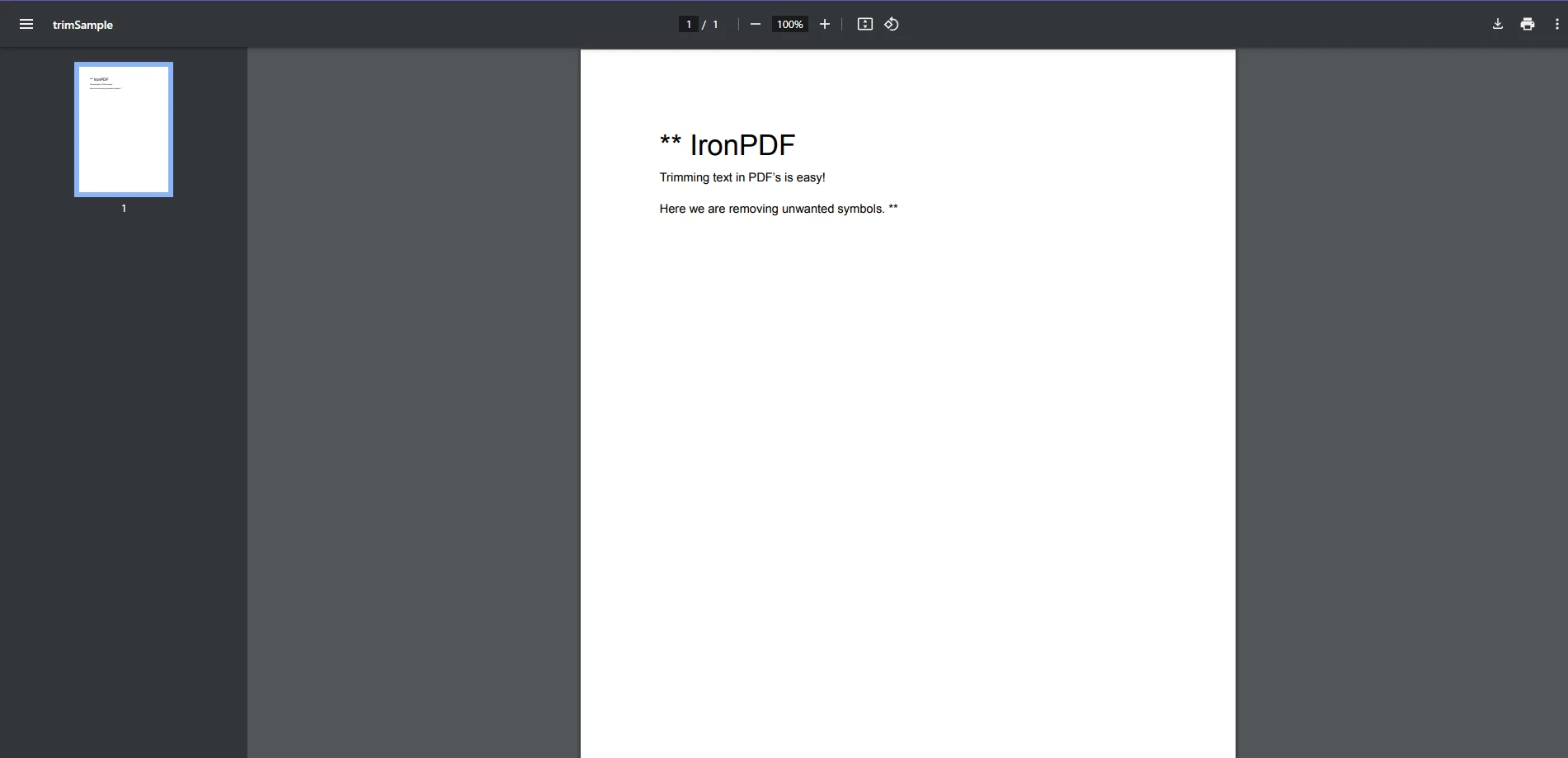
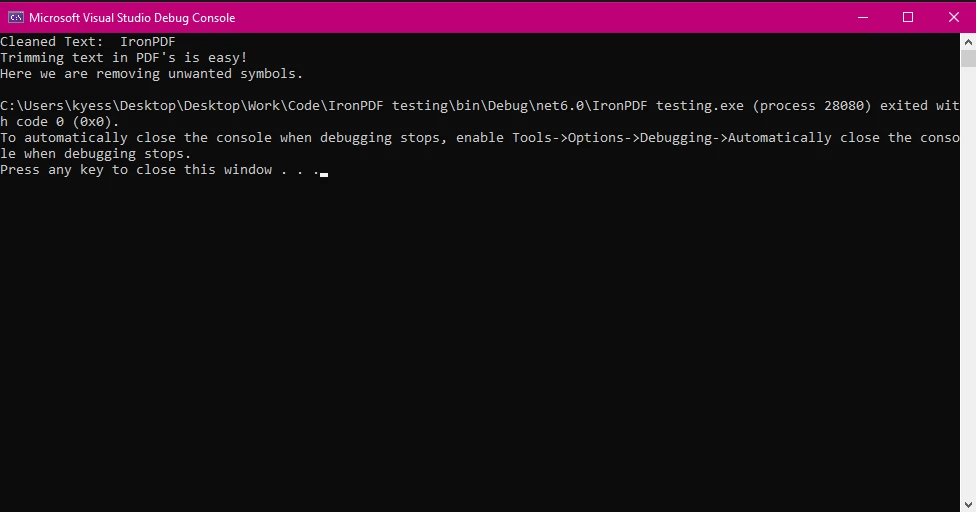
Aquí hay un ejemplo completo de cómo extraer texto de un PDF y limpiarlo usando `Trim()` para eliminar un carácter especificado:
```csharp
using IronPdf;
public class Program
{
public static void Main(string[] args)
{
// Load a PDF file
PdfDocument pdf = PdfDocument.FromFile("trimSample.pdf");
// Extract text from the PDF
string extractedText = pdf.ExtractAllText();
// Trim whitespace and unwanted characters
string trimmedText = extractedText.Trim('*');
// Display the cleaned text
Console.WriteLine($"Cleaned Text: {trimmedText}");
}
}
```
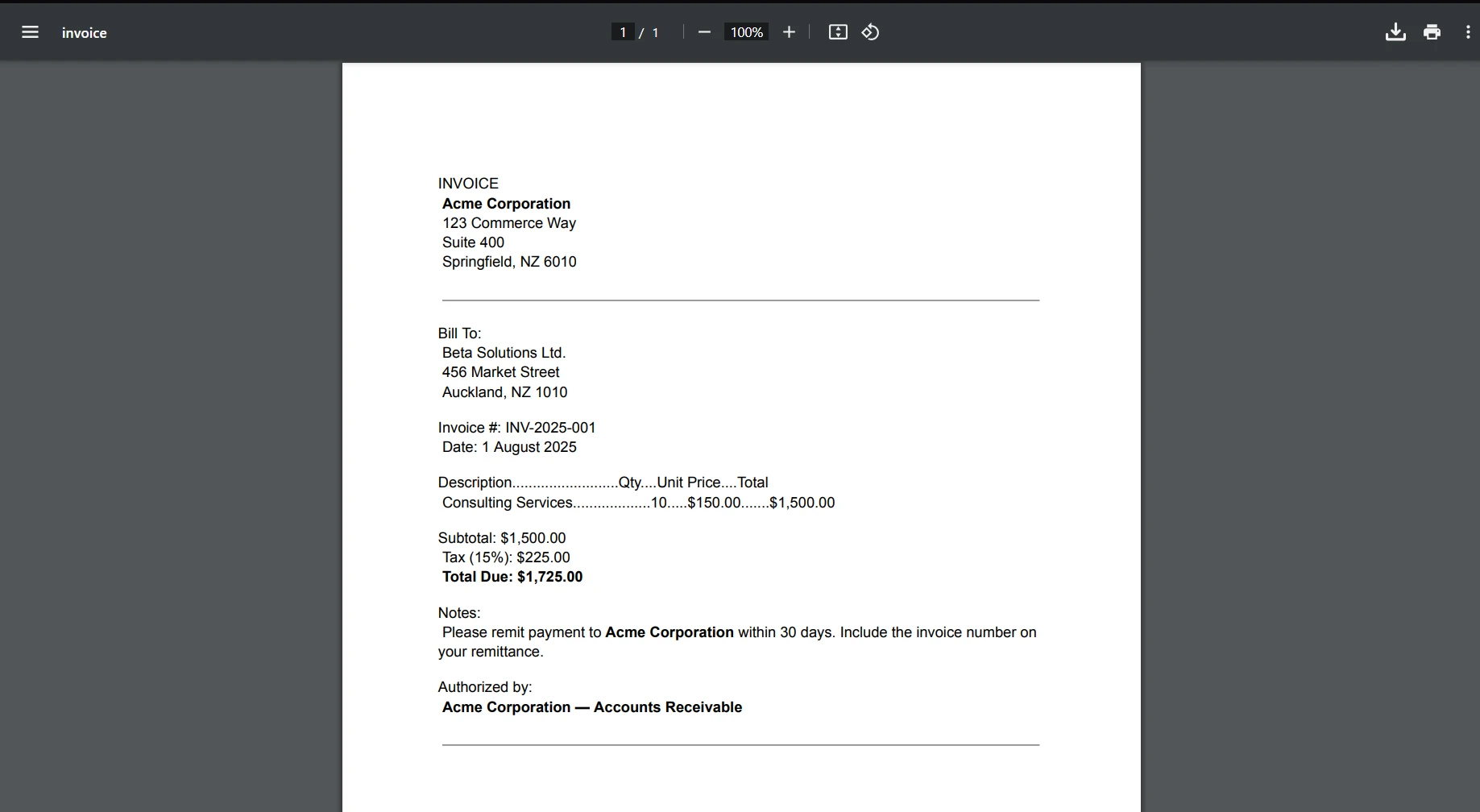
### PDF de entrada:
### Salida de la consola:
## Explorando aplicaciones del mundo real
### Automatización del procesamiento de facturas
Extrae texto de facturas PDF, recorta contenido innecesario, y analiza detalles esenciales como totales o IDs de factura. Ejemplo:
- Usa IronPDF para leer datos de facturas.
- Recorta espacios en blanco para un formato consistente.
### Limpieza de resultados de OCR
El Reconocimiento Óptico de Caracteres (OCR) a menudo resulta en texto ruidoso. Usando las capacidades de extracción de texto de IronPDF y el recorte de C#, puedes limpiar la salida para un procesamiento o análisis posterior.
## Conclusión
El procesamiento eficiente de texto es una habilidad crítica para los desarrolladores .NET, especialmente al trabajar con datos no estructurados de PDFs. El método `Trim()`, particularmente público `string Trim()`, combinado con las capacidades de IronPDF, proporciona una forma confiable de limpiar y procesar texto al eliminar espacios en blanco iniciales y finales, caracteres específicos e incluso caracteres Unicode.
Al aplicar métodos como `TrimEnd()` para eliminar caracteres finales, o realizar una operación de recorte final, puede transformar texto ruidoso en contenido utilizable para informes, automatización y análisis. El método anterior permite a los desarrolladores limpiar la cadena existente con precisión, mejorando los flujos de trabajo que involucran PDFs.
Al combinar las potentes características de manipulación de PDF de [IronPDF](/) con el versátil método `Trim()` de C#, puede ahorrar tiempo y esfuerzo en el desarrollo de soluciones que requieren un formato de texto preciso. Tareas que antes tomaban horas - como eliminar espacios en blanco no deseados, limpiar texto generado por OCR, o estandarizar datos extraídos - ahora pueden completarse en minutos.
Lleva tus capacidades de procesamiento de PDF al siguiente nivel hoy - [descarga la prueba gratuita de IronPDF](trial-license) y ve de primera mano cómo puede transformar tu experiencia de desarrollo en .NET. Ya seas un principiante o un desarrollador experimentado, IronPDF es tu socio para construir soluciones más inteligentes, rápidas y eficientes.
La manipulación de texto es una habilidad esencial para cualquier desarrollador .NET. Ya sea que estés limpiando cadenas para la entrada del usuario, dando formato a los datos para el análisis, o procesando texto extraído de documentos, tener las herramientas adecuadas para el trabajo hace la diferencia. Al trabajar con PDFs, gestionar y procesar texto eficientemente puede ser un desafío debido a su naturaleza no estructurada. Ahí es donde IronPDF, una potente librería para trabajar con PDFs en C#, brilla.
En este artículo, exploraremos cómo aprovechar el método Trim() de C# en combinación con IronPDF para limpiar y procesar texto de documentos PDF de manera efectiva.
Comprender C# Trim()
¿Qué es el recorte de texto?
El método Trim() elimina espacios en blanco o caracteres específicos desde el inicio y el fin de cadenas. Por ejemplo:
Dim str As String = "!!Hello World!!"
Dim trimmedStart As String = str.TrimStart("!"c) ' "Hello World!!"
Dim trimmedEnd As String = str.TrimEnd("!"c) ' "!!Hello World"
Errores comunes y soluciones
1. Excepciones de referencia nula
Llamar a Trim() en una cadena null lanza un error. Para evitar esto, utiliza el operador de coalescencia nula o verificaciones condicionales:
string text = null;
string safeTrim = text?.Trim() ?? string.Empty;
string text = null;
string safeTrim = text?.Trim() ?? string.Empty;
Dim text AsString = NothingDim safeTrim AsString = If(text?.Trim(), String.Empty)
Dim text As String = Nothing
Dim safeTrim As String = If(text?.Trim(), String.Empty)
2. Sobrecarga de inmutabilidad
Dado que las cadenas en C# son inmutables, las operaciones repetidas de Trim() en bucles pueden degradar el rendimiento. Para grandes conjuntos de datos, considere usar Span<t> o reutilizar variables.
3. Recorte excesivo de caracteres válidos
Eliminar accidentalmente caracteres necesarios es un error común. Siempre especifica los caracteres exactos a recortar cuando trabajes con contenido que no sea de espacios en blanco.
4. Espacios en blanco Unicode
El método predeterminado Trim() no maneja ciertos caracteres de espacio en blanco Unicode (por ejemplo, \u2003). Para abordar esto, inclúyelos explícitamente en los parámetros de recorte.
Técnicas avanzadas para un recorte eficaz
Integración de Regex
Para patrones complejos, combine Trim() con expresiones regulares. Por ejemplo, para reemplazar múltiples espacios:
Dim cleanedText AsString = Regex.Replace(text, "^\s+|\s+$", "")
Dim cleanedText As String = Regex.Replace(text, "^\s+|\s+$", "")
Optimización del rendimiento
Al procesar textos largos, evita operaciones de recorte repetidas. Use StringBuilder para el preprocesamiento:
var sb = new StringBuilder(text); // Custom extension method to trim once// Assuming a Trim extension method exists for StringBuildersb.Trim();
var sb = new StringBuilder(text);
// Custom extension method to trim once
// Assuming a Trim extension method exists for StringBuilder
sb.Trim();
Dim sb = New StringBuilder(text)' Custom extension method to trim once' Assuming a Trim extension method exists for StringBuildersb.Trim()
Dim sb = New StringBuilder(text)
' Custom extension method to trim once
' Assuming a Trim extension method exists for StringBuilder
sb.Trim()
Escenarios culturales específicos
Aunque Trim() es insensible a la cultura, puede usar CultureInfo para un recorte sensible a la ubicación en casos raros.
¿Por qué utilizar el recorte en el procesamiento de PDF?
Al extraer texto de PDFs, es frecuente encontrar caracteres iniciales y finales como símbolos especiales, espacios innecesarios, o artefactos de formato. Por ejemplo:
Inconsistencias de formato: La estructura de PDF puede llevar a saltos de línea innecesarios o caracteres especiales.
Los caracteres de espacio en blanco al final pueden ensuciar la salida de texto, especialmente al alinear datos para informes.
Las ocurrencias iniciales y finales de símbolos (por ejemplo, *, -) a menudo aparecen en el contenido generado por OCR.
Usar Trim() le permite limpiar el objeto de cadena actual y prepararlo para operaciones posteriores.
¿Por qué elegir IronPDF para el procesamiento de PDF?
IronPDF es una potente librería de manipulación de PDF for .NET, diseñada para facilitar el trabajo con archivos PDF. Proporciona funciones que le permiten generar, editar y extraer contenido de PDFs con un esfuerzo mínimo de configuración y codificación. Aquí están algunas de las características clave que ofrece IronPDF:
Conversión de HTML a PDF: IronPDF puede convertir contenido HTML (incluyendo CSS, imágenes y JavaScript) en PDFs totalmente formateados. Esto es especialmente útil para representar páginas web dinámicas o informes como PDFs.
Edición de PDF: Con IronPDF, puedes manipular documentos PDF existentes añadiendo texto, imágenes y gráficos, así como editar el contenido de páginas existentes.
Extracción de Texto e Imágenes: La librería te permite extraer texto e imágenes de PDFs, facilitando el análisis y la lectura del contenido PDF.
Relleno de Formularios: IronPDF soporta el relleno de campos de formulario en PDFs, lo cual es útil para generar documentos personalizados.
Marcas de Agua: También es posible añadir marcas de agua a documentos PDF para branding o protección de derechos de autor.
Beneficios del uso de IronPDF para tareas de recorte
IronPDF sobresale en el manejo de datos PDF no estructurados, facilitando la extracción, limpieza y procesamiento de texto de manera eficiente. Los casos de uso incluyen:
Limpieza de datos extraídos: Elimina espacios en blanco o caracteres innecesarios antes de almacenarlos en una base de datos.
Preparación de datos para análisis: Recorta y da formato a los datos para una mejor legibilidad.
Implementing Text Trimming with IronPDF in C#
Cómo configurar su proyecto IronPDF
Comienza instalando IronPDF a través de NuGet:
Abra su proyecto en Visual Studio.
Ejecuta el siguiente comando en la Consola del Administrador de Paquetes NuGet:
PM > Install-Package IronPdf
Install-Package IronPdf
Descarga la prueba gratuita de IronPDF para desbloquear su potencial completo si aún no posees una licencia.
Ejemplo paso a paso: Recortar texto de un PDF
Aquí hay un ejemplo completo de cómo extraer texto de un PDF y limpiarlo usando Trim() para eliminar un carácter especificado:
using IronPdf;public class Program{ public static voidMain(string[] args) { // Load a PDF file PdfDocument pdf = PdfDocument.FromFile("trimSample.pdf"); // Extract text from the PDF string extractedText = pdf.ExtractAllText(); // Trim whitespace and unwanted characters string trimmedText = extractedText.Trim('*'); // Display the cleaned textConsole.WriteLine($"Cleaned Text: {trimmedText}"); }}
using IronPdf;

public class Program
{
    public static void Main(string[] args)
    {
        // Load a PDF file
        PdfDocument pdf = PdfDocument.FromFile("trimSample.pdf");

        // Extract text from the PDF
        string extractedText = pdf.ExtractAllText();

        // Trim whitespace and unwanted characters
        string trimmedText = extractedText.Trim('*');

        // Display the cleaned text
        Console.WriteLine($"Cleaned Text: {trimmedText}");
    }
}
ImportsIronPdfPublic Class Program PublicShared Sub Main(ByVal args AsString()) ' Load a PDF file Dim pdf AsPdfDocument = PdfDocument.FromFile("trimSample.pdf") ' Extract text from the PDF Dim extractedText AsString = pdf.ExtractAllText() ' Trim whitespace and unwanted characters Dim trimmedText AsString = extractedText.Trim("*"c) ' Display the cleaned textConsole.WriteLine($"Cleaned Text: {trimmedText}") End SubEnd Class
Imports IronPdf

Public Class Program
    Public Shared Sub Main(ByVal args As String())
        ' Load a PDF file
        Dim pdf As PdfDocument = PdfDocument.FromFile("trimSample.pdf")

        ' Extract text from the PDF
        Dim extractedText As String = pdf.ExtractAllText()

        ' Trim whitespace and unwanted characters
        Dim trimmedText As String = extractedText.Trim("*"c)

        ' Display the cleaned text
        Console.WriteLine($"Cleaned Text: {trimmedText}")
    End Sub
End Class
PDF de entrada:
Salida de la consola:
Explorando aplicaciones del mundo real
Automatización del procesamiento de facturas
Extrae texto de facturas PDF, recorta contenido innecesario, y analiza detalles esenciales como totales o IDs de factura. Ejemplo:
Usa IronPDF para leer datos de facturas.
Recorta espacios en blanco para un formato consistente.
Limpieza de resultados de OCR
El Reconocimiento Óptico de Caracteres (OCR) a menudo resulta en texto ruidoso. Usando las capacidades de extracción de texto de IronPDF y el recorte de C#, puedes limpiar la salida para un procesamiento o análisis posterior.
Conclusión
El procesamiento eficiente de texto es una habilidad crítica para los desarrolladores .NET, especialmente al trabajar con datos no estructurados de PDFs. El método Trim(), particularmente público string Trim(), combinado con las capacidades de IronPDF, proporciona una forma confiable de limpiar y procesar texto al eliminar espacios en blanco iniciales y finales, caracteres específicos e incluso caracteres Unicode.
Al aplicar métodos como TrimEnd() para eliminar caracteres finales, o realizar una operación de recorte final, puede transformar texto ruidoso en contenido utilizable para informes, automatización y análisis. El método anterior permite a los desarrolladores limpiar la cadena existente con precisión, mejorando los flujos de trabajo que involucran PDFs.
Al combinar las potentes características de manipulación de PDF de IronPDF con el versátil método Trim() de C#, puede ahorrar tiempo y esfuerzo en el desarrollo de soluciones que requieren un formato de texto preciso. Tareas que antes tomaban horas - como eliminar espacios en blanco no deseados, limpiar texto generado por OCR, o estandarizar datos extraídos - ahora pueden completarse en minutos.
Lleva tus capacidades de procesamiento de PDF al siguiente nivel hoy - descarga la prueba gratuita de IronPDF y ve de primera mano cómo puede transformar tu experiencia de desarrollo en .NET. Ya seas un principiante o un desarrollador experimentado, IronPDF es tu socio para construir soluciones más inteligentes, rápidas y eficientes.
Jacob Mellor es Director de Tecnología de Iron Software y un ingeniero visionario pionero en la tecnología C# PDF. Como desarrollador original de la base de código principal de Iron Software, ha dado forma a la arquitectura de productos de la empresa desde su creación, transformándola, junto con el director ejecutivo Cameron Rimington, en una empresa de más de 50 personas que presta servicios a la NASA, Tesla y organismos gubernamentales de todo el mundo.