


Actualizado 21 de abril de 2026
Cómo Convertir TIFF A PDF en Java
Esta guía integral te llevará a través de los pasos sobre cómo convertir imágenes TIFF a PDF sin problemas en Java usando IronPDF.
Leer más

Este artículo discutirá cómo generar archivos PDF usando una biblioteca PDF de Java.
IronPDF for Java es una biblioteca que simplifica la generación de documentos PDF dentro de las aplicaciones Java. Ofrece una API sencilla y fácil de usar que permite a los desarrolladores crear y manipular documentos PDF fácilmente. Algunas de las características notables de IronPDF incluyen la capacidad de crear nuevos documentos PDF, convertir páginas HTML a PDF, añadir texto, imágenes y tablas a un documento PDF, generar formularios PDF y extraer contenido.
IronPDF ofrece una amplia gama de características para generar, formatear y editar archivos PDF. La biblioteca es compatible con varias opciones y no es una biblioteca de Java de código abierto. Con IronPDF, los usuarios pueden crear documentos PDF a partir de documentos XML y archivos de imagen, o editar y agregar marcadores a PDF existentes.
Antes de implementar un generador de archivos PDF en Java, hay algunos requisitos esenciales que deben cumplirse. Estos requisitos previos incluyen:
Una vez que haya cumplido estos requisitos previos, está listo para configurar su proyecto y comenzar a crear archivos PDF en Java.
Con todos los requisitos necesarios cumplidos, agregar IronPDF a su proyecto de Java se convierte en una tarea sencilla, incluso para aquellos nuevos en el desarrollo de Java. Esta guía usará JetBrains IntelliJ IDEA como el IDE principal de Java para instalar la biblioteca y ejecutar los ejemplos de código.
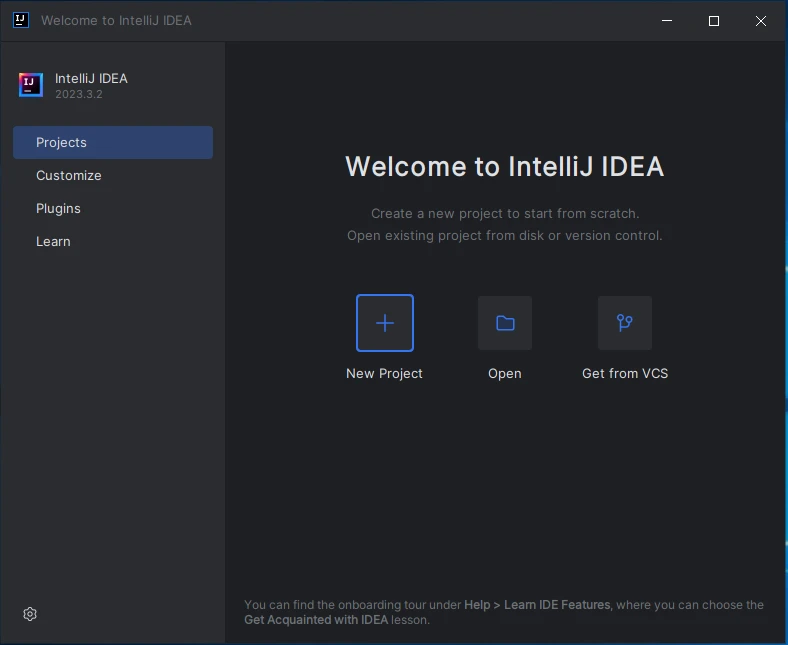
Para comenzar, abre JetBrains IntelliJ IDEA y crea un nuevo proyecto Maven.
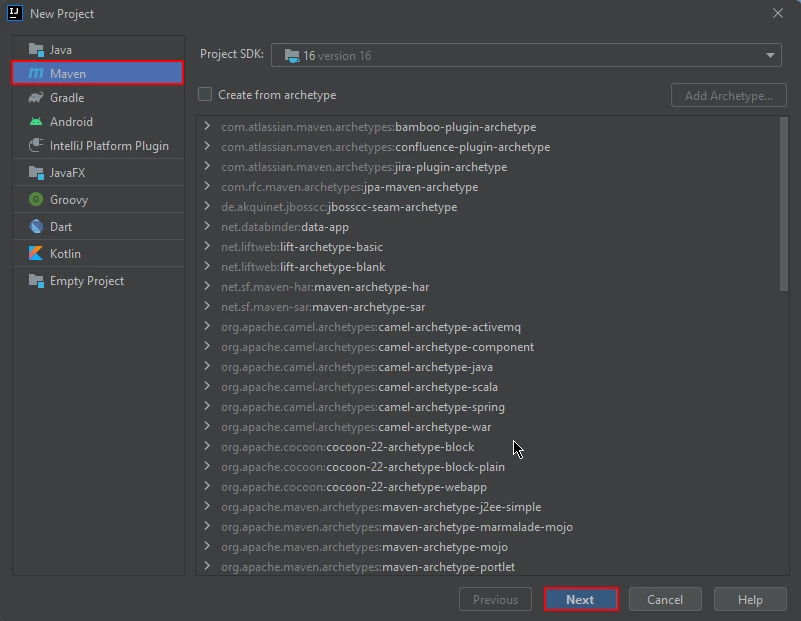 Crear un nuevo proyecto Maven
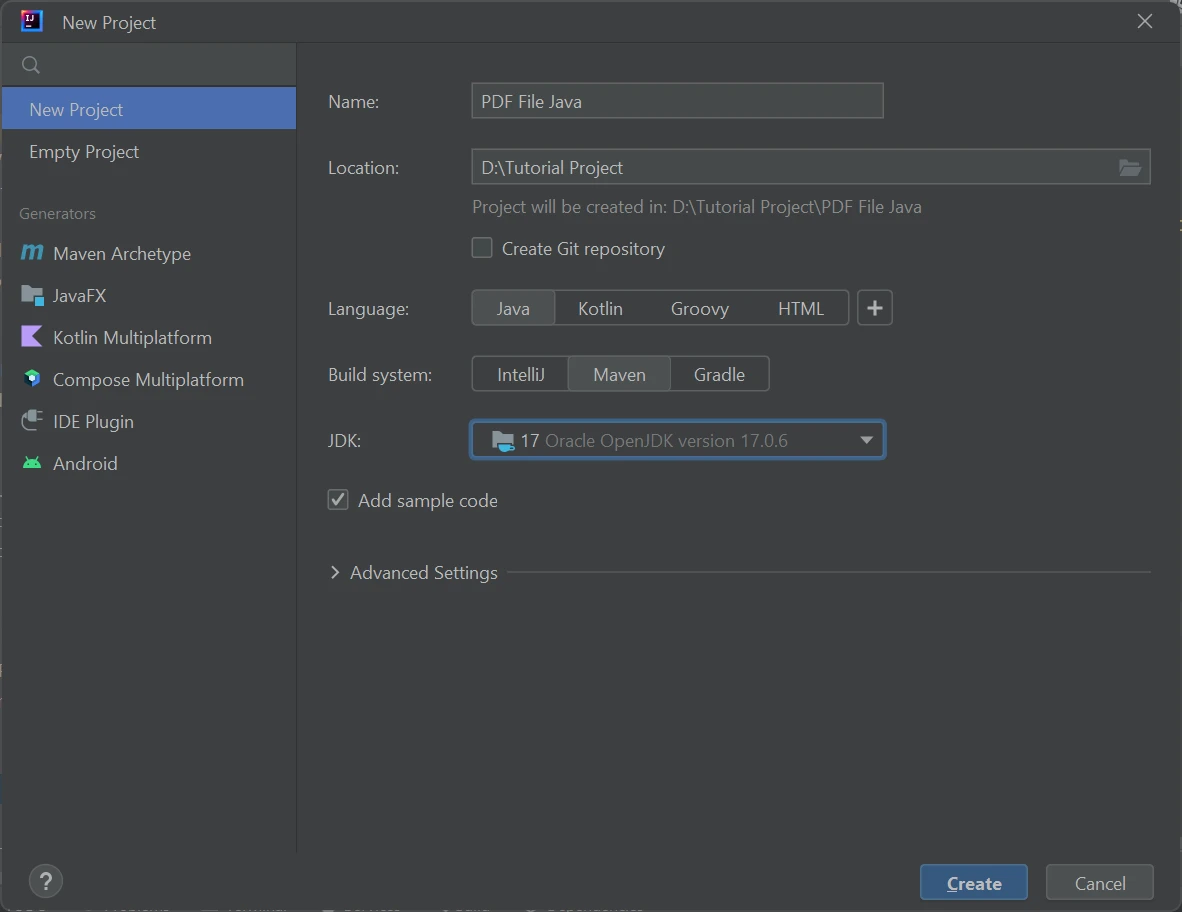
Cuando inicie el proceso de creación de un nuevo proyecto en JetBrains IntelliJ IDEA, aparecerá una nueva ventana. Esta ventana le pedirá que ingrese el nombre de su proyecto. Una vez que haya ingresado un nombre apropiado, simplemente haga clic en el botón "Finalizar" para continuar.
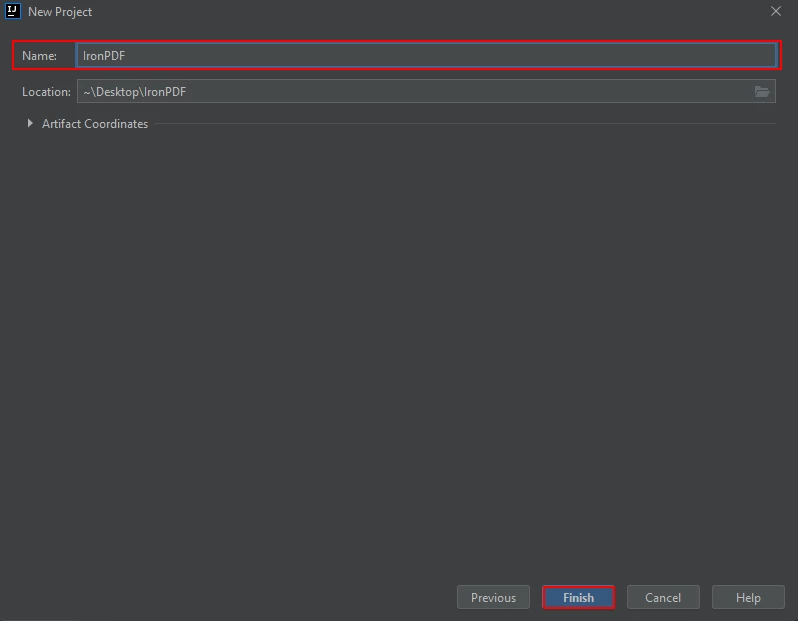 Nombre su proyecto
Una vez que haya hecho clic en el botón "Finalizar", se abrirá un nuevo proyecto en JetBrains IntelliJ IDEA y se le mostrará el archivo pom.xml. Este archivo se utilizará para añadir las dependencias necesarias para el proyecto Maven.
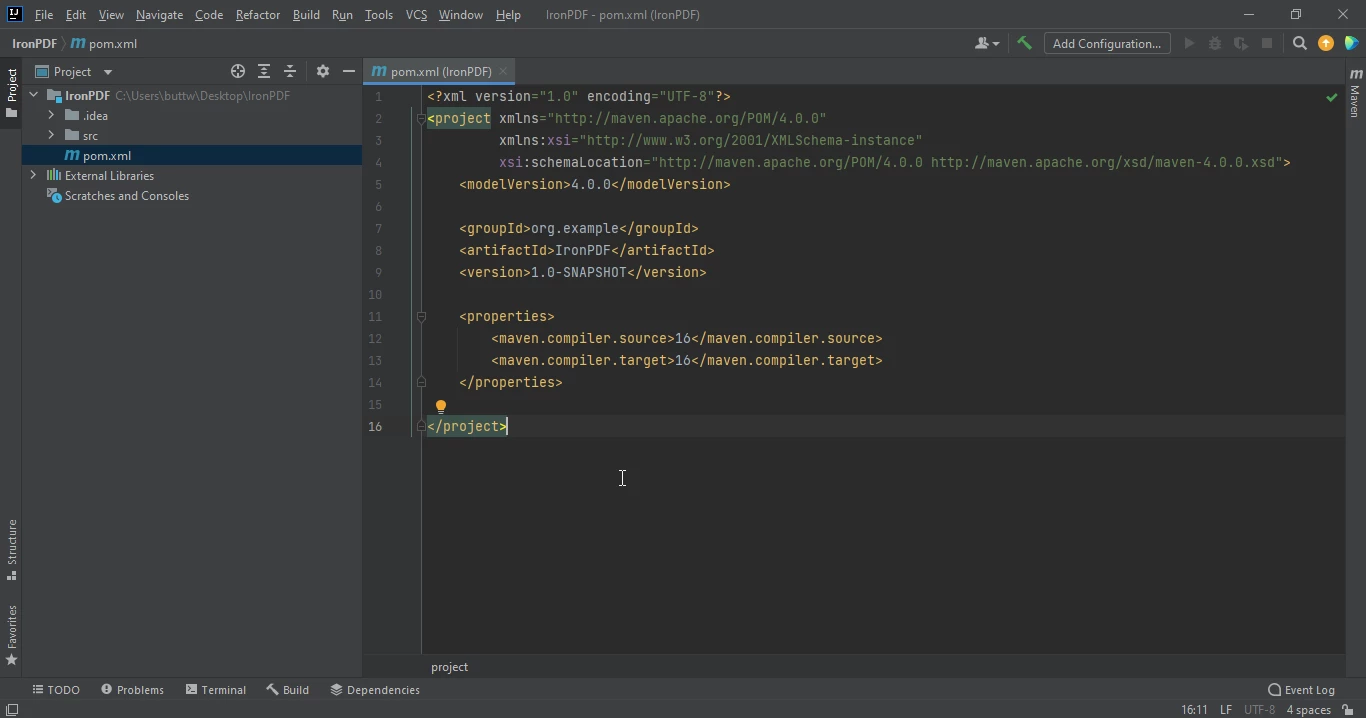 El archivo pom.xml
Añade las siguientes dependencias en el archivo pom.xml. Al añadir estas dependencias, nos aseguramos de que todas las bibliotecas y paquetes necesarios estén disponibles para que el proyecto funcione correctamente.
<dependency>
    <groupId>com.ironsoftware</groupId>
    <artifactId>ironpdf</artifactId>
    <version>latest.version</version>
</dependency>Una vez que haya añadido correctamente las dependencias anteriores al archivo pom.xml, observará que aparece un pequeño icono en la esquina superior derecha del archivo.
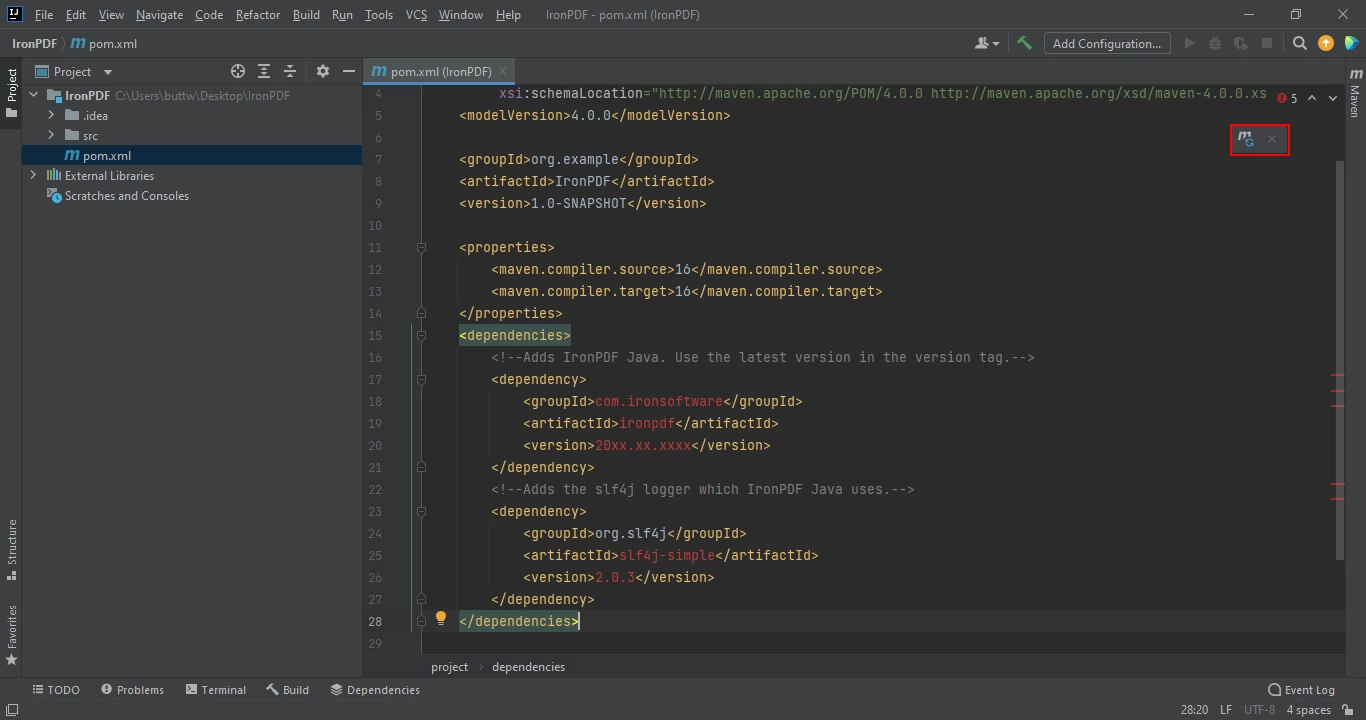 Instalar dependencias faltantes
Simplemente haga clic en este ícono para instalar dependencias. Este proceso solo debería tomar unos minutos, dependiendo de la velocidad de tu conexión a Internet.
Esta sección discutirá cómo generar archivos PDF usando IronPDF for Java. Hay muchas maneras de generar archivos PDF usando IronPDF, pero estas dos han demostrado ser los enfoques más óptimos.
Hay numerosas maneras de generar archivos PDF usando IronPDF. Sin embargo, este artículo solo discutirá dos de ellas:
Una de las características clave de IronPDF es su capacidad de convertir una URL en un archivo PDF. Esta característica hace que sea simple para los desarrolladores convertir páginas web en PDFs para su uso dentro de sus aplicaciones. A continuación se muestra un ejemplo de código que crea un nuevo documento usando una URL.
import com.ironsoftware.ironpdf.PdfDocument;
import java.io.IOException;
import java.nio.file.Paths;

public class Main { // Class names should be capitalized
    public static void main(String[] args) throws IOException {
        // Convert a URL to a PDF document
        PdfDocument myPdf = PdfDocument.renderUrlAsPdf("https://www.pinterest.com/?show_error=true#top");
        // Save the generated PDF to a file
        myPdf.saveAs(Paths.get("url.pdf"));
    }
}El archivo PDF resultante muestra el PDF creado al convertir la URL en un archivo PDF.
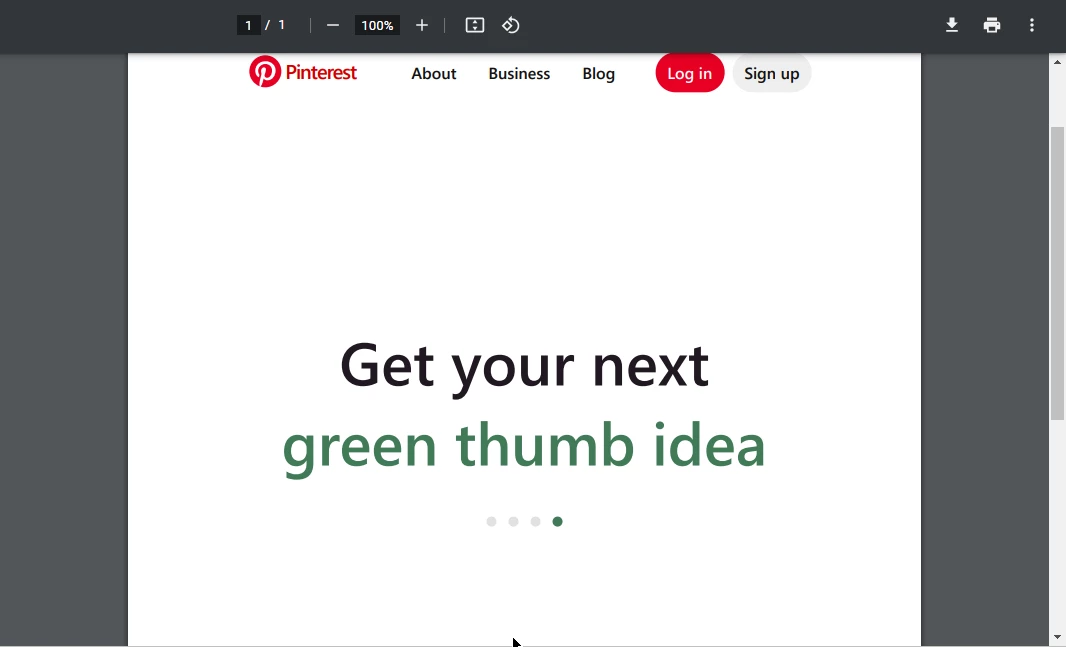 El archivo PDF de salida
En este código fuente, se crea un nuevo archivo PDF convirtiendo una cadena HTML a PDF.
import com.ironsoftware.ironpdf.PdfDocument;
import java.io.IOException;
import java.nio.file.Paths;

public class Main {
    public static void main(String[] args) throws IOException {
        // Convert an HTML string to a PDF document
        PdfDocument myPdf = PdfDocument.renderHtmlAsPdf("<h1> ~Hello World~ </h1> Made with IronPDF!");
        // Save the generated PDF to a file
        myPdf.saveAs(Paths.get("html_saved.pdf"));
    }
}La siguiente imagen muestra el resultado del código anterior, creando un archivo PDF a partir de una cadena HTML.
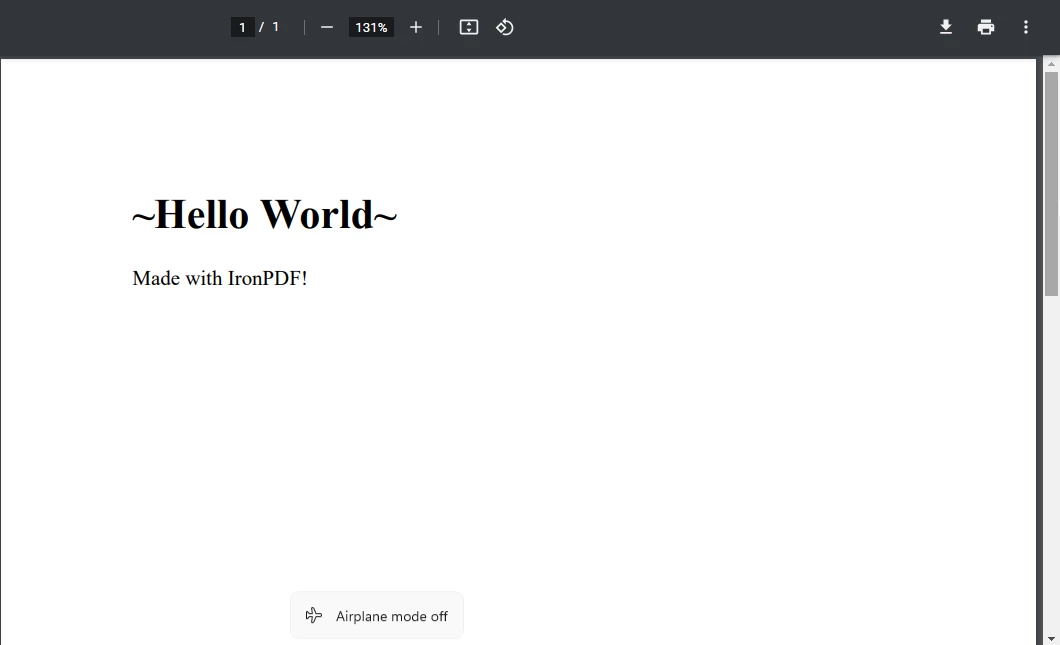 El archivo PDF de salida
IronPDF se puede usar para generar archivos PDF protegidos con contraseña en Java. Para generar un archivo PDF protegido con contraseña usando IronPDF, siga simplemente el ejemplo de código a continuación:
import com.ironsoftware.ironpdf.PdfDocument;
import com.ironsoftware.ironpdf.security.SecurityManager;
import com.ironsoftware.ironpdf.security.SecurityOptions;
import java.io.IOException;
import java.nio.file.Paths;

public class Main {
    public static void main(String[] args) throws IOException {
        // Convert an HTML string to a PDF document
        PdfDocument myPdf = PdfDocument.renderHtmlAsPdf("<h1> ~Hello World~ </h1> Secured file Made with IronPDF!");
        // Setup security options for the PDF document
        SecurityOptions securityOptions = new SecurityOptions();
        securityOptions.setOwnerPassword("123abc");  // Set the owner password
        securityOptions.setUserPassword("secretPassword");  // Set the user password
        // Apply security options to the PDF document
        SecurityManager securityManager = myPdf.getSecurity();
        securityManager.setSecurityOptions(securityOptions);
        // Save the password-protected PDF to a file
        myPdf.saveAs(Paths.get("secured.pdf"));
    }
}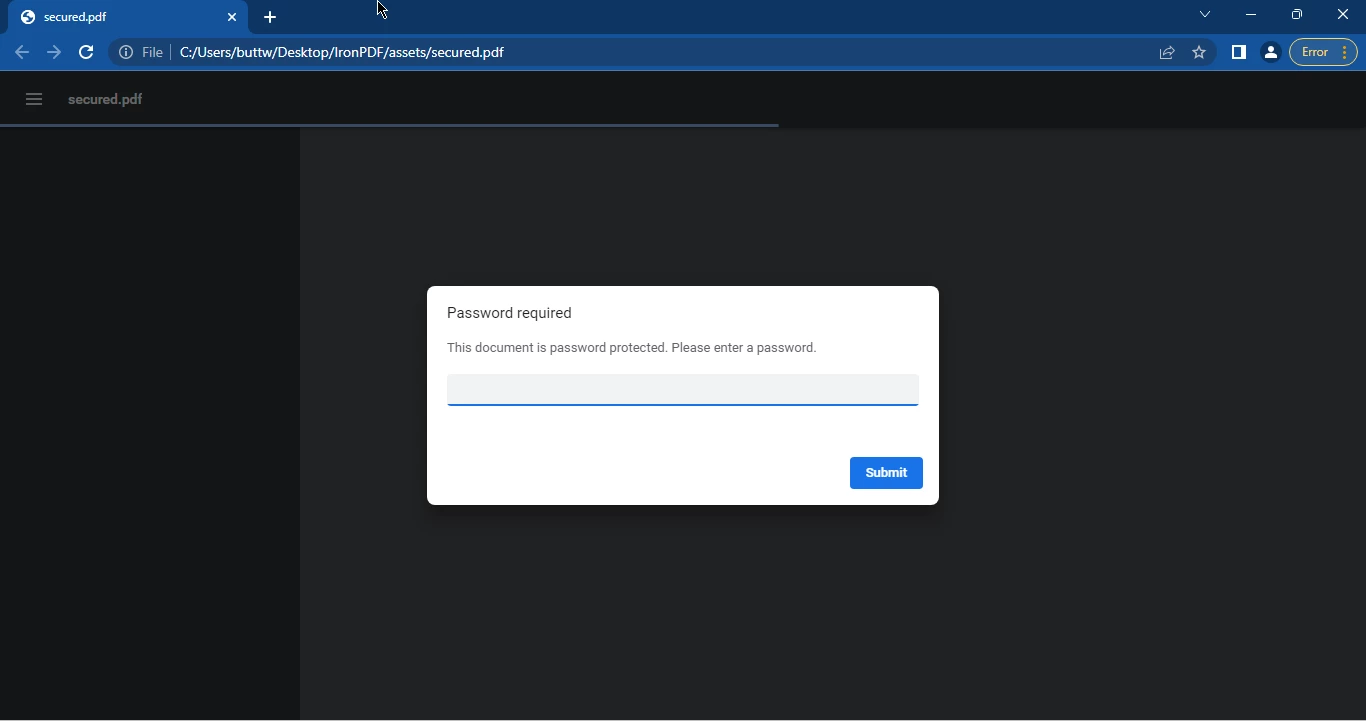 El archivo PDF que requiere contraseña
Una vez que ingrese la contraseña correcta, puede acceder al archivo PDF.
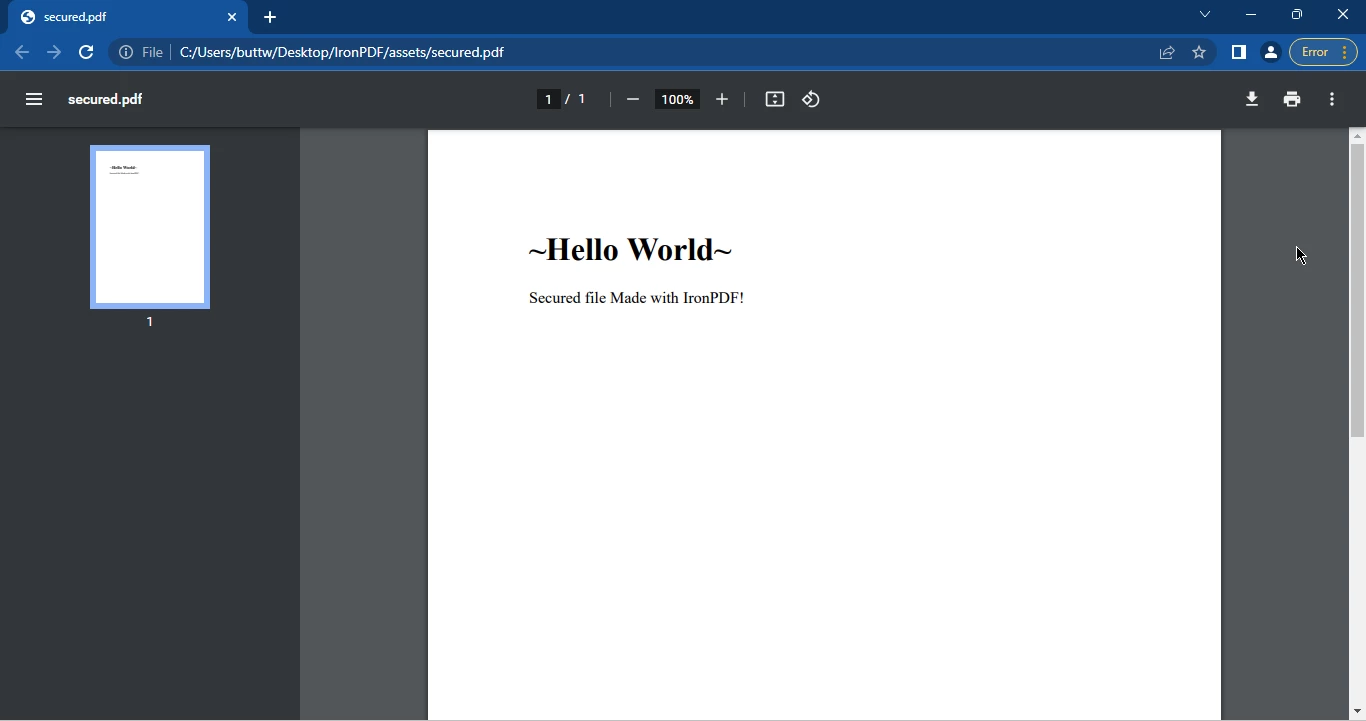 El archivo PDF de salida
Generar archivos PDF en Java se ha convertido en un aspecto crucial de muchos proyectos de Java. IronPDF for Java es una biblioteca que proporciona una API simple, facilitando a los desarrolladores la creación y manipulación de documentos PDF. Para comenzar con IronPDF, necesitará tener Java, un IDE de Java y Maven integrado con su IDE. Una vez que haya cumplido estos requisitos previos, puede añadir las dependencias necesarias a su proyecto Maven y crear archivos PDF.
IronPDF ofrece varias formas de generar PDFs, como convertir un URL a PDF, convertir una cadena HTML a PDF, y crear archivos PDF protegidos con contraseña o firmados digitalmente. Con IronPDF, generar archivos PDF en Java nunca ha sido tan fácil.
IronPDF for Java está disponible de forma gratuita para fines de desarrollo, pero se requiere una licencia para uso comercial. Sin embargo, puede obtener una licencia de prueba gratuita de 30 días para probar la funcionalidad de IronPDF for Java.

Curtis Chau tiene una licenciatura en Ciencias de la Computación (Carleton University) y se especializa en el desarrollo front-end con experiencia en Node.js, TypeScript, JavaScript y React. Apasionado por crear interfaces de usuario intuitivas y estéticamente agradables, disfruta trabajando con frameworks modernos y creando manuales bien estructurados y visualmente atractivos.

IronPDF es parte de IRONSUITE
10 productos API .NET para tus documentos de oficina











Cuando necesitas que tu PDF se parezca al HTML, rápido.

