Python 中的 Requests 库:教程

在多样化的网页开发和数据获取环境中,Python是一种出色的语言。 它的简洁性,加上强大的库,使其成为处理HTTP请求的理想选择。 在这些库中,Python Requests 模块作为一个多功能且用户友好的工具在与网络服务的交互中脱颖而出。
在本文中,我们将了解HTTP请求的基础知识,并探讨Requests库如何让Python开发人员高效处理它们。 我们还将研究如何将HTTP请求与像IronPDF for Python这样的库一起使用,轻松制作和编辑PDF文件。
了解HTTP请求
HTTP(超文本传输协议)是万维网数据通信的基础。 它是一种协议,用于管理客户端(网页浏览器)和服务器之间超文本(如HTML)的传输。 HTTP作为一种请求-响应协议运行,其中客户端向服务器发送请求,然后服务器以请求的资源作出响应。
通常,HTTP请求由几个组件组成:
- HTTP 方法:指定客户端要执行的 HTTP 请求操作。常见方法包括 GET、POST、PUT、DELETE 等。
- URL:统一资源定位符,用于标识所请求的资源。 3.请求标头:随请求发送的附加信息,例如身份验证凭据、内容类型等。 4.正文:通过 POST 或 PUT 请求发送的数据。
介绍Requests库
在Python中,Requests库简化了发起HTTP请求的过程。 它提供了一个优雅且直观的API,用于无缝发送各种类型的请求并处理响应。
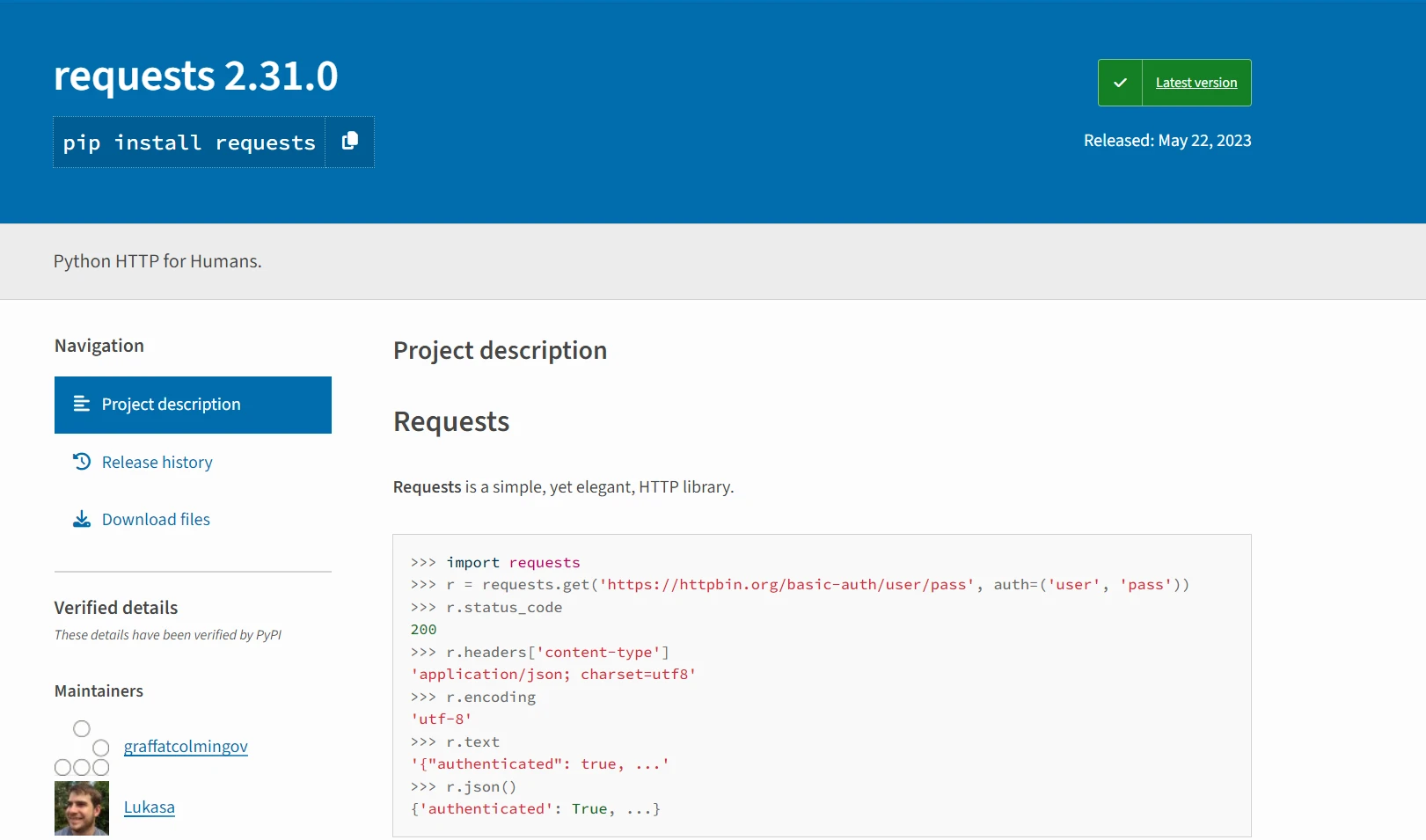
让我们浏览一些基本使用示例,但首先,我们来看看如何安装Requests模块。
安装
在使用Requests库之前,请确保它已安装。 你可以通过pip安装它:
pip install requestspip install requests进行GET请求
使用requests.get()方法对这里的指定URL进行GET请求:
import requests

# Make a GET request to the URL
response = requests.get('https://api.example.com/data')

# Print the response text (content of the response)
print(response.text)
import requests
# Make a GET request to the URL
response = requests.get('https://api.example.com/data')
# Print the response text (content of the response)
print(response.text)此代码向指定的URL https://api.example.com/data发送一个GET请求,并打印响应正文。
进行POST请求
要使用数据进行POST请求,请使用requests.post()方法:
import requests

# Data to send in the POST request
data = {'key': 'value'}

# Make a POST request with data
response = requests.post('https://api.example.com/post', data=data)

# Print the response in JSON format
print(response.json())
import requests
# Data to send in the POST request
data = {'key': 'value'}
# Make a POST request with data
response = requests.post('https://api.example.com/post', data=data)
# Print the response in JSON format
print(response.json())在这里,我们正在向https://api.example.com/post发送一个包含JSON数据的POST请求,并打印JSON响应数据。
处理响应对象
通过HTTP请求返回的响应对象提供了各种属性和方法,以访问响应的不同方面,如HTTP头、状态码、内容等。例如:
import requests

# Make a GET request
response = requests.get('https://api.example.com/data')

# Print the status code of the response
print(response.status_code)

# Print the response headers
print(response.headers)
import requests
# Make a GET request
response = requests.get('https://api.example.com/data')
# Print the status code of the response
print(response.status_code)
# Print the response headers
print(response.headers)错误处理
进行HTTP请求时,优雅地处理错误至关重要。 Requests库通过为常见错误(如连接错误和超时)抛出异常来简化错误处理。 例如:
import requests

try:
    # Make a GET request
    response = requests.get('https://api.example.com/data')

    # Raise an exception for HTTP errors
    response.raise_for_status()
except requests.exceptions.HTTPError as err:
    # Print the error message
    print(err)
import requests
try:
# Make a GET request
response = requests.get('https://api.example.com/data')
# Raise an exception for HTTP errors
response.raise_for_status()
except requests.exceptions.HTTPError as err:
# Print the error message
print(err)禁用SSL证书验证
在False来禁用SSL证书验证:
import requests

# Make a GET request with SSL verification disabled
response = requests.get('https://api.example.com/data', verify=False)

# Process the response
print(response.text)
import requests
# Make a GET request with SSL verification disabled
response = requests.get('https://api.example.com/data', verify=False)
# Process the response
print(response.text)包含查询字符串
您还可以通过使用params参数附加查询参数到您的URL中:
import requests

# Define query parameters
params = {'key': 'value', 'param2': 'value2'}

# Make a GET request with query parameters
response = requests.get('https://api.example.com/data', params=params)

# Process the response
print(response.text)
import requests
# Define query parameters
params = {'key': 'value', 'param2': 'value2'}
# Make a GET request with query parameters
response = requests.get('https://api.example.com/data', params=params)
# Process the response
print(response.text)在这个示例中,params字典包含查询参数。 在发起GET请求时,这些参数会自动附加到URL,形成类似https://api.example.com/data?key=value¶m2=value2的请求URL。
将Requests与IronPDF集成以生成PDF
在深入实现之前,让我们简要了解IronPDF。
IronPDF - Python PDF库
IronPDF for Python是一种流行的Python库,用于生成、读取、编辑和操作PDF文档。 它提供了一套丰富的功能,以程序化地创建专业外观的PDF。
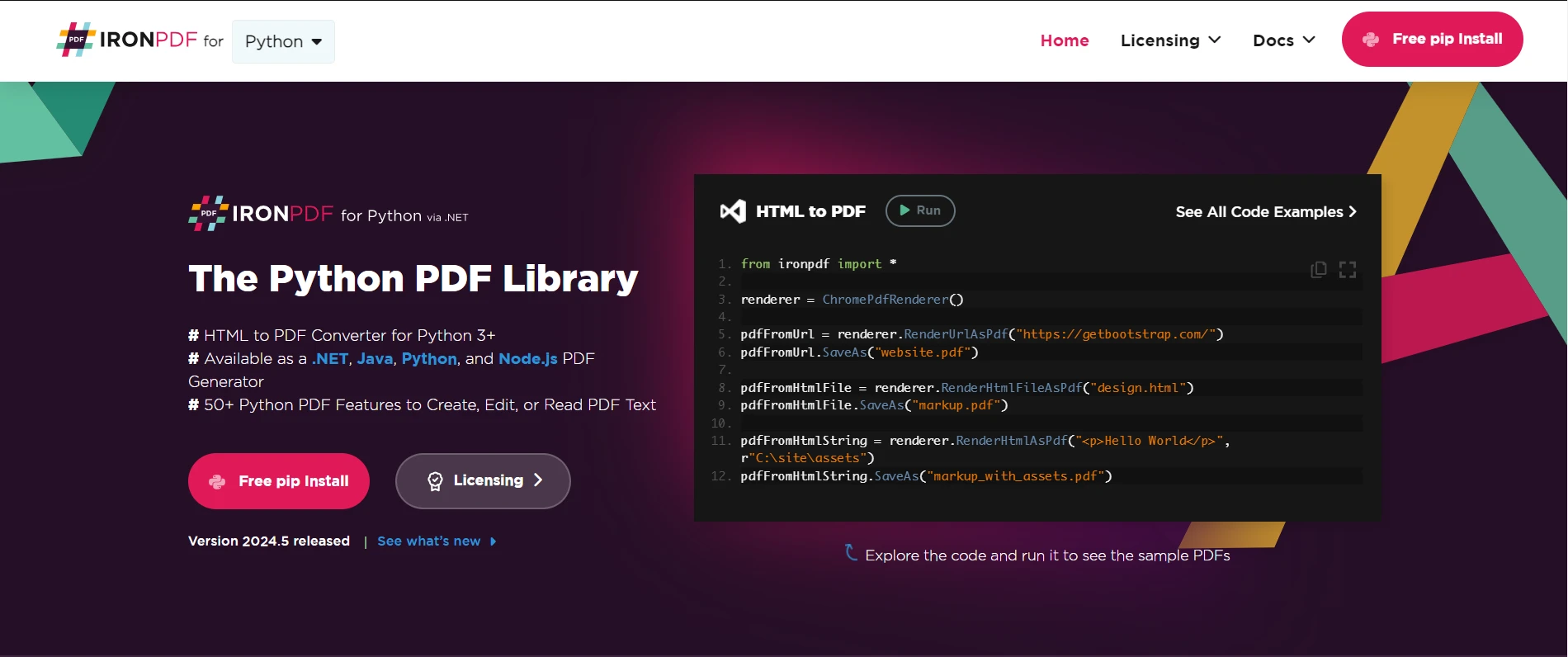
要使用IronPDF生成通过Requests获取的内容的PDF,请按以下步骤进行:
步骤1:安装IronPDF
首先,确保你在Python环境中已安装IronPDF。 你可以通过pip安装它:
pip install ironpdf
步骤2:使用Requests获取内容
使用Requests库获取你希望包含在PDF中的内容。 例如:
import requests

# Make a GET request to fetch data
response = requests.get('https://api.example.com/data')
data = response.text
import requests
# Make a GET request to fetch data
response = requests.get('https://api.example.com/data')
data = response.text步骤 3:使用 IronPDF 生成 PDF
获得内容后,使用IronPDF生成PDF。 这是一个基本示例:
from ironpdf import ChromePdfRenderer

# Instantiate Renderer
renderer = ChromePdfRenderer()

# Create a PDF from the data received from requests
pdf = renderer.RenderHtmlAsPdf(data)

# Export to a file
pdf.SaveAs("output.pdf")
from ironpdf import ChromePdfRenderer
# Instantiate Renderer
renderer = ChromePdfRenderer()
# Create a PDF from the data received from requests
pdf = renderer.RenderHtmlAsPdf(data)
# Export to a file
pdf.SaveAs("output.pdf")在这个示例中,data包含通过Requests获取的HTML内容。 IronPDF的RenderHtmlAsPdf()方法将此HTML内容转换为PDF文档。 最后,使用SaveAs()方法将PDF保存到文件。
通过Requests库,Python使与网络的交互变得轻而易举,使开发人员可以更多地专注于构建出色的应用程序,而不是处理HTTP通信的复杂性。
高级用法
你可以通过使用IronPDF的广泛功能来自定义PDF设置、边距、方向、图像、CSS、JavaScript等,进一步增强PDF生成过程。 例如:
# Set page margins
renderer.RenderingOptions.MarginTop = 40  # millimeters
renderer.RenderingOptions.MarginLeft = 20  # millimeters
renderer.RenderingOptions.MarginRight = 20  # millimeters
renderer.RenderingOptions.MarginBottom = 40  # millimeters

# Example with HTML Assets
# Load external HTML assets: Images, CSS, and JavaScript.
# An optional BasePath 'C:\\site\\assets\\' is set as the file location to load assets from
my_advanced_pdf = renderer.RenderHtmlAsPdf("<img src='icons/iron.png'>", "C:\\site\\assets")
my_advanced_pdf.SaveAs("html-with-assets.pdf")
# Set page margins
renderer.RenderingOptions.MarginTop = 40 # millimeters
renderer.RenderingOptions.MarginLeft = 20 # millimeters
renderer.RenderingOptions.MarginRight = 20 # millimeters
renderer.RenderingOptions.MarginBottom = 40 # millimeters
# Example with HTML Assets
# Load external HTML assets: Images, CSS, and JavaScript.
# An optional BasePath 'C:\\site\\assets\\' is set as the file location to load assets from
my_advanced_pdf = renderer.RenderHtmlAsPdf("<img src='icons/iron.png'>", "C:\\site\\assets")
my_advanced_pdf.SaveAs("html-with-assets.pdf")在这里,我们设置了页面边距并从基本目录中添加图像,然后将其保存到文件中。
有关IronPDF功能和能力的更多信息,请访问文档页面,并查看这些即用型代码示例,以便与Python集成。
结论
Python中的Requests库为发起HTTP请求提供了一个强大且简单的接口。 无论是从API获取数据、与网络服务交互还是抓取网页,Requests都通过其直观的API和强大的功能简化了HTTP请求过程。
将IronPDF for Python与Python中的Requests结合使用,为动态从获取的内容生成PDF文档打开了无限可能。 通过遵循本文中的步骤和探索IronPDF和Requests的高级功能,Python开发人员可以简化其PDF生成工作流程,并生成高质量的、根据其具体要求量身定制的文档。
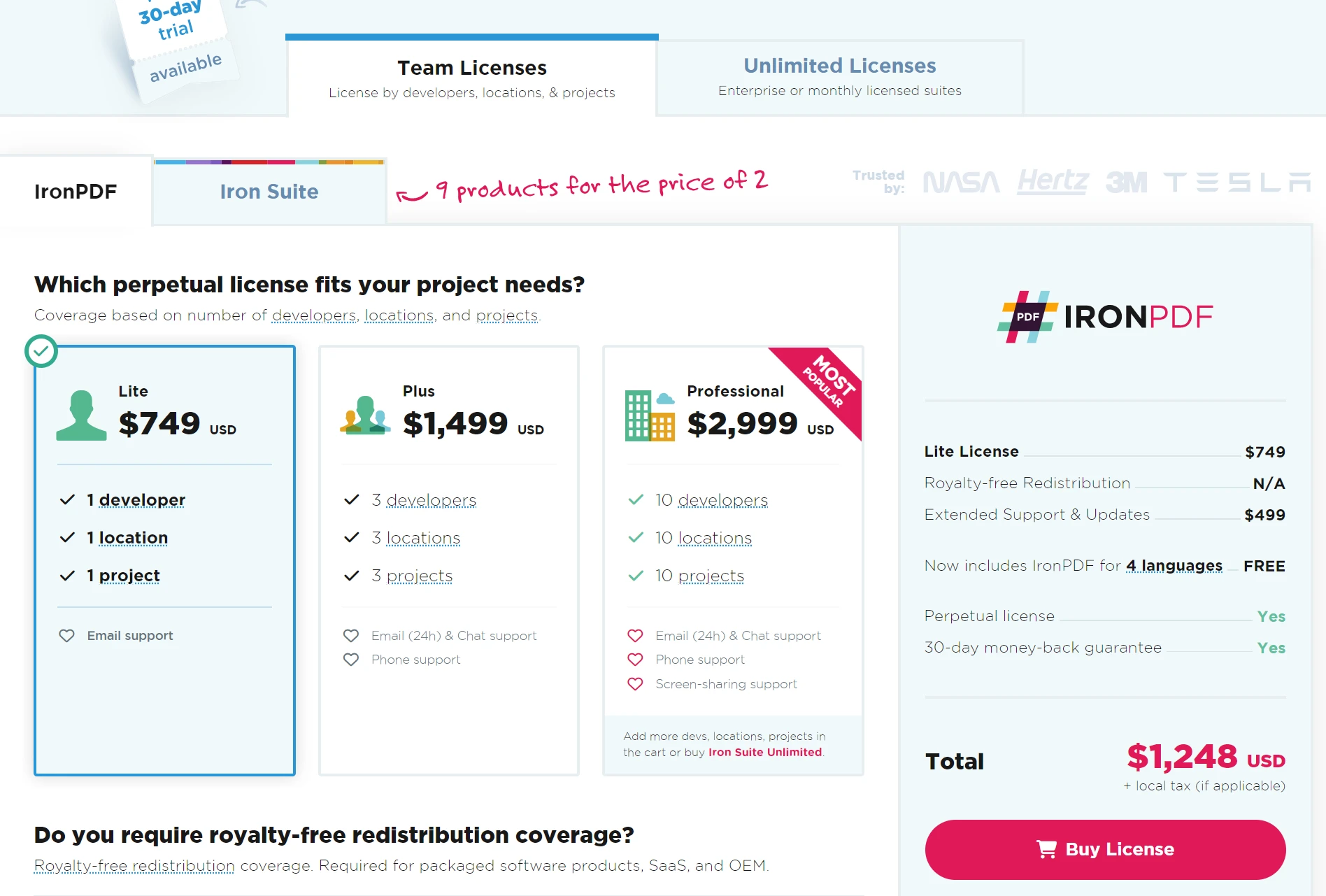
IronPDF非常适合企业。 试试从$999开始的IronPDF免费试用,带有退款保证,这是一个管理文档的安全选择。 立即下载IronPDF体验无缝的PDF集成!








 免费开始
免费开始 免费开始
免费开始 预定免费现场演示