using IronPdf;

// Disable local disk access or cross-origin requests
Installation.EnableWebSecurity = true;

// Instantiate Renderer
var renderer = new ChromePdfRenderer();

// Create a PDF from a HTML string using C#
var pdf = renderer.RenderHtmlAsPdf("<h1>Hello World</h1>");

// Export to a file or Stream
pdf.SaveAs("output.pdf");

// Advanced Example with HTML Assets
// Load external html assets: Images, CSS and JavaScript.
// An optional BasePath 'C:\site\assets\' is set as the file location to load assets from
var myAdvancedPdf = renderer.RenderHtmlAsPdf("<img src='icons/iron.png'>", @"C:\site\assets\");
myAdvancedPdf.SaveAs("html-with-assets.pdf");
using IronPdf;// Disable local disk access or cross-origin requestsInstallation.EnableWebSecurity = true;// Instantiate Renderervar renderer = new ChromePdfRenderer();// Create a PDF from a HTML string using C#var pdf = renderer.RenderHtmlAsPdf("<h1>Hello World</h1>");// Export to a file or Streampdf.SaveAs("output.pdf");// Advanced Example with HTML Assets// Load external html assets: Images, CSS and JavaScript.// An optional BasePath 'C:\site\assets\' is set as the file location to load assets fromvar myAdvancedPdf = renderer.RenderHtmlAsPdf("<img src='icons/iron.png'>", @"C:\site\assets\");myAdvancedPdf.SaveAs("html-with-assets.pdf");
Textmanipulation ist eine wesentliche Fähigkeit für jeden .NET-Entwickler. Egal, ob Sie Zeichenfolgen für Benutzereingaben bereinigen, Daten für Analysen formatieren oder Text aus Dokumenten verarbeiten, die richtigen Werkzeuge für die Arbeit machen den Unterschied. Beim Arbeiten mit PDFs kann es aufgrund ihrer unstrukturierten Natur eine Herausforderung sein, Text effizient zu verwalten und zu verarbeiten. Hier kommt [IronPDF](https://ironpdf.com/) ins Spiel, eine leistungsstarke Bibliothek zum Arbeiten mit PDFs in C#.
In diesem Artikel werden wir untersuchen, wie man die [Trim()-Methode von C#](https://learn.microsoft.com/en-us/dotnet/api/system.string.trim?view=net-8.0) in Kombination mit IronPDF nutzen kann, um Text aus PDF-Dokumenten effektiv zu bereinigen und zu verarbeiten.
## Verständnis von C# Trim()
### Was ist Text Trimming?
Die Trim()-Methode entfernt Leerzeichen oder angegebene Zeichen vom Anfang und Ende von Zeichenfolgen. Zum Beispiel:
```csharp
string text = "   Hello World!   ";
string trimmedText = text.Trim(); // Output: "Hello World!"
```
Sie können auch bestimmte Zeichen anvisieren, wie z. B. das Entfernen von `#`-Symbolen aus einem String:
```csharp
string text = "###Important###";
string trimmedText = text.Trim('#'); // Output: "Important"
```
### Kürzen von bestimmten Positionen
C# bietet `TrimStart()` und `TrimEnd()` zum Entfernen von Zeichen entweder am Anfang oder Ende eines Strings. Zum Beispiel:
```csharp
string str = "!!Hello World!!";
string trimmedStart = str.TrimStart('!'); // "Hello World!!"
string trimmedEnd = str.TrimEnd('!');     // "!!Hello World"
```
## Gängige Fallstricke und Lösungen
### 1. Null-Referenz-Ausnahmen
Ein Aufruf von `Trim()` auf einem `null`-String führt zu einem Fehler. Um dies zu vermeiden, verwenden Sie den Null-Koaleszenz-Operator oder bedingte Überprüfungen:
```csharp
string text = null;
string safeTrim = text?.Trim() ?? string.Empty;
```
### 2. die Unveränderlichkeit des Overheads
Da Strings in C# unveränderlich sind, können wiederholte `Trim()`-Operationen in Schleifen die Leistung beeinträchtigen. Bei großen Datenmengen sollten Sie erwägen, `Span<t>` zu verwenden oder Variablen wiederzuverwenden.
### 3. übermäßige Beschneidung gültiger Zeichen
Das versehentliche Entfernen notwendiger Zeichen ist ein häufiger Fehler. Geben Sie immer die genauen Zeichen an, die beim Arbeiten mit nicht leerzeichenhaltigem Inhalt zu trimmen sind.
### 4. Unicode-Leerzeichen
Die Standardmethode `Trim()` behandelt bestimmte Unicode-Leerzeichen (z. B. `\u2003`) nicht. Um dies zu beheben, schließen Sie sie ausdrücklich in die Trim-Parameter ein.
## Fortgeschrittene Techniken für effizientes Trimmen
### Regex-Einbindung
Für komplexe Muster kombinieren Sie `Trim()` mit regulären Ausdrücken. Zum Beispiel, um mehrere Leerzeichen zu ersetzen:
```csharp
string cleanedText = Regex.Replace(text, @"^\s+|\s+$", "");
```
### Leistungsoptimierung
Vermeiden Sie bei der Verarbeitung großer Texte wiederholte Trimm-Operationen. Verwenden Sie `StringBuilder` für die Vorverarbeitung:
```csharp
var sb = new StringBuilder(text);
// Custom extension method to trim once
// Assuming a Trim extension method exists for StringBuilder
sb.Trim();
```
### Behandlung kulturspezifischer Szenarien
Während `Trim()` kulturunabhängig ist, können Sie in seltenen Fällen `CultureInfo` für lokalisierungssensitives Abschneiden verwenden.
### Warum Trimming bei der PDF-Verarbeitung?
Beim Extrahieren von Text aus PDFs treffen Sie häufig auf führende und nachfolgende Zeichen wie spezielle Symbole, unnötige Leerzeichen oder Formatierungsartefakte. Zum Beispiel:
- Formatierungsinkonsistenzen: PDF-Struktur kann zu unnötigen Zeilenumbrüchen oder Sonderzeichen führen.
- Trailing Whitespace-Zeichen können die Textausgabe unübersichtlich machen, insbesondere beim Ausrichten von Daten für Berichte.
- Führende und abschließende Vorkommen von Symbolen (z. B. `*`, `-`) treten häufig in OCR-generierten Inhalten auf.
Die Verwendung von `Trim()` ermöglicht es Ihnen, das aktuelle String-Objekt zu bereinigen und es für weitere Operationen vorzubereiten.
## Warum IronPDF für die PDF-Verarbeitung wählen?
[IronPDF](https://ironpdf.com/docs/) ist eine leistungsstarke Bibliothek zur PDF-Manipulation for .NET, entwickelt, um das Arbeiten mit PDF-Dateien zu erleichtern. Sie bietet Funktionen, die es ermöglichen, PDFs zu generieren, zu bearbeiten und Inhalte zu extrahieren, mit minimalem Einrichtungsaufwand und geringem Kodierungsaufwand. Hier sind einige der Hauptmerkmale, die IronPDF bietet:
- **HTML-zu-PDF-Konvertierung:** IronPDF kann [HTML-Inhalte](https://ironpdf.com/examples/using-html-to-create-a-pdf/) (einschließlich CSS, Bilder und JavaScript) in vollständig formatierte PDFs konvertieren. Dies ist besonders nützlich, um dynamische Webseiten oder Berichte als PDFs zu rendern.
- **PDF-Bearbeitung:** Mit IronPDF können Sie vorhandene PDF-Dokumente manipulieren, indem Sie Text, Bilder und Grafiken hinzufügen sowie den Inhalt bestehender Seiten [bearbeiten](https://ironpdf.com/examples/editing-pdfs/).
- **Text- und Bilderextraktion:** Die Bibliothek ermöglicht Ihnen das [Extrahieren von Text und Bildern](https://ironpdf.com/how-to/extract-text-and-images/) aus PDFs und erleichtert somit das Parsen und Analysieren von PDF-Inhalten.
- **Formularfüllung:** IronPDF unterstützt das Ausfüllen von [Formularfeldern](https://ironpdf.com/examples/form-data/) in PDFs, was nützlich für das Generieren kundenspezifischer Dokumente ist.
- **Wasserzeichen:** Es ist auch möglich, [Wasserzeichen](https://ironpdf.com/examples/pdf-watermarking/) zu PDF-Dokumenten für Branding oder Urheberrechtsschutz hinzuzufügen.
### Vorteile der Verwendung von IronPDF für Trimm-Aufgaben
IronPDF ist hervorragend geeignet, um unstrukturierte PDF-Daten zu verarbeiten, und erleichtert das effiziente Extrahieren, Reinigen und Verarbeiten von Text. Anwendungsfälle umfassen:
- Bereinigung extrahierter Daten: Entfernen unnötiger Leerzeichen oder Zeichen, bevor sie in einer Datenbank gespeichert werden.
- Vorbereitung von Daten für Analysen: Trimmen und Formatieren von Daten für bessere Lesbarkeit.
## Implementing Text Trimming with IronPDF in C#
### Einrichten Ihres IronPDF-Projekts
Beginnen Sie mit der Installation von IronPDF über NuGet:
1. Öffnen Sie Ihr Projekt in Visual Studio.
2. Führen Sie den folgenden Befehl in der NuGet-Paketmanager-Konsole aus:
```shell
:ProductInstall
```
1. Laden Sie die [kostenlose Testversion](trial-license) von IronPDF herunter, um ihr volles Potenzial freizuschalten, wenn Sie keine Lizenz besitzen.
### Schritt-für-Schritt-Beispiel: Ausschneiden von Text aus einer PDF-Datei
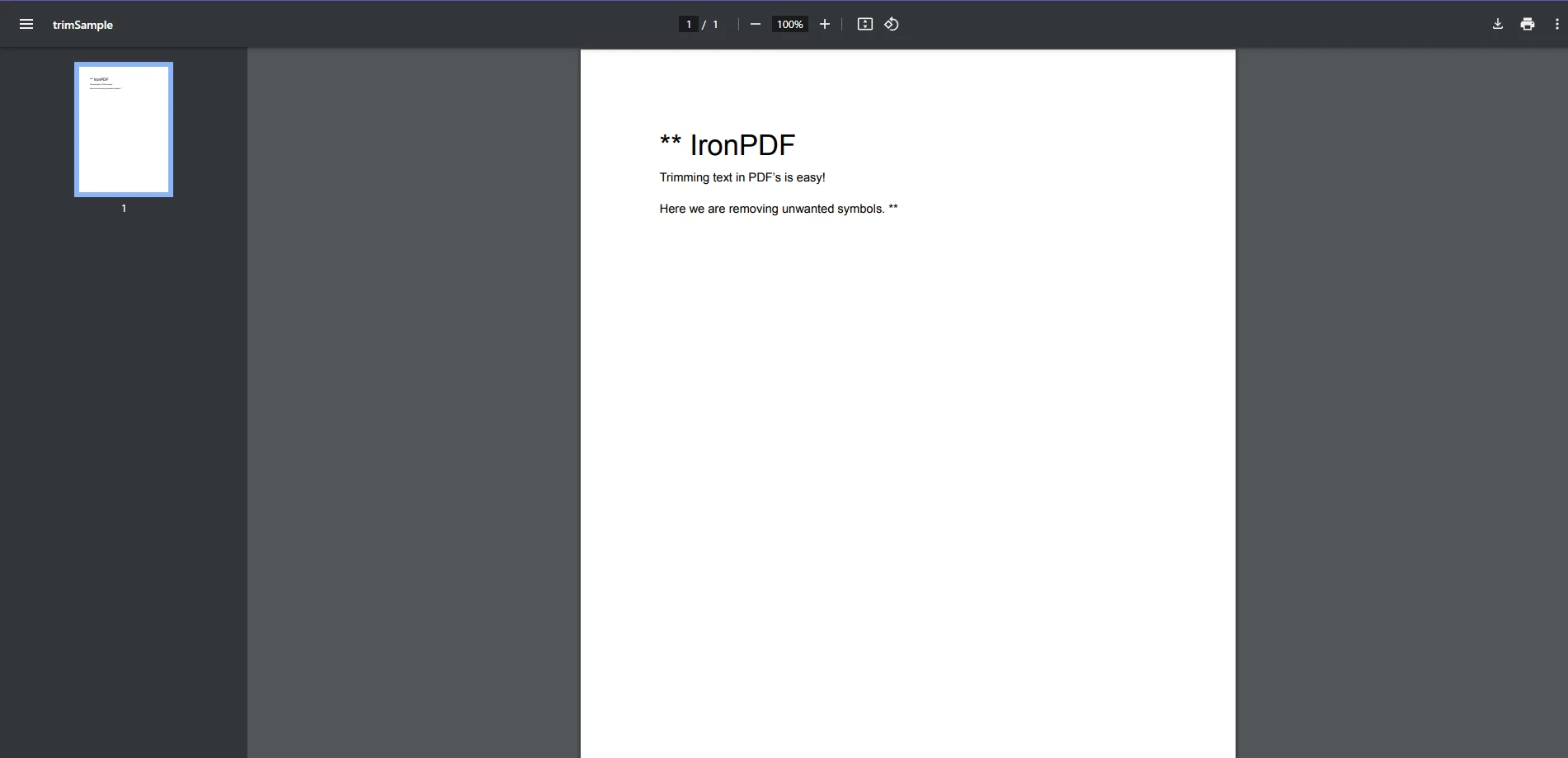
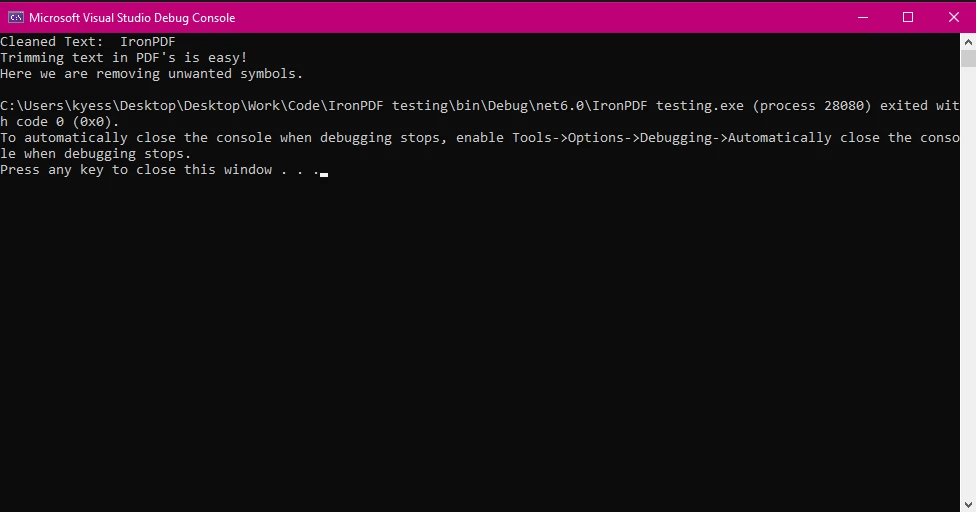
Hier ist ein vollständiges Beispiel, wie Sie Text aus einem PDF extrahieren und ihn mit `Trim()` bereinigen können, um ein bestimmtes Zeichen zu entfernen:
```csharp
using IronPdf;
public class Program
{
public static void Main(string[] args)
{
// Load a PDF file
PdfDocument pdf = PdfDocument.FromFile("trimSample.pdf");
// Extract text from the PDF
string extractedText = pdf.ExtractAllText();
// Trim whitespace and unwanted characters
string trimmedText = extractedText.Trim('*');
// Display the cleaned text
Console.WriteLine($"Cleaned Text: {trimmedText}");
}
}
```
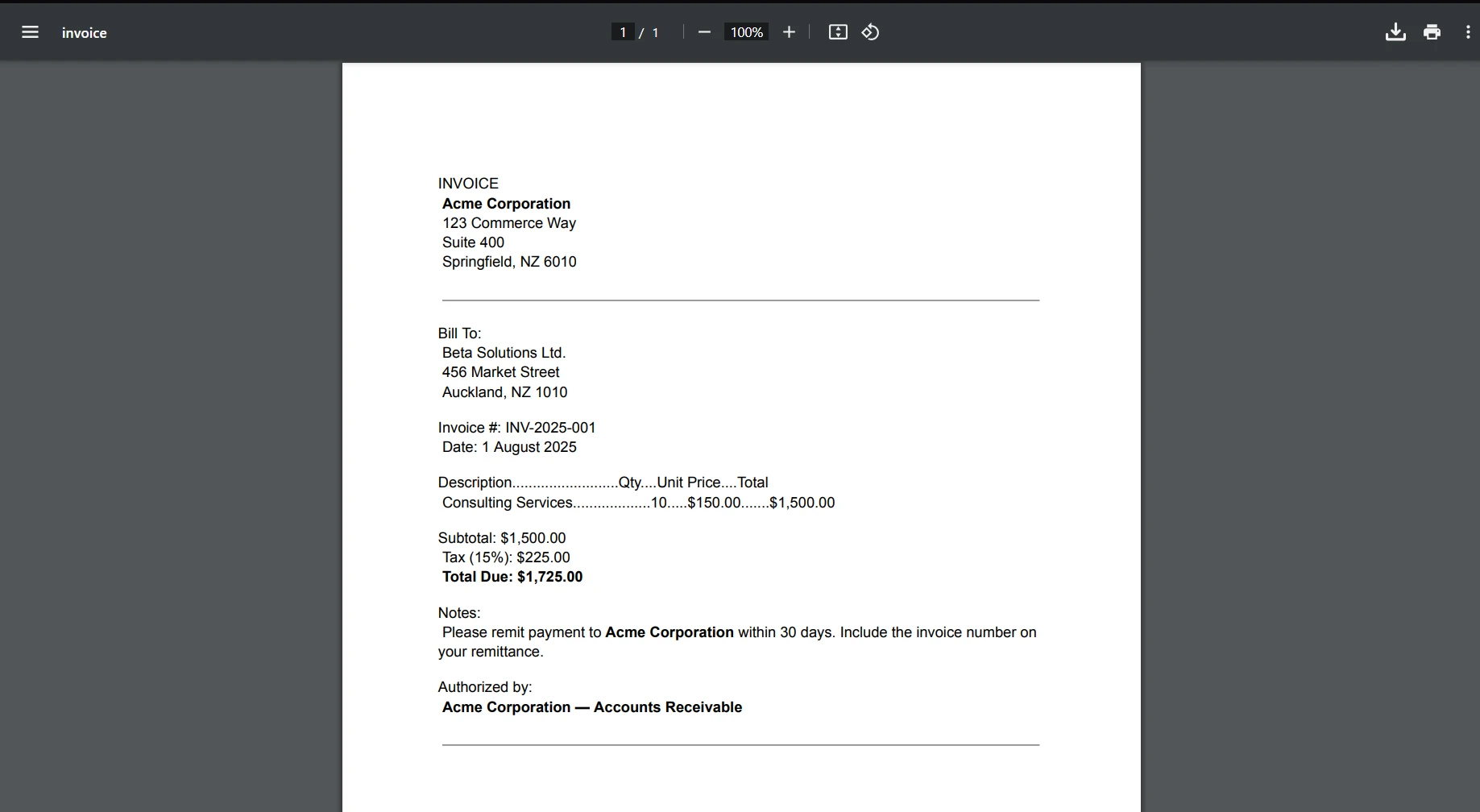
### Eingabe-PDF:
### Konsolenausgabe:
## Erkundung von Anwendungen in der realen Welt
### Rechnungsbearbeitung automatisieren
Extrahieren Sie Text aus PDF-Rechnungen, trimmen Sie unnötigen Inhalt und analysieren Sie wesentliche Details wie Summen oder Rechnungs-IDs. Beispiel:
- Verwenden Sie IronPDF, um Rechnungsdaten zu lesen.
- Trimmen Sie Leerzeichen für konsistente Formatierung.
### Bereinigung der OCR-Ausgabe
Optische Zeichenerkennung (OCR) liefert oft verrauschte Texte. Durch die Verwendung der Texteextraktions- und Trimmfähigkeiten von IronPDF und C# können Sie die Ausgabe für weitere Verarbeitung oder Analyse bereinigen.
## Abschluss
Effiziente Textverarbeitung ist eine kritische Fähigkeit for .NET-Entwickler, insbesondere beim Arbeiten mit unstrukturierten Daten aus PDFs. Die Methode `Trim()`, insbesondere public `string Trim()`, in Kombination mit den Fähigkeiten von IronPDF bietet eine zuverlässige Möglichkeit, Text zu bereinigen und zu verarbeiten, indem führende und abschließende Leerzeichen, bestimmte Zeichen und sogar Unicode-Zeichen entfernt werden.
Durch die Anwendung von Methoden wie `TrimEnd()` zum Entfernen abschließender Zeichen oder Durchführung einer abschließenden Beschnittoperation können Sie lärmigen Text in nutzbaren Inhalt für Berichte, Automatisierung und Analysen umwandeln. Die oben genannte Methode ermöglicht es Entwicklern, die bestehende Zeichenfolge präzise zu bereinigen, was Workflows verbessert, die PDFs beinhalten.
Indem Sie die leistungsstarken PDF-Manipulationsfunktionen von [IronPDF](/) mit C#'s vielseitiger `Trim()`-Methode kombinieren, können Sie Zeit und Mühe bei der Entwicklung von Lösungen sparen, die präzise Textformatierung erfordern. Aufgaben, die einst Stunden dauerten – wie das Entfernen unerwünschter Leerzeichen, die Bereinigung von OCR-generiertem Text oder die Standardisierung extrahierter Daten – können jetzt in Minuten erledigt werden.
Steigern Sie Ihre PDF-Verarbeitungsfähigkeiten noch heute – [laden Sie die kostenlose Testversion von IronPDF herunter](trial-license) und sehen Sie selbst, wie es Ihr .NET-Entwicklungserlebnis transformieren kann. Egal, ob Sie Anfänger oder erfahrener Entwickler sind, IronPDF ist Ihr Partner beim Erstellen intelligenterer, schnellerer und effizienterer Lösungen.
Textmanipulation ist eine wesentliche Fähigkeit für jeden .NET-Entwickler. Egal, ob Sie Zeichenfolgen für Benutzereingaben bereinigen, Daten für Analysen formatieren oder Text aus Dokumenten verarbeiten, die richtigen Werkzeuge für die Arbeit machen den Unterschied. Beim Arbeiten mit PDFs kann es aufgrund ihrer unstrukturierten Natur eine Herausforderung sein, Text effizient zu verwalten und zu verarbeiten. Hier kommt IronPDF ins Spiel, eine leistungsstarke Bibliothek zum Arbeiten mit PDFs in C#.
In diesem Artikel werden wir untersuchen, wie man die Trim()-Methode von C# in Kombination mit IronPDF nutzen kann, um Text aus PDF-Dokumenten effektiv zu bereinigen und zu verarbeiten.
Verständnis von C# Trim()
Was ist Text Trimming?
Die Trim()-Methode entfernt Leerzeichen oder angegebene Zeichen vom Anfang und Ende von Zeichenfolgen. Zum Beispiel:
Dim str As String = "!!Hello World!!"
Dim trimmedStart As String = str.TrimStart("!"c) ' "Hello World!!"
Dim trimmedEnd As String = str.TrimEnd("!"c) ' "!!Hello World"
Gängige Fallstricke und Lösungen
1. Null-Referenz-Ausnahmen
Ein Aufruf von Trim() auf einem null-String führt zu einem Fehler. Um dies zu vermeiden, verwenden Sie den Null-Koaleszenz-Operator oder bedingte Überprüfungen:
string text = null;
string safeTrim = text?.Trim() ?? string.Empty;
string text = null;
string safeTrim = text?.Trim() ?? string.Empty;
Dim text AsString = NothingDim safeTrim AsString = If(text?.Trim(), String.Empty)
Dim text As String = Nothing
Dim safeTrim As String = If(text?.Trim(), String.Empty)
2. die Unveränderlichkeit des Overheads
Da Strings in C# unveränderlich sind, können wiederholte Trim()-Operationen in Schleifen die Leistung beeinträchtigen. Bei großen Datenmengen sollten Sie erwägen, Span<t> zu verwenden oder Variablen wiederzuverwenden.
3. übermäßige Beschneidung gültiger Zeichen
Das versehentliche Entfernen notwendiger Zeichen ist ein häufiger Fehler. Geben Sie immer die genauen Zeichen an, die beim Arbeiten mit nicht leerzeichenhaltigem Inhalt zu trimmen sind.
4. Unicode-Leerzeichen
Die Standardmethode Trim() behandelt bestimmte Unicode-Leerzeichen (z. B. \u2003) nicht. Um dies zu beheben, schließen Sie sie ausdrücklich in die Trim-Parameter ein.
Fortgeschrittene Techniken für effizientes Trimmen
Regex-Einbindung
Für komplexe Muster kombinieren Sie Trim() mit regulären Ausdrücken. Zum Beispiel, um mehrere Leerzeichen zu ersetzen:
Dim cleanedText AsString = Regex.Replace(text, "^\s+|\s+$", "")
Dim cleanedText As String = Regex.Replace(text, "^\s+|\s+$", "")
Leistungsoptimierung
Vermeiden Sie bei der Verarbeitung großer Texte wiederholte Trimm-Operationen. Verwenden Sie StringBuilder für die Vorverarbeitung:
var sb = new StringBuilder(text); // Custom extension method to trim once// Assuming a Trim extension method exists for StringBuildersb.Trim();
var sb = new StringBuilder(text);
// Custom extension method to trim once
// Assuming a Trim extension method exists for StringBuilder
sb.Trim();
Dim sb = New StringBuilder(text)' Custom extension method to trim once' Assuming a Trim extension method exists for StringBuildersb.Trim()
Dim sb = New StringBuilder(text)
' Custom extension method to trim once
' Assuming a Trim extension method exists for StringBuilder
sb.Trim()
Behandlung kulturspezifischer Szenarien
Während Trim() kulturunabhängig ist, können Sie in seltenen Fällen CultureInfo für lokalisierungssensitives Abschneiden verwenden.
Warum Trimming bei der PDF-Verarbeitung?
Beim Extrahieren von Text aus PDFs treffen Sie häufig auf führende und nachfolgende Zeichen wie spezielle Symbole, unnötige Leerzeichen oder Formatierungsartefakte. Zum Beispiel:
Formatierungsinkonsistenzen: PDF-Struktur kann zu unnötigen Zeilenumbrüchen oder Sonderzeichen führen.
Trailing Whitespace-Zeichen können die Textausgabe unübersichtlich machen, insbesondere beim Ausrichten von Daten für Berichte.
Führende und abschließende Vorkommen von Symbolen (z. B. *, -) treten häufig in OCR-generierten Inhalten auf.
Die Verwendung von Trim() ermöglicht es Ihnen, das aktuelle String-Objekt zu bereinigen und es für weitere Operationen vorzubereiten.
Warum IronPDF für die PDF-Verarbeitung wählen?
IronPDF ist eine leistungsstarke Bibliothek zur PDF-Manipulation for .NET, entwickelt, um das Arbeiten mit PDF-Dateien zu erleichtern. Sie bietet Funktionen, die es ermöglichen, PDFs zu generieren, zu bearbeiten und Inhalte zu extrahieren, mit minimalem Einrichtungsaufwand und geringem Kodierungsaufwand. Hier sind einige der Hauptmerkmale, die IronPDF bietet:
HTML-zu-PDF-Konvertierung: IronPDF kann HTML-Inhalte (einschließlich CSS, Bilder und JavaScript) in vollständig formatierte PDFs konvertieren. Dies ist besonders nützlich, um dynamische Webseiten oder Berichte als PDFs zu rendern.
PDF-Bearbeitung: Mit IronPDF können Sie vorhandene PDF-Dokumente manipulieren, indem Sie Text, Bilder und Grafiken hinzufügen sowie den Inhalt bestehender Seiten bearbeiten.
Text- und Bilderextraktion: Die Bibliothek ermöglicht Ihnen das Extrahieren von Text und Bildern aus PDFs und erleichtert somit das Parsen und Analysieren von PDF-Inhalten.
Formularfüllung: IronPDF unterstützt das Ausfüllen von Formularfeldern in PDFs, was nützlich für das Generieren kundenspezifischer Dokumente ist.
Wasserzeichen: Es ist auch möglich, Wasserzeichen zu PDF-Dokumenten für Branding oder Urheberrechtsschutz hinzuzufügen.
Vorteile der Verwendung von IronPDF für Trimm-Aufgaben
IronPDF ist hervorragend geeignet, um unstrukturierte PDF-Daten zu verarbeiten, und erleichtert das effiziente Extrahieren, Reinigen und Verarbeiten von Text. Anwendungsfälle umfassen:
Bereinigung extrahierter Daten: Entfernen unnötiger Leerzeichen oder Zeichen, bevor sie in einer Datenbank gespeichert werden.
Vorbereitung von Daten für Analysen: Trimmen und Formatieren von Daten für bessere Lesbarkeit.
Implementing Text Trimming with IronPDF in C#
Einrichten Ihres IronPDF-Projekts
Beginnen Sie mit der Installation von IronPDF über NuGet:
Öffnen Sie Ihr Projekt in Visual Studio.
Führen Sie den folgenden Befehl in der NuGet-Paketmanager-Konsole aus:
PM > Install-Package IronPdf
Install-Package IronPdf
Laden Sie die kostenlose Testversion von IronPDF herunter, um ihr volles Potenzial freizuschalten, wenn Sie keine Lizenz besitzen.
Schritt-für-Schritt-Beispiel: Ausschneiden von Text aus einer PDF-Datei
Hier ist ein vollständiges Beispiel, wie Sie Text aus einem PDF extrahieren und ihn mit Trim() bereinigen können, um ein bestimmtes Zeichen zu entfernen:
using IronPdf;public class Program{ public static voidMain(string[] args) { // Load a PDF file PdfDocument pdf = PdfDocument.FromFile("trimSample.pdf"); // Extract text from the PDF string extractedText = pdf.ExtractAllText(); // Trim whitespace and unwanted characters string trimmedText = extractedText.Trim('*'); // Display the cleaned textConsole.WriteLine($"Cleaned Text: {trimmedText}"); }}
using IronPdf;

public class Program
{
    public static void Main(string[] args)
    {
        // Load a PDF file
        PdfDocument pdf = PdfDocument.FromFile("trimSample.pdf");

        // Extract text from the PDF
        string extractedText = pdf.ExtractAllText();

        // Trim whitespace and unwanted characters
        string trimmedText = extractedText.Trim('*');

        // Display the cleaned text
        Console.WriteLine($"Cleaned Text: {trimmedText}");
    }
}
ImportsIronPdfPublic Class Program PublicShared Sub Main(ByVal args AsString()) ' Load a PDF file Dim pdf AsPdfDocument = PdfDocument.FromFile("trimSample.pdf") ' Extract text from the PDF Dim extractedText AsString = pdf.ExtractAllText() ' Trim whitespace and unwanted characters Dim trimmedText AsString = extractedText.Trim("*"c) ' Display the cleaned textConsole.WriteLine($"Cleaned Text: {trimmedText}") End SubEnd Class
Imports IronPdf

Public Class Program
    Public Shared Sub Main(ByVal args As String())
        ' Load a PDF file
        Dim pdf As PdfDocument = PdfDocument.FromFile("trimSample.pdf")

        ' Extract text from the PDF
        Dim extractedText As String = pdf.ExtractAllText()

        ' Trim whitespace and unwanted characters
        Dim trimmedText As String = extractedText.Trim("*"c)

        ' Display the cleaned text
        Console.WriteLine($"Cleaned Text: {trimmedText}")
    End Sub
End Class
Eingabe-PDF:
Konsolenausgabe:
Erkundung von Anwendungen in der realen Welt
Rechnungsbearbeitung automatisieren
Extrahieren Sie Text aus PDF-Rechnungen, trimmen Sie unnötigen Inhalt und analysieren Sie wesentliche Details wie Summen oder Rechnungs-IDs. Beispiel:
Verwenden Sie IronPDF, um Rechnungsdaten zu lesen.
Trimmen Sie Leerzeichen für konsistente Formatierung.
Bereinigung der OCR-Ausgabe
Optische Zeichenerkennung (OCR) liefert oft verrauschte Texte. Durch die Verwendung der Texteextraktions- und Trimmfähigkeiten von IronPDF und C# können Sie die Ausgabe für weitere Verarbeitung oder Analyse bereinigen.
Abschluss
Effiziente Textverarbeitung ist eine kritische Fähigkeit for .NET-Entwickler, insbesondere beim Arbeiten mit unstrukturierten Daten aus PDFs. Die Methode Trim(), insbesondere public string Trim(), in Kombination mit den Fähigkeiten von IronPDF bietet eine zuverlässige Möglichkeit, Text zu bereinigen und zu verarbeiten, indem führende und abschließende Leerzeichen, bestimmte Zeichen und sogar Unicode-Zeichen entfernt werden.
Durch die Anwendung von Methoden wie TrimEnd() zum Entfernen abschließender Zeichen oder Durchführung einer abschließenden Beschnittoperation können Sie lärmigen Text in nutzbaren Inhalt für Berichte, Automatisierung und Analysen umwandeln. Die oben genannte Methode ermöglicht es Entwicklern, die bestehende Zeichenfolge präzise zu bereinigen, was Workflows verbessert, die PDFs beinhalten.
Indem Sie die leistungsstarken PDF-Manipulationsfunktionen von IronPDF mit C#'s vielseitiger Trim()-Methode kombinieren, können Sie Zeit und Mühe bei der Entwicklung von Lösungen sparen, die präzise Textformatierung erfordern. Aufgaben, die einst Stunden dauerten – wie das Entfernen unerwünschter Leerzeichen, die Bereinigung von OCR-generiertem Text oder die Standardisierung extrahierter Daten – können jetzt in Minuten erledigt werden.
Steigern Sie Ihre PDF-Verarbeitungsfähigkeiten noch heute – laden Sie die kostenlose Testversion von IronPDF herunter und sehen Sie selbst, wie es Ihr .NET-Entwicklungserlebnis transformieren kann. Egal, ob Sie Anfänger oder erfahrener Entwickler sind, IronPDF ist Ihr Partner beim Erstellen intelligenterer, schnellerer und effizienterer Lösungen.
Jacob Mellor ist Chief Technology Officer bei Iron Software und ein visionärer Ingenieur, der Pionierarbeit in der C# PDF-Technologie leistet. Als der ursprüngliche Entwickler hinter der Kern-Codebasis von Iron Software hat er die Produktarchitektur des Unternehmens seit seiner Gründung geprägt und es zusammen mit CEO Cameron Rimington in ein Unternehmen mit mehr als 50 Mitarbeitern verwandelt, das die NASA, Tesla und globale Regierungsbehörden beliefert.