



업데이트됨 2026년 4월 23일
.NET에서 Microsoft.Extensions.AI로 LLM 통합 간소화
AI는 소프트웨어 개발을 변혁하고 있으나, 대규모 언어 모델(LLM)을 .NET에 통합하는 것은 지금까지 복잡했습니다. 현대에는 OpenAI 기반 PDF 파싱, 데이터 추출 및 콘텐츠 요약을 .NET 애플리케이션에 가져오는 IronPdf.AI로 AI 통합을 더욱 확장하세요.
더 읽어보기

.NET Framework 일부인 HttpClient 클래스는 HTTP 요청을 보내고 URI로 식별된 리소스로부터 HTTP 응답을 받는 메서드를 제공합니다. GET, POST, PUT 또는 DELETE 요청을 수행하든 HTTP 요청 호출을 단순화합니다. 이 가이드는 실제 시나리오에서 HttpClient의 필수 사용법을 다루고 IronPDF 라이브러리를 소개합니다.
HttpClient 클래스는 HTTP 요청을 보내는 데 사용됩니다. 다음과 같이 새로운 인스턴스를 만들 수 있습니다:
using System;
using System.Net.Http;
using System.Threading.Tasks;

class Program
{
    static async Task Main(string[] args)
    {
        using var client = new HttpClient(); // Create a new instance of HttpClient

        // Send a GET request to the specified URI and store the HTTP response
        var response = await client.GetAsync("https://api.weatherapi.com/v1/current.json?key=YOUR_API_KEY&q=London");

        // Retrieve the response content as a string
        var responseBody = await response.Content.ReadAsStringAsync();

        // Print the response content to the console
        Console.WriteLine(responseBody);
    }
}Imports System
Imports System.Net.Http
Imports System.Threading.Tasks
Module Program
Async Function Main(args As String()) As Task
Using client As New HttpClient() ' Create a new instance of HttpClient
' Send a GET request to the specified URI and store the HTTP response
Dim response = Await client.GetAsync("https://api.weatherapi.com/v1/current.json?key=YOUR_API_KEY&q=London")
' Retrieve the response content as a string
Dim responseBody = Await response.Content.ReadAsStringAsync()
' Print the response content to the console
Console.WriteLine(responseBody)
End Using
End Function
End Module이 예시에서는 다음과 같습니다.
var client = new HttpClient()를 사용하여 생성됩니다.GetAsync 메소드를 사용하여 전송됩니다.HttpResponseMessage이(가) var response에 저장됩니다.response.Content.ReadAsStringAsync()를 사용하여 검색됩니다.HTTP GET 요청을 보내고 응답을 처리하려면:
using System;
using System.Net.Http;
using System.Threading.Tasks;

class Example
{
    static async Task Main(string[] args)
    {
        var client = new HttpClient();
        var response = await client.GetAsync("https://api.weatherapi.com/v1/current.json?key=YOUR_API_KEY&q=Paris");

        // Check if the request was successful
        if (response.IsSuccessStatusCode)
        {
            var responseBody = await response.Content.ReadAsStringAsync();
            Console.WriteLine(responseBody);
        }
    }
}Imports System
Imports System.Net.Http
Imports System.Threading.Tasks
Friend Class Example
Shared Async Function Main(ByVal args() As String) As Task
Dim client = New HttpClient()
Dim response = Await client.GetAsync("https://api.weatherapi.com/v1/current.json?key=YOUR_API_KEY&q=Paris")
' Check if the request was successful
If response.IsSuccessStatusCode Then
Dim responseBody = Await response.Content.ReadAsStringAsync()
Console.WriteLine(responseBody)
End If
End Function
End ClassIsSuccessStatusCode 속성은 요청이 성공했음을 보장합니다.ReadAsStringAsync()를 사용하여 비동기적으로 읽습니다.POST 요청을 보내려면 요청 본문을 추가해야 합니다:
using System;
using System.Net.Http;
using System.Text;
using System.Threading.Tasks;

class Example
{
    static async Task Main(string[] args)
    {
        var client = new HttpClient();
        var requestBody = new StringContent("{ \"location\": \"New York\" }", Encoding.UTF8, "application/json");

        // Send the POST request with the specified body
        var response = await client.PostAsync("https://api.weatherapi.com/v1/forecast.json?key=YOUR_API_KEY", requestBody);

        // Check if the request was successful
        if (response.IsSuccessStatusCode)
        {
            var responseBody = await response.Content.ReadAsStringAsync();
            Console.WriteLine(responseBody);
        }
    }
}Imports System
Imports System.Net.Http
Imports System.Text
Imports System.Threading.Tasks
Friend Class Example
Shared Async Function Main(ByVal args() As String) As Task
Dim client = New HttpClient()
Dim requestBody = New StringContent("{ ""location"": ""New York"" }", Encoding.UTF8, "application/json")
' Send the POST request with the specified body
Dim response = Await client.PostAsync("https://api.weatherapi.com/v1/forecast.json?key=YOUR_API_KEY", requestBody)
' Check if the request was successful
If response.IsSuccessStatusCode Then
Dim responseBody = Await response.Content.ReadAsStringAsync()
Console.WriteLine(responseBody)
End If
End Function
End ClassPostAsync은(는) 지정된 본문(requestBody)과 함께 요청을 보냅니다.HTTP PUT 요청은 리소스를 업데이트합니다:
using System;
using System.Net.Http;
using System.Text;
using System.Threading.Tasks;

class Example
{
    static async Task Main(string[] args)
    {
        var client = new HttpClient();
        var requestBody = new StringContent("{ \"location\": \"Tokyo\", \"days\": 3 }", Encoding.UTF8, "application/json");

        // Send a PUT request to update the resource
        var response = await client.PutAsync("https://api.weatherapi.com/v1/forecast.json?key=YOUR_API_KEY", requestBody);

        // Check if the request was successful
        if (response.IsSuccessStatusCode)
        {
            var responseBody = await response.Content.ReadAsStringAsync();
            Console.WriteLine(responseBody);
        }
    }
}Imports System
Imports System.Net.Http
Imports System.Text
Imports System.Threading.Tasks
Friend Class Example
Shared Async Function Main(ByVal args() As String) As Task
Dim client = New HttpClient()
Dim requestBody = New StringContent("{ ""location"": ""Tokyo"", ""days"": 3 }", Encoding.UTF8, "application/json")
' Send a PUT request to update the resource
Dim response = Await client.PutAsync("https://api.weatherapi.com/v1/forecast.json?key=YOUR_API_KEY", requestBody)
' Check if the request was successful
If response.IsSuccessStatusCode Then
Dim responseBody = Await response.Content.ReadAsStringAsync()
Console.WriteLine(responseBody)
End If
End Function
End ClassPutAsync은(는) 지정된 URI의 리소스를 업데이트하기 위해 PUT 요청을 보냅니다.HTTP DELETE 요청을 보내려면:
using System;
using System.Net.Http;
using System.Threading.Tasks;

class Example
{
    static async Task Main(string[] args)
    {
        var client = new HttpClient();

        // Send a DELETE request to remove the resource
        var response = await client.DeleteAsync("https://api.weatherapi.com/v1/locations/1?key=YOUR_API_KEY");

        // Check if the request was successful
        if (response.IsSuccessStatusCode)
        {
            Console.WriteLine("Resource deleted successfully");
        }
    }
}Imports System
Imports System.Net.Http
Imports System.Threading.Tasks
Friend Class Example
Shared Async Function Main(ByVal args() As String) As Task
Dim client = New HttpClient()
' Send a DELETE request to remove the resource
Dim response = Await client.DeleteAsync("https://api.weatherapi.com/v1/locations/1?key=YOUR_API_KEY")
' Check if the request was successful
If response.IsSuccessStatusCode Then
Console.WriteLine("Resource deleted successfully")
End If
End Function
End ClassDeleteAsync은(는) 리소스를 제거하기 위해 DELETE 요청을 보냅니다.각 HTTP 요청은 응답 본문, 헤더 및 상태 코드를 포함하는 HttpResponseMessage 객체를 반환합니다. 예를 들어:
using System;
using System.Net.Http;
using System.Threading.Tasks;

class Example
{
    static async Task Main(string[] args)
    {
        var client = new HttpClient();
        var response = await client.GetAsync("https://api.weatherapi.com/v1/current.json?key=YOUR_API_KEY&q=Sydney");

        // Check if the request was successful
        if (response.IsSuccessStatusCode)
        {
            var responseBody = await response.Content.ReadAsStringAsync();
            Console.WriteLine(responseBody);
        }
        else
        {
            Console.WriteLine($"Error: {response.StatusCode}");
        }
    }
}Imports System
Imports System.Net.Http
Imports System.Threading.Tasks
Friend Class Example
Shared Async Function Main(ByVal args() As String) As Task
Dim client = New HttpClient()
Dim response = Await client.GetAsync("https://api.weatherapi.com/v1/current.json?key=YOUR_API_KEY&q=Sydney")
' Check if the request was successful
If response.IsSuccessStatusCode Then
Dim responseBody = Await response.Content.ReadAsStringAsync()
Console.WriteLine(responseBody)
Else
Console.WriteLine($"Error: {response.StatusCode}")
End If
End Function
End ClassResponse.StatusCode은(는) 상태 코드를 제공합니다(예: 200, 404).response.Content은(는) 응답 본문을 포함하며, 이는 ReadAsStringAsync()를 사용하여 비동기적으로 읽을 수 있습니다.HttpClient 인스턴스는 연결 풀링을 활용하고 시스템 리소스 소모를 피하기 위해 재사용되어야 합니다. 일반적인 패턴은 애플리케이션 또는 서비스의 수명 동안 단일 HttpClient 인스턴스를 만드는 것입니다. 이는 정적 변수 또는 웹 애플리케이션용 의존성 주입을 사용하여 수행할 수 있습니다.
public static class HttpClientProvider
{
    private static readonly HttpClient client = new HttpClient();
    public static HttpClient Client => client;
}Public Module HttpClientProvider
'INSTANT VB NOTE: The field client was renamed since Visual Basic does not allow fields to have the same name as other class members:
Private ReadOnly client_Conflict As New HttpClient()
Public ReadOnly Property Client() As HttpClient
Get
Return client_Conflict
End Get
End Property
End ModuleHttpClient 인스턴스는 애플리케이션 전반에서 재사용되어 새로운 HTTP 연결을 생성하는 오버헤드를 줄입니다.
웹 애플리케이션에서 권장하는 접근 방식은 HttpClient를 싱글턴 서비스로 등록하는 것입니다:
public void ConfigureServices(IServiceCollection services)
{
    services.AddHttpClient();
}Public Sub ConfigureServices(ByVal services As IServiceCollection)
services.AddHttpClient()
End Sub특정 설정을 위해 명명된 클라이언트 및 유형화된 클라이언트를 만드는 것도 가능합니다.
HttpClient 인스턴스를 재사용하면 동일한 서버에 대한 여러 요청의 성능을 향상시키는 연결 풀링의 이점을 얻을 수 있습니다. HttpClientHandler 클래스를 사용하여 프록시 설정을 구성할 수도 있습니다:
using System.Net;
using System.Net.Http;

var handler = new HttpClientHandler
{
    Proxy = new WebProxy("http://proxyserver:port"), // Set the proxy server
    UseProxy = true
};

var client = new HttpClient(handler);Imports System.Net
Imports System.Net.Http
Private handler = New HttpClientHandler With {
.Proxy = New WebProxy("http://proxyserver:port"),
.UseProxy = True
}
Private client = New HttpClient(handler)다른 HTTP 상태 코드를 처리하려면 HttpResponseMessage.StatusCode 속성을 확인하십시오:
using System;
using System.Net;
using System.Net.Http;
using System.Threading.Tasks;

async Task MakeRequestAsync()
{
    try
    {
        using var client = new HttpClient();
        var response = await client.GetAsync("https://api.weatherapi.com/v1/current.json?key=YOUR_API_KEY&q=Berlin");

        // Handle the response based on the status code
        switch (response.StatusCode)
        {
            case HttpStatusCode.OK:
                Console.WriteLine("Success");
                var content = await response.Content.ReadAsStringAsync();
                Console.WriteLine($"Response content: {content}");
                break;
            case HttpStatusCode.NotFound:
                Console.WriteLine("Resource not found");
                break;
            case HttpStatusCode.Unauthorized:
                Console.WriteLine("Unauthorized access");
                break;
            case HttpStatusCode.InternalServerError:
                Console.WriteLine("Server error occurred");
                break;
            default:
                Console.WriteLine($"Unexpected status code: {response.StatusCode}");
                break;
        }
    }
    catch (HttpRequestException e)
    {
        Console.WriteLine($"Request error: {e.Message}");
    }
    catch (Exception e)
    {
        Console.WriteLine($"An error occurred: {e.Message}");
    }
}Imports System
Imports System.Net
Imports System.Net.Http
Imports System.Threading.Tasks
Async Function MakeRequestAsync() As Task
Try
Dim client = New HttpClient()
Dim response = Await client.GetAsync("https://api.weatherapi.com/v1/current.json?key=YOUR_API_KEY&q=Berlin")
' Handle the response based on the status code
Select Case response.StatusCode
Case HttpStatusCode.OK
Console.WriteLine("Success")
Dim content = Await response.Content.ReadAsStringAsync()
Console.WriteLine($"Response content: {content}")
Case HttpStatusCode.NotFound
Console.WriteLine("Resource not found")
Case HttpStatusCode.Unauthorized
Console.WriteLine("Unauthorized access")
Case HttpStatusCode.InternalServerError
Console.WriteLine("Server error occurred")
Case Else
Console.WriteLine($"Unexpected status code: {response.StatusCode}")
End Select
Catch e As HttpRequestException
Console.WriteLine($"Request error: {e.Message}")
Catch e As Exception
Console.WriteLine($"An error occurred: {e.Message}")
End Try
End Function종종 JSON 응답과 작업하게 됩니다. 응답 내용을 강력한 형식의 객체로 디시리얼라이즈 할 수 있습니다:
using System;
using System.Net.Http;
using System.Text.Json;
using System.Threading.Tasks;

class Example
{
    static async Task Main(string[] args)
    {
        var client = new HttpClient();
        var response = await client.GetAsync("https://api.weatherapi.com/v1/current.json?key=YOUR_API_KEY&q=London");
        var jsonString = await response.Content.ReadAsStringAsync();

        // Deserialize the JSON response into a WeatherResponse object
        var weatherResponse = JsonSerializer.Deserialize<WeatherResponse>(jsonString);

        Console.WriteLine($"Location: {weatherResponse.Location}, Temperature: {weatherResponse.Temperature}");
    }
}

public class WeatherResponse
{
    public string Location { get; set; }
    public double Temperature { get; set; }
}Imports System
Imports System.Net.Http
Imports System.Text.Json
Imports System.Threading.Tasks
Module Example
Async Function Main(ByVal args As String()) As Task
Dim client = New HttpClient()
Dim response = Await client.GetAsync("https://api.weatherapi.com/v1/current.json?key=YOUR_API_KEY&q=London")
Dim jsonString = Await response.Content.ReadAsStringAsync()
' Deserialize the JSON response into a WeatherResponse object
Dim weatherResponse = JsonSerializer.Deserialize(Of WeatherResponse)(jsonString)
Console.WriteLine($"Location: {weatherResponse.Location}, Temperature: {weatherResponse.Temperature}")
End Function
End Module
Public Class WeatherResponse
Public Property Location As String
Public Property Temperature As Double
End Class이 ReadAsStringAsync() 메소드는 JSON 내용을 C# 객체로 직접 읽는 것을 간소화합니다.
C# HttpClient (개발자를 위해 작동하는 방법): 그림 1 - IronPDF
IronPDF는 C#에서 PDF 파일을 생성, 조작 및 변환하도록 설계된 .NET PDF 라이브러리입니다. HTML에서 고품질 PDF를 생성하는 것, CSS, JavaScript 및 기타 형식을 위해 널리 사용됩니다. IronPDF는 HTML을 PDF로 변환, PDF 합치기, 워터마킹 및 심지어 디지털 서명 및 PDF 암호화와 같은 고급 작업을 포함한 기능을 제공합니다. Windows, Linux 및 macOS를 포함한 다양한 플랫폼과 호환 가능하여 플랫폼 간 개발에 대한 유연한 솔루션을 제공합니다.
IronPDF와 C#의 HttpClient 클래스를 결합하면 웹 리소스로부터 PDF 문서를 동적으로 생성 및 조작하는 효과적인 방법입니다. 예를 들어, HttpClient를 통해 URL에서 HTML 콘텐츠를 가져오고 이를 IronPDF를 사용하여 PDF 문서로 변환할 수 있습니다. 이는 실제 웹 콘텐츠를 기반으로 리포트, 송장 또는 기타 문서를 동적으로 생성할 때 유용합니다.
using System;
using System.Net.Http;
using System.Text.Json;
using System.Threading.Tasks;
using IronPdf;

class Program
{
    static async Task Main(string[] args)
    {
        License.LicenseKey = "YOUR_LICENSE_KEY"; // Set your IronPDF license key
        using var client = new HttpClient();
        var response = await client.GetAsync("https://api.weatherapi.com/v1/forecast.json?key=YOUR_API_KEY&q=London&days=3");

        // Check if the request was successful
        if (response.IsSuccessStatusCode)
        {
            var jsonContent = await response.Content.ReadAsStringAsync();
            var jsonElement = JsonSerializer.Deserialize<JsonElement>(jsonContent);

            // Format the JSON content for pretty-printing
            var formattedJson = JsonSerializer.Serialize(jsonElement, new JsonSerializerOptions { WriteIndented = true });

            // Escape the JSON for HTML
            formattedJson = System.Web.HttpUtility.HtmlEncode(formattedJson);

            // Create an HTML string for PDF generation
            var htmlContent = $@"
            <html>
            <head>
                <style>
                    body {{font-family: Arial, sans-serif;}}
                    pre {{background-color: #f4f4f4; padding: 20px; border-radius: 5px; white-space: pre-wrap; word-wrap: break-word;}}
                </style>
            </head>
            <body>
                <h1>Weather Forecast (JSON Data)</h1>
                <pre>{formattedJson}</pre>
            </body>
            </html>";

            // Generate the PDF from the HTML content
            var renderer = new ChromePdfRenderer();
            var pdf = renderer.RenderHtmlAsPdf(htmlContent);

            // Save the PDF to a file
            pdf.SaveAs("F://weather_report.pdf");

            Console.WriteLine("PDF generated successfully!");
        }
        else
        {
            Console.WriteLine($"Failed to retrieve content. Status code: {response.StatusCode}");
        }
    }
}Imports System
Imports System.Net.Http
Imports System.Text.Json
Imports System.Threading.Tasks
Imports IronPdf
Module Program
Async Function Main(args As String()) As Task
License.LicenseKey = "YOUR_LICENSE_KEY" ' Set your IronPDF license key
Using client As New HttpClient()
Dim response = Await client.GetAsync("https://api.weatherapi.com/v1/forecast.json?key=YOUR_API_KEY&q=London&days=3")
' Check if the request was successful
If response.IsSuccessStatusCode Then
Dim jsonContent = Await response.Content.ReadAsStringAsync()
Dim jsonElement = JsonSerializer.Deserialize(Of JsonElement)(jsonContent)
' Format the JSON content for pretty-printing
Dim formattedJson = JsonSerializer.Serialize(jsonElement, New JsonSerializerOptions With {.WriteIndented = True})
' Escape the JSON for HTML
formattedJson = System.Web.HttpUtility.HtmlEncode(formattedJson)
' Create an HTML string for PDF generation
Dim htmlContent = "
<html>
<head>
<style>
body {font-family: Arial, sans-serif;}
pre {background-color: #f4f4f4; padding: 20px; border-radius: 5px; white-space: pre-wrap; word-wrap: break-word;}
</style>
</head>
<body>
<h1>Weather Forecast (JSON Data)</h1>
<pre>" & formattedJson & "</pre>
</body>
</html>"
' Generate the PDF from the HTML content
Dim renderer = New ChromePdfRenderer()
Dim pdf = renderer.RenderHtmlAsPdf(htmlContent)
' Save the PDF to a file
pdf.SaveAs("F://weather_report.pdf")
Console.WriteLine("PDF generated successfully!")
Else
Console.WriteLine($"Failed to retrieve content. Status code: {response.StatusCode}")
End If
End Using
End Function
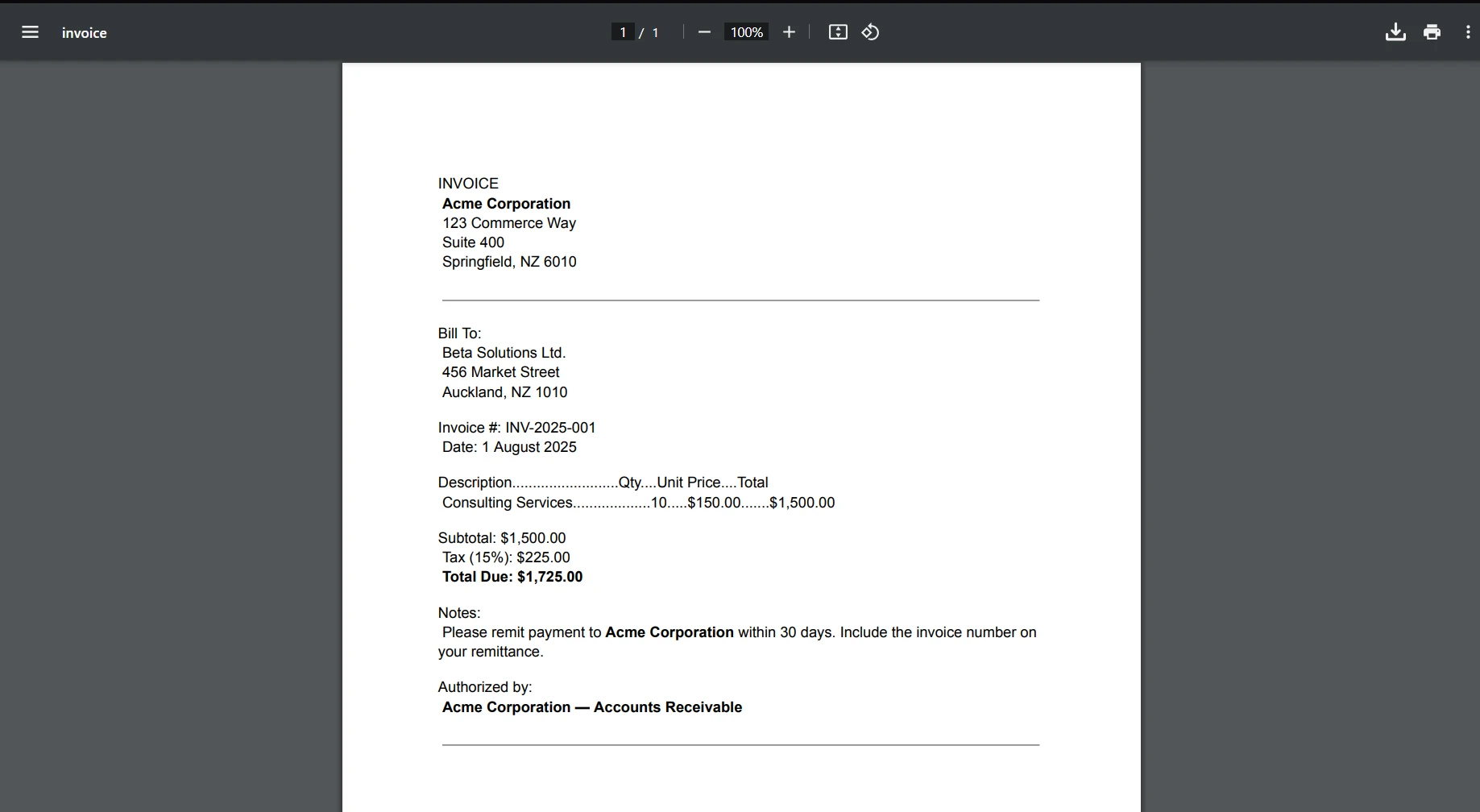
End ModuleC# HttpClient (개발자를 위해 작동하는 방법): 그림 2 - PDF 출력
실제 날씨 API를 사용할 때 "YOUR_API_KEY"를 API 키로 교체하는 것을 잊지 마세요.
C# HttpClient (개발자를 위해 작동하는 방법): 그림 3 - 라이선싱
이 튜토리얼에서는 C#에서 HttpClient 클래스를 사용하여 HTTP 요청을 보내고 응답을 처리하는 방법을 탐색했습니다. 우리는 또한 .NET 애플리케이션에서 PDF를 생성하기 위한 강력한 라이브러리인 IronPDF를 소개했습니다. 이 기술들을 결합하여 HttpClient를 사용해 웹 서비스에서 HTML 콘텐츠를 가져와 IronPDF로 이를 PDF로 변환하는 방법을 보여주었습니다.
IronPDF는 무료 체험판을 제공하며, $999에서 라이선스가 시작되어 포괄적인 PDF 생성 기능을 찾는 개발자에게 가치 있는 도구입니다.

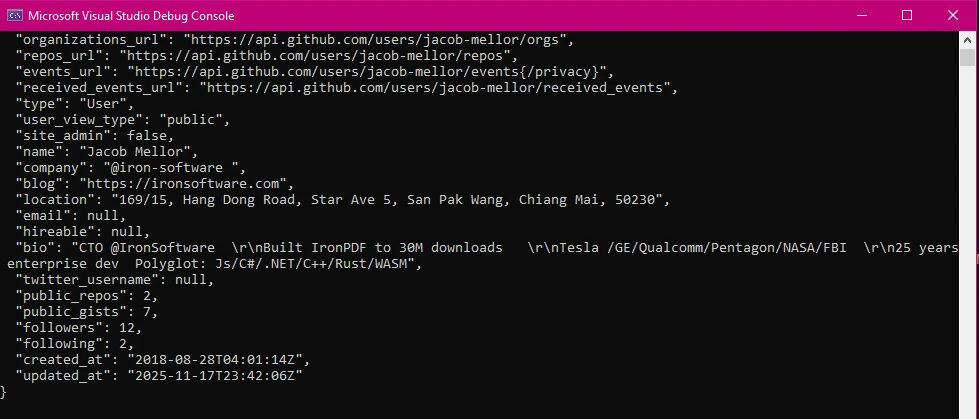
제이콥 멜러는 Iron Software의 최고 기술 책임자(CTO)이자 C# PDF 기술을 개척한 선구적인 엔지니어입니다. Iron Software의 핵심 코드베이스를 최초로 개발한 그는 창립 초기부터 회사의 제품 아키텍처를 설계해 왔으며, CEO인 캐머런 리밍턴과 함께 회사를 NASA, 테슬라, 그리고 전 세계 정부 기관에 서비스를 제공하는 50명 이상의 직원을 보유한 기업으로 성장시켰습니다.

IronPDF는 IRON SUITE 의 일부입니다.
10개의 .NET API 제품, 당신의 사무 문서를 위해

PDF 파일을 HTML처럼 빠르게 변환해야 할 때.


