푸터 콘텐츠로 바로가기
PYTHON용 IRONPDF 사용

Python에서 PDF에서 데이터를 추출하는 방법

A robust Python package called IronPDF can be used to extract data, images, radio buttons, list box widgets (instead of checkbox widgets), and other information from PDF files. This article will demonstrate how to use this library to group interactive forms with data and generate new PDF files and PDF forms.

How To Extract Data from PDF Python

  1. Get the PDF file for extracting text for data processing.
  2. Create a project in PyCharm.
  3. Configure the necessary Python libraries for your project.
  4. Extract information from specific pages in the PDF document.
  5. Print the extracted text content from the PDF document.

2. IronPDF

The IronPDF for Python library seamlessly enhances Python programming by facilitating efficient PDF data processing and offering a multitude of PDF operations. Its integration capabilities extend to various frameworks, expanding capabilities for developing graphical user interfaces.

Python is a versatile programming language that enables the quick and easy creation of user-friendly graphical interfaces, making it a preferred choice for many developers. Its dynamic nature sets it apart from other programming languages. The introduction of the IronPDF library to Python proves to be a straightforward process, allowing for efficient PDF data handling and processing.

For the rapid and secure development of fully functional graphical user interfaces, developers can leverage a wide range of pre-installed tools and popular Python libraries, including PyQt, wxWidgets, Kivy, and many others.

Furthermore, the IronPDF library seamlessly integrates various features from other frameworks, especially in the context of .NET Core, which extends support to Python and several other programming languages. Further information on Python IronPDF can be accessed by visiting the official website.

The IronPDF for Python library simplifies the process of creating and managing websites, especially when it comes to Python-based web development using frameworks like Django, Flask, and Pyramid. It's a valuable tool that these popular websites and online services, such as Reddit, Mozilla, and Spotify, rely on to enhance their functionality and features.

2.1 IronPDF Features

HTML, HTML5, ASPX, and Razor/MVC View are some of the handful of formats that can be converted into PDF format by using IronPDF. Furthermore, IronPDF offers the convenient capability to generate PDF files from both images and HTML pages.

The IronPDF toolkit can assist with various tasks, including the creation of interactive PDFs, the facilitation of interactive form completion and submission, the efficient merging and dividing of PDF files, accurate text and image extraction, comprehensive text searching within PDF files, the transformation of PDFs into images, and the flexibility to customize font sizes, borders, and background colors. IronPDF can also achieve effortless PDF file conversions.

IronPDF goes a step further by extending its support for user agents, proxies, cookies, HTTP headers, and form variables, thereby enhancing HTML login form validation. It uses usernames and passwords to safeguard user access to secure text contained within PDFs.

A PDF file print can be produced from many sources, such as a string, stream, or URL, and is achievable with just a few lines of code.

IronPDF can produce flattened PDF documents by converting interactive elements and ensuring that the document's content remains unchangeable and viewable but not editable.

3. Configuration and Setup

3.1 Installing Python and Creating a Virtual Environment

Make certain that you have the Python programming language installed on your personal computer. This is important because Python libraries are frequently required for various tasks. To achieve this, visit the official Python website and download the latest version compatible with your operating system. This ensures you have the right tools to work effectively with Python libraries.

After installing Python, establish a virtual environment to isolate the required libraries for your project, as some projects may need some necessary libraries from Python. The venv module, which enables you to construct and maintain virtual environments, might help your conversion project have a neat, autonomous workplace, especially when dealing with multiple Python libraries.

3.2 Setting Up a New Project in PyCharm

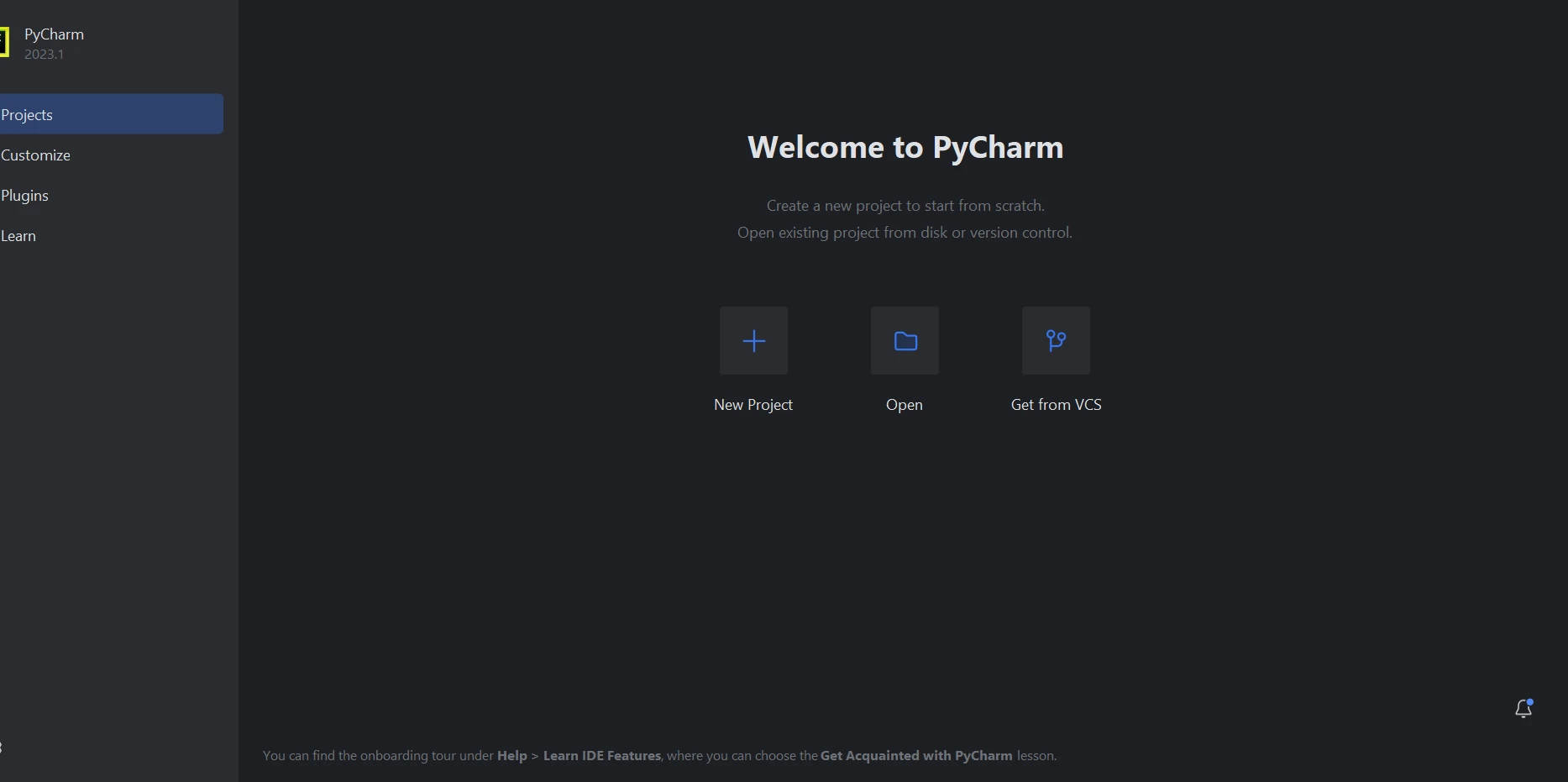
You have the flexibility to write Python code using any text editor or coding environment, such as Visual Studio Code, PyCharm, or Sublime Text. However, this article uses PyCharm, an IDE for writing Python code, to create a Python project.

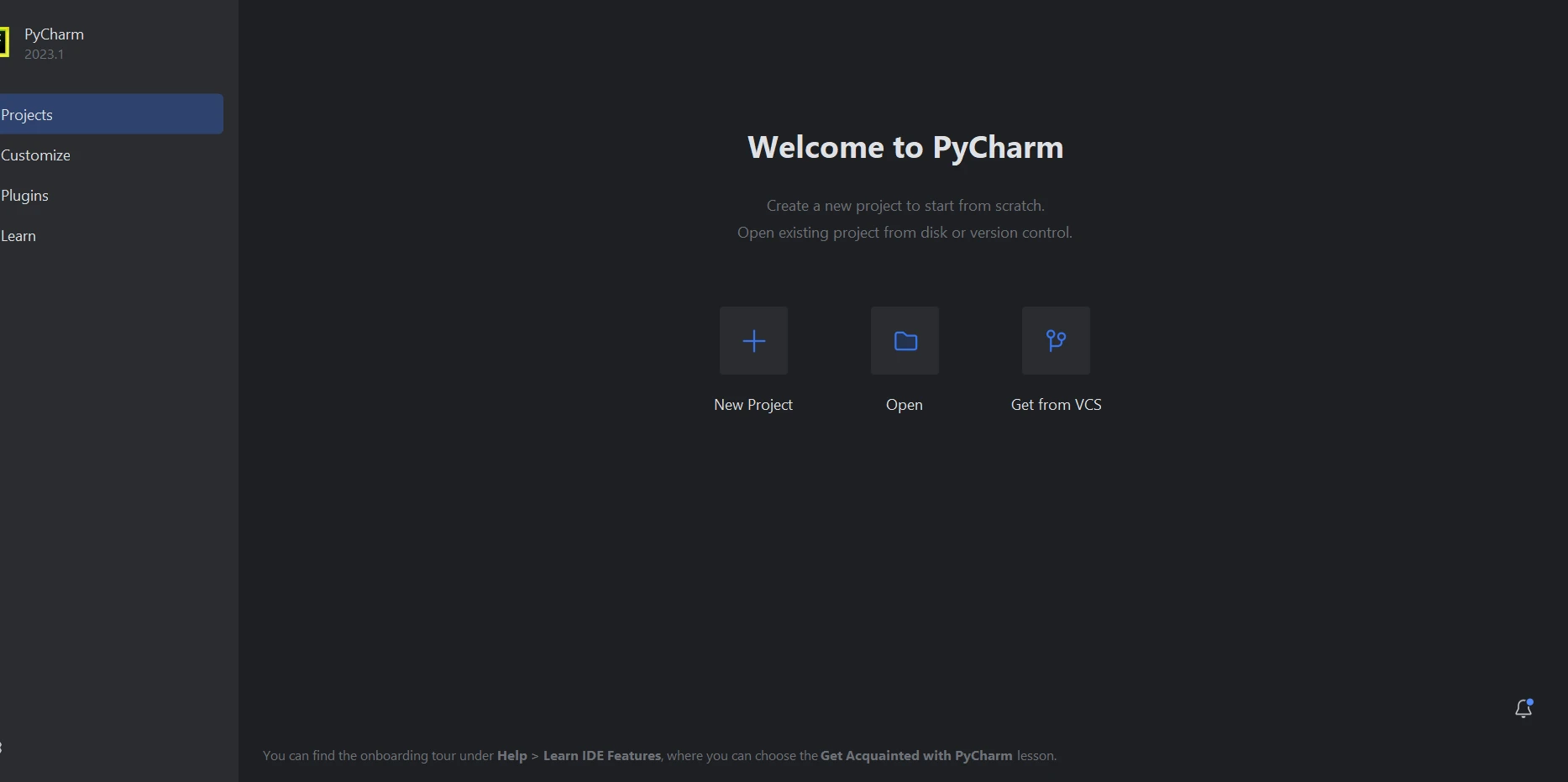
Once PyCharm IDE is launched, select New Project.

How to Extract Data From PDF in Python, Figure 1: PyCharm IDE to create New Python Project PyCharm IDE to create New Python Project

After selecting New Project, you will see a new window that allows you to specify the project's environment and location. The picture below might provide more clarity.

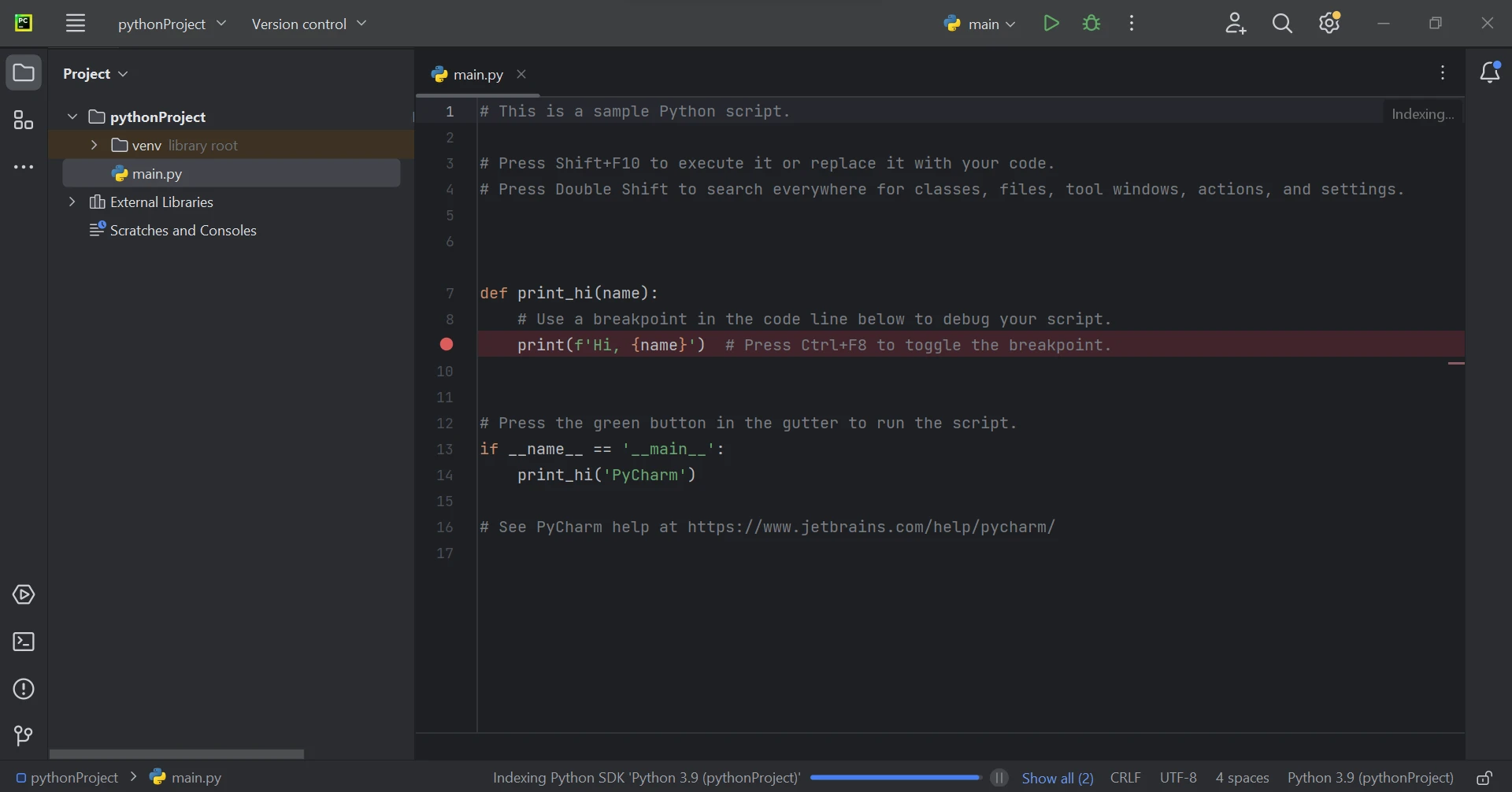
After setting up project location and environment details and clicking Create you'll enter PyCharm's interface. Here, you'll find your project's structure and code files. This is your workspace for managing and developing your project. Python 3.9 is the version used in this guide.

How to Extract Data From PDF in Python, Figure 2: The main Python file The main Python file

3.3 Library Requirements for IronPDF

The Python library IronPDF commonly interfaces with .NET 6.0. Therefore, to effectively utilize IronPDF for Python, your computer must be equipped with the .NET 6.0 runtime.

For Linux and Mac users, it may be necessary to install .NET before utilizing this Python module. For guidance on obtaining the required runtime environment, please visit this Microsoft download page.

3.4 Installing the IronPDF Library

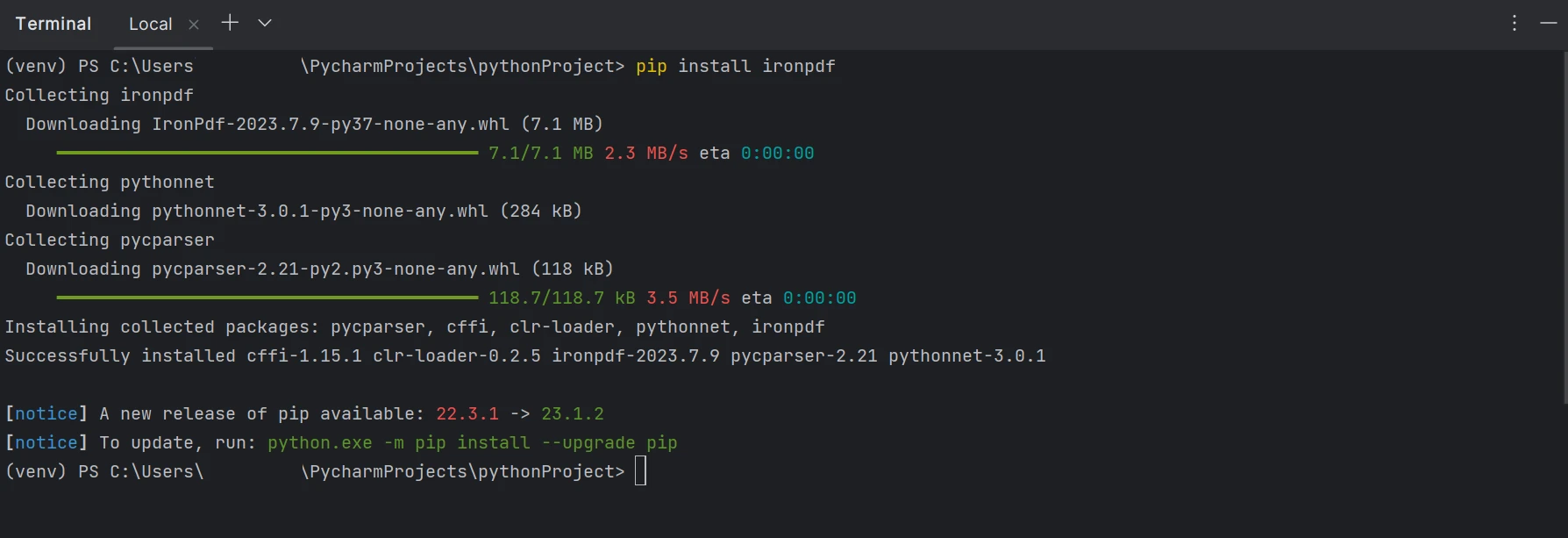
You have to install the "ironpdf" package to work with PDF files, including creating, editing, and opening them. To do this in PyCharm, open the terminal window and enter this command:

 pip install ironpdf

Refer to the screenshot below for the ironpdf package installation.

How to Extract Data From PDF in Python, Figure 3: IronPDF Installation IronPDF Installation

4. Extract Text from PDF Files

The IronPDF for Python library efficiently transforms PDF pages into PDF page objects, streamlining the process of extracting textual content from PDF files.

4.1 Extracting All Text Data from PDF file

In this example, the process of extracting text from an existing PDF using IronPDF is demonstrated. In this case, the below PDF document is utilized for this demonstration.

The first method focuses on extracting all the text from the PDF file. Write the following code to easily perform complete data extraction on input PDF:

from ironpdf import *

# Load a PDF document from a file
pdf = PdfDocument.FromFile("sampleData.pdf")

# Extract all text from the PDF document
all_text = pdf.ExtractAllText()
from ironpdf import *

# Load a PDF document from a file
pdf = PdfDocument.FromFile("sampleData.pdf")

# Extract all text from the PDF document
all_text = pdf.ExtractAllText()
PYTHON

As illustrated in the code above, the FromFile method plays a key role. It loads the PDF file from an existing location, to convert it into PdfDocument objects. With this object, both textual content and images present within the PDF pages can be accessed. To extract all the text from the given PDF file, a method called ExtractAllText is used. The extracted text is then stored in a string, ready for further processing.

4.2 Page-by-Page Text Extraction

Below is the code for the second approach, which explicitly extracts text from each page of the PDF file.

from ironpdf import *

# Load a PDF document from a file
pdf = PdfDocument.FromFile("sampleData.pdf")

# Iterate over each page and extract text
for xpage in range(pdf.PageCount):
    # Extract text from the current page
    print(pdf.ExtractTextFromPage(xpage))
from ironpdf import *

# Load a PDF document from a file
pdf = PdfDocument.FromFile("sampleData.pdf")

# Iterate over each page and extract text
for xpage in range(pdf.PageCount):
    # Extract text from the current page
    print(pdf.ExtractTextFromPage(xpage))
PYTHON

This sample code initially loads the entire PDF file and transforms it into a PdfDocument object called pdf. To ensure that each specific page from the PDF file is processed sequentially, each page is accessed using its page number or page index in the pdf object. To do this first, the total number of pages present in the input PDF is determined using the PageCount method of its pdf object.

With this page count, a for loop iterates through each page, calling the ExtractTextFromPage function to extract text from each page of the PDF document. The extracted text can be stored in a string variable or displayed on the user screen. Thus, this method enables the organized extraction of text from each separate PDF page. These methods, from IronPDF, a Python library designed for PDF tasks, highlight its ability to make text extraction from PDF files easy and thorough. This accessibility has many practical applications and improves the usefulness of PDFs in different areas.

5. Conclusion

The IronPDF library incorporates strong security measures to mitigate potential risks and ensure data safety. It effectively operates on all widely-used browsers without any specific limitations. IronPDF empowers developers to efficiently generate and parse PDF documents with minimal lines of Python code. To address the various demands of developers, the IronPDF library presents a range of licensing choices, encompassing a complimentary developer license and supplementary development licenses that are available for acquisition.

The Lite package costs $799 and gives you a permanent license. You also get a 30-day money-back guarantee, one year of software maintenance, and the chance to get updates. After you buy it, there are no extra charges. You can use this license in production, staging, and development. IronPDF also offers free licenses with some time and sharing limits. You can try it for 30 days without a watermark. For the cost and how to get the trial version of IronPDF, please visit the IronPDF's licensing page.

자주 묻는 질문

Python을 사용하여 PDF 파일에서 데이터를 추출하려면 어떻게 해야 하나요?

IronPDF를 사용하여 Python에서 PDF 파일에서 데이터를 추출할 수 있습니다. PdfDocument.FromFile() 메서드를 사용하여 PDF를 로드하고 ExtractAllText() 또는 ExtractTextFromPage() 메서드를 활용하여 텍스트 데이터를 검색합니다.

Python 프로젝트에서 IronPDF를 설정하는 단계는 무엇인가요?

Python 프로젝트에서 IronPDF를 설정하려면 먼저 Python을 설치하고 가상 환경을 설정합니다. 그런 다음 pip install ironpdf 명령을 사용하여 IronPDF 라이브러리를 설치합니다. 시스템에 .NET 6.0 런타임이 설치되어 있는지 확인합니다.

Python을 사용하여 HTML 콘텐츠를 PDF로 변환할 수 있나요?

예, IronPDF를 사용하면 Python에서 HTML 콘텐츠를 PDF로 변환할 수 있습니다. RenderUrlAsPdf() 또는 RenderHtmlAsPdf() 메서드를 사용하여 웹 페이지 또는 HTML 문자열을 PDF 문서로 변환할 수 있습니다.

IronPDF는 PDF 양식 생성 및 관리를 지원하나요?

IronPDF는 대화형 PDF 양식 작성 및 관리를 지원합니다. 이를 사용하여 프로그래밍 방식으로 양식을 작성하고 제출하여 PDF 문서의 상호 작용성을 향상시킬 수 있습니다.

IronPDF를 Python의 웹 프레임워크와 어떻게 통합할 수 있나요?

IronPDF는 장고 및 플라스크와 같은 인기 있는 Python 웹 프레임워크와 통합할 수 있습니다. 이러한 통합을 통해 웹 애플리케이션에서 PDF를 동적으로 생성하여 웹 개발 기능을 향상시킬 수 있습니다.

IronPDF는 Python에서 PDF 조작을 위해 어떤 기능을 제공하나요?

IronPDF는 텍스트 및 이미지 추출, PDF 분할 및 병합, HTML 및 이미지를 PDF로 변환, 대화형 양식 지원과 같은 기능을 제공합니다. 또한 PDF에 대한 사용자 지정 및 보안 액세스 관리도 가능합니다.

IronPDF를 사용하는 데 사용할 수 있는 라이선스 옵션은 무엇인가요?

IronPDF는 무료 개발자 라이선스와 다양한 수준의 개발 및 배포 요구 사항에 맞는 다양한 유료 라이선스 등 여러 라이선스 옵션을 제공합니다.

Python에서 IronPDF를 사용하여 PDF에서 이미지를 추출할 수 있나요?

예, PDF 페이지 내의 이미지 데이터에 액세스하여 필요에 따라 저장하거나 조작할 수 있는 IronPDF를 사용하여 PDF에서 이미지를 추출할 수 있습니다.

Python 환경에서 IronPDF를 실행하기 위한 시스템 요구 사항은 무엇인가요?

Python에서 IronPDF를 실행하려면 시스템에 .NET 6.0 런타임이 설치되어 있어야 합니다. 이 요구 사항은 Linux 및 MacOS 사용자에게 특히 중요합니다.

Python으로 생성된 PDF에 대한 보안 액세스를 보장하려면 어떻게 해야 하나요?

IronPDF를 사용하면 비밀번호 보호 및 암호화와 같은 보안 조치를 구현하여 PDF에 안전하게 액세스하고 민감한 정보를 보호할 수 있습니다.

커티스 차우
기술 문서 작성자

커티스 차우는 칼턴 대학교에서 컴퓨터 과학 학사 학위를 취득했으며, Node.js, TypeScript, JavaScript, React를 전문으로 하는 프론트엔드 개발자입니다. 직관적이고 미적으로 뛰어난 사용자 인터페이스를 만드는 데 열정을 가진 그는 최신 프레임워크를 활용하고, 잘 구성되고 시각적으로 매력적인 매뉴얼을 제작하는 것을 즐깁니다.
커티스는 개발 분야 외에도 사물 인터넷(IoT)에 깊은 관심을 가지고 있으며, 하드웨어와 소프트웨어를 통합하는 혁신적인 방법을 연구합니다. 여가 시간에는 게임을 즐기거나 디스코드 봇을 만들면서 기술에 대한 애정과 창의성을 결합합니다.