



已更新 2026年4月23日
在 .NET 中用 Microsoft.Extensions.AI 簡化 LLM 整合
AI 正在改變軟體開發,但將大型語言模型 (LLM) 整合到 .NET 中一直很複雜。利用 IronPdf.AI 將 AI 整合推向更遠,為 .NET 應用程式帶來由 OpenAI 驅動的 PDF 解析、資料擷取和內容總結。
閱讀更多

在程式設計的領域中,效率的資料處理是成功的軟體開發的基石。 其中一個在管理和組織資訊方面發揮重要作用的基本資料結構是隊列。 在C#這個強大且多功能的程式語言中,C# Queue作為順序管理資料的基本工具脫穎而出。 要了解更多關於C#中的Queue,這裡有推薦的文章:C#中的Queue和.NET中的Generic Queue類。
隊列遵循先入先出(FIFO)原則,最先加入的元素是最先被移除的。 這一特性使其在需要按特定順序處理資料或物件的場景中特別有用,例如以系統化方式處理任務或管理伺服器中的請求。
在本文中,我們將使用C#的PDF程式庫IronPDF和C# Queue。
C#中的標準隊列是一個通用類,允許開發者建立任何資料型別的隊列。 它提供了像Dequeue,用於從前端移除元素。 這種型別的隊列廣泛應用於資料處理需遵循嚴格順序的場景中,確保資源分配的公平性。
using System;
using System.Collections.Generic;

class Program
{
    static void Main()
    {
        // Create an empty queue
        Queue<int> standardQueue = new Queue<int>();

        // Enqueue elements into the queue
        standardQueue.Enqueue(10);
        standardQueue.Enqueue(20);
        standardQueue.Enqueue(30);

        // Dequeue elements from the queue until it is empty
        while (standardQueue.Count > 0)
        {
            int element = standardQueue.Dequeue();
            Console.WriteLine($"Dequeued: {element}");
        }
    }
}Imports System
Imports System.Collections.Generic
Module Program
Sub Main()
' Create an empty queue
Dim standardQueue As New Queue(Of Integer)()
' Enqueue elements into the queue
standardQueue.Enqueue(10)
standardQueue.Enqueue(20)
standardQueue.Enqueue(30)
' Dequeue elements from the queue until it is empty
While standardQueue.Count > 0
Dim element As Integer = standardQueue.Dequeue()
Console.WriteLine($"Dequeued: {element}")
End While
End Sub
End Module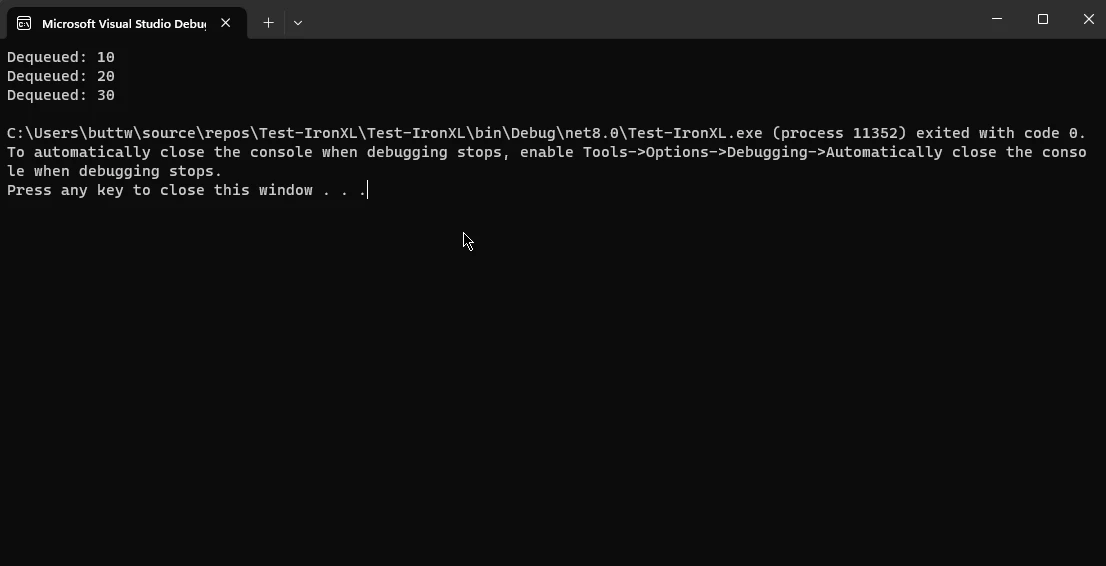
在某些情況下,在隊列中對元素進行優先排序變得至關重要。 C#沒有內建的優先隊列,但開發者可以透過使用排序集合或自定義資料結構來實作。 這種型別的隊列在某些元素需依據特定標準優先處理時非常有用,例如緊急性或重要性。
using System;
using System.Collections.Generic;

class Program
{
    static void Main()
    {
        // Create a priority queue using a sorted set to store elements in order
        SortedSet<int> priorityQueue = new SortedSet<int>();

        // Add elements to the priority queue
        priorityQueue.Add(30);
        priorityQueue.Add(10);
        priorityQueue.Add(20);

        // Dequeue elements from the priority queue based on their priority
        while (priorityQueue.Count > 0)
        {
            // Access the minimum element (highest priority for this example)
            int element = priorityQueue.Min;
            // Remove the element from the queue
            priorityQueue.Remove(element);
            Console.WriteLine($"Priority Queue Dequeued: {element}");
        }
    }
}Imports System
Imports System.Collections.Generic
Module Program
Sub Main()
' Create a priority queue using a sorted set to store elements in order
Dim priorityQueue As New SortedSet(Of Integer)()
' Add elements to the priority queue
priorityQueue.Add(30)
priorityQueue.Add(10)
priorityQueue.Add(20)
' Dequeue elements from the priority queue based on their priority
While priorityQueue.Count > 0
' Access the minimum element (highest priority for this example)
Dim element As Integer = priorityQueue.Min
' Remove the element from the queue
priorityQueue.Remove(element)
Console.WriteLine($"Priority Queue Dequeued: {element}")
End While
End Sub
End Module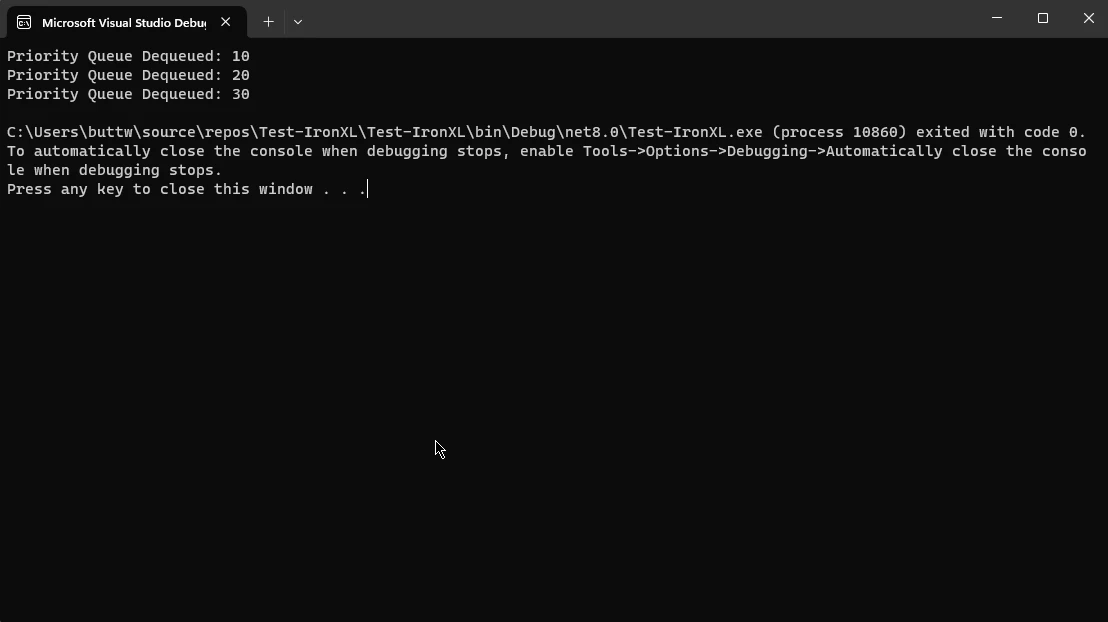
迴圈隊列是一個變體,其中最後一個元素與第一個元素連接,形成一個迴圈結構。 這在隊列有固定大小且需要迴圈地用新元素替換舊隊列元素的場景中是有利的。 在C#中實作一個迴圈隊列可以優化記憶體使用并確保高效的資料處理。
using System;

// CircularQueue class to implement a fixed-size circular queue
class CircularQueue
{
    private int[] array;
    private int front, rear, size;

    public CircularQueue(int size)
    {
        this.size = size;
        array = new int[size];
        front = rear = -1;
    }

    // Enqueue method to add an element to the circular queue
    public void Enqueue(int item)
    {
        if ((front == 0 && rear == size - 1) || (rear == (front - 1) % (size - 1)))
        {
            Console.WriteLine("Queue is full");
            return;
        }
        else if (front == -1)  // Initial insertion case
        {
            front = rear = 0;
            array[rear] = item;
        }
        else if (rear == size - 1 && front != 0)  // Wrap around
        {
            rear = 0;
            array[rear] = item;
        }
        else  // Normal case
        {
            rear++;
            array[rear] = item;
        }
    }

    // Dequeue method to remove an element from the circular queue
    public int Dequeue()
    {
        if (front == -1)  // Queue is empty case
        {
            Console.WriteLine("Queue is empty");
            return -1;
        }

        int item = array[front];
        array[front] = -1;

        if (front == rear)  // Single element case
            front = rear = -1;
        else if (front == size - 1)  // Wrap around
            front = 0;
        else  // Normal case
            front++;

        return item;
    }
}

class Program
{
    static void Main()
    {
        // Create a circular queue with a specified initial capacity
        CircularQueue circularQueue = new CircularQueue(5);

        // Enqueue elements
        circularQueue.Enqueue(10);
        circularQueue.Enqueue(20);
        circularQueue.Enqueue(30);

        // Dequeue elements
        Console.WriteLine($"Circular Queue Dequeued: {circularQueue.Dequeue()}");
        Console.WriteLine($"Circular Queue Dequeued: {circularQueue.Dequeue()}");
    }
}Imports System
' CircularQueue class to implement a fixed-size circular queue
Class CircularQueue
Private array() As Integer
Private front, rear, size As Integer
Public Sub New(size As Integer)
Me.size = size
ReDim array(size - 1)
front = -1
rear = -1
End Sub
' Enqueue method to add an element to the circular queue
Public Sub Enqueue(item As Integer)
If (front = 0 AndAlso rear = size - 1) OrElse (rear = (front - 1) Mod (size - 1)) Then
Console.WriteLine("Queue is full")
Return
ElseIf front = -1 Then ' Initial insertion case
front = 0
rear = 0
array(rear) = item
ElseIf rear = size - 1 AndAlso front <> 0 Then ' Wrap around
rear = 0
array(rear) = item
Else ' Normal case
rear += 1
array(rear) = item
End If
End Sub
' Dequeue method to remove an element from the circular queue
Public Function Dequeue() As Integer
If front = -1 Then ' Queue is empty case
Console.WriteLine("Queue is empty")
Return -1
End If
Dim item As Integer = array(front)
array(front) = -1
If front = rear Then ' Single element case
front = -1
rear = -1
ElseIf front = size - 1 Then ' Wrap around
front = 0
Else ' Normal case
front += 1
End If
Return item
End Function
End Class
Class Program
Shared Sub Main()
' Create a circular queue with a specified initial capacity
Dim circularQueue As New CircularQueue(5)
' Enqueue elements
circularQueue.Enqueue(10)
circularQueue.Enqueue(20)
circularQueue.Enqueue(30)
' Dequeue elements
Console.WriteLine($"Circular Queue Dequeued: {circularQueue.Dequeue()}")
Console.WriteLine($"Circular Queue Dequeued: {circularQueue.Dequeue()}")
End Sub
End Class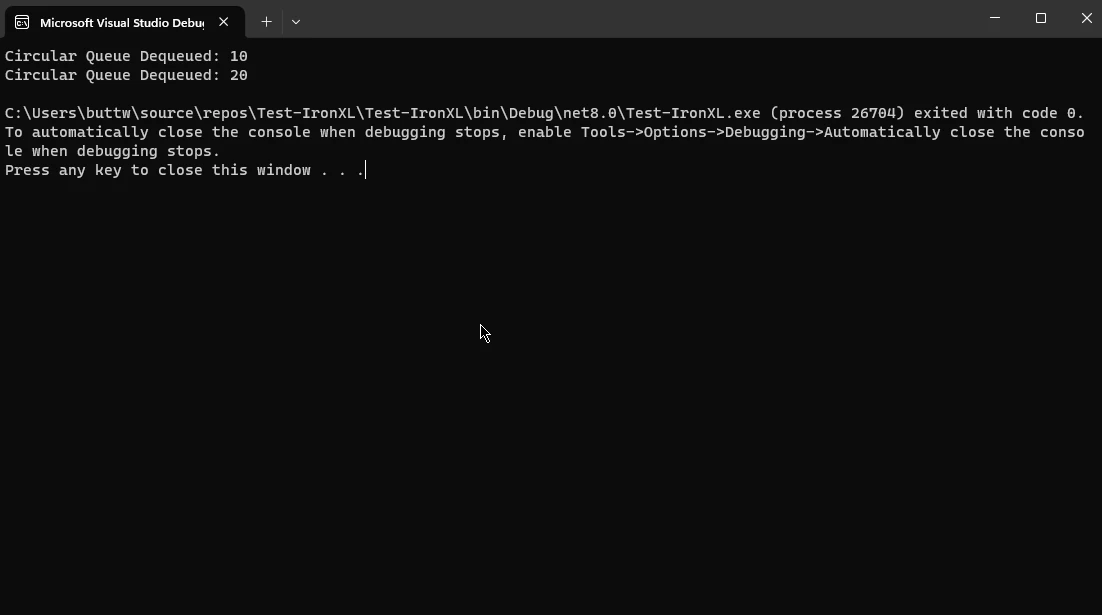
隨著我們深入了解C# Queue的功能和應用,有必要探討如何將其無縫整合到實際應用中。 其中一個強大的增強C#功能的工具是IronPDF。
IronPDF是一個C#程式庫,簡化了PDF文件的建立、操作和呈現。 其直觀的API允許開發者從HTML、ASPX甚至純文字生成PDF。 使用IronPDF,將C# Queue整合到PDF生成應用中可以變得簡單且高效。
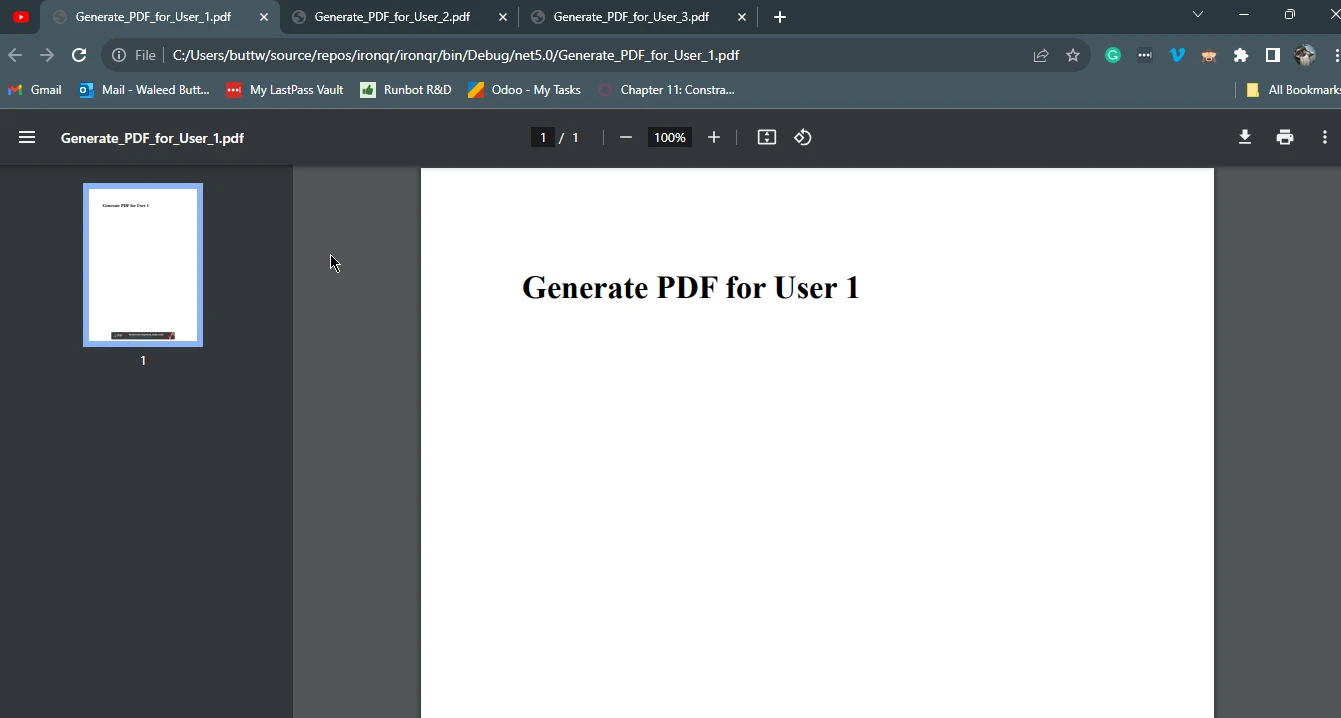
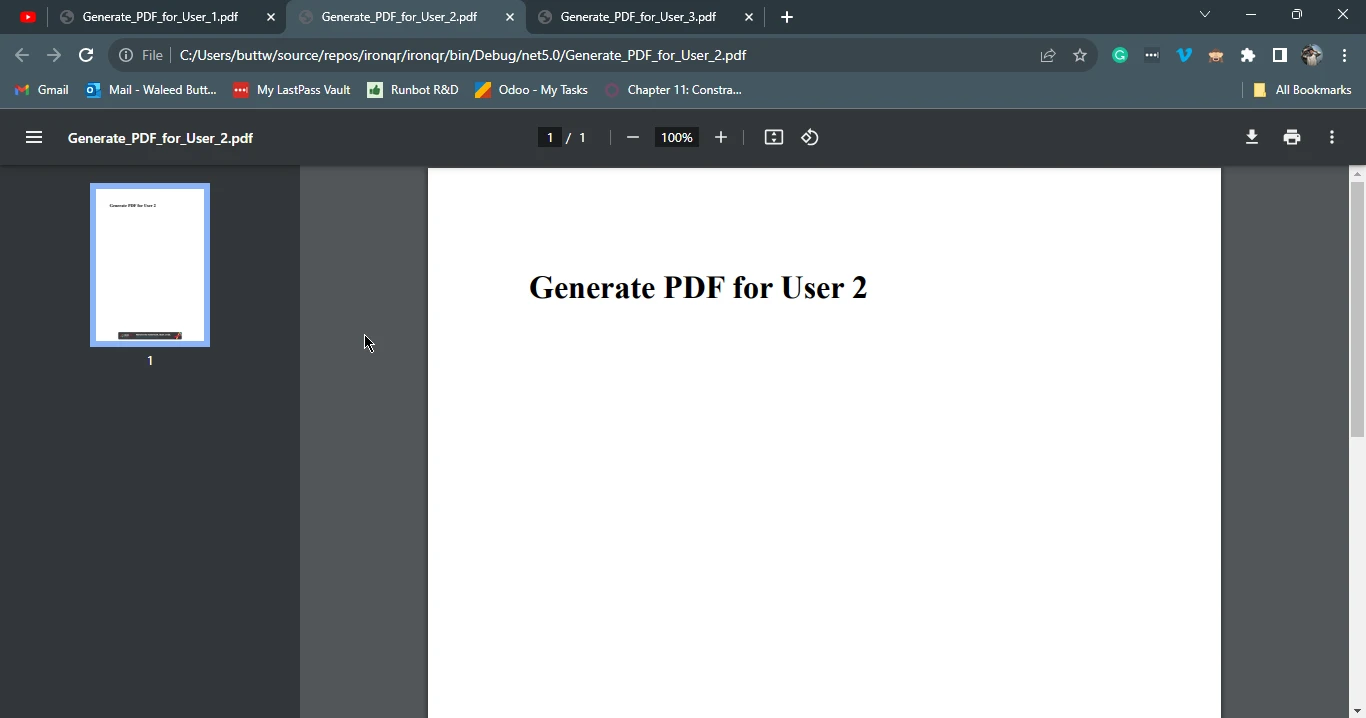
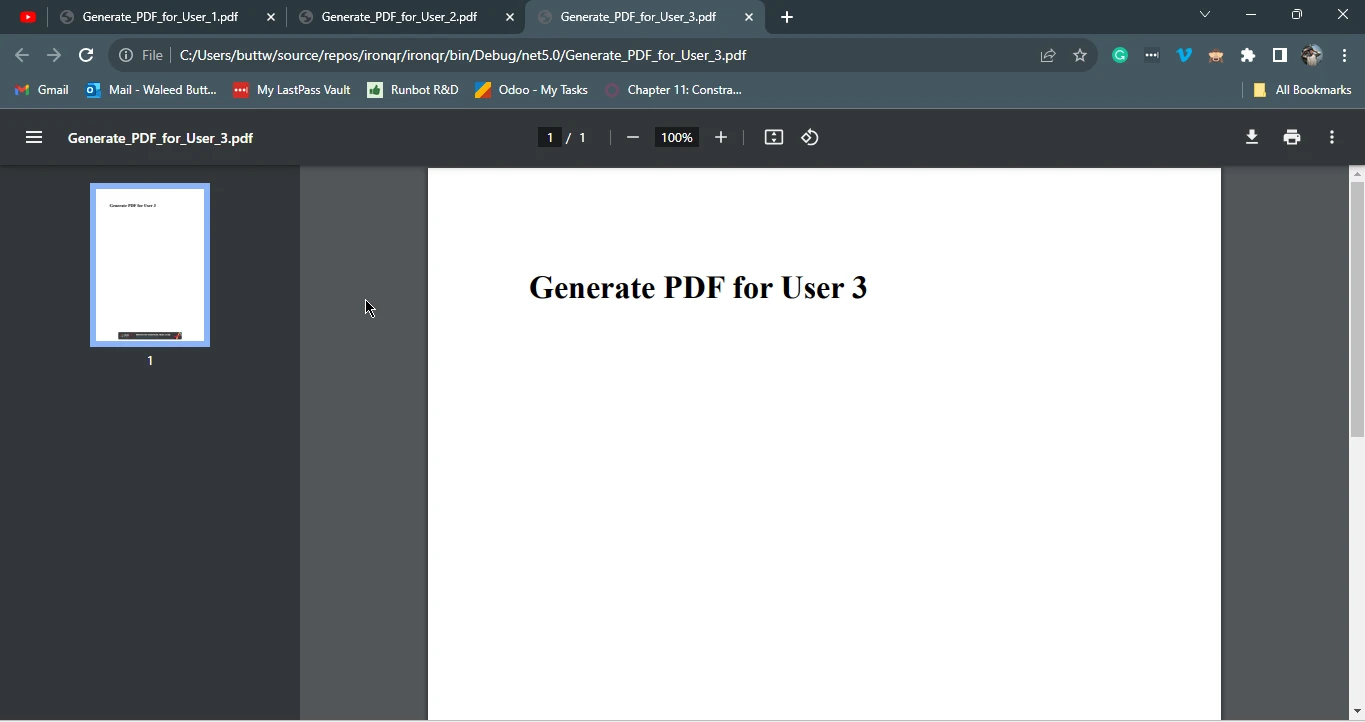
讓我們更詳細地看看如何在IronPDF的協助下,利用C# Queue來建立動態和有條理的PDF文件。 考慮一個情景:一個網頁應用需要根據使用者輸入和請求生成PDF報告。
using IronPdf;
using System;
using System.Collections.Generic;

class PdfGenerator
{
    static void Main()
    {
        // Create a C# Queue to store user requests
        Queue<string> userRequests = new Queue<string>();

        // Simulate user requests being added to the queue
        userRequests.Enqueue("Generate PDF for User 1");
        userRequests.Enqueue("Generate PDF for User 2");
        userRequests.Enqueue("Generate PDF for User 3");

        // Process requests and generate PDFs
        while (userRequests.Count > 0)
        {
            string request = userRequests.Dequeue();
            GeneratePdf(request);
        }
    }

    // Method to generate a PDF file using IronPDF
    static void GeneratePdf(string userRequest)
    {
        // Use IronPDF to generate PDF based on user request
        var Renderer = new HtmlToPdf();

        // Render the provided HTML content as a PDF
        var PDF = Renderer.RenderHtmlAsPdf($"<h1>{userRequest}</h1>");

        // Save the generated PDF with the request name as file name
        PDF.SaveAs($"{userRequest.Replace(" ", "_")}.pdf");
    }
}Imports IronPdf
Imports System
Imports System.Collections.Generic
Class PdfGenerator
Shared Sub Main()
' Create a VB.NET Queue to store user requests
Dim userRequests As New Queue(Of String)()
' Simulate user requests being added to the queue
userRequests.Enqueue("Generate PDF for User 1")
userRequests.Enqueue("Generate PDF for User 2")
userRequests.Enqueue("Generate PDF for User 3")
' Process requests and generate PDFs
While userRequests.Count > 0
Dim request As String = userRequests.Dequeue()
GeneratePdf(request)
End While
End Sub
' Method to generate a PDF file using IronPDF
Shared Sub GeneratePdf(userRequest As String)
' Use IronPDF to generate PDF based on user request
Dim Renderer = New HtmlToPdf()
' Render the provided HTML content as a PDF
Dim PDF = Renderer.RenderHtmlAsPdf($"<h1>{userRequest}</h1>")
' Save the generated PDF with the request name as file name
PDF.SaveAs($"{userRequest.Replace(" ", "_")}.pdf")
End Sub
End Class在此範例中,C# Queue(userRequests)用於儲存PDF生成的使用者請求。 GeneratePdf方法接受使用者請求,使用IronPDF將HTML內容轉換為PDF文件,並以相關名稱保存生成的PDF文件。
這種整合方法也展示了C# Queue與IronPDF之間的協同作用,通過有序處理使用者請求來系統地建立PDF文件。
總之,C# Queue證明在順序管理和處理資料方面是一項有價值的資產。 它對FIFO原則的遵循使其適用於各種應用,從任務調度到網頁伺服器中的請求處理。 當結合像IronPDF這樣強大的程式庫時,C# Queue變得更加有效,讓開發者能夠高效地建立有條理且動態的PDF文件。
理解C# Queue的細微差別並探索其與IronPDF等工具的整合,可以賦予開發者在設計強大且高效的資料管理和處理解決方案上的能力。 隨著技術的持續發展,基本資料結構如C# Queue與創新程式庫之間的協同作用,在塑造軟體開發景觀中將發揮關鍵作用。
欲了解授權資訊,請存取IronPDF授權詳情。 如需瞭解更多有關HTML轉換為PDF的資訊,請存取HTML轉換為PDF教程。

Jacob Mellor是Iron Software的首席技術官,一位在C# PDF技術上開創先河的遠見工程師。作為Iron Software核心程式碼庫的原開發者,他從創立以來就一直在塑造公司的產品架構,與首席執行官Cameron Rimington一起將公司轉變為服務於NASA、特斯拉和全球政府公司的50多名人員的公司。

IronPDF 是 IRONSUITE 的一部分
10 款適用於辦公室文件的 .NET API 產品

當您需要您的PDF看起來像HTML一樣快速。












