



已更新 2026年4月23日
在 .NET 中用 Microsoft.Extensions.AI 簡化 LLM 整合
AI 正在改變軟體開發,但將大型語言模型 (LLM) 整合到 .NET 中一直很複雜。利用 IronPdf.AI 將 AI 整合推向更遠,為 .NET 應用程式帶來由 OpenAI 驅動的 PDF 解析、資料擷取和內容總結。
閱讀更多

在C#中,short資料型別是C#資料型別之一,用於表示具有有限範圍的整數值。 雖然與int或long值型別相比,short的大小較小,但在記憶體效能或特定值範圍要求至關重要的情況下,short仍然具有優勢。 它可以持有正數和負數的數值型別,並可以輕鬆轉換為其他資料型別。本指南深入探討C# short的細節,涵蓋其特點、使用場景、常見操作和最佳實踐。 此外,我們將探討展示short關鍵字在各種程式設計背景下多功能性的例子。
我們將探索IronPDF的基本概念,並通過一個利用C#中的short資料型別來建立和轉換PDF文件的實用例子展示其多功能性。
在深入技術細節之前,讓我們先了解C#中short資料型別的重要性。
short資料型別最多佔用16位元(2個位元組)的記憶體,使得它比int型別(32位元)或long(64位元)更具記憶體效能。 在記憶體受限的環境中或在處理大資料集時,使用short使用者輸入可以顯著節省記憶體。
作為一個16位元帶符號整數,short相對於int或long具有有限的範圍。 它可以表示從-32,768到32,767之間的整數最小值和最大值。儘管其範圍有限,但short適用於值大小落在其範圍內的情況。
在設計操作大量且可變數量整數值的資料結構或演算法時,聲明型別為short的變數可以節省記憶體並提高效能。
在涉及與期望16位元整數值的外部系統或程式庫進行互操作的情況下,例如某些硬體裝置或舊系統,short提供了無縫的相容性。
在記憶體效能和計算速度至關重要的信號處理應用或數值計算中,short可以更適合儲存波形資料、感測器讀數或音訊樣本。
// Declaring and initializing short variables
short temperature = -15; // Default temperature value
short count = 1000; // Example count value' Declaring and initializing short variables
Dim temperature As Short = -15 ' Default temperature value
Dim count As Short = 1000 ' Example count value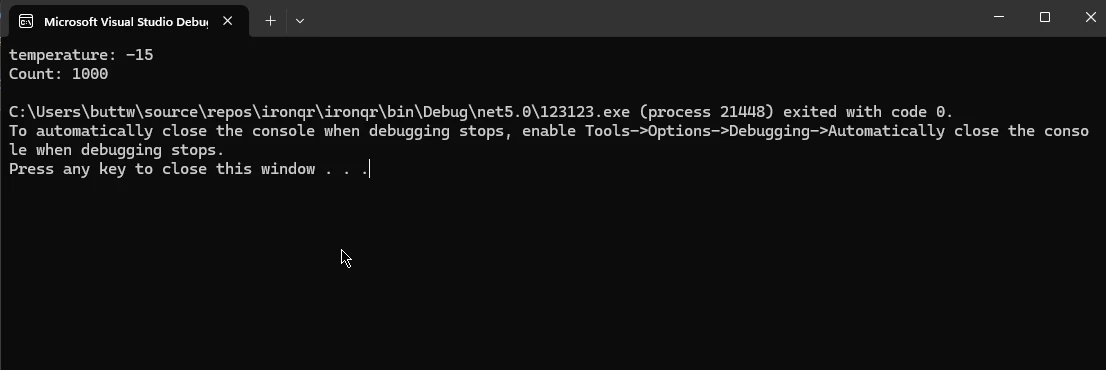
// Performing arithmetic operations on short variables
short a = 100;
short b = 200;
short sum = (short)(a + b);       // Explicit casting for arithmetic operation
short difference = (short)(b - a);' Performing arithmetic operations on short variables
Dim a As Short = 100
Dim b As Short = 200
Dim sum As Short = CShort(a + b) ' Explicit casting for arithmetic operation
Dim difference As Short = CShort(b - a)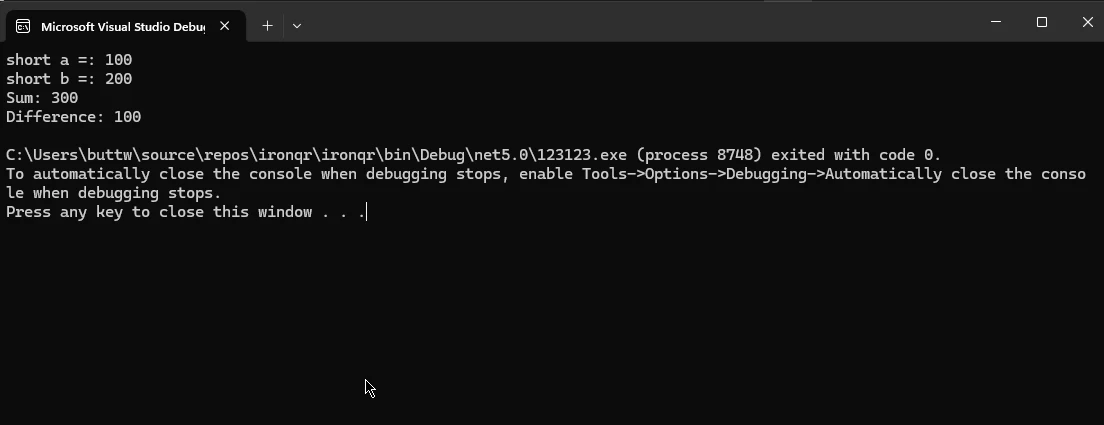
// Demonstrating comparison and logical operations with short
short x = 10;
short y = 20;
bool isEqual = (x == y);        // Check if x is equal to y
bool isGreater = (x > y);       // Check if x is greater than y
bool logicalResult = (x != y) && (x < 100); // Logical operation combining conditions' Demonstrating comparison and logical operations with short
Dim x As Short = 10
Dim y As Short = 20
Dim isEqual As Boolean = (x = y) ' Check if x is equal to y
Dim isGreater As Boolean = (x > y) ' Check if x is greater than y
Dim logicalResult As Boolean = (x <> y) AndAlso (x < 100) ' Logical operation combining conditions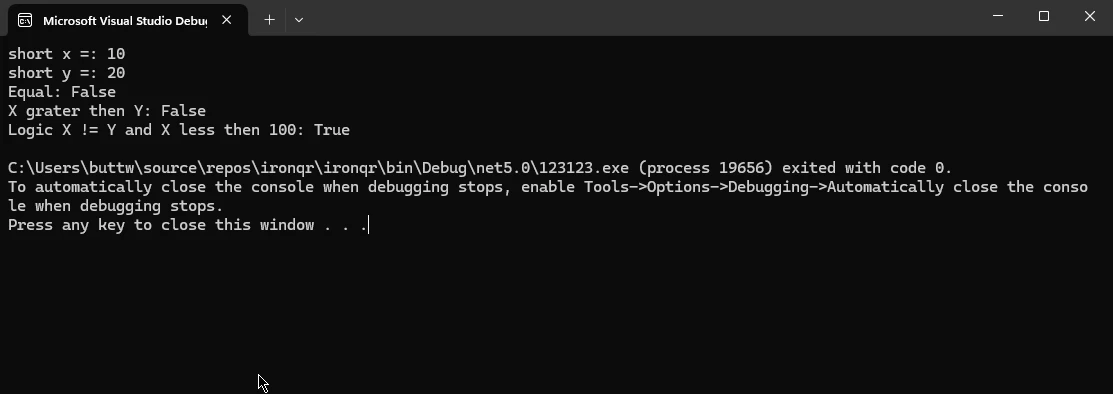
// Initializing arrays and collections with short
short[] temperatures = new short[] { -10, 0, 10, 20, 30 }; // Array of short temperatures
List<short> scores = new List<short>() { 90, 85, 95, 88 }; // List of short scores' Initializing arrays and collections with short
Dim temperatures() As Short = { -10, 0, 10, 20, 30 } ' Array of short temperatures
Dim scores As New List(Of Short)() From {90, 85, 95, 88} ' List of short scores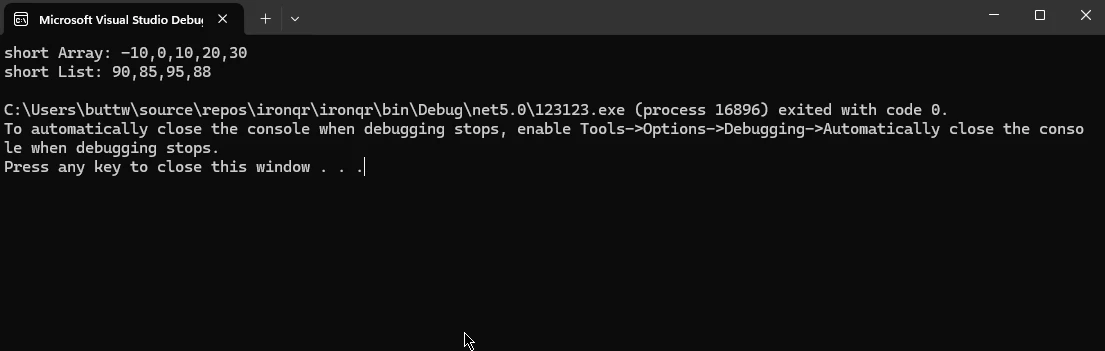
請注意short的範圍限制(-32,768到32,767),並確保被分配的值、隱式轉換或計算結果在此最小和最大值範圍內。
雖然涉及short的算術運算可能需要顯式強制轉換,但避免過多的強制轉換以維持程式碼的可讀性並降低複雜性。
在使用short時提供清晰的文件或註釋,以表明其用途,特別是在如上例所述的情況下,其使用可能不立即明顯。
IronPDF作為C#開發領域的基石解決方案,為開發者提供了一個強大的工具包,可在其應用程式中無縫生成、編輯和操作PDF文件。 依賴其直觀的API和豐富的功能集,IronPDF旨在讓開發者輕鬆地將PDF功能整合到其C#專案中,從而解鎖文件生成、報告和內容分發等多種可能性。
要在您的C#應用中安裝IronPDF,請在NuGet Package Manager控制台中運行以下命令。
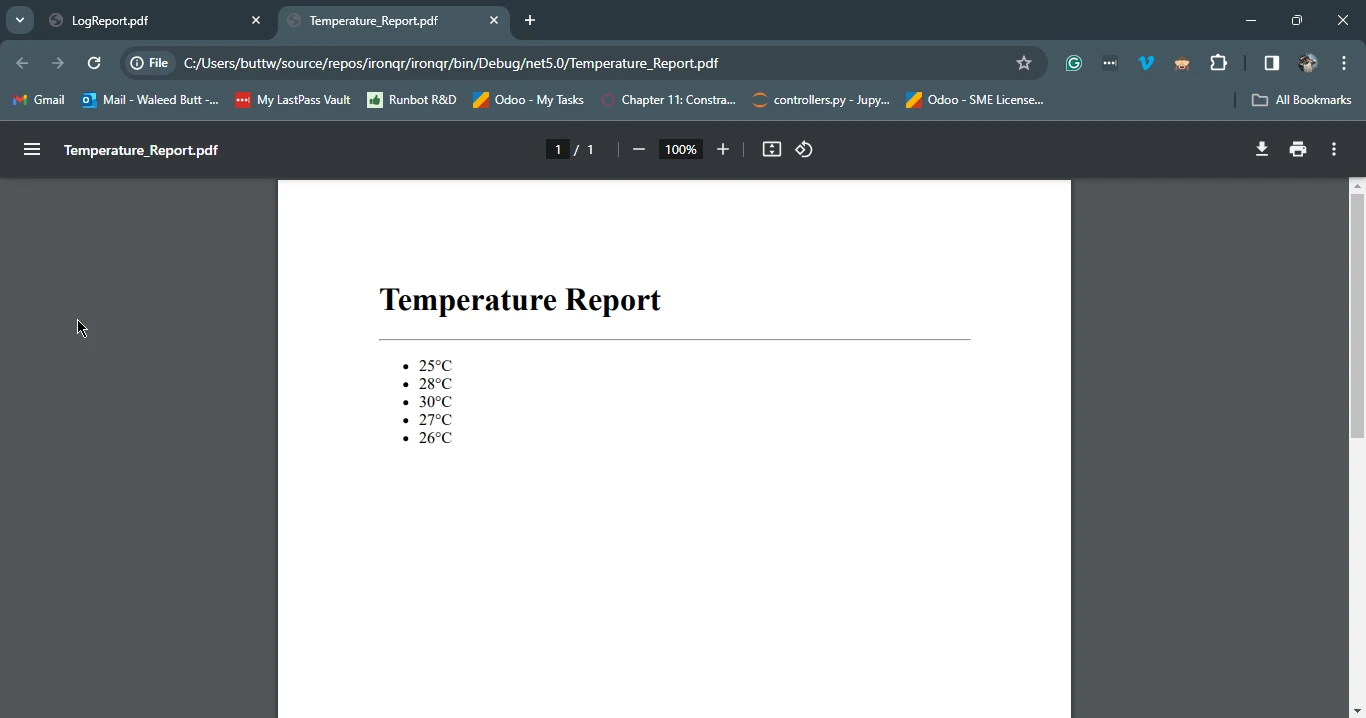
現在,讓我們深入探討一個將C#中的short資料型別與IronPDF整合以建立PDF文件的實用例子。在此情境下,想像一個溫度監測應用程式,收集感測器資料並生成一份簡明報告總結溫度讀數。 我們將利用short資料型別的緊湊性來高效地表示溫度值,並利用IronPDF動態編譯此PDF報告。
using IronPdf;
using System;

class Program
{
    static void Main(string[] args)
    {
        // Sample temperature data represented as short integers
        short[] temperatureData = { 25, 28, 30, 27, 26 };

        // Initialize the ChromePdfRenderer to generate PDFs
        var pdfRenderer = new ChromePdfRenderer();

        // Prepare HTML content for the PDF report
        var htmlContent = "<h1>Temperature Report</h1><hr/><ul>";
        foreach (var temperature in temperatureData)
        {
            // Append each temperature reading as a list item
            htmlContent += $"<li>{temperature}°C</li>";
        }
        htmlContent += "</ul>";

        // Convert the HTML content into a PDF document
        var pdfDocument = pdfRenderer.RenderHtmlAsPdf(htmlContent);

        // Define the output path for the PDF file
        var outputPath = "Temperature_Report.pdf";

        // Save the generated PDF to the specified file path
        pdfDocument.SaveAs(outputPath);

        // Notify the user that the PDF report was generated successfully
        Console.WriteLine($"PDF report generated successfully: {outputPath}");
    }
}Imports IronPdf
Imports System
Module Program
Sub Main(args As String())
' Sample temperature data represented as short integers
Dim temperatureData As Short() = {25, 28, 30, 27, 26}
' Initialize the ChromePdfRenderer to generate PDFs
Dim pdfRenderer = New ChromePdfRenderer()
' Prepare HTML content for the PDF report
Dim htmlContent = "<h1>Temperature Report</h1><hr/><ul>"
For Each temperature In temperatureData
' Append each temperature reading as a list item
htmlContent += $"<li>{temperature}°C</li>"
Next
htmlContent += "</ul>"
' Convert the HTML content into a PDF document
Dim pdfDocument = pdfRenderer.RenderHtmlAsPdf(htmlContent)
' Define the output path for the PDF file
Dim outputPath = "Temperature_Report.pdf"
' Save the generated PDF to the specified file path
pdfDocument.SaveAs(outputPath)
' Notify the user that the PDF report was generated successfully
Console.WriteLine($"PDF report generated successfully: {outputPath}")
End Sub
End Module上面的例子中包含的C#程式碼段展示了使用IronPDF程式庫生成PDF報告的過程。 它首先定義了一個temperatureData陣列,其中包含以short整數形式表示的溫度讀數。 接下來,它動態生成PDF報告的HTML內容,將溫度值融入結構化格式中。
利用IronPDF的ChromePdfRenderer,然後將HTML內容轉換為PDF文件。 最後,生成的PDF報告被保存到一個名為"Temperature_Report.pdf"的檔案中,並在控制台中顯示成功生成的消息。 總體而言,此程式碼展示了C#程式碼與IronPDF的無縫整合,以生成視覺上吸引人的PDF報告。
C#中的short資料型別作為一種既緊湊又強大的工具,用於處理有限範圍內的整數值。 其記憶體效能和範圍限制使其在記憶體優化和相容性至關重要的情況下非常理想。 無論是儲存感測器資料、優化資料結構中的儲存,還是與舊系統介面,short都提供了多功能性和有效性。
通過遵循最佳實踐並理解其細微差別,開發者可以利用short的潛在價值來提高其C#應用程式的效能和效能。 當配合像IronPDF這樣的工具時,這些工具簡化了PDF生成,short變得更加有價值,可使資料無縫地整合到簡明且視覺上吸引人的報告中。
IronPDF 授權從$999開始,此外還提供免費試用授權,這是一個了解IronPDF功能的絕佳機會。 要了解更多關於IronPDF HTML到PDF轉換的資訊,請存取轉換頁面。

Jacob Mellor是Iron Software的首席技術官,一位在C# PDF技術上開創先河的遠見工程師。作為Iron Software核心程式碼庫的原開發者,他從創立以來就一直在塑造公司的產品架構,與首席執行官Cameron Rimington一起將公司轉變為服務於NASA、特斯拉和全球政府公司的50多名人員的公司。

IronPDF 是 IRONSUITE 的一部分
10 款適用於辦公室文件的 .NET API 產品

當您需要您的PDF看起來像HTML一樣快速。












