using IronPdf;

// Disable local disk access or cross-origin requests
Installation.EnableWebSecurity = true;

// Instantiate Renderer
var renderer = new ChromePdfRenderer();

// Create a PDF from a HTML string using C#
var pdf = renderer.RenderHtmlAsPdf("<h1>Hello World</h1>");

// Export to a file or Stream
pdf.SaveAs("output.pdf");

// Advanced Example with HTML Assets
// Load external html assets: Images, CSS and JavaScript.
// An optional BasePath 'C:\site\assets\' is set as the file location to load assets from
var myAdvancedPdf = renderer.RenderHtmlAsPdf("<img src='icons/iron.png'>", @"C:\site\assets\");
myAdvancedPdf.SaveAs("html-with-assets.pdf");
using IronPdf;// Disable local disk access or cross-origin requestsInstallation.EnableWebSecurity = true;// Instantiate Renderervar renderer = new ChromePdfRenderer();// Create a PDF from a HTML string using C#var pdf = renderer.RenderHtmlAsPdf("<h1>Hello World</h1>");// Export to a file or Streampdf.SaveAs("output.pdf");// Advanced Example with HTML Assets// Load external html assets: Images, CSS and JavaScript.// An optional BasePath 'C:\site\assets\' is set as the file location to load assets fromvar myAdvancedPdf = renderer.RenderHtmlAsPdf("<img src='icons/iron.png'>", @"C:\site\assets\");myAdvancedPdf.SaveAs("html-with-assets.pdf");
Wenn Sie ein .NET-Entwickler sind, haben Sie wahrscheinlich die Aufgabe gehabt, PDF-Dateien aus Webseiten in Ihren Webanwendungen zu generieren. Glücklicherweise wird dieser Prozess in ASP.NET Core mit der IronPDF PDF-Bibliothek zum Kinderspiel. Dies ermöglicht es Ihnen, mit nur einer Zeile Code ein PDF zu erstellen. Lassen Sie uns genau darauf eingehen, wie Sie IronPDF zum Erstellen einer PDF-Datei verwenden können.
## In diesem Tutorial behandelte Themen
Dieses Tutorial behandelt die folgenden Themen:
- IronPDF
- Erstellen einer ASP.NET Core Web-App
- Installieren der IronPDF-Bibliothek
1. NuGet-Paket-Manager
2. NuGet-Paket-Manager-Konsole
3. Verwendung der DLL-Datei
- Erstellen eines PDF-Dokuments mithilfe von ASP.NET Core Webanwendungen
1. Erstellen eines PDF-Dokuments mit ASP.NET WebForms (ASPX)
2. Erstellen eines PDF-Dokuments in ASP.NET Core aus einer HTML-Datei
- Zusammenfassung
## IronPDF
Die IronPDF for .NET Bibliothek ermöglicht es Entwicklern, auf einfache Weise PDF-Dokumente in C#, F# und VB.NET for .NET Core und .NET Framework zu erstellen. Das Rendering von IronPDF ist eine pixelgenaue Kopie der Desktop-Versionen von Google Chrome. Es bearbeitet PDF-Dokumente ohne Adobe Acrobat. IronPDF kann verwendet werden, um eine PDF-Datei aus ASP.NET-Webseiten, HTML-Inhalten, URLs oder innerhalb von Model View Controller-Anwendungen zu erstellen.
**Einige wichtige Funktionen der IronPDF for .NET-Bibliothek:**
- [Erstellt PDF-Dokumente aus HTML](/how-to/html-file-to-pdf/), CSS und JavaScript
- [Erzeugt PDF-Dokumente aus URLs](/how-to/url-to-pdf/) oder Webseiten
- Lädt URLs mit [benutzerdefinierten Netzwerk-Anmeldedaten](/how-to/logins/), User-Agents, Proxys, [Cookies](/how-to/cookies/), HTTP-Headern und Formularvariablen (ermöglicht die Anmeldung hinter HTML-Login-Formularen)
- [Liest und füllt PDF-Formularfelddaten aus](/how-to/edit-forms/)
- [Extrahiert Bilder und Texte](/how-to/extract-text-and-images/) aus PDF-Dateien
- [Digitale Signatur](/examples/digitally-sign-a-pdf/)
Lassen Sie uns mit dem beginnen, wie Sie die IronPDF-Bibliothek verwenden, um ein PDF-Dokument zu erstellen.
## Erstellen einer ASP.NET Core Web App
Dieses Tutorial geht davon aus, dass Sie die neueste Version von Visual Studio installiert haben.
- Öffnen Sie Visual Studio
- Erstellen Sie eine neue ASP.NET Core Webanwendung
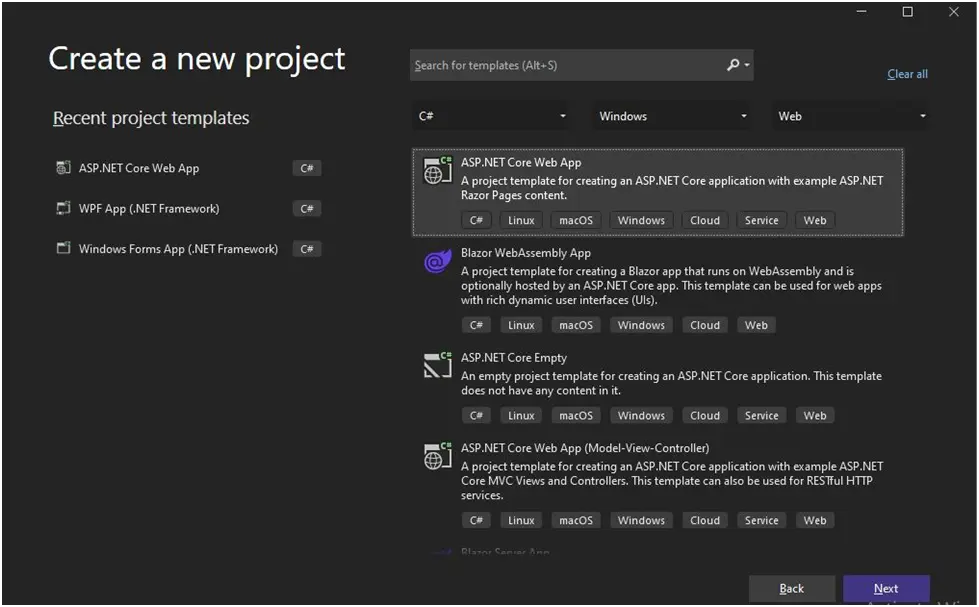
**Webanwendung**
- Geben Sie dem Projekt einen Namen (z. B. *Pdf_Generation*)
- Die neueste und stabilste Version des .NET Frameworks ist 6.0. Wählen Sie diese Version des Frameworks aus.
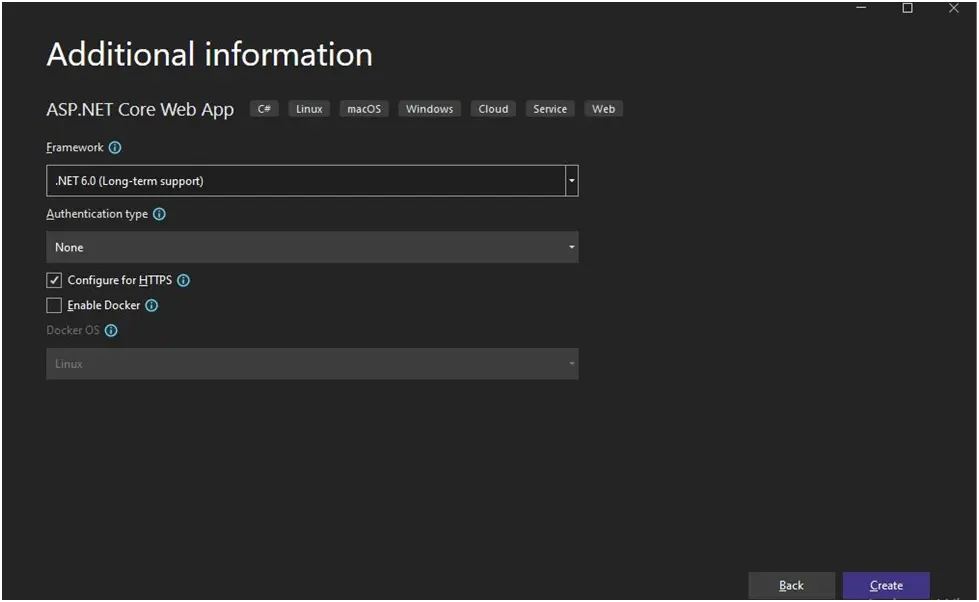
**.NET Framework**
## Installieren Sie die IronPDF-Bibliothek
Um ein PDF-Dokument zu erstellen, ist der erste Schritt, die IronPDF-Bibliothek zu installieren. Sie können es mit einer der folgenden Methoden installieren.
### 1. NuGet Paket Manager
Um die IronPDF C# .NET Core-Bibliothek über den NuGet-Paket-Manager zu installieren:
- Öffnen Sie den NuGet-Paket-Manager, indem Sie auf **Tools** > **NuGet Paket-Manager** > **NuGet-Pakete für Lösung verwalten** klicken.
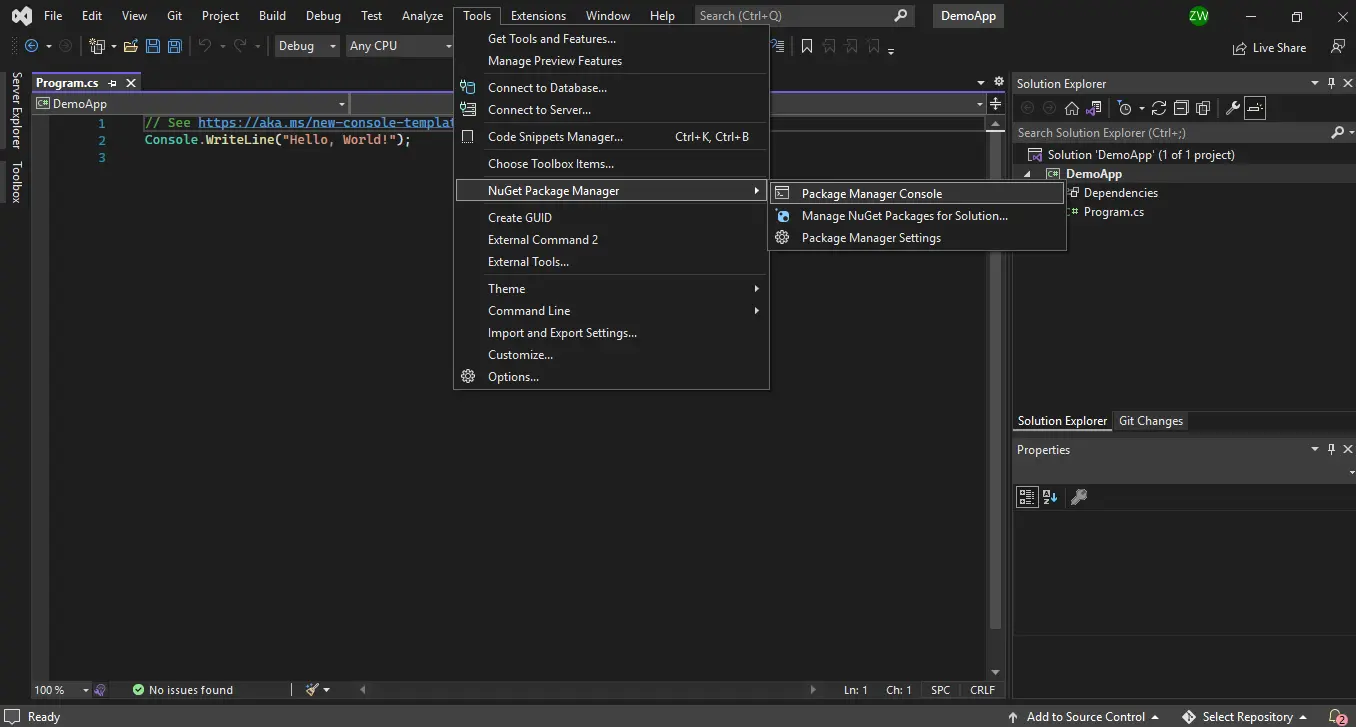
**NuGet-Paket-Manager**
- Oder, klicken Sie mit der rechten Maustaste auf das Projekt im **Projektmappen-Explorer** und klicken auf **NuGet-Pakete verwalten**.
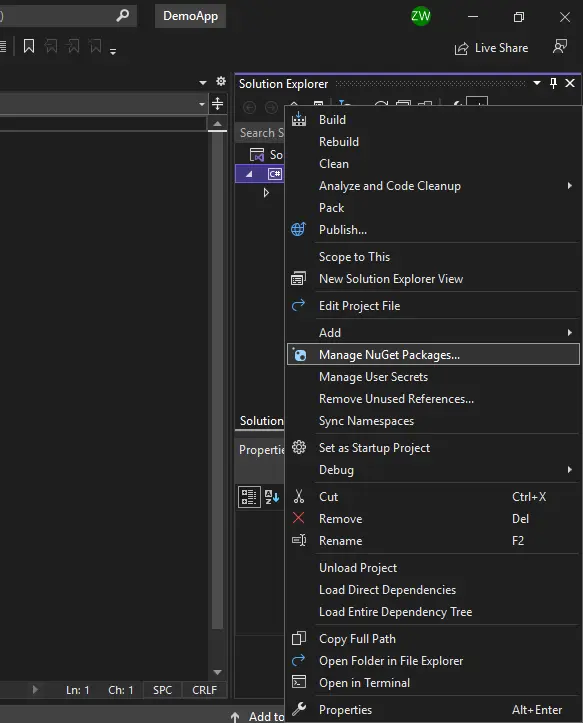
**NuGet-Paket-Manager - Projektmappen-Explorer**
- Suchen Sie nach IronPDF. Wählen Sie IronPDF und klicken Sie auf 'Installieren'. Die Bibliothek beginnt mit der Installation.
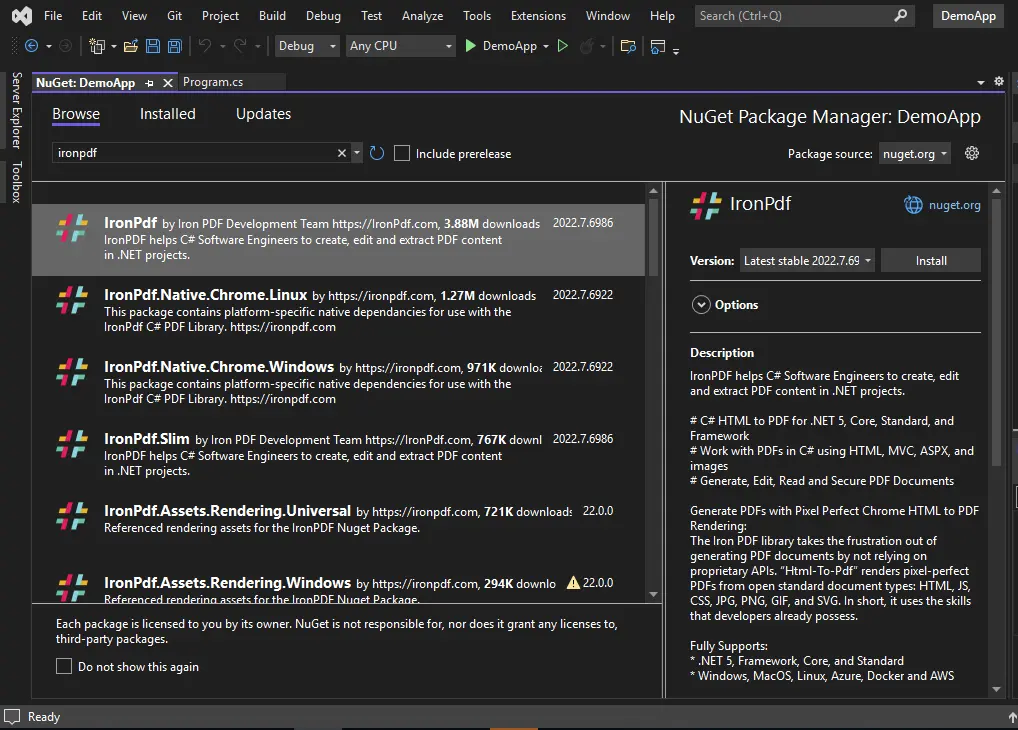
**NuGet-Paket-Manager - Projektmappen-Explorer**
## 2. NuGet-Paketmanager-Konsole
Öffnen Sie den NuGet-Paket-Manager, indem Sie auf **Tools** > **NuGet Paket-Manager** > **Paket-Manager Konsole** klicken. Geben Sie den folgenden Befehl im Terminal ein.
```shell
:ProductInstall
```

**NuGet-Paket-Manager - Projektmappen-Explorer**
## 3. eine DLL-Datei verwenden
Die dritte Möglichkeit, IronPDF in Ihr Projekt einzubinden, besteht darin, eine DLL-Datei aus der IronPDF-Bibliothek hinzuzufügen. Sie können die DLL-Datei von dieser [direkten Download-Seite für das IronPDF-Paket](https://ironpdf.com/packages/IronPdf.zip) herunterladen.
- Laden Sie die DLL-Zip-Datei herunter und entpacken Sie sie in einen bestimmten Ordner.
- Öffnen Sie das Projekt in Visual Studio. Im **Projektmappen-Explorer** klicken Sie mit der rechten Maustaste auf **Verweise** und navigieren zur IronPDF DLL-Datei.
## Erstellen eines PDF-Dokuments in ASP.NET Core-Webanwendungen
IronPDF ist bereit und nun erstellen Sie ein PDF in ASP.NET Web Forms (ASPX) und ASP.NET Core Webanwendungen.
Es gibt mehrere Möglichkeiten, ein PDF-Dokument zu erstellen. Werfen wir einen Blick auf einige davon unten mit Codebeispielen.
### 1. Erstellen einer PDF-Datei mit einem ASP.NET WebForms (ASPX)
In diesem Abschnitt wird demonstriert, wie man PDF-Dateien aus ASP.NET WebForms generiert, welche nur .NET Framework Version 4 unterstützt. Daher muss [IronPdf.Extensions.ASPX von der offiziellen NuGet-Seite für ASPX](https://www.nuget.org/packages/IronPdf.Extensions.ASPX/) installiert werden. Es ist nicht in .NET Core verfügbar, da ASPX durch das MVC-Modell abgelöst wurde.
Öffnen Sie die Quelldatei der ASPX-Webseite, die Sie in ein PDF-Dokument umwandeln möchten. In diesem Fall erstellen Sie eine neue `Default.aspx` Seite.
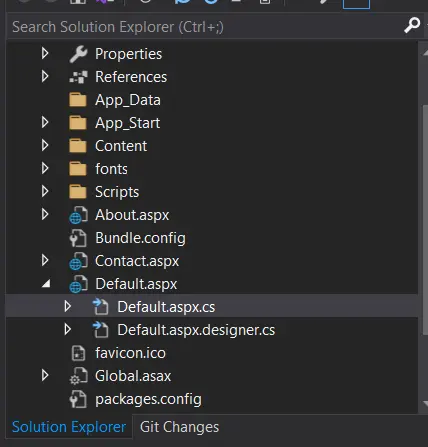
**NuGet-Paket-Manager - Projektmappen-Explorer**
Öffnen Sie die `Default.aspx.cs` Datei und fügen Sie den IronPDF-Namensraum oben hinzu.
```csharp
using IronPdf;
```
Schreiben Sie als Nächstes die folgende Codezeile in die `Page_Load()` Funktion:
```csharp
// This code renders the current ASPX page as a PDF file and displays it in the browser.
AspxToPdf.RenderThisPageAsPdf(AspxToPdf.FileBehavior.InBrowser);
```
Mit nur einer Zeile Code wird ein neues PDF-Dokument aus einer ASP.NET Webseite erstellt.
Die [`RenderThisPageAsPdf`](https://ironpdf.com/object-reference/api/IronPdf.AspxToPdf.html#IronPdf_AspxToPdf_RenderThisPageAsPdf_IronPdf_AspxToPdf_FileBehavior_System_String_IronPdf_ChromePdfRenderOptions_) Methode wird innerhalb der [`AspxToPdf`](https://ironpdf.com/object-reference/api/IronPdf.AspxToPdf.html) Klasse verwendet, um die ASPX-Seite in eine PDF-Datei zu konvertieren.
Wenn Sie das Projekt ausführen, erscheint ein PDF der Webseite im Browser. Dies wird auf der Serverseite durchgeführt.
Der obige Code zeigt nur das PDF-Dokument im Browser an. Es ist auch möglich, das PDF-Dokument direkt auf den Computer herunterzuladen, indem Sie diese Codezeile in die `Page_Load()` Funktion hinzufügen:
```csharp
// This code downloads the generated PDF file of the current ASPX page to the client.
AspxToPdf.RenderThisPageAsPdf(IronPdf.AspxToPdf.FileBehavior.Attachment);
```
Dieser Code lädt die PDF-Datei der ASPX-Webseite in das .NET Projektverzeichnis herunter.
**Ausgabe:**
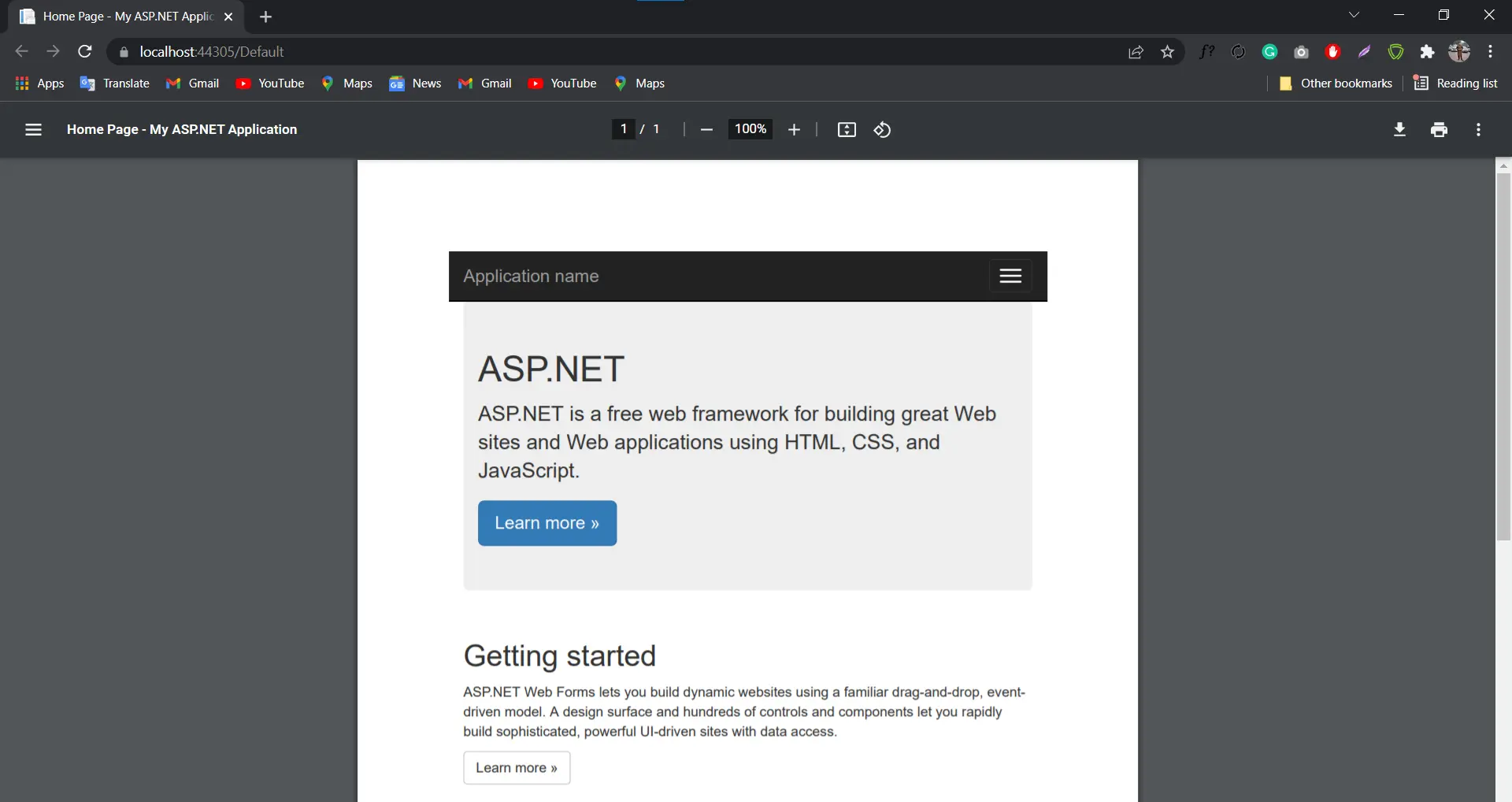
**ASPX-Seite zu PDF**
### 2. PDF mit ASP.NET Core aus einer HTML-Datei erstellen
In diesem Abschnitt wird erläutert, wie man PDF-Dateien in ASP.NET Core generiert. IronPDF kann alles in einer HTML-Datei, einschließlich Bildern, CSS, Formulare usw., direkt in ein PDF-Dokument konvertieren. Fügen Sie einen Button hinzu, der beim Klicken PDFs generiert.
Fügen Sie das folgende Markup zu einer beliebigen `.cshtml` Seite Ihrer Wahl hinzu (`index.cshtml` wird hier verwendet).
```html
<div>
<form method="post" asp-page="Index" asp-page-handler="GeneratePDF">
<input type="Submit" value="GeneratePDF"/>
</form>
</div>
```
Erstellen Sie in der `index.cshtml.cs` Datei eine Methode namens `OnPostGeneratePDF`. Diese Funktion wird verwendet, um das HTML als PDF zu rendern.
```csharp
public void OnPostGeneratePDF()
{
// Placeholder method that will handle PDF generation.
}
```
Fügen Sie als Nächstes eine neue HTML-Seite zu Ihrer Webanwendung hinzu.
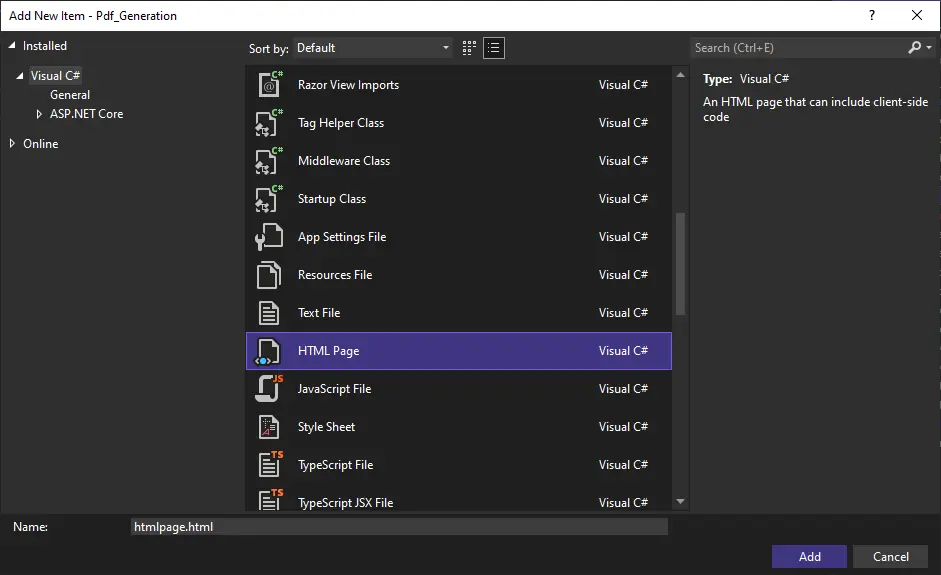
**Hinzufügen einer neuen Webseite**
Fügen Sie etwas Text in den Body dieser Seite ein, z.B. 'PDF-Dateien aus HTML-Seiten generieren.'
Fügen Sie schließlich den folgenden Code in die `OnPostGeneratePDF` Aktionsmethode ein.
```csharp
public void OnPostGeneratePDF()
{
// Create a new instance of the ChromePdfRenderer class to handle PDF rendering.
var renderer = new ChromePdfRenderer();
// Render the HTML file as a PDF by specifying the path and save the resulting PDF file.
var pdf = renderer.RenderHtmlFileAsPdf("Pages/htmlpage.html");
// Save the generated PDF document with the specified name.
pdf.SaveAs("MyPdf.pdf");
}
```
Oben wird die [`RenderHtmlFileAsPdf`](https://ironpdf.com/object-reference/api/IronPdf.ChromePdfRenderer.html#IronPdf_ChromePdfRenderer_RenderHtmlFileAsPdf_System_String_) Funktion verwendet, um PDFs aus HTML-Dateien zu erstellen, indem der Pfad zur zu konvertierenden HTML-Datei angegeben wird.
Starten Sie das Projekt und klicken Sie auf den 'Generate PDF'-Button. Die erzeugte PDF-Datei erscheint im ASP.NET Core Projektordner.
Ausgabe:
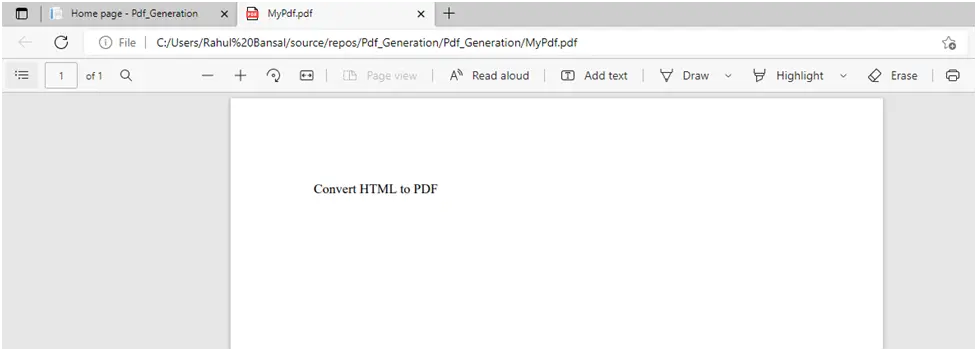
**ASP.NET HTML-Seite zu PDF**
Besuchen Sie die Tutorial-Seiten, um zu lernen, wie man [MVC-Ansichten in PDFs in ASP.NET Core konvertiert](/tutorials/html-to-pdf/).
## Zusammenfassung
IronPDF for .NET Core ist eine vollständige Lösung für die Arbeit mit PDF-Dokumenten. Es bietet die Möglichkeit, von verschiedenen Formaten zu einem neuen PDF-Dokument zu konvertieren. Es benötigt nur wenige Zeilen Code, um PDF-Dateien programmatisch zu erstellen und zu formatieren.
Das Hauptmerkmal von IronPDF ist der HTML-Konverter, der HTML-Dokumente mit einer Instanz eines echten, standardkonformen Webbrowsers im Hintergrund rendert. Das HTML wird mit vollständiger Genauigkeit im Vektorformat gerendert, das den höchsten Standards des kommerziellen Drucks entspricht. Das Ergebnis ist ein sauberes und hochwertiges PDF.
IronPDF ist ideal für Entwickler und Unternehmen, die PDF-Dateien innerhalb ihrer Software manipulieren müssen. Details zu kommerziellen Lizenzen und Preisen werden auf der Website veröffentlicht.
Sie können die kostenlose Version der IronPDF-Bibliothek ausprobieren, um ihre Funktionalität zu testen. Ein kostenloser Testlizenzschlüssel ermöglicht es Ihnen, den gesamten Funktionsumfang von IronPDF zu testen.
Darüber hinaus ermöglicht ein Sonderangebot, alle fünf Iron Software-Produkte zum Preis von nur zwei zu erhalten. Weitere Informationen zu Lizenzen finden Sie auf dieser [Seite mit Lizenzierungsinformationen von Iron Software](/licensing/).
Wenn Sie ein .NET-Entwickler sind, haben Sie wahrscheinlich die Aufgabe gehabt, PDF-Dateien aus Webseiten in Ihren Webanwendungen zu generieren. Glücklicherweise wird dieser Prozess in ASP.NET Core mit der IronPDF PDF-Bibliothek zum Kinderspiel. Dies ermöglicht es Ihnen, mit nur einer Zeile Code ein PDF zu erstellen. Lassen Sie uns genau darauf eingehen, wie Sie IronPDF zum Erstellen einer PDF-Datei verwenden können.
In diesem Tutorial behandelte Themen
Dieses Tutorial behandelt die folgenden Themen:
IronPDF
Erstellen einer ASP.NET Core Web-App
Installieren der IronPDF-Bibliothek
NuGet-Paket-Manager
NuGet-Paket-Manager-Konsole
Verwendung der DLL-Datei
Erstellen eines PDF-Dokuments mithilfe von ASP.NET Core Webanwendungen
Erstellen eines PDF-Dokuments mit ASP.NET WebForms (ASPX)
Erstellen eines PDF-Dokuments in ASP.NET Core aus einer HTML-Datei
Zusammenfassung
IronPDF
Die IronPDF for .NET Bibliothek ermöglicht es Entwicklern, auf einfache Weise PDF-Dokumente in C#, F# und VB.NET for .NET Core und .NET Framework zu erstellen. Das Rendering von IronPDF ist eine pixelgenaue Kopie der Desktop-Versionen von Google Chrome. Es bearbeitet PDF-Dokumente ohne Adobe Acrobat. IronPDF kann verwendet werden, um eine PDF-Datei aus ASP.NET-Webseiten, HTML-Inhalten, URLs oder innerhalb von Model View Controller-Anwendungen zu erstellen.
Einige wichtige Funktionen der IronPDF for .NET-Bibliothek:
Lassen Sie uns mit dem beginnen, wie Sie die IronPDF-Bibliothek verwenden, um ein PDF-Dokument zu erstellen.
Erstellen einer ASP.NET Core Web App
Dieses Tutorial geht davon aus, dass Sie die neueste Version von Visual Studio installiert haben.
Öffnen Sie Visual Studio
Erstellen Sie eine neue ASP.NET Core Webanwendung
Webanwendung
Geben Sie dem Projekt einen Namen (z. B. Pdf_Generation)
Die neueste und stabilste Version des .NET Frameworks ist 6.0. Wählen Sie diese Version des Frameworks aus.
.NET Framework
Installieren Sie die IronPDF-Bibliothek
Um ein PDF-Dokument zu erstellen, ist der erste Schritt, die IronPDF-Bibliothek zu installieren. Sie können es mit einer der folgenden Methoden installieren.
1. NuGet Paket Manager
Um die IronPDF C# .NET Core-Bibliothek über den NuGet-Paket-Manager zu installieren:
Öffnen Sie den NuGet-Paket-Manager, indem Sie auf Tools > NuGet Paket-Manager > NuGet-Pakete für Lösung verwalten klicken.
NuGet-Paket-Manager
Oder, klicken Sie mit der rechten Maustaste auf das Projekt im Projektmappen-Explorer und klicken auf NuGet-Pakete verwalten.
NuGet-Paket-Manager - Projektmappen-Explorer
Suchen Sie nach IronPDF. Wählen Sie IronPDF und klicken Sie auf 'Installieren'. Die Bibliothek beginnt mit der Installation.
NuGet-Paket-Manager - Projektmappen-Explorer
2. NuGet-Paketmanager-Konsole
Öffnen Sie den NuGet-Paket-Manager, indem Sie auf Tools > NuGet Paket-Manager > Paket-Manager Konsole klicken. Geben Sie den folgenden Befehl im Terminal ein.
PM > Install-Package IronPdf
Install-Package IronPdf
NuGet-Paket-Manager - Projektmappen-Explorer
3. eine DLL-Datei verwenden
Die dritte Möglichkeit, IronPDF in Ihr Projekt einzubinden, besteht darin, eine DLL-Datei aus der IronPDF-Bibliothek hinzuzufügen. Sie können die DLL-Datei von dieser direkten Download-Seite für das IronPDF-Paket herunterladen.
Laden Sie die DLL-Zip-Datei herunter und entpacken Sie sie in einen bestimmten Ordner.
Öffnen Sie das Projekt in Visual Studio. Im Projektmappen-Explorer klicken Sie mit der rechten Maustaste auf Verweise und navigieren zur IronPDF DLL-Datei.
Erstellen eines PDF-Dokuments in ASP.NET Core-Webanwendungen
IronPDF ist bereit und nun erstellen Sie ein PDF in ASP.NET Web Forms (ASPX) und ASP.NET Core Webanwendungen.
Es gibt mehrere Möglichkeiten, ein PDF-Dokument zu erstellen. Werfen wir einen Blick auf einige davon unten mit Codebeispielen.
1. Erstellen einer PDF-Datei mit einem ASP.NET WebForms (ASPX)
In diesem Abschnitt wird demonstriert, wie man PDF-Dateien aus ASP.NET WebForms generiert, welche nur .NET Framework Version 4 unterstützt. Daher muss IronPdf.Extensions.ASPX von der offiziellen NuGet-Seite für ASPX installiert werden. Es ist nicht in .NET Core verfügbar, da ASPX durch das MVC-Modell abgelöst wurde.
Öffnen Sie die Quelldatei der ASPX-Webseite, die Sie in ein PDF-Dokument umwandeln möchten. In diesem Fall erstellen Sie eine neue Default.aspx Seite.
NuGet-Paket-Manager - Projektmappen-Explorer
Öffnen Sie die Default.aspx.cs Datei und fügen Sie den IronPDF-Namensraum oben hinzu.
using IronPdf;
using IronPdf;
ImportsIronPdf
Imports IronPdf
Schreiben Sie als Nächstes die folgende Codezeile in die Page_Load() Funktion:
// This code renders the current ASPX page as a PDF file and displays it in the browser.AspxToPdf.RenderThisPageAsPdf(AspxToPdf.FileBehavior.InBrowser);
// This code renders the current ASPX page as a PDF file and displays it in the browser.
AspxToPdf.RenderThisPageAsPdf(AspxToPdf.FileBehavior.InBrowser);
' This code renders the current ASPX page as a PDF file and displays it in the browser.AspxToPdf.RenderThisPageAsPdf(AspxToPdf.FileBehavior.InBrowser)
' This code renders the current ASPX page as a PDF file and displays it in the browser.
AspxToPdf.RenderThisPageAsPdf(AspxToPdf.FileBehavior.InBrowser)
Mit nur einer Zeile Code wird ein neues PDF-Dokument aus einer ASP.NET Webseite erstellt.
Die RenderThisPageAsPdf Methode wird innerhalb der AspxToPdf Klasse verwendet, um die ASPX-Seite in eine PDF-Datei zu konvertieren.
Wenn Sie das Projekt ausführen, erscheint ein PDF der Webseite im Browser. Dies wird auf der Serverseite durchgeführt.
Der obige Code zeigt nur das PDF-Dokument im Browser an. Es ist auch möglich, das PDF-Dokument direkt auf den Computer herunterzuladen, indem Sie diese Codezeile in die Page_Load() Funktion hinzufügen:
// This code downloads the generated PDF file of the current ASPX page to the client.AspxToPdf.RenderThisPageAsPdf(IronPdf.AspxToPdf.FileBehavior.Attachment);
// This code downloads the generated PDF file of the current ASPX page to the client.
AspxToPdf.RenderThisPageAsPdf(IronPdf.AspxToPdf.FileBehavior.Attachment);
' This code downloads the generated PDF file of the current ASPX page to the client.AspxToPdf.RenderThisPageAsPdf(IronPdf.AspxToPdf.FileBehavior.Attachment)
' This code downloads the generated PDF file of the current ASPX page to the client.
AspxToPdf.RenderThisPageAsPdf(IronPdf.AspxToPdf.FileBehavior.Attachment)
Dieser Code lädt die PDF-Datei der ASPX-Webseite in das .NET Projektverzeichnis herunter.
Ausgabe:
ASPX-Seite zu PDF
2. PDF mit ASP.NET Core aus einer HTML-Datei erstellen
In diesem Abschnitt wird erläutert, wie man PDF-Dateien in ASP.NET Core generiert. IronPDF kann alles in einer HTML-Datei, einschließlich Bildern, CSS, Formulare usw., direkt in ein PDF-Dokument konvertieren. Fügen Sie einen Button hinzu, der beim Klicken PDFs generiert.
Fügen Sie das folgende Markup zu einer beliebigen .cshtml Seite Ihrer Wahl hinzu (index.cshtml wird hier verwendet).
Erstellen Sie in der index.cshtml.cs Datei eine Methode namens OnPostGeneratePDF. Diese Funktion wird verwendet, um das HTML als PDF zu rendern.
public voidOnPostGeneratePDF(){ // Placeholder method that will handle PDF generation.}
public void OnPostGeneratePDF()
{
    // Placeholder method that will handle PDF generation.
}
Public Sub OnPostGeneratePDF() ' Placeholder method that will handle PDF generation.End Sub
Public Sub OnPostGeneratePDF()
	' Placeholder method that will handle PDF generation.
End Sub
Fügen Sie als Nächstes eine neue HTML-Seite zu Ihrer Webanwendung hinzu.
Hinzufügen einer neuen Webseite
Fügen Sie etwas Text in den Body dieser Seite ein, z.B. 'PDF-Dateien aus HTML-Seiten generieren.'
Fügen Sie schließlich den folgenden Code in die OnPostGeneratePDF Aktionsmethode ein.
public voidOnPostGeneratePDF(){ // Create a new instance of the ChromePdfRenderer class to handle PDF rendering. var renderer = new ChromePdfRenderer(); // Render the HTML file as a PDF by specifying the path and save the resulting PDF file. var pdf = renderer.RenderHtmlFileAsPdf("Pages/htmlpage.html"); // Save the generated PDF document with the specified name. pdf.SaveAs("MyPdf.pdf");}
public void OnPostGeneratePDF()
{
    // Create a new instance of the ChromePdfRenderer class to handle PDF rendering.
    var renderer = new ChromePdfRenderer();

    // Render the HTML file as a PDF by specifying the path and save the resulting PDF file.
    var pdf = renderer.RenderHtmlFileAsPdf("Pages/htmlpage.html");

    // Save the generated PDF document with the specified name.
    pdf.SaveAs("MyPdf.pdf");
}
Public Sub OnPostGeneratePDF() ' Create a new instance of the ChromePdfRenderer class to handle PDF rendering. Dim renderer As New ChromePdfRenderer() ' Render the HTML file as a PDF by specifying the path and save the resulting PDF file. Dim pdf = renderer.RenderHtmlFileAsPdf("Pages/htmlpage.html") ' Save the generated PDF document with the specified name. pdf.SaveAs("MyPdf.pdf")End Sub
Public Sub OnPostGeneratePDF()
    ' Create a new instance of the ChromePdfRenderer class to handle PDF rendering.
    Dim renderer As New ChromePdfRenderer()

    ' Render the HTML file as a PDF by specifying the path and save the resulting PDF file.
    Dim pdf = renderer.RenderHtmlFileAsPdf("Pages/htmlpage.html")

    ' Save the generated PDF document with the specified name.
    pdf.SaveAs("MyPdf.pdf")
End Sub
Oben wird die RenderHtmlFileAsPdf Funktion verwendet, um PDFs aus HTML-Dateien zu erstellen, indem der Pfad zur zu konvertierenden HTML-Datei angegeben wird.
Starten Sie das Projekt und klicken Sie auf den 'Generate PDF'-Button. Die erzeugte PDF-Datei erscheint im ASP.NET Core Projektordner.
IronPDF for .NET Core ist eine vollständige Lösung für die Arbeit mit PDF-Dokumenten. Es bietet die Möglichkeit, von verschiedenen Formaten zu einem neuen PDF-Dokument zu konvertieren. Es benötigt nur wenige Zeilen Code, um PDF-Dateien programmatisch zu erstellen und zu formatieren.
Das Hauptmerkmal von IronPDF ist der HTML-Konverter, der HTML-Dokumente mit einer Instanz eines echten, standardkonformen Webbrowsers im Hintergrund rendert. Das HTML wird mit vollständiger Genauigkeit im Vektorformat gerendert, das den höchsten Standards des kommerziellen Drucks entspricht. Das Ergebnis ist ein sauberes und hochwertiges PDF.
IronPDF ist ideal für Entwickler und Unternehmen, die PDF-Dateien innerhalb ihrer Software manipulieren müssen. Details zu kommerziellen Lizenzen und Preisen werden auf der Website veröffentlicht.
Sie können die kostenlose Version der IronPDF-Bibliothek ausprobieren, um ihre Funktionalität zu testen. Ein kostenloser Testlizenzschlüssel ermöglicht es Ihnen, den gesamten Funktionsumfang von IronPDF zu testen.
Darüber hinaus ermöglicht ein Sonderangebot, alle fünf Iron Software-Produkte zum Preis von nur zwei zu erhalten. Weitere Informationen zu Lizenzen finden Sie auf dieser Seite mit Lizenzierungsinformationen von Iron Software.
Curtis Chau hat einen Bachelor-Abschluss in Informatik von der Carleton University und ist spezialisiert auf Frontend-Entwicklung mit Expertise in Node.js, TypeScript, JavaScript und React. Leidenschaftlich widmet er sich der Erstellung intuitiver und ästhetisch ansprechender Benutzerschnittstellen und arbeitet gerne mit modernen Frameworks sowie der Erstellung gut strukturierter, optisch ansprechender Handbücher.





 Webanwendung
 .NET Framework
 NuGet-Paket-Manager
 NuGet-Paket-Manager - Projektmappen-Explorer
 NuGet-Paket-Manager - Projektmappen-Explorer
 NuGet-Paket-Manager - Projektmappen-Explorer
 NuGet-Paket-Manager - Projektmappen-Explorer
 ASPX-Seite zu PDF
 Hinzufügen einer neuen Webseite
 ASP.NET HTML-Seite zu PDF