C# This(開發者的工作原理)

C# 中有一個特別重要的關鍵字,那就是 this 關鍵字。 這個關鍵字指的是使用它的當前類別實例。 除其他事項外,它可用於區分類別層級的變數和共用相同名稱的方法參數。 例如,如果您有一個同名的實例變數和一個同名的方法參數,this 可以救您一命!
此關鍵字的基礎知識
例如,在公共類別中,例如Employee ,您可以有公共實例變量,例如 id 或 name。 如果您想在方法中為這些實例變數指定值,您可能會遇到一個常見的問題:如果方法參數的名稱與實例變數相同,該怎麼辦?
解決方案如下:在 C# 文件中使用 this 關鍵字! 在以下公共類別 Employee 的方法範例中,使用 this 關鍵字來區分具有相同名稱的實例變數和方法參數。
public class Employee
{
    private int id;
    private string name;

    public void Display(int id, string name)
    {
        // Use `this.id` to refer to the instance variable,
        // and `id` for the method parameter.
        this.id = id;
        this.name = name;
    }
}
public class Employee
{
private int id;
private string name;
public void Display(int id, string name)
{
// Use `this.id` to refer to the instance variable,
// and `id` for the method parameter.
this.id = id;
this.name = name;
}
}Public Class Employee
Private id As Integer
Private name As String
Public Sub Display(ByVal id As Integer, ByVal name As String)
' Use `this.id` to refer to the instance variable,
' and `id` for the method parameter.
Me.id = id
Me.name = name
End Sub
End Class在這種情況下,this.id 指的是實例變量,而 id 是方法參數。
this 建構子重載中的關鍵字
透過利用 this 關鍵字,建構函數重載成為同一個類別中的強大技術。 當一個類別(例如 Student 類別)有多個具有不同參數的建構函數時,this 關鍵字允許一個建構函數呼叫另一個建構函數,從而消除冗餘程式碼的需要。
考慮以下範例,其中在帶參數的建構函數中使用了 this:
public class Student
{
    private string name;
    private int id;

    public Student() : this("Default", 0)
    {
        // Default constructor delegates to the parameterized constructor
        // with "Default" as the name and 0 as the id.
    }

    public Student(string name, int id)
    {
        // Assign the parameters to the instance variables
        this.name = name;
        this.id = id;
    }
}
public class Student
{
private string name;
private int id;
public Student() : this("Default", 0)
{
// Default constructor delegates to the parameterized constructor
// with "Default" as the name and 0 as the id.
}
public Student(string name, int id)
{
// Assign the parameters to the instance variables
this.name = name;
this.id = id;
}
}Public Class Student
Private name As String
Private id As Integer
Public Sub New()
Me.New("Default", 0)
' Default constructor delegates to the parameterized constructor
' with "Default" as the name and 0 as the id.
End Sub
Public Sub New(ByVal name As String, ByVal id As Integer)
' Assign the parameters to the instance variables
Me.name = name
Me.id = id
End Sub
End Class在沒有參數的建構函數中,this("Default", 0) 呼叫有參數的建構函數,將 Default 設定為名稱,將 0 設為 ID。
探索擴展方法中的 this
C# 中的擴充方法提供了一種在不修改原始類型的情況下為現有類型增加方法的方法。 這裡,this 關鍵字發揮了神奇的作用。 它用在擴充方法的參數清單中,指代被擴充的類型。
請考慮以下擴充方法的範例:
public static class StringExtensions
{
    // This extension method can be called on any string instance
    public static bool IsNullOrEmpty(this string str)
    {
        return string.IsNullOrEmpty(str);
    }
}
public static class StringExtensions
{
// This extension method can be called on any string instance
public static bool IsNullOrEmpty(this string str)
{
return string.IsNullOrEmpty(str);
}
}Public Module StringExtensions
' This extension method can be called on any string instance
<System.Runtime.CompilerServices.Extension> _
Public Function IsNullOrEmpty(ByVal str As String) As Boolean
Return String.IsNullOrEmpty(str)
End Function
End Module這裡,this string str 告訴 C# 這是一個字串類型的擴充方法。 現在你可以對任何字串物件使用此方法,例如 if(myString.IsNullOrEmpty())。
this 在索引器中
關鍵字 this 也可以用來定義索引器。 索引器允許類的實例像陣列一樣被索引。 這有助於您使用類似索引的符號存取物件內的資料。 在索引器中,this 後面跟著一個陣列索引,通常是 int index。
以下是索引器的基本範例:
public class Test
{
    private int[] array = new int[100];

    // Define an indexer for the class
    public int this[int index]
    {
        get { return array[index]; }
        set { array[index] = value; }
    }
}
public class Test
{
private int[] array = new int[100];
// Define an indexer for the class
public int this[int index]
{
get { return array[index]; }
set { array[index] = value; }
}
}Public Class Test
Private array(99) As Integer
' Define an indexer for the class
Default Public Property Item(ByVal index As Integer) As Integer
Get
Return array(index)
End Get
Set(ByVal value As Integer)
array(index) = value
End Set
End Property
End Class在這個類別 Test 中,關鍵字 this 定義了一個索引器,該索引器可用於取得或設定 array 實例欄位中的值。
this 和靜態成員
需要注意的是,this 不能用來引用靜態成員或方法。 這是因為 this 指的是目前實例,而靜態成員屬於類別本身,而不是類別的實例。
public class Program
{
    public static void Main(string[] args)
    {
        // Can't use `this` here, because 'Main' is a static method.
    }
}
public class Program
{
public static void Main(string[] args)
{
// Can't use `this` here, because 'Main' is a static method.
}
}Public Class Program
Public Shared Sub Main(ByVal args() As String)
' Can't use `this` here, because 'Main' is a static method.
End Sub
End Class所以,請記住,this 是用於實例的,而不是用於類別層級或靜態成員的!
this 關鍵字與屬性
就像實例變數和方法參數一樣,this 關鍵字也可以用於屬性。 在 C# 中,屬性是一個成員,提供靈活的機制來讀取、寫入或計算私有欄位的值。 屬性可以當作公共資料成員來使用,但它們實際上是稱為存取器的特殊方法。
讓我們來看一個使用屬性中 this 的簡單範例:
public class Employee
{
    private string name;

    public string Name
    {
        get { return this.name; }
        set { this.name = value; } // Use `this` to refer to the instance variable
    }
}
public class Employee
{
private string name;
public string Name
{
get { return this.name; }
set { this.name = value; } // Use `this` to refer to the instance variable
}
}Public Class Employee
'INSTANT VB NOTE: The field name was renamed since Visual Basic does not allow fields to have the same name as other class members:
Private name_Conflict As String
Public Property Name() As String
Get
Return Me.name_Conflict
End Get
Set(ByVal value As String)
Me.name_Conflict = value
End Set ' Use `this` to refer to the instance variable
End Property
End Class在上面的類別中,關鍵字 this 用於在 Name 屬性的 get 和 set 存取器中引用私有字串 name。
探索 this 和委託
this 也出現在委託中。 C# 中的 delegate 類似於 C 或 C++ 中的函數指標。 它是一個引用型變數,持有方法的引用。 委託方法和擴充方法一樣,可以使用 this 來存取目前實例。
以下是使用 this 的委託範例:
public delegate void DisplayDelegate();

public class Student
{
    public int Id { get; set; }
    public string Name { get; set; }

    public void Display()
    {
        // `this.DisplayDetails` refers to the method instance of the current object.
        DisplayDelegate displayDelegate = new DisplayDelegate(this.DisplayDetails);
        displayDelegate();
    }

    private void DisplayDetails()
    {
        Console.WriteLine("ID: " + Id + ", Name: " + Name);
    }
}
public delegate void DisplayDelegate();
public class Student
{
public int Id { get; set; }
public string Name { get; set; }
public void Display()
{
// `this.DisplayDetails` refers to the method instance of the current object.
DisplayDelegate displayDelegate = new DisplayDelegate(this.DisplayDetails);
displayDelegate();
}
private void DisplayDetails()
{
Console.WriteLine("ID: " + Id + ", Name: " + Name);
}
}Public Delegate Sub DisplayDelegate()
Public Class Student
Public Property Id() As Integer
Public Property Name() As String
Public Sub Display()
' `this.DisplayDetails` refers to the method instance of the current object.
Dim displayDelegate As New DisplayDelegate(AddressOf Me.DisplayDetails)
displayDelegate()
End Sub
Private Sub DisplayDetails()
Console.WriteLine("ID: " & Id & ", Name: " & Name)
End Sub
End Class在學生類別中,this.DisplayDetails 建立了一個新的委託實例,該委託引用目前物件的 DisplayDetails 方法。
使用 IronPDF 實作 this 關鍵字
讓我們深入探討一個例子,其中您可能會將 this 關鍵字與IronPDF結合使用,IronPDF 是一個強大的 .NET 庫,用於使用 HTML 編輯和建立 PDF 文件。
考慮一個名為 PDFHandler 的類,該類使用 IronPDF 庫對 PDF 文件執行各種操作:
using IronPdf;

public class PDFHandler
{
    private string path;

    public PDFHandler(string path)
    {
        this.path = path;
    }

    public void GeneratePDF(string content)
    {
        // Creating a renderer to convert HTML content to PDF
        var Renderer = new IronPdf.ChromePdfRenderer();
        var PDF = Renderer.RenderHtmlAsPdf(content);

        // Save the generated PDF to the path specified by the current instance
        PDF.SaveAs(this.path);
    }
}
using IronPdf;
public class PDFHandler
{
private string path;
public PDFHandler(string path)
{
this.path = path;
}
public void GeneratePDF(string content)
{
// Creating a renderer to convert HTML content to PDF
var Renderer = new IronPdf.ChromePdfRenderer();
var PDF = Renderer.RenderHtmlAsPdf(content);
// Save the generated PDF to the path specified by the current instance
PDF.SaveAs(this.path);
}
}Imports IronPdf
Public Class PDFHandler
Private path As String
Public Sub New(ByVal path As String)
Me.path = path
End Sub
Public Sub GeneratePDF(ByVal content As String)
' Creating a renderer to convert HTML content to PDF
Dim Renderer = New IronPdf.ChromePdfRenderer()
Dim PDF = Renderer.RenderHtmlAsPdf(content)
' Save the generated PDF to the path specified by the current instance
PDF.SaveAs(Me.path)
End Sub
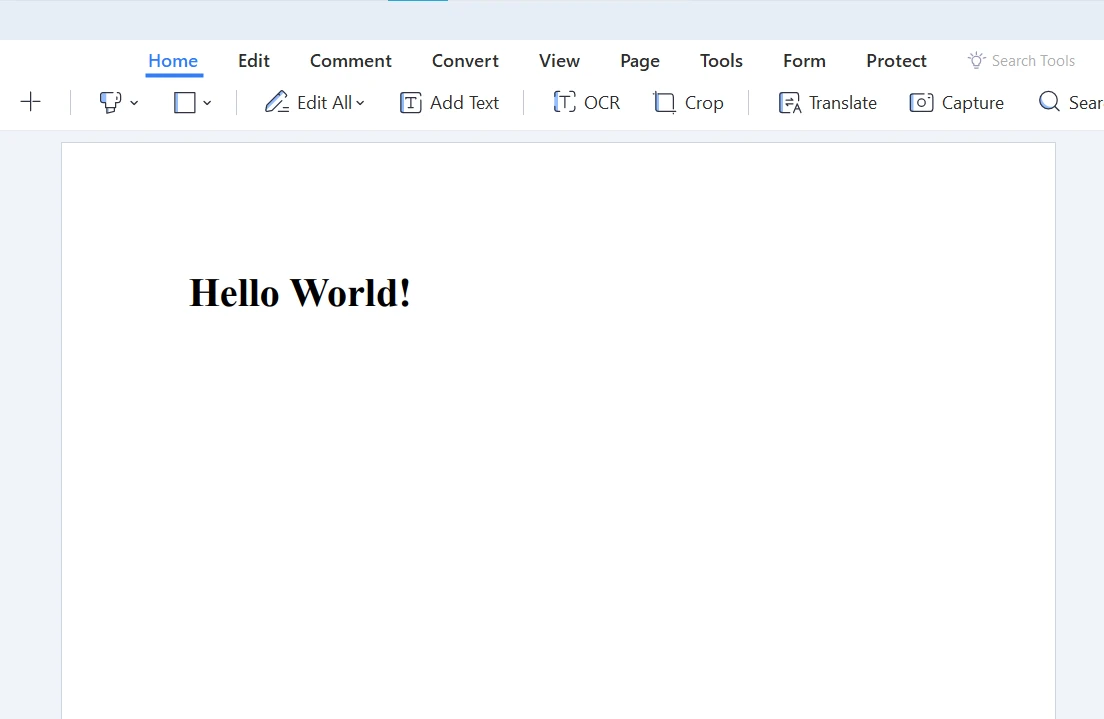
End Class在這個 PDFHandler 類別中,關鍵字 this 用於引用目前實例的 path 欄位。 此欄位用於將產生的 PDF 儲存到指定路徑。
當我們建立 PDFHandler 的新實例並呼叫 GeneratePDF 方法時,this 關鍵字允許我們使用在物件建立期間指定的 path:
class Program
{
    static void Main(string[] args)
    {
        // Initialize PDFHandler with a specified file path
        PDFHandler pdfHandler = new PDFHandler("C:\\ThisKeyword.pdf");
        pdfHandler.GeneratePDF("Hello World!");
    }
}
class Program
{
static void Main(string[] args)
{
// Initialize PDFHandler with a specified file path
PDFHandler pdfHandler = new PDFHandler("C:\\ThisKeyword.pdf");
pdfHandler.GeneratePDF("Hello World!");
}
}Friend Class Program
Shared Sub Main(ByVal args() As String)
' Initialize PDFHandler with a specified file path
Dim pdfHandler As New PDFHandler("C:\ThisKeyword.pdf")
pdfHandler.GeneratePDF("Hello World!")
End Sub
End Class在這裡,this 讓程式碼更易讀易懂,尤其是在處理 IronPDF 等程式庫時。
結論
到現在,你應該已經很好地理解了 C# 中的 this 關鍵字,包括它的廣泛用途,從簡單的實例變數到複雜的上下文,例如構造函數、擴展方法、屬性、委託、匿名方法,甚至在使用像 IronPDF 這樣的流行庫時。
請記住,IronPDF 提供 免費的 IronPDF 試用版,讓您可以測試今天所學到的一切。 如果您決定繼續使用,授權僅需 \$liteLicense 起。 IronPDF 可以成為您 C# 開發工具包中值得一用的工具,簡化在應用程式中處理 PDF 檔案的工作。
常見問題解答
在 C# 中,'this' 關鍵字如何區分類別變數和方法參數?
在 C# 中,'this' 關鍵字用於引用當前類別實例,讓開發人員能夠區分類別變數和共享相同名稱的方法參數。這在避免方法中的命名衝突時特別有用。
在構造函數重載中,'this' 的意義是什麼?
在構造函數重載中,'this' 使得一個構造函數可以在同一個類別中調用另一個構造函數。這有助於通過重用現有的構造函數邏輯來減少冗餘代碼,確保一致性和可維護性。
'this' 如何促進 C# 中擴展方法的使用?
'this' 關鍵字用於擴展方法的方法參數列表中,以指示正在擴展的類型。這使得開發人員可以在不修改源代碼的情況下為現有類型添加新方法,從而無縫地擴展其功能。
'this' 在索引器中以什麼方式使用?
在 C# 中,'this' 用於索引器,以定義允許使用類似數組符號訪問類別實例的屬性。這增強了對象中數據訪問的可讀性和可用性。
為什麼 'this' 不能在 C# 中使用靜態成員?
'this' 關鍵字指的是類別的實例成員,而靜態成員屬於類別本身,而不是任何特定實例。因此,'this' 無法用於引用靜態成員或方法。
'this' 關鍵字如何增強 C# 類別中的屬性訪問?
'this' 關鍵字可在屬性的 get 和 set 訪問器內用於引用當前類別實例的私有字段。這通過明確表明操作是在類別自己的字段上進行的,改善了代碼的清晰度。
'this' 在委託的上下文中扮演什麼角色?
在委託的上下文中,'this' 允許委託引用當前對象的方法實例。這對於通過委託調用實例方法非常重要,提供了事件處理和回調的靈活性。
使用 IronPDF 庫時,'this' 如何改善代碼可讀性?
使用 IronPDF 庫時,'this' 可以通過明確指出實例變量(如文件路徑)來使代碼更具可讀性。在執行生成和保存 PDF 文件等操作時,這特別有用,因為它提高了代碼的清晰度和可維護性。

















 免費開始使用
 免費開始使用
 預約免費現場演示





 無需信用卡或創建帳戶