streamjsonrpc c#(對開發者如何理解的工作)

使用JSON-RPC協定,StreamJsonRpc在C#中啟用客戶端和伺服器之間跨不同傳輸層的高效通訊。 藉助這個程式庫,可以更輕鬆地實現遠端程式呼叫,讓開發者能夠建立可靠的分佈式系統,程式可以像在本地一樣呼叫遠端伺服器上的方法。 通過允許根據透過JSON-RPC請求傳輸的資料動態建立PDF,StreamJsonRpc在與IronPDF一起使用時,提高了應用程式的能力。IronPDF是一個完整的.NET Framework,用於PDF生成和操作。 對於希望簡化生成自定義報告、發票或需要按需生成PDF的任何文件導向應用程式過程的開發者來說,這個介面非常有用。
IronPDF通過支援將HTML、ASPX和原始資料轉換為高質量的PDF出版物,給開發者提供了組織和傳遞內容的靈活性和效率。 StreamJsonRpc和IronPDF一起工作,幫助C#開發者構建響應性強、可擴展的應用程式,能夠輕鬆結合複雜的PDF和遠端程式呼叫。
什麼是StreamJsonRpc?
StreamJsonRpc是一個跨平台的程式庫,專為促進使用輕量高效的線路協定的遠端程式呼叫(RPC)而設計的。 它利用支持多種通訊通道的底層傳輸機制,如TCP/IP、命名管道和HTTP。程式庫利用.NET事件來處理傳入的請求和回應,提供了一個處理異步通訊的穩健機制。 開發者可以使用StreamJsonRpc API附加方法實作來處理RPC請求,並定義自定義的行為。 StreamJsonRpc作為.NET可移植庫提供,確保了跨不同平台的相容性,並能無縫整合到多樣化的.NET應用程式中。
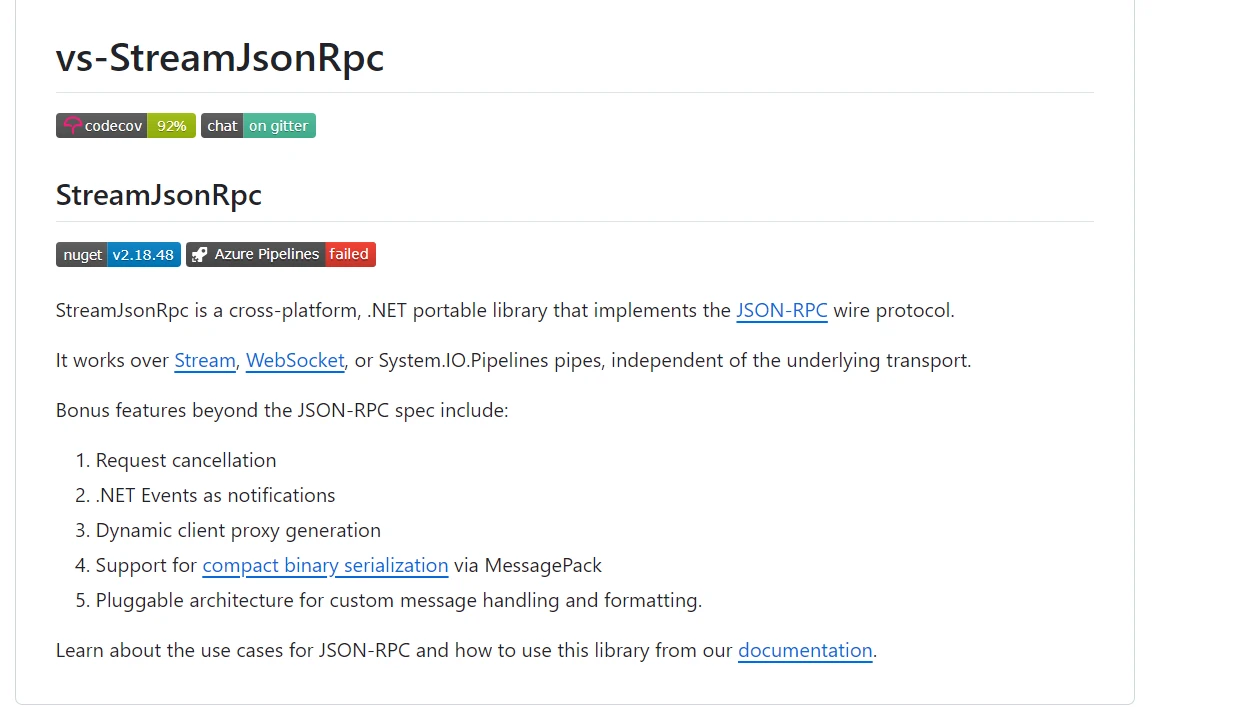
強大的雙向通信支持,包括通知和進度回報,是StreamJsonRpc的主要特點之一。 透過支援多種傳輸協定,包括HTTP、命名管道和TCP/IP,它給予程式更多的通訊選擇。 StreamJsonRpc處理JSON-RPC消息的序列化和反序列化,保證在多種平台和支持JSON的計算機語言間的相容性。
StreamJsonRpc在設計時考慮了性能和擴展性。 它相容現有的C#程式,可以用來構建客戶端-伺服器應用程式、微服務架構、分佈式系統和其他依賴於穩定高效通訊的應用程式。 在將遠端程式呼叫整合到C#專案中時,開發人員傾向於選擇它,因為它的可靠性和易用性。
StreamJsonRpc的特性
StreamJsonRpc為C#提供了一個全面的功能集合,旨在促進和改善基於JSON-RPC協定的客戶端-伺服器應用程式通訊。
遠端程式呼叫(RPC)
通過將遠端操作視為本地的函式呼叫,StreamJsonRpc允許客戶端通過遠端程式呼叫在伺服器上呼叫方法。 這種抽象掩蓋了網路通訊的複雜性,使得分佈式應用的建立更加容易。
雙向通訊
此程式庫支持雙向客戶端-伺服器通訊。 客戶端可以向伺服器提交請求,然後伺服器可以通過通知或結果回應,這使得實時通訊和更新成為可能。
傳輸層不可知性
由於不受傳輸層限制,StreamJsonRpc可以運作於多種傳輸協定之上,包括HTTP、命名管道和TCP/IP。這種適應性使得開發者可以根據應用需求和網路設置選擇最佳的傳輸方法。
序列化和反序列化
它處理JSON-RPC消息的序列化和反序列化,保證跨多種平台和支持JSON的計算機語言間的順暢通訊。
進度回報
StreamJsonRpc支援長時間運行操作的進度回報技術。 此功能透過使伺服器能夠向客戶端更新當前過程的狀態,提升使用者體驗和透明度。
錯誤處理
為處理在遠端方法調用過程中出現的異常和問題,程式庫擁有廣泛的錯誤處理功能。 這保證了分佈式系統的彈性和可靠性。
擴展點
開發人員可以擴展StreamJsonRpc以改變其功能或將其包含在已有的應用程式架構中。 由於其多功能性,它可以根據各種整合需求和應用場景進行定制。
性能優化
透過有效的自訂消息處理和傳輸層管理,StreamJsonRpc最大限度提高客戶端-伺服器通訊的吞吐量,同時保證低開銷。
異步支持
通過使用異步操作,它使應用能夠實現更好的回應性和可擴展性。 它完全支持異步通訊模式。
互操作性
透過遵從JSON-RPC標準,StreamJsonRpc促進多樣環境下順暢整合,增進C#應用與其他支持JSON語言構建的服務之間的互操作性。
除這些主要特點外,超出JSON-RPC規範的附加功能還包括支持緊湊的二進制序列化和動態客戶端代理。
Create and Config StreamJsonRpc C
要在C#應用程式中建立和配置StreamJsonRpc,必須設置一個客戶端和伺服器。 每個部分的詳細說明如下:
設置您的專案
首先,確保您的.NET專案已準備好。 您可以使用Visual Studio或.NET CLI建立一個新的。
dotnet new console -n StreamjsonrpcExample
cd StreamjsonrpcExample
dotnet new console -n StreamjsonrpcExample
cd StreamjsonrpcExample安裝StreamJsonRpc包
為了實現JSON-RPC通訊,從NuGet安裝StreamJsonRpc包。 它包含必要的程式庫。
dotnet add package StreamJsonRpcdotnet add package StreamJsonRpc實作JSON-RPC伺服器
建立一個類別作為JSON-RPC的伺服器。 請參考這個簡單的範例:
using Microsoft.AspNetCore.Hosting;
using StreamJsonRpc;
using System;
using System.Threading.Tasks;

public class MyService
{
    // Asynchronous method to add two integers
    public Task<int> AddAsync(int a, int b)
    {
        return Task.FromResult(a + b);
    }

    // Asynchronous method to greet a user
    public Task<string> GreetAsync(string name)
    {
        return Task.FromResult($"Hello, {name}!");
    }
}

class Program
{
    static void Main(string[] args)
    {
        // Initialize the service offering RPC methods
        var service = new MyService();

        // Create a StreamJsonRpc server listening on websockets
        var jsonRpc = new JsonRpc(new ServerWebSocketJsonRpcMessageHandler("ws://localhost:8080"));

        // Add service as RPC target
        jsonRpc.AddLocalRpcTarget(service);

        // Start listening for incoming JSON-RPC requests
        jsonRpc.StartListening();

        Console.WriteLine("JsonRpc server listening on ws://localhost:8080");
        Console.WriteLine("Press any key to stop the server...");

        // Wait for user input to stop the server
        Console.ReadKey();

        // Dispose resources when done
        jsonRpc.Dispose();
    }
}
using Microsoft.AspNetCore.Hosting;
using StreamJsonRpc;
using System;
using System.Threading.Tasks;
public class MyService
{
// Asynchronous method to add two integers
public Task<int> AddAsync(int a, int b)
{
return Task.FromResult(a + b);
}
// Asynchronous method to greet a user
public Task<string> GreetAsync(string name)
{
return Task.FromResult($"Hello, {name}!");
}
}
class Program
{
static void Main(string[] args)
{
// Initialize the service offering RPC methods
var service = new MyService();
// Create a StreamJsonRpc server listening on websockets
var jsonRpc = new JsonRpc(new ServerWebSocketJsonRpcMessageHandler("ws://localhost:8080"));
// Add service as RPC target
jsonRpc.AddLocalRpcTarget(service);
// Start listening for incoming JSON-RPC requests
jsonRpc.StartListening();
Console.WriteLine("JsonRpc server listening on ws://localhost:8080");
Console.WriteLine("Press any key to stop the server...");
// Wait for user input to stop the server
Console.ReadKey();
// Dispose resources when done
jsonRpc.Dispose();
}
}Imports Microsoft.AspNetCore.Hosting
Imports StreamJsonRpc
Imports System
Imports System.Threading.Tasks
Public Class MyService
' Asynchronous method to add two integers
Public Function AddAsync(ByVal a As Integer, ByVal b As Integer) As Task(Of Integer)
Return Task.FromResult(a + b)
End Function
' Asynchronous method to greet a user
Public Function GreetAsync(ByVal name As String) As Task(Of String)
Return Task.FromResult($"Hello, {name}!")
End Function
End Class
Friend Class Program
Shared Sub Main(ByVal args() As String)
' Initialize the service offering RPC methods
Dim service = New MyService()
' Create a StreamJsonRpc server listening on websockets
Dim jsonRpc As New JsonRpc(New ServerWebSocketJsonRpcMessageHandler("ws://localhost:8080"))
' Add service as RPC target
jsonRpc.AddLocalRpcTarget(service)
' Start listening for incoming JSON-RPC requests
jsonRpc.StartListening()
Console.WriteLine("JsonRpc server listening on ws://localhost:8080")
Console.WriteLine("Press any key to stop the server...")
' Wait for user input to stop the server
Console.ReadKey()
' Dispose resources when done
jsonRpc.Dispose()
End Sub
End ClassMyService類別:指定客戶端可遠端呼叫的方法,如GreetAsync。
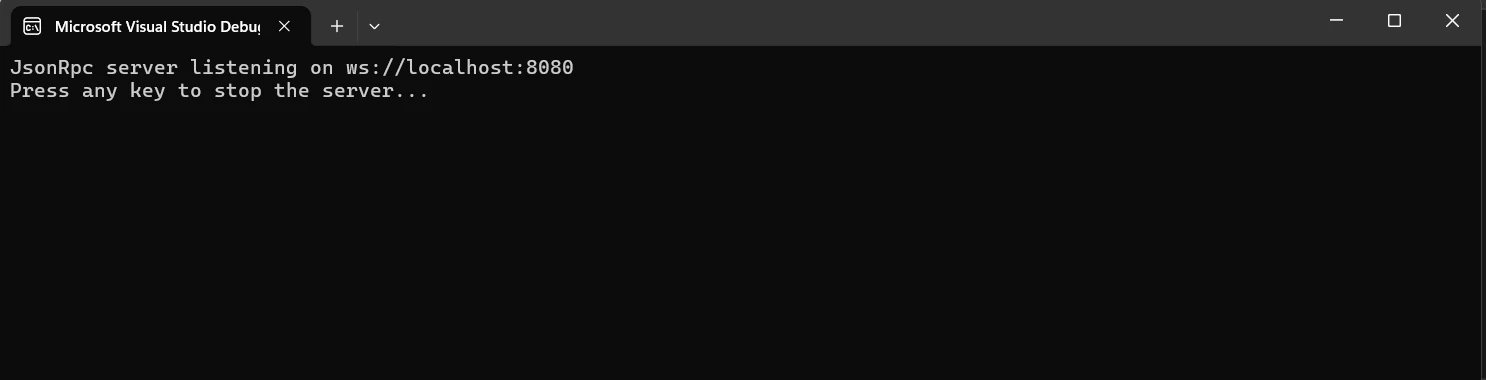
這將啟動一個新的ws://localhost:8080監聽。 伺服器將MyService公開為新的本地RPC目標,並開始等待JSON-RPC查詢到達。按下按鍵停止監聽並釋放資源。
客戶端配置
建立一個將作為JSON-RPC客戶端的類別。 請參考這個簡單的範例:
using StreamJsonRpc;
using System;
using System.Threading.Tasks;

class Program
{
    static async Task Main(string[] args)
    {
        // Create a JSON-RPC client connected to the WebSocket server endpoint
        var proxy = new JsonRpc(new ClientWebSocketJsonRpcMessageHandler("ws://localhost:8080"));

        // Start listening for incoming messages from the server
        await proxy.StartListeningAsync();

        // Invoke the AddAsync method on the server
        var resultAdd = await proxy.InvokeAsync<int>("AddAsync", 10, 20);
        Console.WriteLine($"AddAsync result: {resultAdd}");

        // Invoke the GreetAsync method on the server
        var resultGreet = await proxy.InvokeAsync<string>("GreetAsync", "John");
        Console.WriteLine($"GreetAsync result: {resultGreet}");

        // Dispose the proxy when done
        proxy.Dispose();
    }
}
using StreamJsonRpc;
using System;
using System.Threading.Tasks;
class Program
{
static async Task Main(string[] args)
{
// Create a JSON-RPC client connected to the WebSocket server endpoint
var proxy = new JsonRpc(new ClientWebSocketJsonRpcMessageHandler("ws://localhost:8080"));
// Start listening for incoming messages from the server
await proxy.StartListeningAsync();
// Invoke the AddAsync method on the server
var resultAdd = await proxy.InvokeAsync<int>("AddAsync", 10, 20);
Console.WriteLine($"AddAsync result: {resultAdd}");
// Invoke the GreetAsync method on the server
var resultGreet = await proxy.InvokeAsync<string>("GreetAsync", "John");
Console.WriteLine($"GreetAsync result: {resultGreet}");
// Dispose the proxy when done
proxy.Dispose();
}
}Imports StreamJsonRpc
Imports System
Imports System.Threading.Tasks
Friend Class Program
Shared Async Function Main(ByVal args() As String) As Task
' Create a JSON-RPC client connected to the WebSocket server endpoint
Dim proxy = New JsonRpc(New ClientWebSocketJsonRpcMessageHandler("ws://localhost:8080"))
' Start listening for incoming messages from the server
Await proxy.StartListeningAsync()
' Invoke the AddAsync method on the server
Dim resultAdd = Await proxy.InvokeAsync(Of Integer)("AddAsync", 10, 20)
Console.WriteLine($"AddAsync result: {resultAdd}")
' Invoke the GreetAsync method on the server
Dim resultGreet = Await proxy.InvokeAsync(Of String)("GreetAsync", "John")
Console.WriteLine($"GreetAsync result: {resultGreet}")
' Dispose the proxy when done
proxy.Dispose()
End Function
End Class此範例建立與JsonRpc實例。 接著透過與JSON-RPC伺服器建立連接啟用伺服器上定義的MyService)。 最後,顯示伺服器返回的結果,並在RPC調用完成後釋放資源。

快速入門
透過將StreamJsonRpc與IronPDF整合,並使用JSON-RPC查詢交換的資料,可以在C#應用中動態生成PDF頁面。 這是一個設置IronPDF和StreamJsonRpc的基本操作指南:
什麼是IronPDF?
IronPDF可以被C#程式用來建立、讀取和編輯PDF文件。 這個工具使開發者可以輕鬆地將HTML、CSS和JavaScript資訊轉換為可印刷的高質量PDF。 關鍵任務包括新增頁眉和頁尾、分割及合併PDF、在文件中新增水印、轉換HTML到PDF。 IronPDF因為支援.NET Framework和.NET Core,對多種應用來說是有用的。
因為PDF使用方便且內容豐富,開發者可以輕鬆將它們整合進自己的產品。 IronPDF能夠輕鬆處理複雜的佈局和格式,所生成的PDF幾乎與原始HTML文字一致。
IronPDF 的功能
從HTML生成PDF
將JavaScript、HTML和CSS轉換為PDF。 IronPDF支援媒體查詢和響應式設計這兩個當代網頁標準。 它是一個有用的工具,用於使用HTML和CSS動態裝飾PDF文件、報告和賬單。
PDF編輯
可以在已有的PDF中新增文字、圖片和其他內容。 從PDF文件中提取文字和圖片。 開發者可以將多個PDF合併為一個文件,或者將PDF文件分割為多個單獨的文件。 包含水印、註解、頁眉和頁尾。
PDF轉換
可以將多種文件格式(包括Word、Excel和圖像文件)轉換為PDF,使用IronPDF。 也可以使用它執行PDF到圖像的轉換(PNG、JPEG等)。
性能和可靠性
在工業環境中,高性能和可靠性是期望的設計品質。 IronPDF可以輕鬆管理大型文件集。
安裝 IronPDF
要獲得需要的工具以在.NET專案中與PDF一起使用,請安裝IronPDF包。
dotnet add package IronPdfdotnet add package IronPdfStreamJsonRpc With IronPDF
建立服務類別
在服務類別PdfService.cs中提供將從接收到的資料建立PDF的方法。 例如:
using IronPdf;
using System.IO;
using System.Threading.Tasks;

public class PdfService
{
    // Asynchronously generates a PDF from HTML content
    public async Task<byte[]> GeneratePdfAsync(string htmlContent)
    {
        var renderer = new ChromePdfRenderer();
        var pdf = renderer.RenderHtmlAsPdf(htmlContent);
        return await pdf.BinaryDataAsync();
    }
}
using IronPdf;
using System.IO;
using System.Threading.Tasks;
public class PdfService
{
// Asynchronously generates a PDF from HTML content
public async Task<byte[]> GeneratePdfAsync(string htmlContent)
{
var renderer = new ChromePdfRenderer();
var pdf = renderer.RenderHtmlAsPdf(htmlContent);
return await pdf.BinaryDataAsync();
}
}Imports IronPdf
Imports System.IO
Imports System.Threading.Tasks
Public Class PdfService
' Asynchronously generates a PDF from HTML content
Public Async Function GeneratePdfAsync(ByVal htmlContent As String) As Task(Of Byte())
Dim renderer = New ChromePdfRenderer()
Dim pdf = renderer.RenderHtmlAsPdf(htmlContent)
Return Await pdf.BinaryDataAsync()
End Function
End Class配置StreamJsonRpc伺服器
使用GeneratePdfAsync方法:
using StreamJsonRpc;
using System;
using System.Net.WebSockets;
using System.Threading.Tasks;

class Program
{
    static async Task Main(string[] args)
    {
        // Initialize PdfService which generates PDFs
        var service = new PdfService();

        // Create JSON-RPC server listening on websockets
        var jsonRpc = new JsonRpc(new WebSocketRpcServerMessageHandler(new Uri("ws://localhost:8080")));

        // Add the PdfService as an RPC target
        jsonRpc.AddLocalRpcTarget(service);

        // Start listening for incoming JSON-RPC requests
        jsonRpc.StartListening();

        Console.WriteLine("JsonRpc server listening on ws://localhost:8080");
        Console.WriteLine("Press any key to stop the server...");

        // Wait for user input to stop the server
        Console.ReadKey();

        // Gracefully stop listening and dispose resources when done
        await jsonRpc.StopListeningAsync();
        jsonRpc.Dispose();
    }
}
using StreamJsonRpc;
using System;
using System.Net.WebSockets;
using System.Threading.Tasks;
class Program
{
static async Task Main(string[] args)
{
// Initialize PdfService which generates PDFs
var service = new PdfService();
// Create JSON-RPC server listening on websockets
var jsonRpc = new JsonRpc(new WebSocketRpcServerMessageHandler(new Uri("ws://localhost:8080")));
// Add the PdfService as an RPC target
jsonRpc.AddLocalRpcTarget(service);
// Start listening for incoming JSON-RPC requests
jsonRpc.StartListening();
Console.WriteLine("JsonRpc server listening on ws://localhost:8080");
Console.WriteLine("Press any key to stop the server...");
// Wait for user input to stop the server
Console.ReadKey();
// Gracefully stop listening and dispose resources when done
await jsonRpc.StopListeningAsync();
jsonRpc.Dispose();
}
}Imports StreamJsonRpc
Imports System
Imports System.Net.WebSockets
Imports System.Threading.Tasks
Friend Class Program
Shared Async Function Main(ByVal args() As String) As Task
' Initialize PdfService which generates PDFs
Dim service = New PdfService()
' Create JSON-RPC server listening on websockets
Dim jsonRpc As New JsonRpc(New WebSocketRpcServerMessageHandler(New Uri("ws://localhost:8080")))
' Add the PdfService as an RPC target
jsonRpc.AddLocalRpcTarget(service)
' Start listening for incoming JSON-RPC requests
jsonRpc.StartListening()
Console.WriteLine("JsonRpc server listening on ws://localhost:8080")
Console.WriteLine("Press any key to stop the server...")
' Wait for user input to stop the server
Console.ReadKey()
' Gracefully stop listening and dispose resources when done
Await jsonRpc.StopListeningAsync()
jsonRpc.Dispose()
End Function
End Class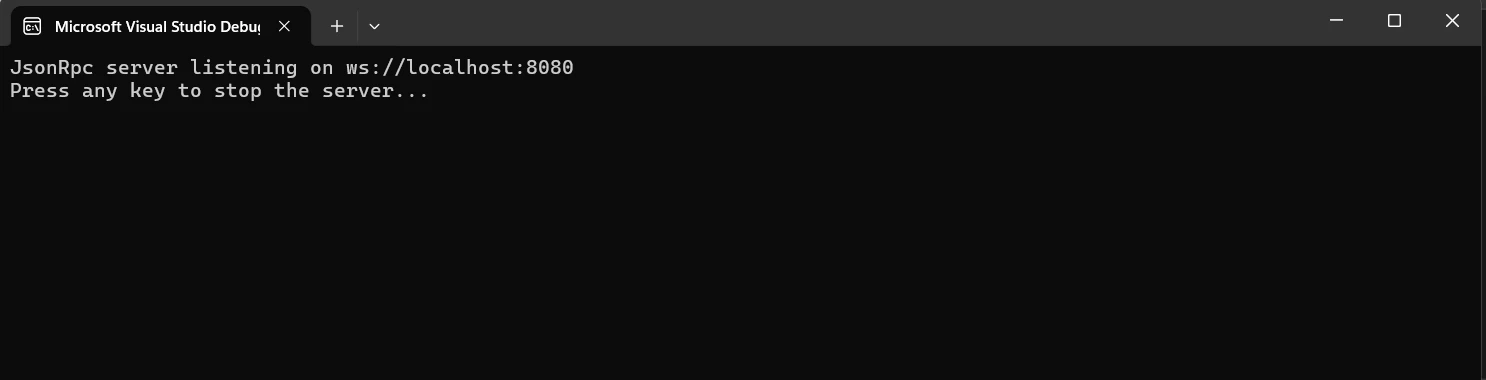
建立IronPDF客戶端
為了連接到伺服器並請求建立PDF,實作StreamJsonRpc客戶端(ClientProgram.cs):
using StreamJsonRpc;
using System;
using System.Net.WebSockets;
using System.Text;
using System.Threading.Tasks;
using System.IO;

class ClientProgram
{
    static async Task Main(string[] args)
    {
        // Create JSON-RPC client connected to WebSocket server endpoint
        var proxy = new JsonRpc(new WebSocketRpcClientMessageHandler(new Uri("ws://localhost:8080")));

        // Start listening for incoming messages from the server
        await proxy.StartListeningAsync();

        // Example HTML content
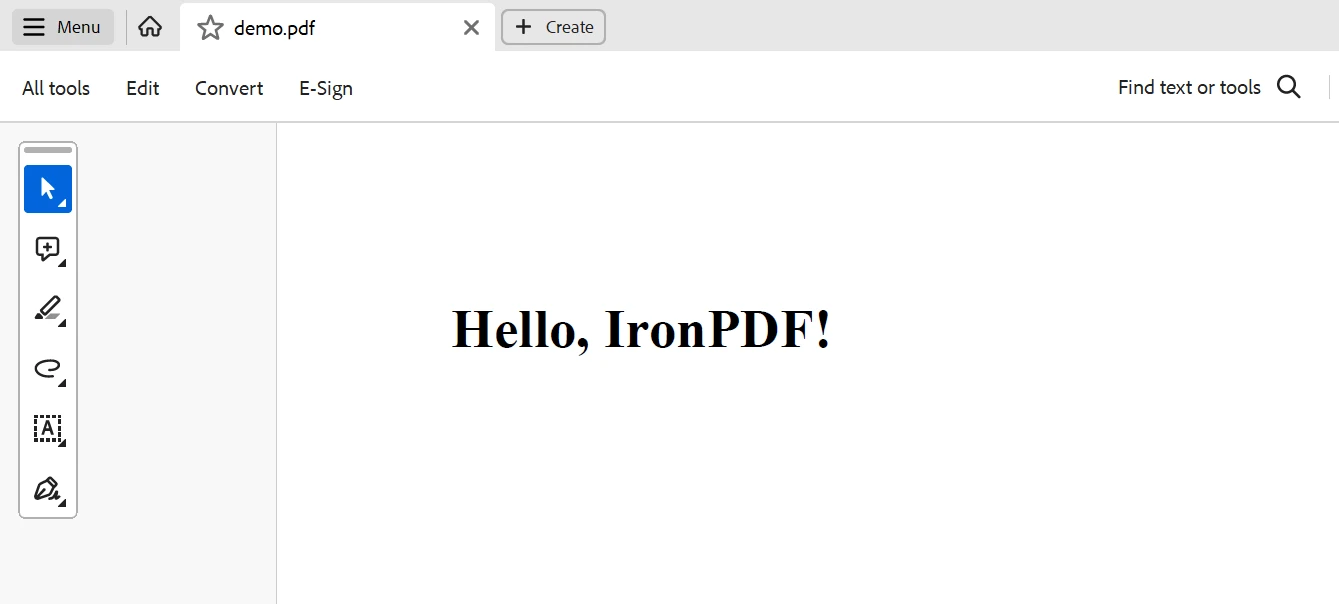
        string htmlContent = "<html><body><h1>Hello, IronPDF!</h1></body></html>";

        // Invoke GeneratePdfAsync method on the server
        var pdfBytes = await proxy.InvokeAsync<byte[]>("GeneratePdfAsync", htmlContent);

        // Save the resulted PDF to a file
        File.WriteAllBytes("GeneratedPdf.pdf", pdfBytes);

        Console.WriteLine("PDF generated: GeneratedPdf.pdf");

        // Dispose the proxy when done
        proxy.Dispose();
    }
}
using StreamJsonRpc;
using System;
using System.Net.WebSockets;
using System.Text;
using System.Threading.Tasks;
using System.IO;
class ClientProgram
{
static async Task Main(string[] args)
{
// Create JSON-RPC client connected to WebSocket server endpoint
var proxy = new JsonRpc(new WebSocketRpcClientMessageHandler(new Uri("ws://localhost:8080")));
// Start listening for incoming messages from the server
await proxy.StartListeningAsync();
// Example HTML content
string htmlContent = "<html><body><h1>Hello, IronPDF!</h1></body></html>";
// Invoke GeneratePdfAsync method on the server
var pdfBytes = await proxy.InvokeAsync<byte[]>("GeneratePdfAsync", htmlContent);
// Save the resulted PDF to a file
File.WriteAllBytes("GeneratedPdf.pdf", pdfBytes);
Console.WriteLine("PDF generated: GeneratedPdf.pdf");
// Dispose the proxy when done
proxy.Dispose();
}
}Imports StreamJsonRpc
Imports System
Imports System.Net.WebSockets
Imports System.Text
Imports System.Threading.Tasks
Imports System.IO
Friend Class ClientProgram
Shared Async Function Main(ByVal args() As String) As Task
' Create JSON-RPC client connected to WebSocket server endpoint
Dim proxy = New JsonRpc(New WebSocketRpcClientMessageHandler(New Uri("ws://localhost:8080")))
' Start listening for incoming messages from the server
Await proxy.StartListeningAsync()
' Example HTML content
Dim htmlContent As String = "<html><body><h1>Hello, IronPDF!</h1></body></html>"
' Invoke GeneratePdfAsync method on the server
Dim pdfBytes = Await proxy.InvokeAsync(Of Byte())("GeneratePdfAsync", htmlContent)
' Save the resulted PDF to a file
File.WriteAllBytes("GeneratedPdf.pdf", pdfBytes)
Console.WriteLine("PDF generated: GeneratedPdf.pdf")
' Dispose the proxy when done
proxy.Dispose()
End Function
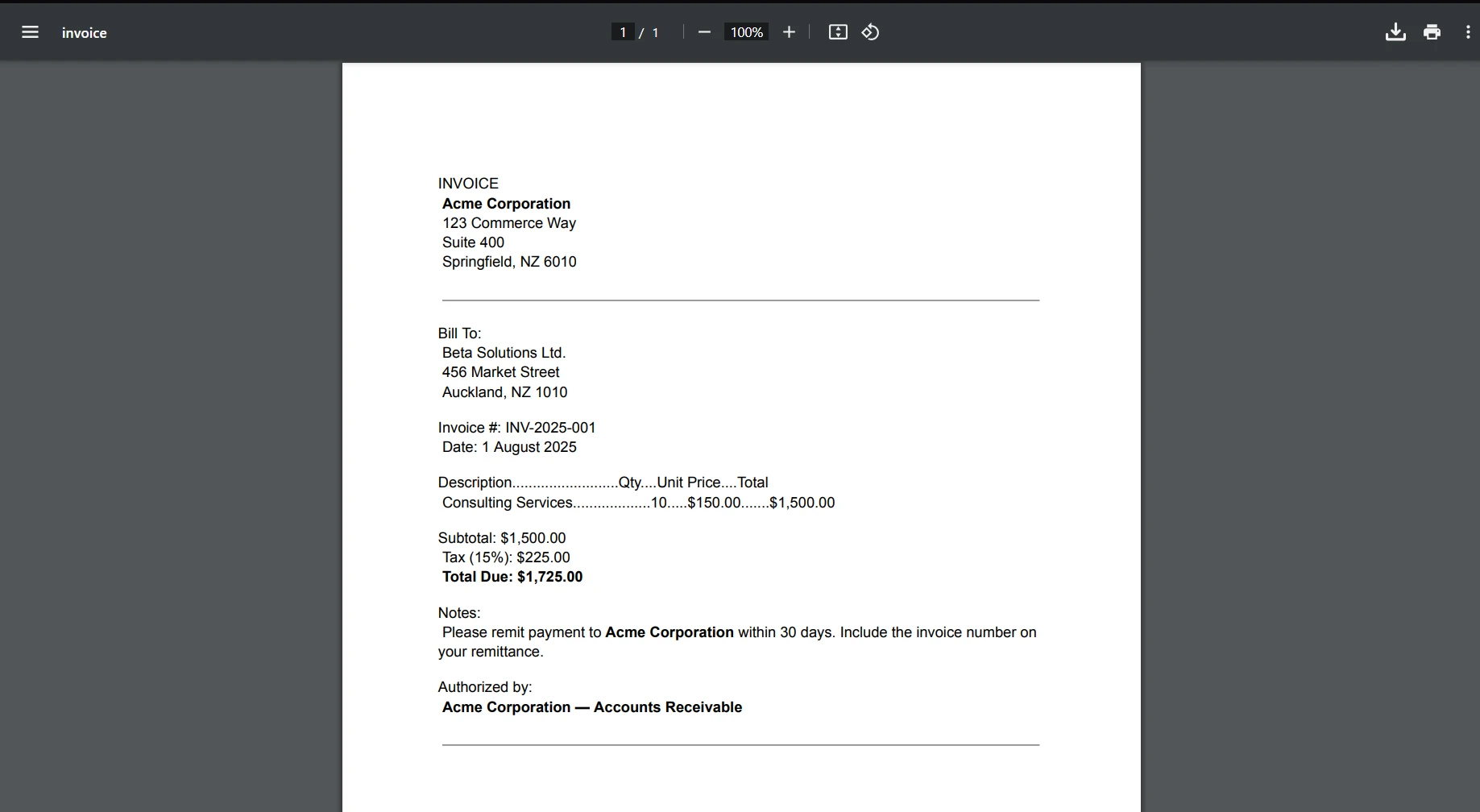
End ClassPdfService.cs類別是StreamJsonRpc伺服器實作的一個基本部分,讓C#應用程式更容易使用IronPDF生成PDF文件。 藉由利用IronPDF的RenderHtmlAsPdf,該服務類別包含用於處理將HTML資料轉為PDF格式的方法。 透過async Task<byte[]> GeneratePdfAsync(string htmlContent))。
此方法建立RenderHtmlAsPdf(htmlContent)的PDF文件。 然後此方法以非同步方式檢索建立的PDF的二進位資料(byte[]陣列返回。
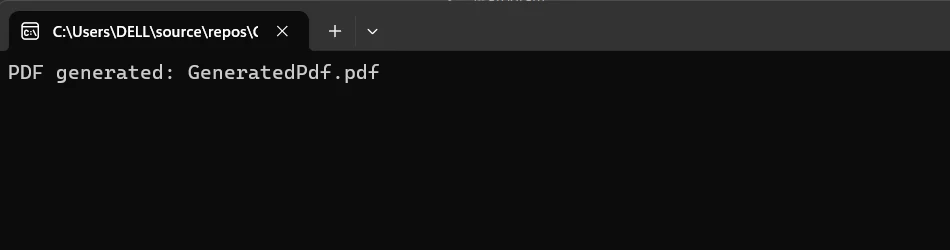
這個方法保證快速響應的PDF生成,使其適合需要快速建立文件的應用程式。 PDF生成邏輯包含在PdfService.cs中,這使得開發者可以輕鬆地透過StreamJsonRpc整合和公開此功能。 這允許遠道的客戶端順利啟動PDF生成任務,同時保持其伺服器端設計的模組化和清晰性。
結論
總結來說,透過結合StreamJsonRpc與IronPDF,開發者可以建立支持遠端程式呼叫(RPC)的可靠高效的.NET應用,並利用強大的PDF生成功能。 使用JSON-RPC,一種輕量的遠端程式呼叫協定,StreamJsonRpc實現客戶端與伺服器元件之間的順暢通訊。 開發者可以將此與IronPDF結合使用,生成依賴這些遠端呼叫結果的動態、資料驅動的PDF。
在準備報告、發票或必須表示最新可得的資料的任何文件時,這種整合尤其有用,因為它允許即時資料檢索和PDF輸出。 這些技術的整合優化了開發過程,提高了性能,增強了應用程式滿足複雜業務需求的能力。
使用IronPDF和Iron Software開發工具,開發者可以更快速地建立更多的網頁應用程式和功能,起始價格為$999。 它通過將其核心概念與極其靈活的Iron Software工具箱結合來實現這一點。
如果與專案相關的所有授權選項得到清楚的說明,開發者將更容易選擇最佳的模型。 上述的好處使開發者能夠更快捷、有效地為一系列問題建立解決方案,實現及時、協調的解決。
常見問題
如何在 C# 中將 HTML 轉換為 PDF?
您可以使用PDF程式庫的RenderHtmlAsPdf方法將HTML字串轉換為PDF。此外,還可以使用RenderHtmlFileAsPdf方法將HTML文件轉換為PDF。
什麼是StreamJsonRpc,它在C#中如何運作?
StreamJsonRpc是一個C#程式庫,它使用JSON-RPC協議來實現遠端程式呼叫。它可以通過各種傳輸協議如TCP/IP、命名管道和HTTP實現客戶端與伺服器之間的雙向通信。
StreamJsonRpc如何增強PDF生成功能?
StreamJsonRpc透過允許遠端客戶端通過JSON-RPC調用PDF建立任務,使用PDF程式庫動態將HTML內容轉換成PDF,來增強PDF生成能力。
為什麼StreamJsonRpc對分散式系統有利?
StreamJsonRpc對分散式系統有利因為它實現了無縫的遠程方法調用,支持非同步操作,並提供強大的錯誤處理,從而提高系統的可靠性和效率。
在C#專案中設置StreamJsonRpc涉及哪些步驟?
要在C#專案中設置StreamJsonRpc,您需要建立一個.NET專案,通過NuGet安裝StreamJsonRpc套件,並實現一個JSON-RPC伺服器和客戶端以便通過選擇的傳輸協議進行通信。
StreamJsonRpc可以用於在.NET應用程式中生成報告或發票嗎?
是的,通過將StreamJsonRpc與PDF生成程式庫整合,您可以動態建立PDF來響應JSON-RPC請求,使其成為以文件為中心的應用程式的理想選擇。
StreamJsonRpc支持哪些傳輸協議?
StreamJsonRpc是傳輸層無關的,支持包括HTTP、命名管道和TCP/IP在內的多種傳輸協議,允許開發者根據其應用程式的具體需求進行選擇。
PDF程式庫如何促進C#中的文件操作?
C#中的PDF程式庫促進文件操作,允許您建立、讀取和編輯PDF。它支持將HTML、CSS和JavaScript轉換成PDF,並新增頁眉、頁腳以及執行分割和合併等操作。
使用StreamJsonRpc中的非同步操作有什麼好處?
StreamJsonRpc中的非同步操作通過使用.NET事件來有效地處理分散式系統中的進入請求和回應,提高應用程式的響應能力和可擴展性。
StreamJsonRpc如何確保可靠的錯誤處理?
StreamJsonRpc通過提供全面的功能來管理遠程方法調用期間的異常和問題,從而確保可靠的錯誤處理以保持分散式系統的彈性。







 免費開始
免費開始 免費開始
免費開始 預訂免費直播演示