



Updated September 2, 2026
HTML to PDF in C#: Benchmarking 7 .NET Libraries (2026)
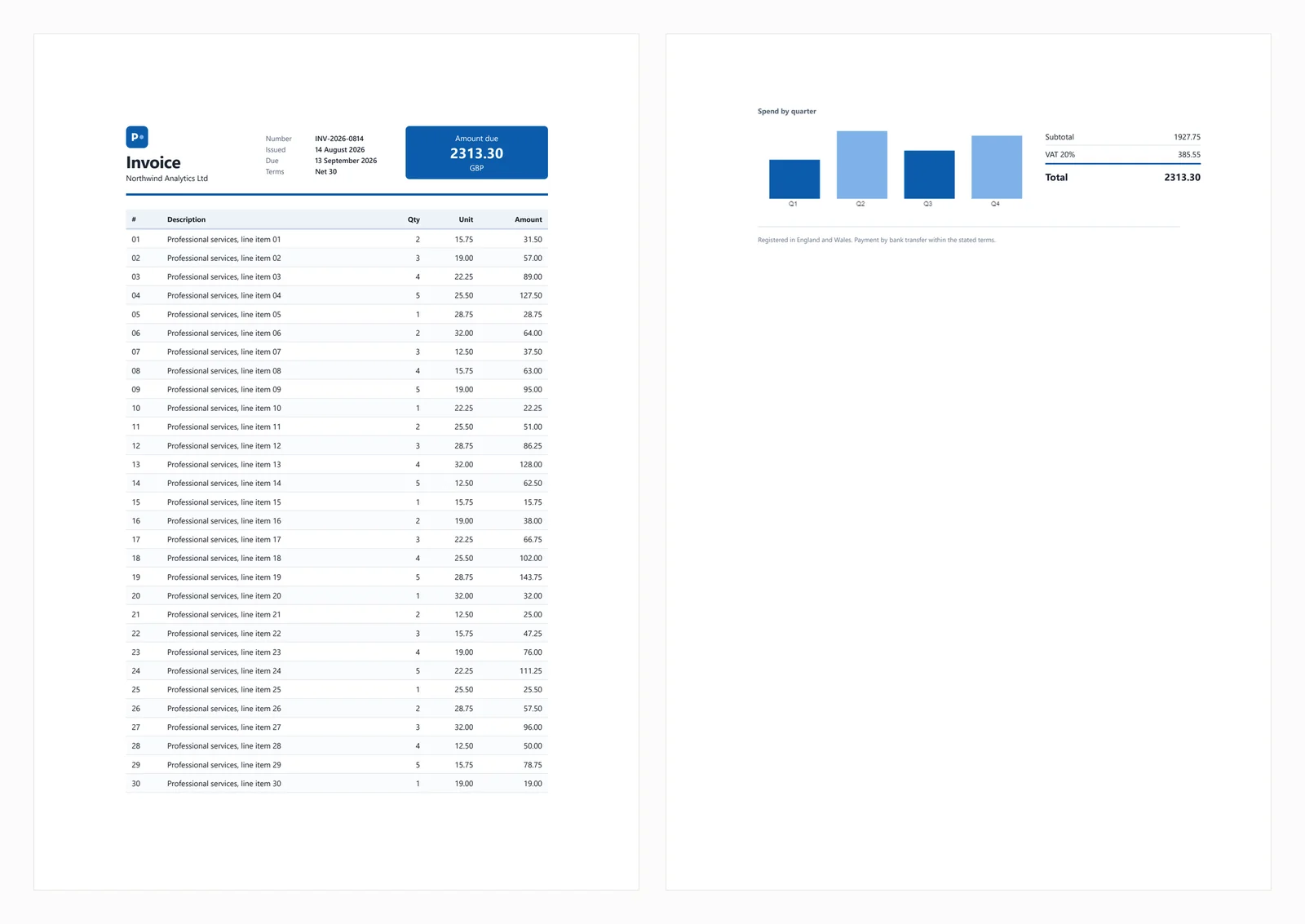
Compare 7 C# HTML to PDF libraries on .NET 10 for cold start, throughput, memory and rendering accuracy. Only 3 rendered the test invoice correctly.
Read More

IronPDF provides excellent HTML-to-PDF conversion with full CSS3 and JavaScript support using Chrome rendering. In contrast, iText offers programmatic PDF creation but struggles with modern HTML conversion, making IronPDF a better choice for ASP.NET MVC applications that require web-standard PDFs.
Creating PDF documents in ASP.NET MVC applications is a common requirement for generating reports, invoices, and downloadable content. While iText has been a popular choice for years, IronPDF offers a modern alternative with superior HTML rendering capabilities. This article explores both approaches to help you make an informed decision for your .NET PDF generation needs.
Both libraries solve the same core problem -- generating PDFs in a .NET web context -- but they take fundamentally different approaches. iText builds PDFs programmatically through an object model, while IronPDF converts HTML to PDF using a full Chrome rendering engine. Understanding that architectural difference is the key to selecting the right tool. The ASP.NET MVC framework from Microsoft supports both integration patterns, and either library can be wired into the standard controller-action pipeline.
Before writing any code, you need to get each library into your project. NuGet is the standard package manager for .NET and handles both installations cleanly. For iText, install the legacy package via NuGet:
dotnet add package iTextSharpFor IronPDF, install through NuGet as well:
IronPDF bundles the Chrome rendering engine with the package, so no additional browser installation is required on your server. The library supports Windows, Linux, macOS, and container environments out of the box. After installing, add your IronPDF license key during application startup.
To generate PDF files using iText in your ASP.NET MVC application, first install the library through NuGet. The iText library provides low-level control over PDF creation through its Document class and object model.
The following code demonstrates a production-ready implementation for creating PDFs with iText in an MVC controller:
// Production-ready iTextSharp implementation with proper resource disposal
public class ReportController : Controller
{
    private readonly ILogger<ReportController> _logger;

    public ReportController(ILogger<ReportController> logger)
    {
        _logger = logger;
    }

    public ActionResult GeneratePDF()
    {
        try
        {
            using var memoryStream = new MemoryStream();
            using var document = new Document(PageSize.A4, 50, 50, 25, 25);
            using var writer = PdfWriter.GetInstance(document, memoryStream);

            document.Open();
            document.AddTitle("Generated Report");
            document.AddCreationDate();

            var titleFont = FontFactory.GetFont(FontFactory.HELVETICA_BOLD, 16);
            document.Add(new Paragraph("Hello World", titleFont));
            document.Add(new Paragraph("This is a PDF document created with iTextSharp"));

            var table = new PdfPTable(3);
            table.AddCell("Header 1");
            table.AddCell("Header 2");
            table.AddCell("Header 3");
            document.Add(table);

            document.Close();

            var pdfBytes = memoryStream.ToArray();
            Response.Headers.Add("Content-Disposition", "inline; filename=report.pdf");
            _logger.LogInformation("PDF generated: {Size} bytes", pdfBytes.Length);
            return File(pdfBytes, "application/pdf");
        }
        catch (Exception ex)
        {
            _logger.LogError(ex, "Error generating PDF");
            return StatusCode(500, "Error generating PDF document");
        }
    }
}Imports System
Imports System.IO
Imports Microsoft.AspNetCore.Mvc
Imports Microsoft.Extensions.Logging
Imports iTextSharp.text
Imports iTextSharp.text.pdf
Public Class ReportController
Inherits Controller
Private ReadOnly _logger As ILogger(Of ReportController)
Public Sub New(logger As ILogger(Of ReportController))
_logger = logger
End Sub
Public Function GeneratePDF() As ActionResult
Try
Using memoryStream As New MemoryStream()
Using document As New Document(PageSize.A4, 50, 50, 25, 25)
Using writer As PdfWriter = PdfWriter.GetInstance(document, memoryStream)
document.Open()
document.AddTitle("Generated Report")
document.AddCreationDate()
Dim titleFont As Font = FontFactory.GetFont(FontFactory.HELVETICA_BOLD, 16)
document.Add(New Paragraph("Hello World", titleFont))
document.Add(New Paragraph("This is a PDF document created with iTextSharp"))
Dim table As New PdfPTable(3)
table.AddCell("Header 1")
table.AddCell("Header 2")
table.AddCell("Header 3")
document.Add(table)
document.Close()
Dim pdfBytes As Byte() = memoryStream.ToArray()
Response.Headers.Add("Content-Disposition", "inline; filename=report.pdf")
_logger.LogInformation("PDF generated: {Size} bytes", pdfBytes.Length)
Return File(pdfBytes, "application/pdf")
End Using
End Using
End Using
Catch ex As Exception
_logger.LogError(ex, "Error generating PDF")
Return StatusCode(500, "Error generating PDF document")
End Try
End Function
End Class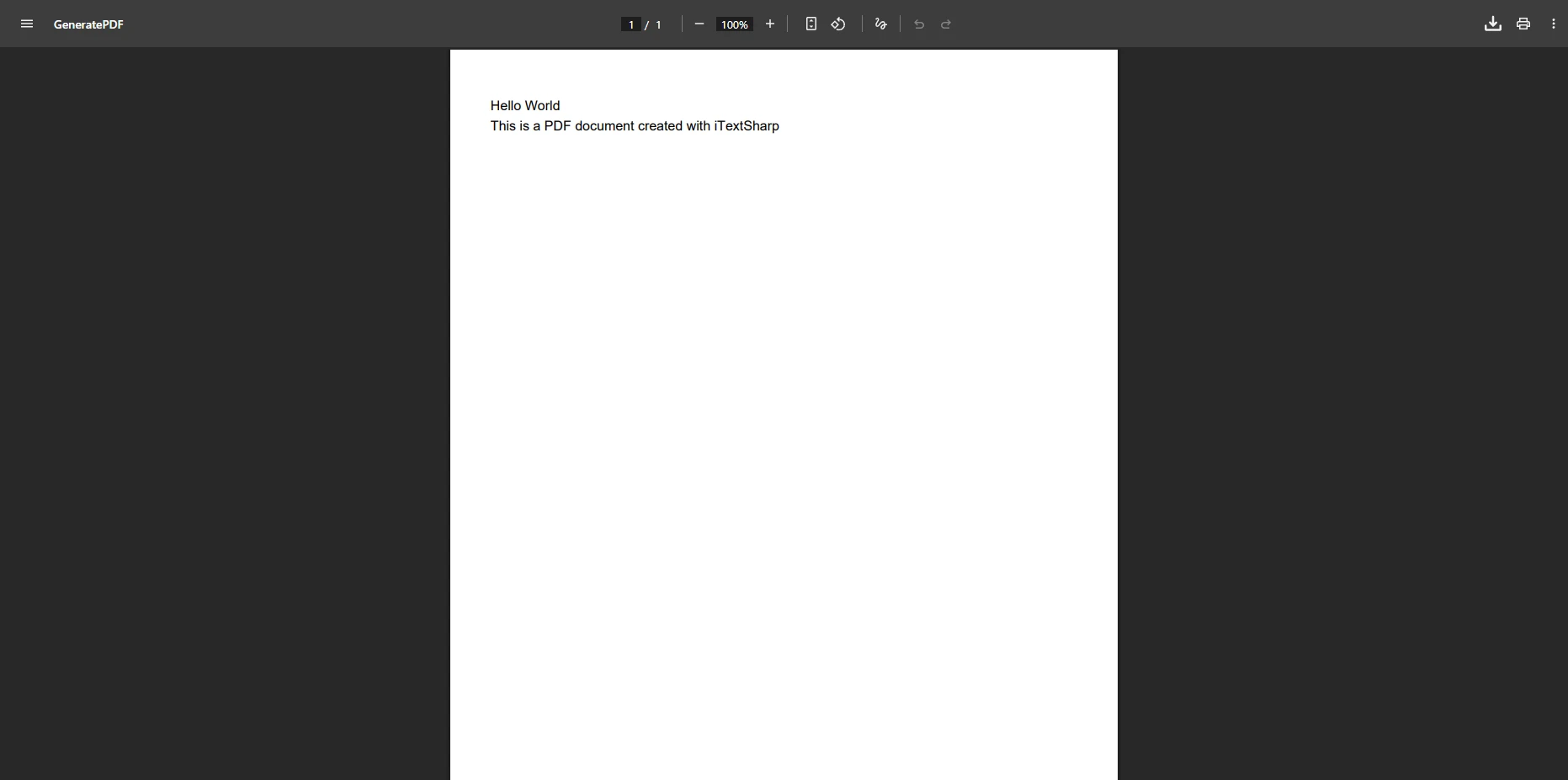
This code demonstrates the fundamental approach: create a Document instance, attach a PdfWriter to a stream, add content using element objects, and return the file through an action result. The implementation handles resource disposal patterns essential for production systems. For more advanced scenarios, you can configure custom paper sizes, manage page orientation, or add page numbers.
The programmatic approach gives you fine-grained control over every element on the page. That precision is useful when generating documents with fixed layouts such as invoices, certificates, or forms where the structure is always the same. However, it becomes a burden as soon as the content is dynamic or driven by an HTML template.
While iText excels at programmatic PDF creation, converting HTML to PDF presents significant challenges. The deprecated HTMLWorker class and its replacement XMLWorker have limited CSS support and struggle with modern web content, particularly when dealing with responsive CSS and JavaScript-rendered content.
// HTML conversion with iTextSharp -- note the CSS limitations
public class HtmlToPdfController : Controller
{
    private readonly ILogger<HtmlToPdfController> _logger;

    public HtmlToPdfController(ILogger<HtmlToPdfController> logger)
    {
        _logger = logger;
    }

    public async Task<ActionResult> ConvertHtmlAsync(string htmlContent)
    {
        if (string.IsNullOrWhiteSpace(htmlContent))
            return BadRequest("HTML content is required");

        return await Task.Run(() =>
        {
            using var stream = new MemoryStream();
            using var document = new Document(PageSize.A4);
            using var writer = PdfWriter.GetInstance(document, stream);

            document.Open();

            var cssResolver = XMLWorkerHelper.GetInstance().GetDefaultCssResolver(true);
            var fontProvider = new XMLWorkerFontProvider();
            var cssAppliers = new CssAppliersImpl(fontProvider);
            var htmlContext = new HtmlPipelineContext(cssAppliers);
            htmlContext.SetTagFactory(Tags.GetHtmlTagProcessorFactory());

            // Pipeline with limited CSS3 support
            var pdf = new PdfWriterPipeline(document, writer);
            var html = new HtmlPipeline(htmlContext, pdf);
            var css = new CssResolverPipeline(cssResolver, html);

            var worker = new XMLWorker(css, true);
            var parser = new XMLParser(worker);

            using var stringReader = new StringReader(htmlContent);
            parser.Parse(stringReader);
            document.Close();

            return File(stream.ToArray(), "application/pdf", "converted.pdf");
        });
    }
}Imports System
Imports System.IO
Imports System.Threading.Tasks
Imports System.Web.Mvc
Imports iTextSharp.text
Imports iTextSharp.text.pdf
Imports iTextSharp.tool.xml
Imports iTextSharp.tool.xml.pipeline.css
Imports iTextSharp.tool.xml.pipeline.html
Imports iTextSharp.tool.xml.pipeline.end
Imports Microsoft.Extensions.Logging
' HTML conversion with iTextSharp -- note the CSS limitations
Public Class HtmlToPdfController
Inherits Controller
Private ReadOnly _logger As ILogger(Of HtmlToPdfController)
Public Sub New(logger As ILogger(Of HtmlToPdfController))
_logger = logger
End Sub
Public Async Function ConvertHtmlAsync(htmlContent As String) As Task(Of ActionResult)
If String.IsNullOrWhiteSpace(htmlContent) Then
Return BadRequest("HTML content is required")
End If
Return Await Task.Run(Function()
Using stream As New MemoryStream()
Using document As New Document(PageSize.A4)
Using writer = PdfWriter.GetInstance(document, stream)
document.Open()
Dim cssResolver = XMLWorkerHelper.GetInstance().GetDefaultCssResolver(True)
Dim fontProvider = New XMLWorkerFontProvider()
Dim cssAppliers = New CssAppliersImpl(fontProvider)
Dim htmlContext = New HtmlPipelineContext(cssAppliers)
htmlContext.SetTagFactory(Tags.GetHtmlTagProcessorFactory())
' Pipeline with limited CSS3 support
Dim pdf = New PdfWriterPipeline(document, writer)
Dim html = New HtmlPipeline(htmlContext, pdf)
Dim css = New CssResolverPipeline(cssResolver, html)
Dim worker = New XMLWorker(css, True)
Dim parser = New XMLParser(worker)
Using stringReader As New StringReader(htmlContent)
parser.Parse(stringReader)
End Using
document.Close()
End Using
End Using
End Using
Return File(stream.ToArray(), "application/pdf", "converted.pdf")
End Function)
End Function
End Class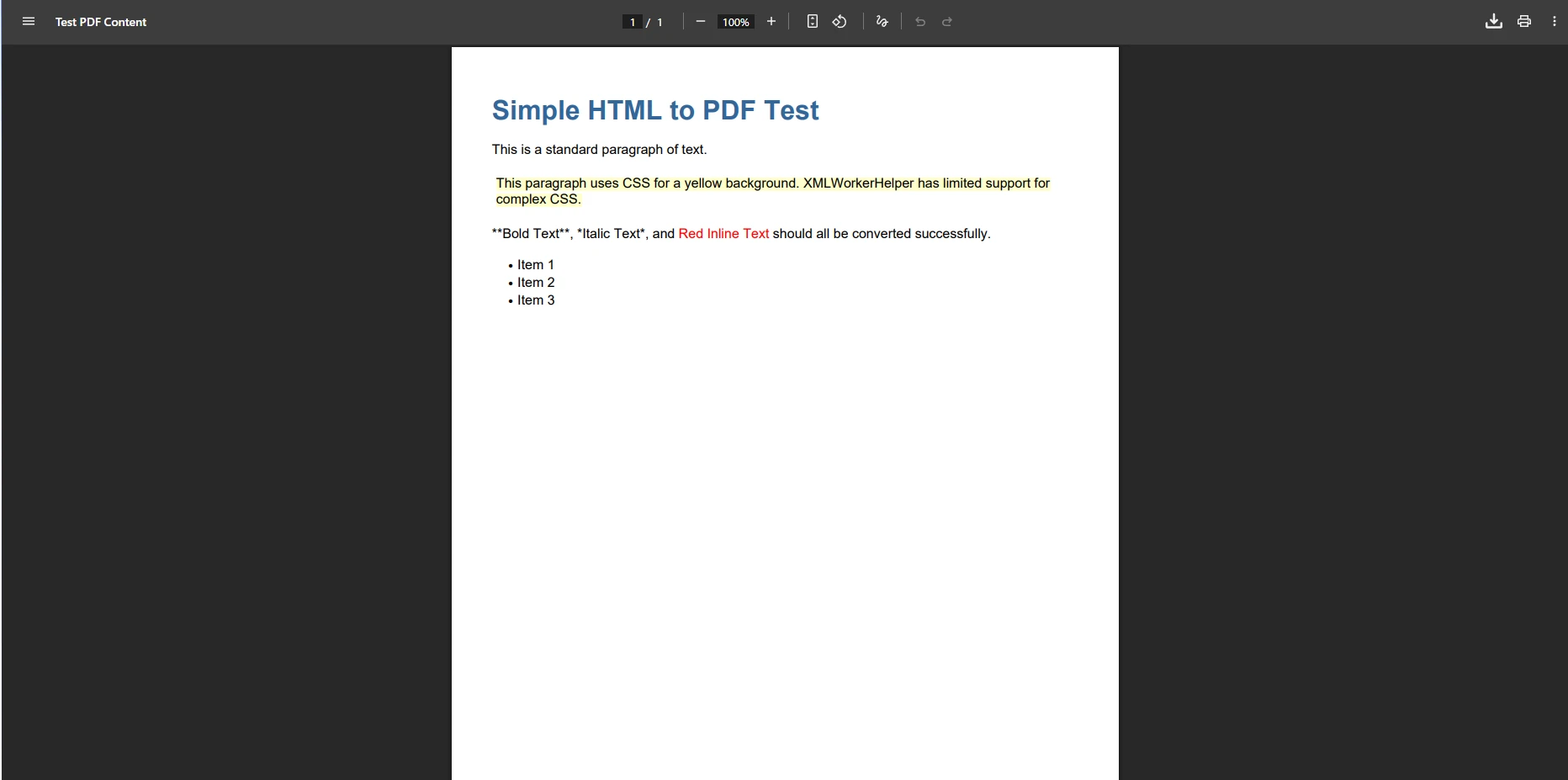
The limitations become apparent when working with Bootstrap layouts, JavaScript-rendered content, or complex CSS3 styling. Common issues include missing web fonts, broken responsive layouts, and lack of support for CSS media types. Additionally, iText struggles with international language characters and SVG graphics when converting HTML content.
These limitations are not just cosmetic. When a customer-facing invoice or report renders incorrectly because a background color does not appear or a grid collapses, the PDF loses its purpose. For teams that maintain HTML templates, rebuilding the same layout in iText's object model means maintaining two versions of every document design. That duplication adds cost and introduces drift between the web view and the PDF output.
IronPDF transforms PDF generation by using a Chrome rendering engine, ensuring pixel-perfect HTML to PDF conversion. Install the IronPDF NuGet package to get started with a simplified approach in your Visual Studio project.
using IronPdf;

// Configure IronPDF in Program.cs (top-level statements, .NET 10)
var builder = WebApplication.CreateBuilder(args);

builder.Services.AddSingleton<ChromePdfRenderer>(_ =>
{
    var renderer = new ChromePdfRenderer();
    renderer.RenderingOptions.MarginTop = 10;
    renderer.RenderingOptions.MarginBottom = 10;
    renderer.RenderingOptions.EnableJavaScript = true;
    renderer.RenderingOptions.CssMediaType = PdfCssMediaType.Print;
    return renderer;
});

builder.Services.AddMemoryCache();
builder.Services.AddControllersWithViews();

var app = builder.Build();
app.MapControllers();
app.Run();Imports IronPdf
' Configure IronPDF in Program.vb (top-level statements, .NET 10)
Dim builder = WebApplication.CreateBuilder(args)
builder.Services.AddSingleton(Function(_)
Dim renderer = New ChromePdfRenderer()
renderer.RenderingOptions.MarginTop = 10
renderer.RenderingOptions.MarginBottom = 10
renderer.RenderingOptions.EnableJavaScript = True
renderer.RenderingOptions.CssMediaType = PdfCssMediaType.Print
Return renderer
End Function)
builder.Services.AddMemoryCache()
builder.Services.AddControllersWithViews()
Dim app = builder.Build()
app.MapControllers()
app.Run()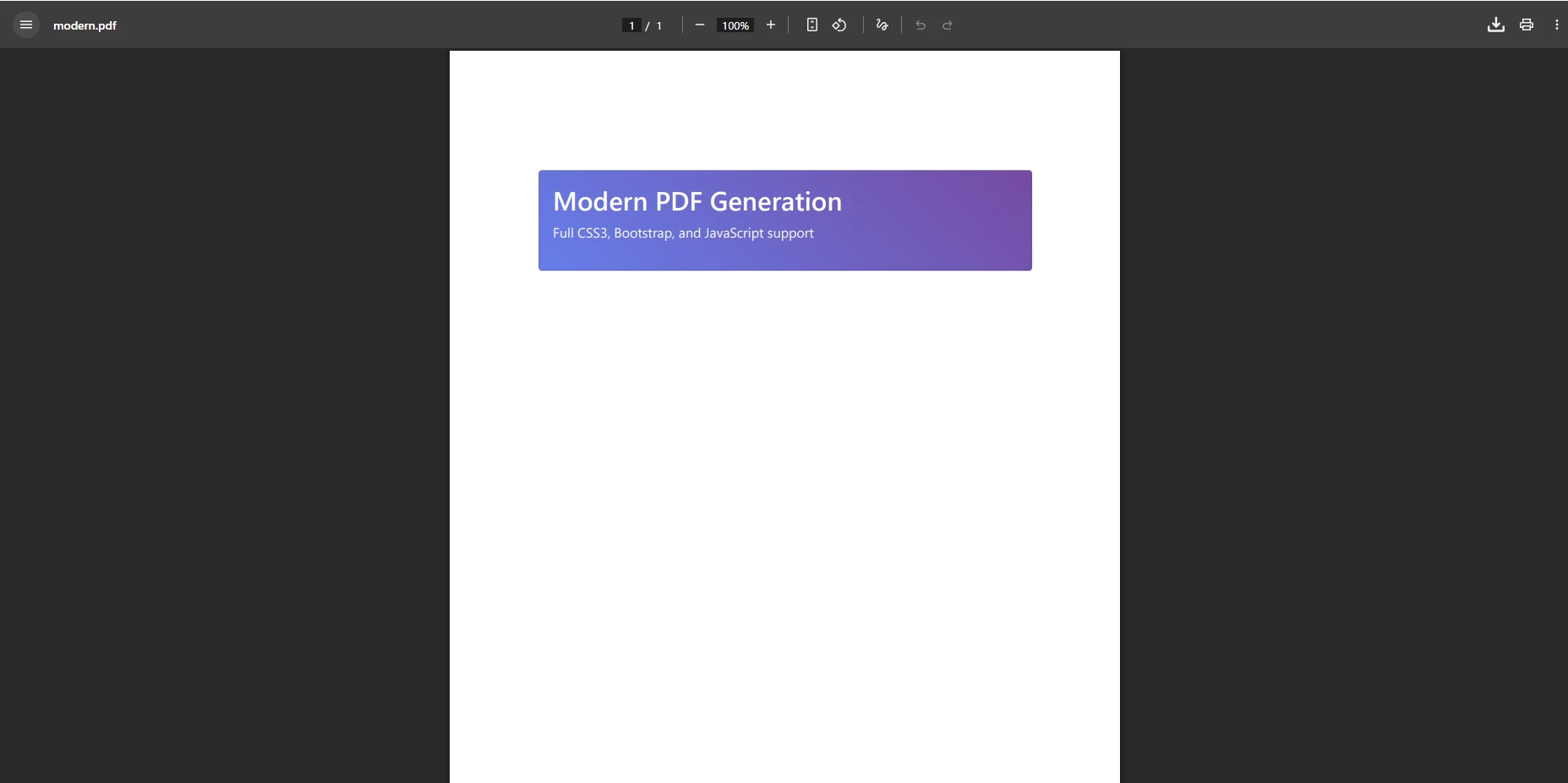
The ChromePdfRenderer handles complex layouts without manual workarounds. It supports CSS Grid, Flexbox, web fonts from Google Fonts, and JavaScript charts. The library also manages render delays for dynamic content and supports viewport configuration for responsive pages. For full configuration options, see the rendering options reference.
IronPDF stands out with its Razor Engine view rendering capabilities. You can convert entire Razor views directly to PDF with full support for ViewBag, ViewData, and model binding. The following example renders an invoice view server-side and returns it as a downloadable PDF:
// Production-ready Razor view to PDF
public class InvoiceController : Controller
{
    private readonly ChromePdfRenderer _pdfRenderer;
    private readonly IInvoiceService _invoiceService;
    private readonly IRazorViewToStringRenderer _razorRenderer;

    public InvoiceController(
        ChromePdfRenderer pdfRenderer,
        IInvoiceService invoiceService,
        IRazorViewToStringRenderer razorRenderer)
    {
        _pdfRenderer = pdfRenderer;
        _invoiceService = invoiceService;
        _razorRenderer = razorRenderer;
    }

    [HttpGet]
    public async Task<IActionResult> DownloadInvoiceAsync(int id)
    {
        var invoice = await _invoiceService.GetInvoiceAsync(id);
        if (invoice == null) return NotFound();

        var htmlContent = await _razorRenderer.RenderViewToStringAsync(
            "Invoice/InvoiceTemplate", invoice);

        var renderOptions = new ChromePdfRenderOptions
        {
            PaperSize = PdfPaperSize.A4,
            MarginTop = 20,
            MarginBottom = 20,
            PrintHtmlBackgrounds = true,
            CreatePdfFormsFromHtml = true
        };

        var pdf = await Task.Run(() =>
            _pdfRenderer.RenderHtmlAsPdf(htmlContent, renderOptions));

        pdf.MetaData.Title = $"Invoice-{invoice.InvoiceNumber}";
        pdf.MetaData.Subject = $"Invoice for {invoice.CustomerName}";

        var fileName = $"Invoice-{invoice.InvoiceNumber}-{DateTime.UtcNow:yyyyMMdd}.pdf";
        return File(pdf.BinaryData, "application/pdf", fileName);
    }
}Imports System
Imports System.Threading.Tasks
Imports Microsoft.AspNetCore.Mvc
' Production-ready Razor view to PDF
Public Class InvoiceController
Inherits Controller
Private ReadOnly _pdfRenderer As ChromePdfRenderer
Private ReadOnly _invoiceService As IInvoiceService
Private ReadOnly _razorRenderer As IRazorViewToStringRenderer
Public Sub New(pdfRenderer As ChromePdfRenderer, invoiceService As IInvoiceService, razorRenderer As IRazorViewToStringRenderer)
_pdfRenderer = pdfRenderer
_invoiceService = invoiceService
_razorRenderer = razorRenderer
End Sub
<HttpGet>
Public Async Function DownloadInvoiceAsync(id As Integer) As Task(Of IActionResult)
Dim invoice = Await _invoiceService.GetInvoiceAsync(id)
If invoice Is Nothing Then Return NotFound()
Dim htmlContent = Await _razorRenderer.RenderViewToStringAsync("Invoice/InvoiceTemplate", invoice)
Dim renderOptions As New ChromePdfRenderOptions With {
.PaperSize = PdfPaperSize.A4,
.MarginTop = 20,
.MarginBottom = 20,
.PrintHtmlBackgrounds = True,
.CreatePdfFormsFromHtml = True
}
Dim pdf = Await Task.Run(Function() _pdfRenderer.RenderHtmlAsPdf(htmlContent, renderOptions))
pdf.MetaData.Title = $"Invoice-{invoice.InvoiceNumber}"
pdf.MetaData.Subject = $"Invoice for {invoice.CustomerName}"
Dim fileName = $"Invoice-{invoice.InvoiceNumber}-{DateTime.UtcNow:yyyyMMdd}.pdf"
Return File(pdf.BinaryData, "application/pdf", fileName)
End Function
End Class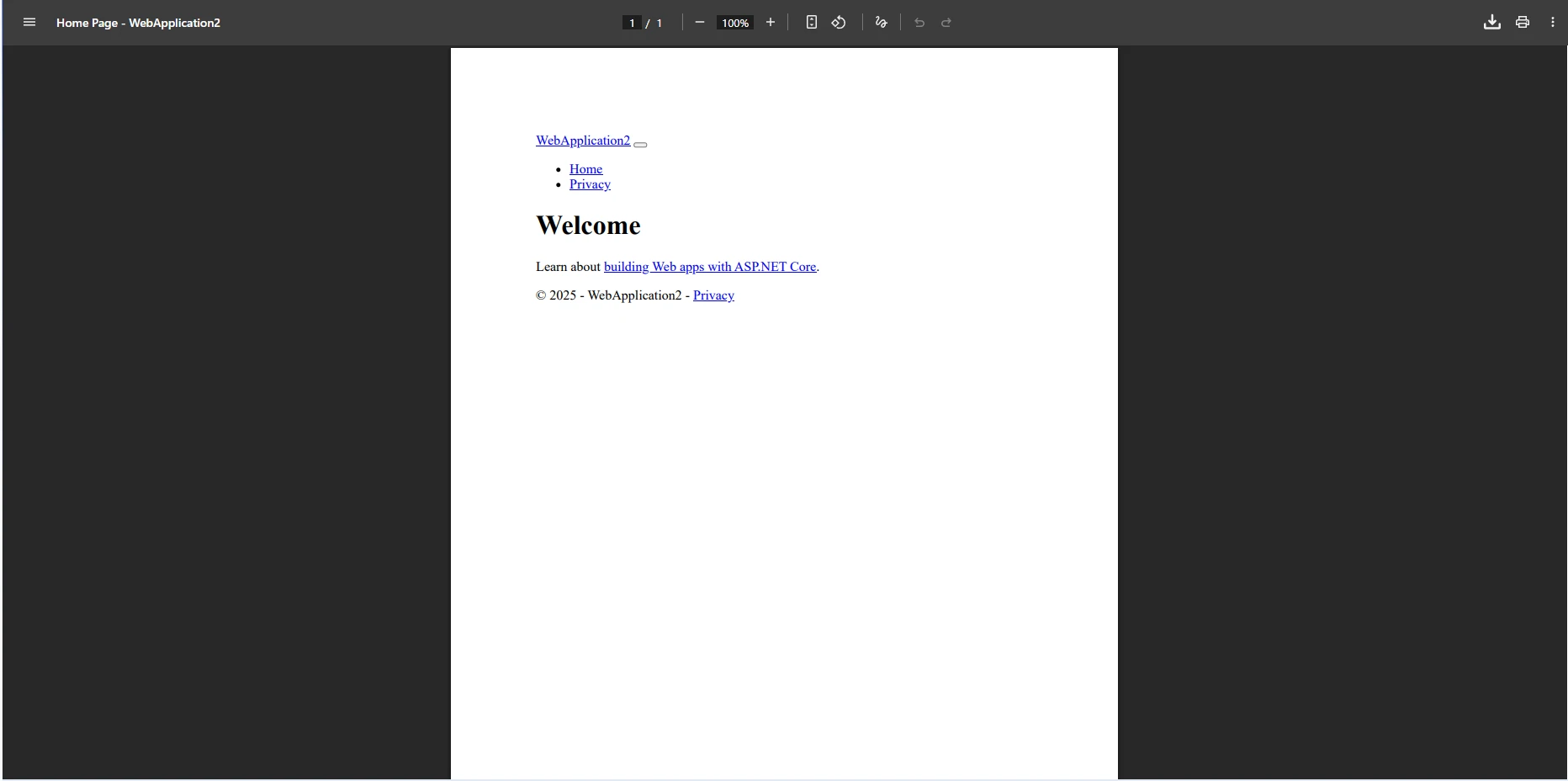
Contrast that with iText's approach, which requires manually building the document structure in code. Every heading, table cell, font choice, and spacing adjustment must be expressed as a C# object. There is no HTML template to iterate on in a browser; every change requires a compile-and-check cycle against the PDF output.
IronPDF's Razor integration allows you to reuse existing Razor views, HTML files, or HTML strings for PDF generation. You can also work with HTML ZIP files or implement base URL configurations for asset loading. The CSHTML to PDF how-to guide walks through the full Razor rendering pattern including dependency injection setup.
Both libraries support various output methods for PDF files in web applications. IronPDF offers additional features like PDF compression, linearization for fast web viewing, and rasterization to images. The streaming controller below demonstrates how to handle large PDFs with caching and range request support:
// Streaming controller for large PDFs
public class StreamingPdfController : Controller
{
    private readonly ChromePdfRenderer _ironPdfRenderer;
    private readonly IMemoryCache _cache;

    public StreamingPdfController(ChromePdfRenderer ironPdfRenderer, IMemoryCache cache)
    {
        _ironPdfRenderer = ironPdfRenderer;
        _cache = cache;
    }

    [HttpGet]
    public async Task<IActionResult> StreamLargePdf(string reportId)
    {
        var cacheKey = $"pdf_stream_{reportId}";
        if (_cache.TryGetValue<byte[]>(cacheKey, out var cachedPdf))
            return File(cachedPdf, "application/pdf", $"report_{reportId}.pdf");

        Response.ContentType = "application/pdf";
        Response.Headers.Add("Content-Disposition",
            $"attachment; filename=large_report_{reportId}.pdf");

        await using var stream = Response.BodyWriter.AsStream();
        var html = await GenerateLargeHtmlReport(reportId);
        var pdf = _ironPdfRenderer.RenderHtmlAsPdf(html);
        pdf.SaveAs(stream);

        if (pdf.BinaryData.Length < 10_000_000)
            _cache.Set(cacheKey, pdf.BinaryData, TimeSpan.FromMinutes(30));

        return new EmptyResult();
    }

    [HttpGet]
    public IActionResult DownloadWithRangeSupport(string documentId)
    {
        var pdfBytes = GetPdfBytes(documentId);
        return File(pdfBytes, "application/pdf",
            $"document_{documentId}.pdf", enableRangeProcessing: true);
    }
}Imports System
Imports System.Threading.Tasks
Imports Microsoft.AspNetCore.Mvc
Imports Microsoft.Extensions.Caching.Memory
' Streaming controller for large PDFs
Public Class StreamingPdfController
Inherits Controller
Private ReadOnly _ironPdfRenderer As ChromePdfRenderer
Private ReadOnly _cache As IMemoryCache
Public Sub New(ironPdfRenderer As ChromePdfRenderer, cache As IMemoryCache)
_ironPdfRenderer = ironPdfRenderer
_cache = cache
End Sub
<HttpGet>
Public Async Function StreamLargePdf(reportId As String) As Task(Of IActionResult)
Dim cacheKey = $"pdf_stream_{reportId}"
Dim cachedPdf As Byte() = Nothing
If _cache.TryGetValue(cacheKey, cachedPdf) Then
Return File(cachedPdf, "application/pdf", $"report_{reportId}.pdf")
End If
Response.ContentType = "application/pdf"
Response.Headers.Add("Content-Disposition", $"attachment; filename=large_report_{reportId}.pdf")
Await Using stream = Response.BodyWriter.AsStream()
Dim html = Await GenerateLargeHtmlReport(reportId)
Dim pdf = _ironPdfRenderer.RenderHtmlAsPdf(html)
pdf.SaveAs(stream)
If pdf.BinaryData.Length < 10000000 Then
_cache.Set(cacheKey, pdf.BinaryData, TimeSpan.FromMinutes(30))
End If
End Using
Return New EmptyResult()
End Function
<HttpGet>
Public Function DownloadWithRangeSupport(documentId As String) As IActionResult
Dim pdfBytes = GetPdfBytes(documentId)
Return File(pdfBytes, "application/pdf", $"document_{documentId}.pdf", enableRangeProcessing:=True)
End Function
End ClassFor advanced scenarios, IronPDF supports parallel PDF generation, multi-threaded processing, and batch operations. You can implement custom logging, handle network authentication, work with cookies, and add HTTP request headers for secure document generation.
The table below summarizes the key differences between iText and IronPDF for ASP.NET MVC projects:
| Feature | iText | IronPDF |
|---|---|---|
| HTML-to-PDF rendering | Limited (XMLWorker, no modern CSS3) | Full Chrome engine (CSS3, JS, Flexbox) |
| Razor / CSHTML support | No native support | Built-in Razor view rendering |
| Thread safety | Requires manual locking | Thread-safe by default |
| Async API | No native async | Full async support |
| Linux / Docker | Supported | Supported |
| License type | AGPL (open-source) or commercial | Commercial with free trial |
| Digital signatures | Yes | Yes |
| PDF forms | Yes (manual) | Yes (from HTML form elements) |
iText offers detailed control for programmatic PDF creation, making it a workable option when document structure is simple and fixed. IronPDF is the stronger choice when you need to convert HTML templates or Razor views into professional PDF documents with precise rendering, full CSS3 support, and JavaScript execution.
For production ASP.NET applications, IronPDF provides superior async support and integration with modern .NET patterns including dependency injection and middleware pipelines. Its capability to render Razor views, support digital signatures, and handle complex layouts makes it a preferred choice for enterprise applications. The library also supports Blazor Server applications and PDF/A compliance for archival documents.
The iText library uses an AGPL license for its open-source version, which requires your application code to also be open-source. Commercial licenses are available from iText Group for proprietary projects. This licensing consideration is particularly important for SaaS products or internal enterprise tools where you cannot publish source code.
IronPDF uses a commercial licensing model with a free trial for development and testing. Licenses scale by deployment environment: developer, single server, or unlimited deployment options. When implementing either solution, consider deployment scenarios including Docker, Azure, and Linux environments.
Performance considerations for high-traffic scenarios include implementing async operations, proper memory management, and caching strategies. IronPDF's Chrome engine provides superior performance for complex HTML rendering, while iText may be more efficient for simple programmatic PDF generation without HTML involved. For applications that generate hundreds of PDFs per minute, benchmarking under realistic load is the most reliable guide to which library suits your infrastructure.
Migration from iText to IronPDF is straightforward for most MVC projects. The core change is replacing the manual document-building code with an HTML template rendered by the Chrome engine. IronPDF provides extensive documentation, code examples, and engineering support to make transitions go smoothly.
For new projects requiring HTML to PDF conversion with modern web standards support, IronPDF offers a clear advantage with its Chrome-based rendering. Legacy projects already using iText for basic PDF creation can continue with their existing implementation unless HTML rendering accuracy becomes a requirement.
Start with IronPDF's free trial and test it directly with your existing Razor views or HTML templates. Explore the complete documentation and API reference to see how quickly the integration comes together. If you have questions about migrating an existing iText-based project or need guidance on PDF memory stream handling and PDF/A compliance, the support team is available to help.
For a broader look at how IronPDF compares with the iText product family, see the dedicated iText vs. IronPDF comparison page.

Curtis Chau holds a Bachelor’s degree in Computer Science (Carleton University) and specializes in front-end development with expertise in Node.js, TypeScript, JavaScript, and React. Passionate about crafting intuitive and aesthetically pleasing user interfaces, Curtis enjoys working with modern frameworks and creating well-structured, visually appealing manuals.

IronPDF is a part of IRONSUITE
10 .NET API products for your office documents

When you need your PDF to look like HTML, fast.


