# Debug HTML in Chrome for Pixel-Perfect PDFs with C#
IronPDF's Chrome Renderer enables developers to create pixel-perfect PDFs that match HTML designs exactly as displayed in Chrome, supporting HTML5, CSS3, and JavaScript for precise document generation.
IronPDF ensures PDFs look exactly as expected. Achieving pixel-perfect results requires excellent HTML templates or collaboration with web developers to create them. IronPDF renders PDFs identically to Chrome browser display through its Chrome Renderer. For comprehensive documentation on getting started, visit the [Quickstart Guide](https://ironpdf.com/get-started/quickstart/).
*as-heading:2(Quickstart: Generate Pixel Perfect PDFs with IronPDF)*
IronPDF's Chrome Renderer makes HTML to PDF conversion straightforward. This guide helps developers produce pixel-perfect PDF documents that mirror HTML designs exactly as they appear in Chrome. The process ensures full support for HTML5, CSS3, and JavaScript elements. Follow these steps to create PDFs that maintain web branding and design integrity. For more HTML to PDF conversion techniques, check the [HTML to PDF Tutorial](https://ironpdf.com/tutorials/html-to-pdf/).
```cs
:title=Create Pixel-Perfect PDF in Seconds!
// Initialize Chrome PDF renderer with IronPDF
new IronPdf.ChromePdfRenderer().RenderHtmlAsPdf("<html><body>Hello World</body></html>").SaveAs("output.pdf");
```
## What is IronPDF's Chrome Renderer?
### Why does IronPDF differ from other .NET PDF libraries?
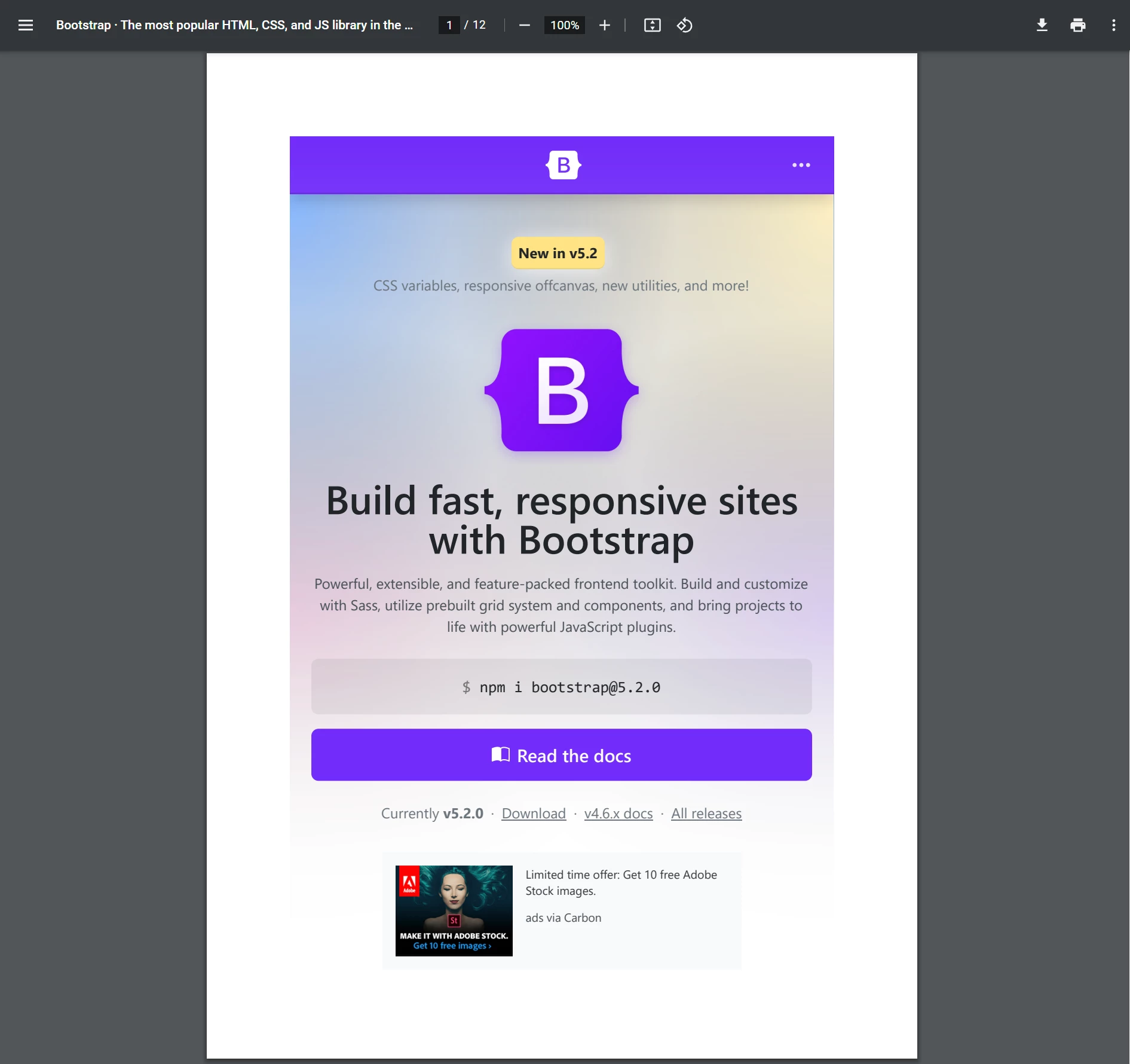
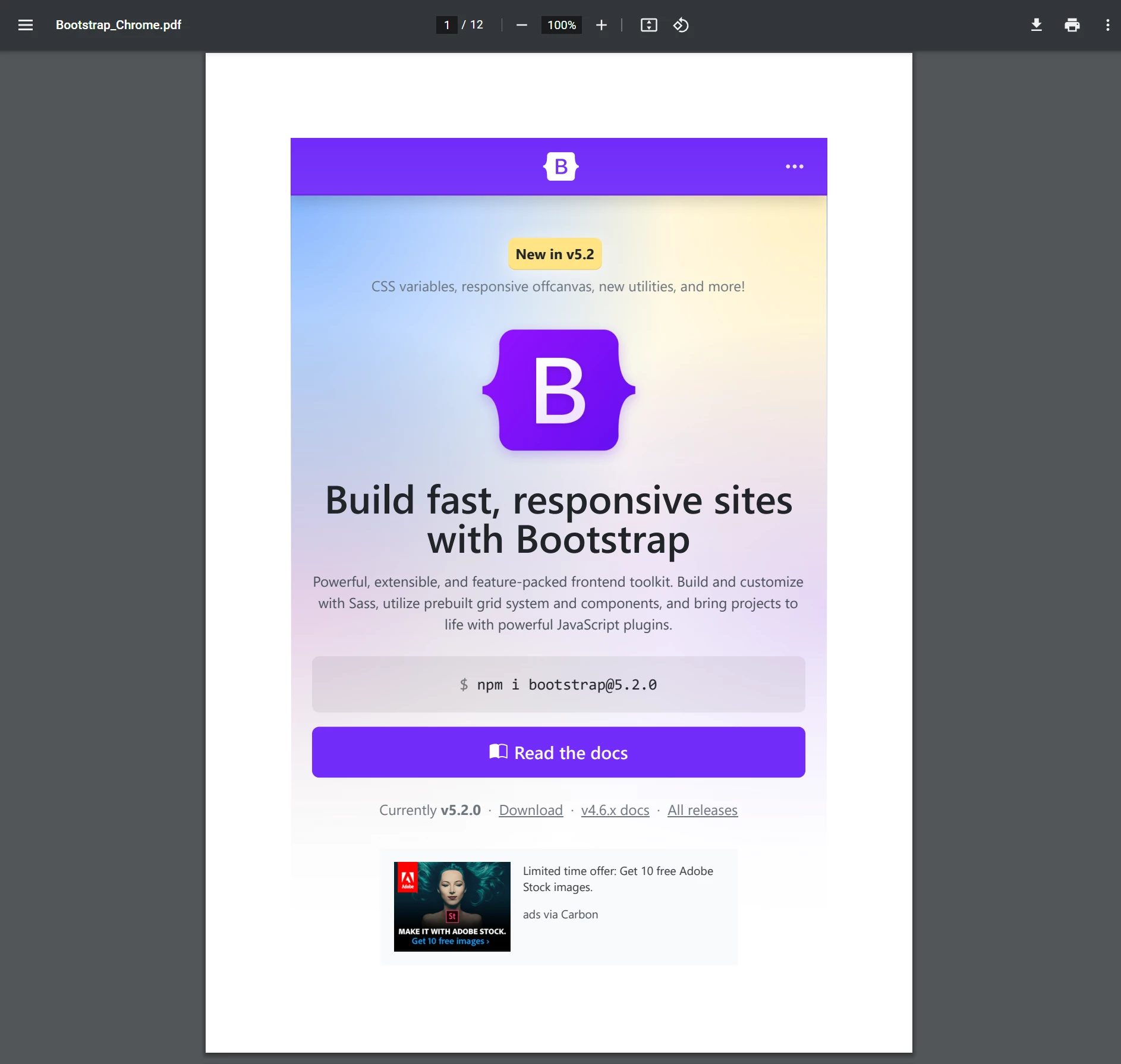
IronPDF utilizes the Google Chromium Renderer, ensuring HTML appears in PDFs exactly as it does in Chrome browsers. This guide covers settings needed in both Chrome and IronPDF to achieve this result. Learn more about the [Chrome PDF Rendering Engine](https://ironpdf.com/how-to/ironpdf-2021-chrome-rendering-engine-eap/) to understand its advanced capabilities.
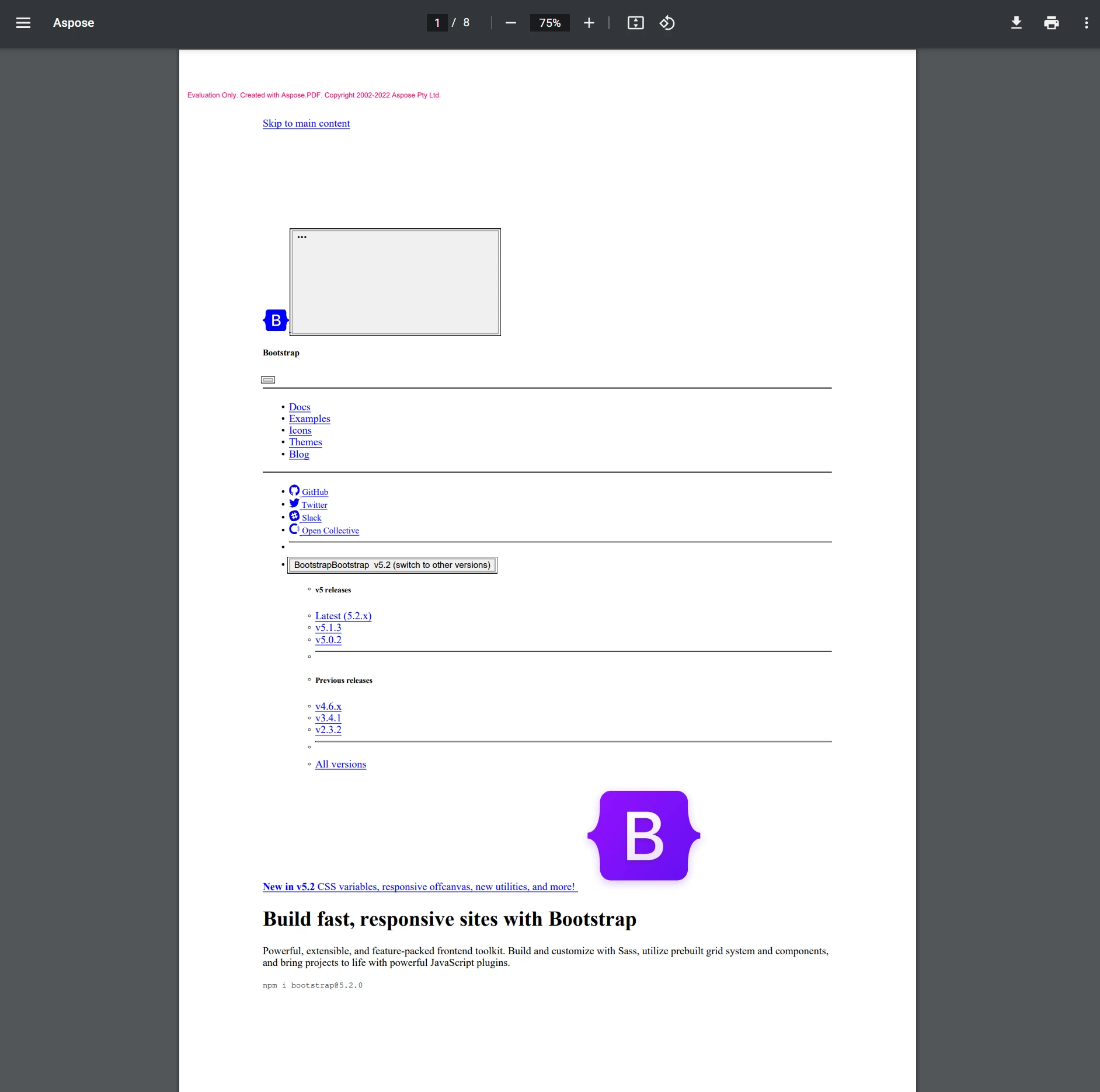
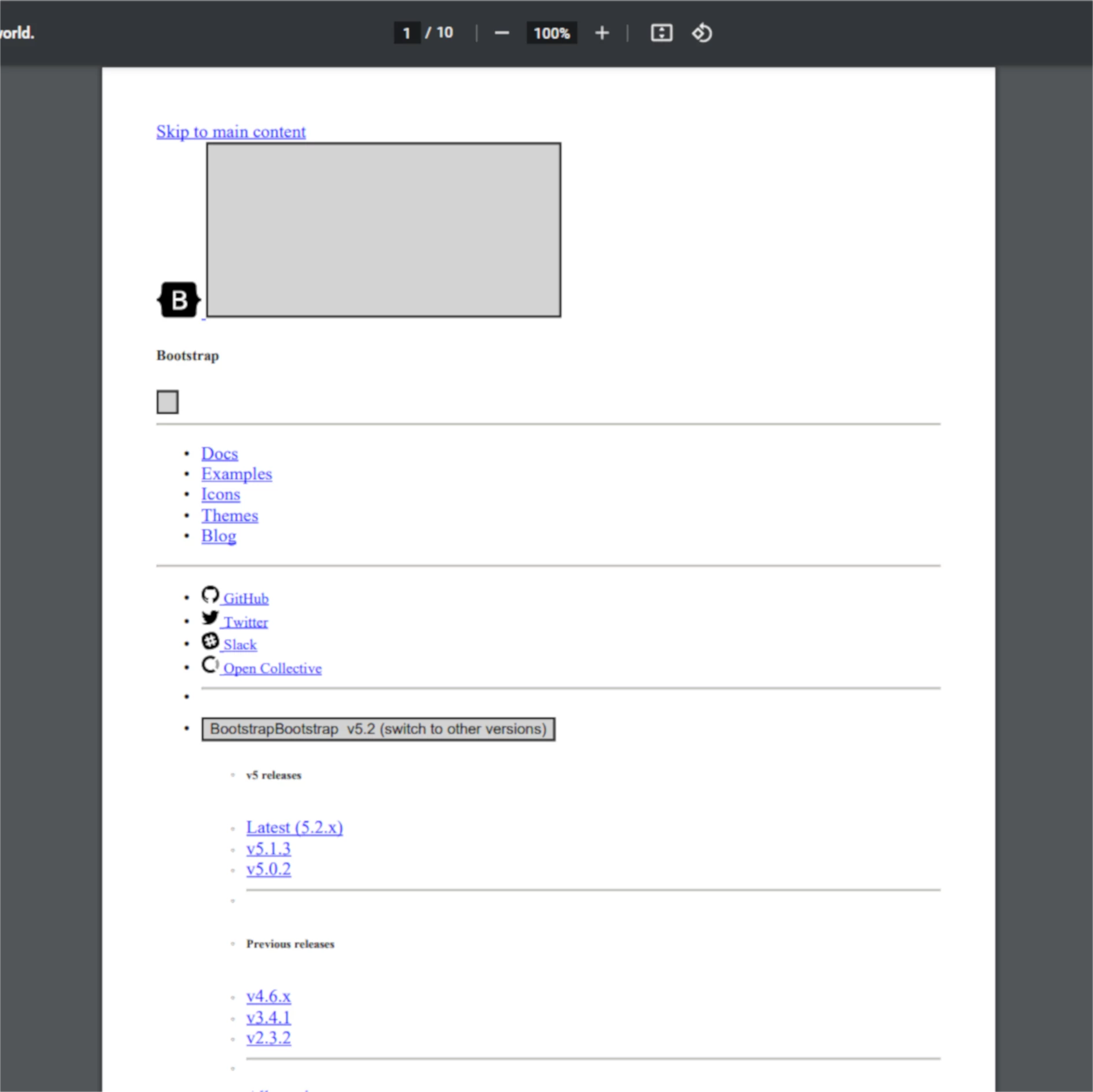
Many competing "HTML to PDF" technologies don't comply with W3C standards or support HTML5, CSS3, or JavaScript, using underlying renderers like [wkhtmltopdf in C# comparison](/blog/compare-to-other-components/wkhtmltopdf-c-sharp/). For a detailed performance comparison, see the [iText vs IronPDF](https://ironpdf.com/competitors/itext-vs-ironpdf/) analysis.
### How does IronPDF compare with competitors?
<div class="competitors-section__wrapper-even-1">
<div class="competitors__card">
<p class="competitors__header">IronPDF</p>
<img
class="competitors__image img-popup"
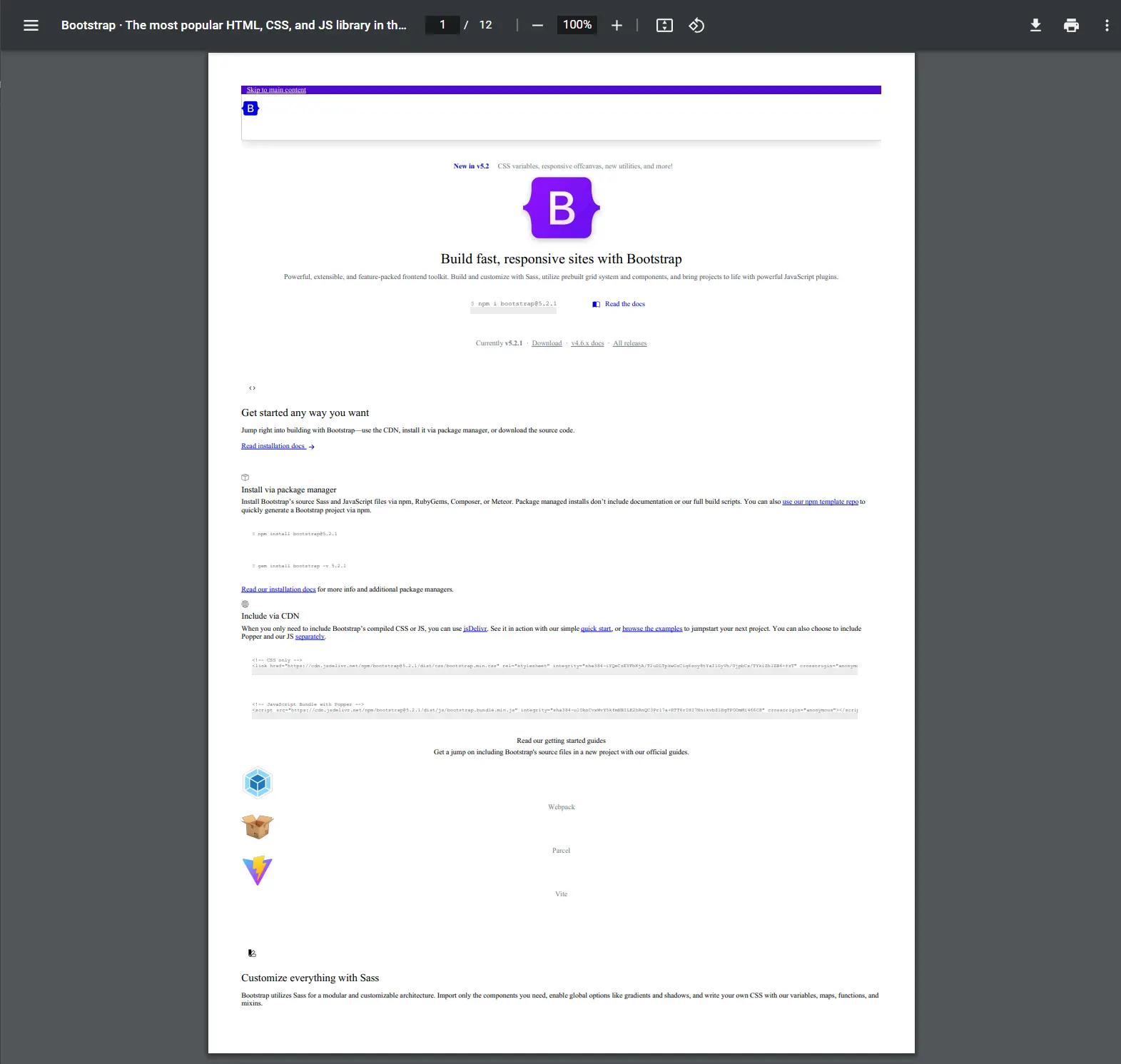
src="/static-assets/pdf/how-to/pixel-perfect-html-to-pdf/bootstrap_ironpdf_p1.webp"
alt="IronPDF rendering of Bootstrap components showing pixel-perfect HTML to PDF conversion"
data-fullsize="/static-assets/pdf/how-to/pixel-perfect-html-to-pdf/bootstrap_ironpdf_p1.webp" />
<p class="competitors__download-link">
<i class="fas fa-file-pdf"></i>
<a href="https://raw.githubusercontent.com/iron-software/iron-nuget-assets/main/IronPDF-Tutorial/Bootstrap_IronPDF.pdf">Download PDF</a>
</p>
</div>
<div class="competitors__card">
<p class="competitors__header">Vanilla Chrome</p>
<img
class="competitors__image img-popup"
src="/static-assets/pdf/how-to/pixel-perfect-html-to-pdf/bootstrap_chrome_p1.webp"
alt="Chrome browser's native PDF rendering of Bootstrap components for comparison"
data-fullsize="/static-assets/pdf/how-to/pixel-perfect-html-to-pdf/bootstrap_chrome_p1.webp" />
<p class="competitors__download-link">
<i class="fas fa-file-pdf"></i>
<a href="https://raw.githubusercontent.com/iron-software/iron-nuget-assets/main/IronPDF-Tutorial/Bootstrap_Chrome.pdf">Download PDF</a>
</p>
</div>
</div>
<div class="competitors-section__wrapper">
<div class="competitors__card">
<p class="competitors__header">Aspose.PDF</p>
<img
class="competitors__image img-popup"
src="/static-assets/pdf/how-to/pixel-perfect-html-to-pdf/bootstrap_aspose_p1.webp"
alt="Aspose.PDF rendering showing limited Bootstrap component support"
data-fullsize="/static-assets/pdf/how-to/pixel-perfect-html-to-pdf/bootstrap_aspose_p1.webp" />
<p class="competitors__download-link">
<i class="fas fa-file-pdf"></i>
<a href="https://raw.githubusercontent.com/iron-software/iron-nuget-assets/main/IronPDF-Tutorial/Bootstrap_Aspose.pdf">Download PDF</a>
</p>
</div>
<div class="competitors__card">
<p class="competitors__header">iText</p>
<img
class="competitors__image img-popup"
src="/static-assets/pdf/how-to/pixel-perfect-html-to-pdf/bootstrap_itext.webp"
alt="iText PDF rendering demonstrating incomplete HTML/CSS support"
data-fullsize="/static-assets/pdf/how-to/pixel-perfect-html-to-pdf/bootstrap_itext.webp" />
<p class="competitors__download-link">
<i class="fas fa-file-pdf"></i>
<a href="https://raw.githubusercontent.com/iron-software/iron-nuget-assets/main/IronPDF-Tutorial/Boostrap_iText.pdf">Download PDF</a>
</p>
</div>
<div class="competitors__card">
<p class="competitors__header">wkhtmltopdf</p>
<img
class="competitors__image img-popup"
src="/static-assets/pdf/how-to/pixel-perfect-html-to-pdf/bootstrap_wkhtmltopdf_p1.webp"
alt="wkhtmltopdf rendering showing outdated WebKit engine limitations"
data-fullsize="/static-assets/pdf/how-to/pixel-perfect-html-to-pdf/bootstrap_wkhtmltopdf_p1.webp" />
<p class="competitors__download-link">
<i class="fas fa-file-pdf"></i>
<a href="https://github.com/iron-software/iron-nuget-assets/blob/main/IronPDF-Tutorial/Bootstrap_wkhtmltopdf.pdf">Download PDF</a>
</p>
</div>
</div>
*To see a full list of comparisons with other products, see the [comparison blog](/blog/compare-to-other-components/).*
<p><a href="/features/">Features of Iron Software Libraries</a> | <a href="/how-to/ironpdf-2021-chrome-rendering-engine-eap/">Using IronPDF's Chrome Rendering Engine</a> | <a href="/blog/compare-to-other-components/aspose-pdf-converter/">Aspose vs IronPDF Analysis</a> | <a href="/blog/compare-to-other-components/itextpdf-alternative-html-to-pdf-csharp/">iText vs IronPDF Comparison</a></p>
## How does IronPDF's Chrome Renderer outperform standard Chrome?
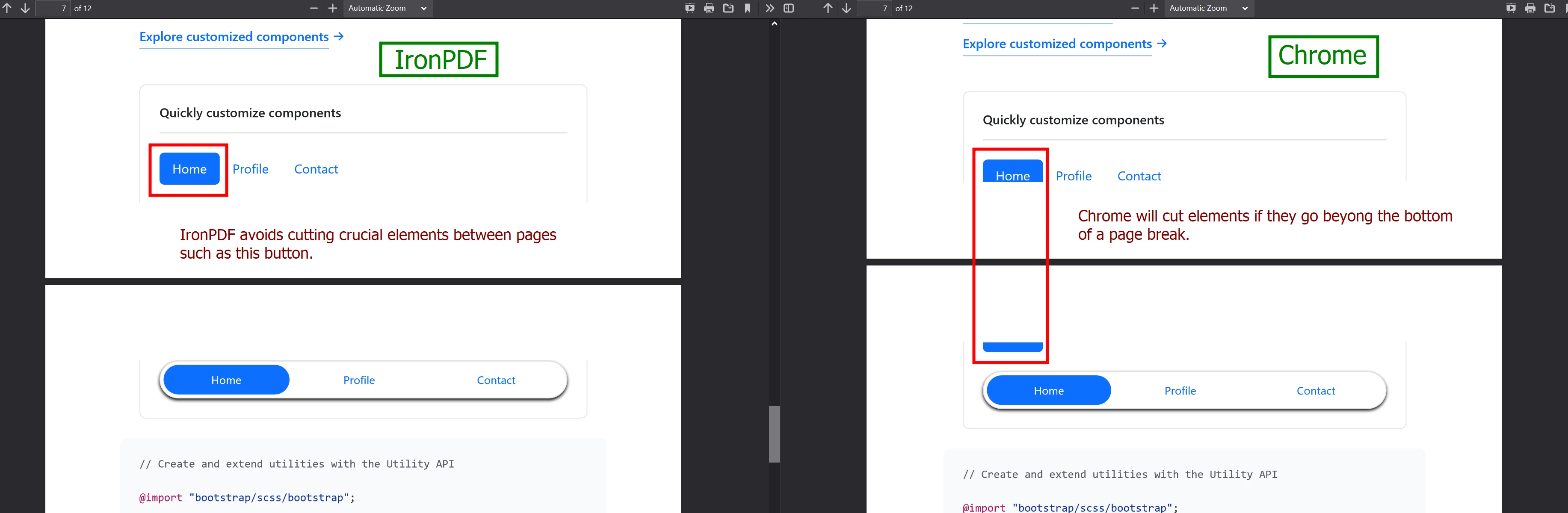
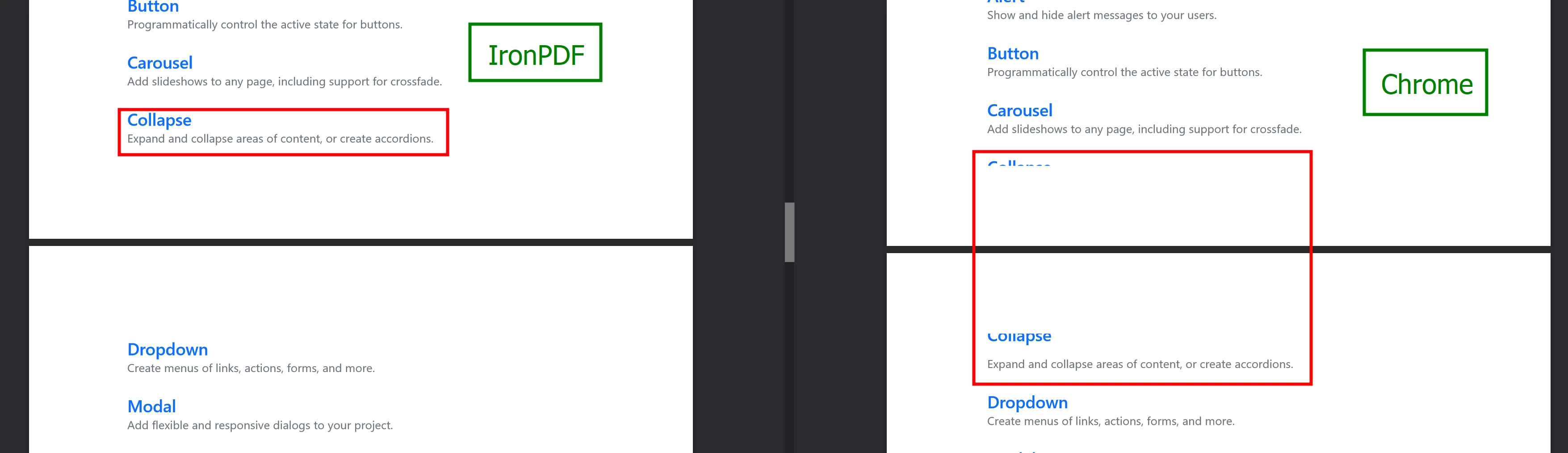
IronPDF surpasses Chrome in two key areas. Buttons and text that Chrome splits across pages remain intact with IronPDF. This superior rendering comes from optimized print algorithms and advanced page break handling. For more details on managing page breaks, see the [Page Breaks Guide](https://ironpdf.com/how-to/html-to-pdf-page-breaks/).
### What happens when buttons get cut off in Chrome?
<div class="content-img-align-center">
<div class="center-image-wrapper">
<img src="/static-assets/pdf/how-to/pixel-perfect-html-to-pdf/ironpdf_vs_chrome_button.webp" alt="IronPDF vs Chrome rendering: IronPDF preserves complete buttons while Chrome cuts off elements at page breaks" class="img-responsive add-shadow" />
</div>
</div>
### What happens when text gets cut off in Chrome?
<div class="content-img-align-center">
<div class="center-image-wrapper">
<img src="/static-assets/pdf/how-to/pixel-perfect-html-to-pdf/ironpdf_vs_chrome_text.webp" alt="IronPDF vs Chrome rendering comparison showing complete text display in IronPDF versus text cutoff in Chrome" class="img-responsive add-shadow" />
</div>
</div>
## Why should developers use HTML to PDF?
HTML to PDF delivers predictable results matching existing web branding. Design uses standardized HTML, CSS, and JavaScript technologies. For creating PDFs from scratch, explore the [Create New PDFs](https://ironpdf.com/how-to/create-new-pdfs/) documentation.
- Layout and design match the website exactly
- Web developers can design with absolute precision
- Backend developers focus on logic rather than layout
## How do I choose between CSS Media Type Print or Screen?
IronPDF's renderer has two media rendering options: `Screen` **(default)** and `Print`. For a visual comparison, see [the end of this section](#anchor-comparison-of-screen-and-print-example). For responsive CSS handling, refer to the [CSS (Screen & Print)](https://ironpdf.com/how-to/html-to-pdf-responsive-css/) guide.
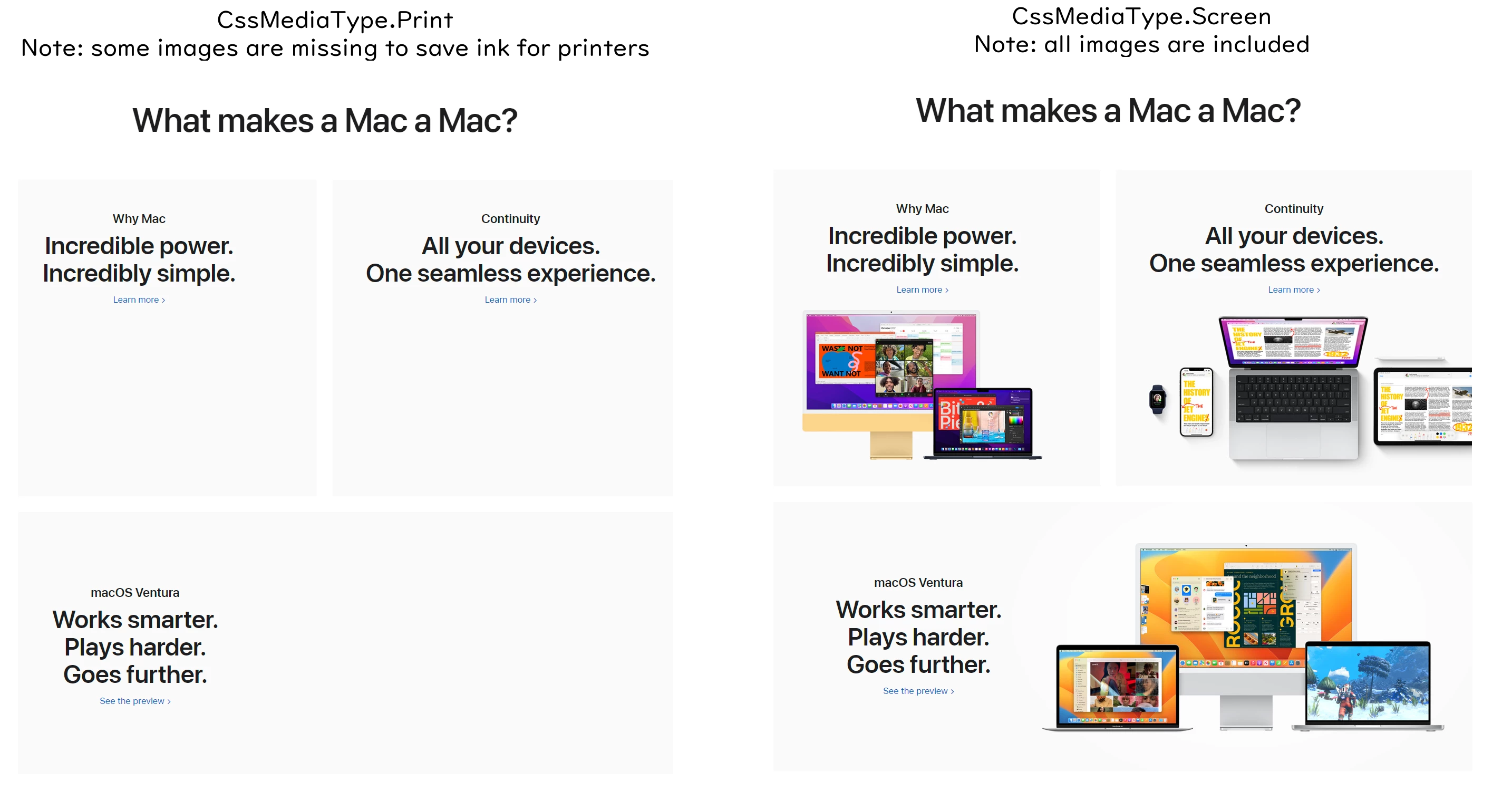
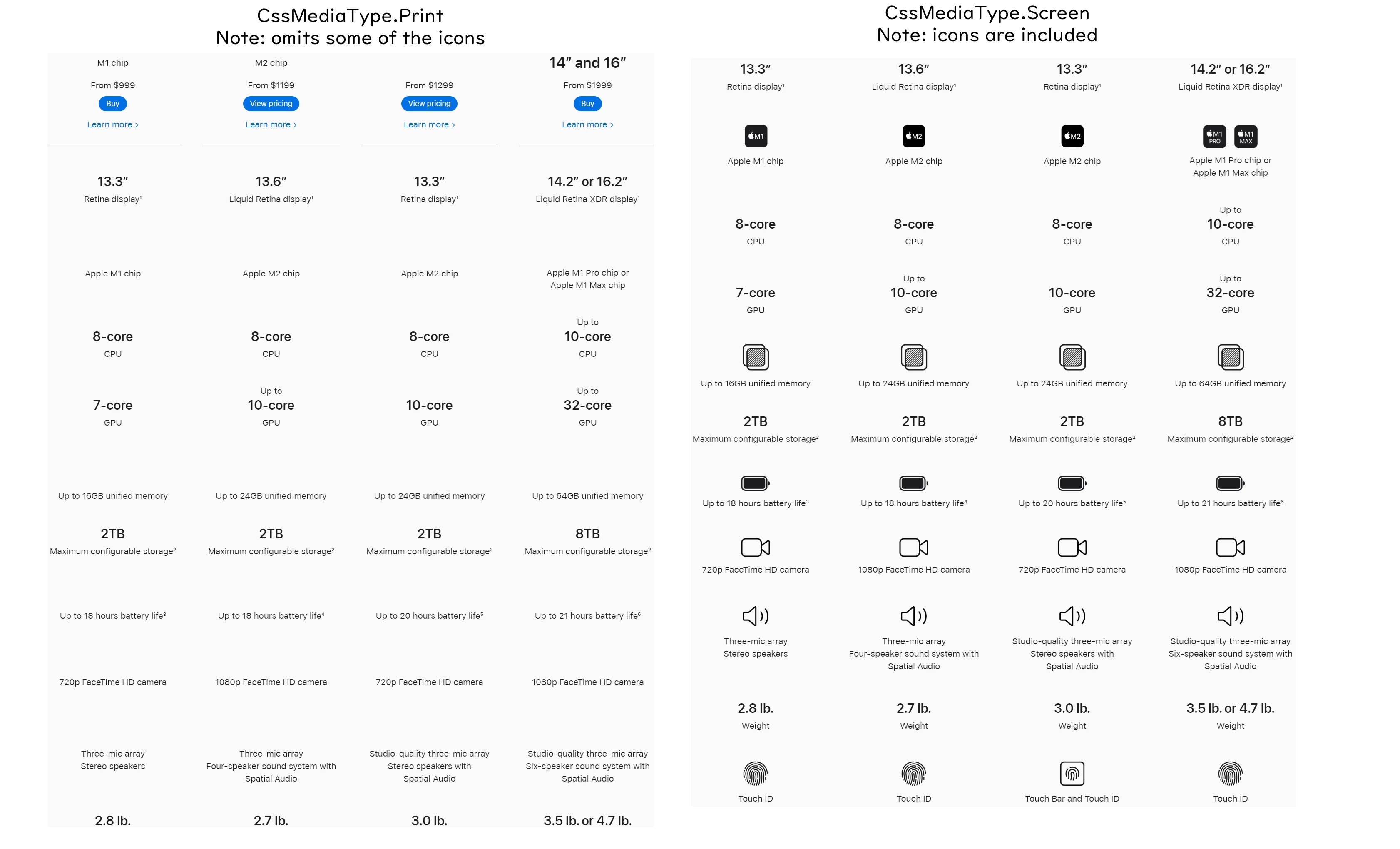
- `CssMediaType.Print` optimizes HTML for printing, potentially omitting background images, icons, and ink-heavy elements. Good for documents without background images.
- `CssMediaType.Screen` renders PDFs exactly as they appear in Chrome. Requires specific Chrome browser setup for accurate print-preview debugging.
```csharp
// Pixel Perfect HTML Formatting Settings
IronPdf.ChromePdfRenderer renderer = new IronPdf.ChromePdfRenderer();
renderer.RenderingOptions.CssMediaType = PdfCssMediaType.Print; // or Screen
```
### When should I use repeating table headers?
For tables spanning multiple pages with repeating headers:
- Use `Print` `CssMediaType` exclusively
- `Screen` mode prints headers only once
Ensure proper table rendering with this HTML structure:
```html
<table>
<thead>
<tr>
<th>Product</th>
<th>Quantity</th>
<th>Price</th>
</tr>
</thead>
<tbody>
<tr>
<td>Widget A</td>
<td>10</td>
<td>$25.00</td>
</tr>
<tr>
<td>Widget B</td>
<td>5</td>
<td>$40.00</td>
</tr>
<!-- Additional rows spanning multiple pages.
The <thead> header row repeats automatically at the top of each page. -->
</tbody>
</table>
```
### What are the visual differences between Screen and Print modes?
Many images and icons load in `Screen` mode but not in `Print` mode:
## How do I set up Chrome for pixel-perfect debugging?
IronPDF utilizes a Chrome Rendering Engine. Follow these steps for IronPDF to render HTML exactly as displayed in Chrome. For additional rendering customization, see the [Rendering Options](https://ironpdf.com/how-to/rendering-options/) documentation.
To render pixel-perfect PDFs including all images, icons, and backgrounds typically omitted in print format, use the `Screen` CSS Media option.
### How do I enable CSS Media emulation in Chrome DevTools?
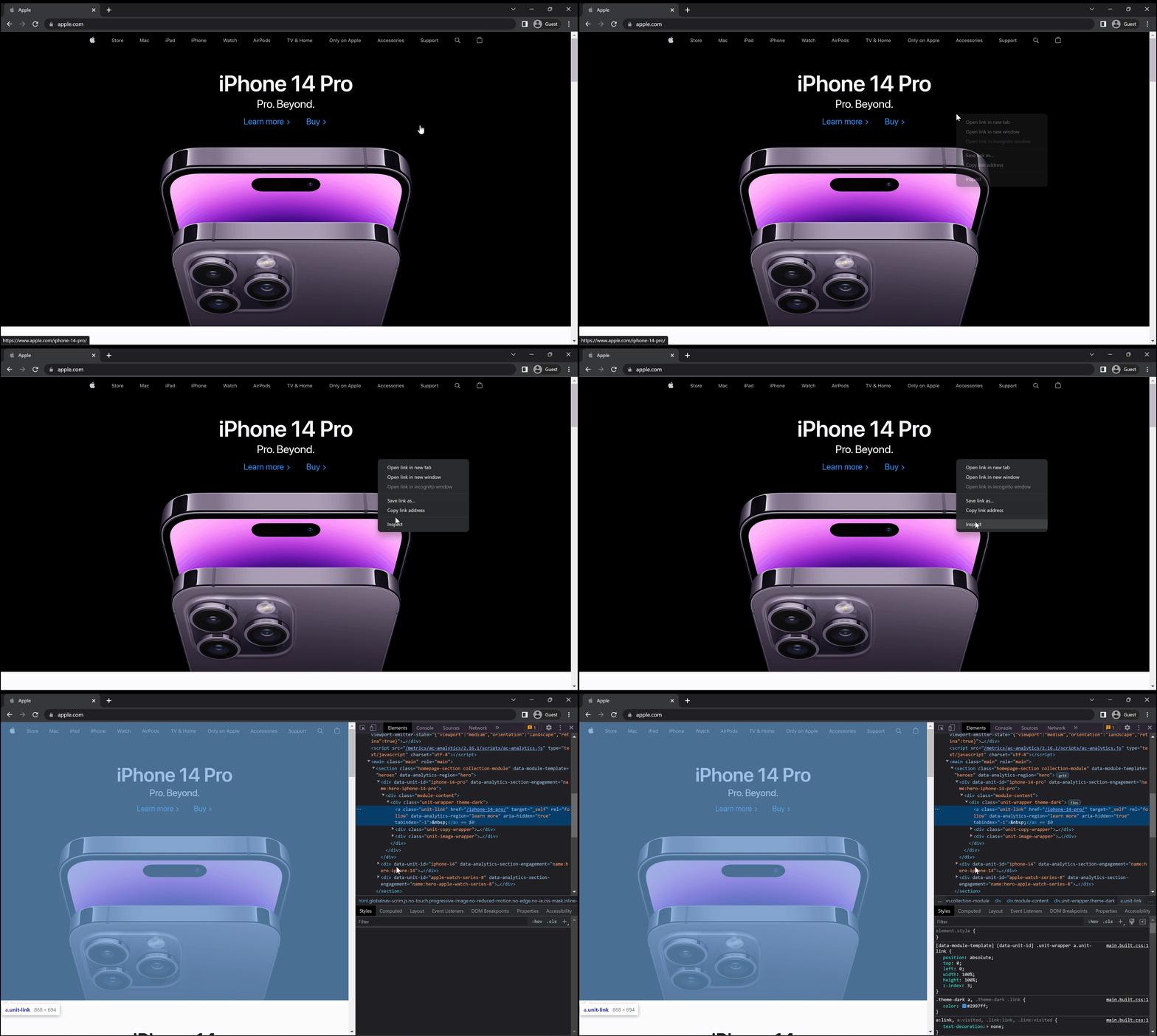
1. Within Chrome, [open DevTools in Chrome](https://developer.chrome.com/docs/devtools/open/).
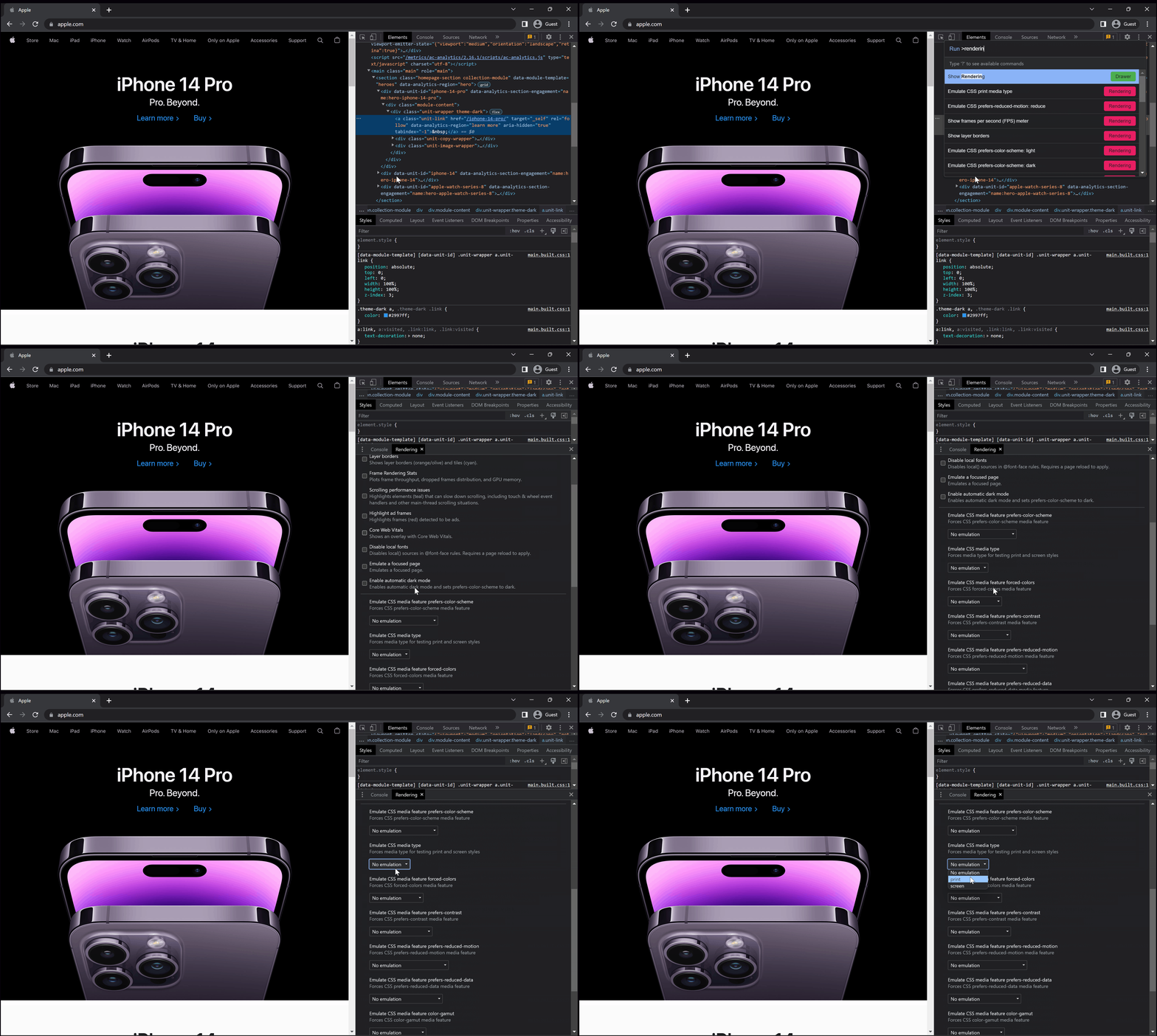
<img src="/static-assets/pdf/how-to/pixel-perfect-html-to-pdf/open_devtools.gif" alt="Chrome browser showing how to access Developer Tools for PDF debugging" class="img-responsive add-shadow" style="margin-bottom: 30px;" />
2. Press Command+Shift+P (Mac) or Control+Shift+P (Windows, Linux, ChromeOS) to open the **Command Menu**. Type `rendering`, select Show Rendering, and press Enter. DevTools displays the Rendering tab at the bottom. *[More help on rendering settings](https://developer.chrome.com/docs/devtools/rendering/)*
<img src="/static-assets/pdf/how-to/pixel-perfect-html-to-pdf/find_emulate_css_type.gif" alt="Chrome DevTools showing how to access Rendering panel for CSS media emulation" class="img-responsive add-shadow" style="margin-bottom: 30px;" />
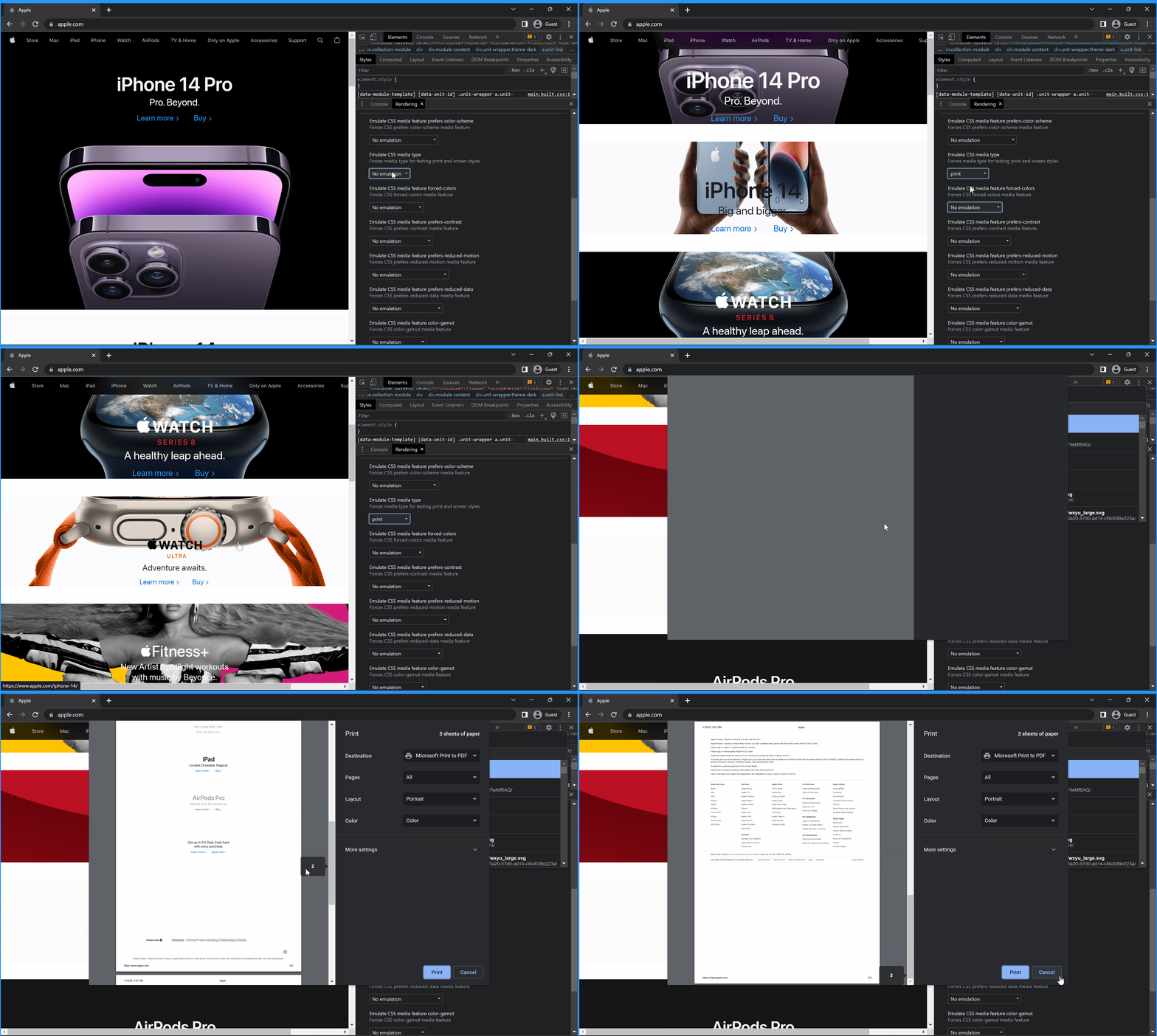
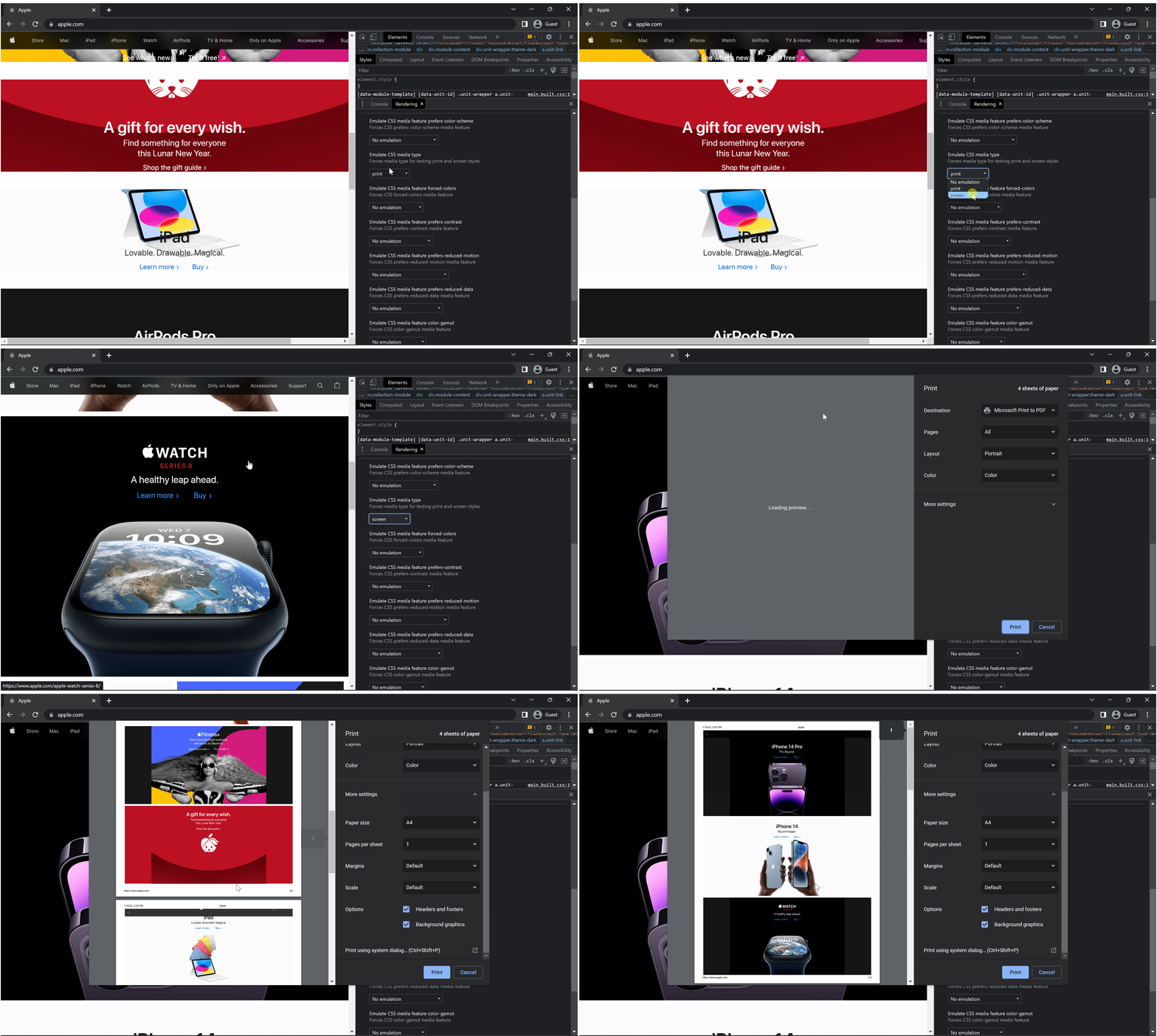
3. Navigate to the Emulate CSS media dropdown and choose `Screen` or `Print`. Reload (Ctrl+R) if on a webpage for settings to take effect.
<div class="competitors-section__wrapper-even-1">
<div class="competitors__card" style="width: 48%;">
<img src="/static-assets/pdf/how-to/pixel-perfect-html-to-pdf/view_css_print.gif" alt="Chrome DevTools showing CSS Print media type emulation settings" class="img-responsive add-shadow" style="margin-bottom: 30px;" />
<p class="competitors__download-link" style="color: #181818; font-style: italic;">
Print
</p>
</div>
<div class="competitors__card" style="width: 48%;">
<img src="/static-assets/pdf/how-to/pixel-perfect-html-to-pdf/view_css_screen.gif" alt="Chrome DevTools Rendering panel showing CSS media emulation options with dropdowns set to No emulation" class="img-responsive add-shadow" style="margin-bottom: 30px;" />
<p class="competitors__download-link" style="color: #181818; font-style: italic;">
Screen
</p>
</div>
</div>
### How do I access the Print Preview window?
Change paper size and enable 'printing background images' in Chrome Print dialog for accurate display. For custom paper sizes, refer to the [Custom Paper Size](https://ironpdf.com/how-to/custom-paper-size/) guide.
### What Print Preview settings should I use?
- Choose the Paper Size used in your IronPDF project (`A4` or `Letter`)
- Under `Margins` select `Custom` and set all sides to 1 inch
- Enable `Background Graphics` checkbox
- Set `Layout` to `Landscape` for landscape documents
These settings enable debugging HTML with print preview showing exactly how IronPDF renders layouts.
## How do I configure IronPDF for pixel-perfect rendering?
### How do I match the CSS Media Type in IronPDF?
To match webpage design with 100% precision, choose the same CSS Media Type set in Chrome.
Remember that `PdfCssMediaType.Screen` includes backgrounds and larger images omitted in `PdfCssMediaType.Print` format, which is designed for printers to save ink.
```csharp
// Example using PdfCssMediaType.Screen
IronPdf.ChromePdfRenderer renderer = new IronPdf.ChromePdfRenderer();
renderer.RenderingOptions.CssMediaType = PdfCssMediaType.Screen; // or Print
renderer.RenderingOptions.PrintHtmlBackgrounds = true;
```
### Why are Render Delay and Render Timeout important?
IronPDF's default rendering timeout is 60 seconds. When rendering takes longer, a timeout exception occurs. Override defaults by adjusting `RenderingOptions.Timeout`. Render delay allows time for assets like images, fonts, and JavaScript to load properly. For JavaScript-heavy pages, see the [JavaScript (Custom Render Delays)](https://ironpdf.com/how-to/javascript-to-pdf/) guide.
```csharp
// Example of setting Timeout and RenderDelay options
renderer.RenderingOptions.Timeout = 90; // seconds (default is 60)
renderer.RenderingOptions.WaitFor.RenderDelay(30000); // milliseconds
```
Having no timeout set or a render delay longer than the timeout produces an "<strong>Unable to Render PDF</strong>" exception. Increase these values if encountering this error.
- [`WaitFor` and JavaScript Code Example](/how-to/javascript-to-pdf/)
- [Use `WaitFor` to Delay PDF Render](/object-reference/api/IronPdf.Engines.Chrome.WaitFor.html) for advanced timing control
[[i:(Aspose, iText, wkhtmltopdf, and PuppeteerSharp are registered trademarks of their respective owners. This site is not affiliated with, endorsed by, or sponsored by Aspose, iText, wkhtmltopdf, or Puppeteer. All product names, logos, and brands are the property of their respective owners. Comparisons are provided for informational purposes only and are based on publicly available information at the time of writing.)]]
IronPDF's Chrome Renderer enables developers to create pixel-perfect PDFs that match HTML designs exactly as displayed in Chrome, supporting HTML5, CSS3, and JavaScript for precise document generation.
IronPDF ensures PDFs look exactly as expected. Achieving pixel-perfect results requires excellent HTML templates or collaboration with web developers to create them. IronPDF renders PDFs identically to Chrome browser display through its Chrome Renderer. For comprehensive documentation on getting started, visit the Quickstart Guide.
Quickstart: Generate Pixel Perfect PDFs with IronPDF
IronPDF's Chrome Renderer makes HTML to PDF conversion straightforward. This guide helps developers produce pixel-perfect PDF documents that mirror HTML designs exactly as they appear in Chrome. The process ensures full support for HTML5, CSS3, and JavaScript elements. Follow these steps to create PDFs that maintain web branding and design integrity. For more HTML to PDF conversion techniques, check the HTML to PDF Tutorial.
1Install IronPDF with NuGet Package Manager
PM > Install-Package IronPdf
Install-Package IronPdf
2Copy and run this code snippet.
// Initialize Chrome PDF renderer with IronPDFnewIronPdf.ChromePdfRenderer().RenderHtmlAsPdf("<html><body>Hello World</body></html>").SaveAs("output.pdf");
// Initialize Chrome PDF renderer with IronPDF
new IronPdf.ChromePdfRenderer().RenderHtmlAsPdf("<html><body>Hello World</body></html>").SaveAs("output.pdf");
C#
3Deploy to test on your live environment
Start using IronPDF in your project today with a free trial
What is IronPDF's Chrome Renderer?
Why does IronPDF differ from other .NET PDF libraries?
IronPDF utilizes the Google Chromium Renderer, ensuring HTML appears in PDFs exactly as it does in Chrome browsers. This guide covers settings needed in both Chrome and IronPDF to achieve this result. Learn more about the Chrome PDF Rendering Engine to understand its advanced capabilities.
Many competing "HTML to PDF" technologies don't comply with W3C standards or support HTML5, CSS3, or JavaScript, using underlying renderers like wkhtmltopdf in C# comparison. For a detailed performance comparison, see the iText vs IronPDF analysis.
How does IronPDF's Chrome Renderer outperform standard Chrome?
IronPDF surpasses Chrome in two key areas. Buttons and text that Chrome splits across pages remain intact with IronPDF. This superior rendering comes from optimized print algorithms and advanced page break handling. For more details on managing page breaks, see the Page Breaks Guide.
What happens when buttons get cut off in Chrome?
What happens when text gets cut off in Chrome?
Why should developers use HTML to PDF?
HTML to PDF delivers predictable results matching existing web branding. Design uses standardized HTML, CSS, and JavaScript technologies. For creating PDFs from scratch, explore the Create New PDFs documentation.
Layout and design match the website exactly
Web developers can design with absolute precision
Backend developers focus on logic rather than layout
How do I choose between CSS Media Type Print or Screen?
IronPDF's renderer has two media rendering options: Screen(default) and Print. For a visual comparison, see the end of this section. For responsive CSS handling, refer to the CSS (Screen & Print) guide.
CssMediaType.Print optimizes HTML for printing, potentially omitting background images, icons, and ink-heavy elements. Good for documents without background images.
CssMediaType.Screen renders PDFs exactly as they appear in Chrome. Requires specific Chrome browser setup for accurate print-preview debugging.
// Pixel Perfect HTML Formatting SettingsIronPdf.ChromePdfRenderer renderer = new IronPdf.ChromePdfRenderer();renderer.RenderingOptions.CssMediaType = PdfCssMediaType.Print; // or Screen
// Pixel Perfect HTML Formatting Settings
IronPdf.ChromePdfRenderer renderer = new IronPdf.ChromePdfRenderer();
renderer.RenderingOptions.CssMediaType = PdfCssMediaType.Print; // or Screen
' Pixel Perfect HTML Formatting SettingsDim renderer As New IronPdf.ChromePdfRenderer()renderer.RenderingOptions.CssMediaType = PdfCssMediaType.Print' or Screen
' Pixel Perfect HTML Formatting Settings
Dim renderer As New IronPdf.ChromePdfRenderer()
renderer.RenderingOptions.CssMediaType = PdfCssMediaType.Print ' or Screen
When should I use repeating table headers?
For tables spanning multiple pages with repeating headers:
Use PrintCssMediaType exclusively
Screen mode prints headers only once
Ensure proper table rendering with this HTML structure:
<table> <thead> <tr> <th>Product</th> <th>Quantity</th> <th>Price</th> </tr> </thead> <tbody> <tr> <td>Widget A</td> <td>10</td> <td>$25.00</td> </tr> <tr> <td>Widget B</td> <td>5</td> <td>$40.00</td> </tr> <!-- Additional rows spanning multiple pages. The <thead> header row repeats automatically at the top of each page. --> </tbody></table>
<table>
    <thead>
        <tr>
            <th>Product</th>
            <th>Quantity</th>
            <th>Price</th>
        </tr>
    </thead>
    <tbody>
        <tr>
            <td>Widget A</td>
            <td>10</td>
            <td>$25.00</td>
        </tr>
        <tr>
            <td>Widget B</td>
            <td>5</td>
            <td>$40.00</td>
        </tr>
        <!-- Additional rows spanning multiple pages.
             The <thead> header row repeats automatically at the top of each page. -->
    </tbody>
</table>
HTML
What are the visual differences between Screen and Print modes?
Many images and icons load in Screen mode but not in Print mode:
My favorite library of this kind is IronPDF. It allows for fast and efficient manipulation of PDF files. It also has many valuable features, like exporting to PDF/A format and digitally signing PDF documents.
IronOCR means we can save $40,000 annually from manual processing, while enhancing productivity and freeing up resources for high-impact tasks. I would highly recommend it.
The IronSuite play a crucial role in our operations. These are tools that increase efficiencies across the business including creating floor plans and improving inventory management.
How do I set up Chrome for pixel-perfect debugging?
IronPDF utilizes a Chrome Rendering Engine. Follow these steps for IronPDF to render HTML exactly as displayed in Chrome. For additional rendering customization, see the Rendering Options documentation.
To render pixel-perfect PDFs including all images, icons, and backgrounds typically omitted in print format, use the Screen CSS Media option.
How do I enable CSS Media emulation in Chrome DevTools?
Press Command+Shift+P (Mac) or Control+Shift+P (Windows, Linux, ChromeOS) to open the Command Menu. Type rendering, select Show Rendering, and press Enter. DevTools displays the Rendering tab at the bottom. More help on rendering settings
Navigate to the Emulate CSS media dropdown and choose Screen or Print. Reload (Ctrl+R) if on a webpage for settings to take effect.
Print
Screen
How do I access the Print Preview window?
Change paper size and enable 'printing background images' in Chrome Print dialog for accurate display. For custom paper sizes, refer to the Custom Paper Size guide.
What Print Preview settings should I use?
Choose the Paper Size used in your IronPDF project (A4 or Letter)
Under Margins select Custom and set all sides to 1 inch
Enable Background Graphics checkbox
Set Layout to Landscape for landscape documents
These settings enable debugging HTML with print preview showing exactly how IronPDF renders layouts.
How do I configure IronPDF for pixel-perfect rendering?
How do I match the CSS Media Type in IronPDF?
To match webpage design with 100% precision, choose the same CSS Media Type set in Chrome.
Remember that PdfCssMediaType.Screen includes backgrounds and larger images omitted in PdfCssMediaType.Print format, which is designed for printers to save ink.
// Example using PdfCssMediaType.ScreenIronPdf.ChromePdfRenderer renderer = new IronPdf.ChromePdfRenderer();renderer.RenderingOptions.CssMediaType = PdfCssMediaType.Screen; // or Printrenderer.RenderingOptions.PrintHtmlBackgrounds = true;
// Example using PdfCssMediaType.Screen
IronPdf.ChromePdfRenderer renderer = new IronPdf.ChromePdfRenderer();
renderer.RenderingOptions.CssMediaType = PdfCssMediaType.Screen; // or Print
renderer.RenderingOptions.PrintHtmlBackgrounds = true;
' Example using PdfCssMediaType.ScreenDim renderer As New IronPdf.ChromePdfRenderer()renderer.RenderingOptions.CssMediaType = PdfCssMediaType.Screen' or Printrenderer.RenderingOptions.PrintHtmlBackgrounds = True
' Example using PdfCssMediaType.Screen
Dim renderer As New IronPdf.ChromePdfRenderer()
renderer.RenderingOptions.CssMediaType = PdfCssMediaType.Screen ' or Print
renderer.RenderingOptions.PrintHtmlBackgrounds = True
Why are Render Delay and Render Timeout important?
IronPDF's default rendering timeout is 60 seconds. When rendering takes longer, a timeout exception occurs. Override defaults by adjusting RenderingOptions.Timeout. Render delay allows time for assets like images, fonts, and JavaScript to load properly. For JavaScript-heavy pages, see the JavaScript (Custom Render Delays) guide.
// Example of setting Timeout and RenderDelay optionsrenderer.RenderingOptions.Timeout = 90; // seconds (default is 60)renderer.RenderingOptions.WaitFor.RenderDelay(30000); // milliseconds
// Example of setting Timeout and RenderDelay options
renderer.RenderingOptions.Timeout = 90; // seconds (default is 60)
renderer.RenderingOptions.WaitFor.RenderDelay(30000); // milliseconds
net
net
Having no timeout set or a render delay longer than the timeout produces an "Unable to Render PDF" exception. Increase these values if encountering this error.
Please note: Aspose, iText, wkhtmltopdf, and PuppeteerSharp are registered trademarks of their respective owners. This site is not affiliated with, endorsed by, or sponsored by Aspose, iText, wkhtmltopdf, or Puppeteer. All product names, logos, and brands are the property of their respective owners. Comparisons are provided for informational purposes only and are based on publicly available information at the time of writing.
Frequently Asked Questions
What makes IronPDF's Chrome Renderer unique for HTML to PDF conversion?
IronPDF's Chrome Renderer uses the Google Chromium Renderer to ensure that HTML appears in PDFs exactly as it does in Chrome browsers. This ensures compliance with HTML5, CSS3, and JavaScript standards, which many other technologies do not support.
How does IronPDF help achieve pixel-perfect PDF rendering?
IronPDF's Chrome Renderer provides developers with the ability to create PDFs that mirror HTML designs exactly as they appear in Chrome. This includes full support for HTML5, CSS3, and JavaScript elements, maintaining web branding and design integrity.
Why should developers use HTML to PDF conversion?
HTML to PDF conversion provides predictable results that match existing web branding. It allows web developers to design with precision, while backend developers can focus on logic, creating PDFs that match website layouts exactly.
What are the differences between CssMediaType.Print and CssMediaType.Screen in IronPDF?
CssMediaType.Print optimizes HTML for printing, potentially omitting background images and icons. CssMediaType.Screen renders PDFs as they appear in Chrome, including images and backgrounds. This requires specific Chrome setup for accurate results.
How can developers set up Chrome for pixel-perfect PDF debugging?
Developers can use Chrome DevTools to emulate CSS media types by selecting 'Screen' or 'Print' in the Rendering tab. This setup helps IronPDF render HTML exactly as displayed in Chrome, including options for print preview.
How does IronPDF's rendering outperform standard Chrome in PDF creation?
IronPDF excels in preserving the integrity of elements across page breaks, such as buttons and text, which Chrome may split. This is achieved through optimized print algorithms and advanced page break handling.
Why are render delay and timeout settings important in IronPDF?
IronPDF allows adjustment of render delay and timeout settings to ensure all assets load properly before rendering begins. This is crucial for JavaScript-heavy pages, to prevent rendering exceptions.
How can IronPDF be configured to match Chrome's CSS Media Type?
To match a webpage's design precisely, set the same CSS Media Type in IronPDF as used in Chrome. `PdfCssMediaType.Screen` will include backgrounds and images, while `Print` is ink-saving.
Curtis Chau holds a Bachelor’s degree in Computer Science (Carleton University) and specializes in front-end development with expertise in Node.js, TypeScript, JavaScript, and React. Passionate about crafting intuitive and aesthetically pleasing user interfaces, Curtis enjoys working with modern frameworks and creating well-structured, visually appealing manuals.