The article explores the detailed process of converting PDF files into PNG image format using the capabilities of the .NET Framework by using the IronPDF library.
Why Convert PDF to PNG?
The rationale behind converting PDF files into PNG format is grounded in the unique advantages that PNG (Portable Network Graphics) images offer. PNG is renowned for its lossless compression, enabling images to be compressed without compromising quality. Additionally, PNG supports transparent backgrounds, making it an ideal format for retaining intricate visual details while accommodating diverse design elements.
By converting PDFs to PNG, one can ensure that document formatting, full image resolution and fidelity, and intricate graphical components are preserved, making PNG an invaluable choice for applications requiring visual precision and versatility.
This article will use IronPDF's PDF to PNG Conversion Capabilities to convert PDF to PNG images programmatically.
How to Convert PDF to PNG using .NET
- Download and install the .NET PDF to PNG library.
- Convert PDF files to PNG images.
- Open an existing PDF document from the system using the "
PdfDocument.FromFile method".
- Convert the PDF to images using the "
RasterizeToImageFiles method".
- Pass the output folder and image format as parameters to the method mentioned above.
1. IronPDF
IronPDF Library Overview is a .NET library that allows developers to create, manipulate, and render PDF documents in .NET applications. It provides a wide range of features for working with PDF files, including creating PDF documents programmatically, converting HTML to PDF documents, merging multiple PDFs, adding text and images to PDFs, extracting content from PDFs, and more. IronPDF is particularly useful when working with Web Applications or any .NET project that requires PDF generation or manipulation capabilities.
2. Setting up the Environment and Installing IronPDF
It is essential to create an ideal environment before beginning the process of PDF transformation with IronPDF. Installing a suitable version of the .NET Framework should be your first step. Once your framework is prepared, start IronPDF installation. Employing NuGet, a well-liked package management for .NET projects, makes this task simple.
2.1. Create a New VB.NET Project
-
Open Visual Studio and follow these steps to create a new .NET project:
- Click on "File" > "New" > "Project..."
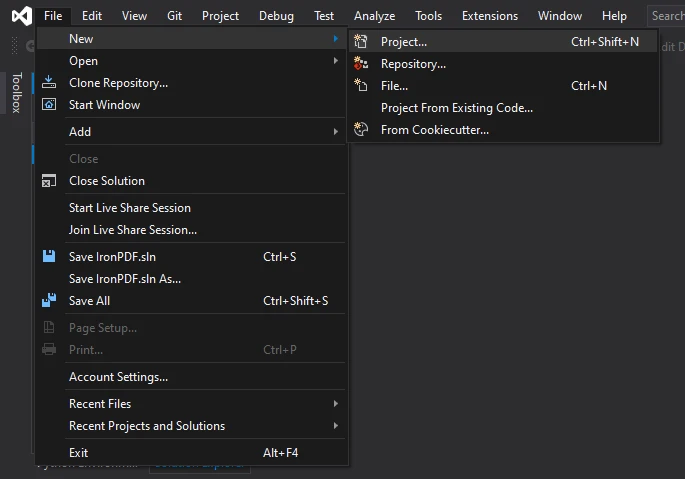 The Project dropdown in Visual Studio
- Choose a project template based on your application type (e.g., Windows Forms, Console Application, ASP.NET, etc.) and click on next.
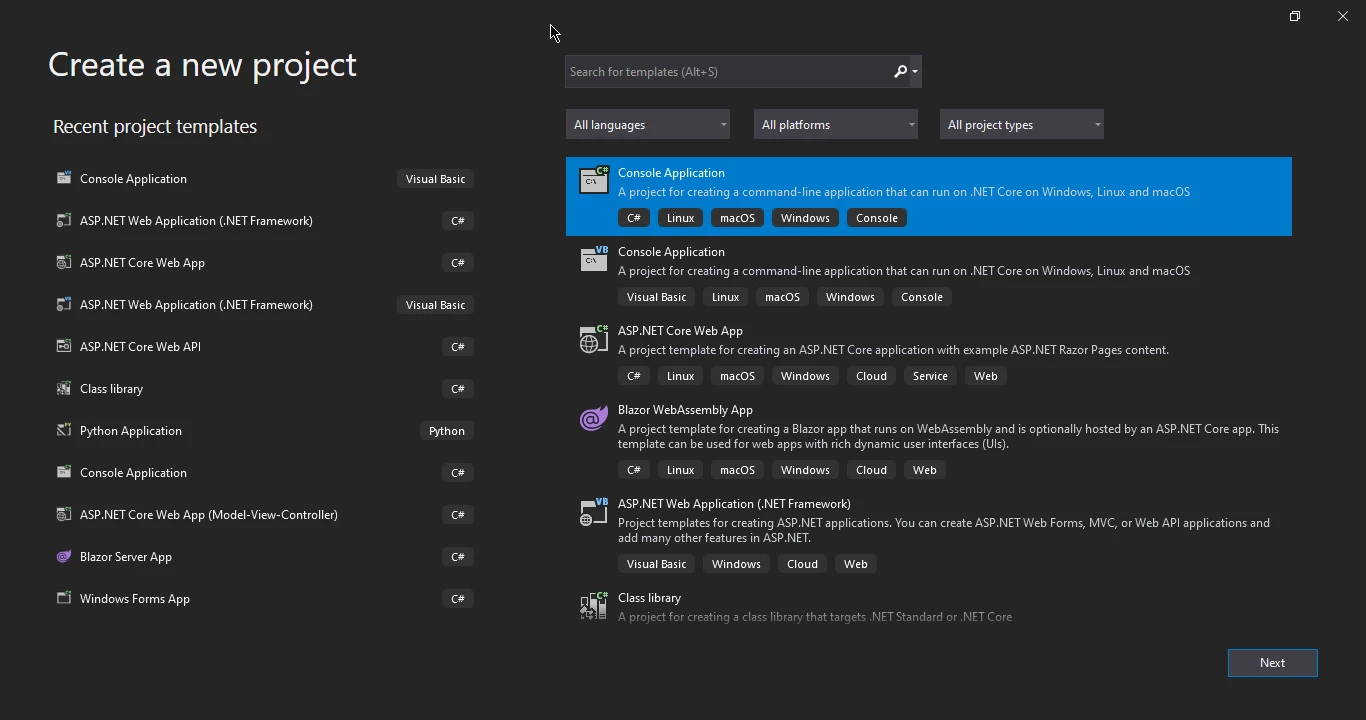 Create a new project with Visual Studio
- Enter a name and location for your project and click on the Next button.
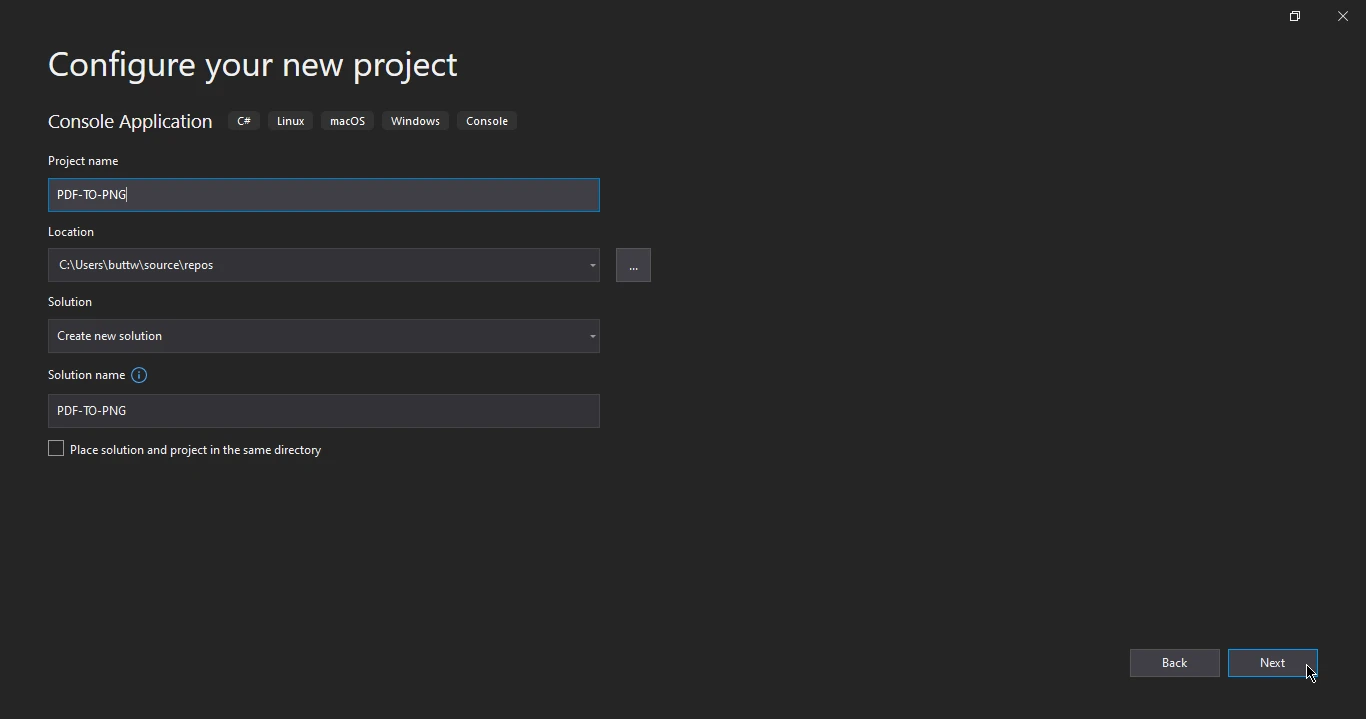 Configure your new project
- Select the target framework and Click "Create" to create the project.
-
Install IronPDF:
After creating the project, you'll need to install the IronPDF library using NuGet. Here's how:
- Right-click on your project in the Solution Explorer.
- Select "Manage NuGet Packages..."
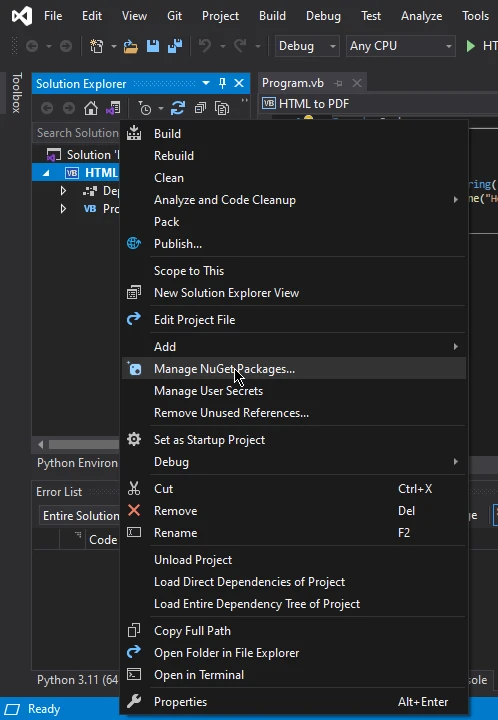 The NuGet Package Manager dropdown from the Tools bar in Visual Studio
- In the "NuGet Package Manager" window, make sure "Browse" is selected on the left.
- In the search box, type "IronPDF."
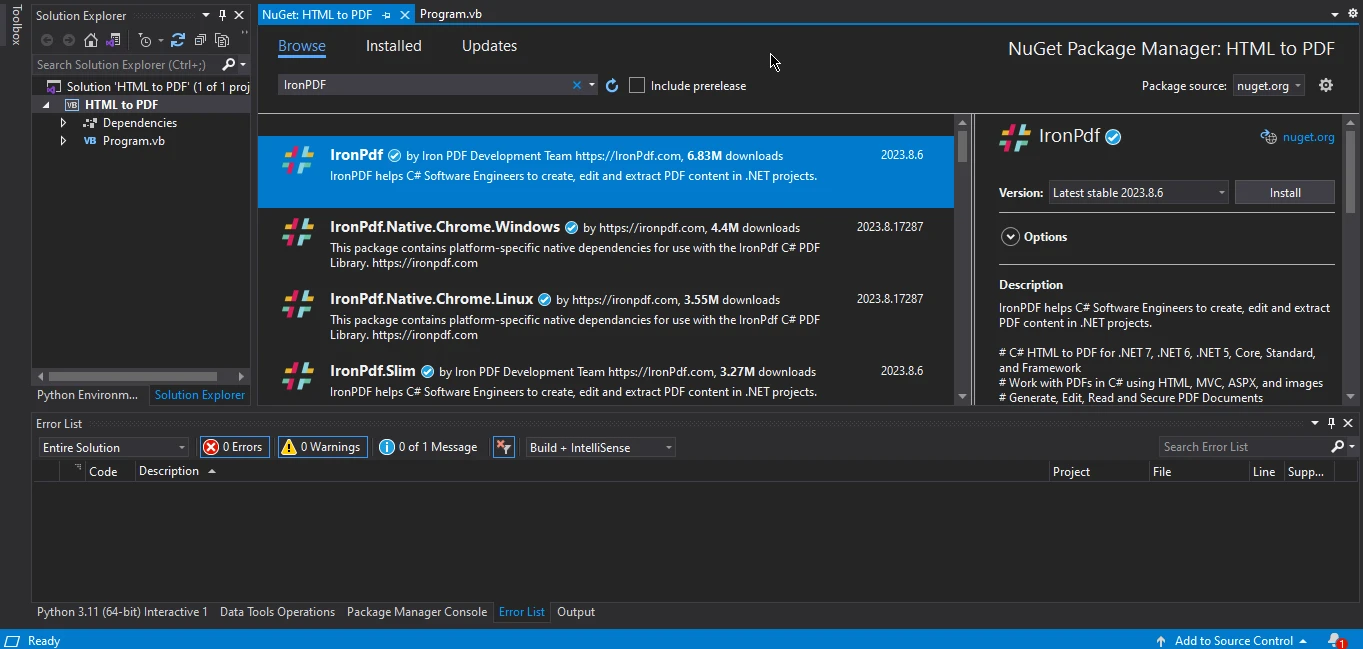 IronPDF selected in the NuGet Package Manager
- Select the "IronPDF" package from the search results.
- Click the "Install" button to install the package.
3. Convert PDF Files to PNG images
The process of converting PDF documents into PNG images is made remarkably straightforward through the utilization of the IronPDF .NET library. Within this segment, we will delve into the streamlined methodology that enables you to seamlessly transform PDFs into PNG images with a mere handful of concise code lines. By harnessing the capabilities of IronPDF, this process becomes an efficient and accessible endeavor. Let's navigate through the steps that empower you to achieve this conversion effortlessly.
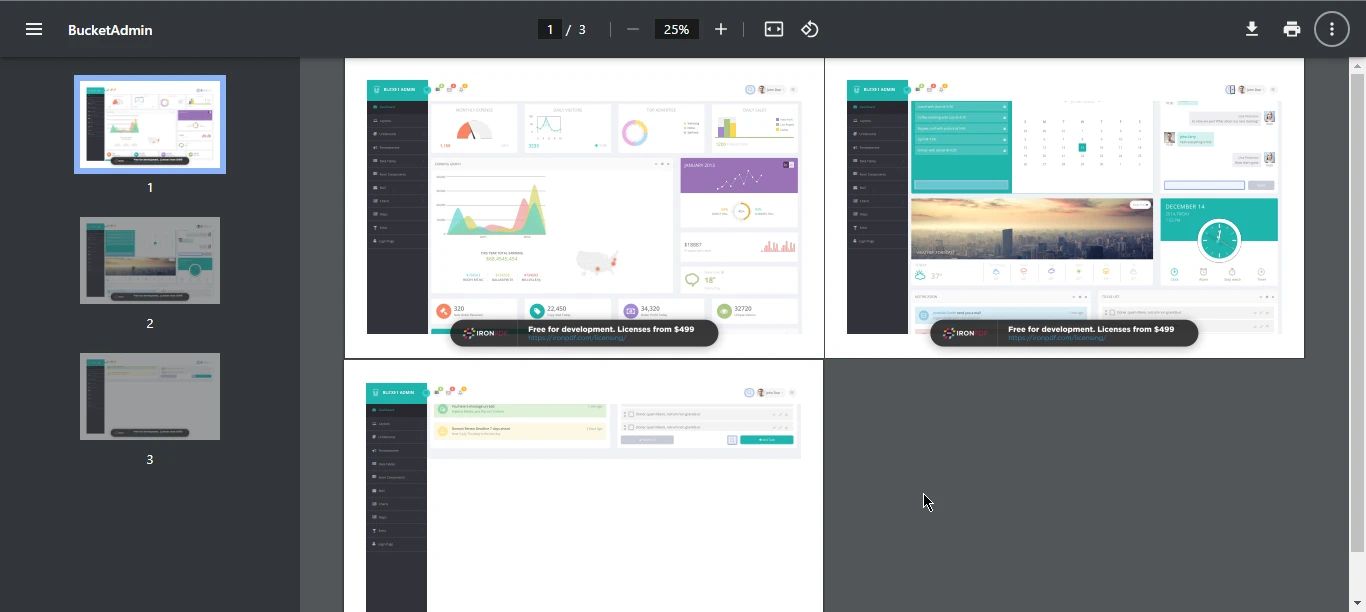 A three-page PDF document with a variety of graphs and charts
using IronPdf;

// Load the PDF document you want to convert
var pdf = PdfDocument.FromFile("bucket.pdf");

// Convert each page of the PDF into a separate PNG image stored in the specified directory
pdf.RasterizeToImageFiles(@"C:\image\folder\*.png");
using IronPdf;

// Load the PDF document you want to convert
var pdf = PdfDocument.FromFile("bucket.pdf");

// Convert each page of the PDF into a separate PNG image stored in the specified directory
pdf.RasterizeToImageFiles(@"C:\image\folder\*.png");
Imports IronPdf
' Load the PDF document you want to convert
Private pdf = PdfDocument.FromFile("bucket.pdf")
' Convert each page of the PDF into a separate PNG image stored in the specified directory
pdf.RasterizeToImageFiles("C:\image\folder\*.png")
Imports IronPdf

' Load the PDF document you want to convert
Private pdf = PdfDocument.FromFile("bucket.pdf")

' Convert each page of the PDF into a separate PNG image stored in the specified directory
pdf.RasterizeToImageFiles("C:\image\folder\*.png")
The above code uses the IronPDF library in a .NET application to convert all pages of a specified PDF file ("bucket.pdf") into a series of PNG files. The FromFile method loads the PDF, and then each page is converted to PNG format. The RasterizeToImageFiles method specifies the output directory and file format, automatically naming files based on input content and producing high-quality PNG images.
3.2. Output Images
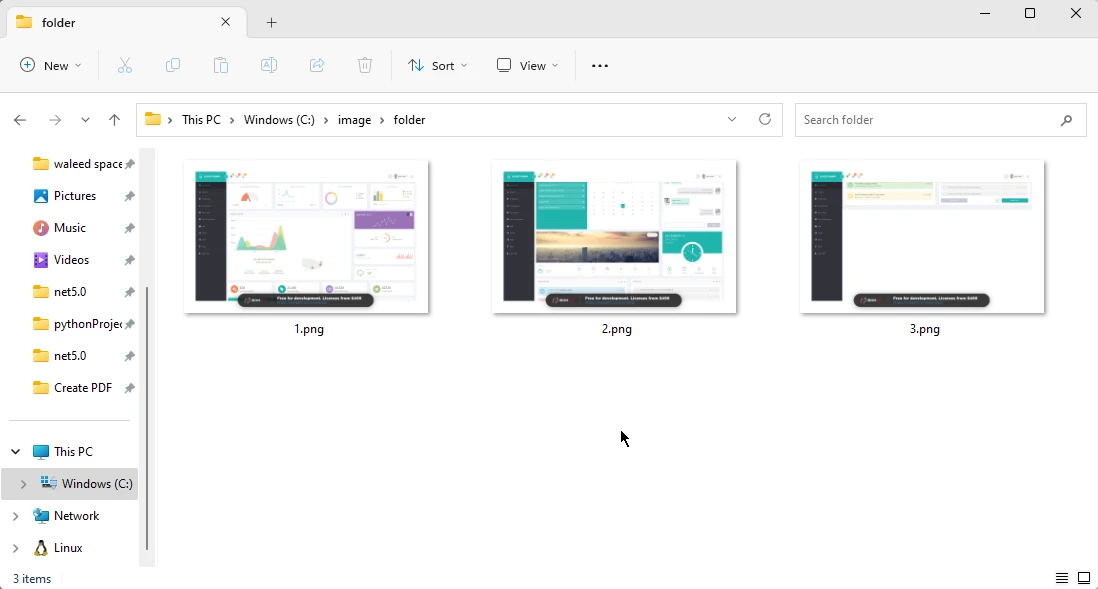 Three PNG pictures in the Windows file explorer, one for each of the PDF pages
4. Conclusion
The ability to convert PDF pages to PNG images using the .NET Framework, specifically leveraging the power of IronPDF, offers a versatile and effective solution for addressing the growing demand for seamless document transformation in today's technology-driven landscape. The unique advantages of PNG format, including lossless compression and support for transparent backgrounds, make it an invaluable choice for preserving document formatting, image fidelity, and intricate graphical elements.
Discover more about IronPDF Features and Capabilities to empower developers to easily integrate the PDF page to PNG conversion functionality into their applications, demonstrating the framework's significance in enhancing visual precision and versatility across various domains. As technology continues to evolve, such tools provide crucial support for meeting the ever-expanding requirements of modern applications.
Make sure to check out this IronPDF PDF-to-PNG Conversion Tutorial, and for more related code examples, visit the IronPDF Rasterize PDF to Images Guide.