




업데이트됨 2026년 9월 4일
월별 계정 명세서를 PDF 문서로 생성하기
개발자는 IronPDF C# PDF 라이브러리를 사용하여 외부 서비스에 의존하지 않고도 .NET 프로젝트 내에서 HTML을 신뢰할 수 있는 PDF 파일로 변환할 수 있습니다.
더 읽어보기

IronPDF는 .NET 개발자가 몇 줄의 코드만으로 여러 PDF 파일을 단일 문서로 병합할 수 있도록 합니다. 기존 PDF, HTML 콘텐츠, 웹 URL을 포함한 다양한 소스를 지원하여 매끄러운 문서 통합을 제공합니다.
여러 PDF 파일을 하나의 문서로 결합하는 것은 비즈니스 애플리케이션에서 일반적입니다. 보고서를 통합하든, 청구서를 묶든, 문서 패키지를 조립하든 PDF 파일을 병합하면 프로그래밍적으로 시간을 절약하고 수작업을 줄여줍니다. IronPDF는 최소한의 코드로 이 과정을 간소화하는 완전한 PDF 라이브러리입니다.
이 기사에서는 IronPDF의 API를 사용하여 기본 두 파일 조합에서 여러 문서를 동적으로 처리하는 방법에 이르기까지 PDF 문서를 병합하는 방법을 배웁니다. 라이브러리는 문서 무결성을 유지하면서 PDF 파일을 효율적으로 결합할 수 있는 신뢰할 수 있는 방법을 제공합니다.
시작하려면 간단한 NuGet Install-Package가 필요합니다. Visual Studio에서 패키지 관리자 콘솔을 열고 다음을 실행하세요:
또는 .NET CLI를 사용하세요:
IronPDF는 PDF 조작의 복잡한 부분을 뒤에서 처리하여 애플리케이션 논리에 집중할 수 있도록 도와줍니다. 이 프로세스는 Linux의 .NET Core를 포함하여 다양한 운영 체제와 호환됩니다. 자세한 설치 지침은 IronPDF 설치 문서를 방문하십시오.
IronPDF는 외부 종속성이 없는 단일 NuGet 패키지로 설계되어 .NET 개발자에게 플러그 앤 플레이 솔루션을 제공합니다. 이 라이브러리는 다양한 .NET 버전 간의 PDF 렌더링 엔진과 호환성을 자동으로 처리합니다.
Visual Studio 또는 .NET 호환 IDE와 .NET Framework 4.6.2+ 또는 .NET Core 3.1+가 필요합니다. 라이브러리는 추가 구성 없이 두 프레임워크 버전과 함께 작동합니다. 또한 Azure 및 AWS 환경으로 배포를 지원합니다.
가장 기본적인 병합 시나리오는 두 개의 기존 PdfDocument 객체를 결합하는 것입니다. 이 작업을 수행하는 방법은 다음과 같습니다:
using IronPdf;

// Load the PDF documents
var pdf1 = PdfDocument.FromFile("Invoice1.pdf");
var pdf2 = PdfDocument.FromFile("Invoice2.pdf");

// Merge the documents
var merged = PdfDocument.Merge(pdf1, pdf2);

// Save the merged document
merged.SaveAs("Merged.pdf");Imports IronPdf
' Load the PDF documents
Dim pdf1 = PdfDocument.FromFile("Invoice1.pdf")
Dim pdf2 = PdfDocument.FromFile("Invoice2.pdf")
' Merge the documents
Dim merged = PdfDocument.Merge(pdf1, pdf2)
' Save the merged document
merged.SaveAs("Merged.pdf")이 코드는 IronPDF로 PDF를 병합하는 간편함을 보여줍니다. PdfDocument.FromFile() 메소드는 기존 PDF 파일을 메모리에 로드합니다. 이 로드된 문서들은 프로그래밍적으로 조작할 수 있는 PdfDocument 객체가 됩니다.
Merge() 메소드는 두 개 이상의 PdfDocument 객체를 받아 하나의 PDF 파일로 결합합니다. 두 번째 문서의 페이지는 첫 번째 문서 페이지 뒤에 추가되며, 각 페이지의 원래 순서와 서식을 유지합니다.
마지막으로 SaveAs()은(는) 병합된 문서를 디스크에 쓰기합니다. 결과로 나온 PDF는 두 소스 문서의 모든 페이지를 순서대로 포함하여 배포 또는 추가 처리가 준비됩니다.
PDF는 Merge() 메소드 매개변수에 나타나는 순서대로 정확하게 병합됩니다. 첫 번째 PDF의 페이지가 먼저 오고, 이어서 두 번째 PDF의 페이지가 와서 각 문서 내의 원래 페이지 순서를 유지합니다. 매개변수 순서를 조정하여 페이지 순서를 제어할 수 있습니다.
IronPDF는 각 소스 PDF의 폰트, 이미지, 레이아웃 및 인터랙티브 요소를 포함한 모든 원래 형식을 유지합니다. 병합 작업은 콘텐츠를 변경하거나 재압축하지 않아 문서의 충실도를 보장합니다.
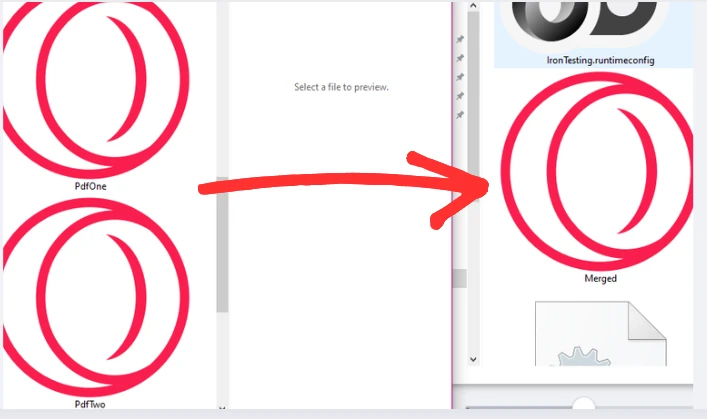
병합된 PDF 크기는 일반적으로 개별 파일 크기의 합과 결합된 문서 구조에 대한 최소 부가 비용과 같습니다. 대용량 파일의 경우 병합 후 압축을 적용하는 것을 고려하세요.
실제 사용에서는 종종 두 개 이상의 문서를 병합해야 합니다. IronPDF는 이 시나리오를 List 컬렉션을 사용하여 처리합니다:
using IronPdf;
using System.Collections.Generic;
using System.IO;

// Create a list to store PDF documents
var files = new List<PdfDocument>();

// Get all PDF files from a directory
string[] fileNames = Directory.GetFiles(@"C:\Reports\", "*.pdf");

// Load each PDF file
foreach (var fileName in fileNames)
{
    files.Add(PdfDocument.FromFile(fileName));
}

// Merge all PDFs into one
var merged = PdfDocument.Merge(files);

// Save the combined document
merged.SaveAs("CombinedReports.pdf");Imports IronPdf
Imports System.Collections.Generic
Imports System.IO
' Create a list to store PDF documents
Dim files As New List(Of PdfDocument)()
' Get all PDF files from a directory
Dim fileNames As String() = Directory.GetFiles("C:\Reports\", "*.pdf")
' Load each PDF file
For Each fileName In fileNames
files.Add(PdfDocument.FromFile(fileName))
Next
' Merge all PDFs into one
Dim merged As PdfDocument = PdfDocument.Merge(files)
' Save the combined document
merged.SaveAs("CombinedReports.pdf")코드는 Directory.GetFiles()를 사용하여 지정된 폴더의 모든 PDF 파일을 자동으로 검색하여 개별 파일 이름을 하드코딩하지 않아도 됩니다. 파일 작업에 대한 Microsoft's 문서에 따르면, 이 메서드는 조건에 맞는 파일 경로를 효율적으로 검색합니다.
발견된 각 PDF 파일은 PdfDocument으로 로드되어 List 컬렉션에 추가됩니다. 이 접근 방식은 세 개의 파일을 병합하든 세백 개의 파일을 병합하든 효율적으로 확장됩니다. Merge() 메소드는 전체 목록을 수락하여 하나의 새로운 문서를 생성하기 위해 모든 소스 문서를 단일 작업으로 처리합니다.
foreach 루프는 여러 PDF 파일을 순회하는 깔끔한 방법을 제공합니다. 여기서 이름 패턴, 날짜 또는 기타 기준에 따라 특정 파일을 선택하는 필터링 로직을 추가할 수 있습니다. 이 패턴은 월간 보고서 집계나 문서 보관과 같은 일괄 처리 시나리오에 유용합니다.
IronPDF는 수백 개의 PDF를 단일 병합 작업에서 처리할 수 있으며, 주로 사용 가능한 시스템 메모리에 의해 제한됩니다. 대량 배치에서 최적의 성능을 원한다면, 50~100개 그룹으로 파일을 처리하는 것을 고려하세요. Microsoft의 메모리 관리 가이드에 따르면, 문서 객체를 신속히 해제하면 처리량을 유지하는 데 도움이 될 수 있습니다. 비동기 작업을 구현하여 더 나은 성능을 제공할 수 있습니다.
대용량 모음의 경우 진행 상황 추적과 함께 배치 처리를 구현하고 비동기 작업을 사용하는 것을 고려하세요. 병합 프로세스를 개선하기 위해 파일을 크기나 날짜를 기준으로 미리 필터링하세요.
LINQ 또는 배열 정렬 메서드를 사용하여 PDF를 로드하기 전에 파일 목록을 정렬하세요. 일반적인 정렬 방법으로는 알파벳 순서, 생성 날짜, 사용자 지정 명명 규칙 등이 있으며, 최종 문서 순서를 제어하기 위해 사용됩니다.
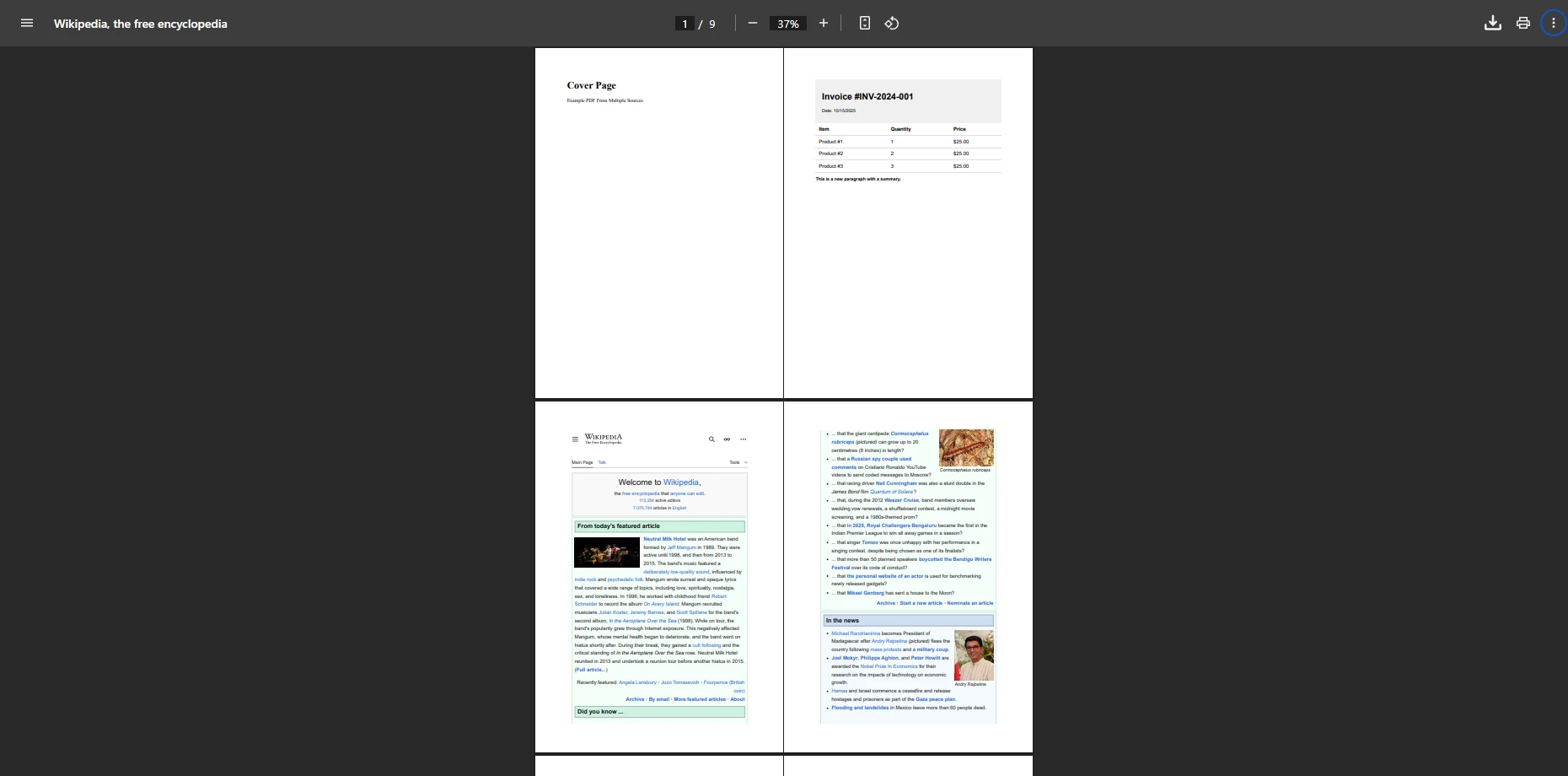
때때로 다양한 소스에서 PDF 파일을 결합해야 할 때가 있습니다. 아마도 기존 템플릿과 동적으로 생성된 콘텐츠를 병합해야 할 것입니다. 여기에서 IronPDF가 이 패턴을 처리하는 방법을 설명합니다.
using IronPdf;

var renderer = new ChromePdfRenderer();

// Create a PDF from HTML
string html = @"<h1>Cover Page</h1>
               <p>Example PDF From Multiple Sources</p>
               <div style='page-break-after: always;'></div>";
var coverPage = renderer.RenderHtmlAsPdf(html);

// Load an existing PDF report
var pdf = PdfDocument.FromFile("invoice.pdf");

// Create a summary from URL
var summary = renderer.RenderUrlAsPdf("https://en.wikipedia.org/wiki/PDF");

// Merge all three sources
var finalDocument = PdfDocument.Merge(new[] { coverPage, pdf, summary });

// Save the complete document
finalDocument.SaveAs("MultipleSources.pdf");Imports IronPdf
Dim renderer As New ChromePdfRenderer()
' Create a PDF from HTML
Dim html As String = "<h1>Cover Page</h1>
<p>Example PDF From Multiple Sources</p>
<div style='page-break-after: always;'></div>"
Dim coverPage As PdfDocument = renderer.RenderHtmlAsPdf(html)
' Load an existing PDF report
Dim pdf As PdfDocument = PdfDocument.FromFile("invoice.pdf")
' Create a summary from URL
Dim summary As PdfDocument = renderer.RenderUrlAsPdf("https://en.wikipedia.org/wiki/PDF")
' Merge all three sources
Dim finalDocument As PdfDocument = PdfDocument.Merge(New PdfDocument() {coverPage, pdf, summary})
' Save the complete document
finalDocument.SaveAs("MultipleSources.pdf")이 예제는 IronPDF의 다양한 PDF 소스 처리 능력을 보여줍니다. ChromePdfRenderer 클래스는 HTML을 PDF로 변환하게 하여, 동적 표지 페이지나 응용 프로그램 데이터에서 형식화된 콘텐츠를 생성하는 데 적합합니다. 렌더러는 W3C 사양에 명시된 최신 웹 표준을 지원합니다.
RenderHtmlAsPdf() 메소드는 HTML 문자열을 직접 PDF로 변환하며, 완전한 CSS 스타일링과 JavaScript를 지원합니다. RenderUrlAsPdf() 메소드는 웹 콘텐츠를 가져와 변환하며, 실시간 데이터나 외부 리소스를 통합하는 데 유용합니다. HTML to PDF 튜토리얼에서 더 알아볼 수 있습니다.
이러한 렌더링 방법을 기존 PDF 문서와 결합하여 정교한 문서 워크플로를 만들 수 있습니다. 이 접근 방식은 보고서에 브랜드 커버 페이지를 추가하거나, 계약서에 법적 책임 사면을 부가하거나, 템플릿과 사용자 생성 콘텐츠를 결합하는 시나리오에 잘 작동합니다.
IronPDF는 파일, HTML 문자열, URL, 스트림, 바이트 배열에서 PDF 병합을 지원합니다. 이 유연성은 데이터베이스, API, 웹 서비스, 로컬 스토리지 등의 콘텐츠를 단일 작업에서 결합할 수 있습니다.
IronPDF는 다양한 페이지 크기와 방향을 가진 PDF를 자동으로 처리합니다. 각 페이지는 결합된 문서에서 원래 크기를 유지하여 소스 차이에 상관없이 적절하게 표시됩니다.
예, 결합 후 병합된 문서에 머리글과 바닥글 및 워터마크를 적용할 수 있습니다. IronPDF의 후처리 기능을 사용하여 병합된 모든 콘텐츠에 일관된 브랜드 또는 페이지 번호를 추가하세요.
적절한 병합 전략을 선택하는 것은 사용자의 시나리오에 따라 다릅니다. 아래 표는 세 가지 주요 접근 방식을 요약한 것입니다:
| 접근 방식 | 최적의 용도 | 주요 메서드 | 확장성 |
|---|---|---|---|
| 두 파일 병합 | 간단한 송장 또는 보고서 통합 | PdfDocument.Merge(pdf1, pdf2) | 최대 몇 개의 파일 |
| 목록 기반 병합 | 대량으로 처리되는 보고서 디렉토리 | PdfDocument.Merge(fileList) | 수백 개의 파일 |
| 다중 소스 병합 | HTML, URL 및 파일 콘텐츠 결합 | ChromePdfRenderer + Merge() | 동적 콘텐츠 파이프라인 |
각 접근 방식은 동일한 Merge() 메소드 시그니처를 공유하므로, 전략 간 전환에는 최소의 코드 변경만 필요합니다. API 참조는 모든 오버로드를 자세히 문서화합니다.
병합 후 많은 워크플로가 추가적인 문서 수준 작업을 요구합니다. IronPDF는 깨끗하고 체이닝 가능한 API를 통해 이를 지원합니다:
using IronPdf;
using IronPdf.Editing;

var pdf1 = PdfDocument.FromFile("Report-January.pdf");
var pdf2 = PdfDocument.FromFile("Report-February.pdf");

var merged = PdfDocument.Merge(pdf1, pdf2);

// Add a text-based header across all pages
var headerStamper = new HtmlHeaderFooter
{
    HtmlFragment = "<div style='text-align:right;font-size:10px;'>Quarterly Report</div>"
};
merged.AddHtmlHeadersAndFooters(headerStamper);

// Apply password protection
merged.SecuritySettings.UserPassword = "YourPassword";
merged.SecuritySettings.OwnerPassword = "OwnerSecret";

// Save the final, protected document
merged.SaveAs("QuarterlyReport_Protected.pdf");Imports IronPdf
Imports IronPdf.Editing
Dim pdf1 = PdfDocument.FromFile("Report-January.pdf")
Dim pdf2 = PdfDocument.FromFile("Report-February.pdf")
Dim merged = PdfDocument.Merge(pdf1, pdf2)
' Add a text-based header across all pages
Dim headerStamper As New HtmlHeaderFooter With {
.HtmlFragment = "<div style='text-align:right;font-size:10px;'>Quarterly Report</div>"
}
merged.AddHtmlHeadersAndFooters(headerStamper)
' Apply password protection
merged.SecuritySettings.UserPassword = "YourPassword"
merged.SecuritySettings.OwnerPassword = "OwnerSecret"
' Save the final, protected document
merged.SaveAs("QuarterlyReport_Protected.pdf")이 패턴은 단일 병합 문서 객체에 후처리 단계를 계층화하는 방법을 보여줍니다. 머리글과 바닥글 API는 일관된 브랜딩을 적용할 수 있으며, 보안 설정은 무단 접근으로부터 민감한 문서를 보호합니다. 같은 워크플로에서 디지털 서명을 추가하거나 PDF/A 규격 준수를 적용할 수도 있습니다.
Merge() 호출 후 워터마크 API를 사용하세요. 워터마크는 텍스트 기반 또는 이미지 기반일 수 있으며 선택된 페이지나 전체 문서에 적용될 수 있습니다.
IronPDF의 분할 기능을 사용하면 어떤 PdfDocument 객체에서든 페이지 범위를 추출할 수 있습니다. 이는 더 큰 병합 문서의 수신자별 하위 집합을 만드는 데 유용합니다.
카운터 변수와 함께 루프 내에서 각 PdfDocument.FromFile() 호출을 감쌉니다. 진정으로 큰 배치의 경우 비동기 API를 고려하여 수백 개의 파일을 백그라운드에서 처리하는 동안 애플리케이션의 반응성을 유지하세요.
IronPDF는 .NET에서 PDF 파일 병합 작업을 최소한의 코드로 필요한 과정으로 변환합니다. 단순한 두 파일 조합에서 정교한 다중 소스 문서 조립에 이르기까지 라이브러리는 기술적 복잡성을 처리하면서 직관적인 API를 제공합니다. 단일 파일을 다루건 대량의 문서를 처리하건 간에 IronPDF는 병합 과정 동안 최종 문서의 무결성을 유지합니다.
이 튜토리얼의 예제는 .NET 애플리케이션에 PDF 병합 기능을 통합하는 방법을 보여줍니다. 문서 관리 시스템을 빌드하건, 보고서 생성을 자동화하건, 사용자 업로드를 처리하건 간에, IronPDF는 다양한 입력 소스에서 PDF 파일을 효율적으로 결합하는 데 필요한 도구를 제공합니다.
프로젝트에서 PDF 병합을 구현할 준비가 되셨나요? 무료 체험판으로 IronPDF의 모든 기능을 탐색을 시작하세요. 생산 배포의 경우, 라이선스 옵션을 탐색하여 필요에 맞는 것을 찾으세요. 전체 문서는 워터마크 추가, 보안 적용 및 PDF 문서 분할과 같은 고급 기능을 다룹니다.

커티스 차우는 칼턴 대학교에서 컴퓨터 과학 학사 학위를 취득했으며, Node.js, TypeScript, JavaScript, React를 전문으로 하는 프론트엔드 개발자입니다. 직관적이고 미적으로 뛰어난 사용자 인터페이스를 만드는 데 열정을 가진 그는 최신 프레임워크를 활용하고, 잘 구성되고 시각적으로 매력적인 매뉴얼을 제작하는 것을 즐깁니다.



IronPDF는 IRON SUITE 의 일부입니다.
10개의 .NET API 제품, 당신의 사무 문서를 위해

PDF 파일을 HTML처럼 빠르게 변환해야 할 때.


